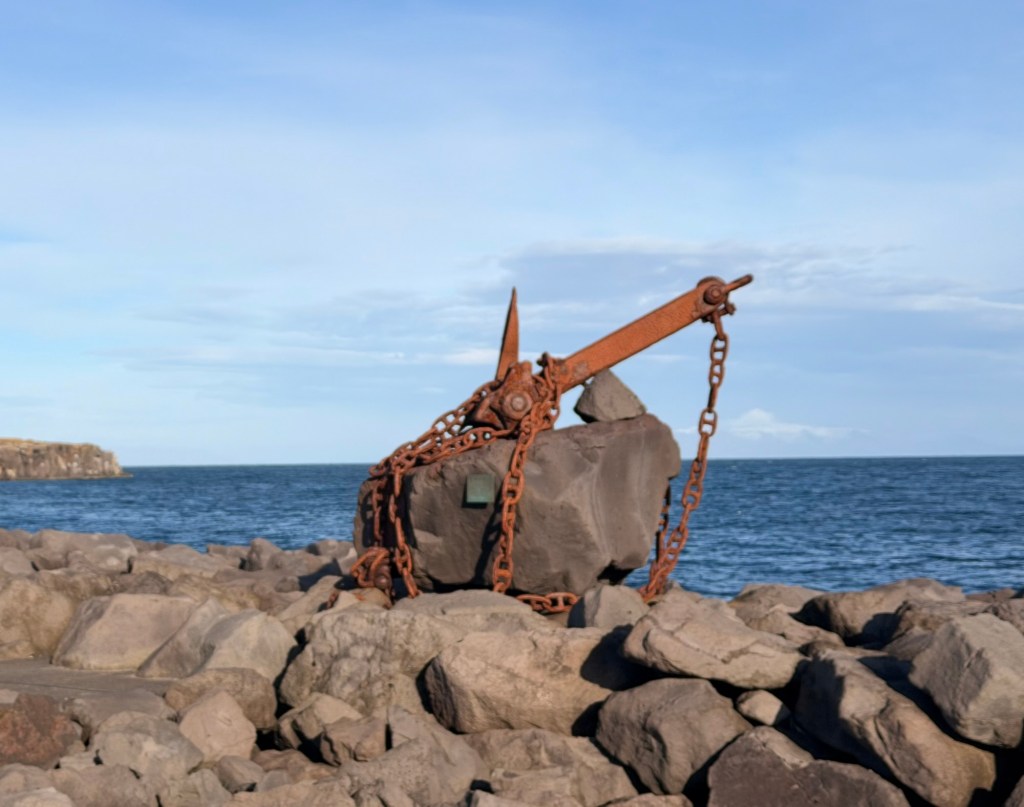
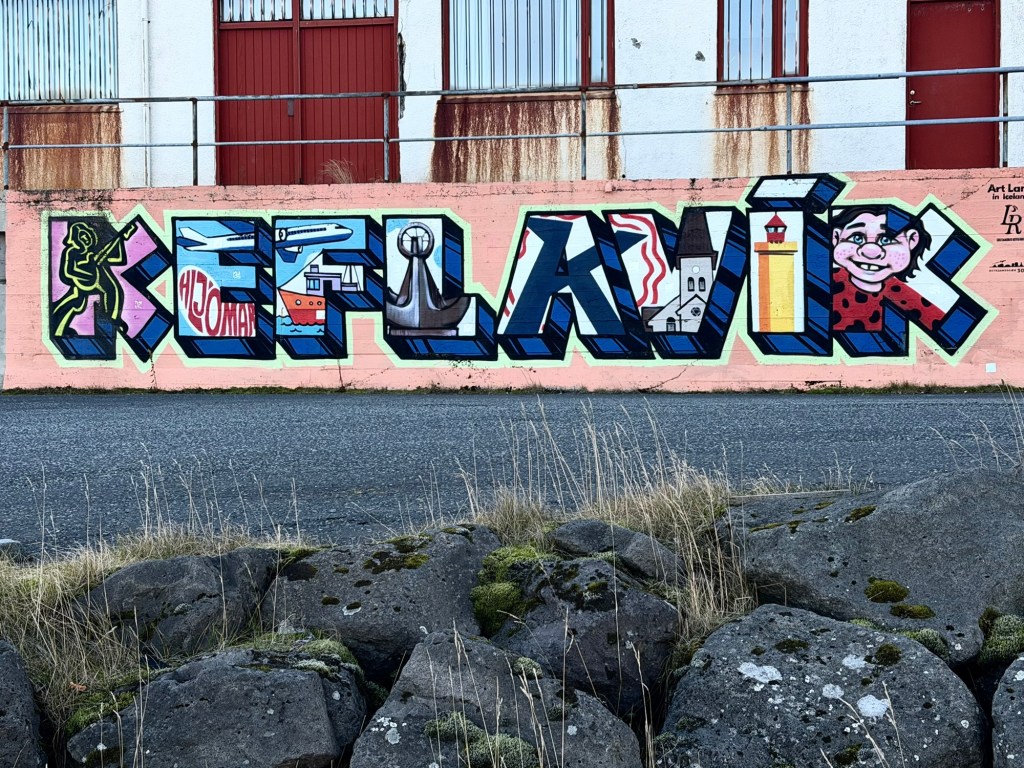
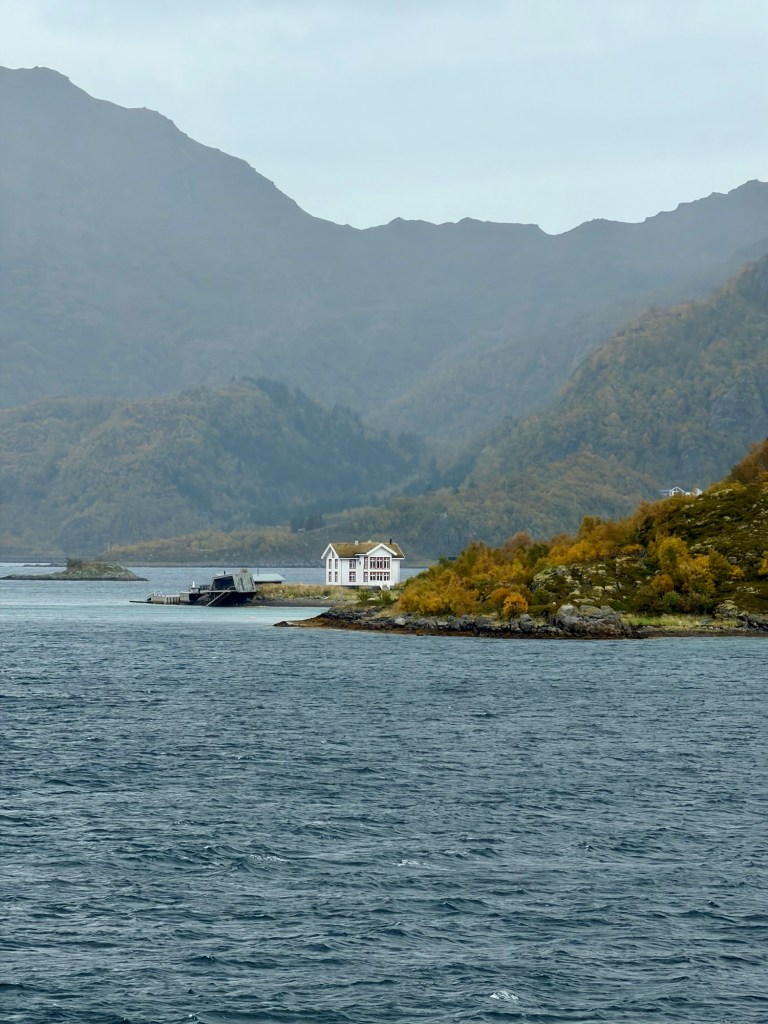
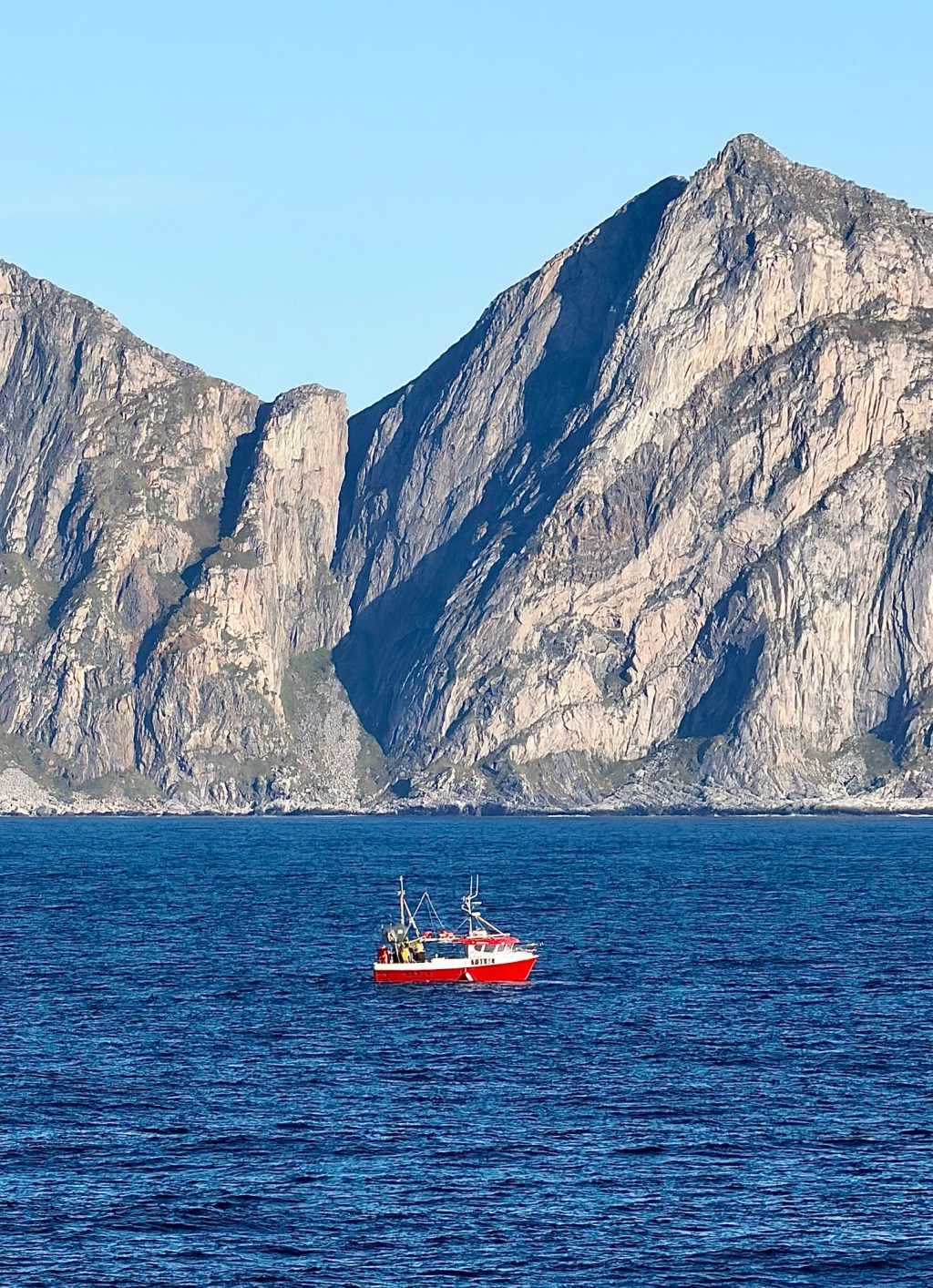
When I planned this trip, I realized I’d have to take a taxi from Reykjavík to the airport—an hour-long drive—because there was no airport bus early enough for my flight. That could have easily cost me a couple hundred dollars, so instead I booked a seaside hotel in the small town of Keflavík, not far from the airport.
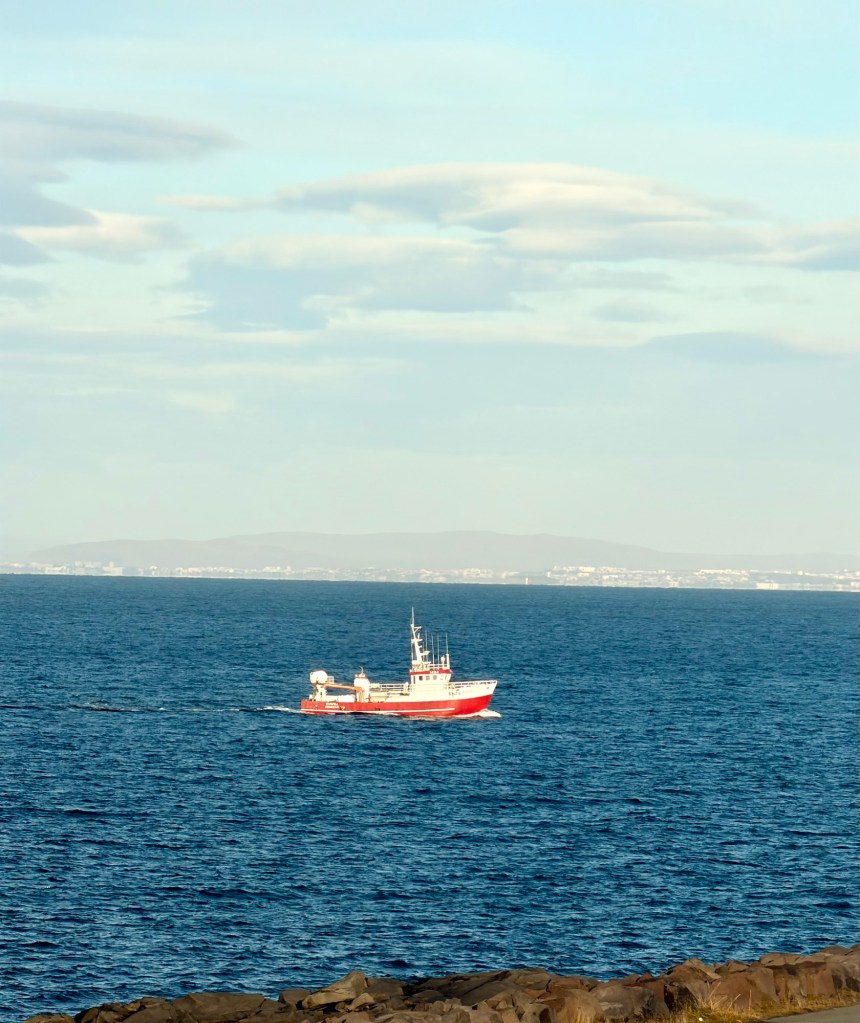
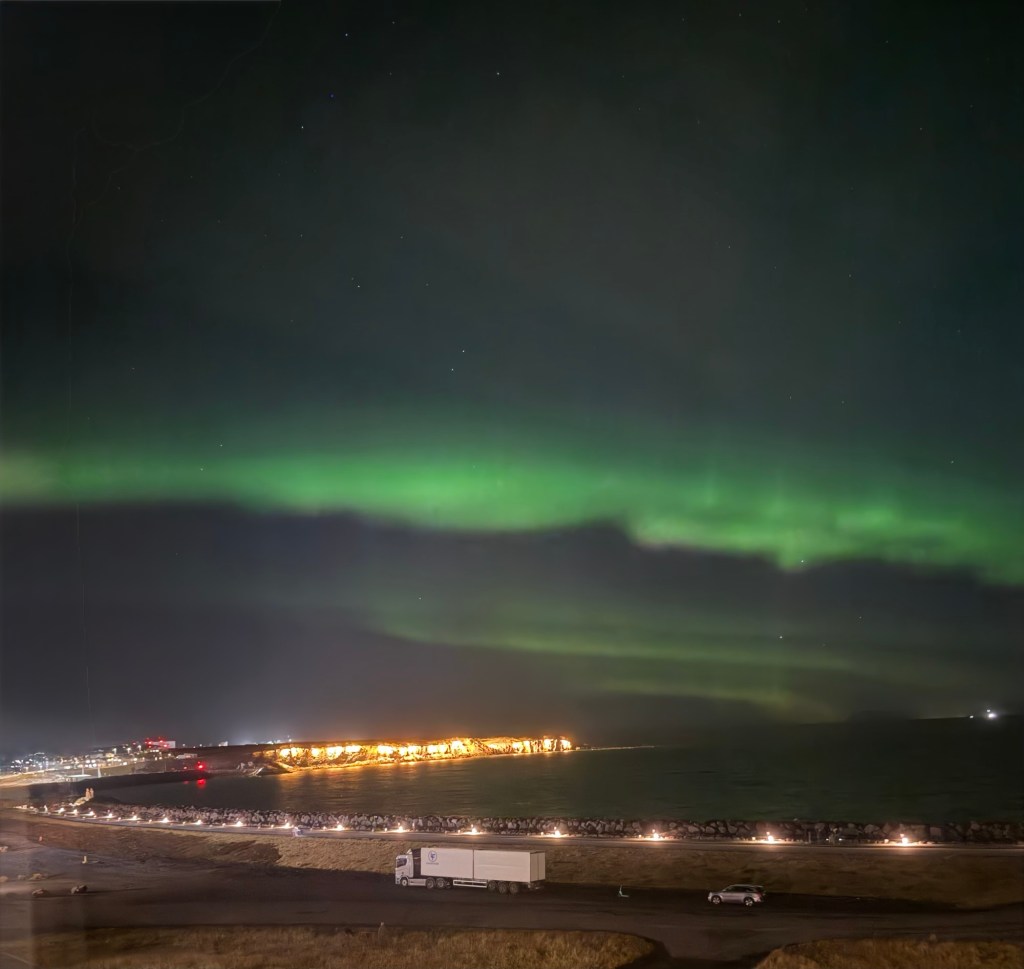
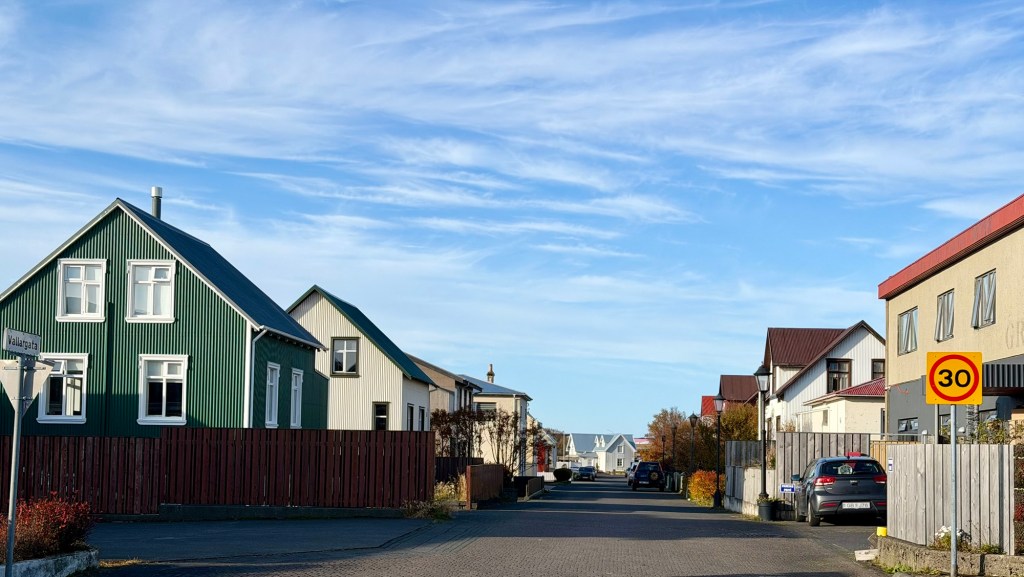
Daytime view out my window.
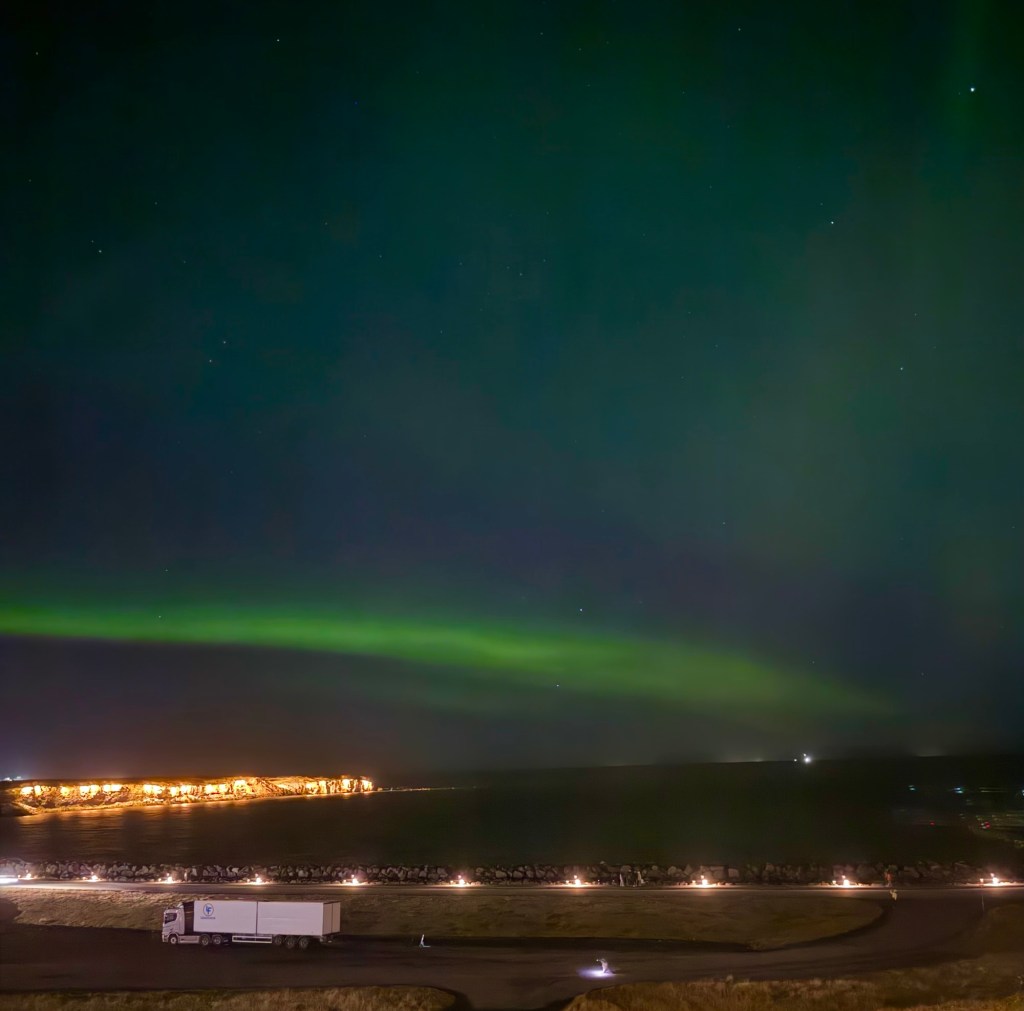
The owner seemed to really like me and put me in a room with a great ocean view. It was the same huge corner room, with two picture windows, where chess champion Bobby Fischer stayed during the 1972 World Chess Championship. Very cool! And there are Northern Lights!
Nighttime view out my window!
I set out to explore and found a quiet, tidy little town with a lovely oceanfront walk—perfect for decompressing after six weeks of traveling solo.
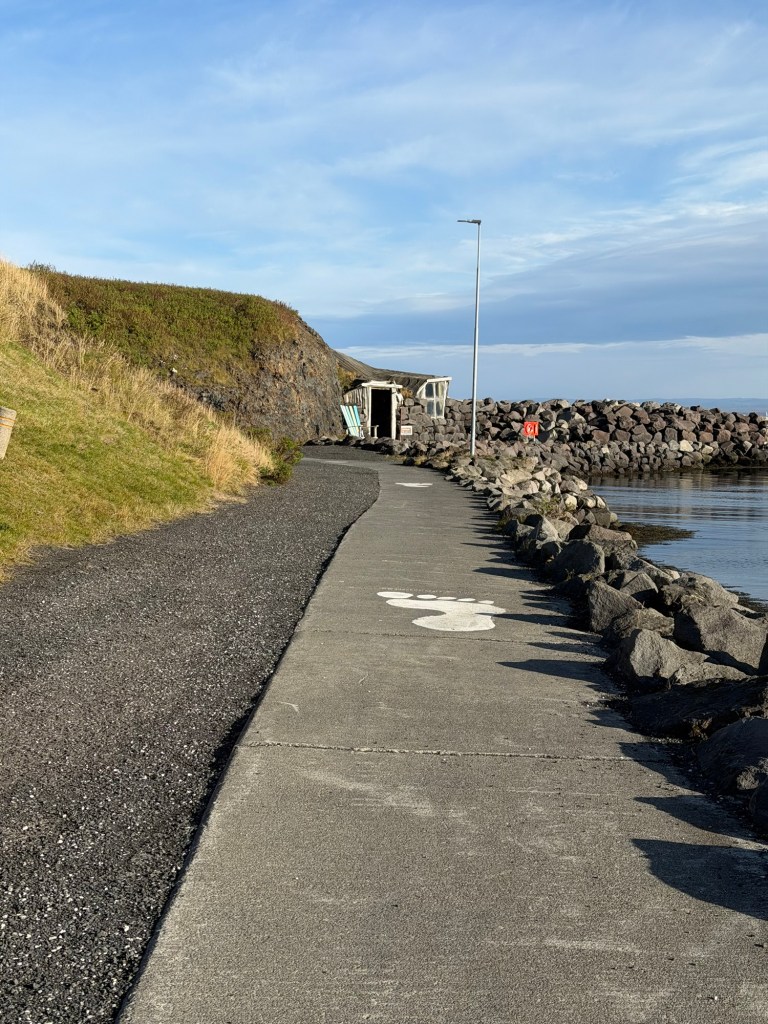
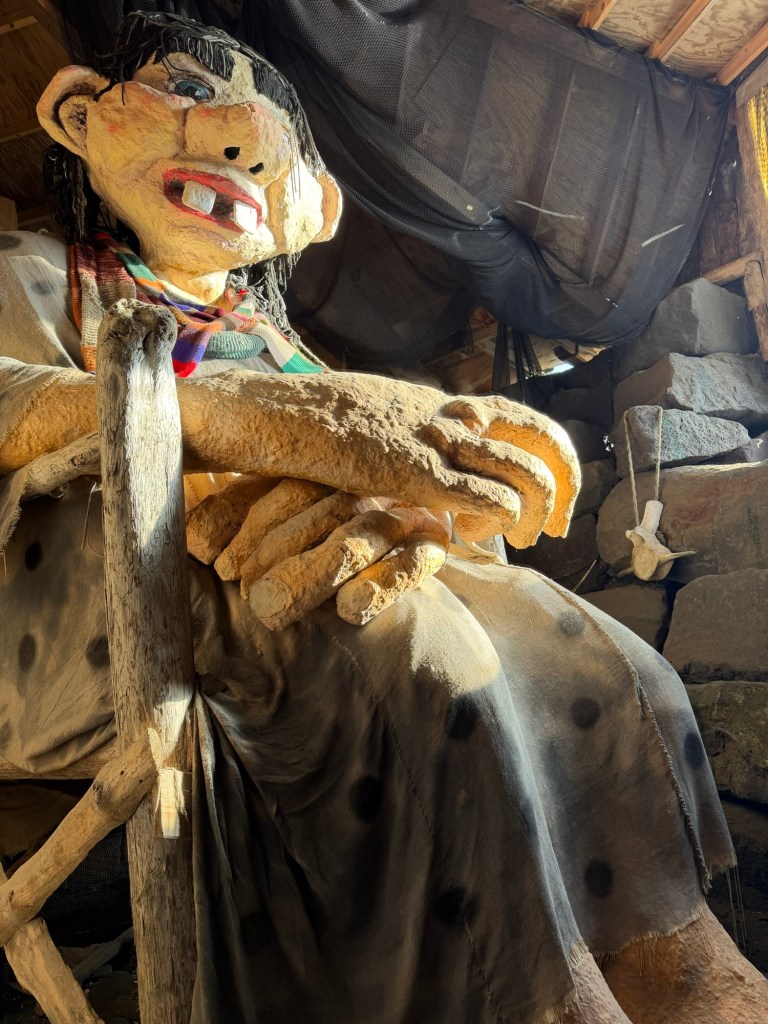
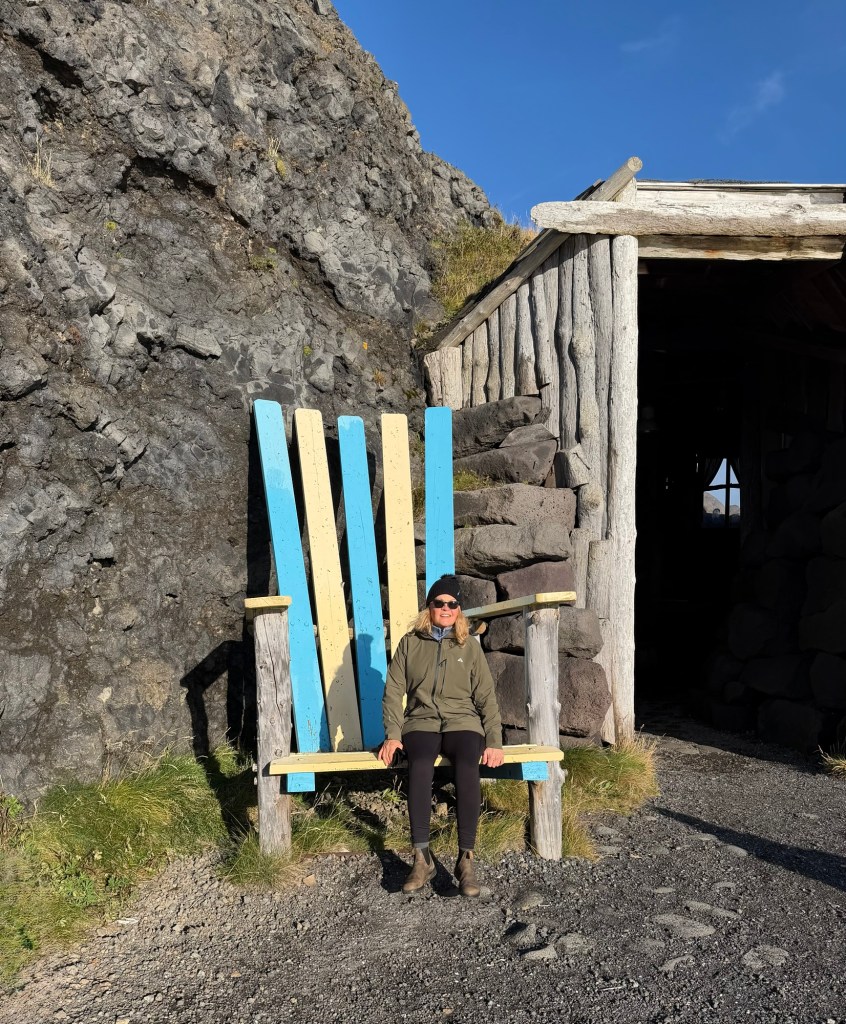
On my walk I found the Giantess’s cave.
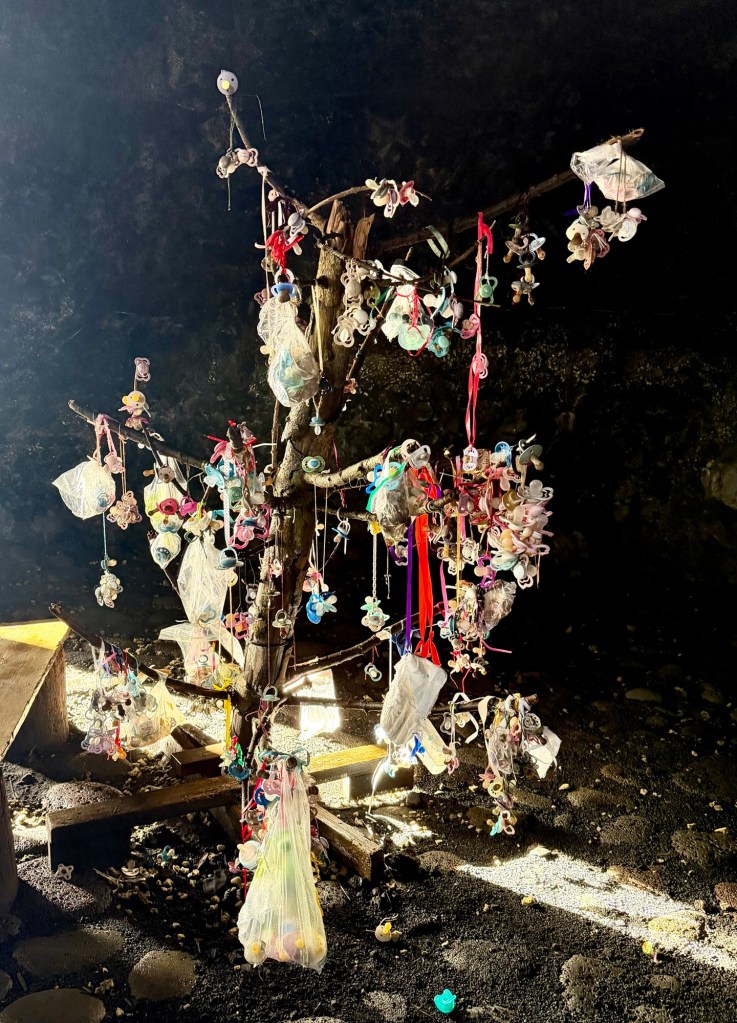
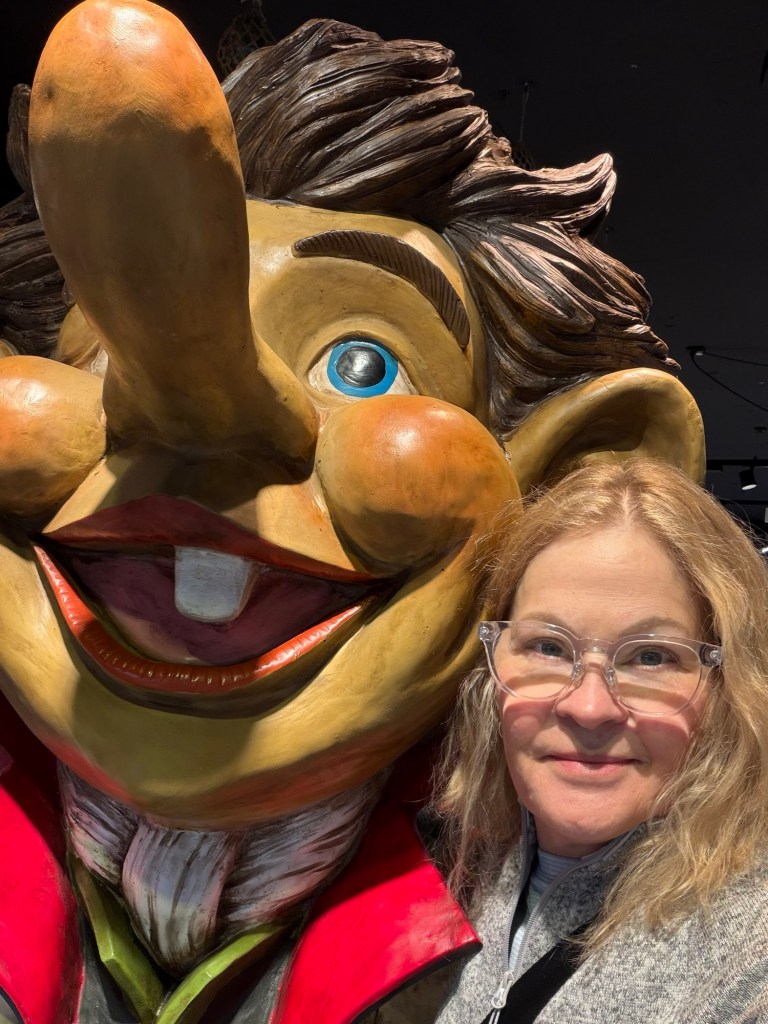
Giant footsteps led me to the Giantess’s cave. The friendly (albeit a little freaky) town mascot GiantessAlong with a giant bed, toothbrush, dress, and slippers, there was a pacifier tree where toddlers can leave their soothers when they’re ready to give them up.
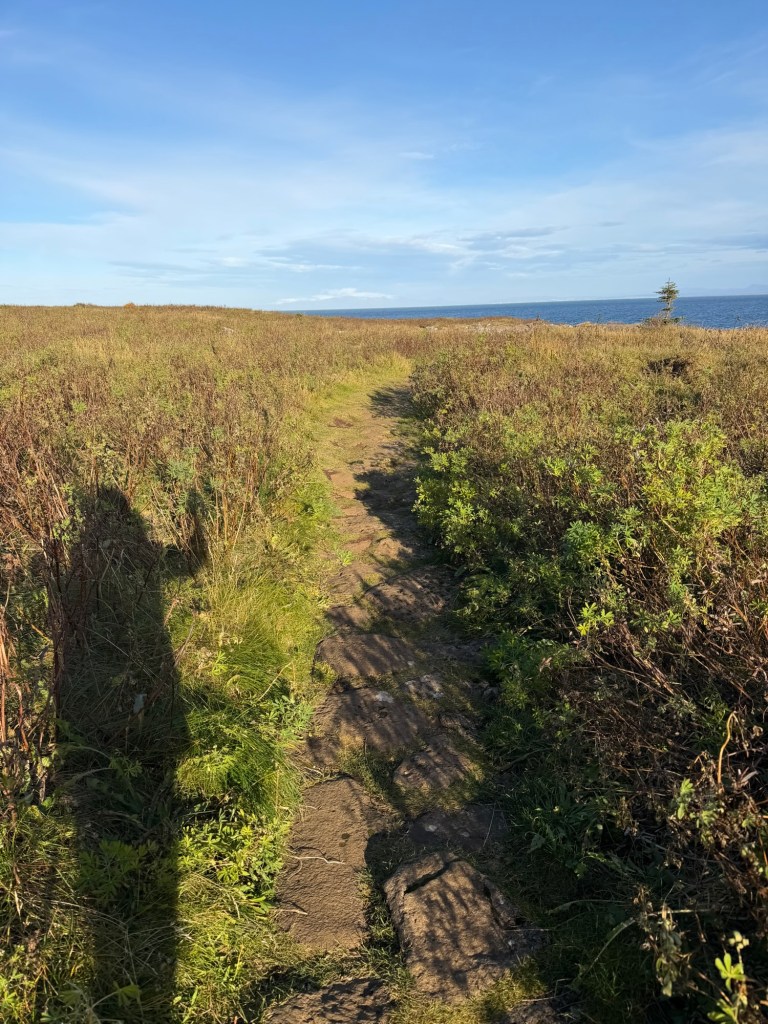
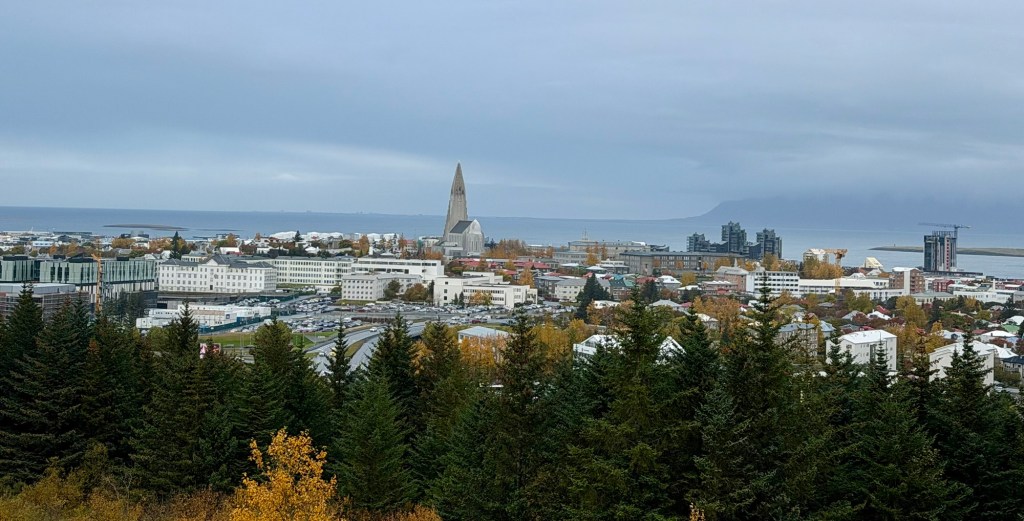
After, I actually hiked up the hill above the cave and took in the panorama.
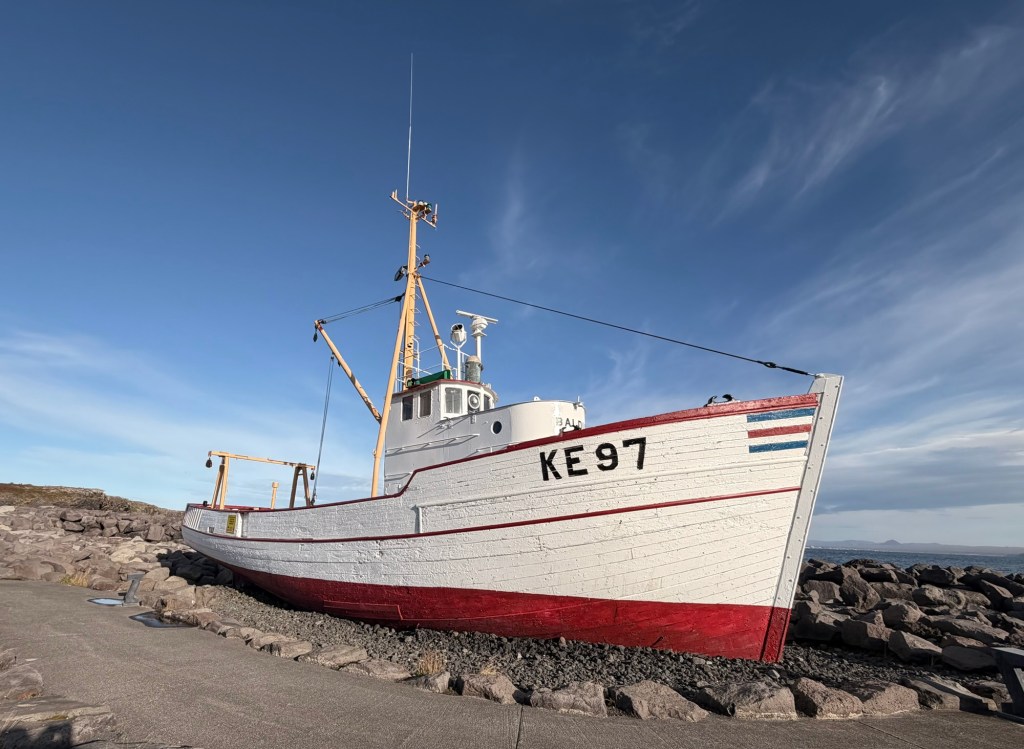
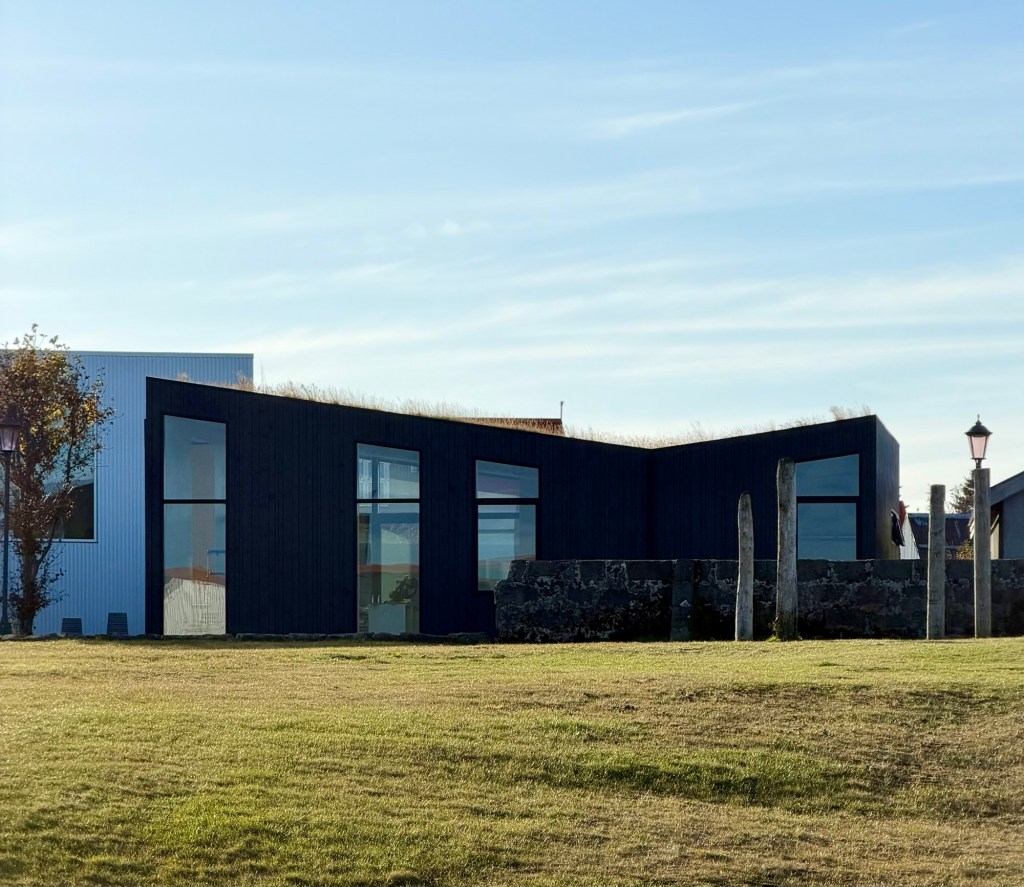
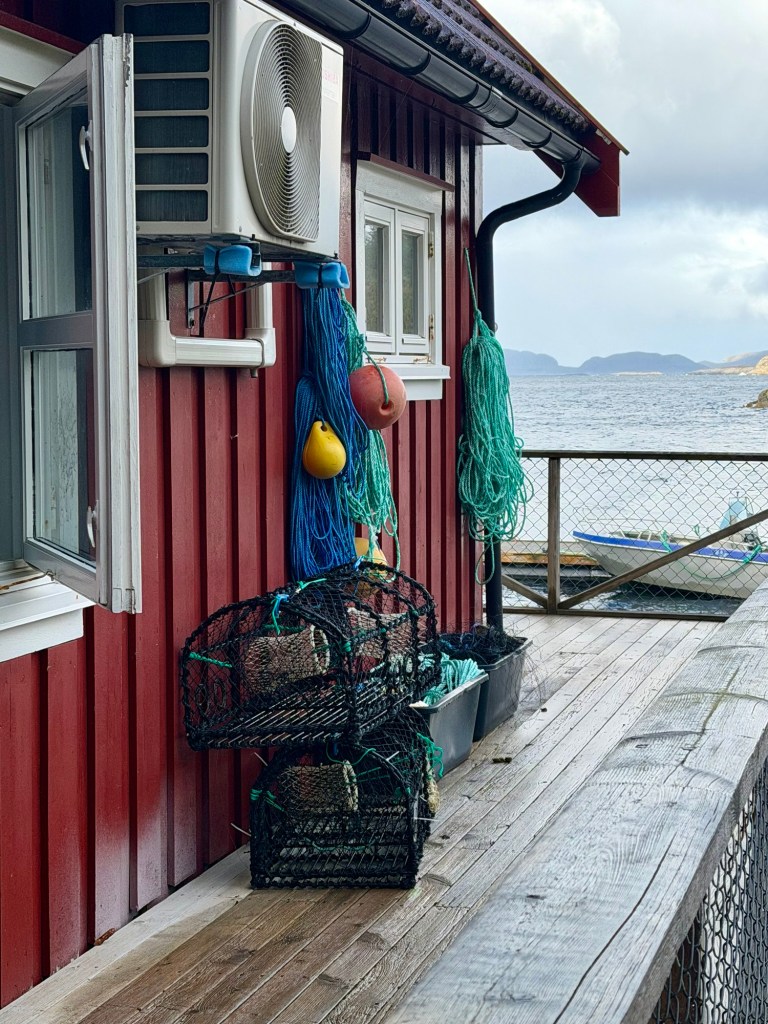
Path up—long shadow!Old fishing boat Modern home with a living roof. Goodbye Iceland!
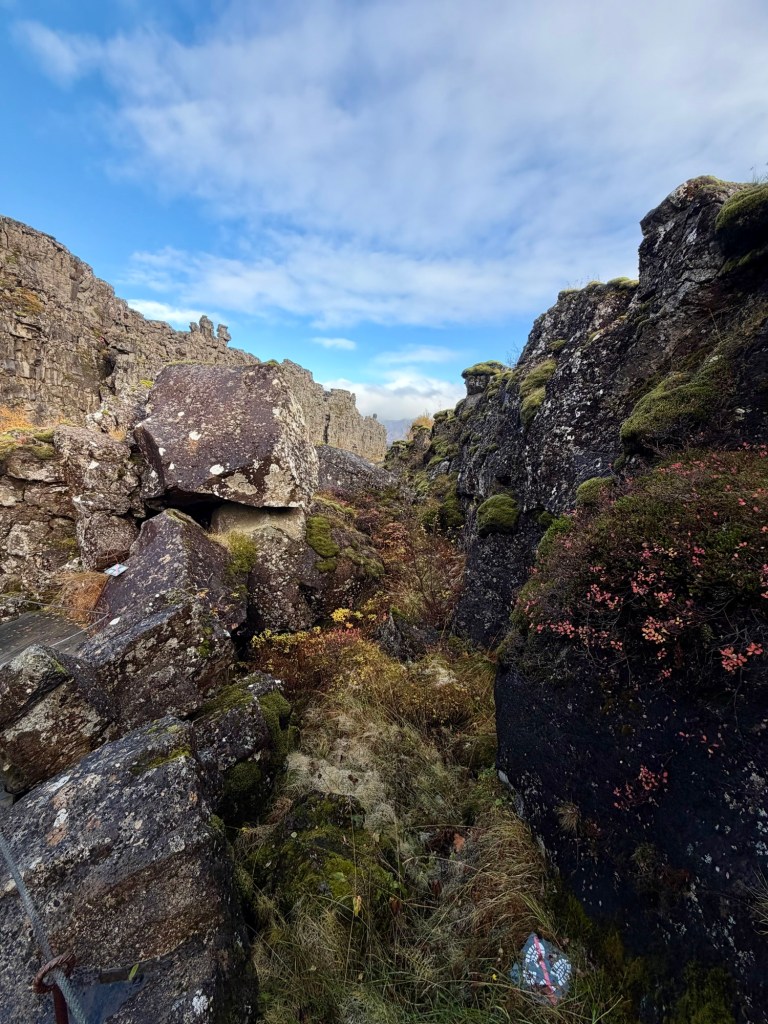
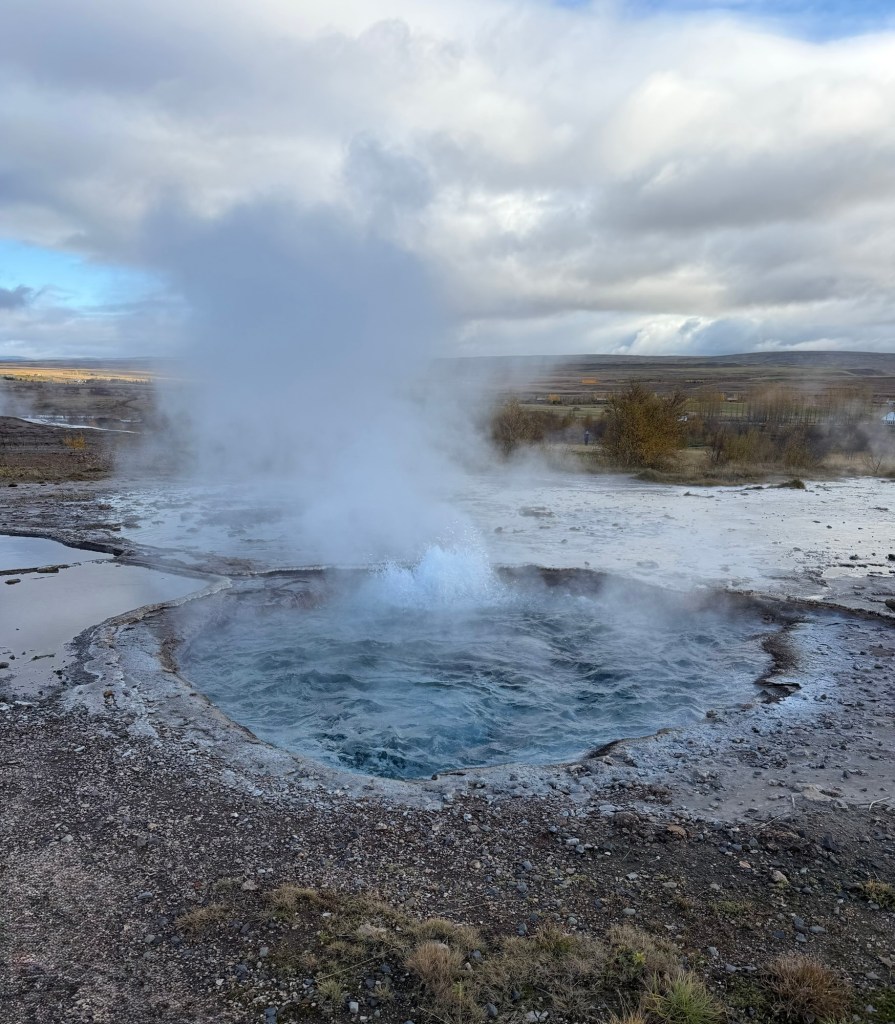
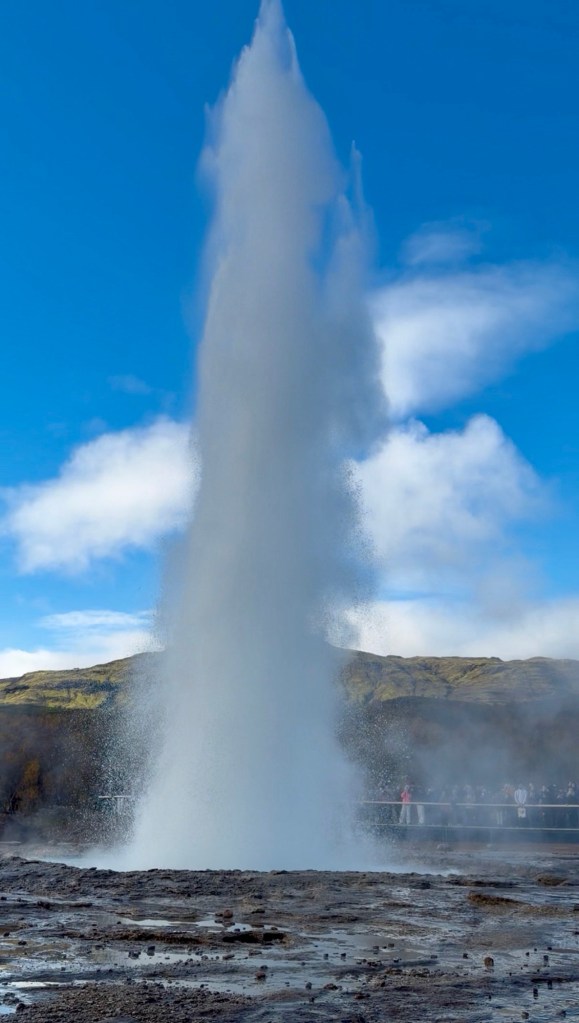
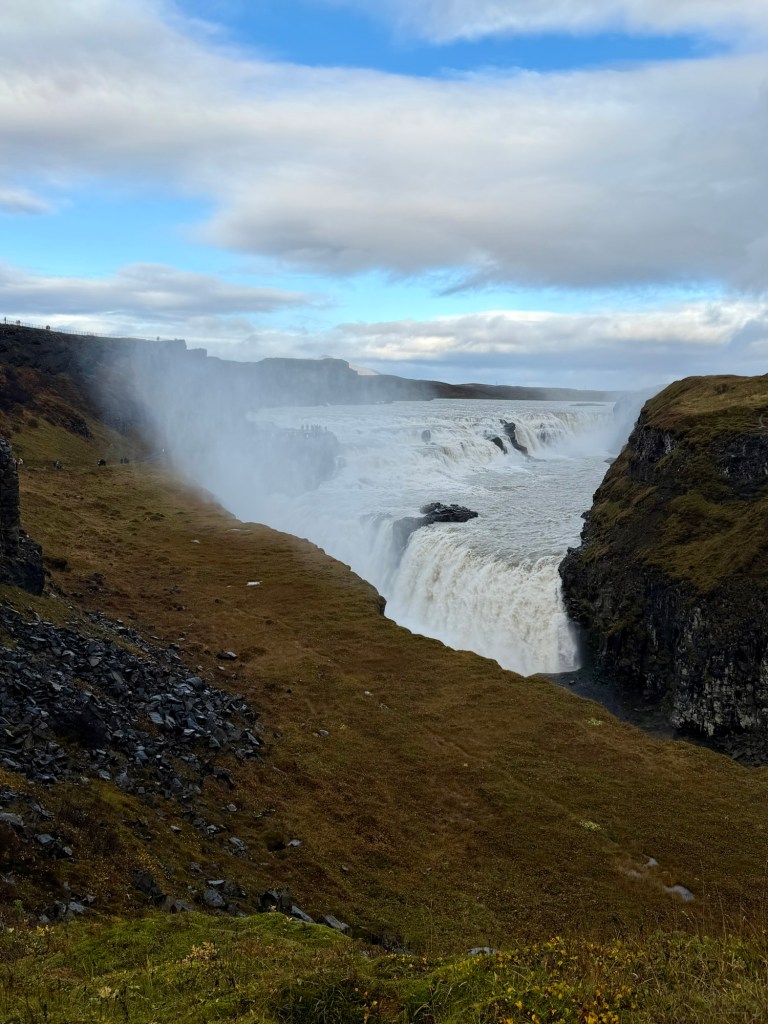
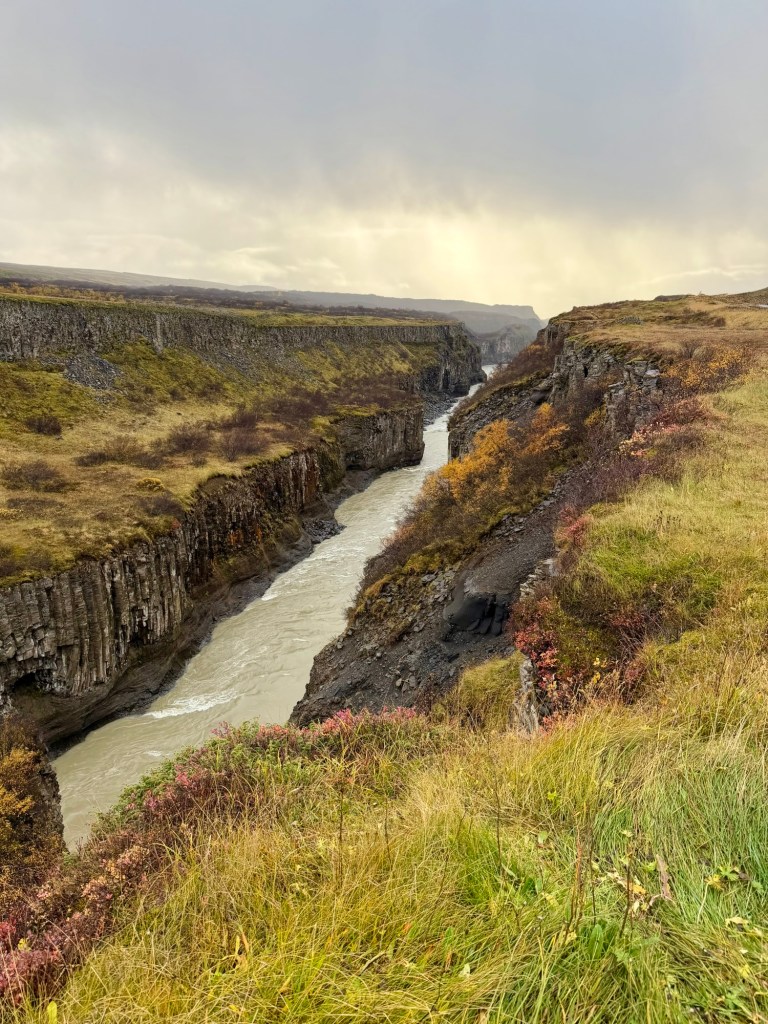
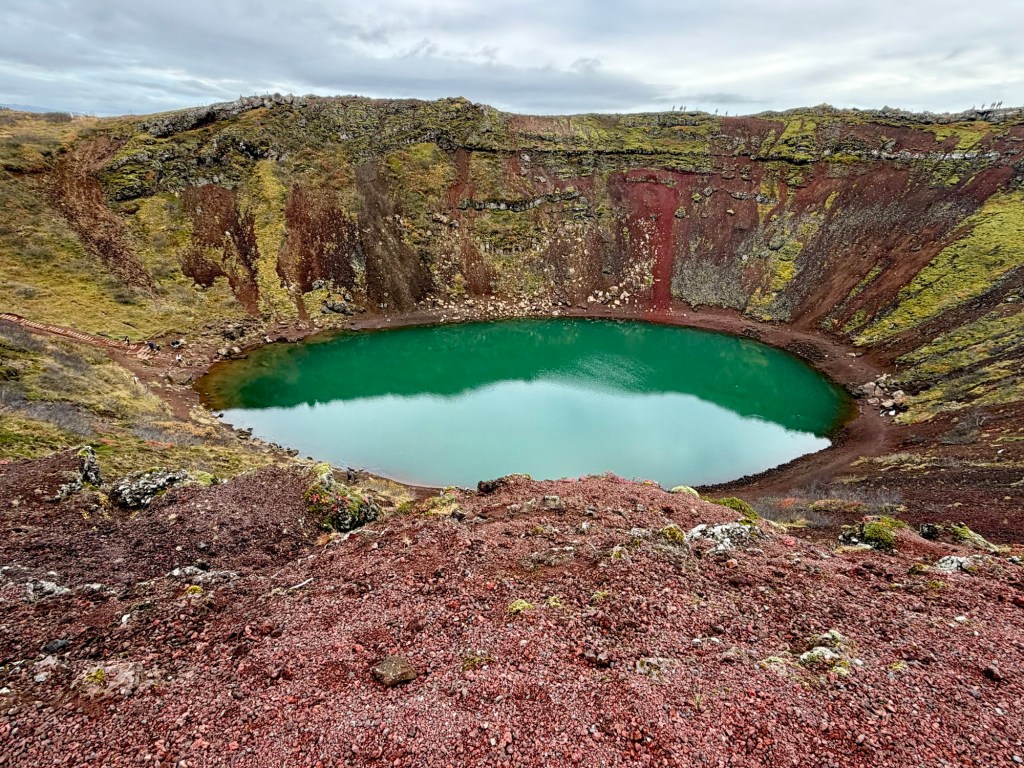
I hopped on a full-day bus tour from Reykjavik for a change of scenery (plus, I think I’ve seen just about everything there is to see in the city). I went on the popular Golden Circle Tour that visits some of Iceland’s most stunning sights, including Þingvellir National Park, the Geysir geothermal area, Gullfoss waterfall, and the Kerið volcanic crater.
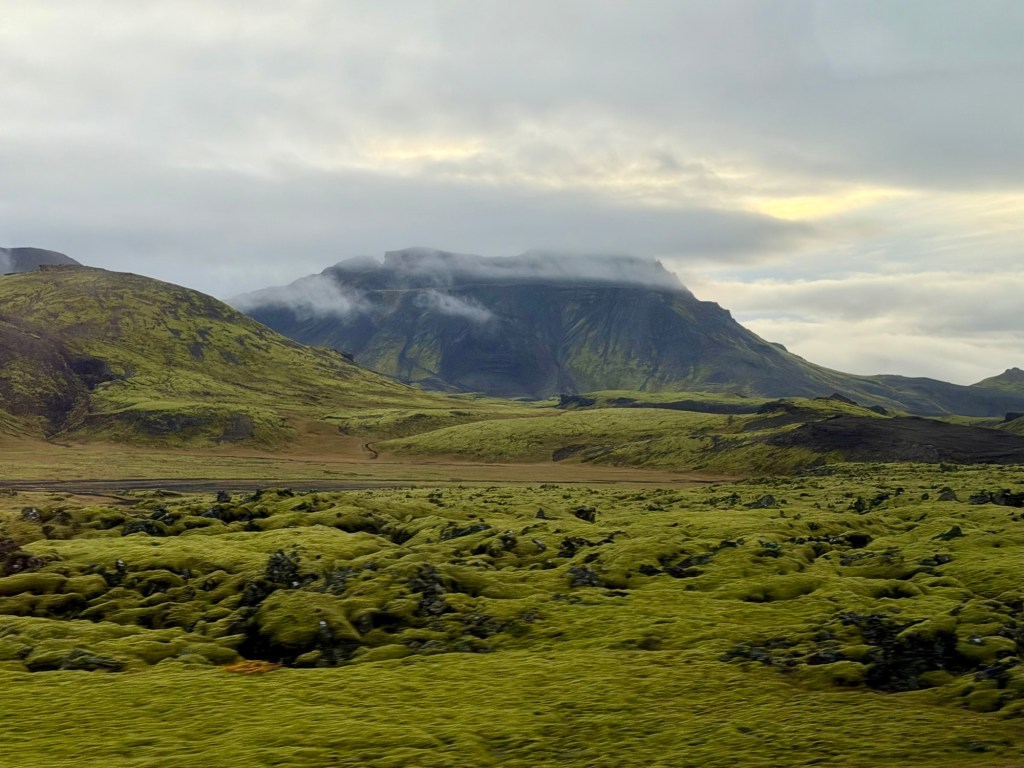
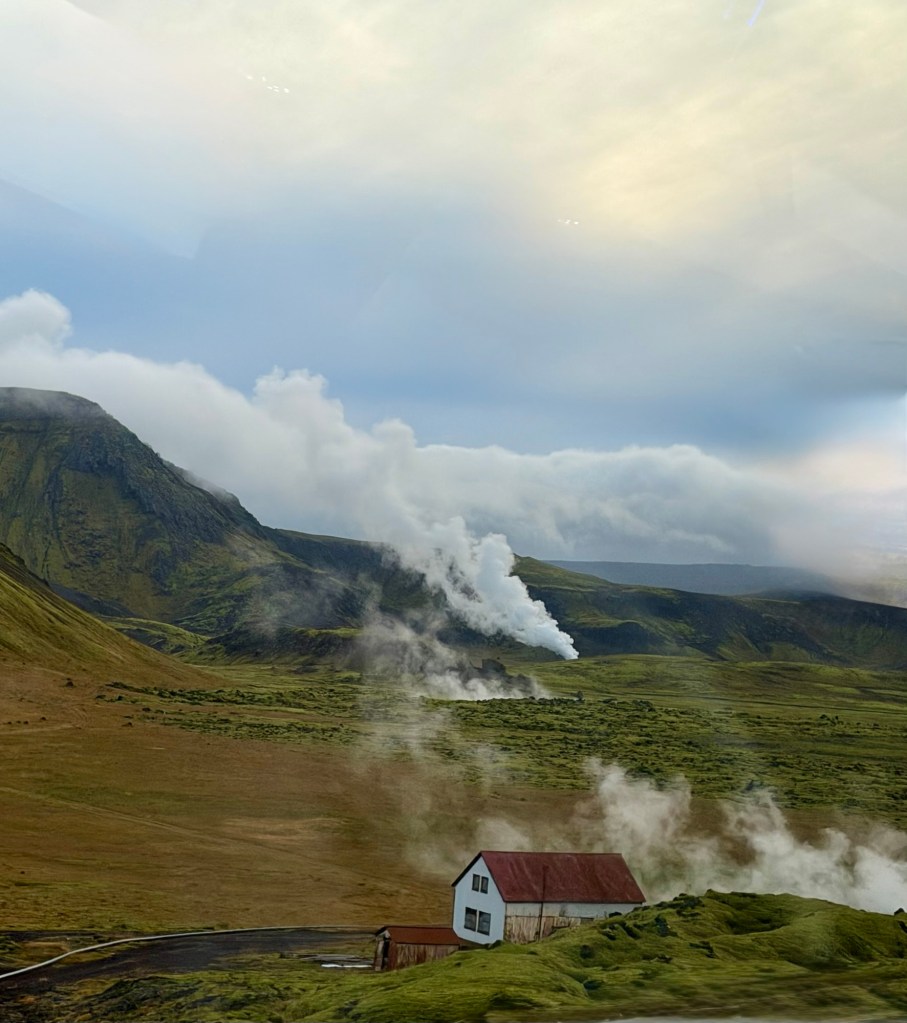
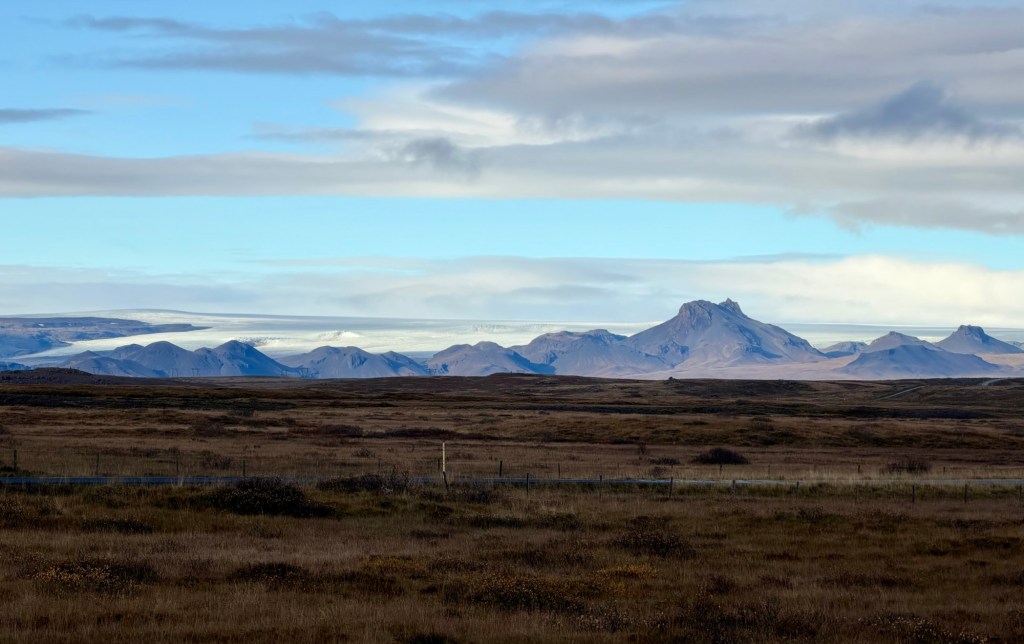
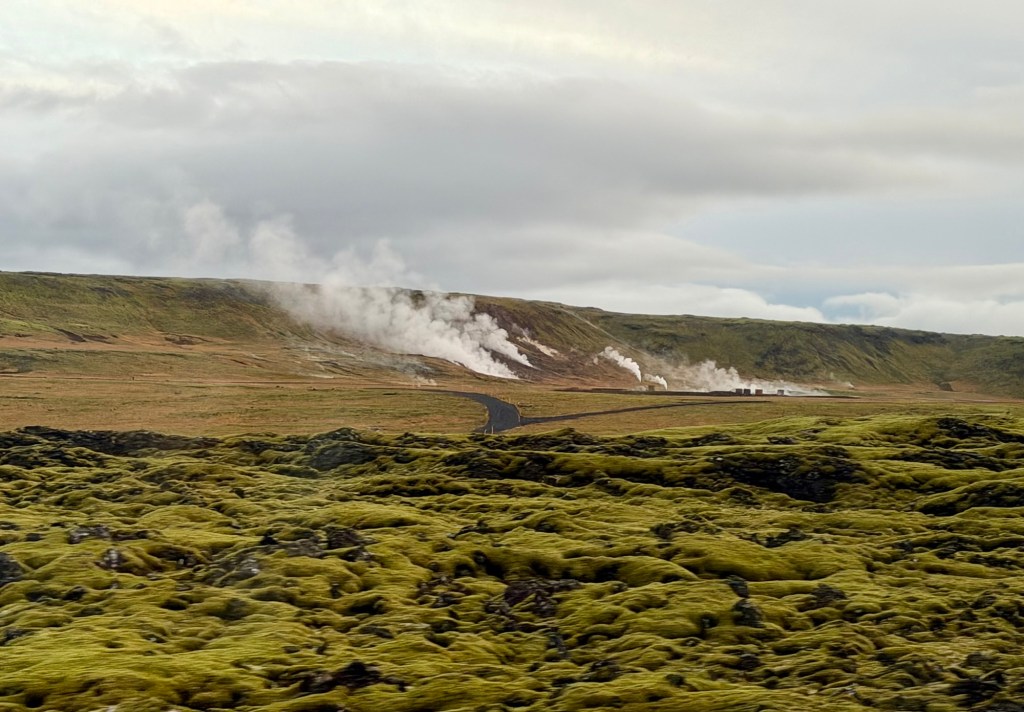
As we headed out of the city, I noticed an incredible variety of landscapes—from moss-covered lava fields and glacier-topped mountains to small hills forested with trees, along with massive chasms and rifts. Plumes of steam rose from various spots across the countryside, a reminder of Iceland’s ubiquitous geothermal activity.
Even being October, the parking lots at every attraction were packed, so I was especially glad to be on a bus. I’m definitely grateful that I got to see these incredible natural wonders, but the crowds were crazy—pretty much like every touristy place in the world these days. I’m always open to suggestions for future travel ideas that are more off the beaten path!
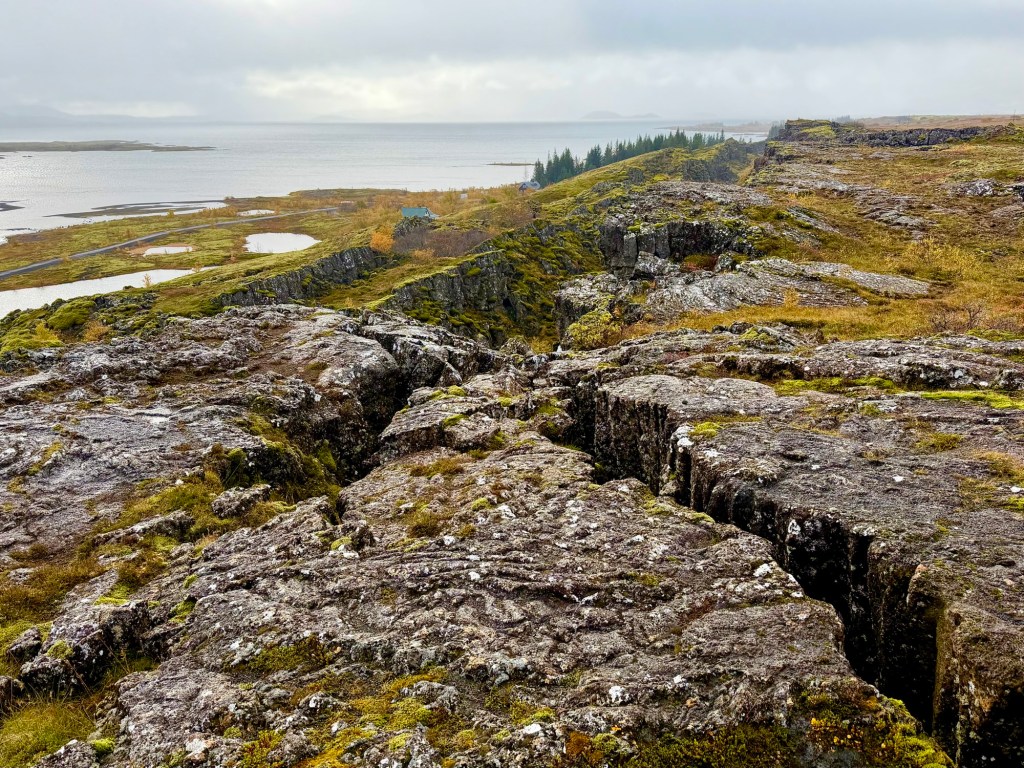
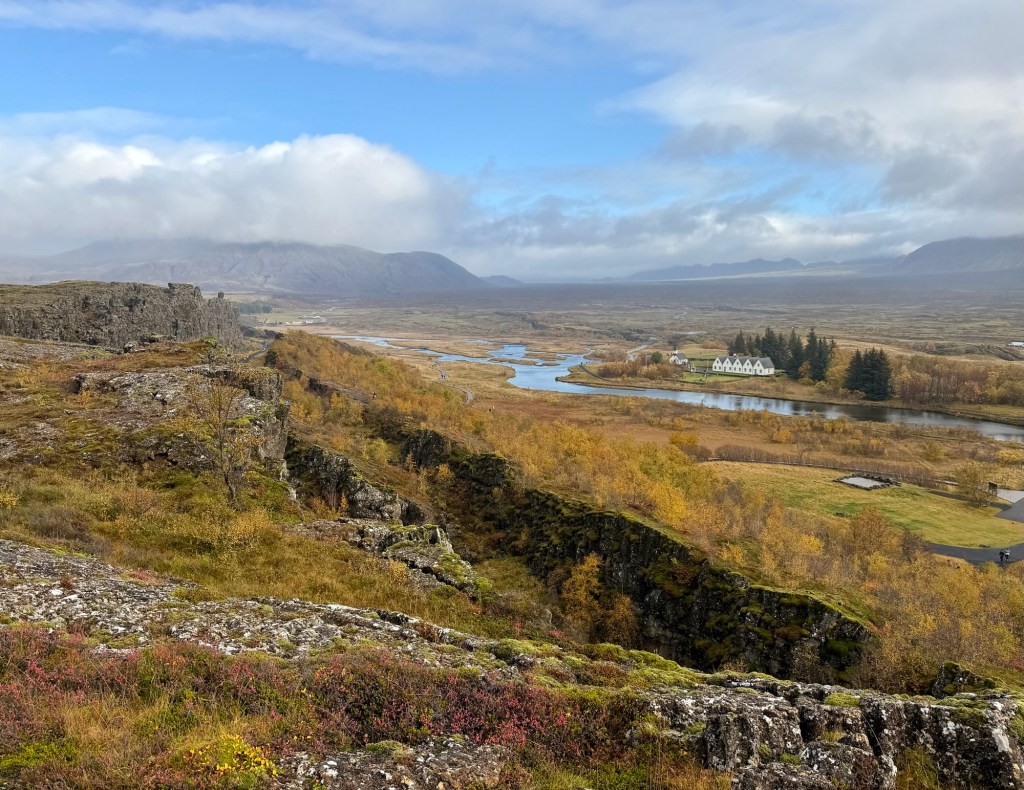
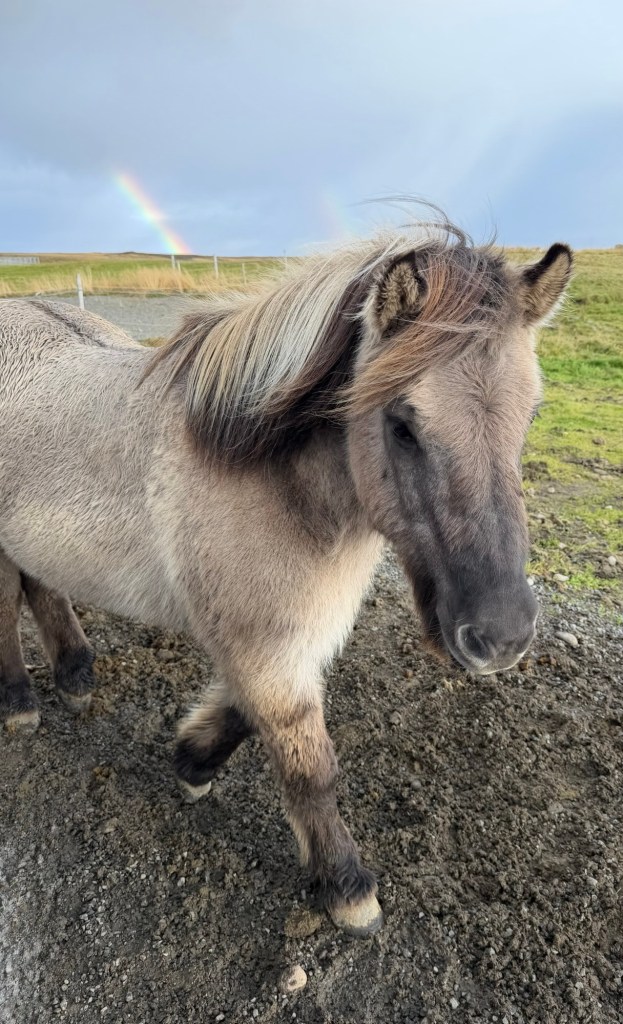
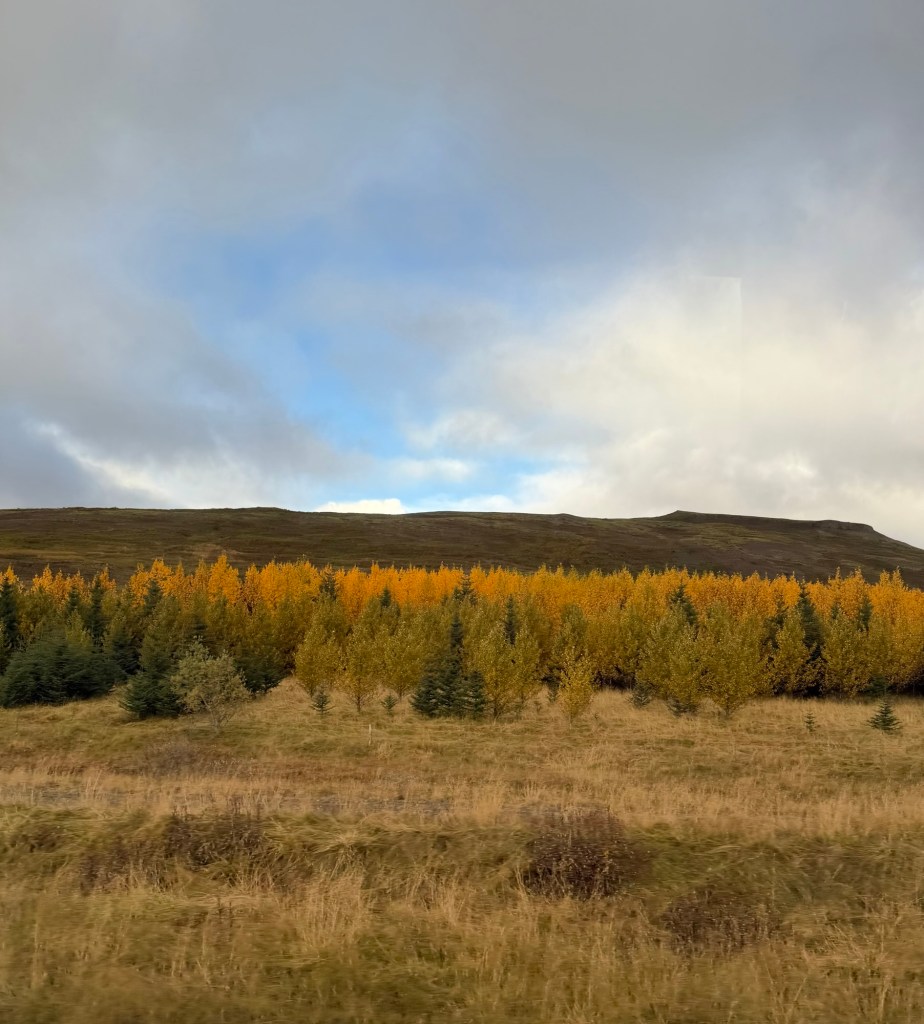
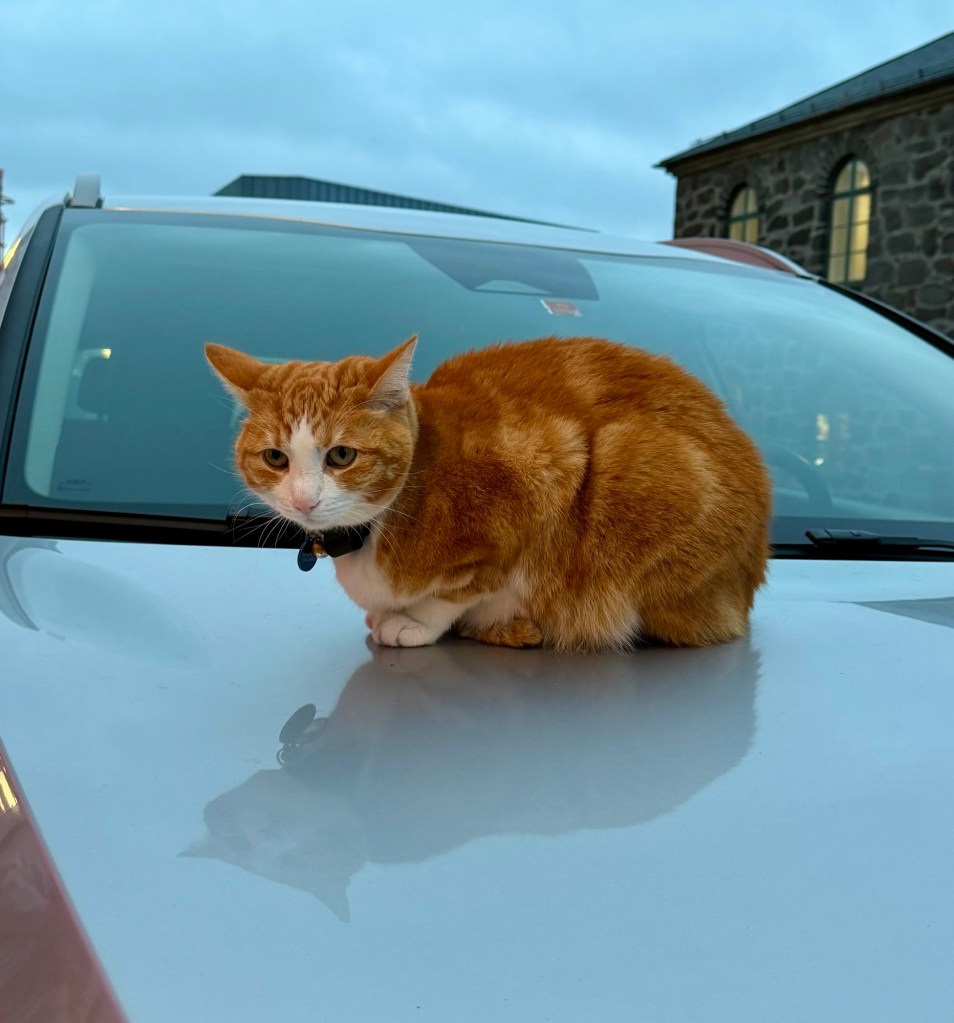
Þingvellir National Park—the edge of the North American Tectonic Plate Geysir Geothermal AreaThere were too many people for me to get close which was good because the closest observers got sprayed with pungent egg-water!Massive Gullfoss WaterfallChasm carved out by GullfossKerið Volcanic Crater An Icelandic HorseAutumn coloursBlue hour Cat
I walk a lot, usually 8–10 km a day, and tend to avoid the busy tourist streets so I’m always seeing new things.
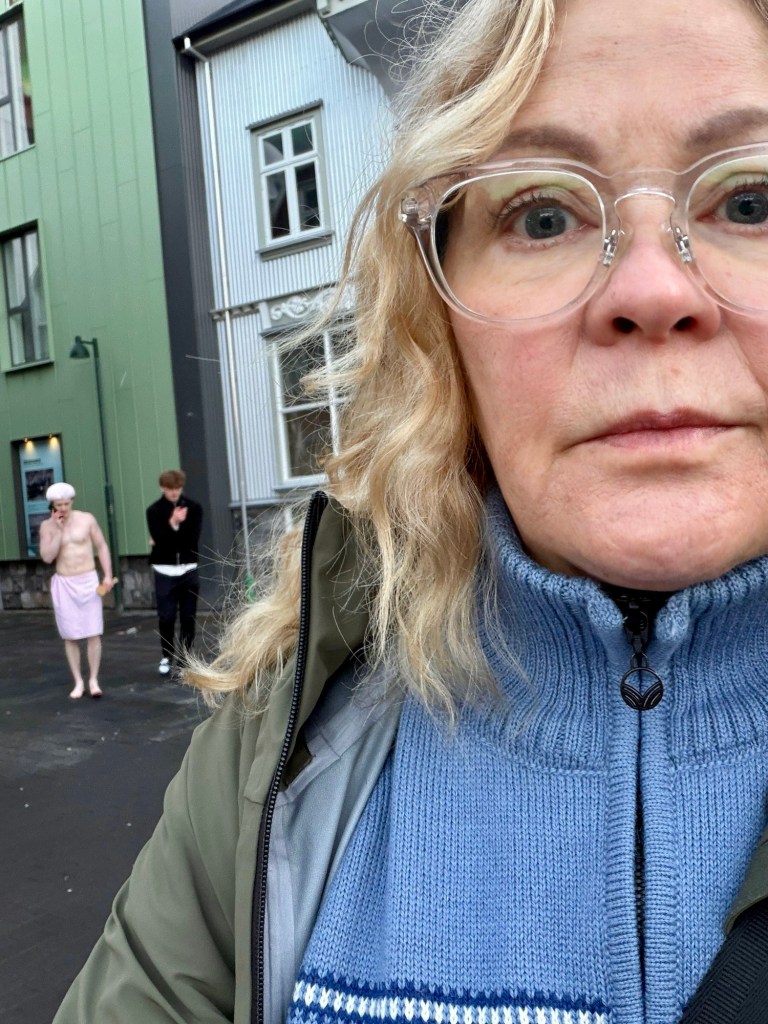
Walking around Old Reykjavik I noticed a young man walking down the street in a towel and shower cap, talking on his cell phone.
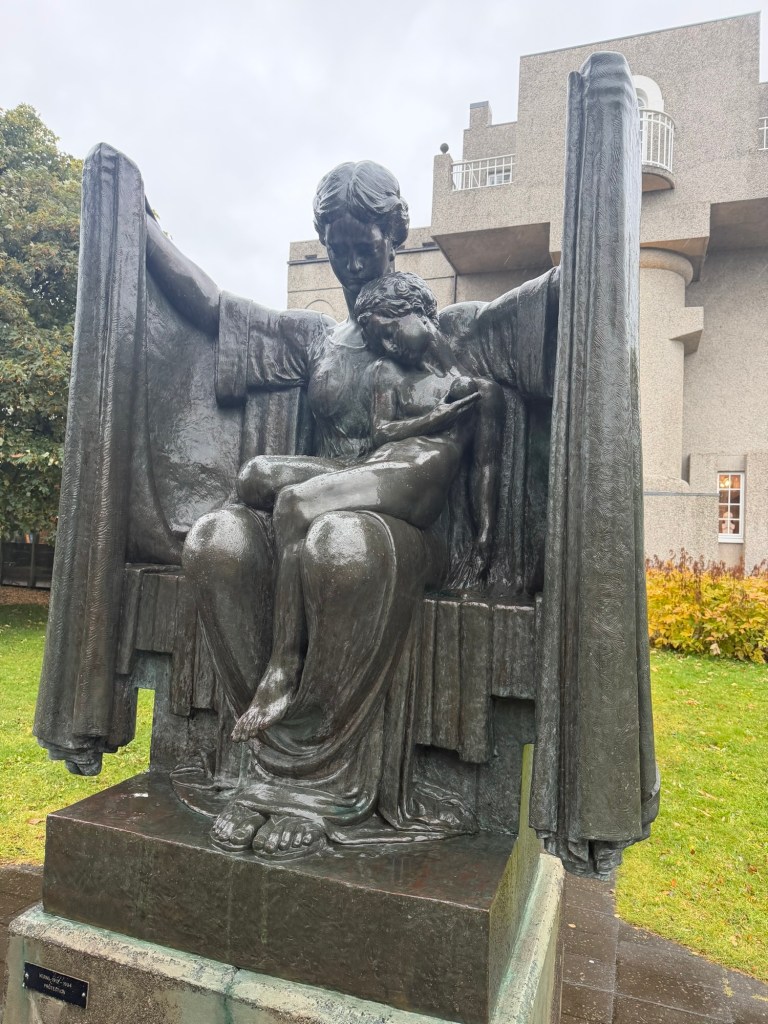
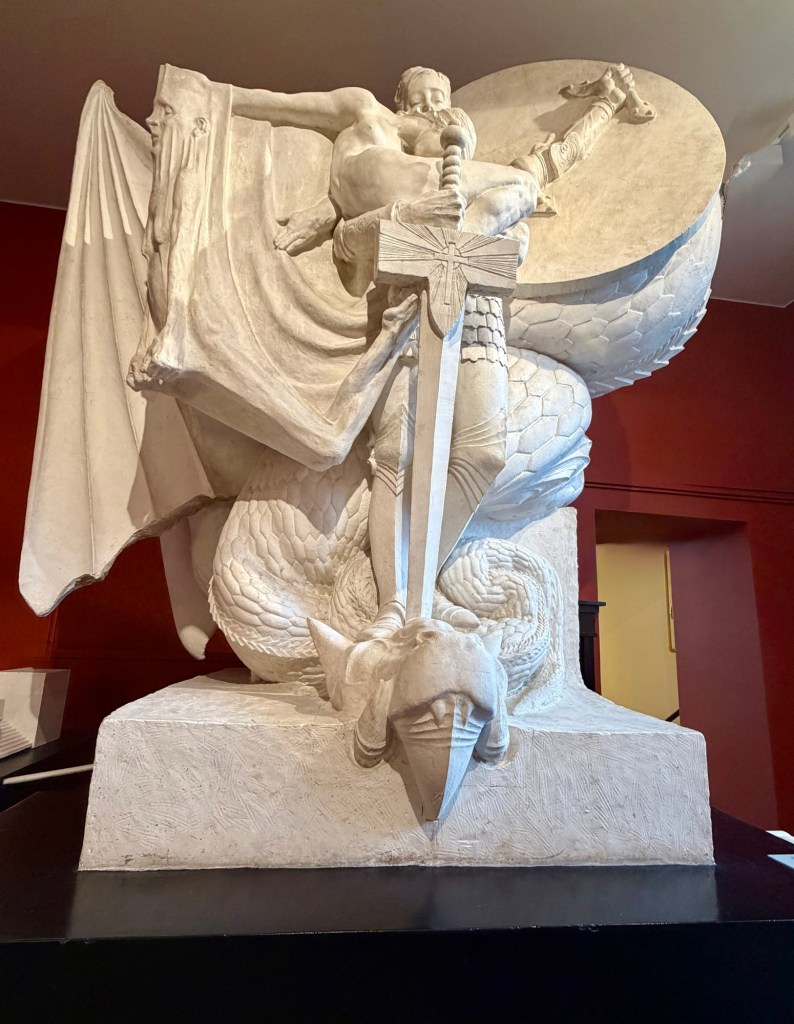
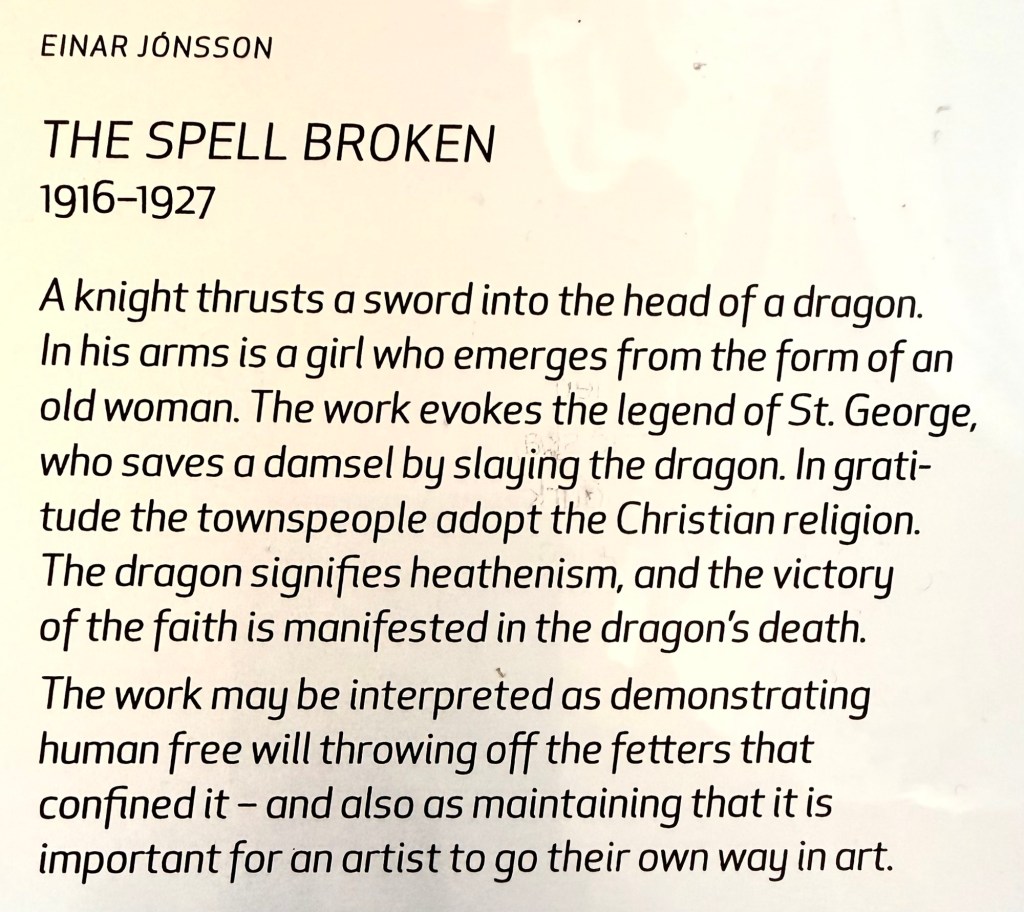
Tucked around the corner from me, I discovered the Einar Jónsson Museum and Sculpture Garden. I’d never heard of Jónsson, though he’s apparently quite famous in Iceland.
The sculpture garden behind the Einar Jónsson Museum is free to visit. It’s a peaceful haven away from crowds.
His huge collection of highly symbolic sculptures was fascinating, though some of his later works were sometimes overly mystical. “Far out” seems fitting for some of the ideas and the sculptures themselves.
Can you interpret this? See below ⬇️
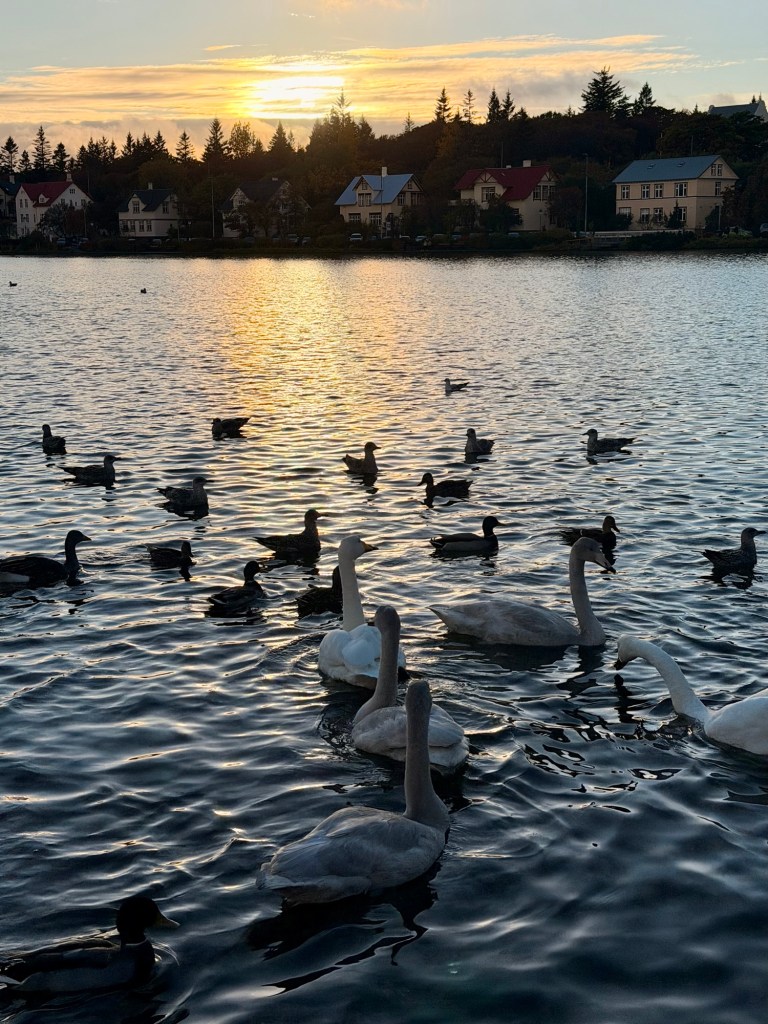
One of my favourite walks leads to Tjörnin, a placid little lake where I’ve often visited the birds. Unfortunately, it’s also beneath the flight path of planes descending into the municipal airport, which occasionally roar closely overhead.
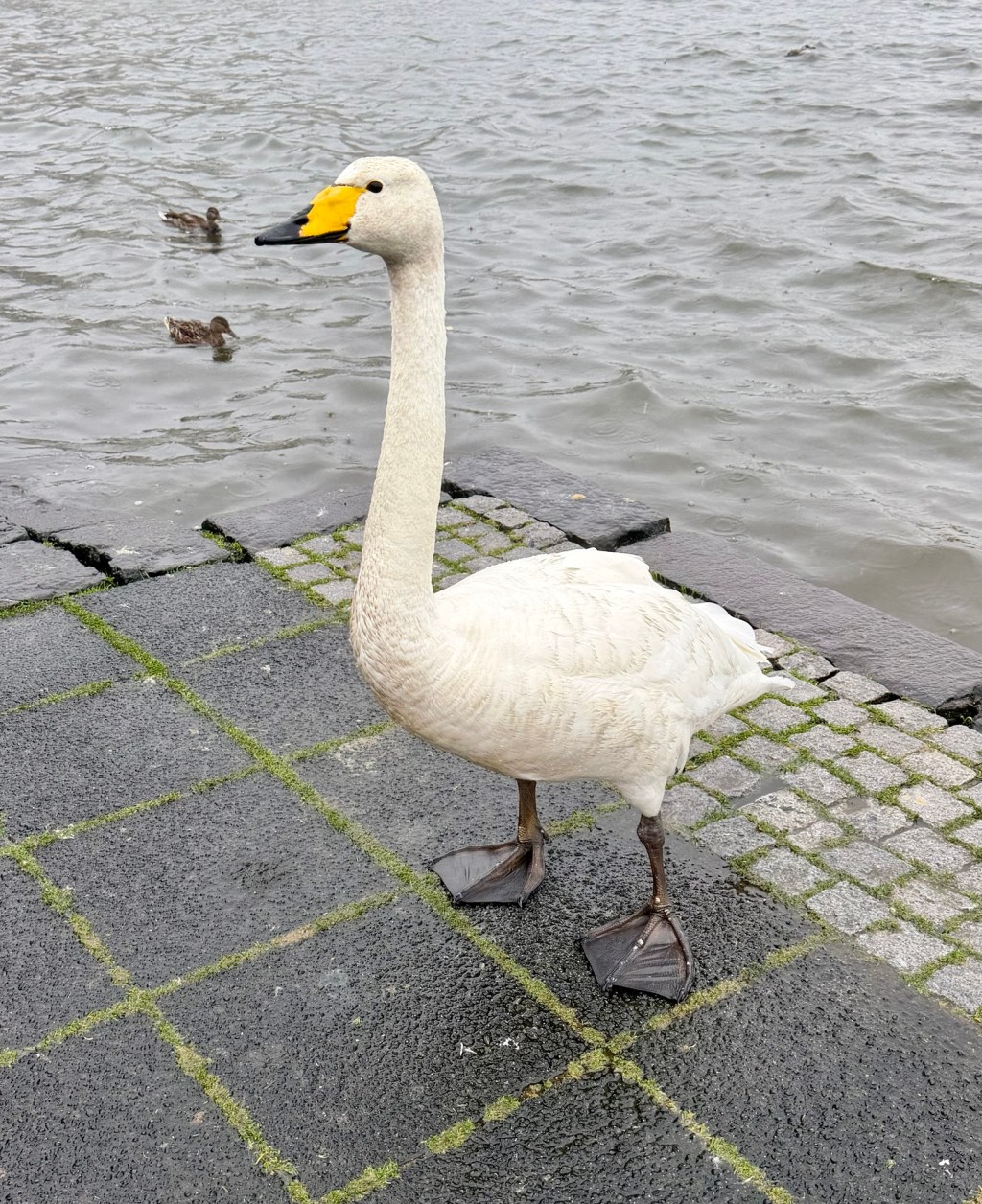
Birds at Tjörnin
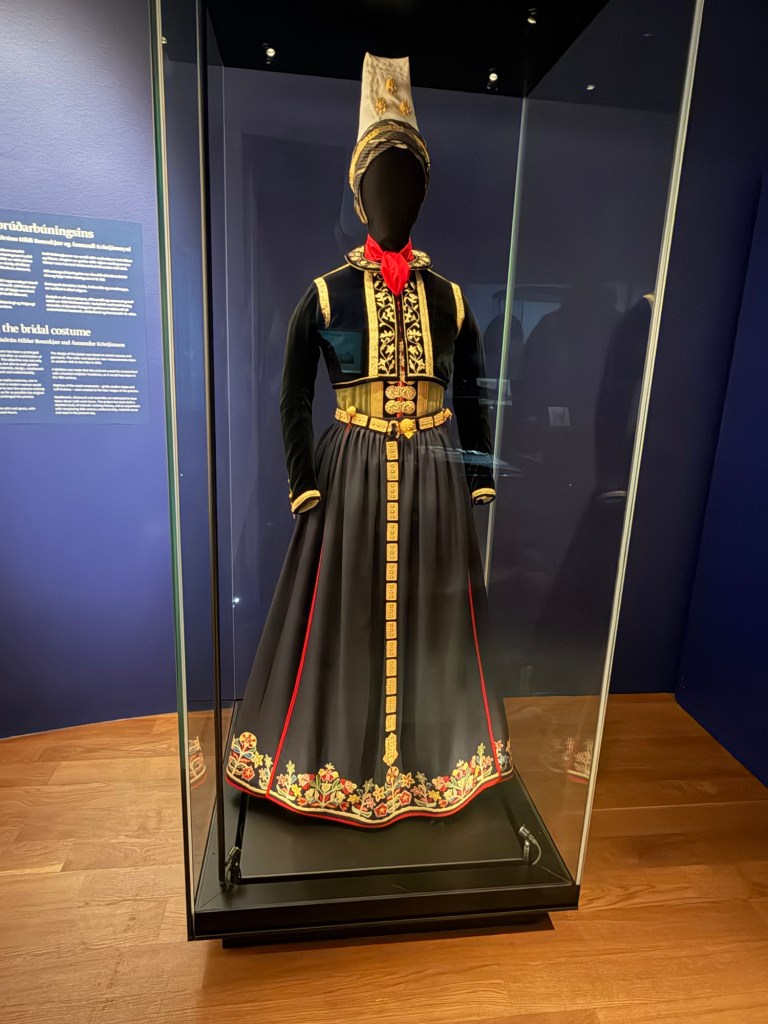
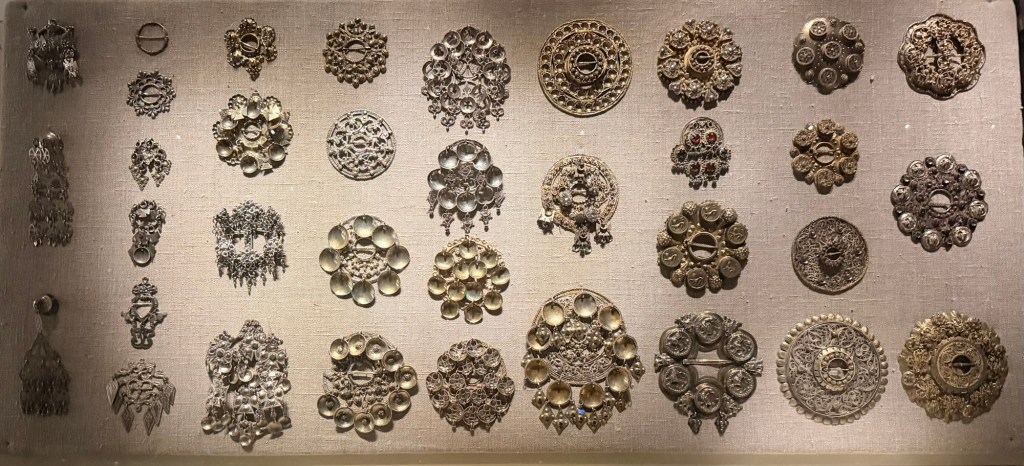
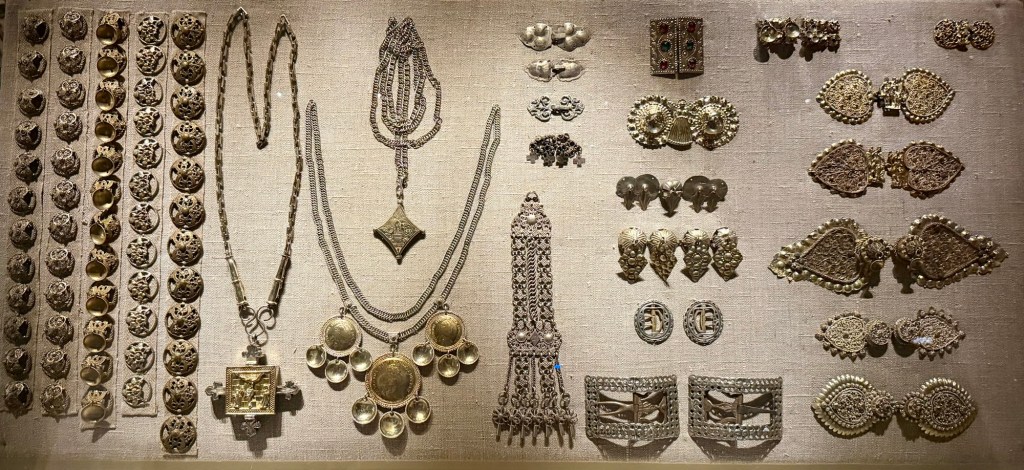
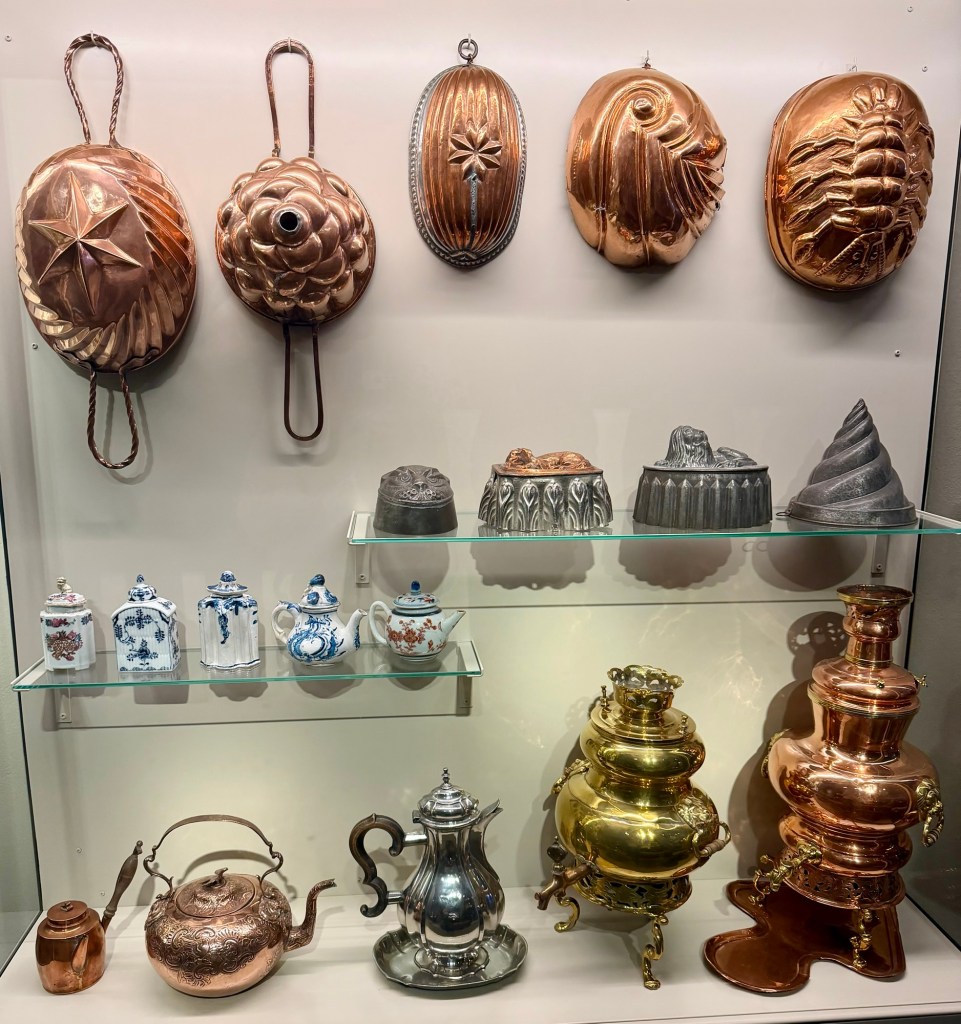
I spent a couple of hours at the National Museum of Iceland, which offers a comprehensive look at Icelandic cultural history. I noticed many parallels with Norwegian culture.
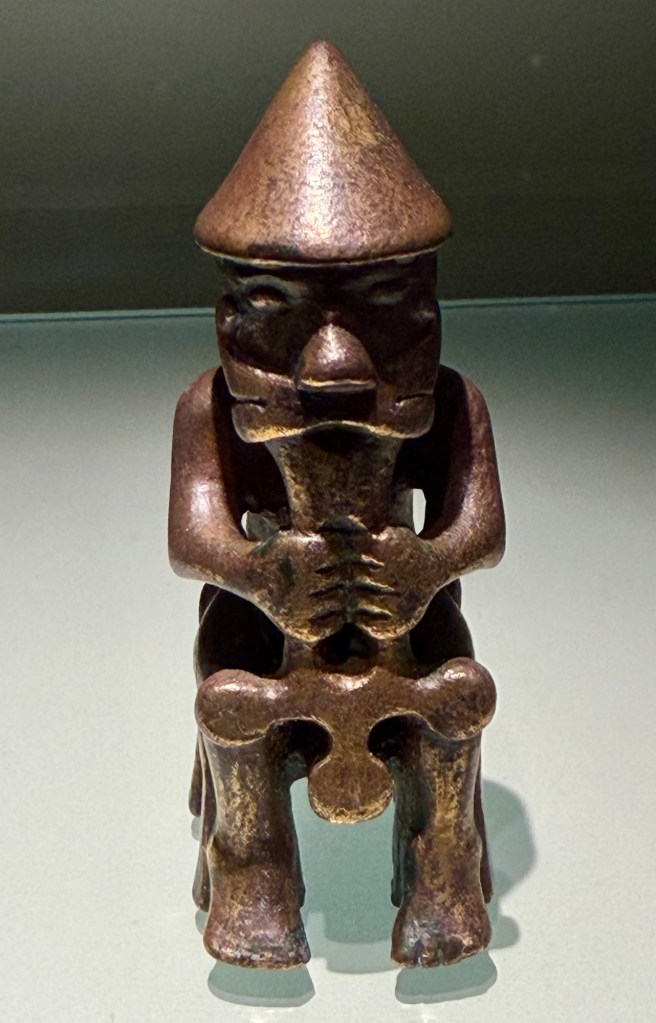
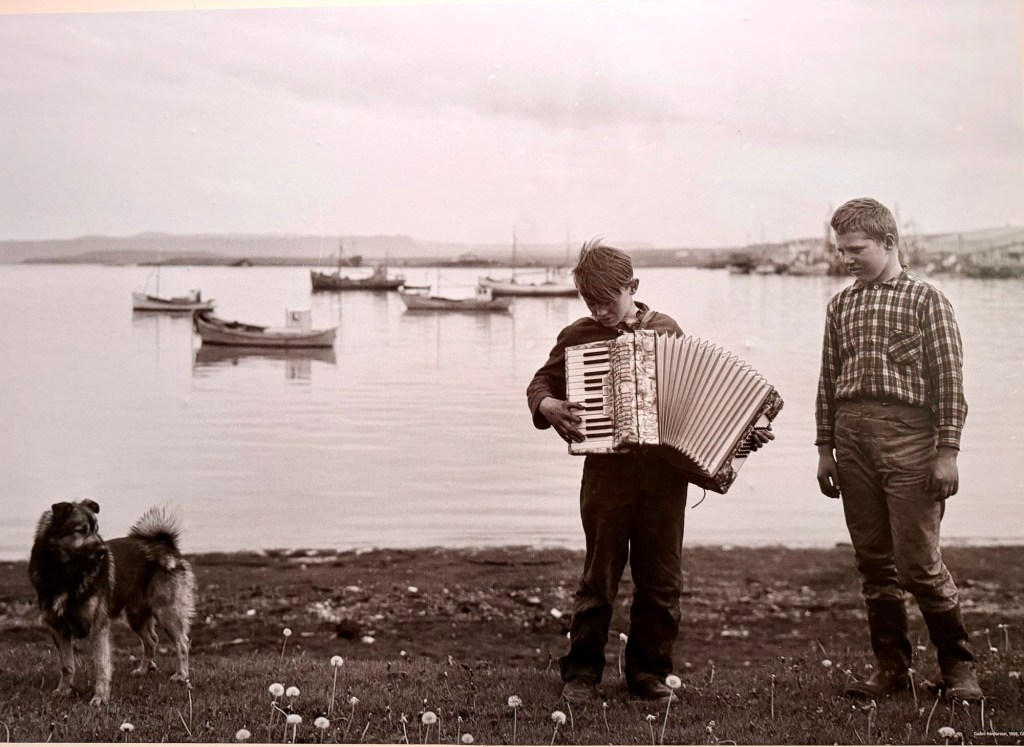
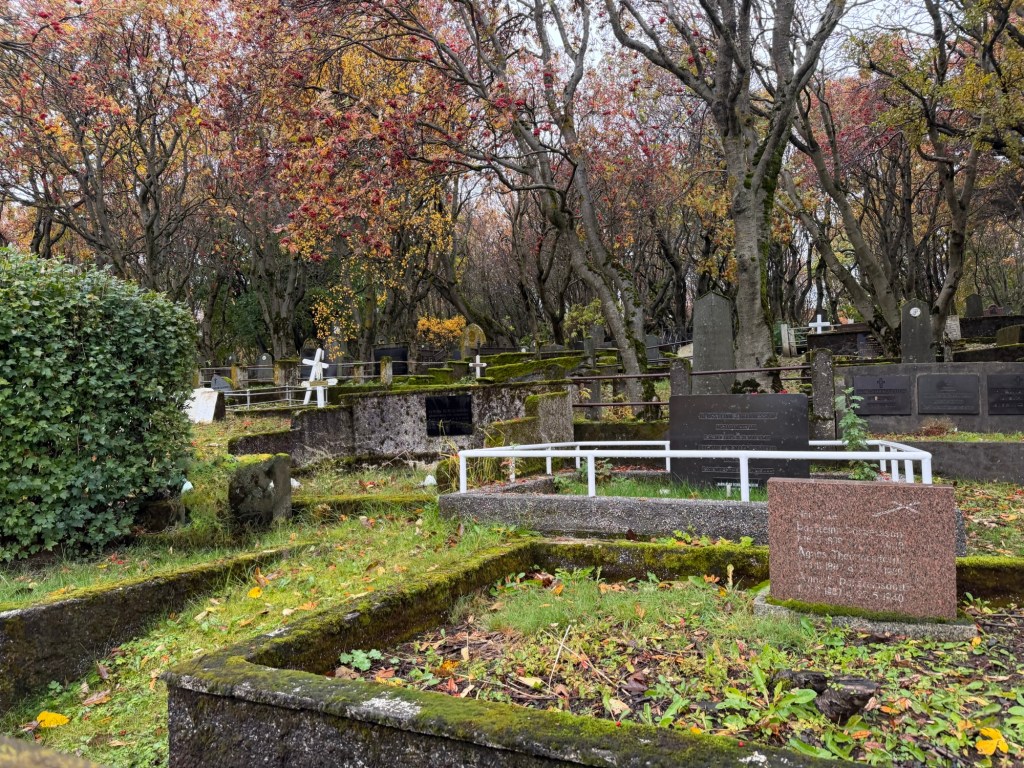
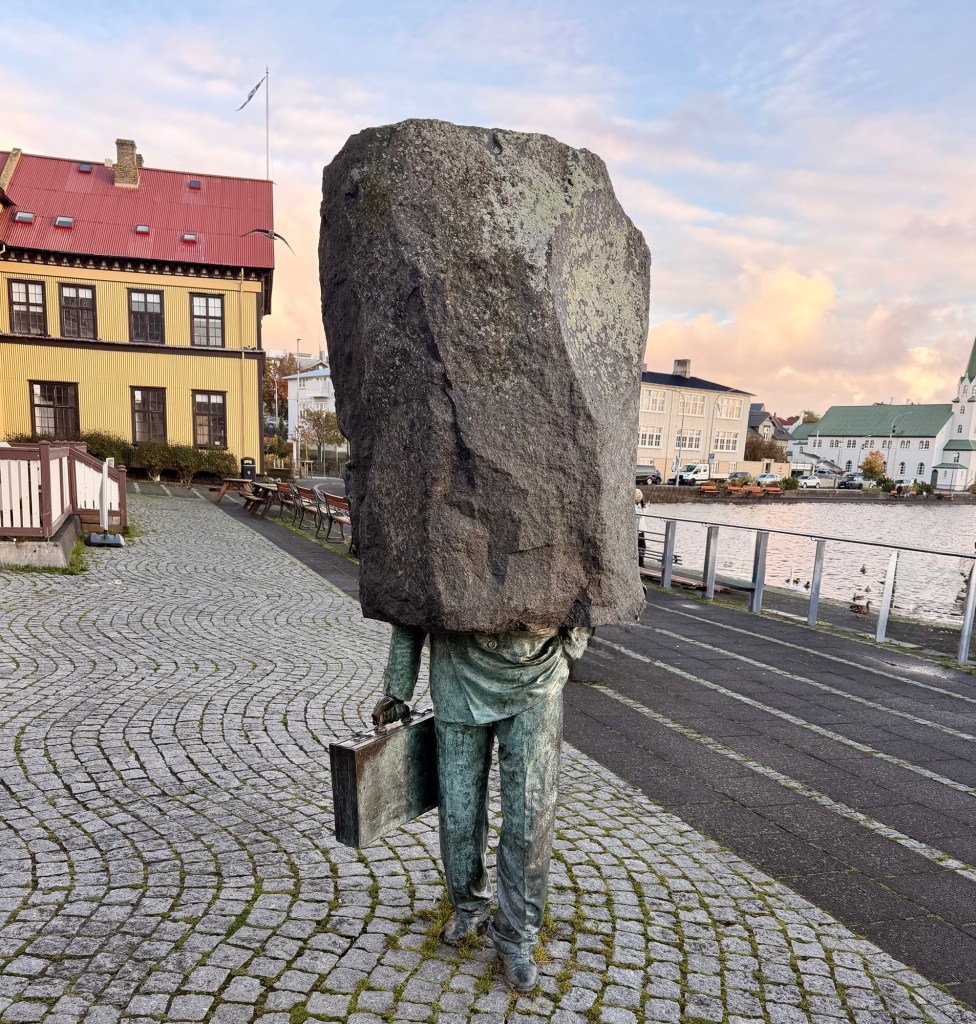
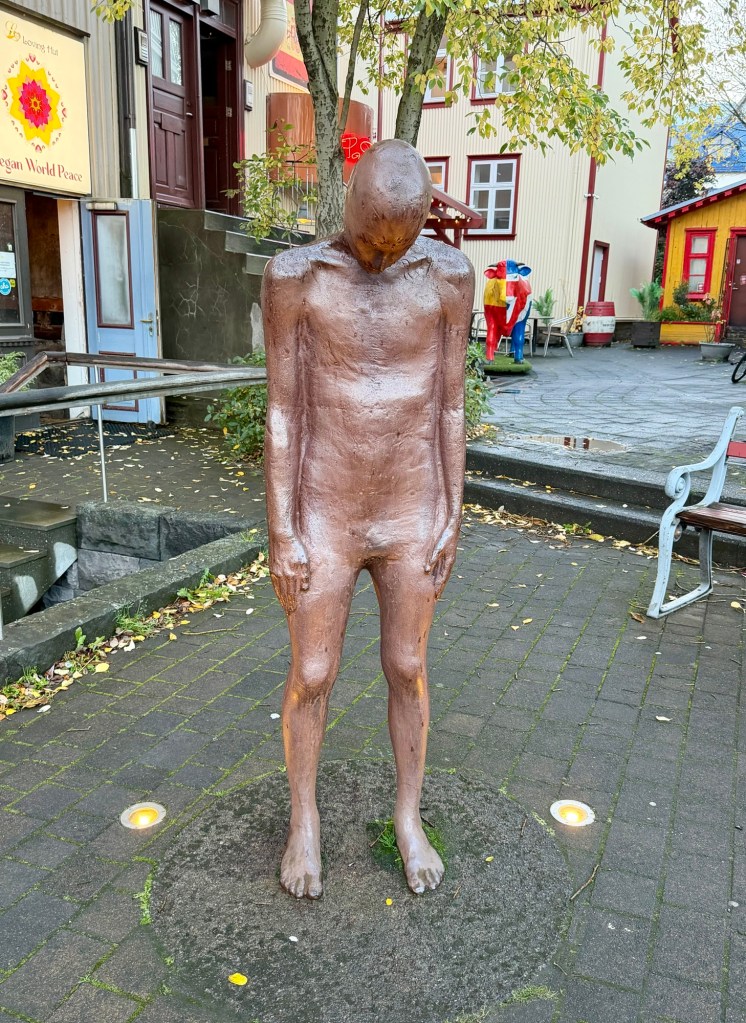
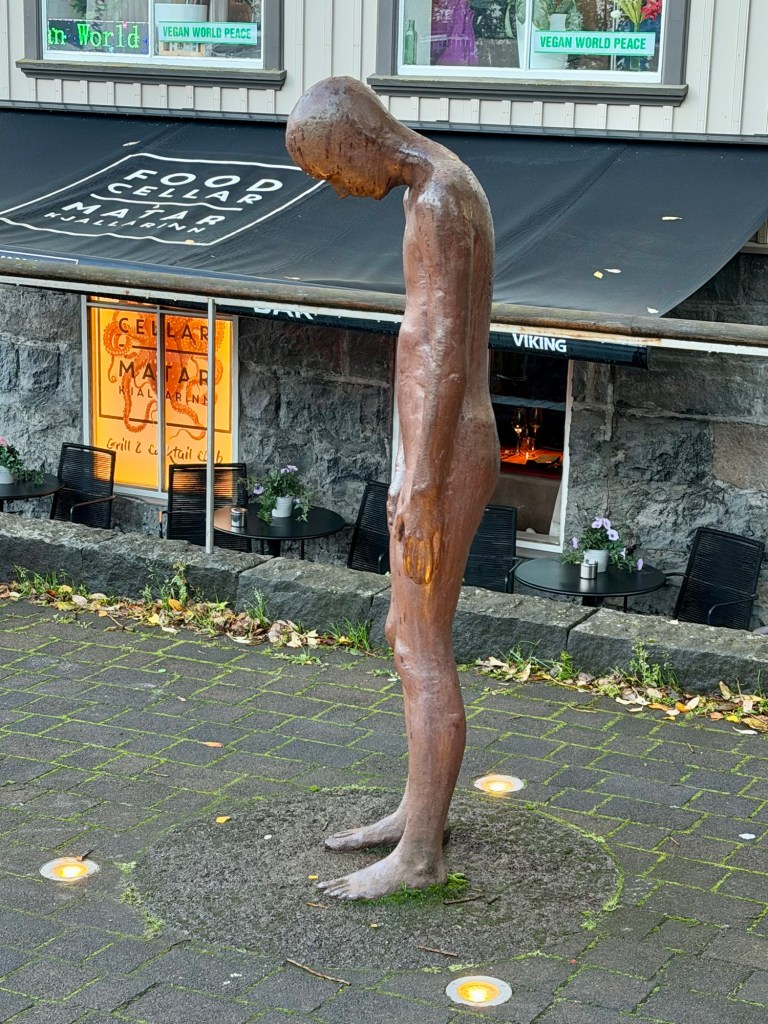
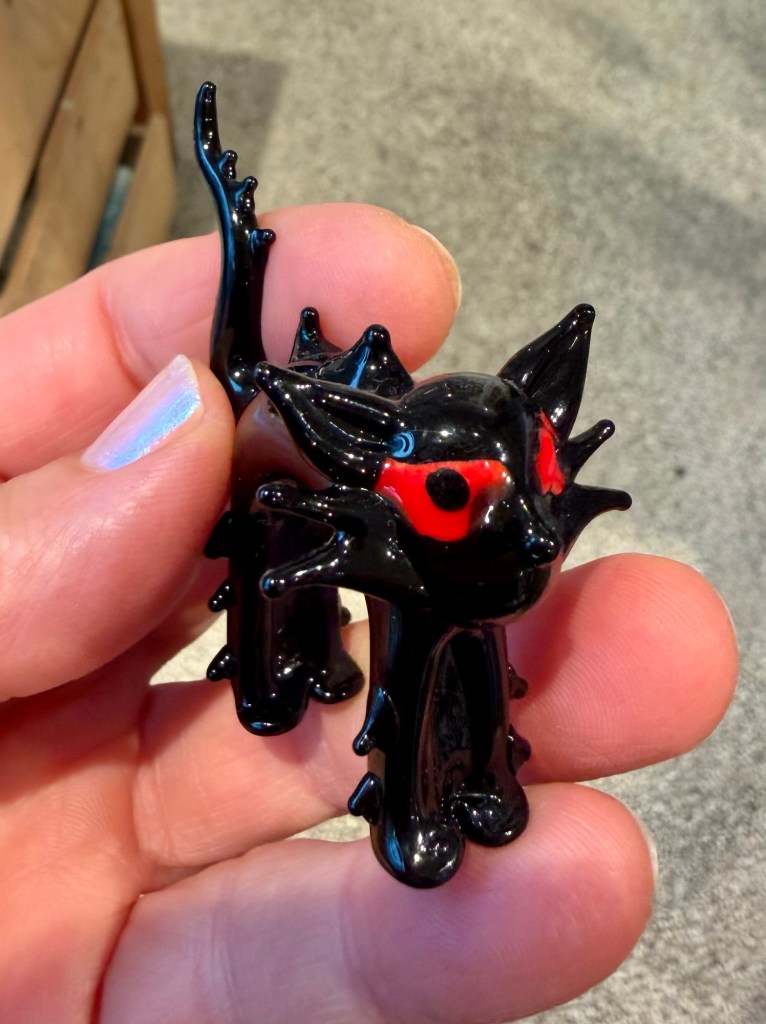
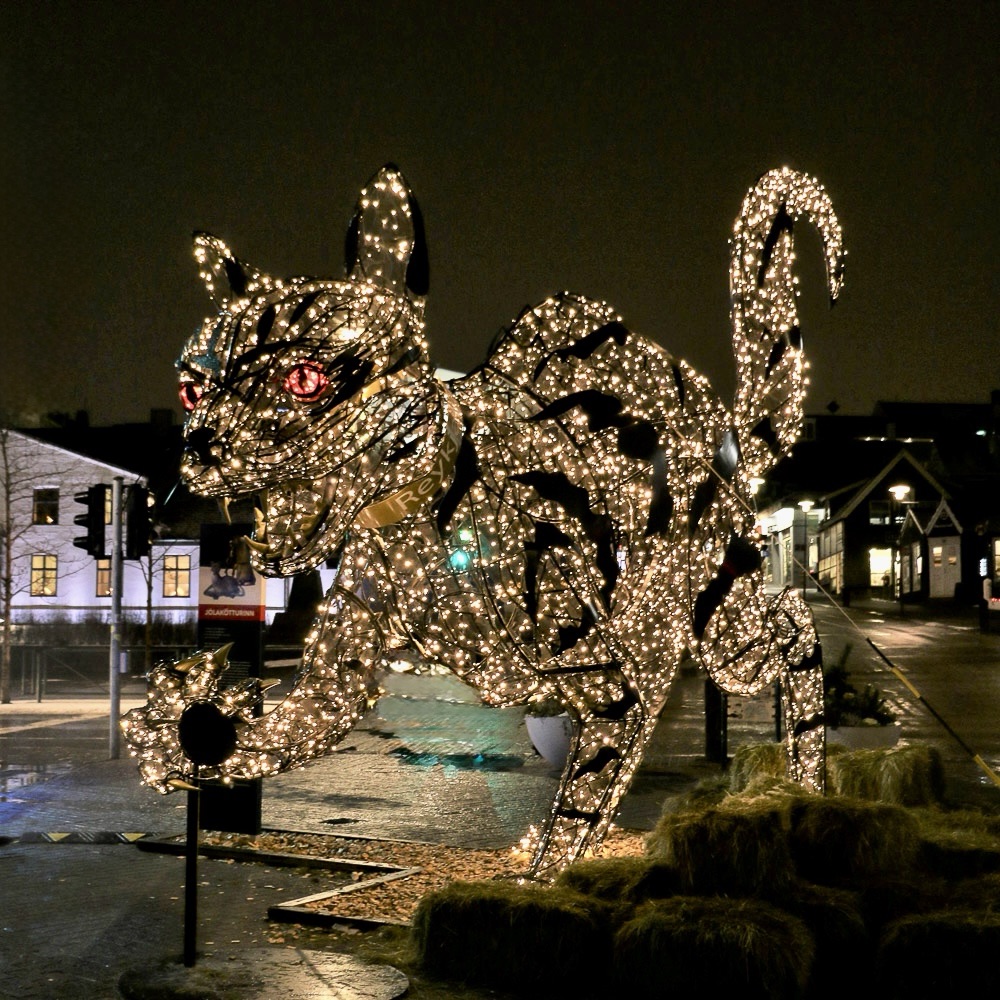
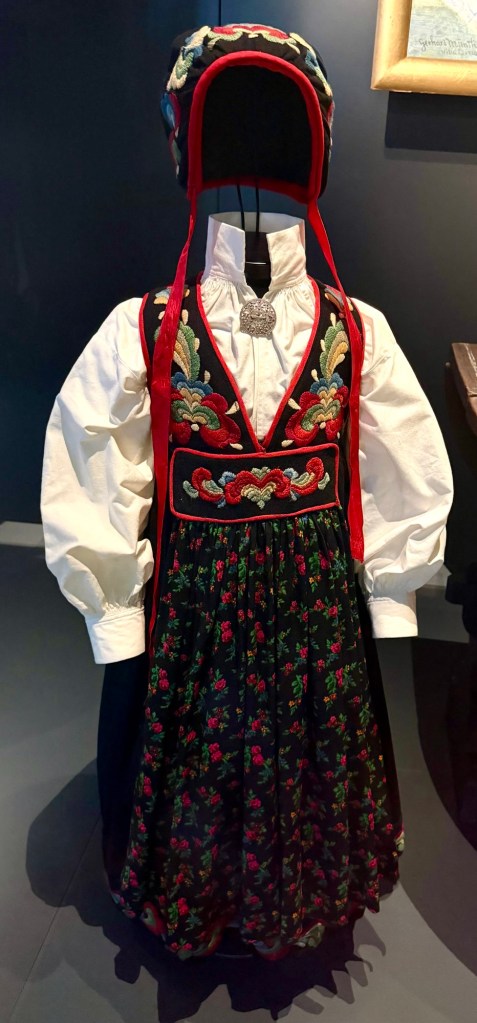
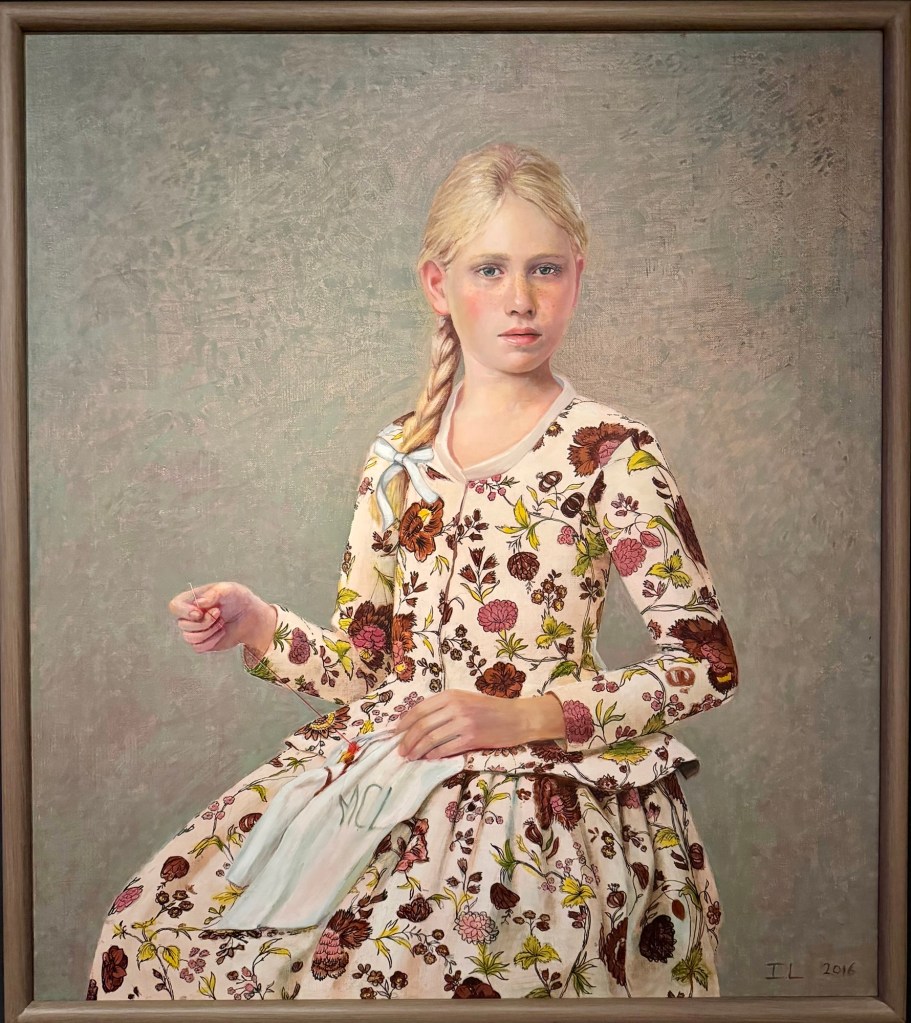
Icelandic bridal costume, similar to the Norwegian bunads.The EyrarlandStatue, a small bronze piece from ~1000 AD. Is it Thor? A game piece? Or even Christ? The debate will forever rage on. The museum even had a dog and cat exhibit. I love this picture!Heading home from the museum, I walked around this historic graveyard. Monumenttothe Unknown Bureaucrat, a satirical sculpture near city hall. Horfur/Outlook, a universal symbol of vulnerabilityPoor guy…or is it a girl?I’m the world’s biggest Yule Cat fan. According to Icelandic folklore, this huge, vicious mythical cat prowls the countryside and eats anyone who doesn’t receive new clothes before Christmas Eve. Now I have my own Yule Cat to hang on my tree. The outdoor Yule Cat is being erected in one month!Typical Icelandic weather, though I’ve been lucky up till now!
I’ve been exploring Reykjavik for a couple of days, and I’m enjoying the colder weather. It’s not hard to spot the locals from the tourists. This has inspired me to compose another one of my really bad haikus:
Dress Code = Completely Inconsistent
Ball caps, tees, and shorts Snow pants, parkas, furry hats Winter boots, flip-flops
I’ve been mistaken for a local repeatedly so I’ll take that as a compliment.
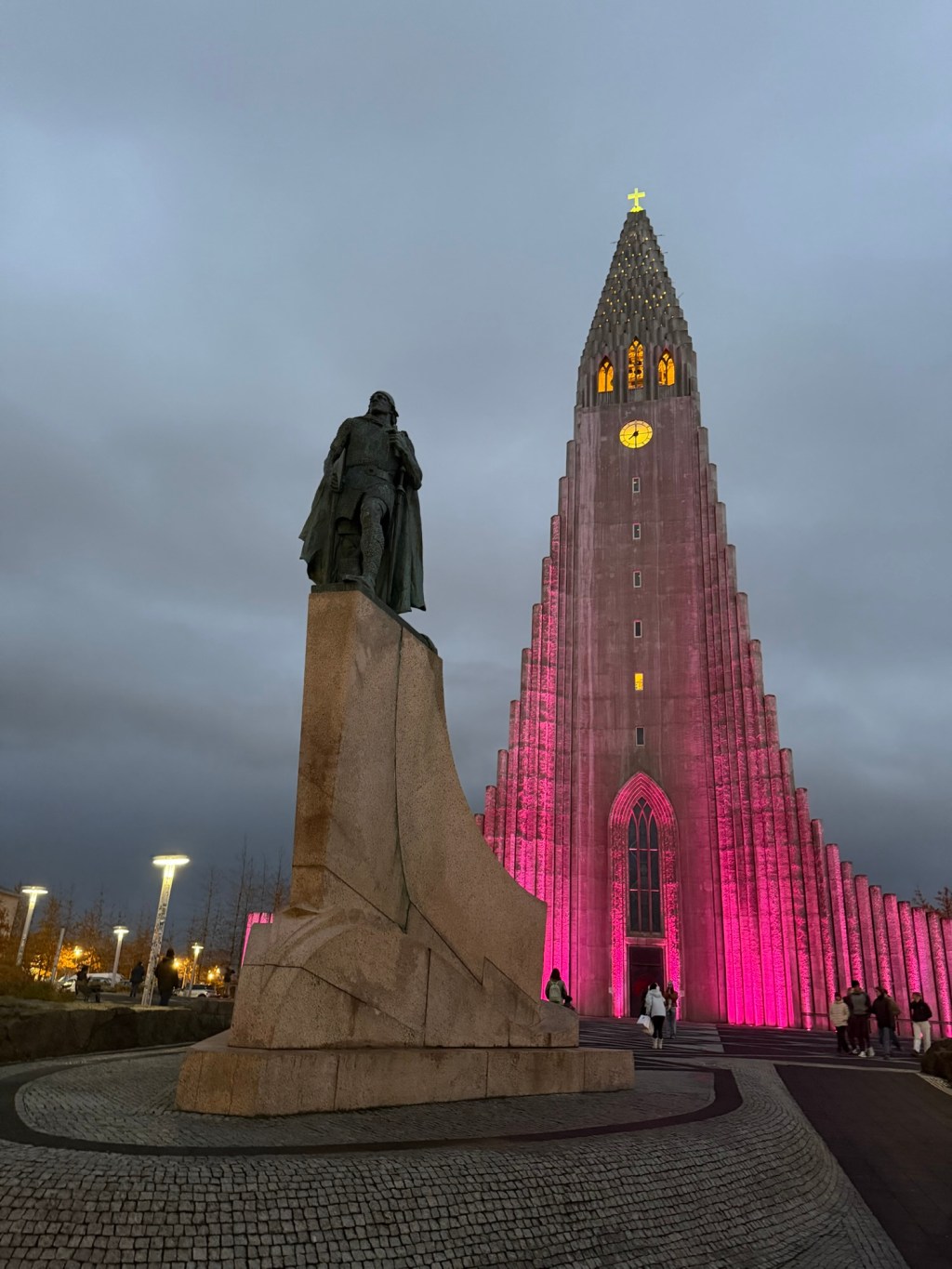
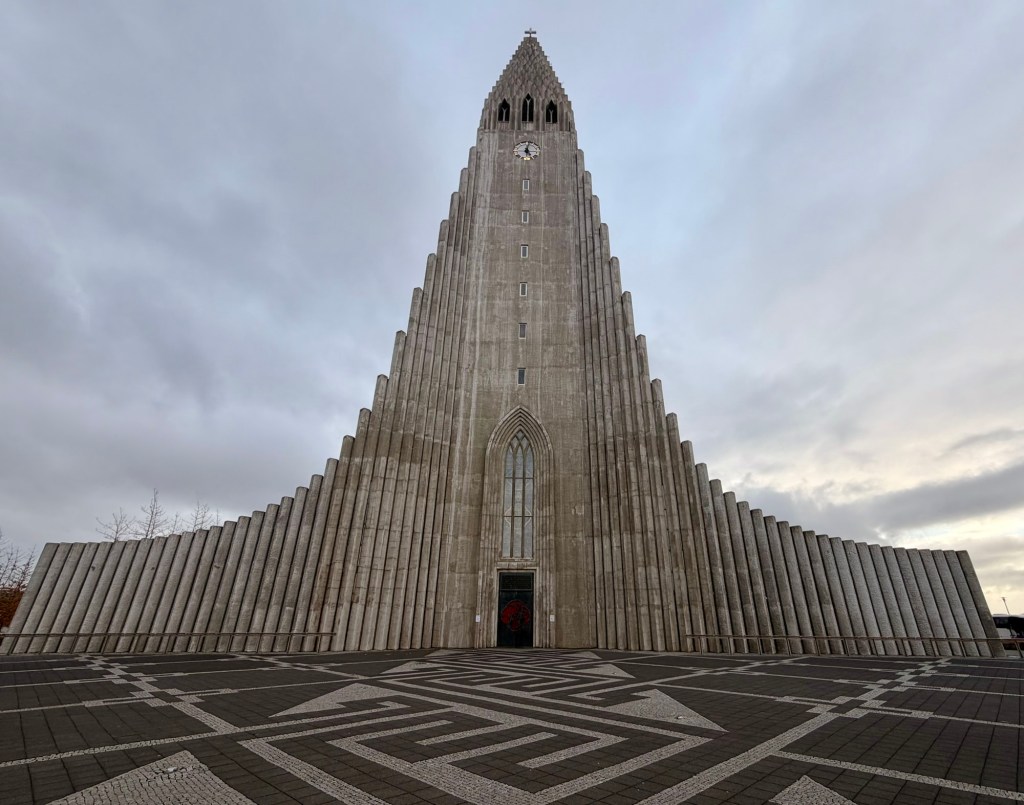
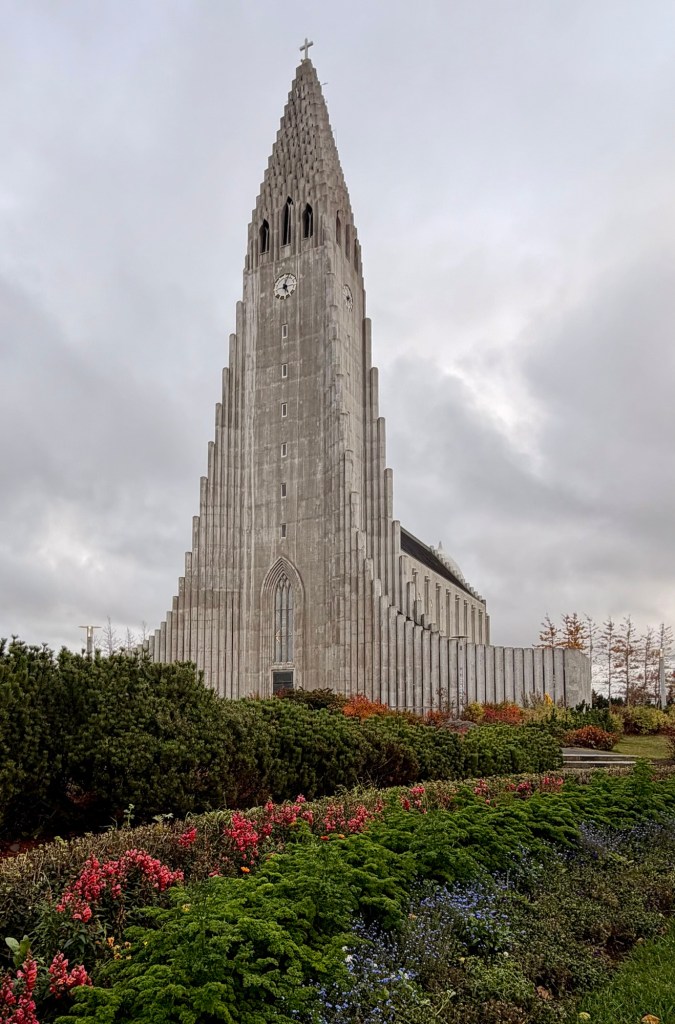
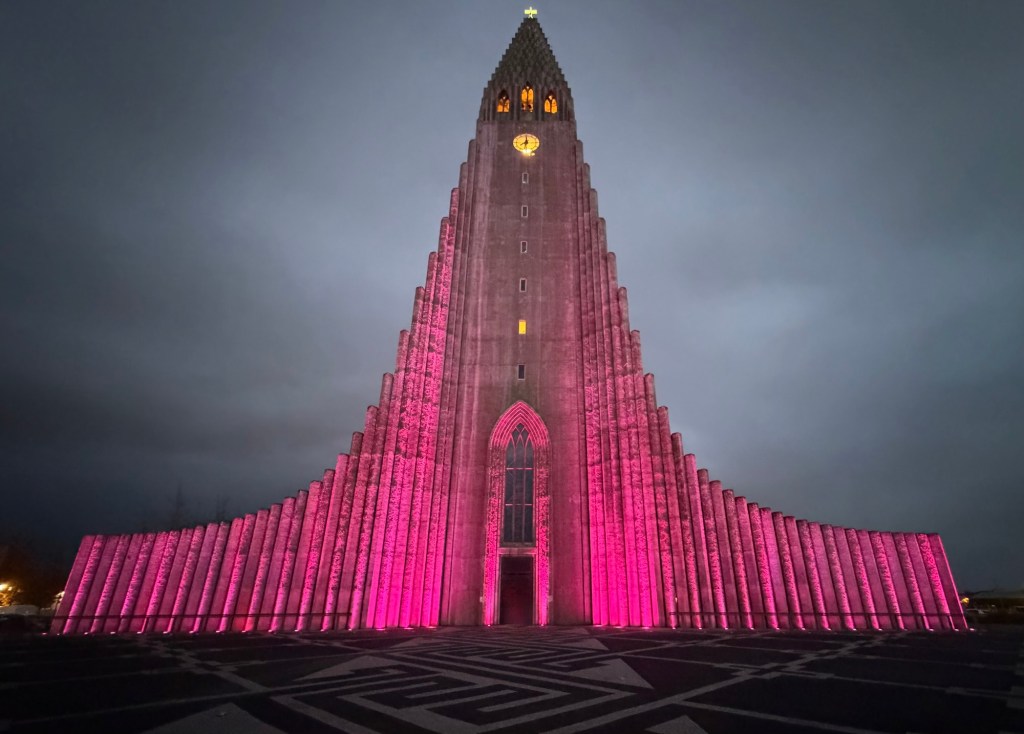
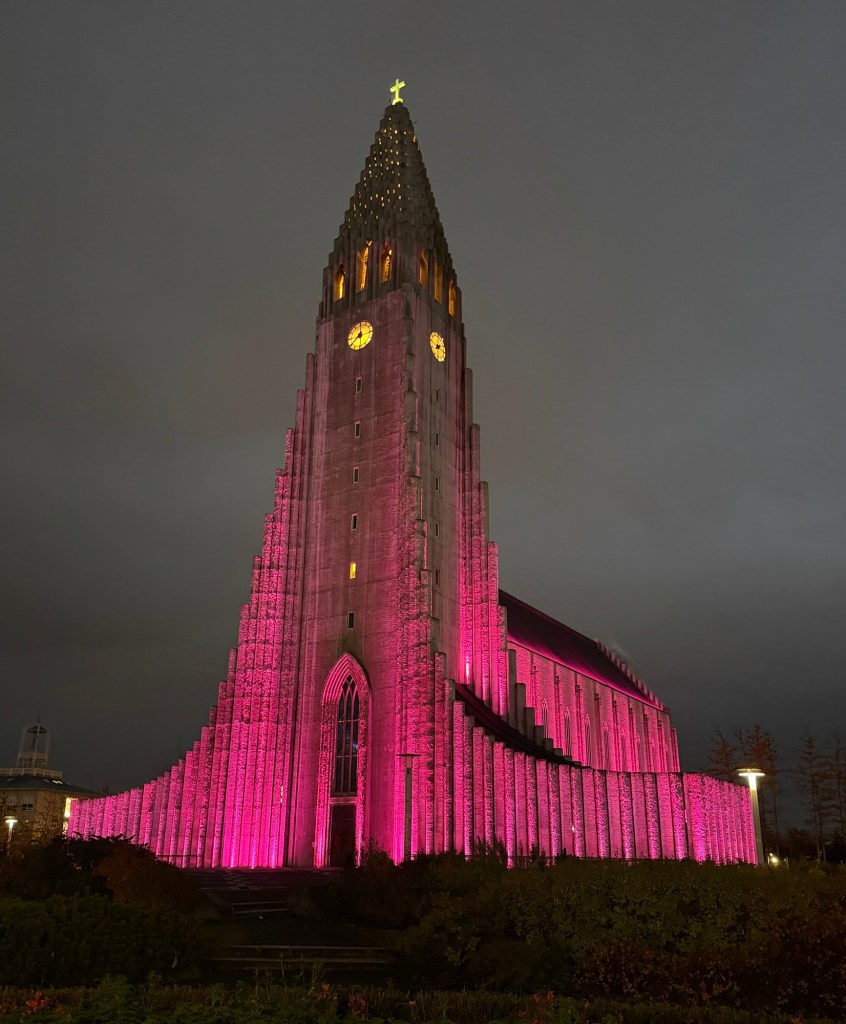
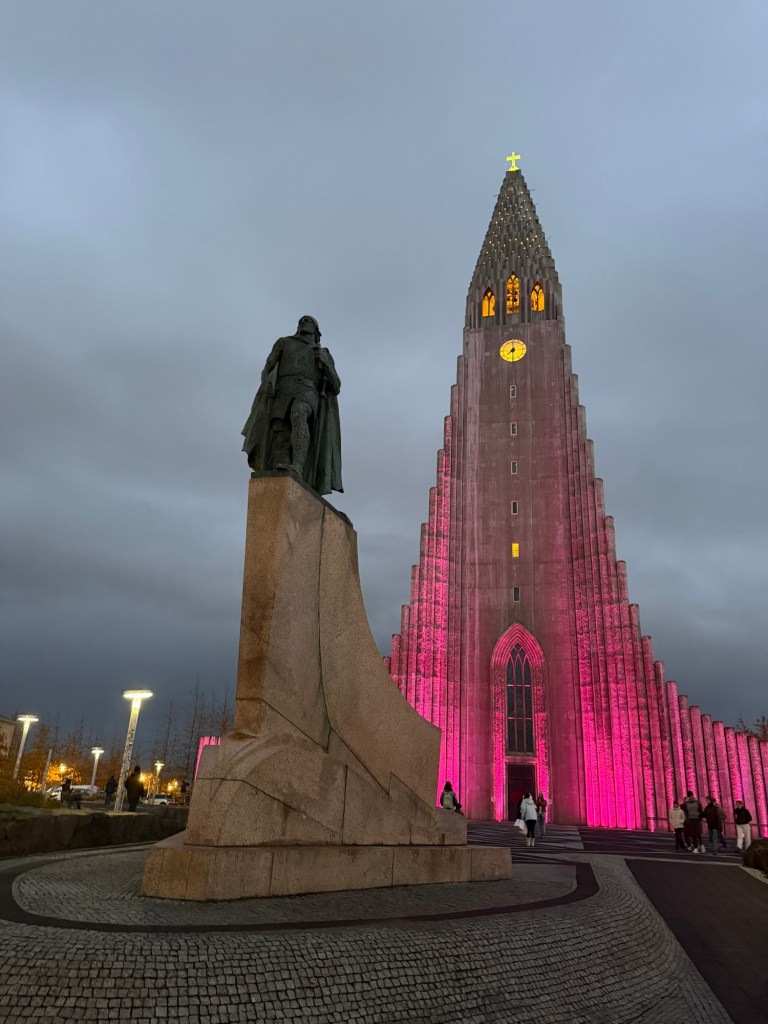
Im fortunate that Hallgrímskirkja, the largest church in Iceland, is one block from me so I get to enjoy the sound of beautiful church bells throughout the day, just like Amsterdam.
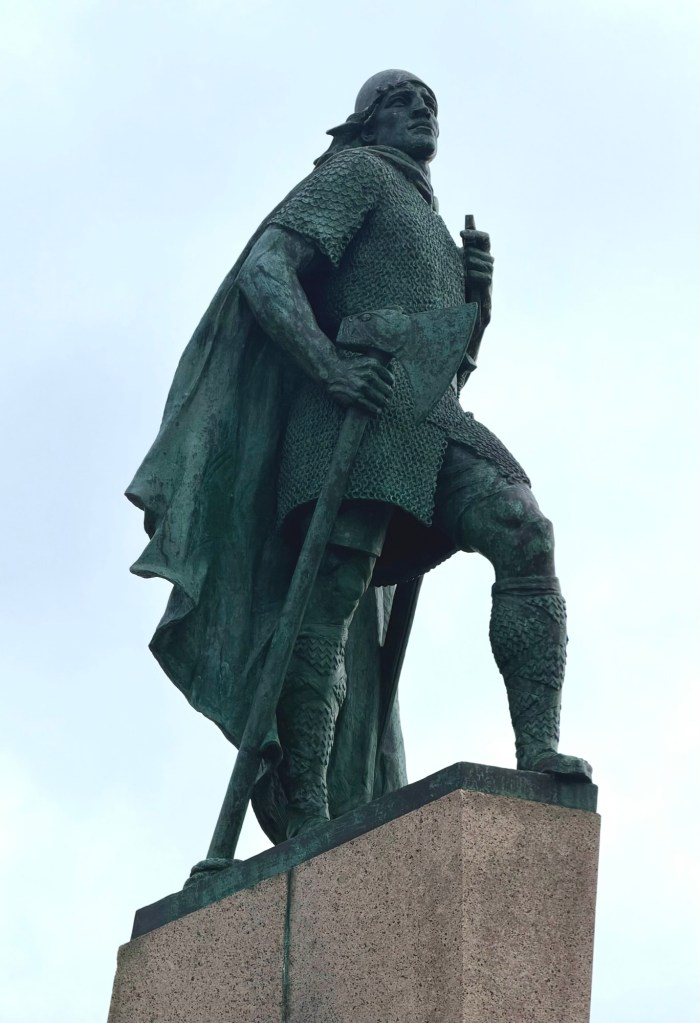
There’s a Leif Eriksson statue in front of Hallgrimskirkja.
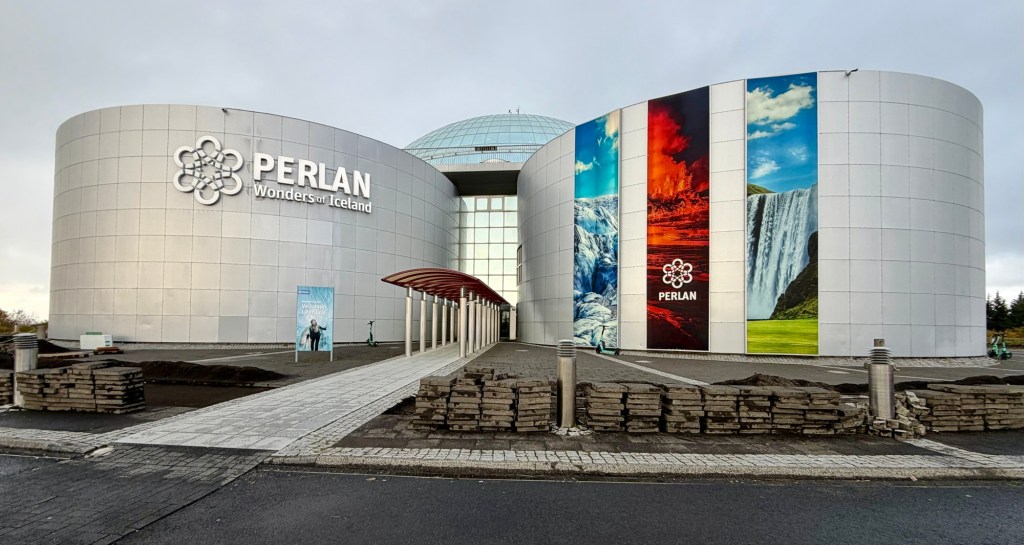
Today’s highlight was visiting Perlan, a natural history museum housed in a distinct steel building with a glass dome perched atop a hill.
The exhibits at Perlan cover everything from the environment and geology to wildlife and Iceland’s extraordinary natural phenomena.
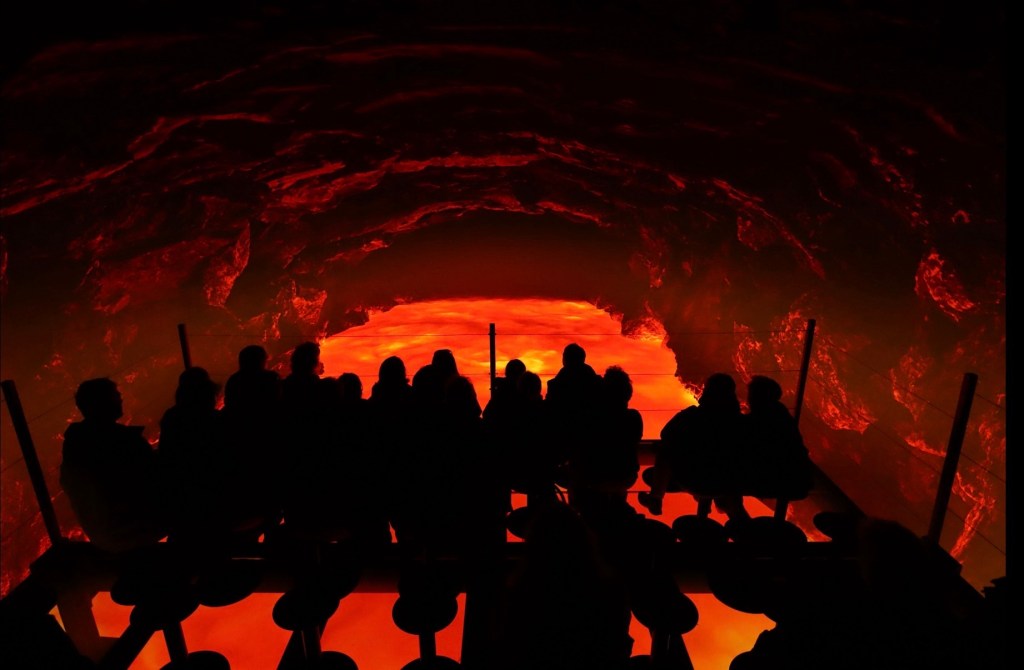
My favourite was the immersive volcano experience that took me 2,000 meters beneath the earth’s surface using a simulator, glass floor, and 3D sound. It was remarkably convincing.
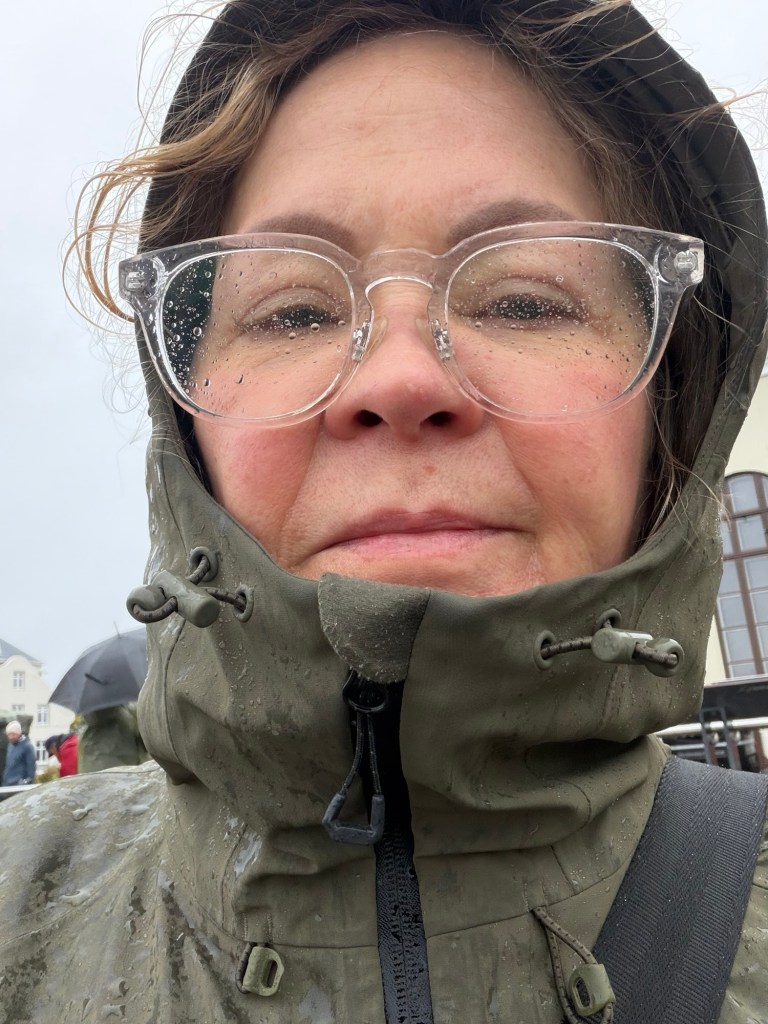
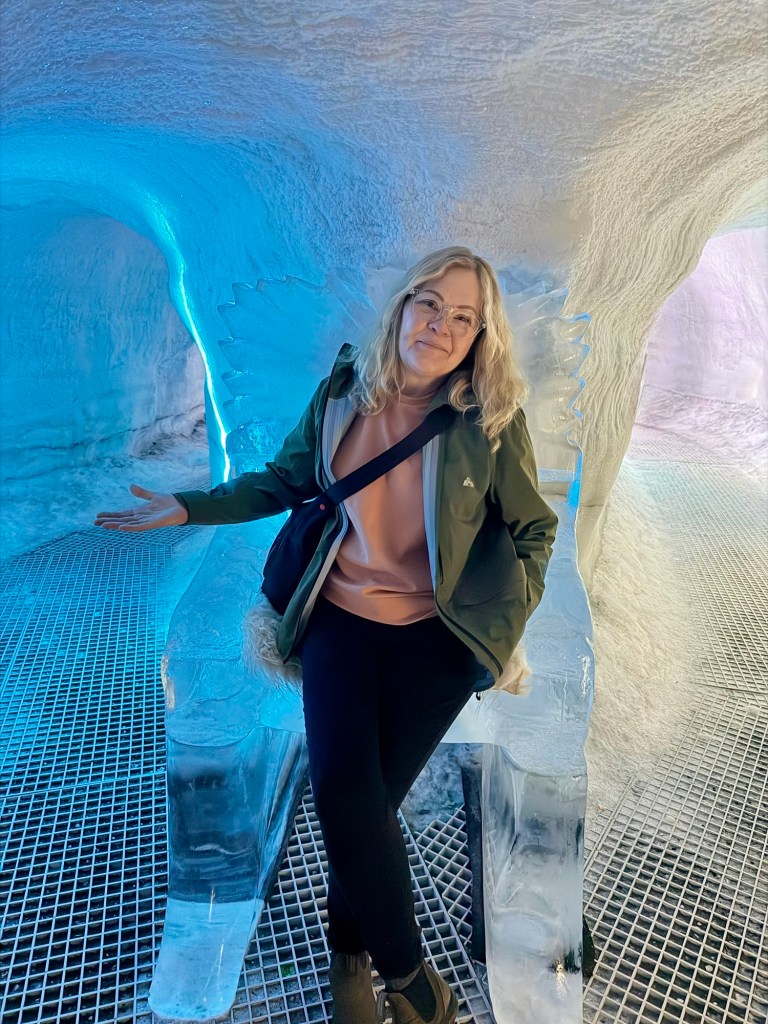
I also walked through a 100-meter ice cave made from real snow collected from Iceland’s mountains (woot woot). Don’t get me wrong—it was very cool, but given where I’m from, it wasn’t exactly extraordinary. While other tourists arrived dressed as though they were heading into the Yukon, I wandered around with my rain jacket wide open.
There was even an ice chair, where I watched people ham it up for photos with flexed arms and various tough-guy poses. When someone offered to take my picture, I happily obliged—and naturally went with my signature “meh, whatever” pose.
I really liked the 360° observation deck at the top of Perlan.
Here are a few other highlights of Reykjavik so far:
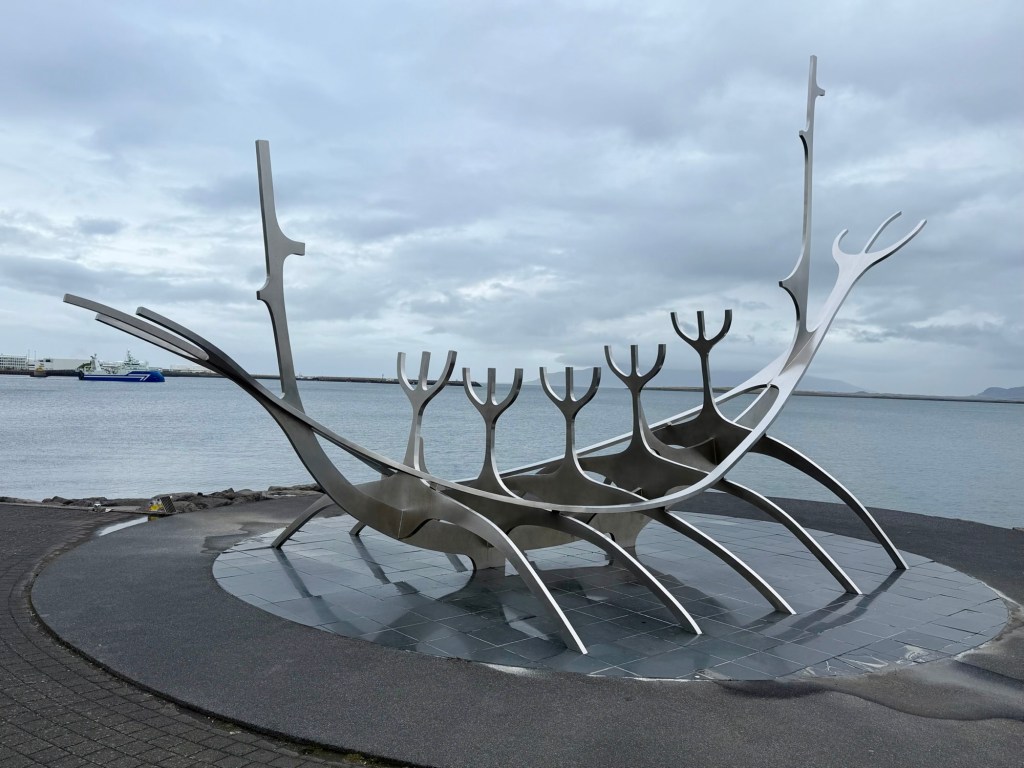
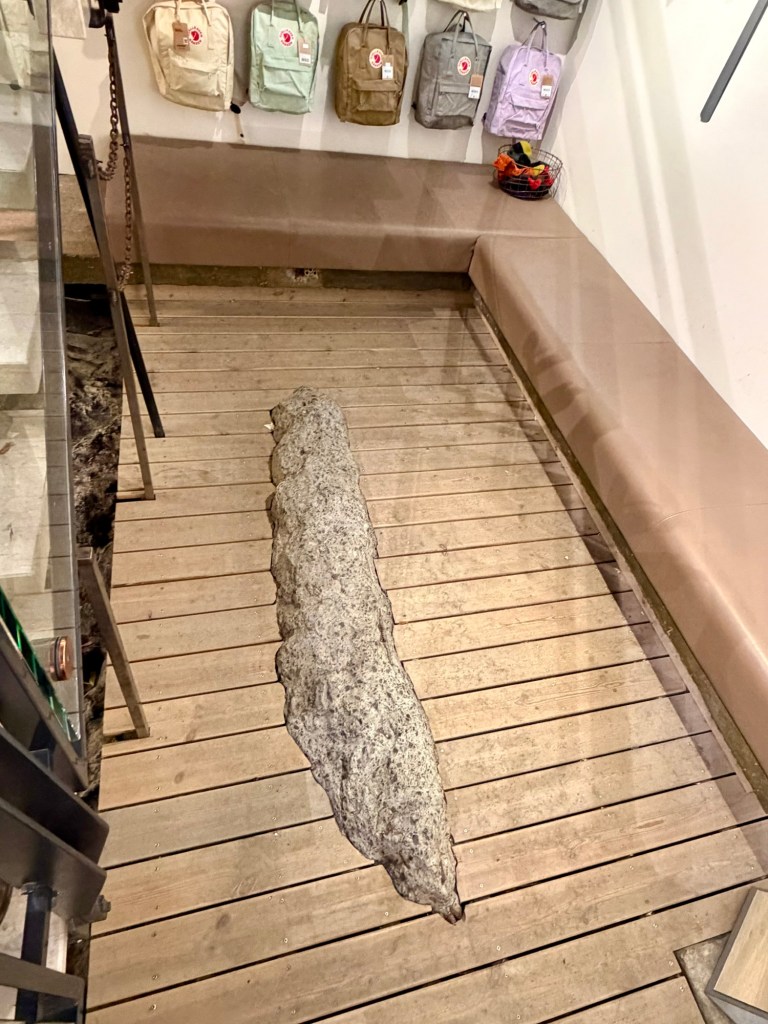
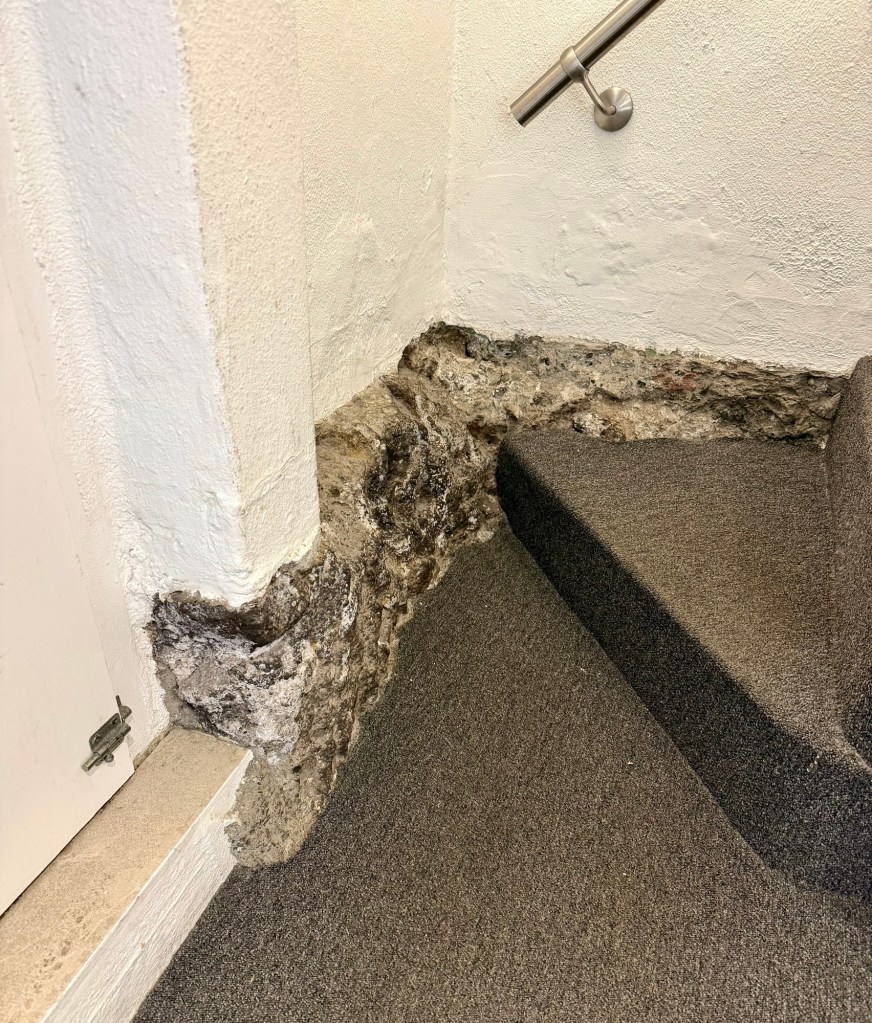
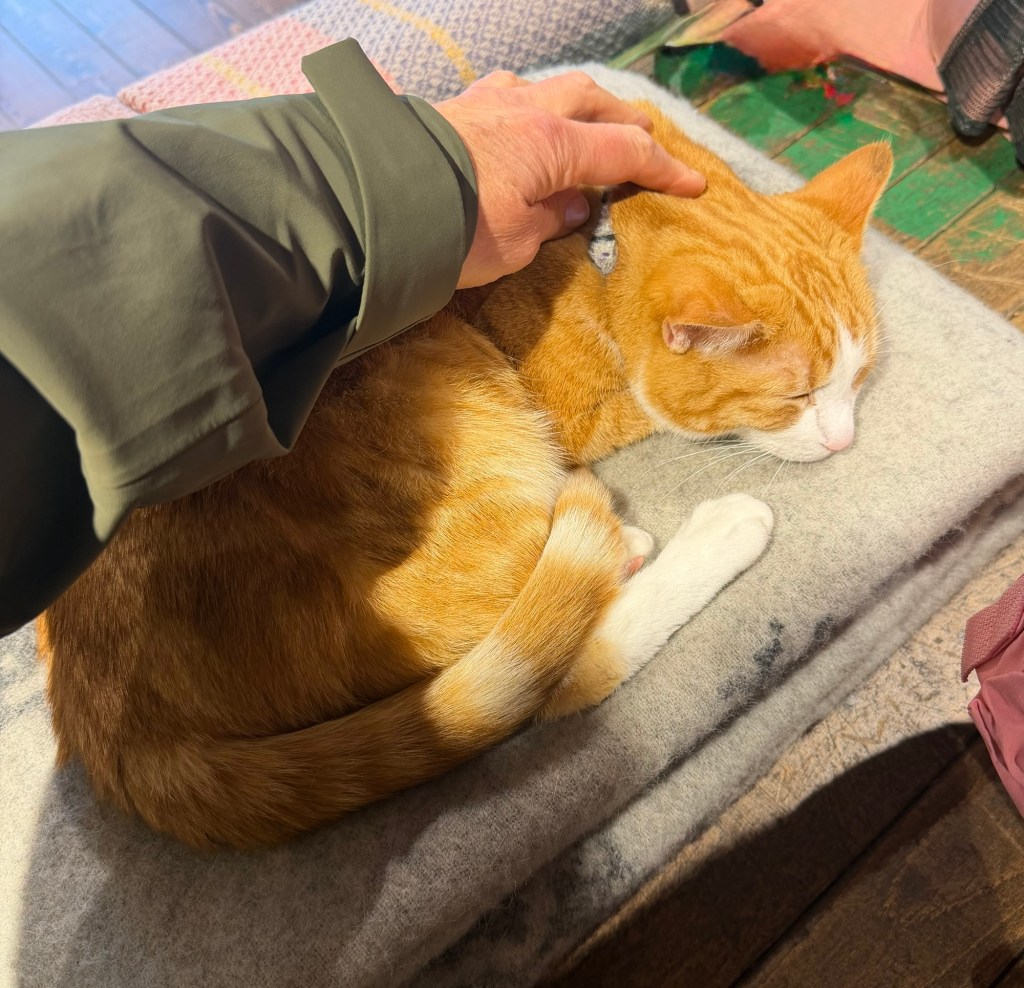
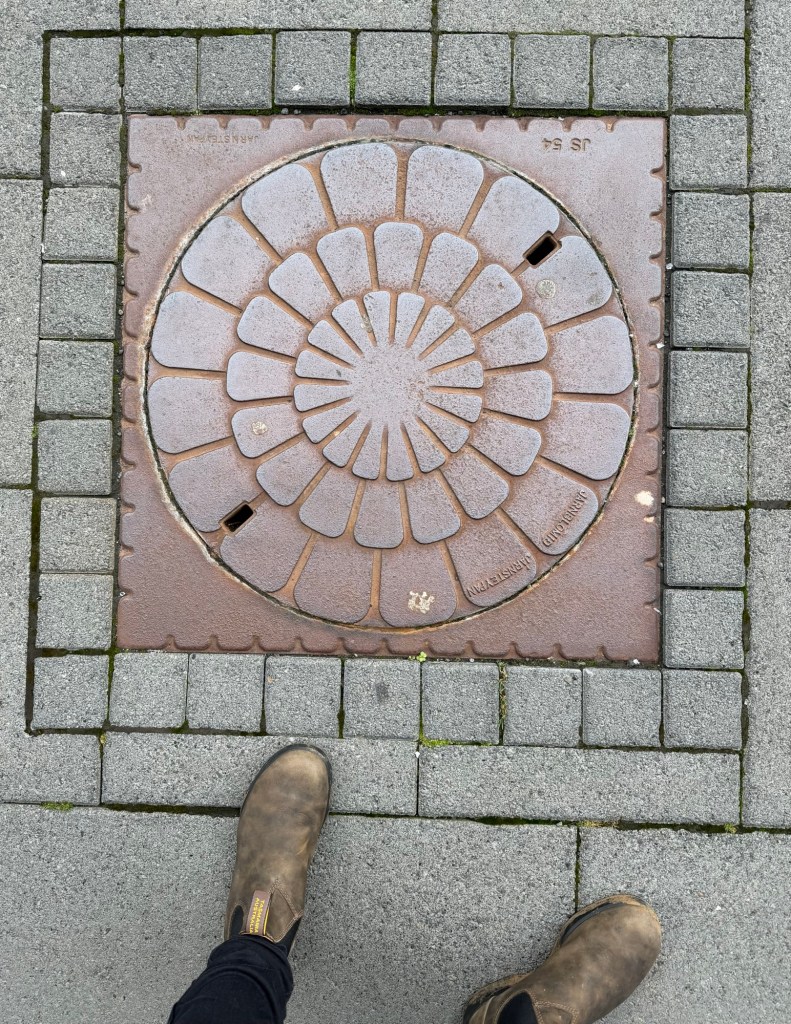
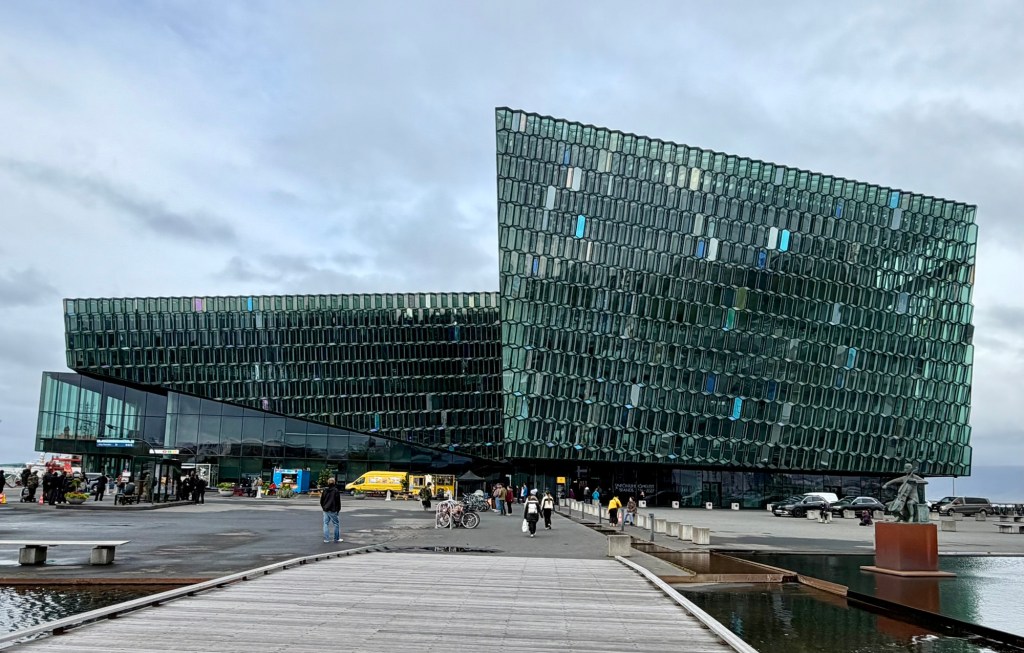
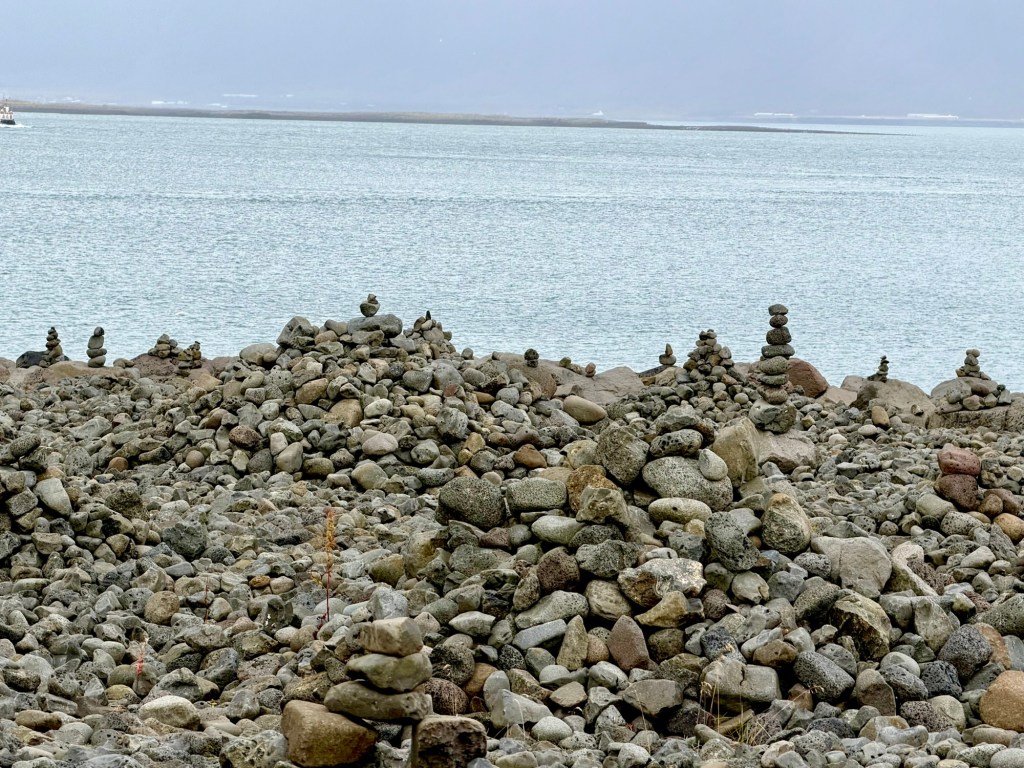
Sea Voyager sculpture Protruding rock in basements. Don’t blast it–just build around it!Sweet cat in the wool store. I’ve stopped to pet so many outside that I can’t keep track. Groovy manhole coversHarpa Concert Hall Cairns (a little controversial as they do not support leave no trace travel).Dance by ÞorbjörgPálsdóttir
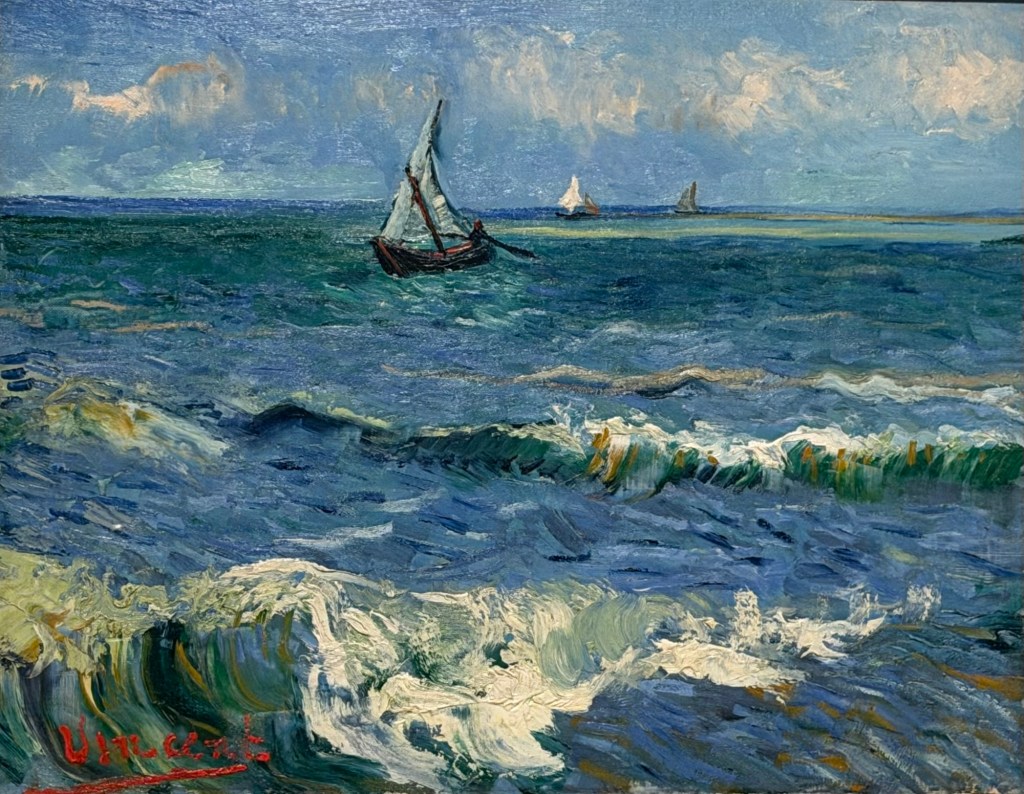
I visited two of Amsterdam‘s most popular museums today: the Van Gogh Museum and the Anne Frank House.
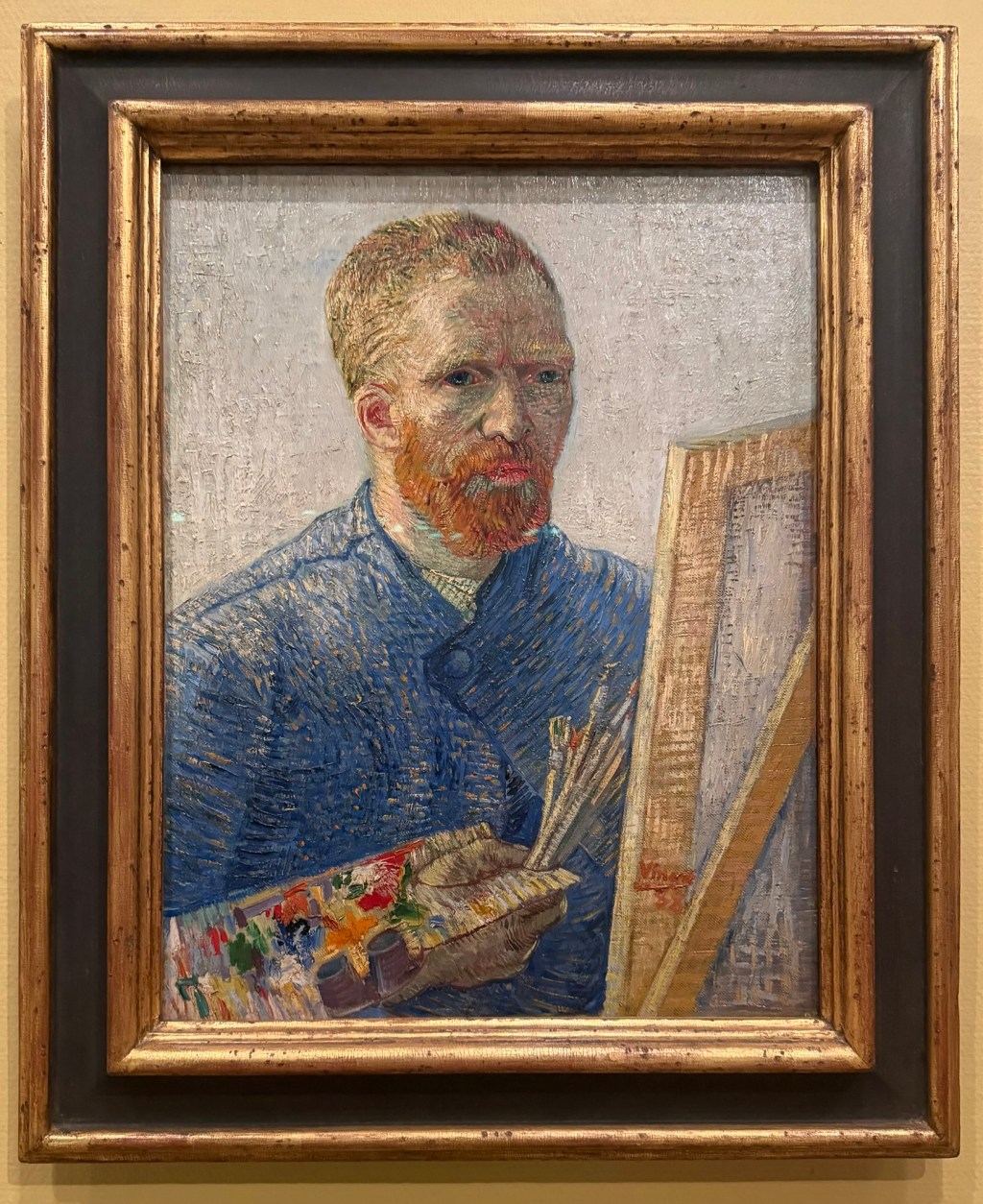
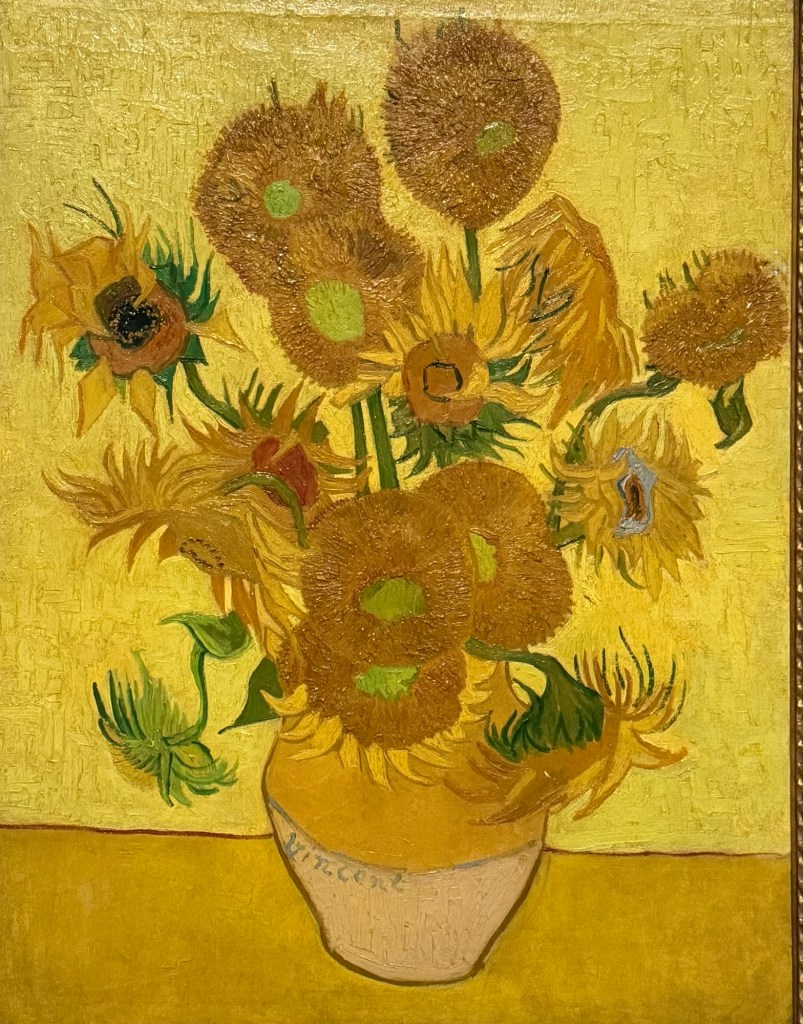
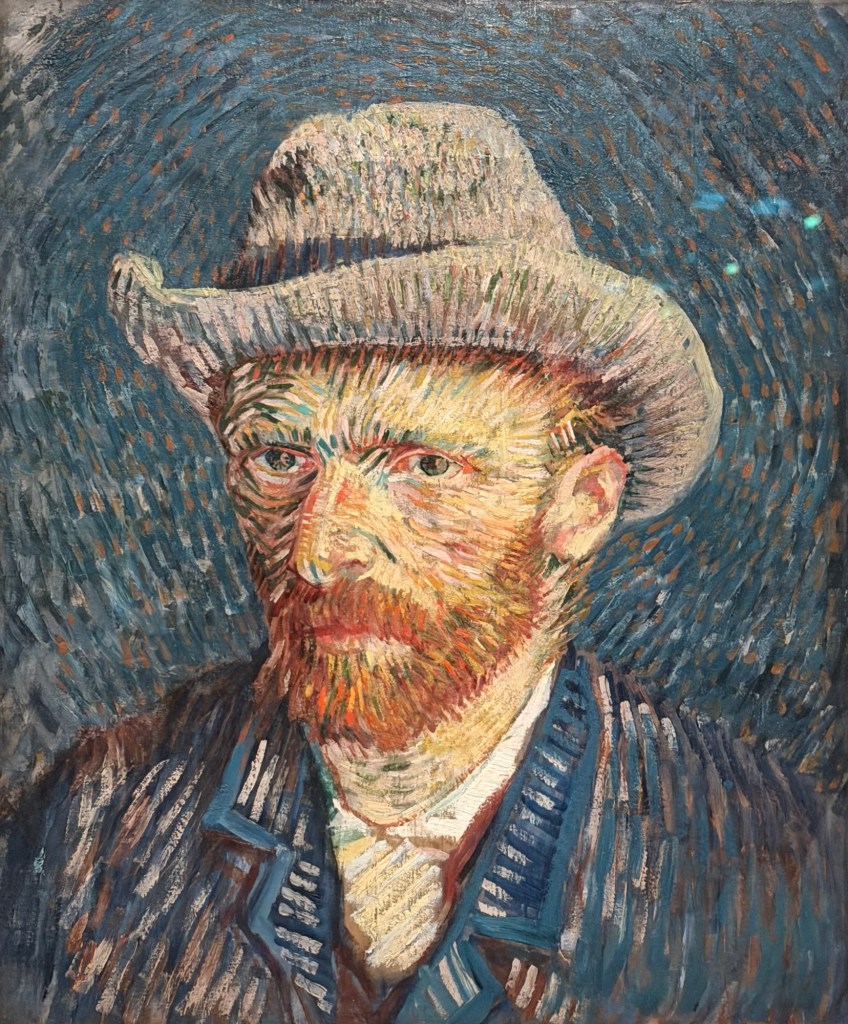
When the Van Gogh Museum opened in 1973, there wasn’t nearly the volume of tourists there is today. I really loved the museum, despite the slow-moving, backed-up lines. I did find it annoying that so many people were taking selfies in front of the most popular works, Sunflowers and Almond Blossoms. One young woman kept posing—kicking back her heel, putting her hands on her cheeks with a surprised expression—while her friends snapped multiple shots.
Crowds also stood much too close, leaning over the already-too-close, knee-high barriers. Gosh, what if Self-Portrait with Bandaged Ear were here instead of being permanently displayed in London?
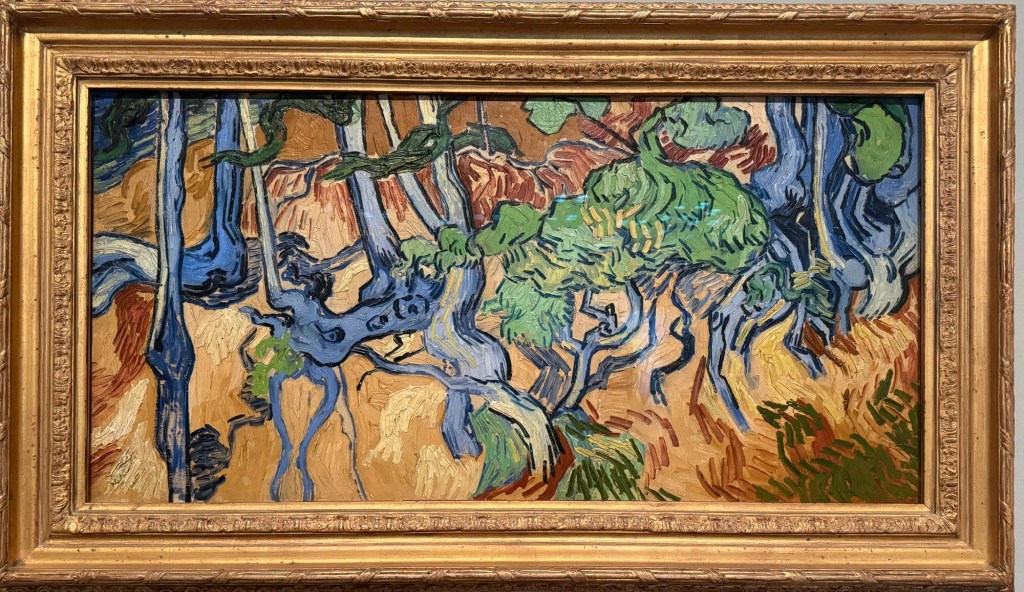
Standing close to Van Gogh’s works gives you a brief glimpse of his thick, textured brushwork, intricate patterns, and unexpected colour pairings. But stepping back allows your eyes to blend those bold combinations into a more sweeping, unified perspective. I know it sounds cliché, but that’s when the painting comes alive. Try zooming in on some of his pictures.
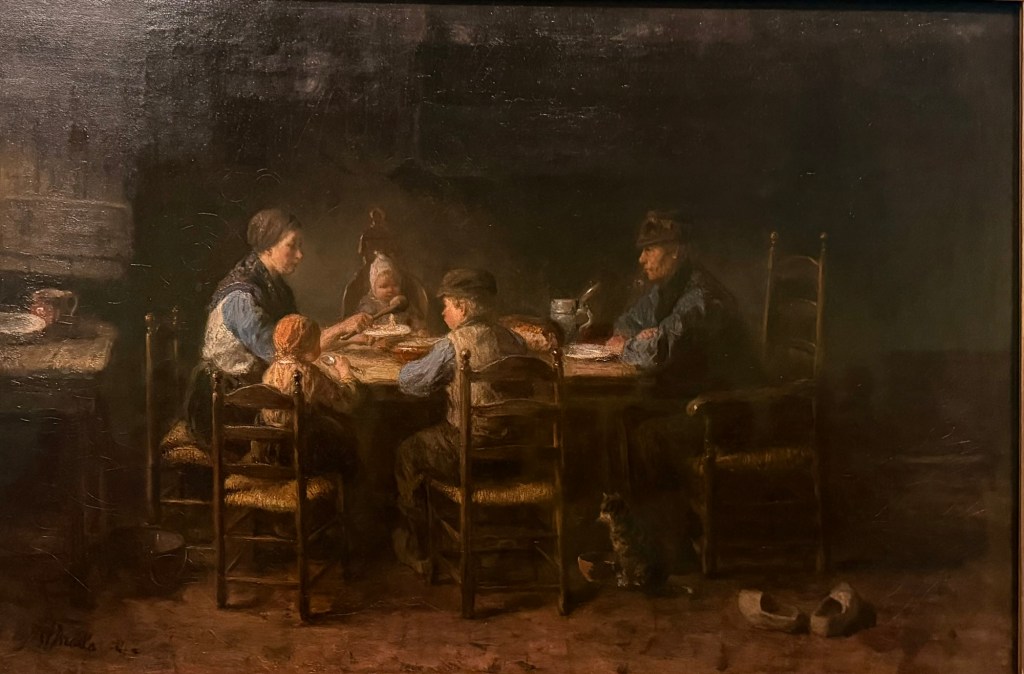
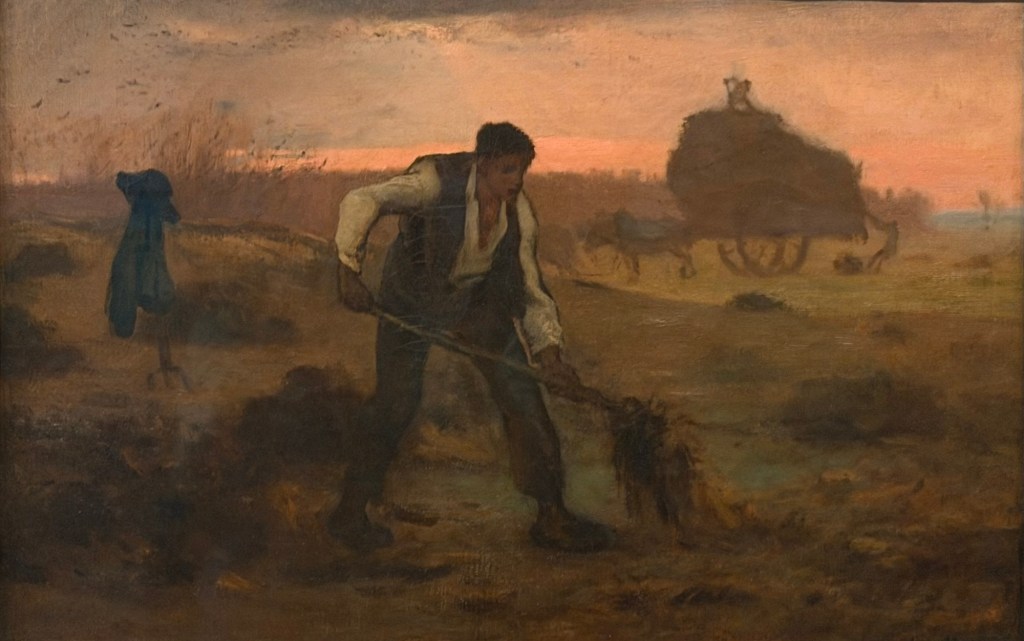
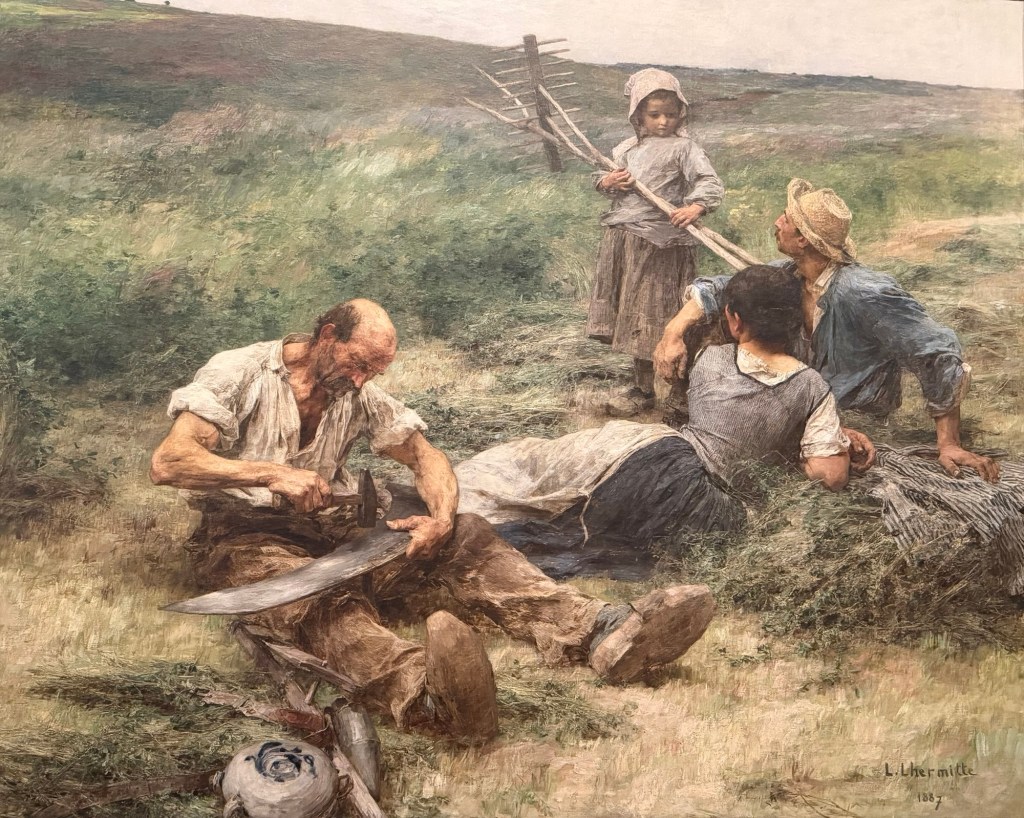
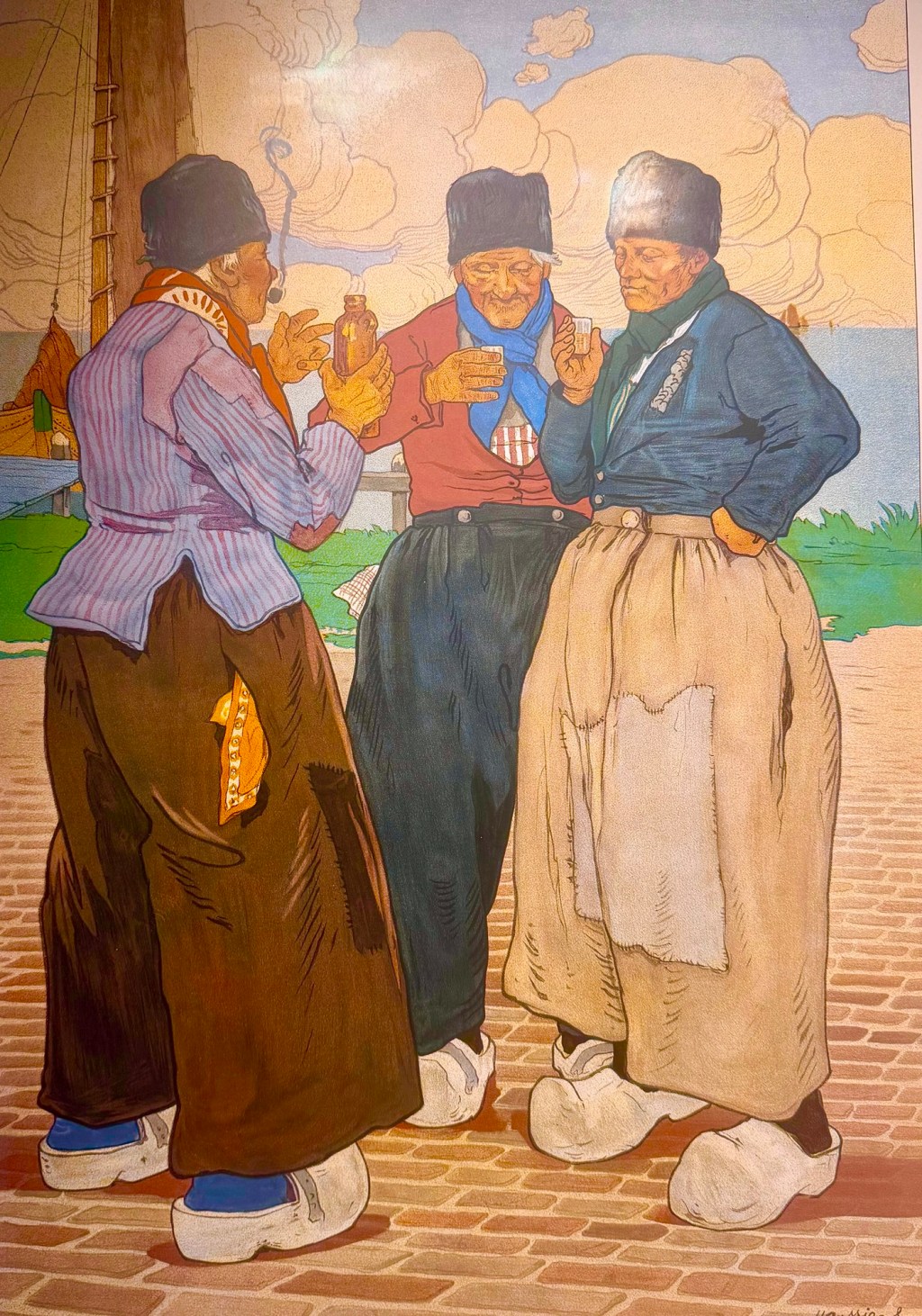
I particularly enjoyed Van Gogh’s paintings of peasants. He had a deep interest in their lives and was even criticized for his focus on them. He always depicted them with dignity.
They even had van Gogh’s last, unfinished painting on display.
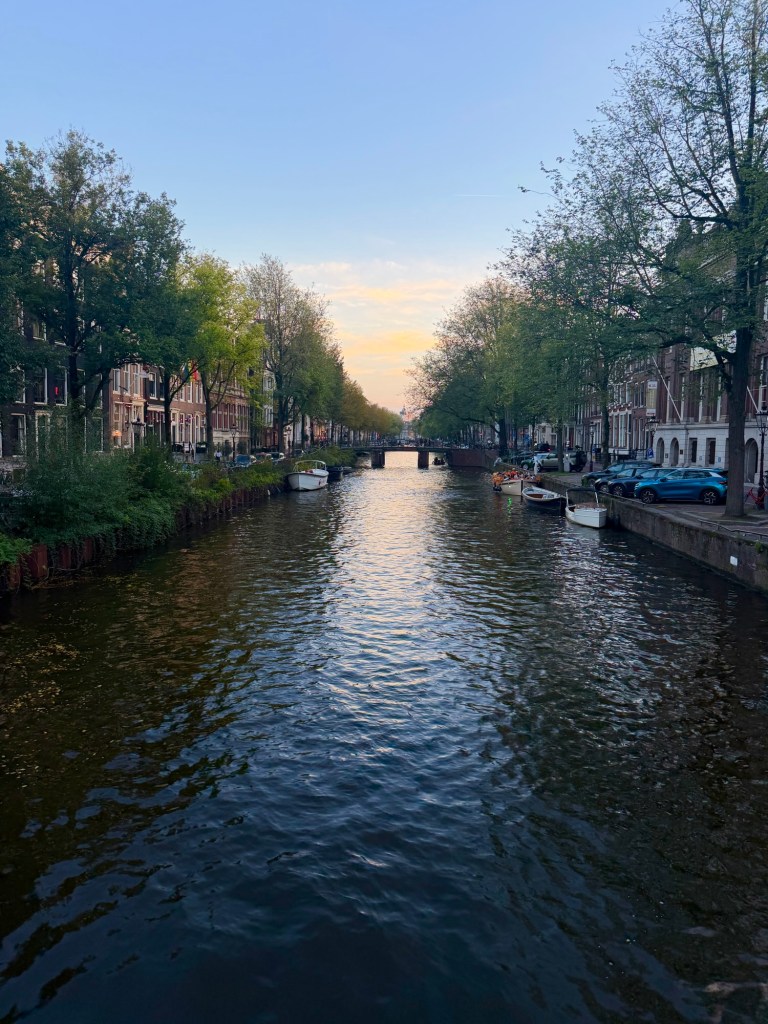
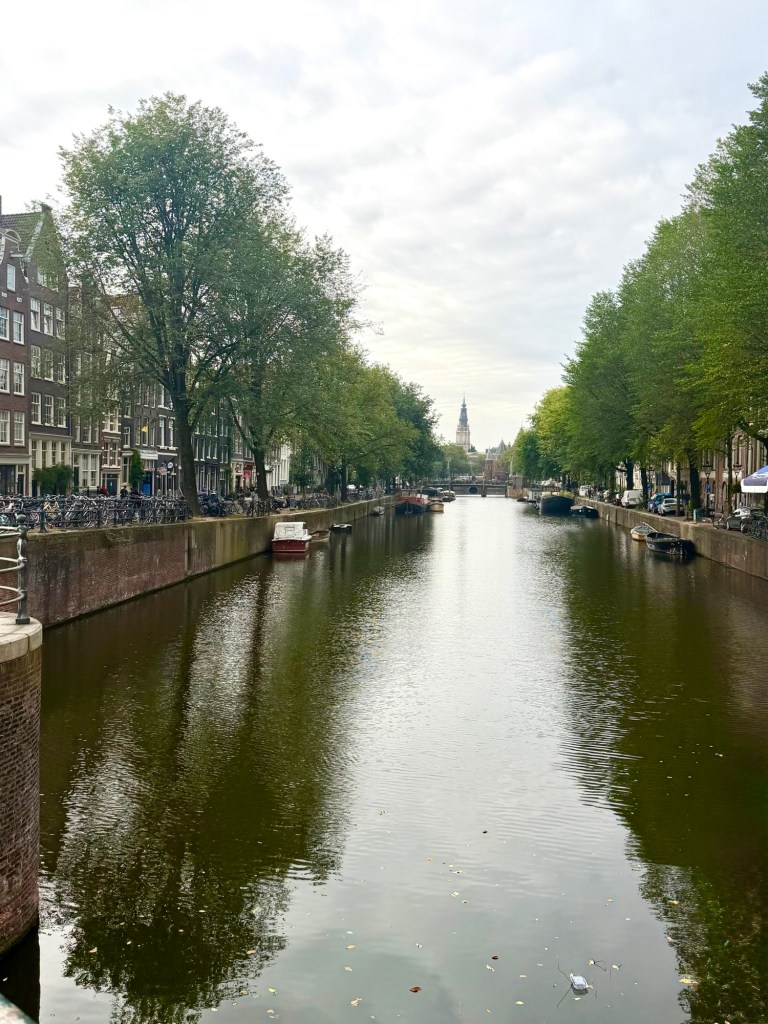
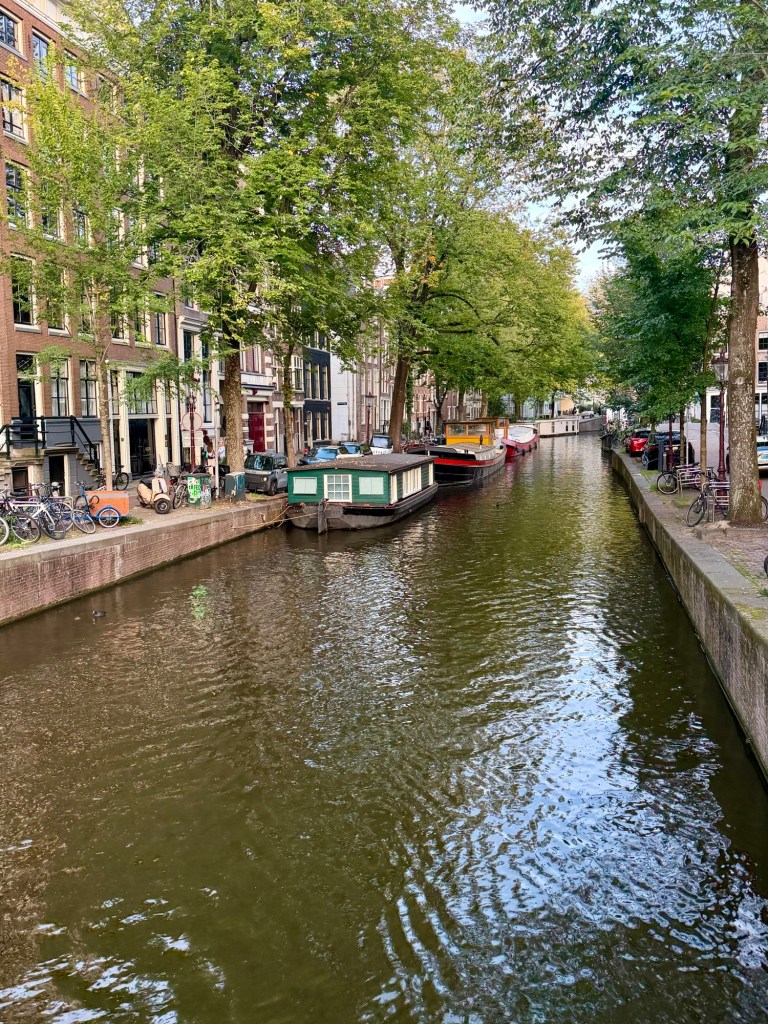
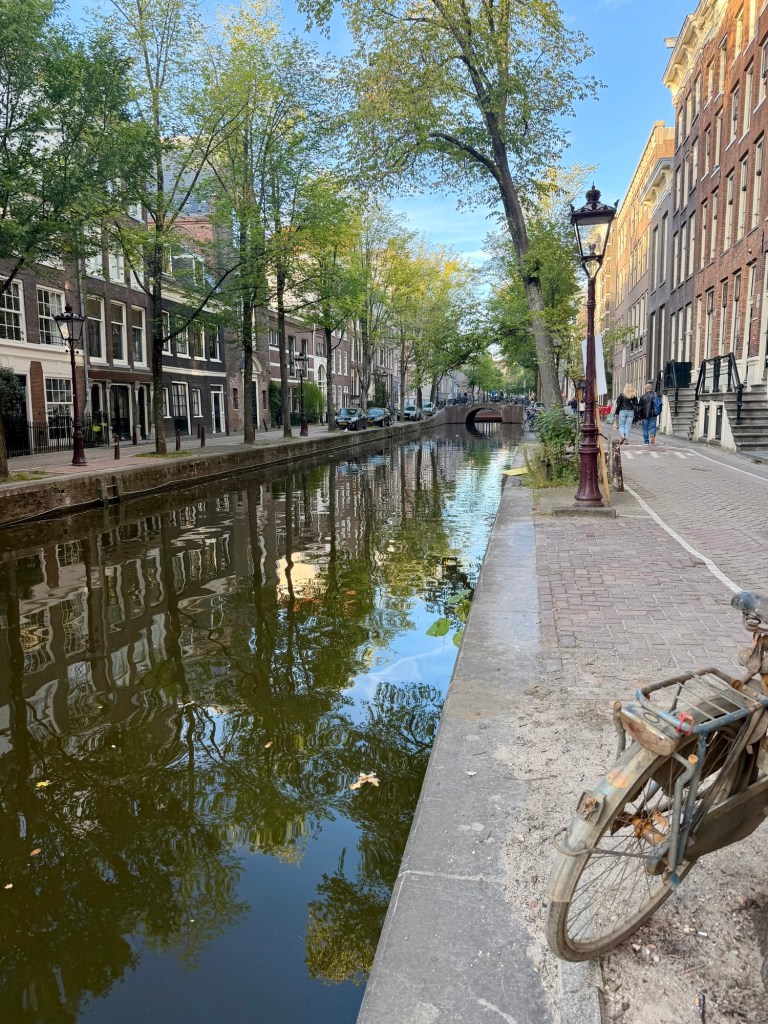
Next, I headed over to the Anne Frank House, but I had some time to kill, so I found a bench (hard to find here, unlike Copenhagen) by a canal and sat watching the many and various electric boats going by.
The Anne Frank House was very well organized, and I didn’t feel that they had booked too many people into my timeslot. Overall, the experience was thoughtfully done. I had an audio guide and passed through several exhibitions highlighting the Frank family’s personal life before entering the Secret Annex via a series of extremely steep stairs.
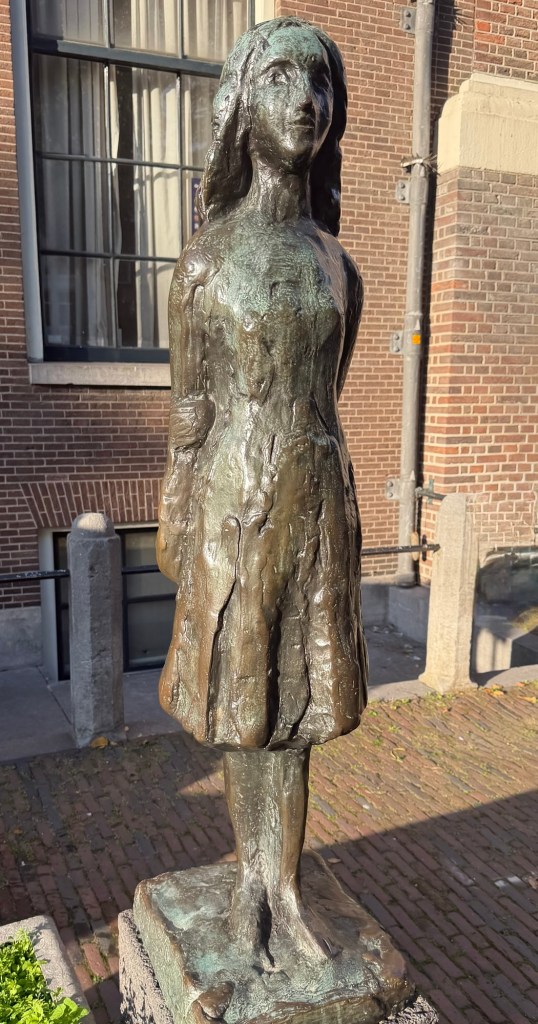
There were personal effects, including documents, photographs, objects, and Anne’s original diary. I read The Diary of a Young Girl as a preteen and remember it well. Visiting the house put me right there. It was a deeply moving experience, and one I would highly recommend.
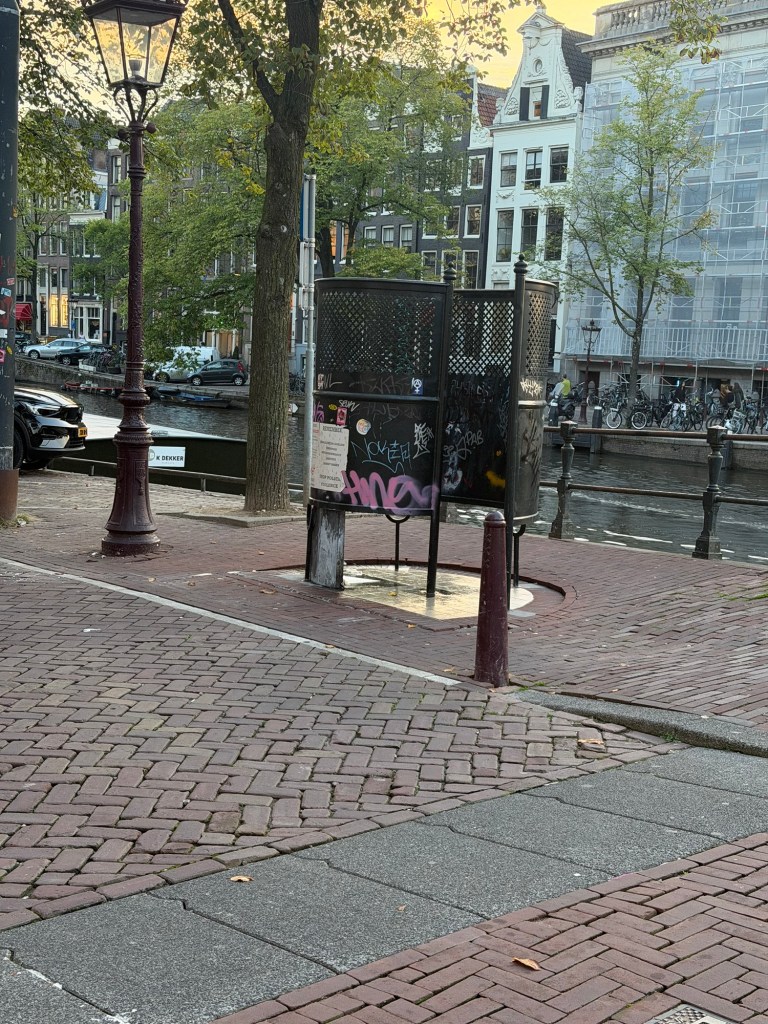
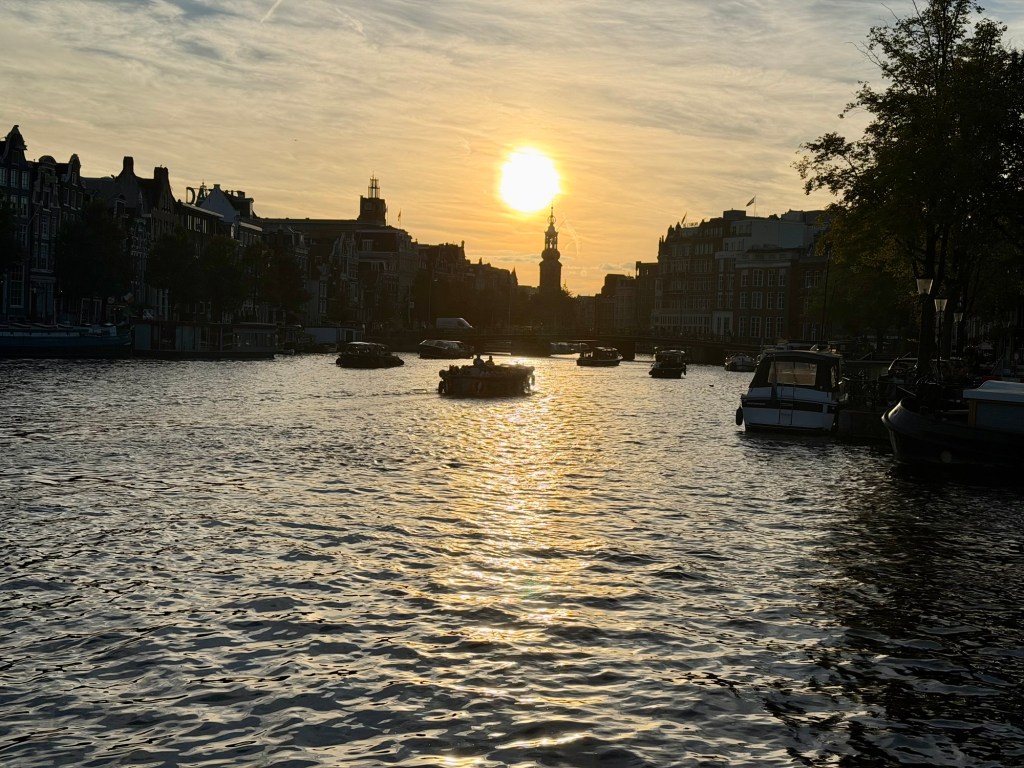
Yet another canal  later in the day Public urinals for men – you can smell them a block away.
Off to Iceland! 🇮🇸 I’m SO looking forward to colder weather.
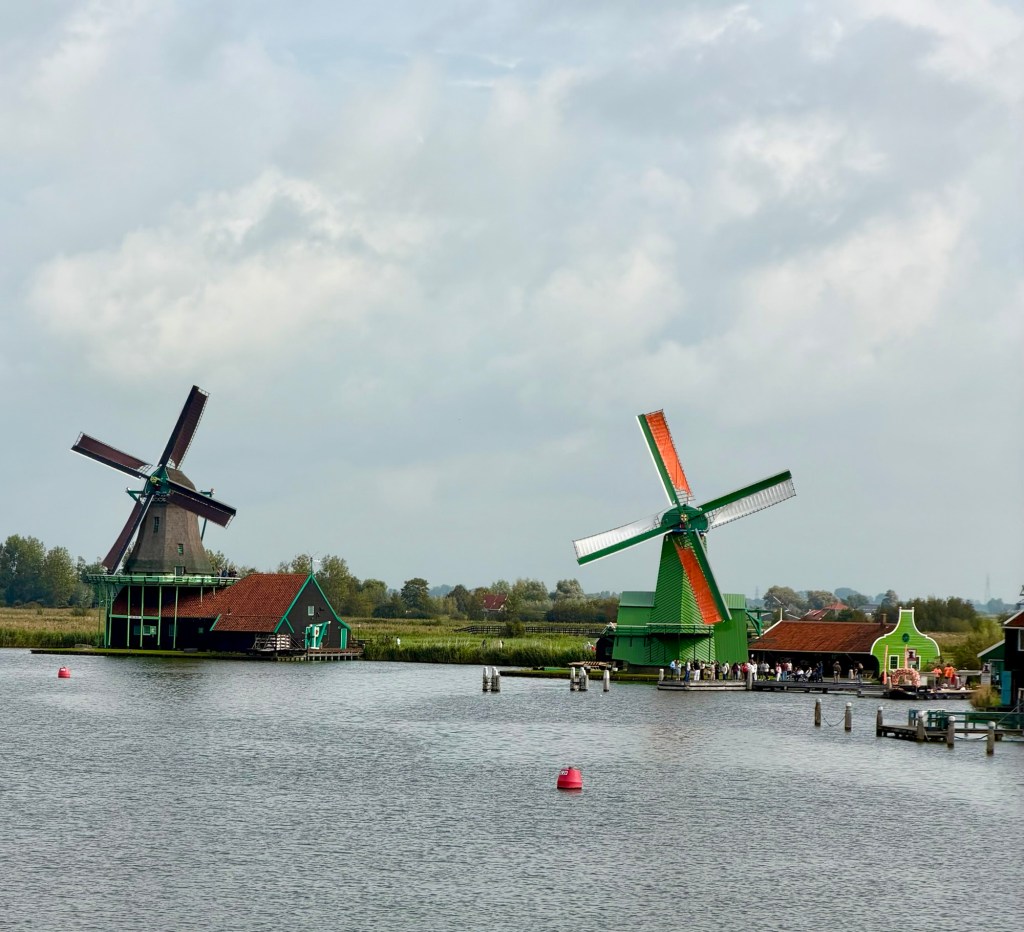
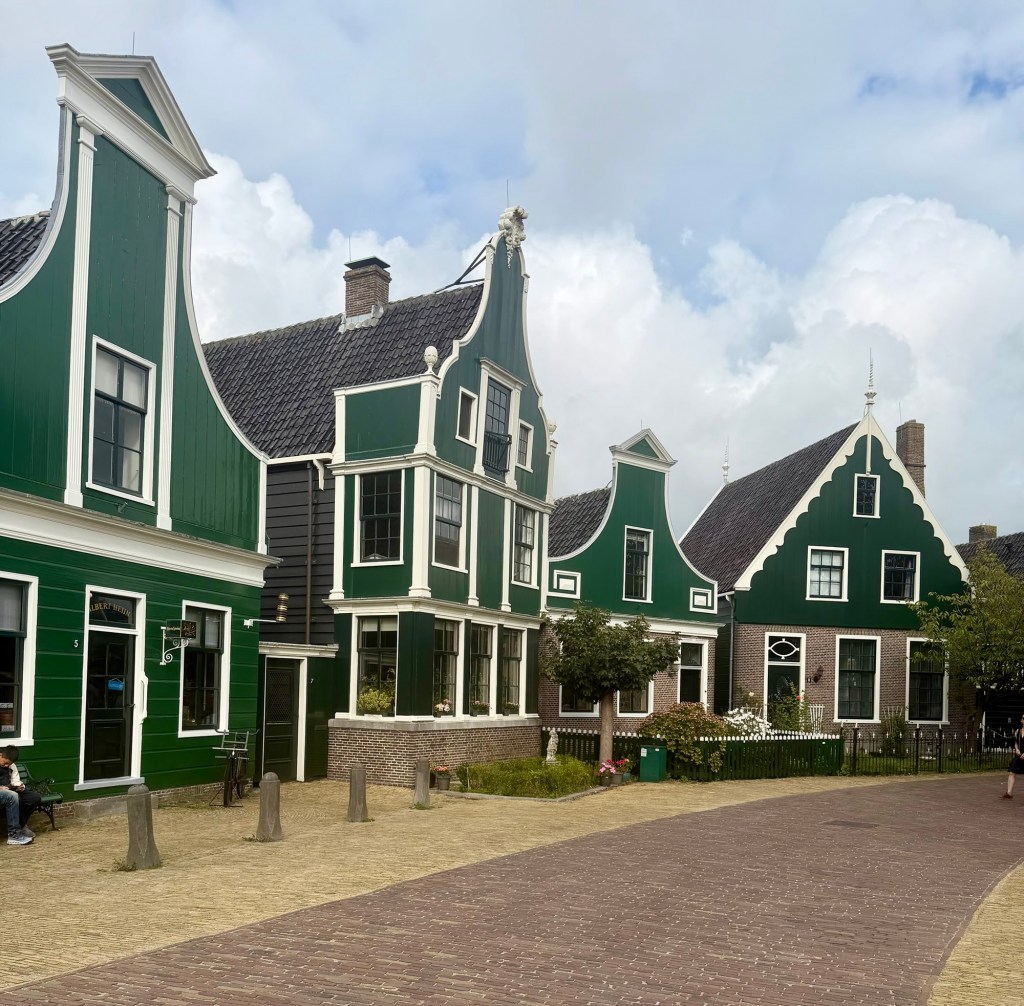
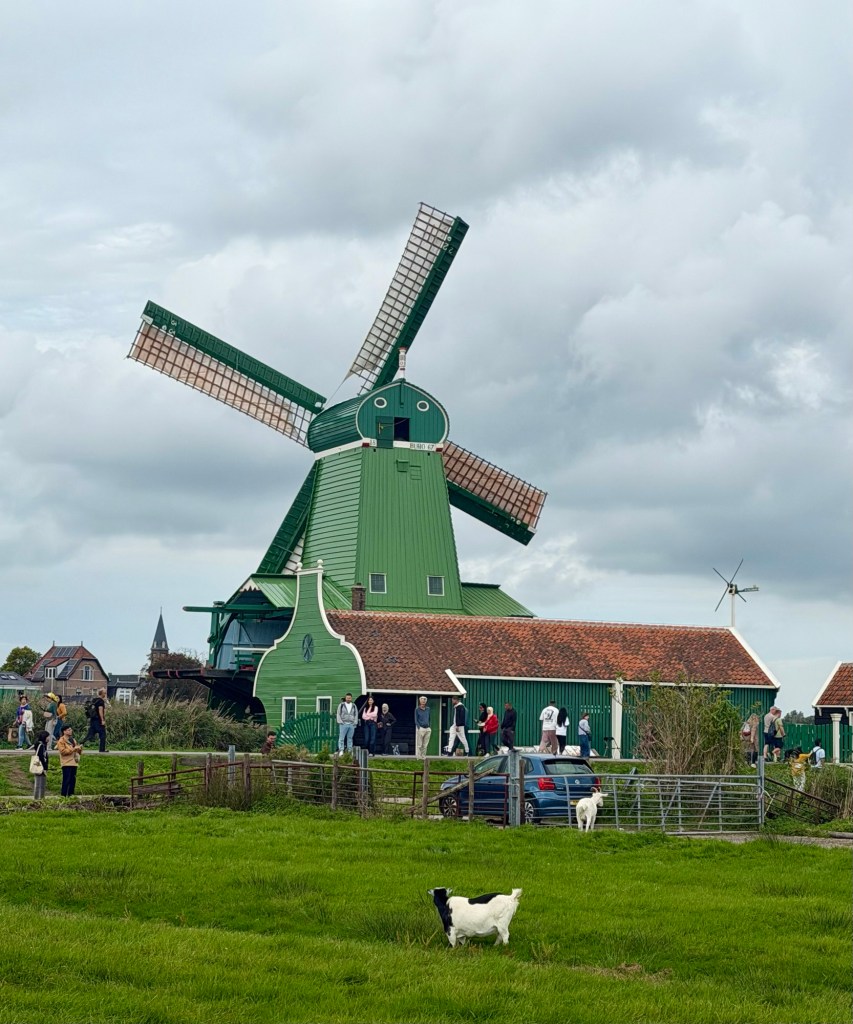
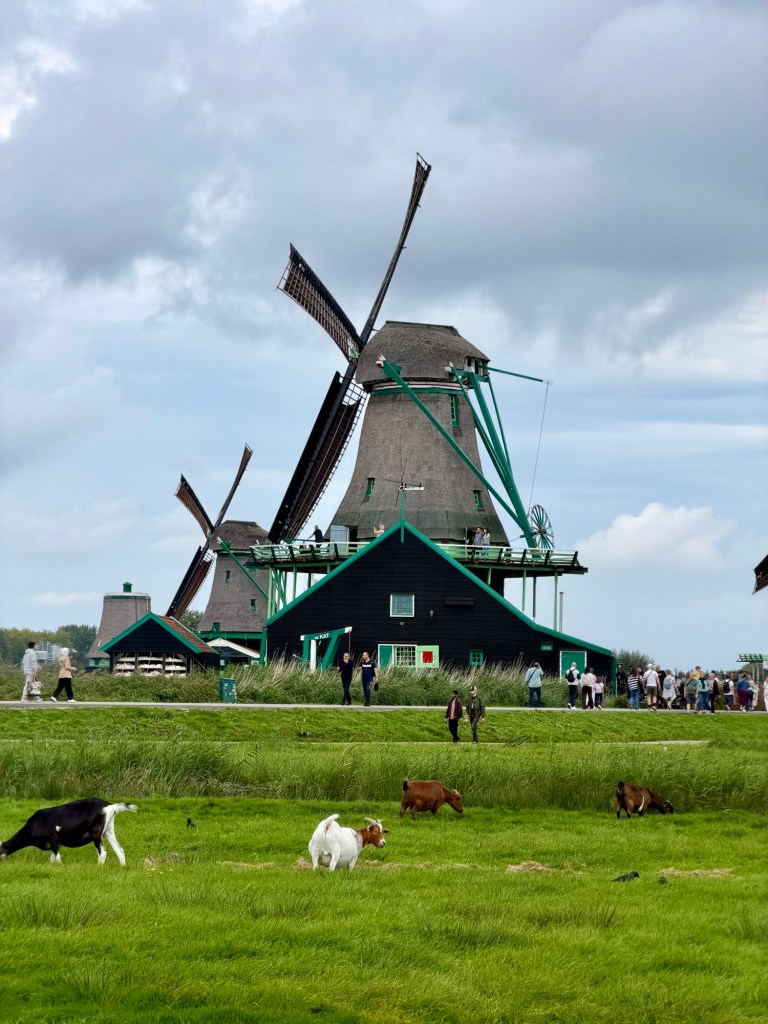
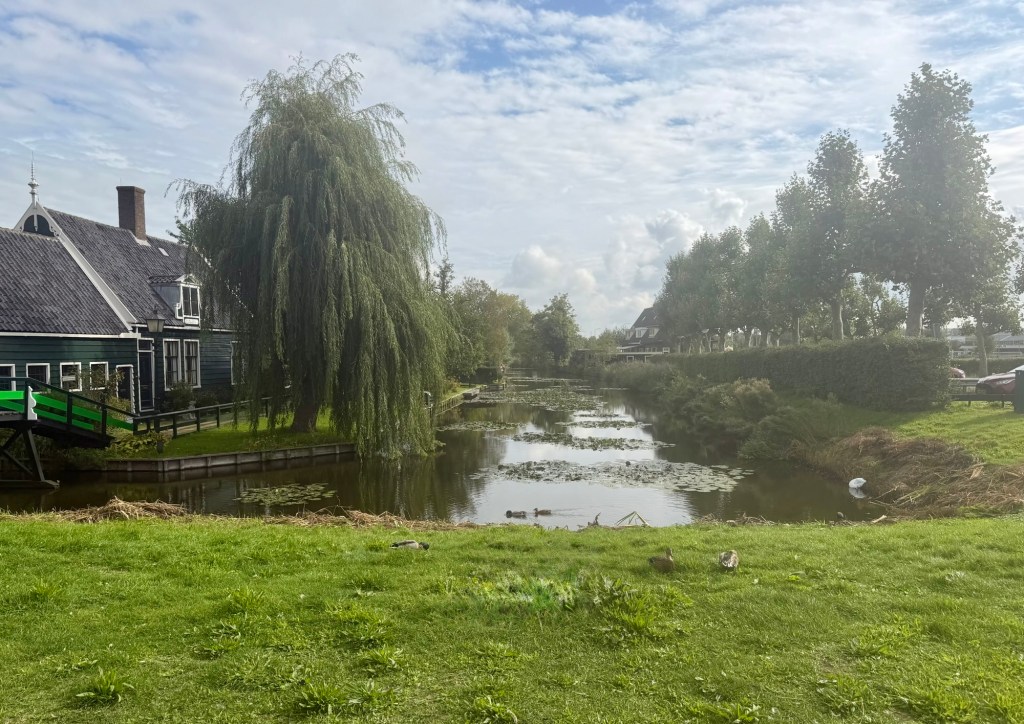
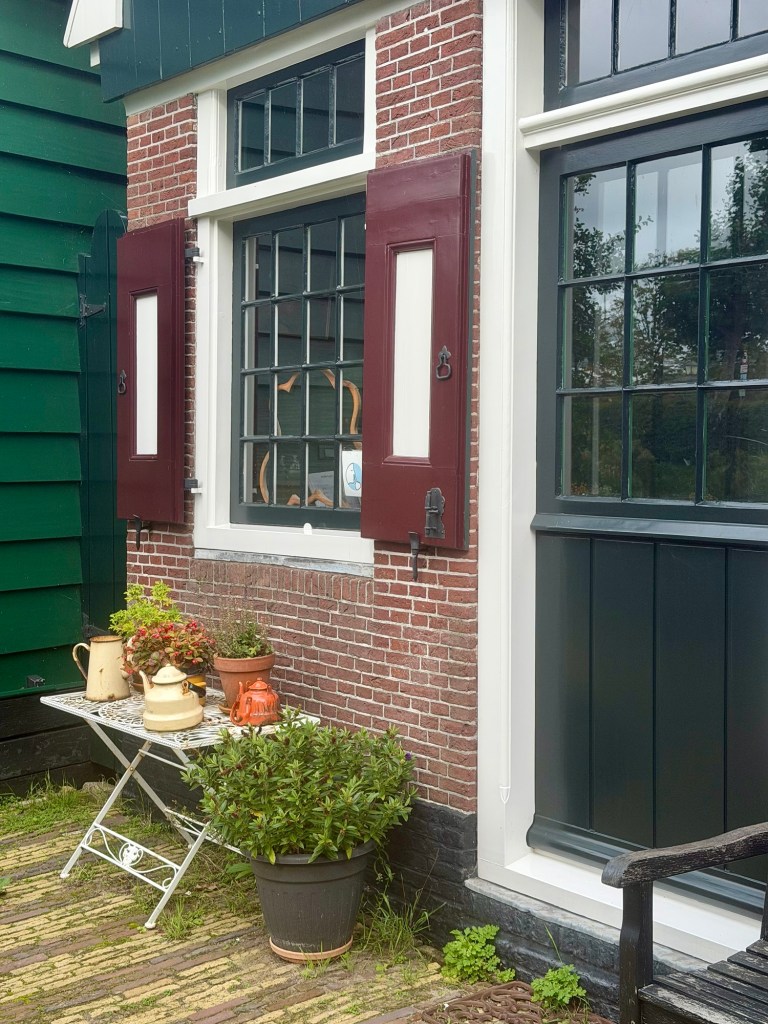
2 of the 10 historic windmills at Zaanse Schans. Around 6-8 mills actively turn and operate, performing traditional industrial tasks like grinding spices, pressing oil, sawing wood, and making paint pigments.Signature green and white houses. The deeper the green, the more prestigious.
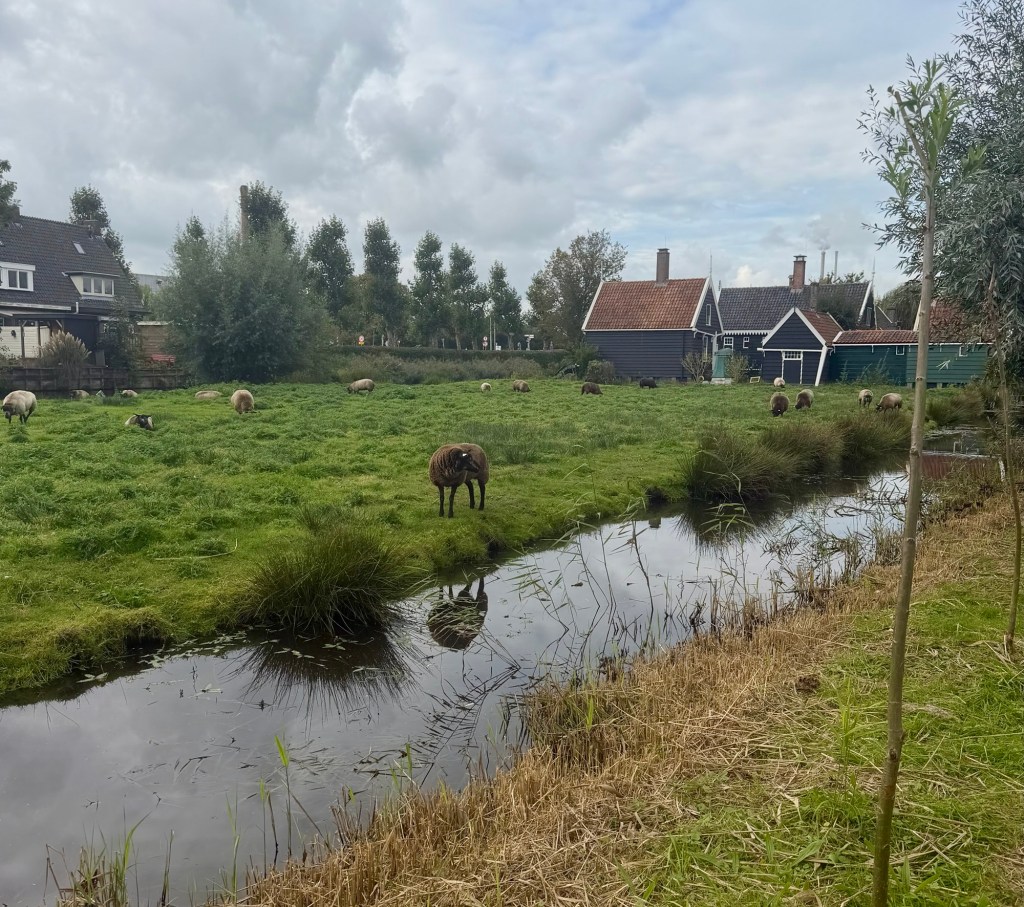
Today I joined a small-group tour and visited Zaanse Schans, a historic village in Zaandam, just north of Amsterdam. 18th and 19th century windmills and distinctive green wooden houses were relocated here to preserve the character of a traditional Dutch village. It is a beschermd dorpsgezicht, or “protected village view” yet people actually occupy some of the heritage houses.
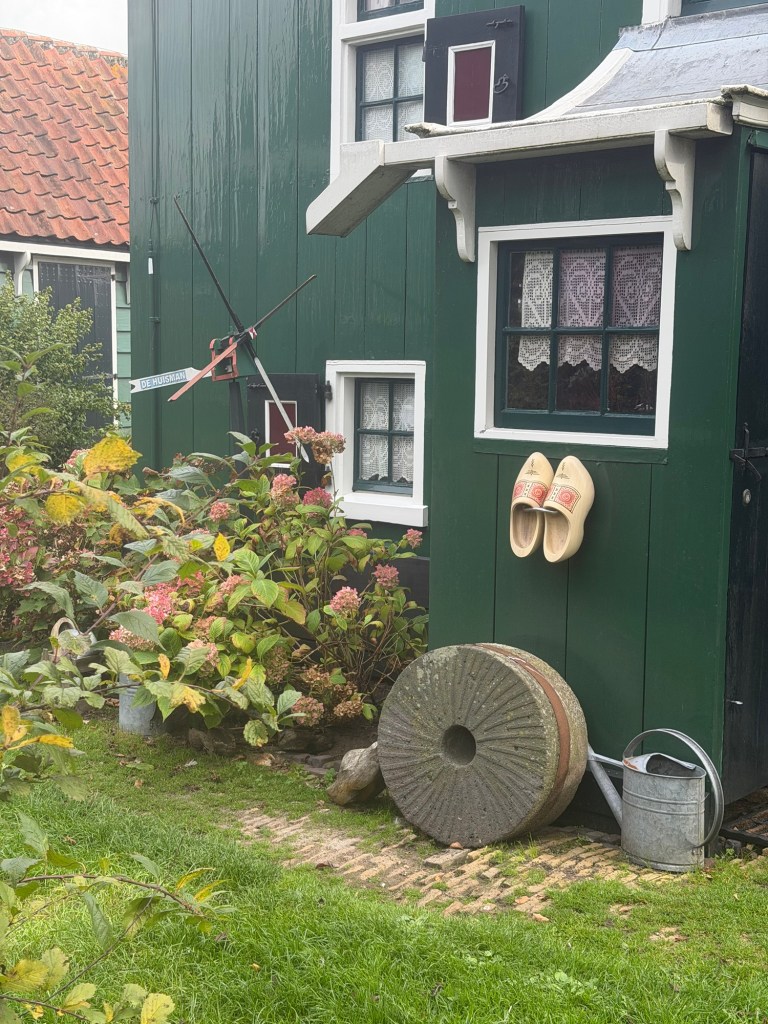
The small protruding room is a clog room, much like North American mud rooms.
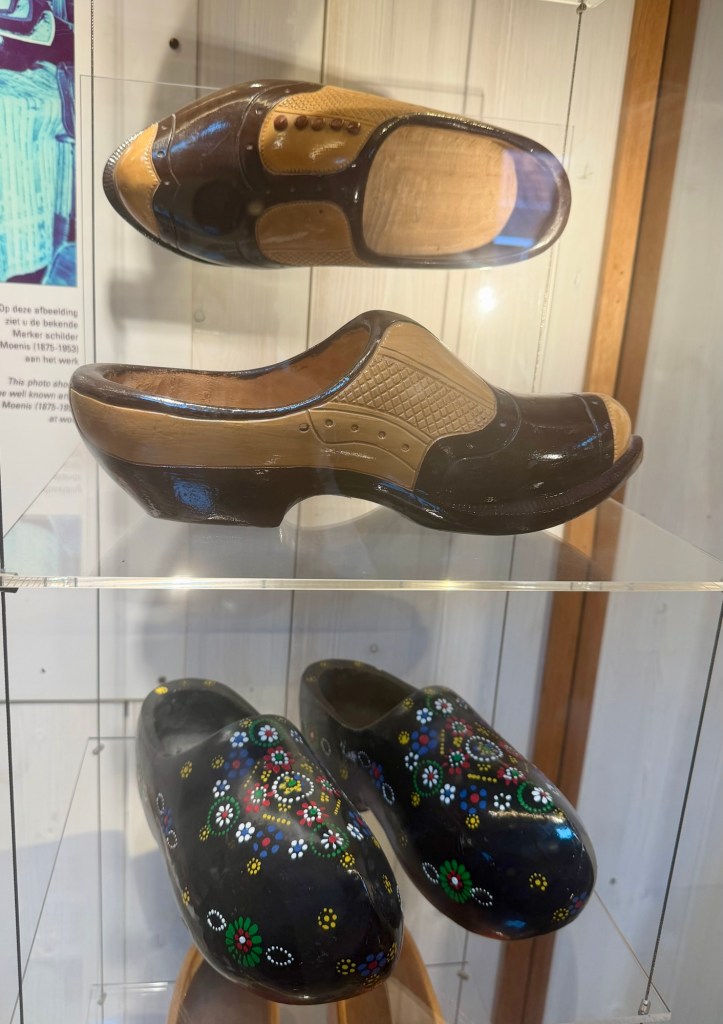
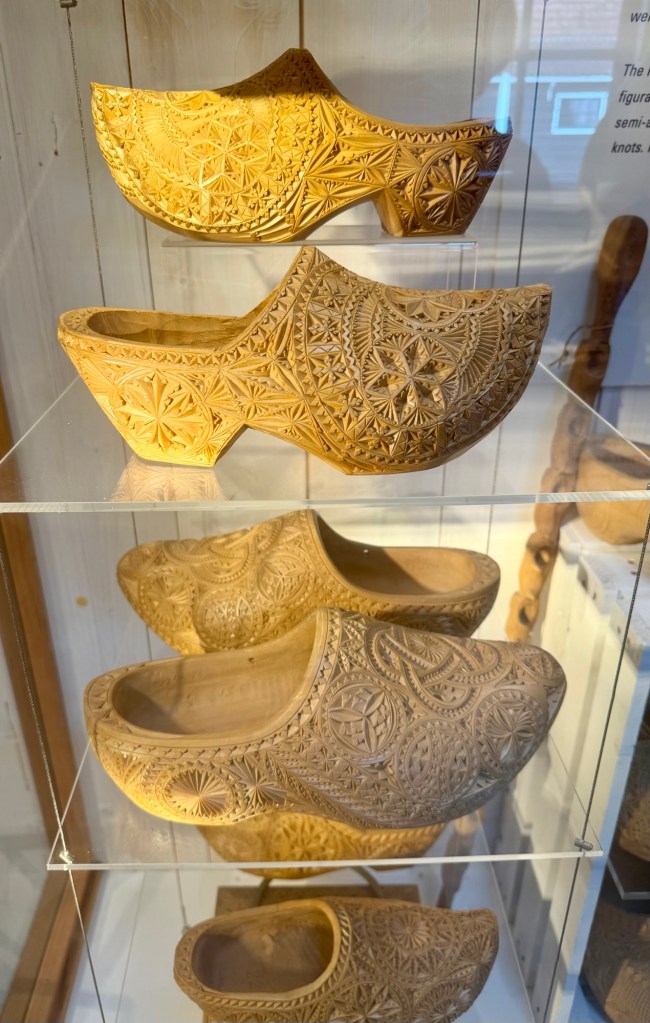
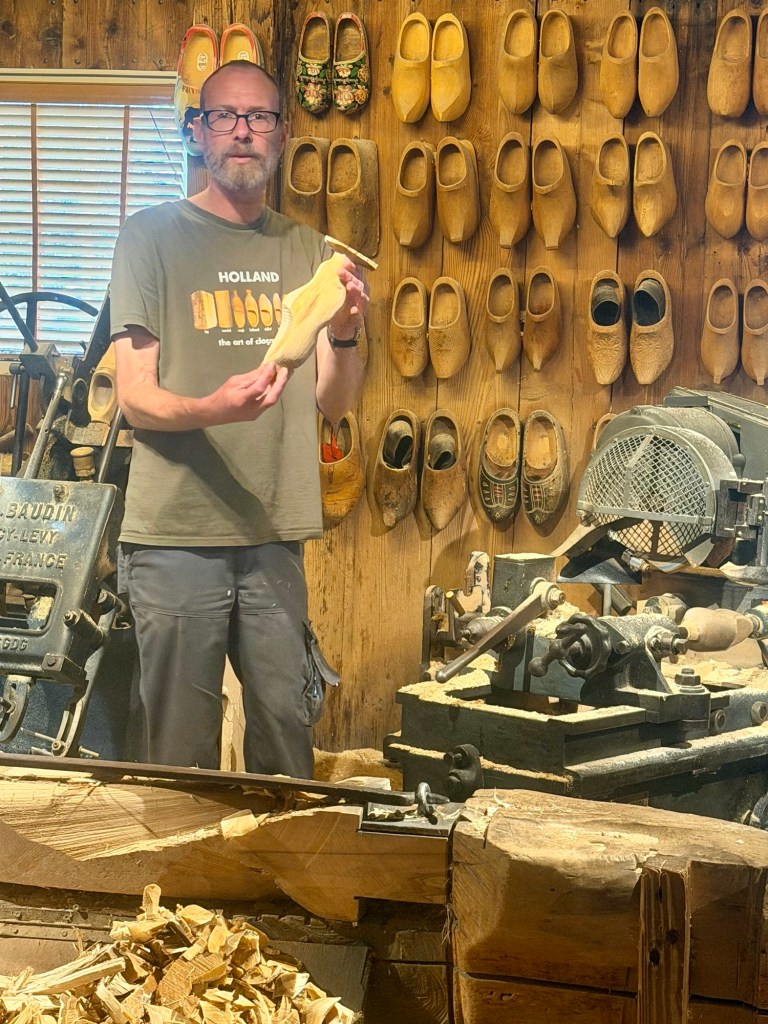
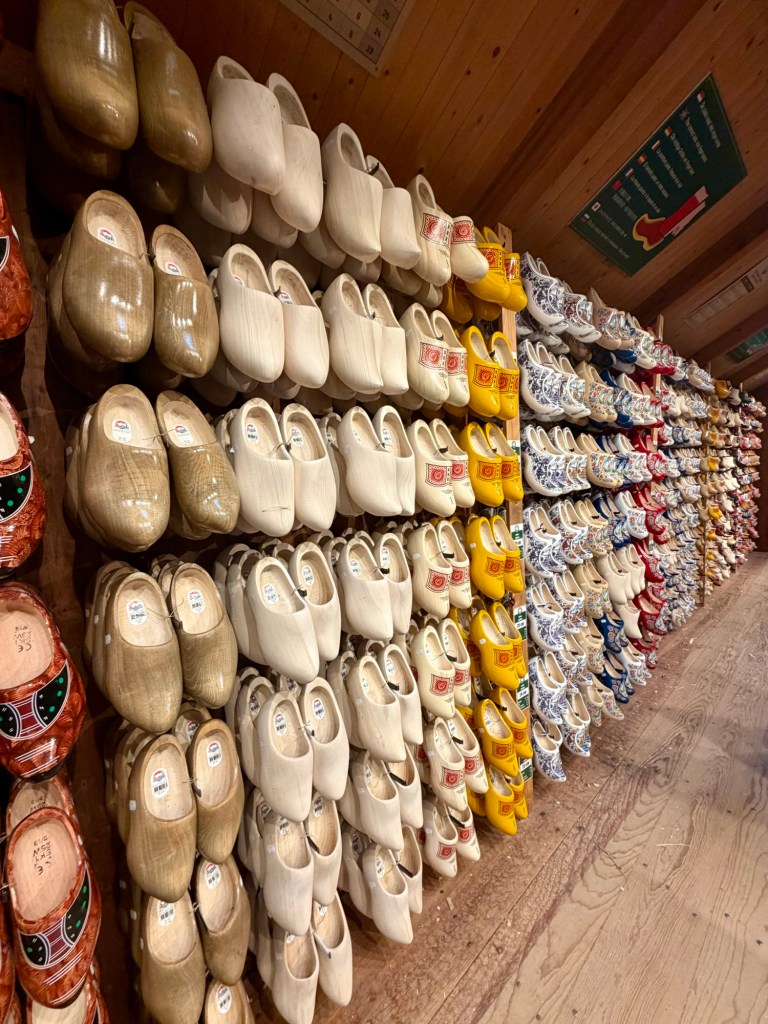
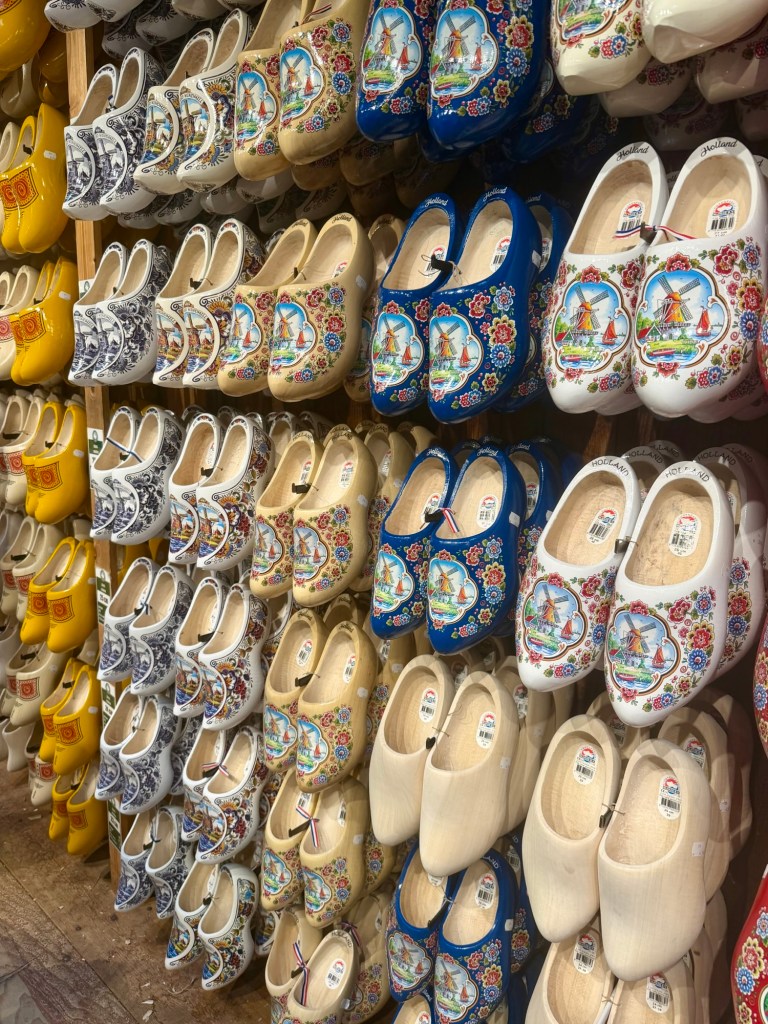
First, I visited a clog factory that also had a museum displaying many varieties of traditional wooden shoes.
Chip-carved clogs. Many cultures share this traditional woodworking technique.
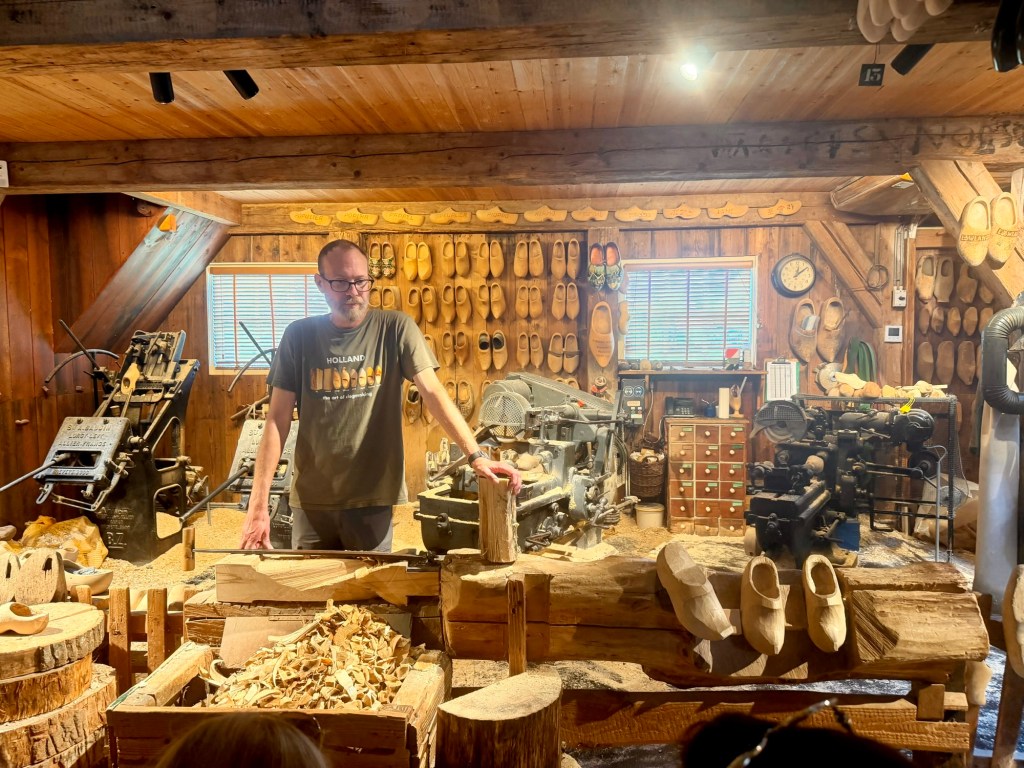
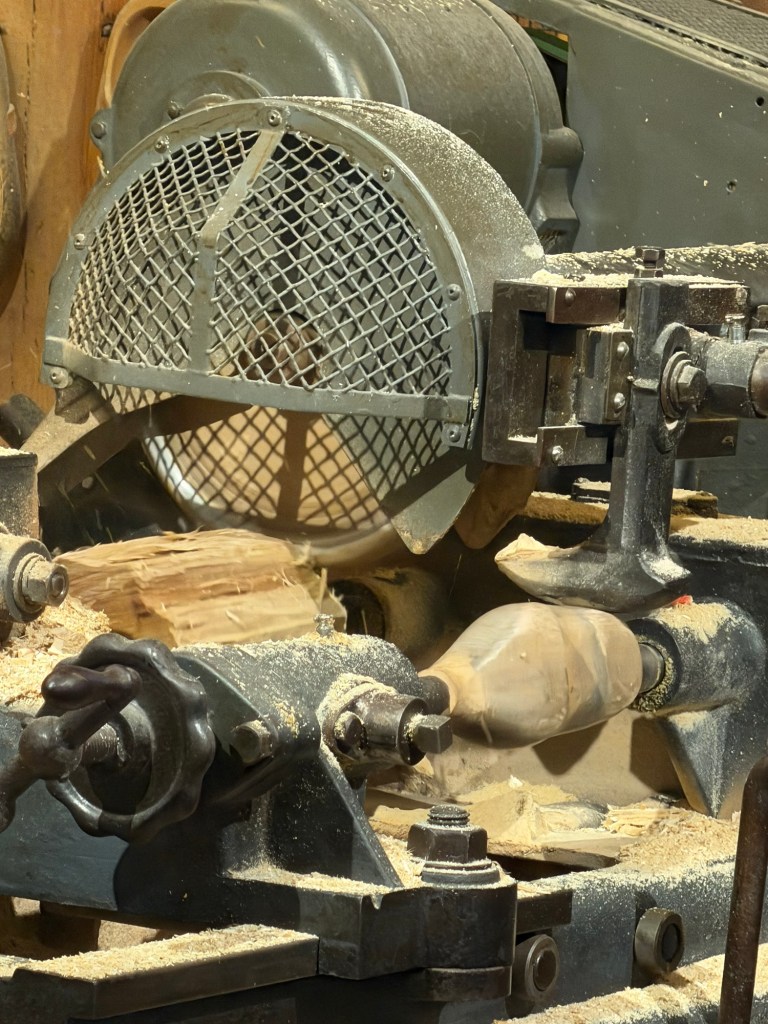
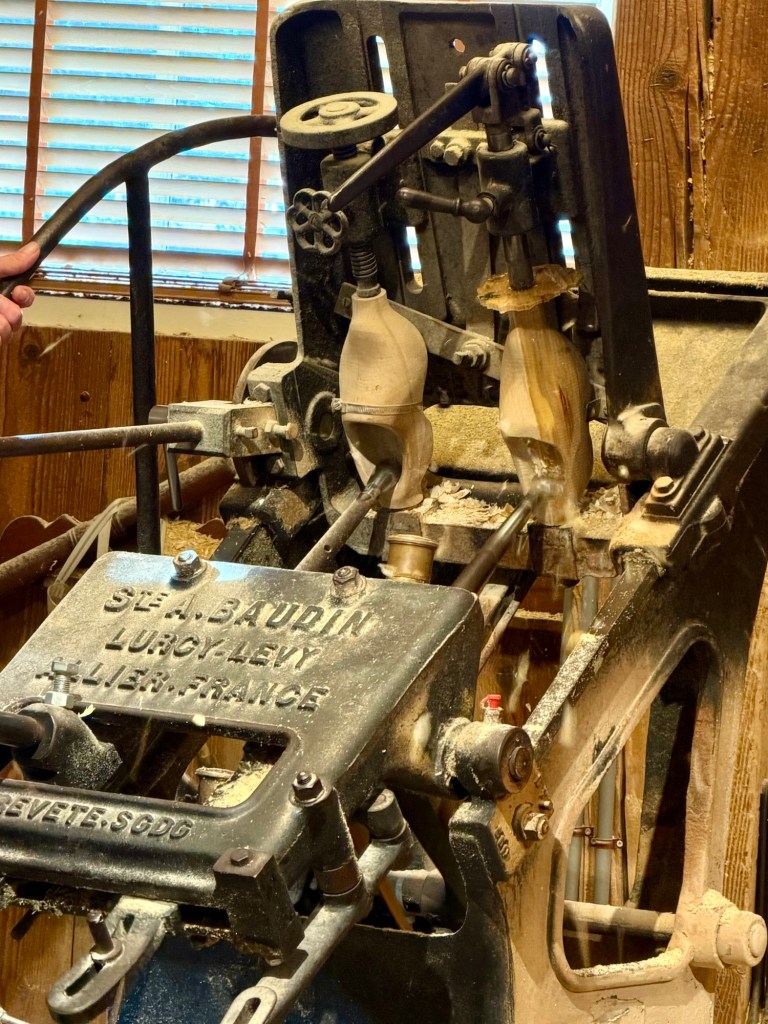
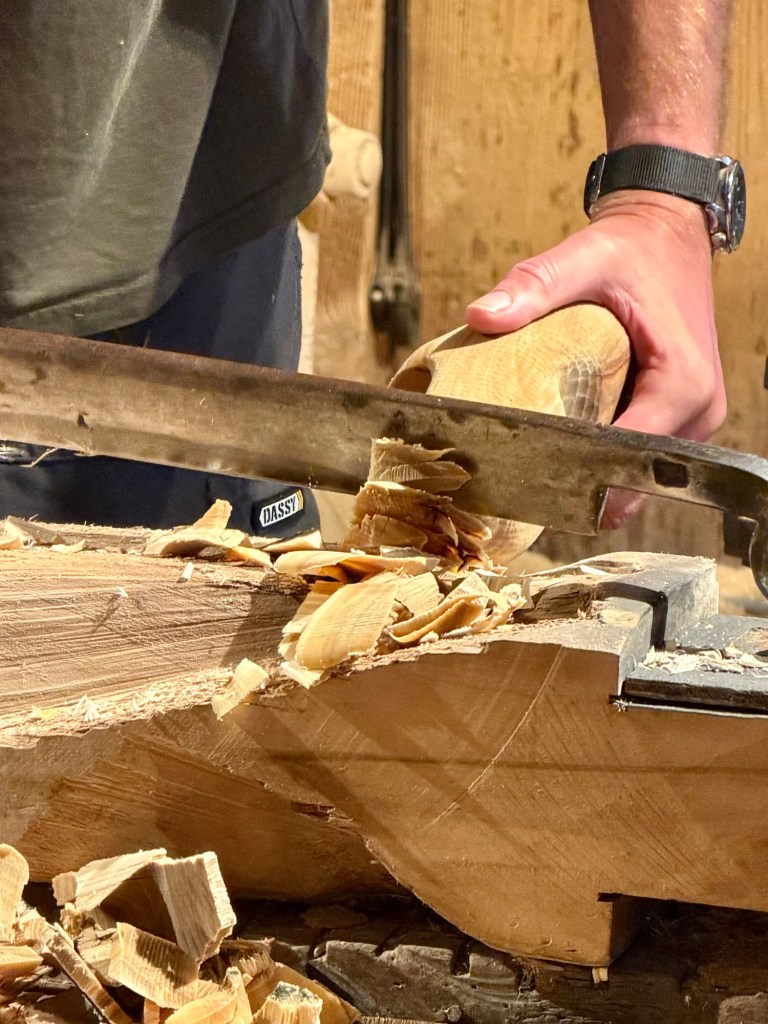
I watched a wooden clog being made in about five minutes, thanks to modern machinery.
The factoryA chunk of wood is placed in the lathe (left) with a test-guide clog (right) serving as a reference.Exterior doneNow the inside is carved out (right) with the test-guide clog (left) serving as a reference.The clog-maker trims and smooths the exterior by hand before the clog dries for 4 weeks, out of sunlight (or it can crack).
There were many styles and colours of clogs for sale in a wide variety of sizes. The Dutch swear by their clogs, but the thought of wearing them takes me back to the days of painful Dr. Scholl’s sandals, so no thanks.
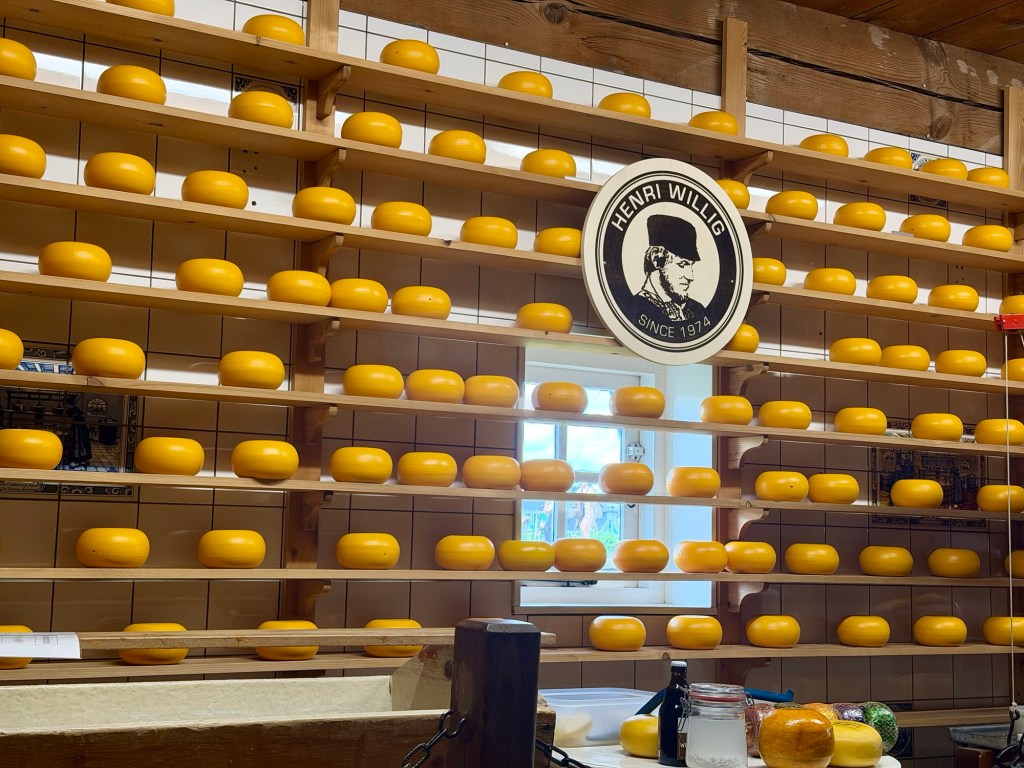
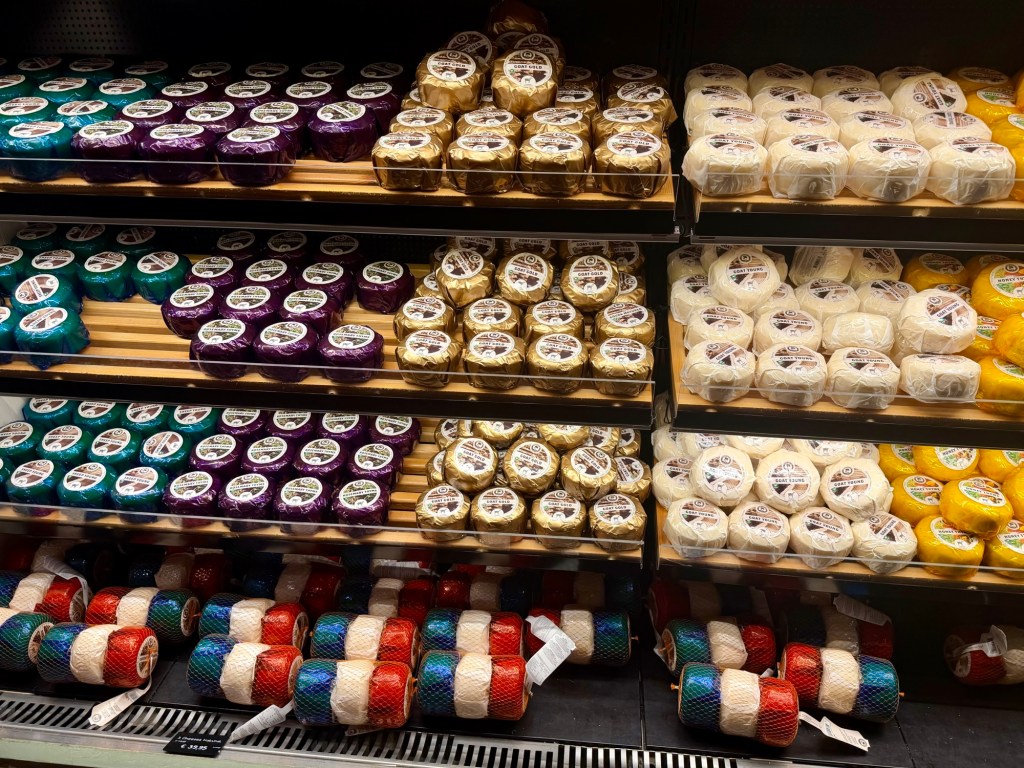
Next, I visited a cheese maker and learned how Gouda and Edam are made. There was a tasting room where I sampled several varieties, the most memorable being a lavender cheese with a striking violet color.
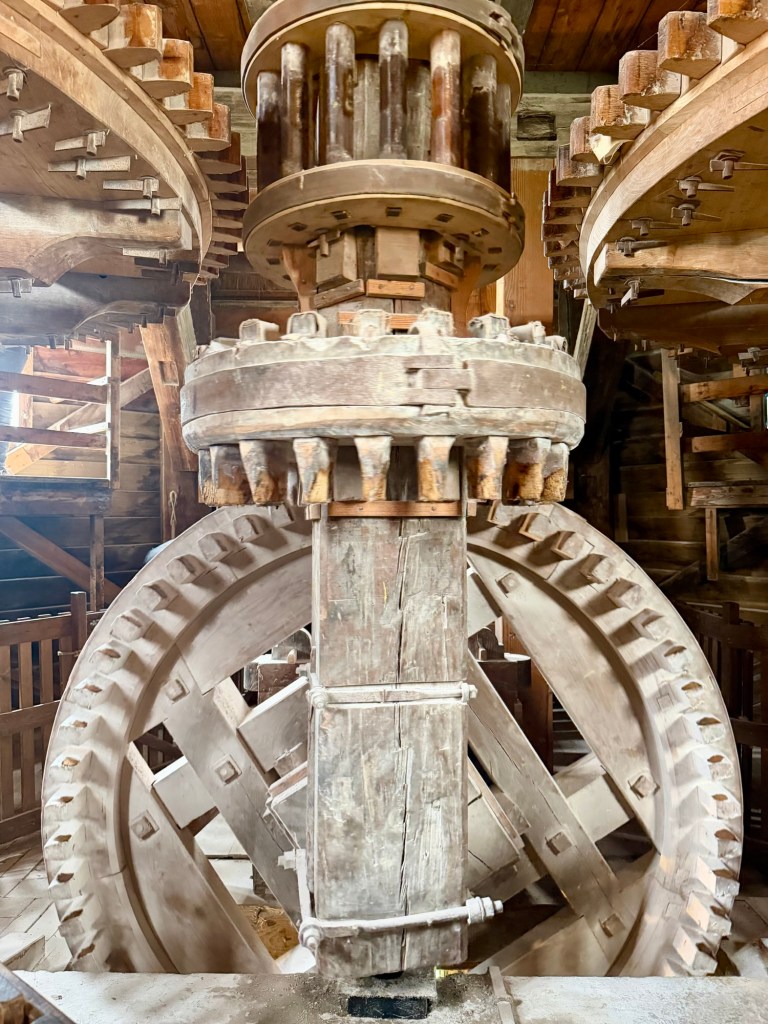
Finally, I toured a functioning windmill. I don’t know who first designed windmills and their series of enormous internal wooden cogs, but they are a brilliant piece of engineering.
I had to climb a couple flights of steep ladders with tiny steps to reach the top of the windmill; the view made it completely worth it. Then I had to descend the same way, facing the steps for safety.
It was nice to get out of central Amsterdam. Several other travelers on the tour expressed the same sentiment.
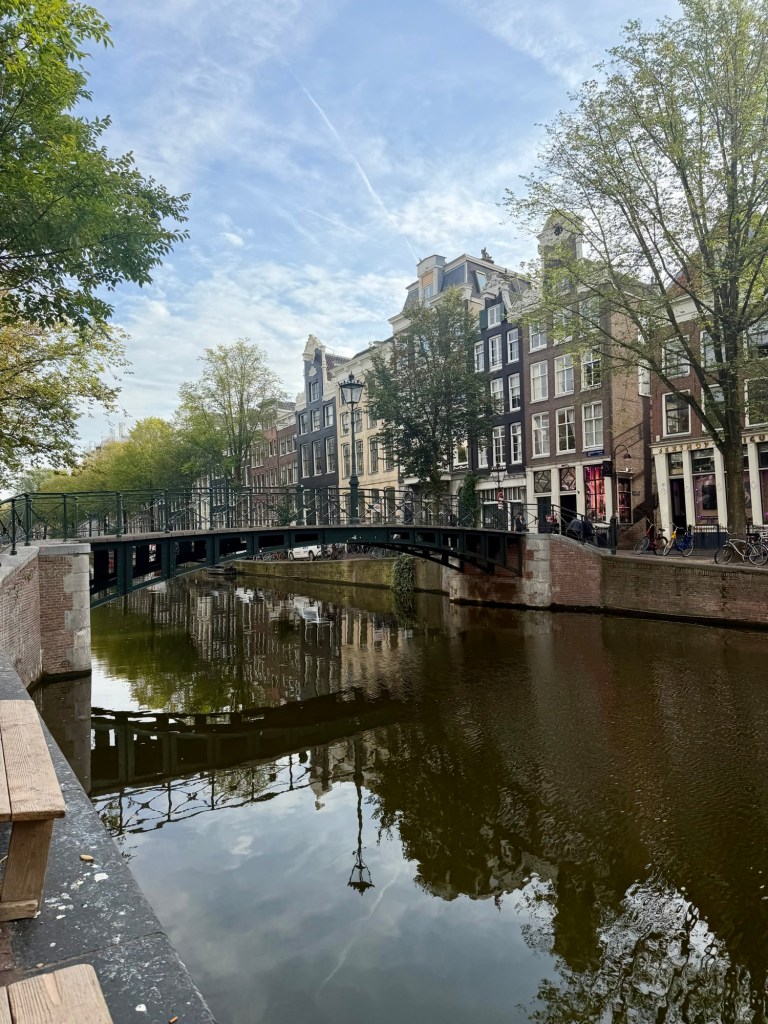
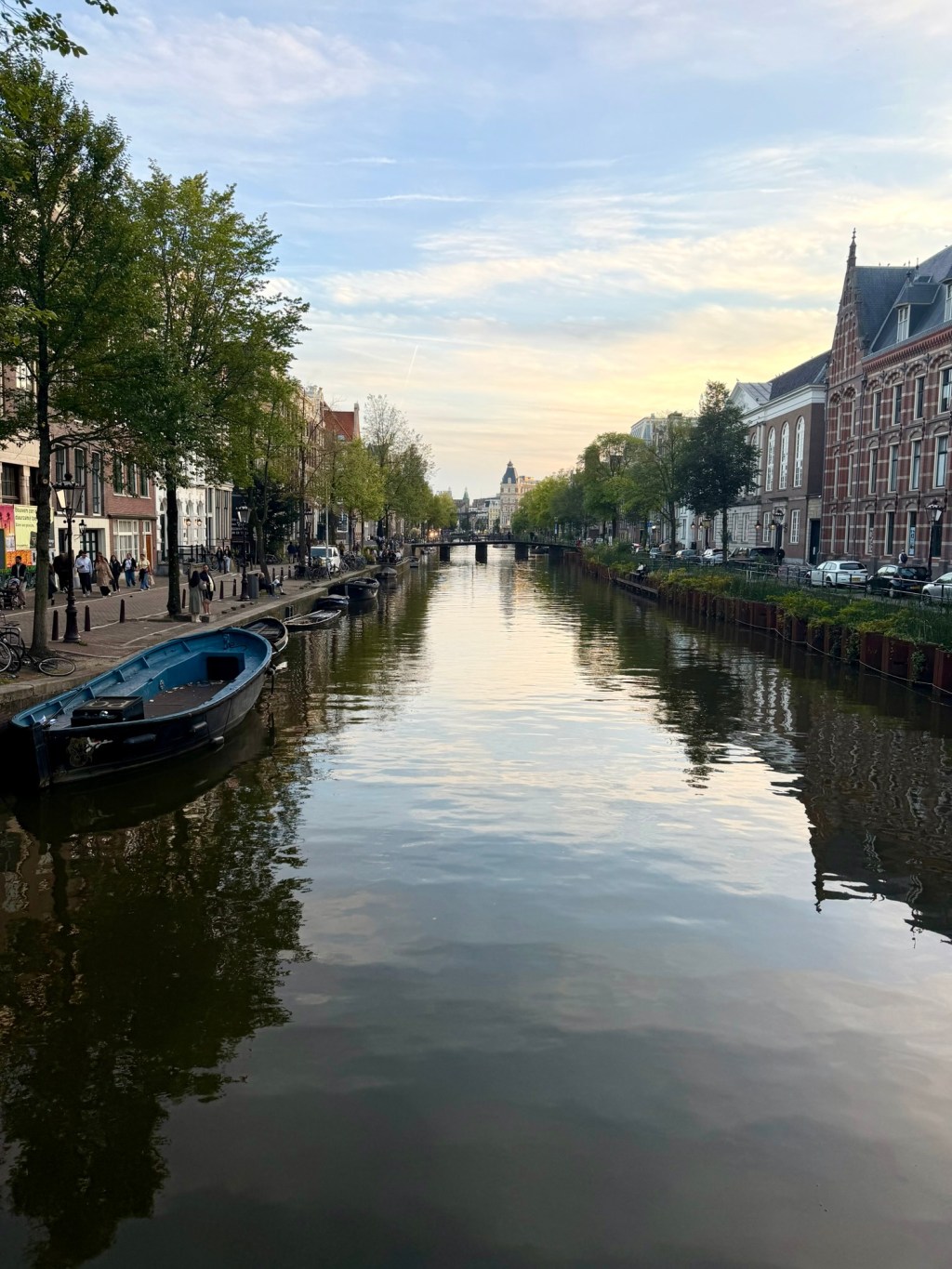
Walking back to my hotel, I snapped a few more pictures of new canals. There are so many here it’s hard to keep track!
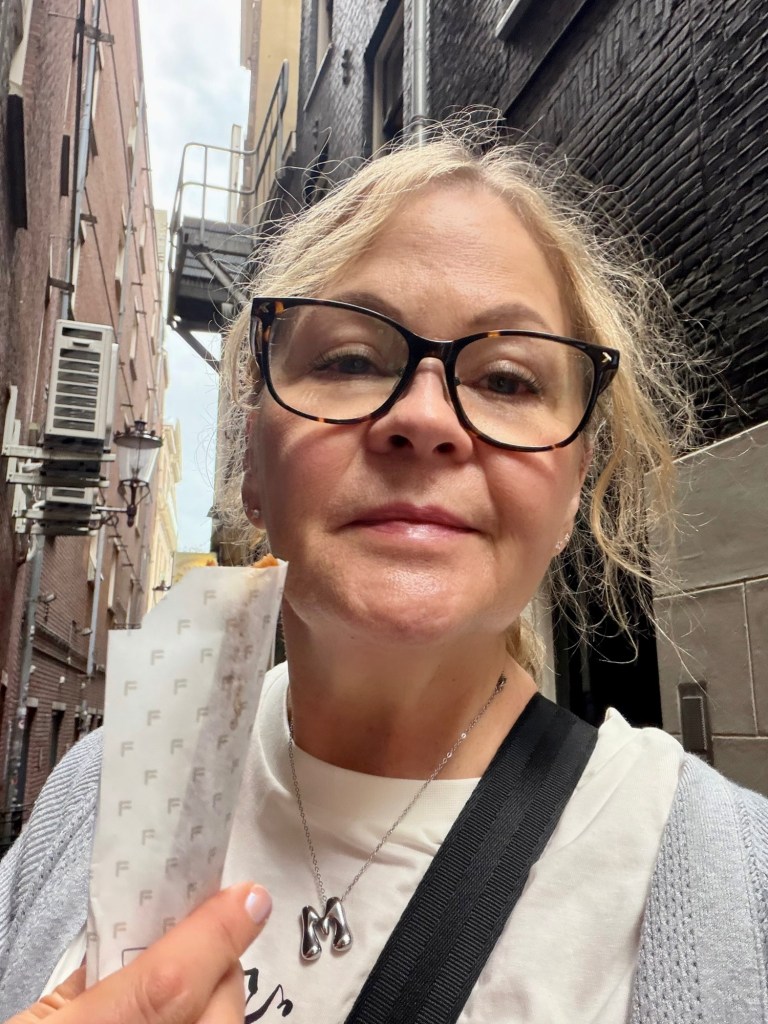
I also ate my first and last frikandellen. It was okay, but nothing to write home about. I had to do it. When in Rome…
Crowds, neon, and noise Devil’s lettuce fills the air Church bells ring so sweet
Marla breathing in the ubiquitous jazz cigarettes
Well, I’ve been in Amsterdam for a few days now, and I’d best describe it as Copenhagen’s grittier, Bohemian brother.
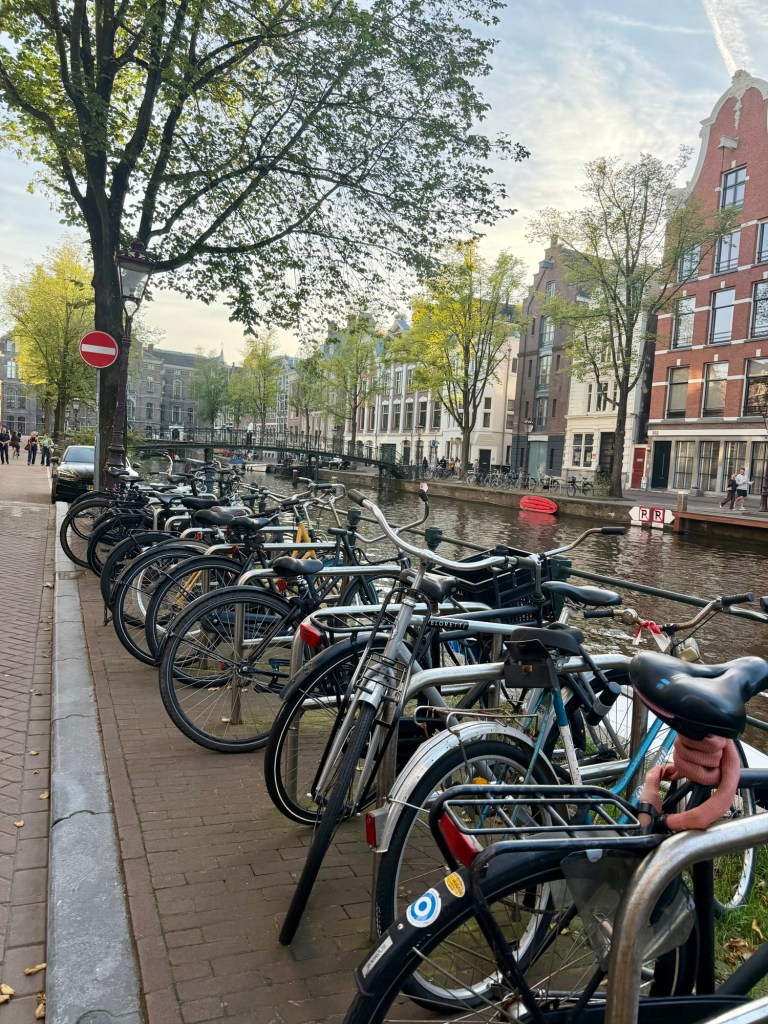
The two cities have plenty in common: both are waterbound, threaded with beautiful canals (though Amsterdam has more), and both have a strong bicycle culture (though Copenhagen seems to have more cyclists).
Amsterdam’s bicycle culture is more “Mad Max.” Bikes are less pristine, there are more e-bikes, and it’s not uncommon to see 2-3 people on a single bike.
But the vibes are very different. Copenhagen is calm and cozy, with its signature hygge, whereas Amsterdam is edgy and high-energy despite the sweet church bells that always seem to be chiming. Copenhagen’s architecture feels bright and modern, while Amsterdam’s is moodier, darker, and a little more mysterious.
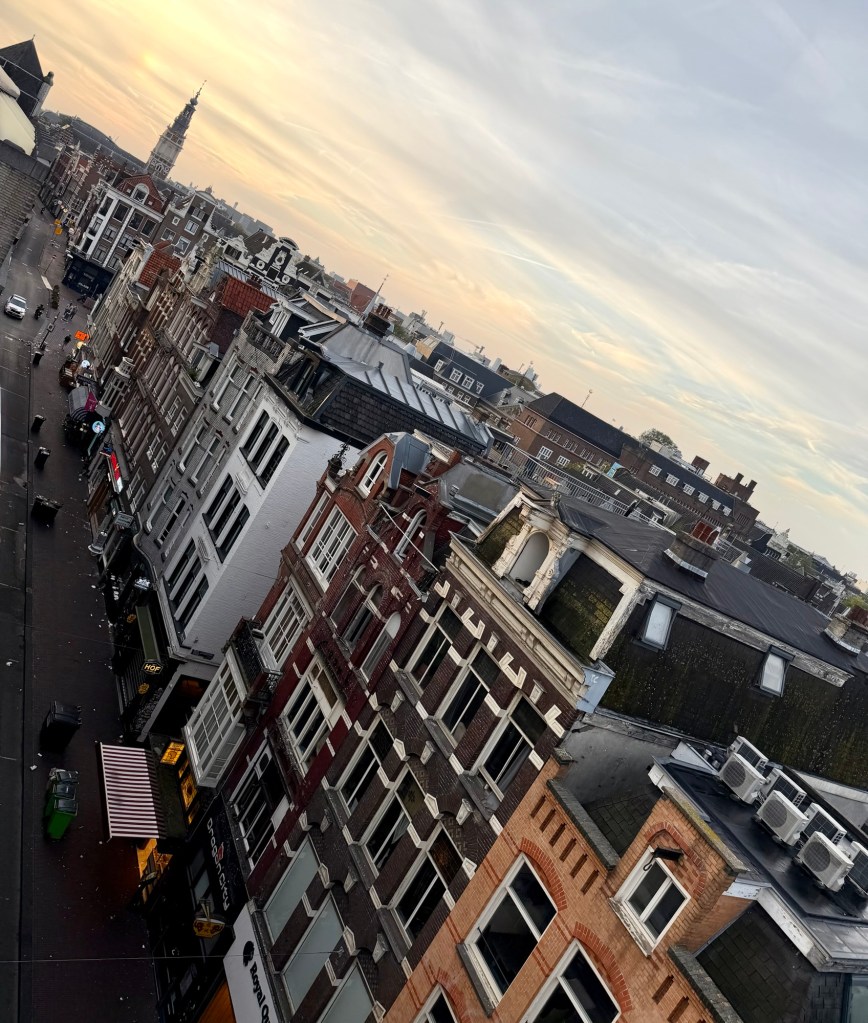
Looking down from my 6th floor loft
I find Amsterdam slightly less walkable, mostly because of the crowds. The smell of jazz cabbage seems to be everywhere, and even small grocery stores have entire sections devoted to cannabis-infused snacks and other products which, thankfully, are clearly labeled.
It’s definitely a fun city if you’re looking for some revelry, but there’s plenty of culture here too, with a huge selection of museums and galleries ranging from the world-famous Van Gogh Museum and Anne Frank House to decidedly more niche attractions like the Hash, Marijuana & Hemp Museum.
I should stress that I’m specifically describing the city centre. Not all of Amsterdam feels this way. I’ve already found quiet, peaceful streets just a kilometre or so from here, where the city takes on a completely different character.
I’ve got some fun adventures lined up for the next few days here, so stay tuned.
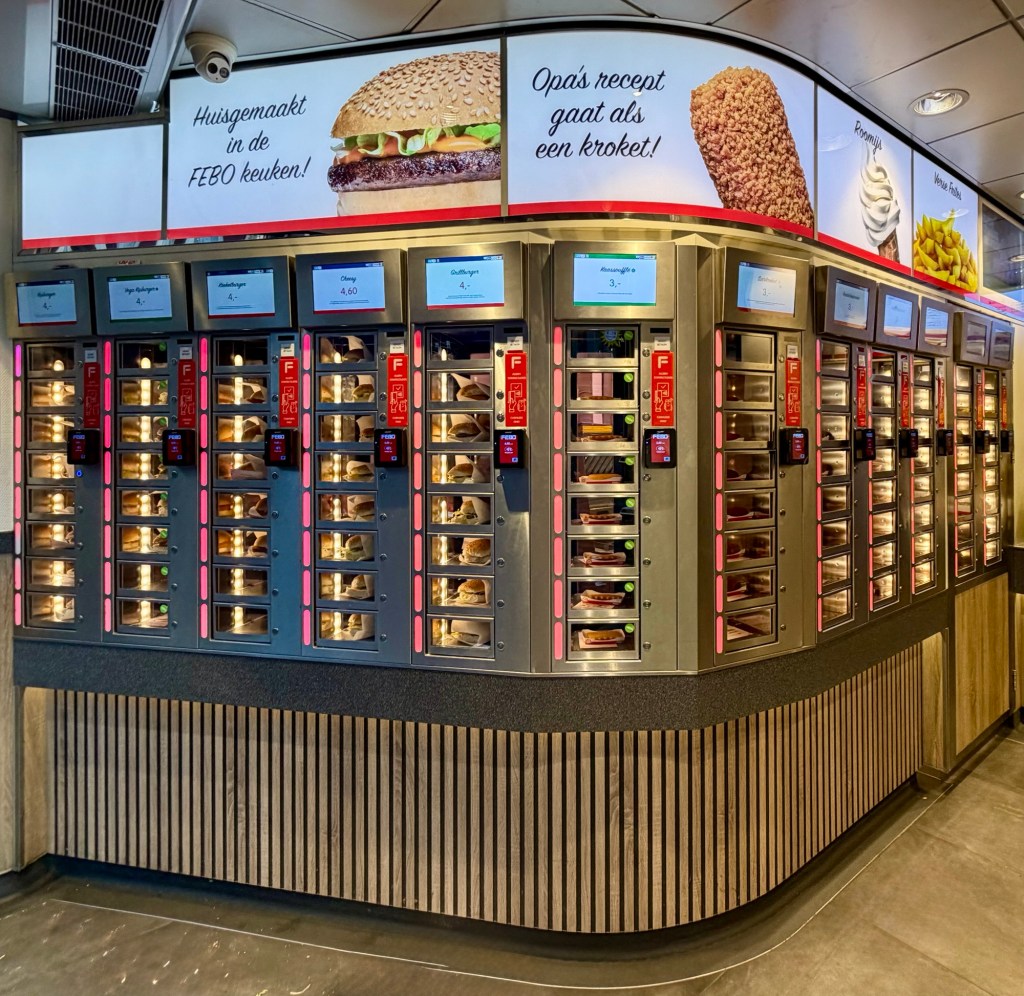
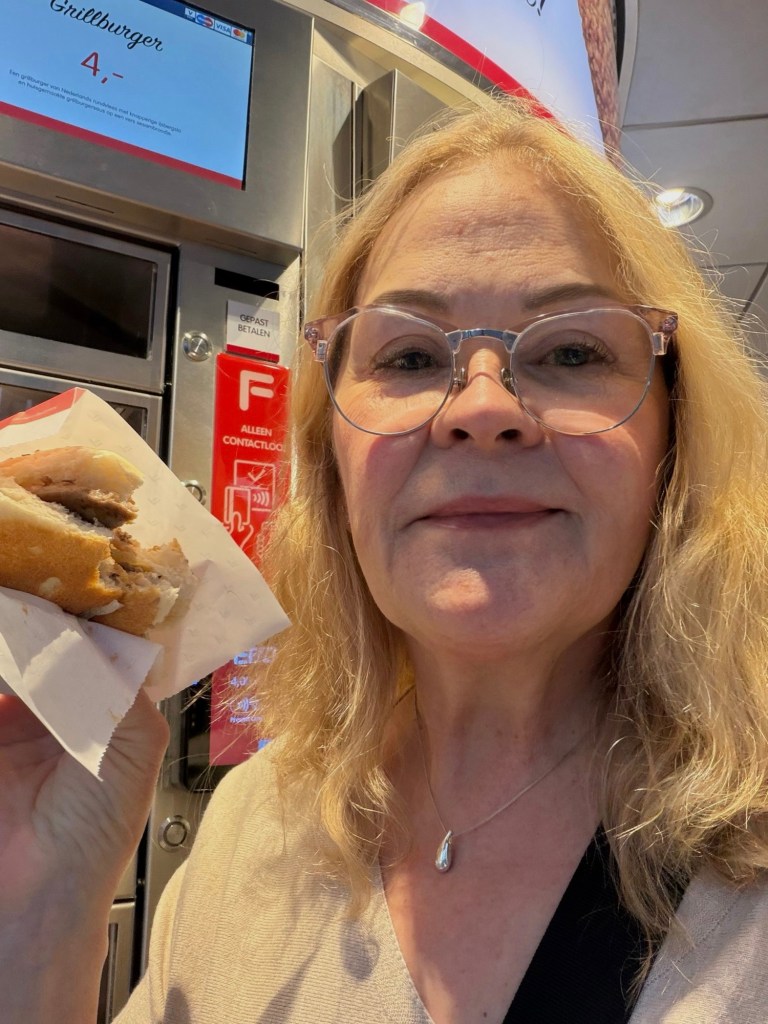
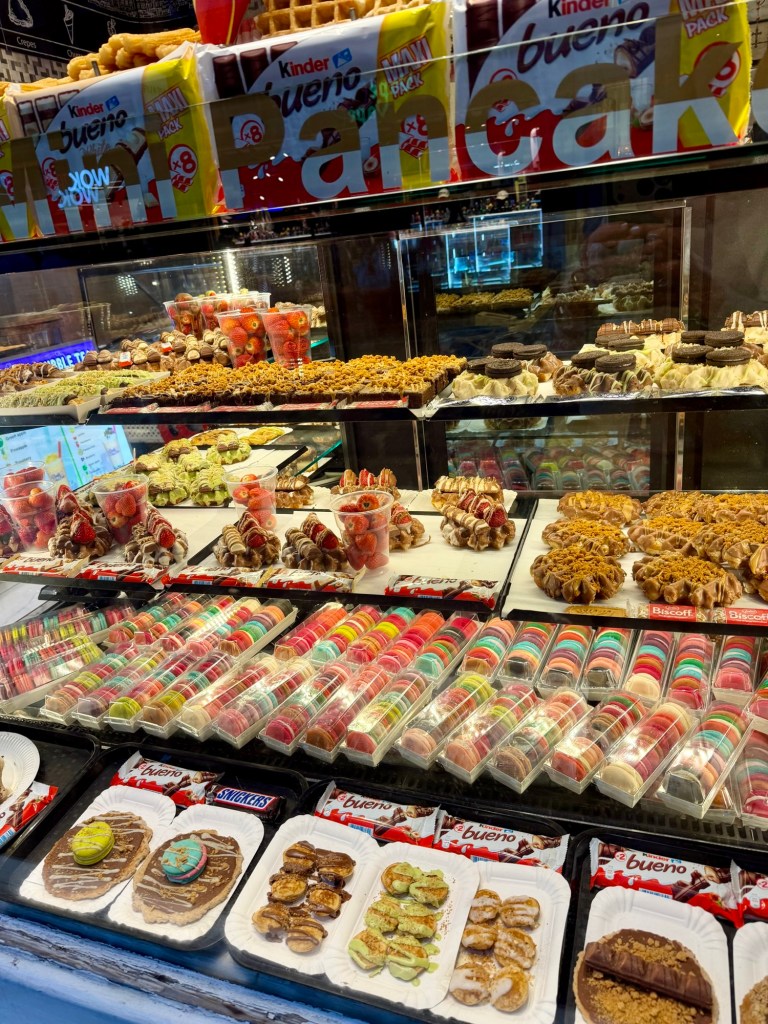
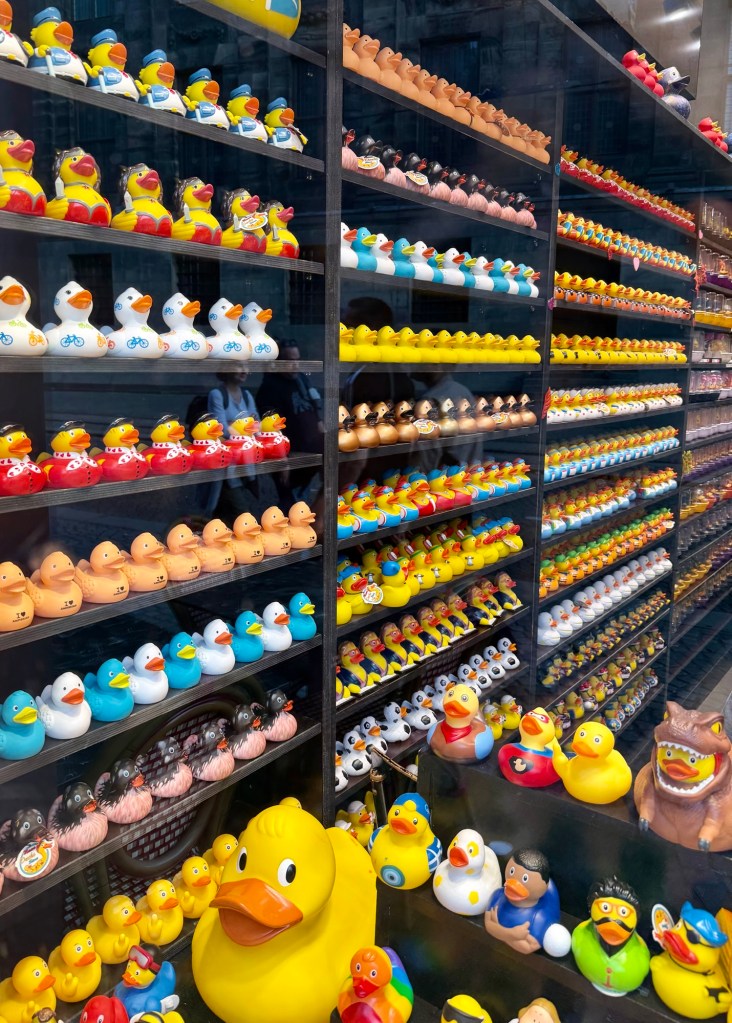
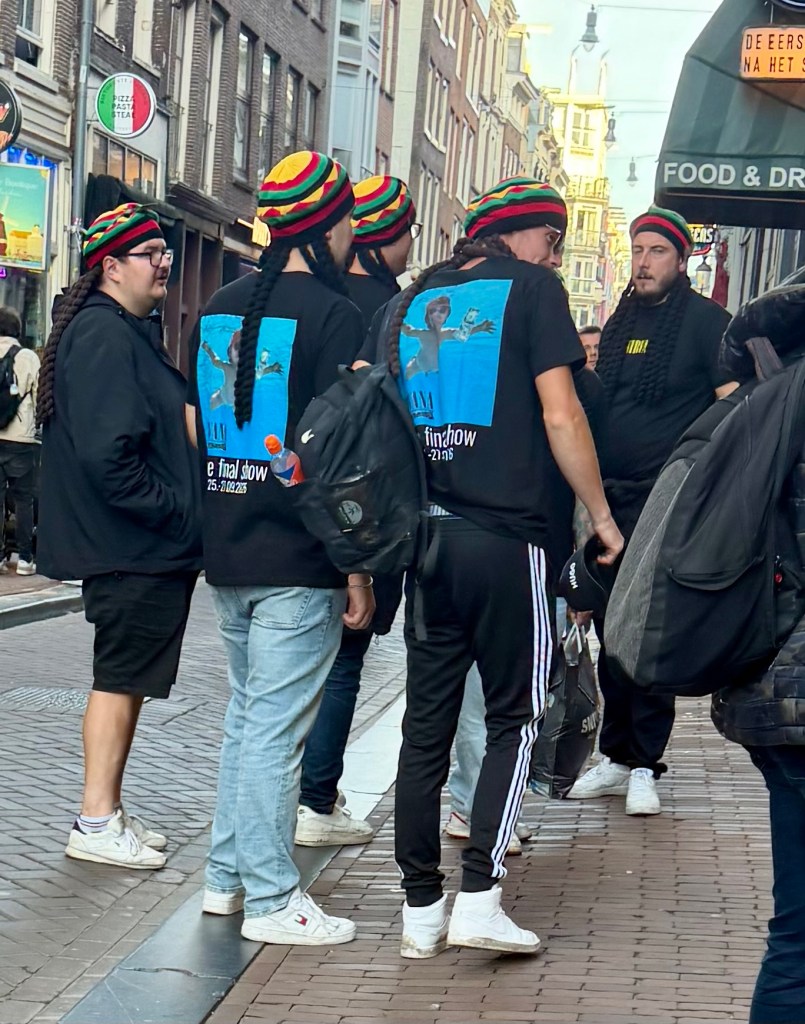
FEBO’s automated snack walls can be found in multiple locations. They dispense freshly made snacks, such as croquettes, burgers, frikandellen, and other Dutch foods I can’t spell, from heated compartments.I had a delicious burger. It was lean and garnished with lettuce, tomatoes, and a tiny bit of sauce. No cheese, pickles, or onions. How did they know that this is my perfect burger? No, I have not indulged. It’s too bad that I don’t eat cheese (due to the salt content).No shortage of souvenir stores here!I think they’re tourists, not locals. 😂
I spent four days in Copenhagen and was fortunate to see much more than I’d planned. The locals understood my Norwegian, but I couldn’t follow their Danish, so I stuck to English and the little Danish I knew.
Here are some highlights of Copenhagen:
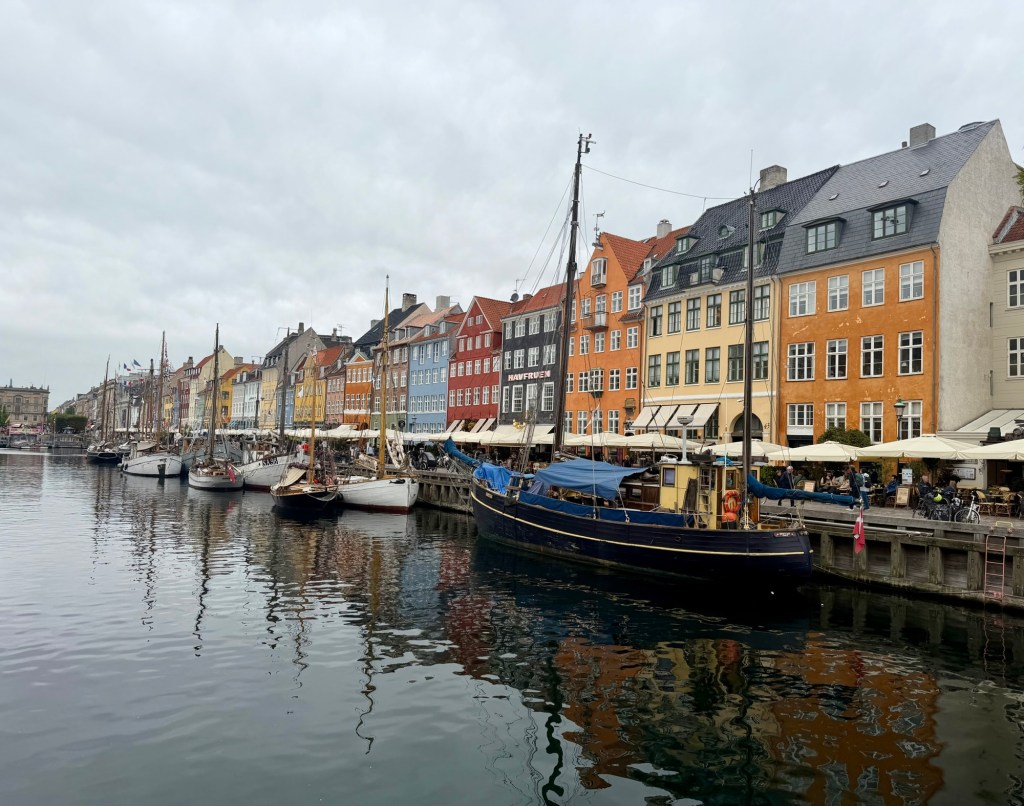
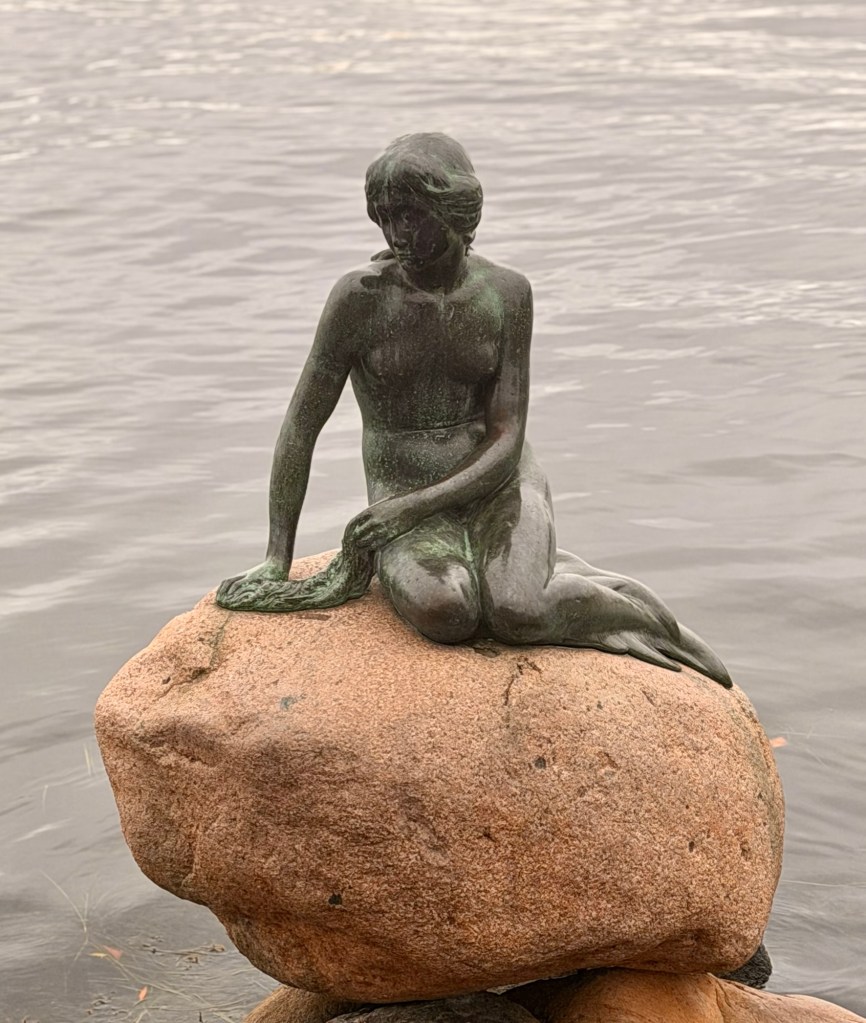
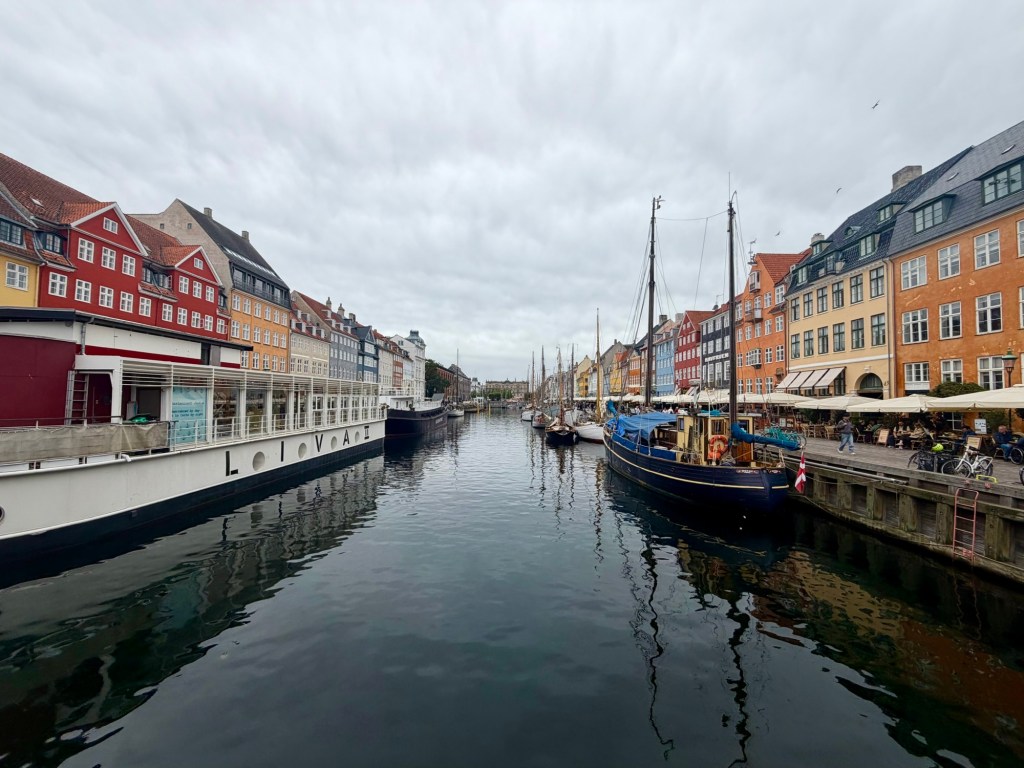
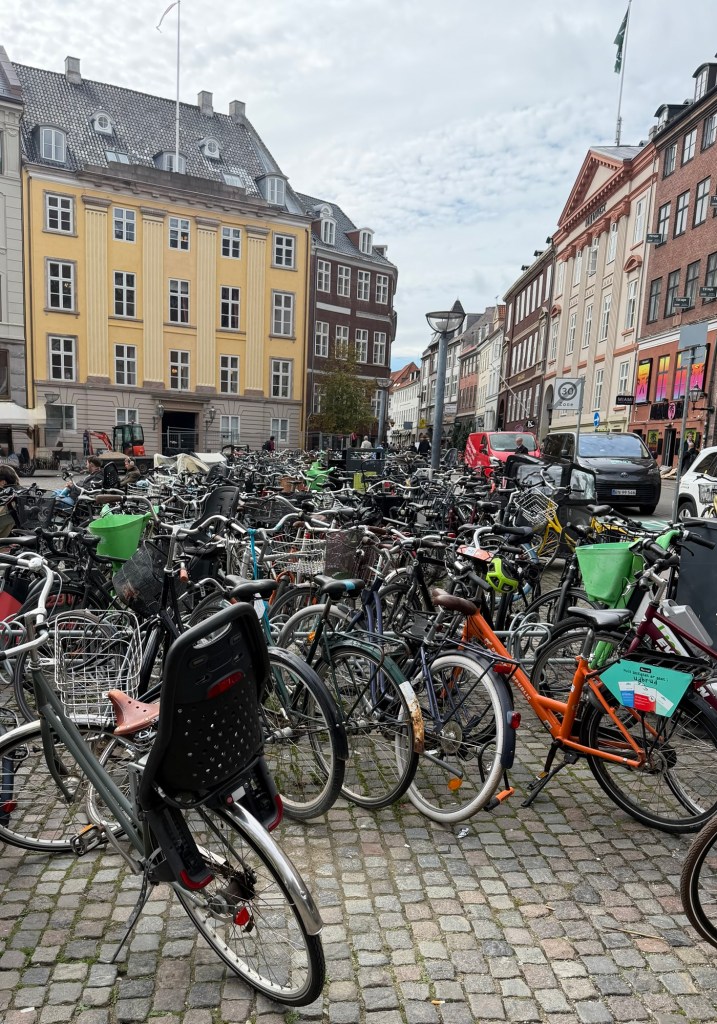
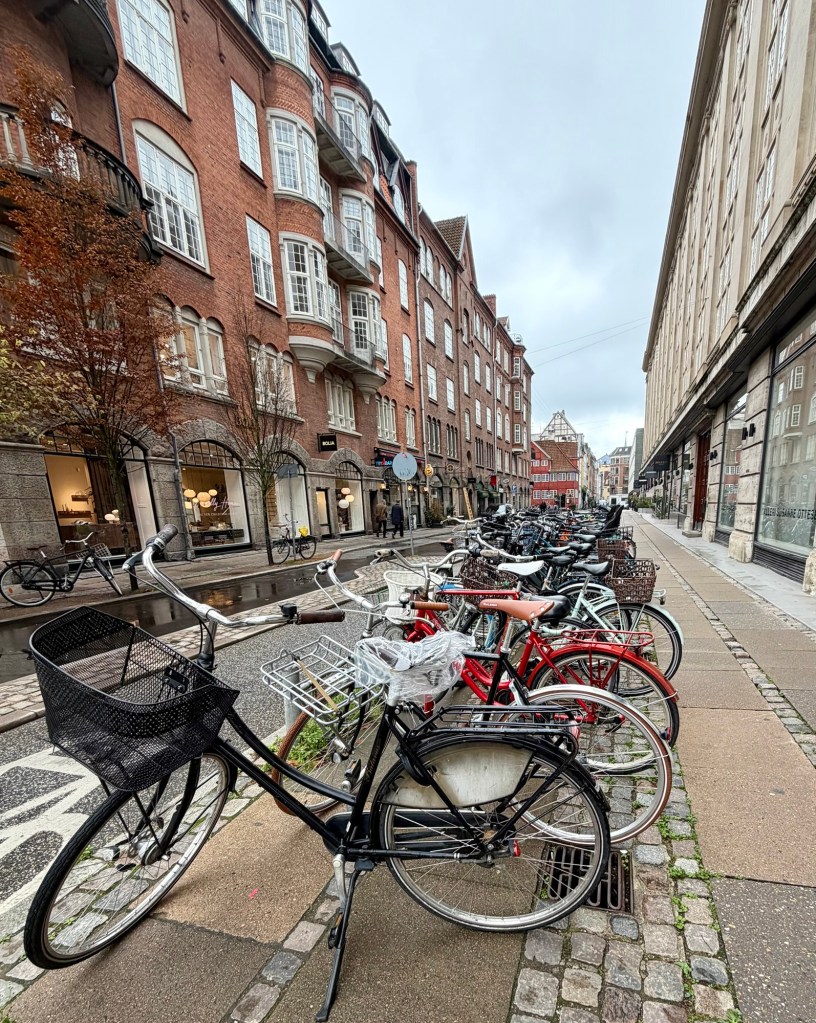
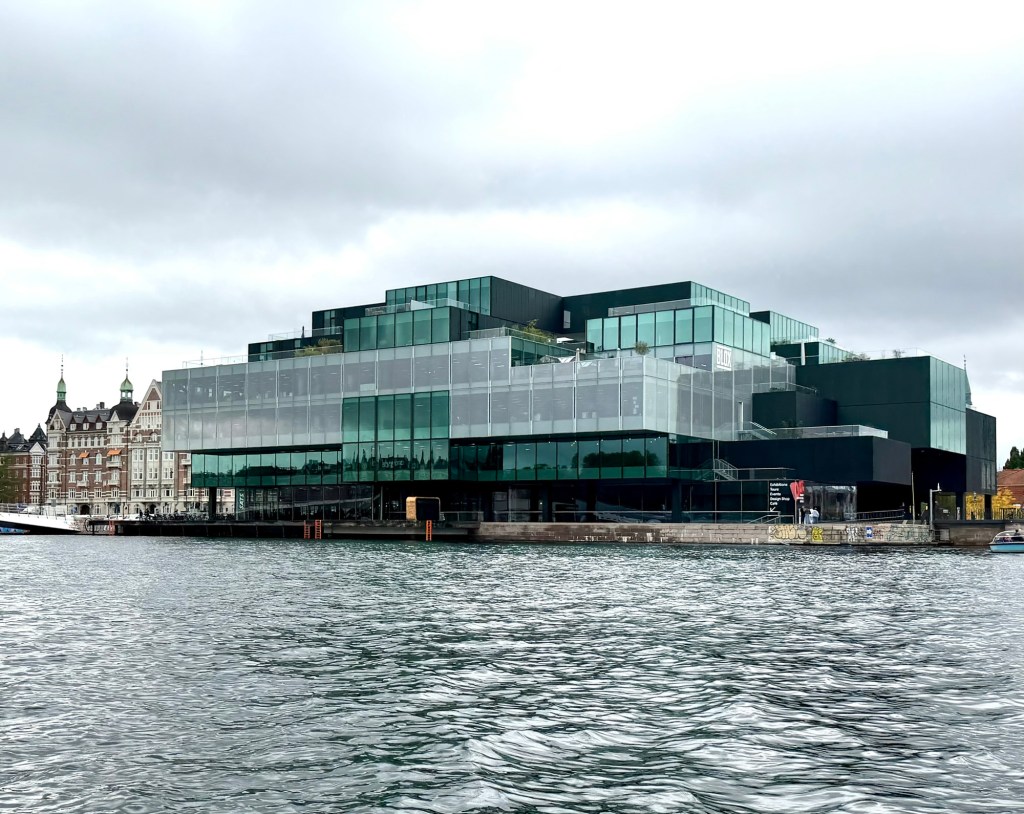
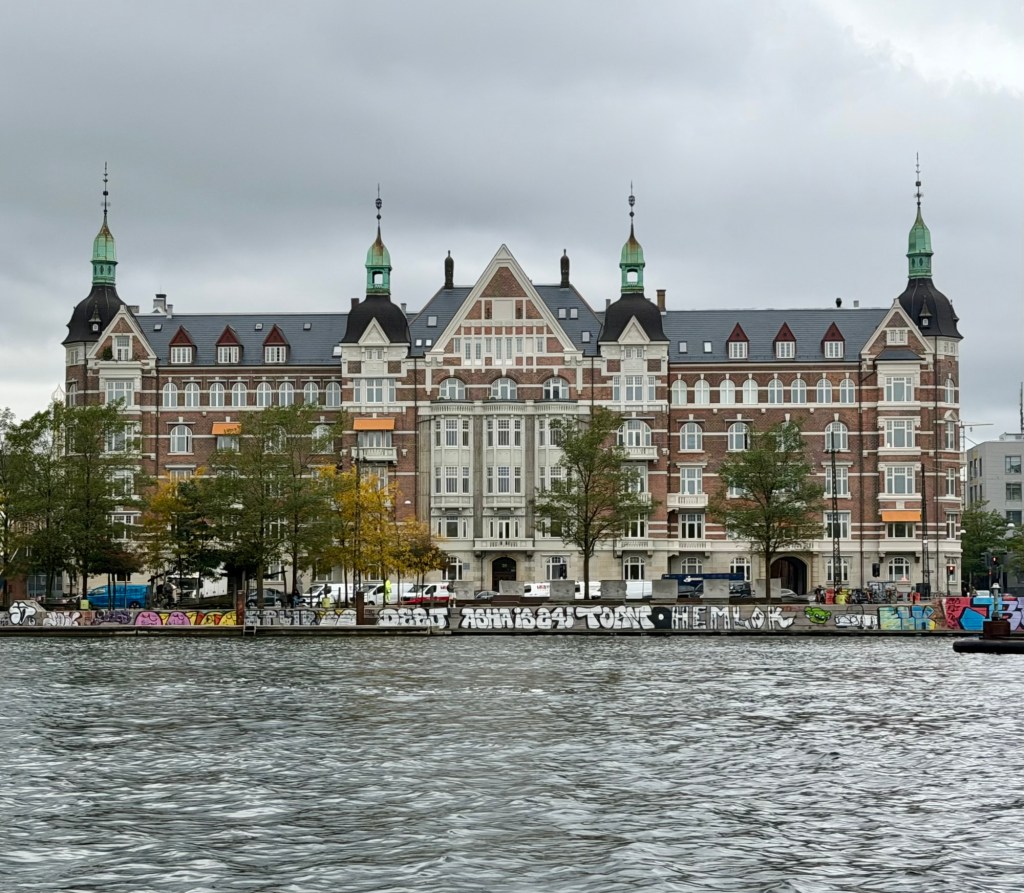
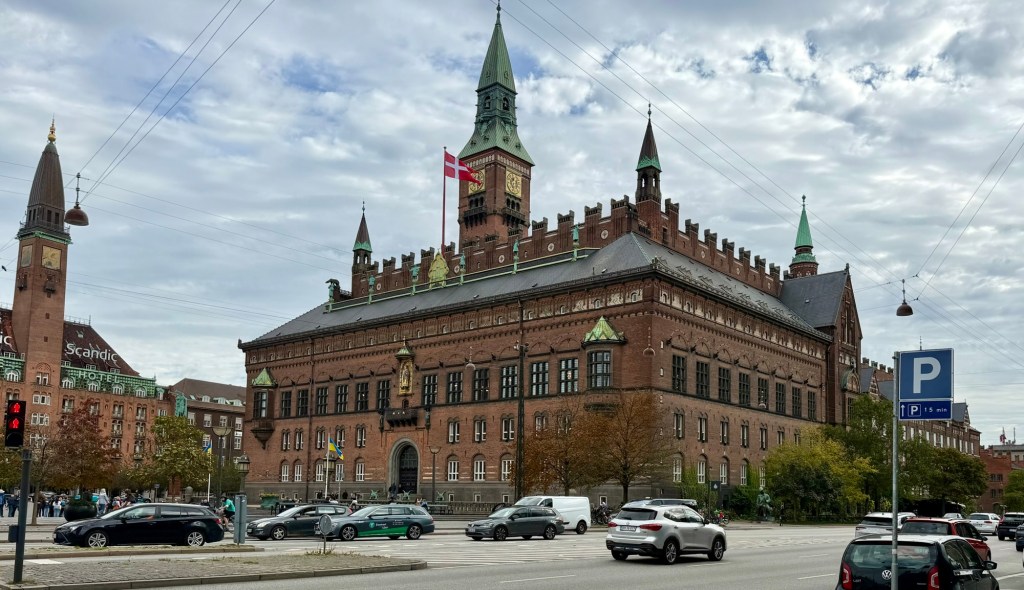
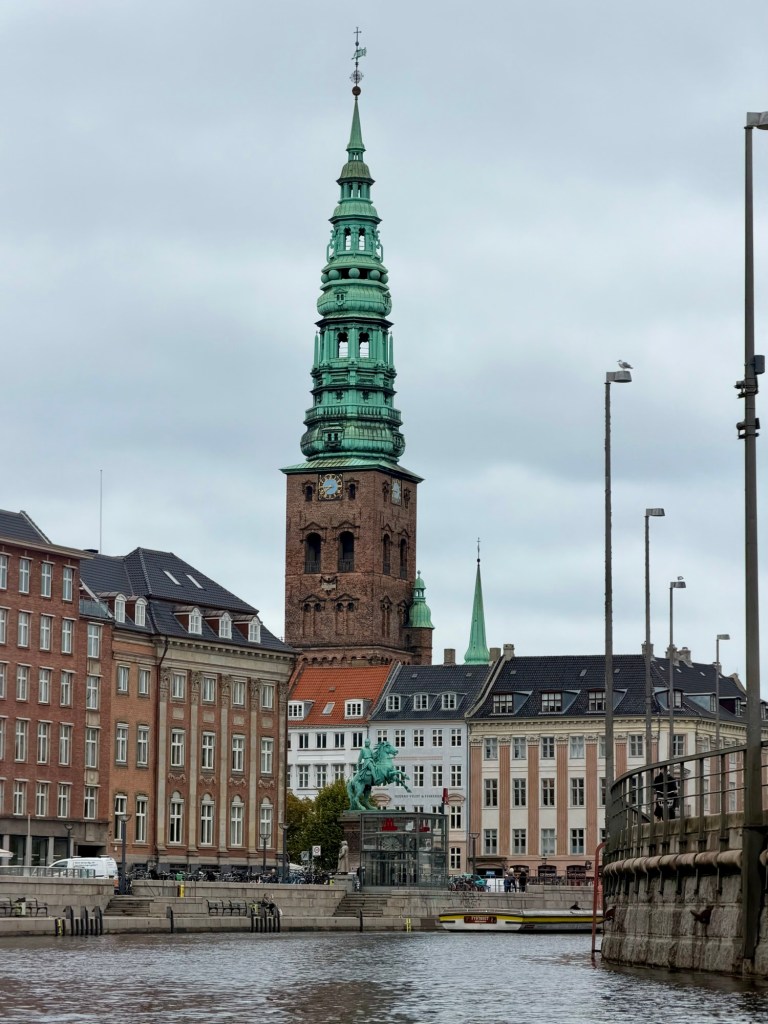
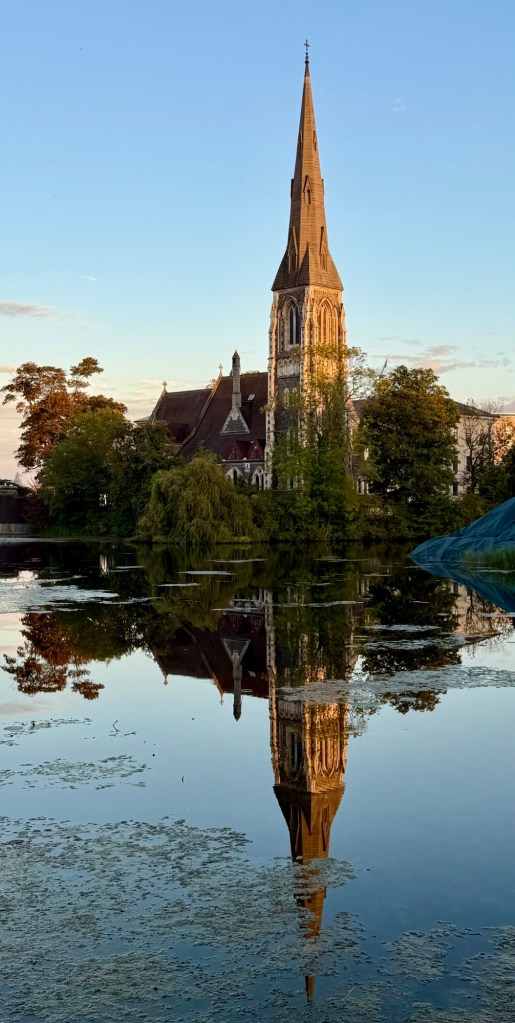
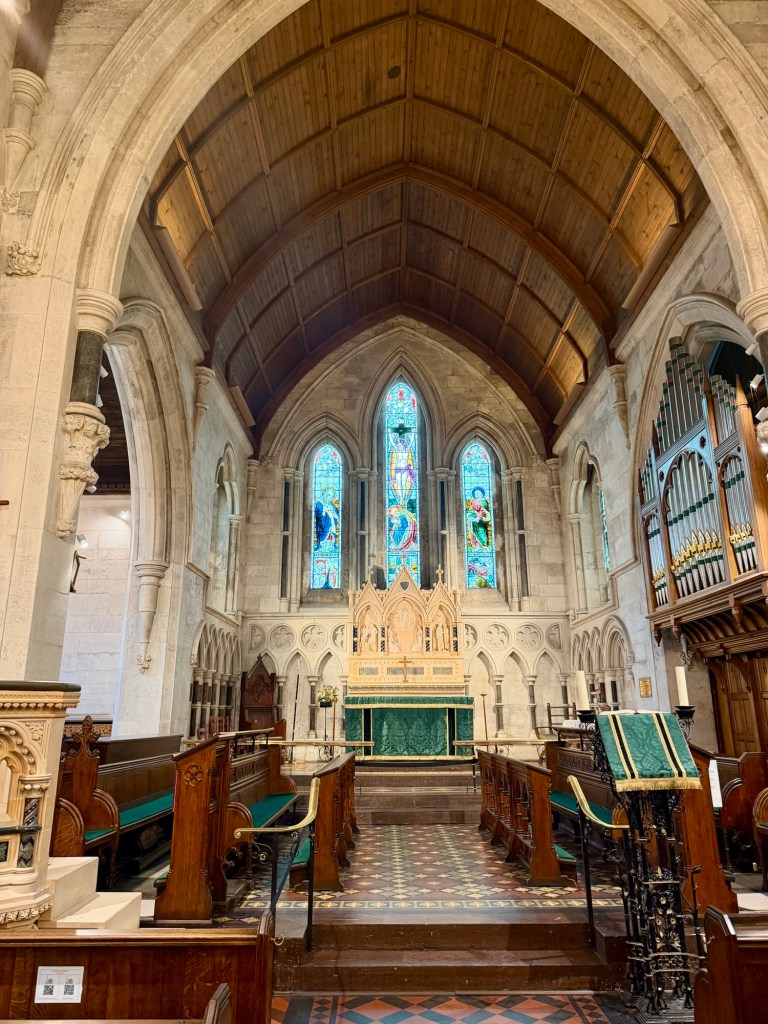
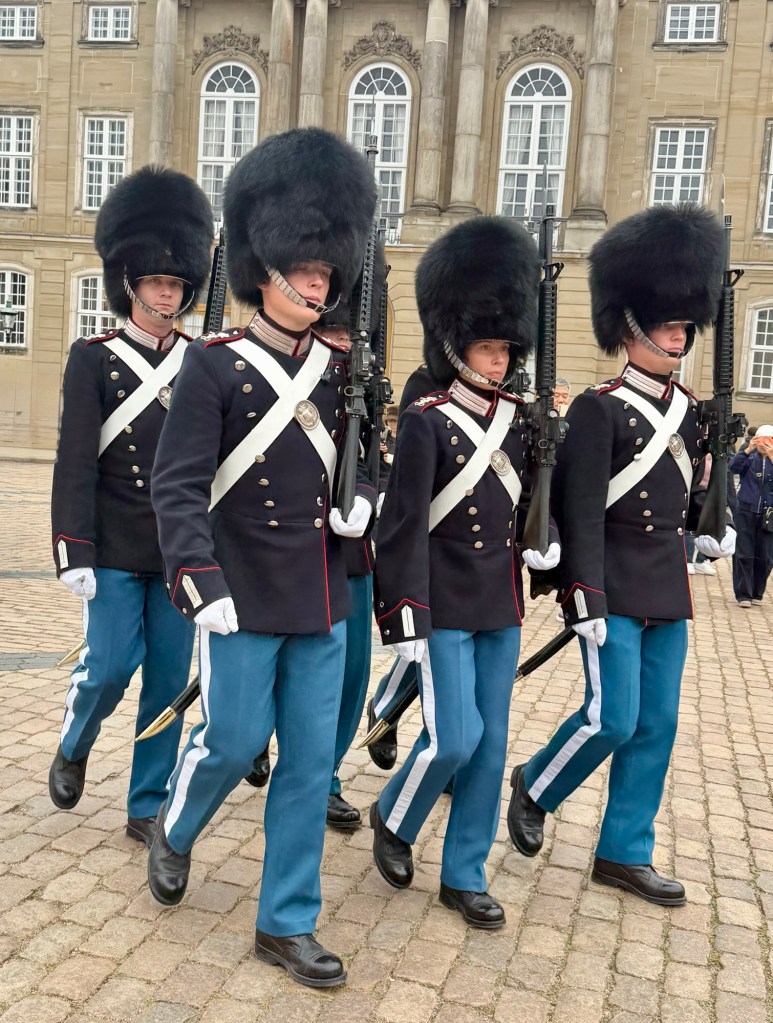
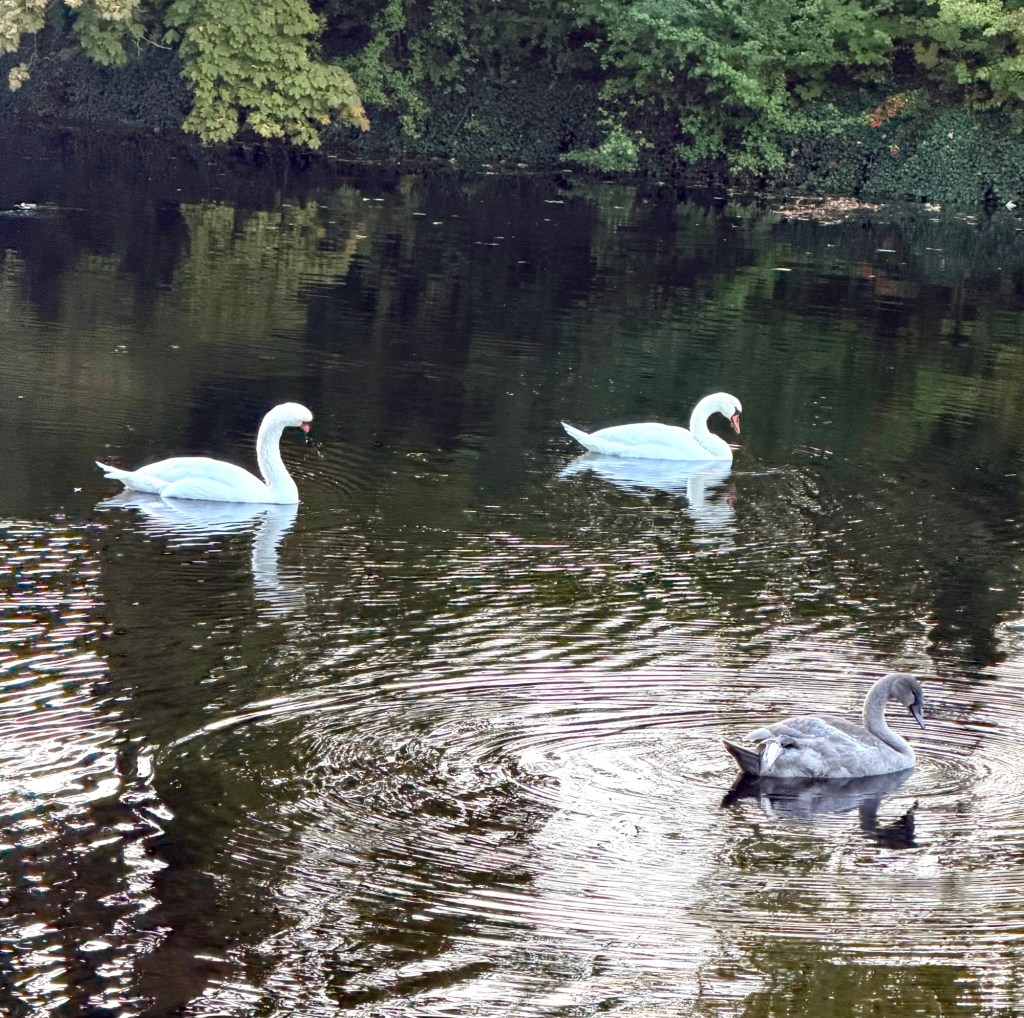
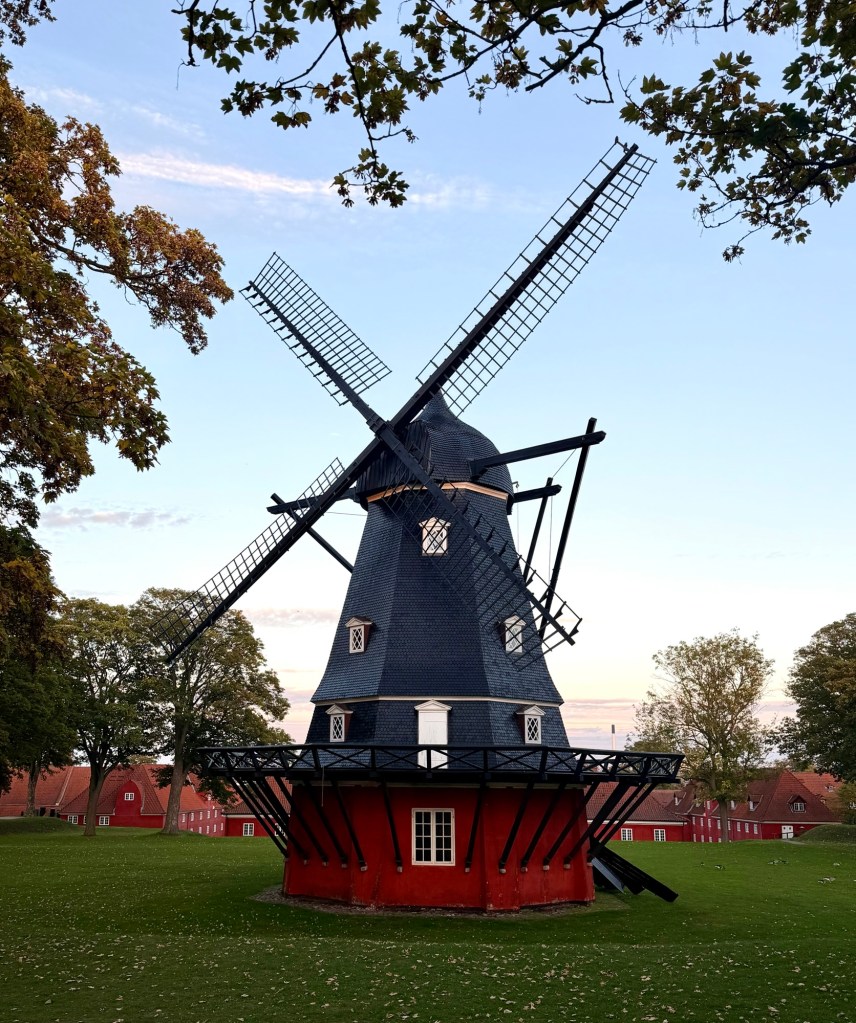
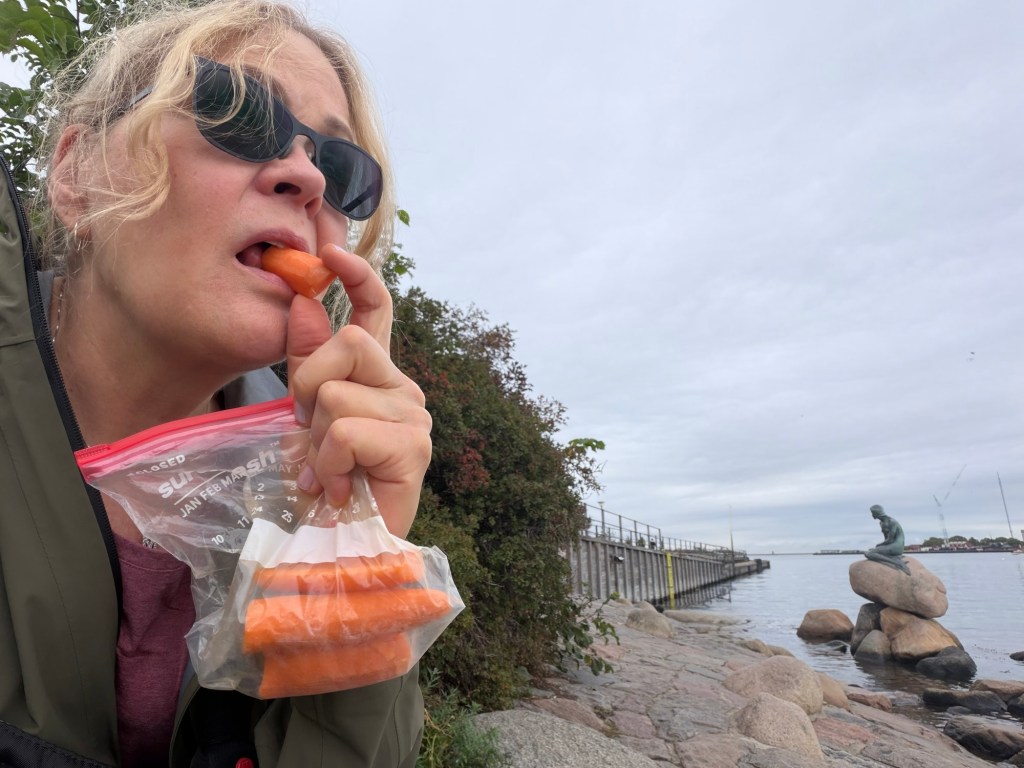
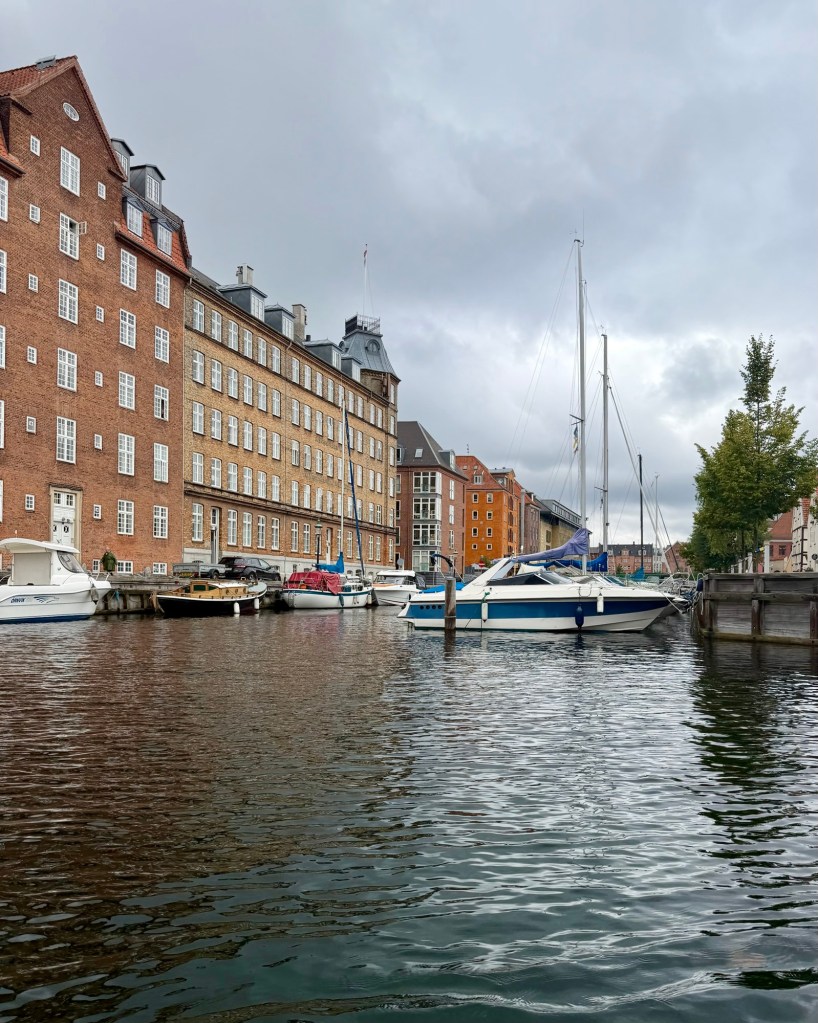
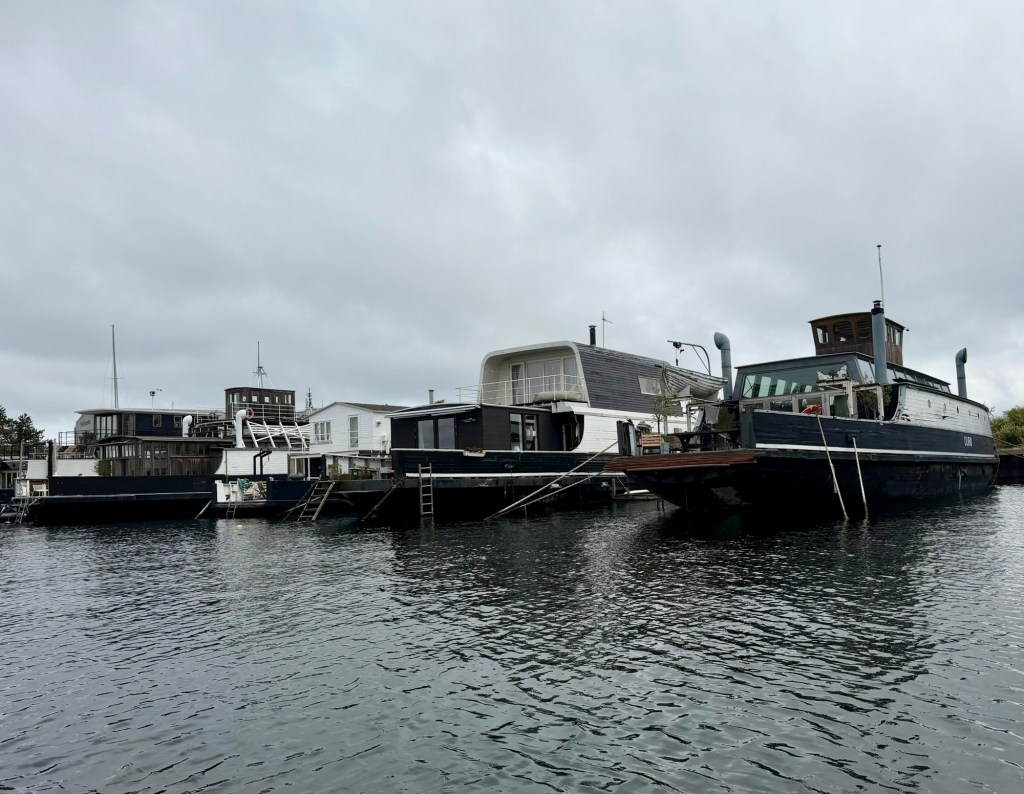
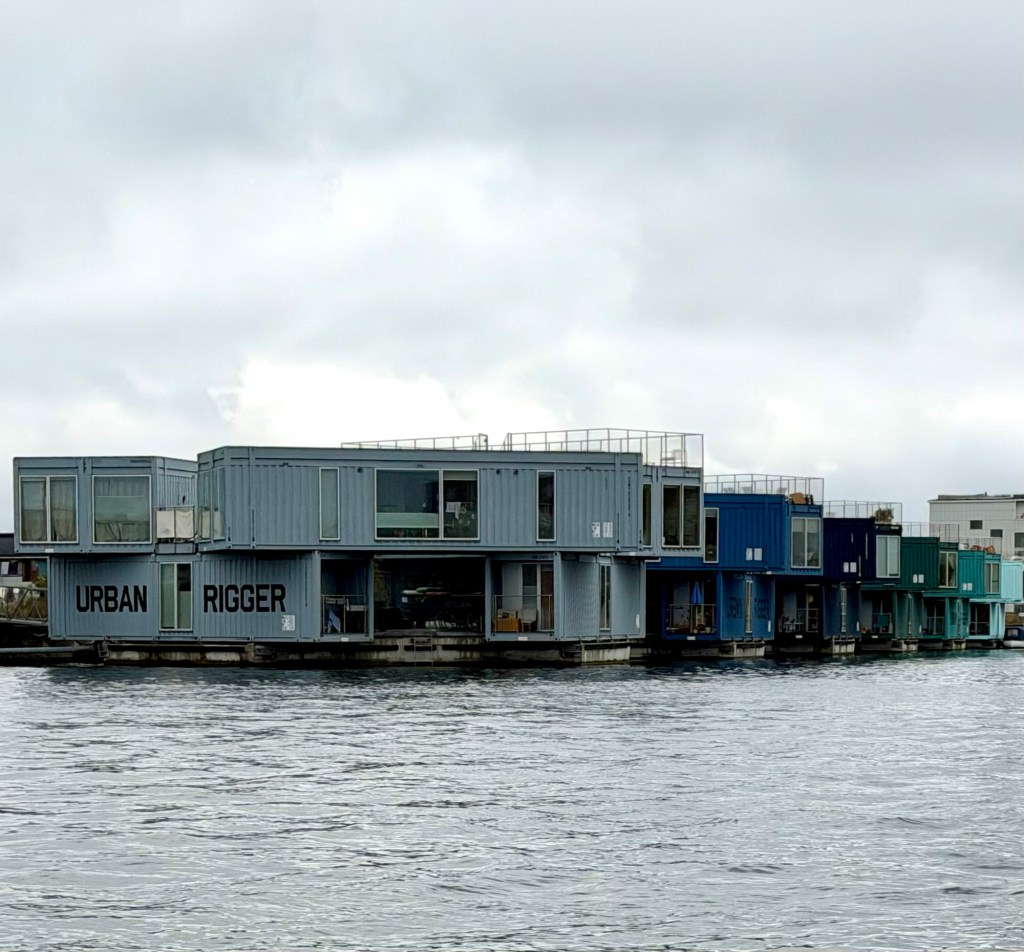
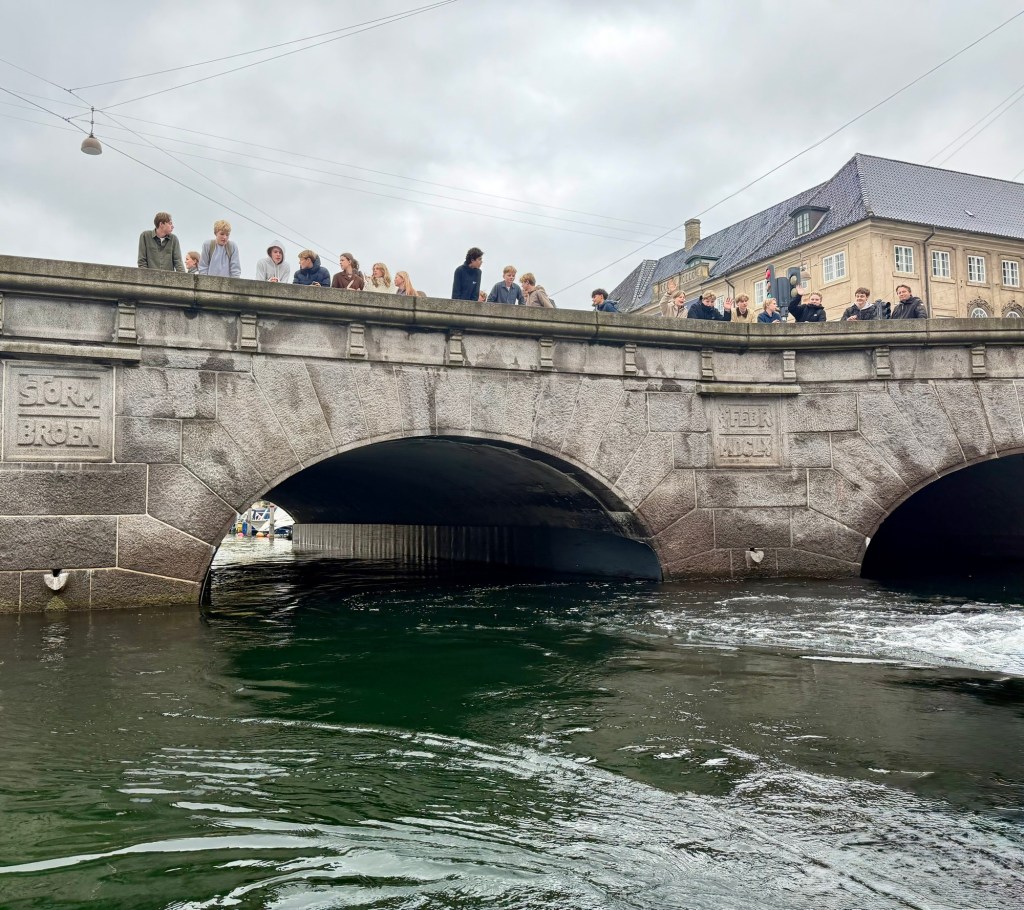
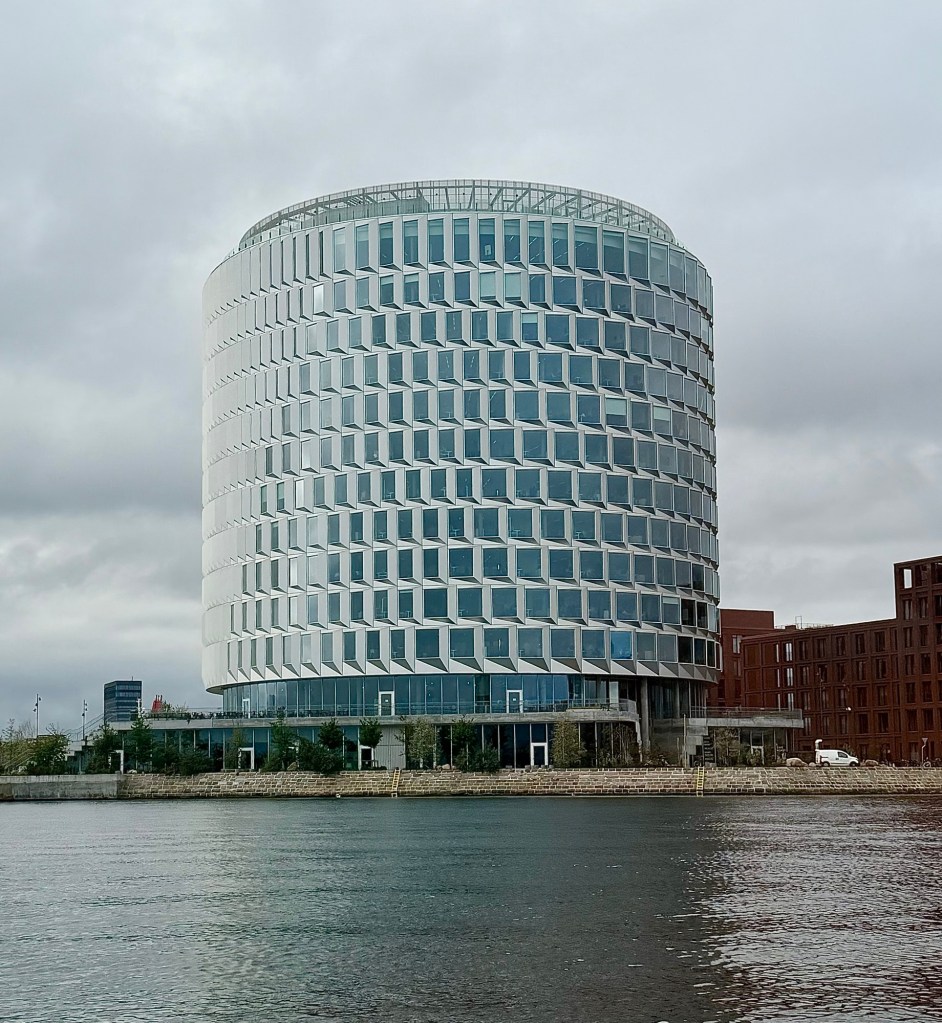
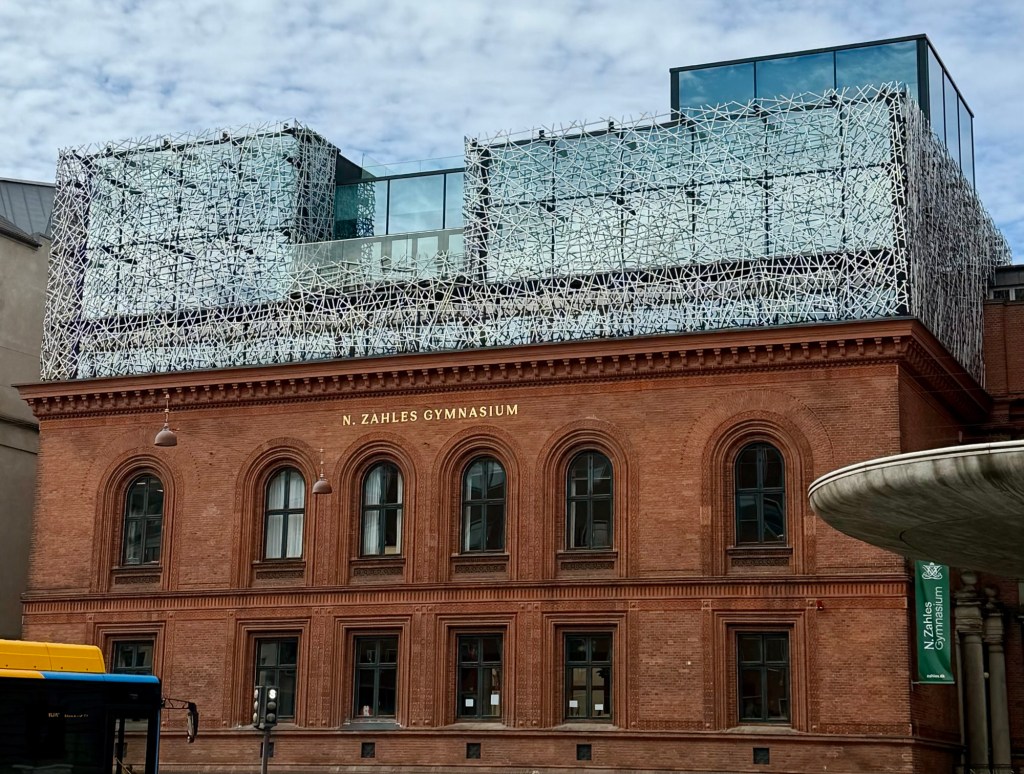
Postcard perfect Nyhavn. Lurking behind the boats are hoardes of people. Copenhagen has a lot of bicycles! The city has an estimated 675,000–750,000 bicycles. 🚲 That’s a 5 to 1 ratio to automobiles. Bicycles have 400 km of their own wide, dedicated lanes throughout the city, and cyclists generally have the right of way over pedestrians—except at intersections where they’re supposed to obey traffic lights. I’m so glad I read up on this before coming here because otherwise I probably would have been wiped out! 😂Copenhagen has an interesting blend of classic historic buildings and striking modern architecture. Here, BLOX sits next to Christian IV’s Brewhouse. Christian IV’s BrewhouseCity Hall The green spire and red-brick tower of Nikolaj Kunsthal, a historic landmark in the center of Copenhagen. St. Alban’s Anglican ChurchSt. Alban’s inside: On day 1 I took a sightseeing break and sat inside for a while.Changing of the guards at Amalienborg Palace. Kastellet, an old fortress/park, was a nearby oasis that I visited daily.Kastellet windmillThe Little Mermaid is just off of Kastellet. Just after I snapped this, a tourist fell in the water trying to get as close as possible for the ultimate selfie. Meanwhile, I could just come eat carrots by TLM any time I wanted.There is a lot of waterfront real estate. Another waterfront option–repurposed boats. Or repurposed shopping containers!Cheer squad after the canal boat I was on threaded the needle!
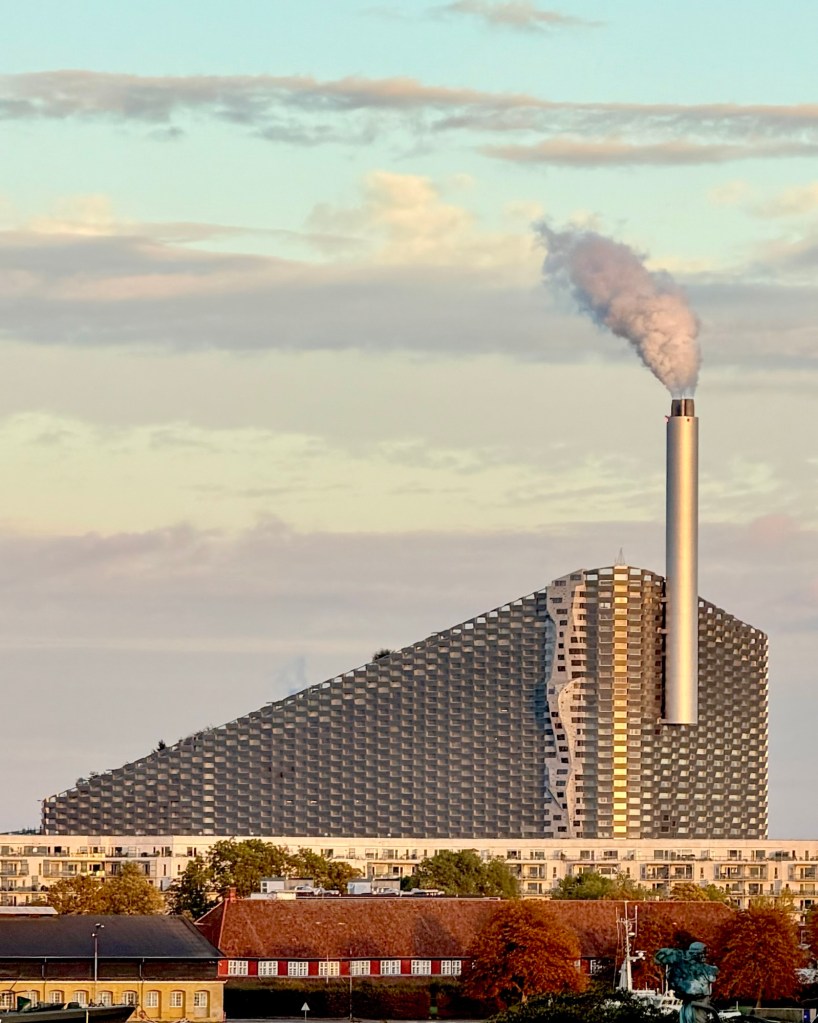
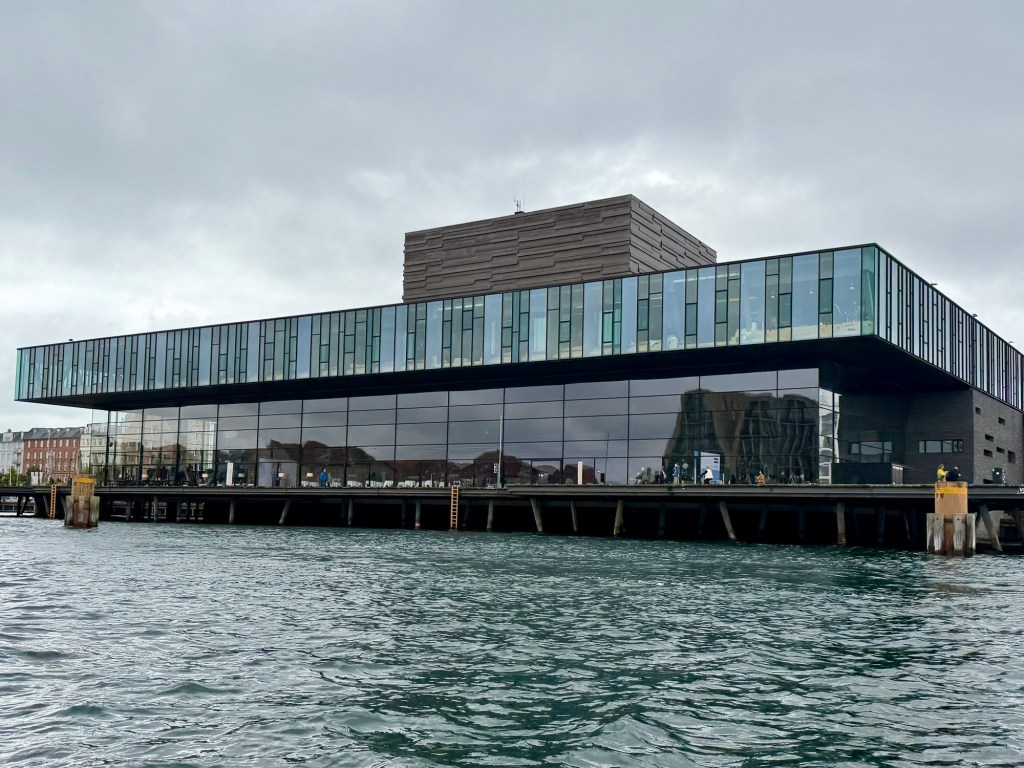
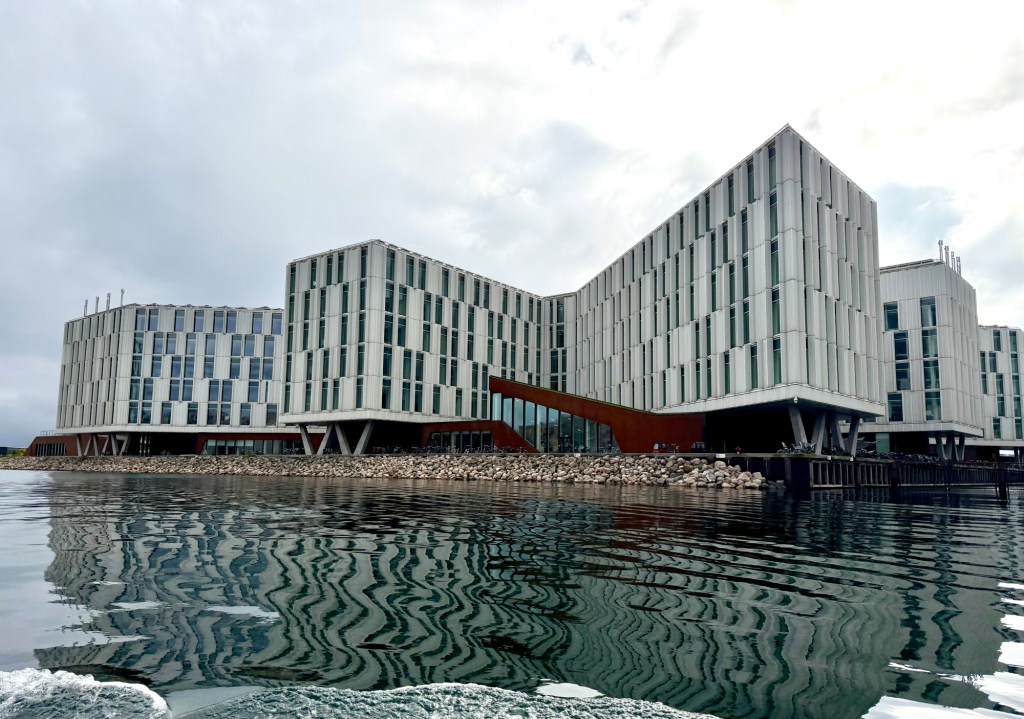
Some newer architecture:
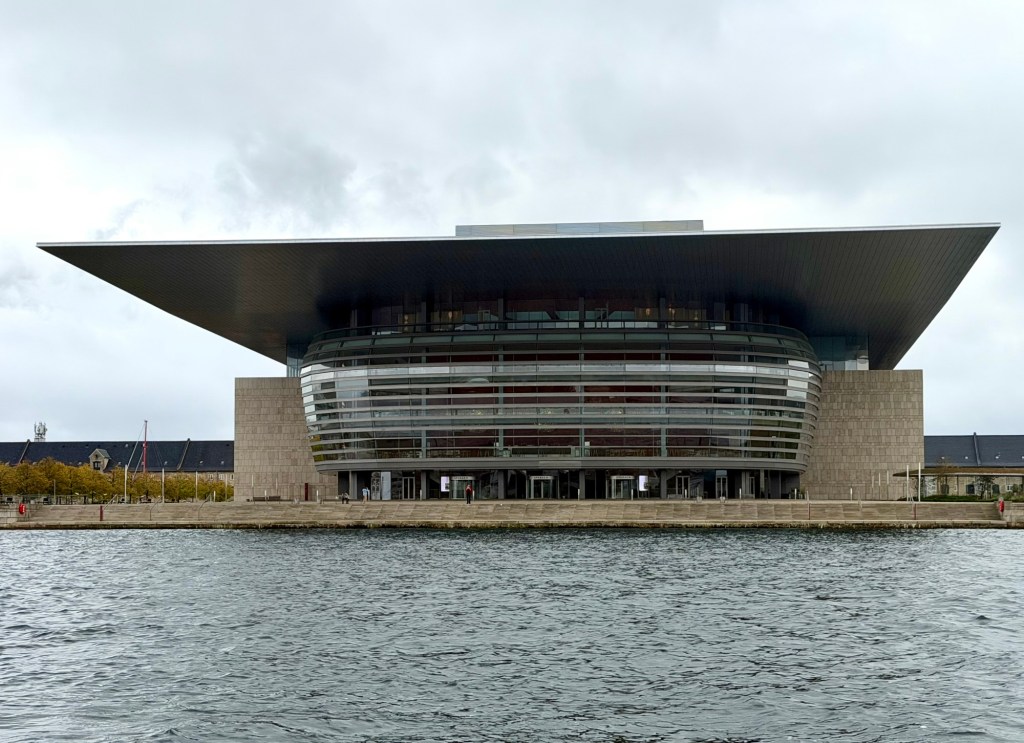
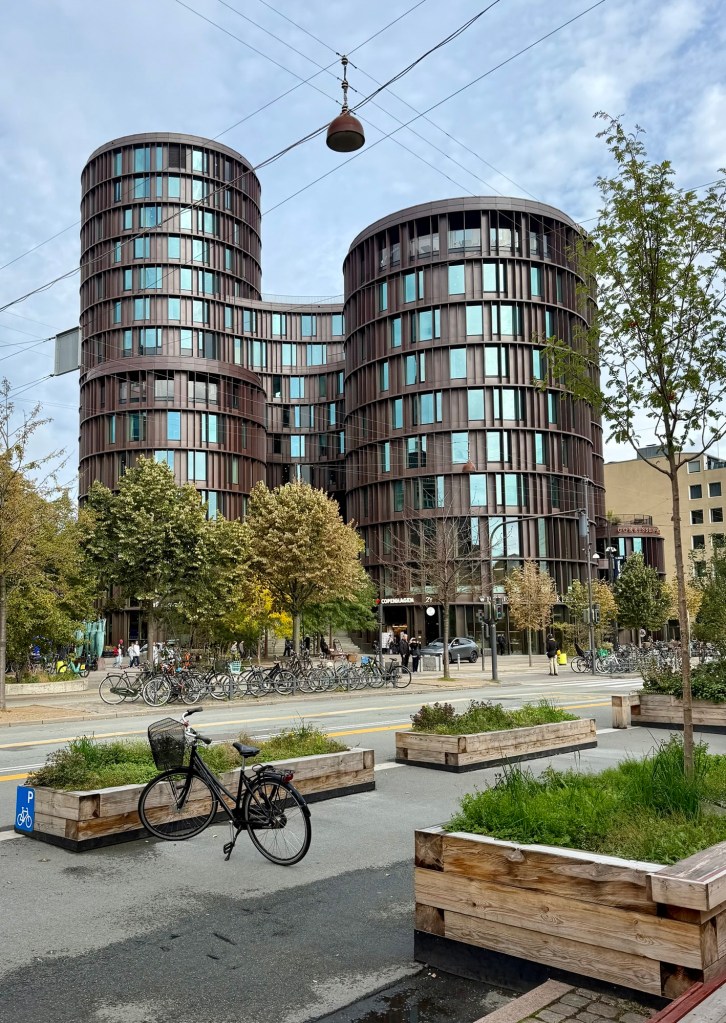
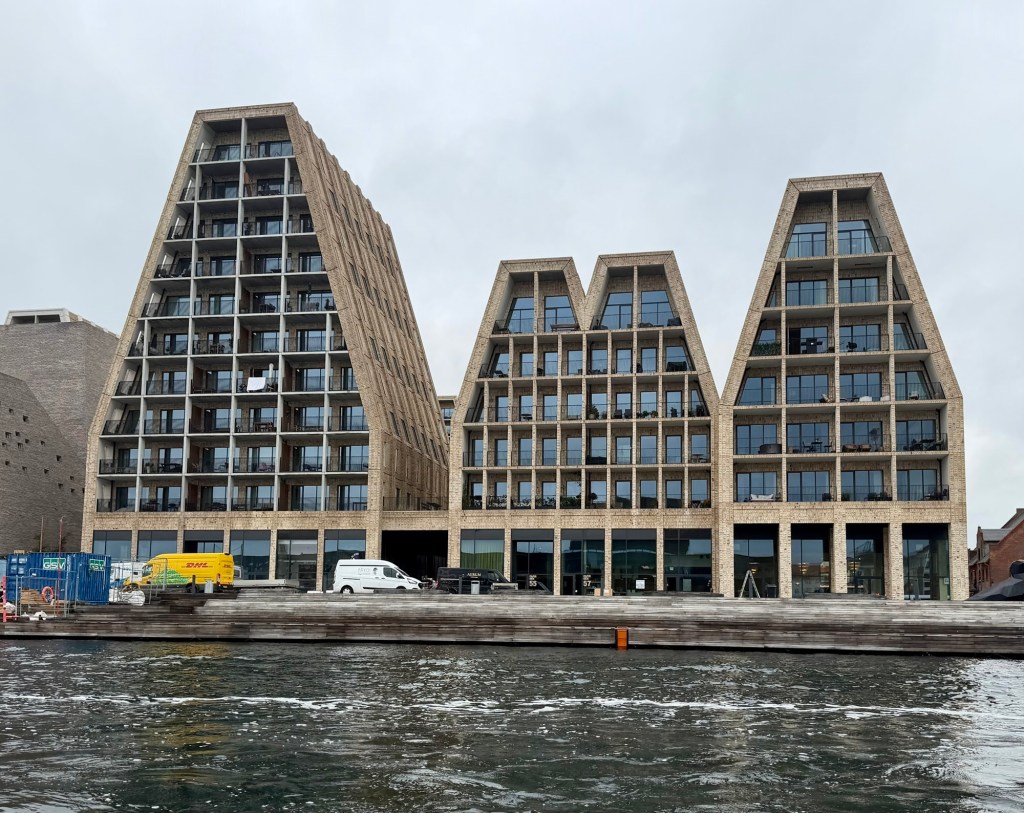
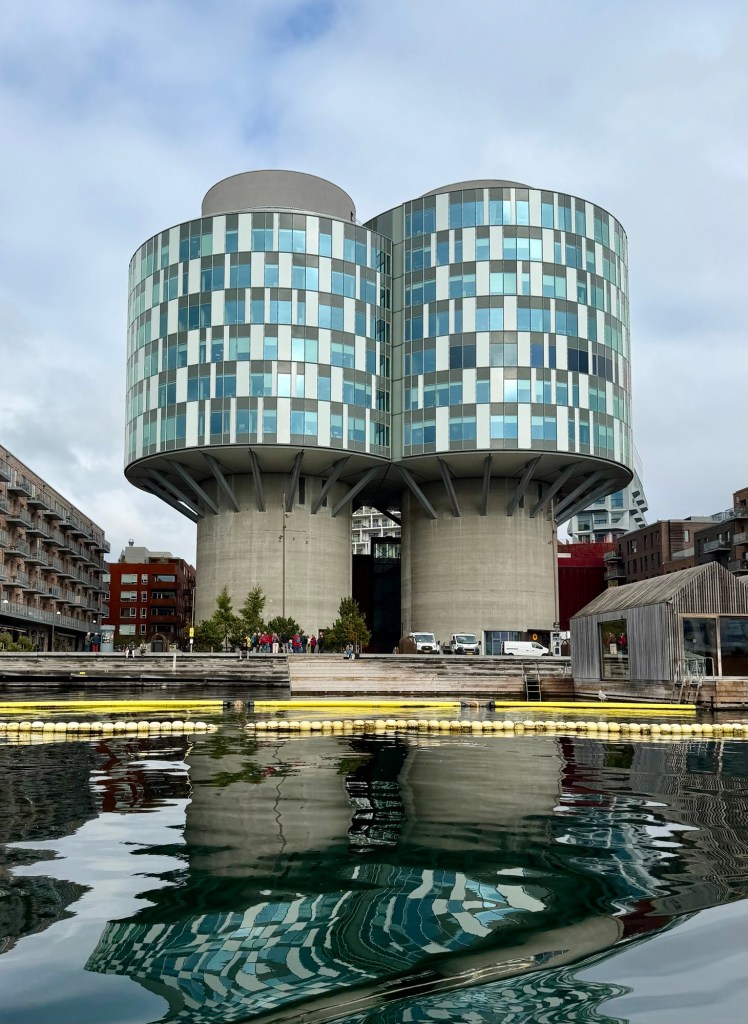
Amager Bakke (aka CopenHill), a combined waste-to-energy power plant, coverts local waste into heating and electricity, emitting water vapor from the stack. It also has a recreational rooftop facility with an artificial ski slope, hiking and running trails, and a massive climbing wall.Royal Danish Playhouse. Fun fact: the glass section up top is comprised of change rooms. They had to install curtains after complaints from the condos across the way. U.N. CityOpera House a.k.a. “The Toaster”Axel TowersPaper Island: Copenhagen’s most expensive condos. Portland TowersSpidsenA modern addition to an old building.
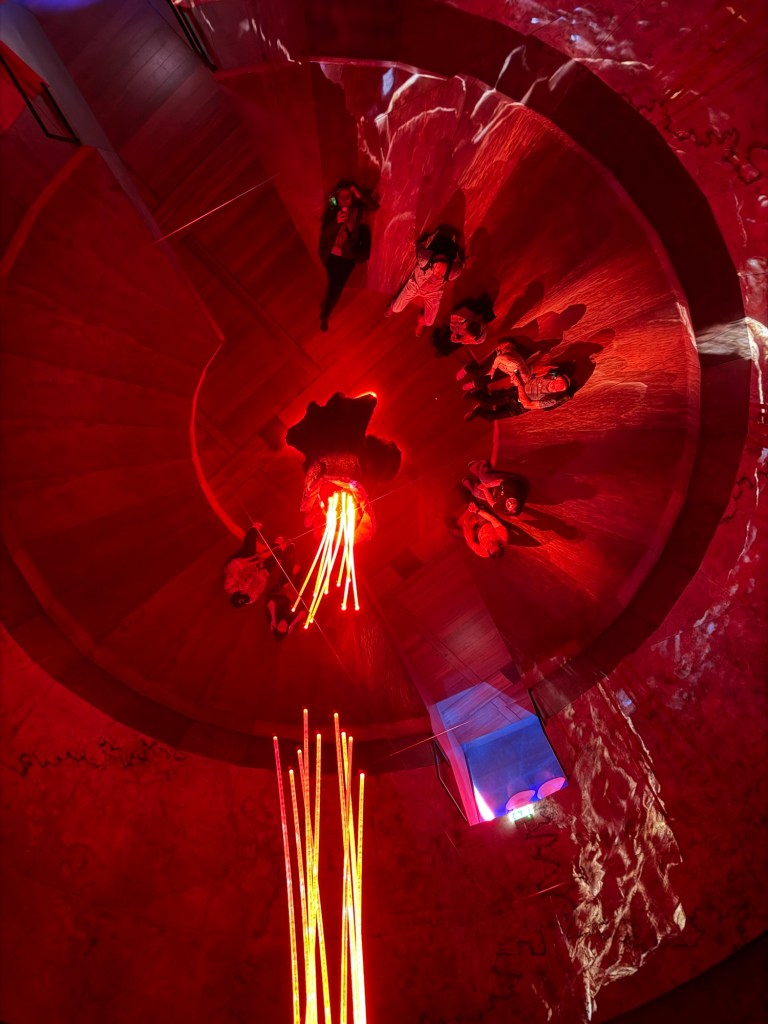
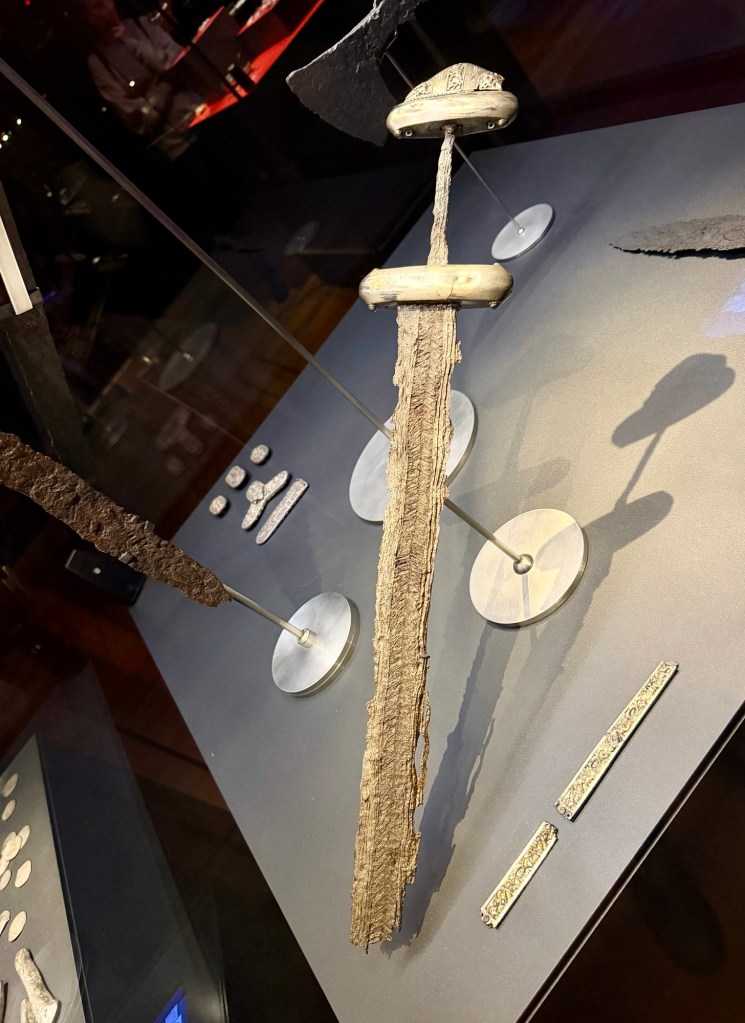
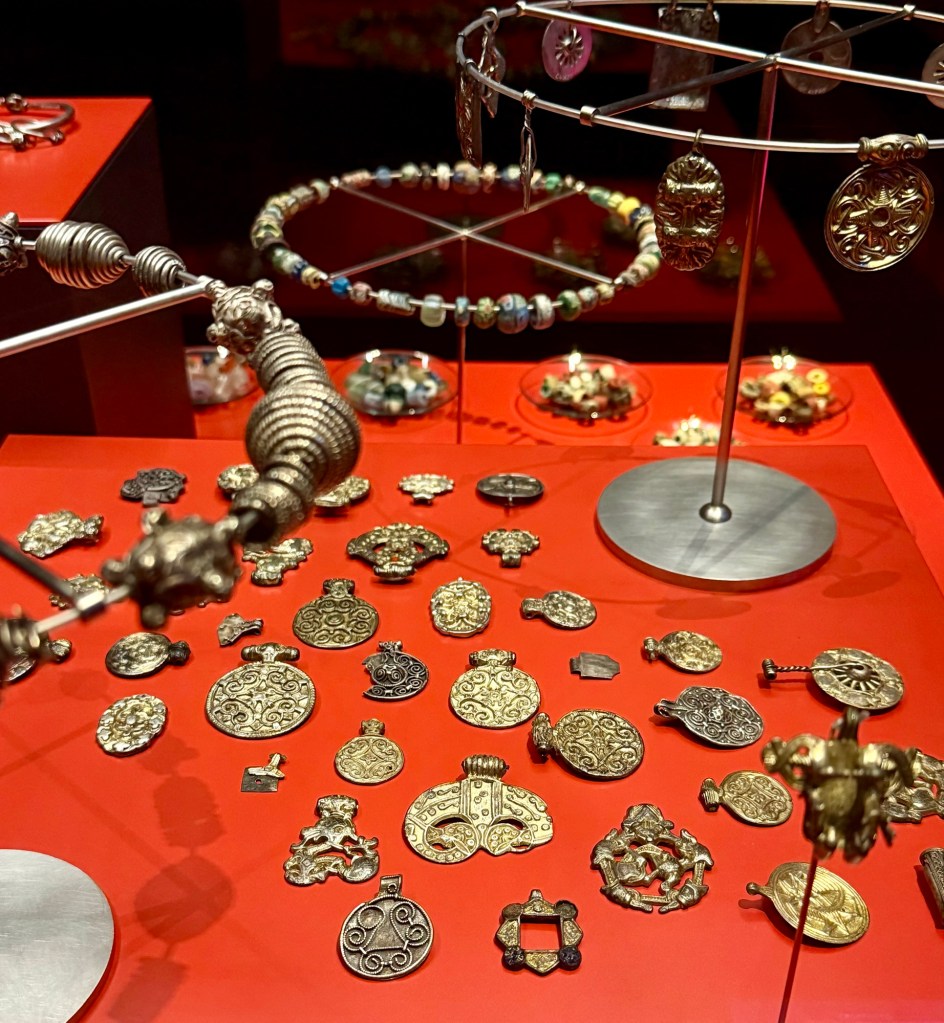
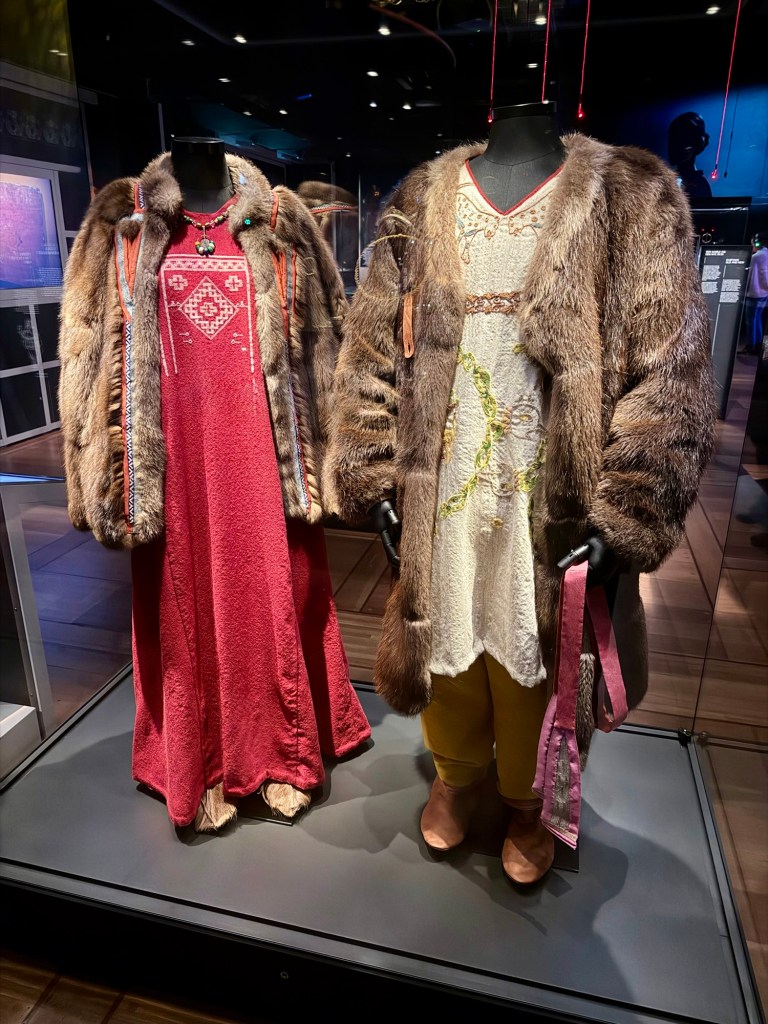
I visited the National Museum’s Viking exhibition, which began with an immersive storytelling experience narrated by a Völva, the Norse seeress. In poetic detail, she traced the transformation from Norse paganism to the emergence of a unified state. The experience was followed by a small exhibition of rare Viking treasures.
I found it difficult to focus on the Seeress’s overwrought, poetic tales coming through my headphones. I’m the one lying down instead of staring into the LED campfire.The Viking Age Egå SwordIf I take up silversmithing again, I’d love to recreate some of these. Reconstructed Viking Age garments
A few random pictures to end off my Copenhagen visit:
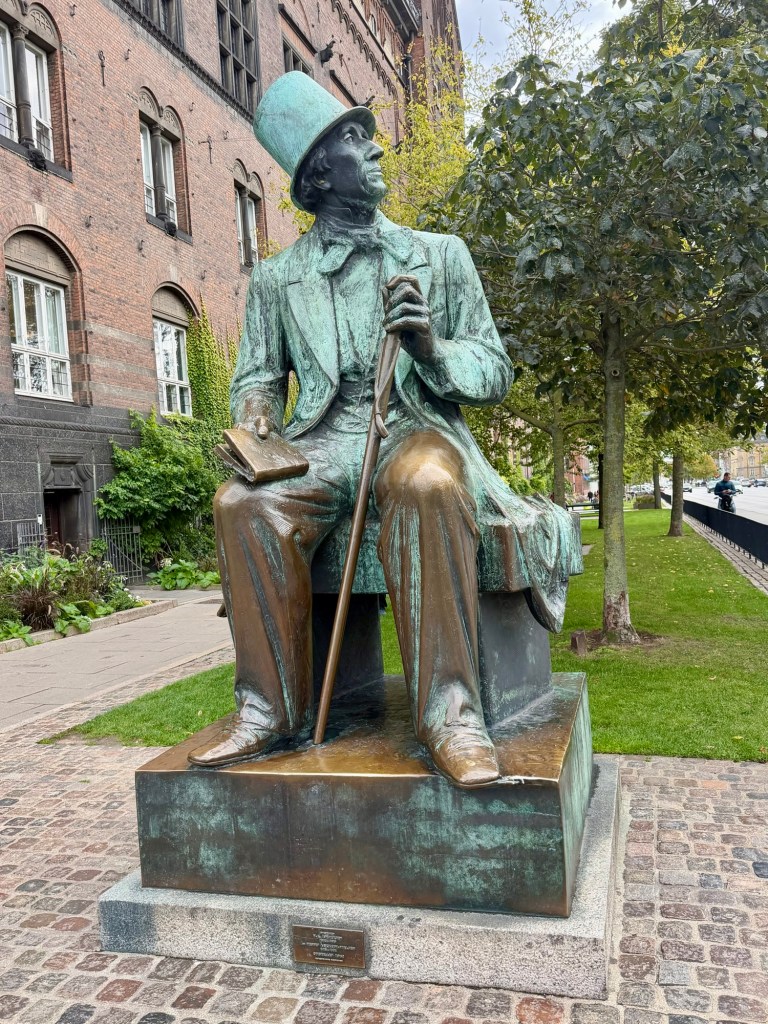
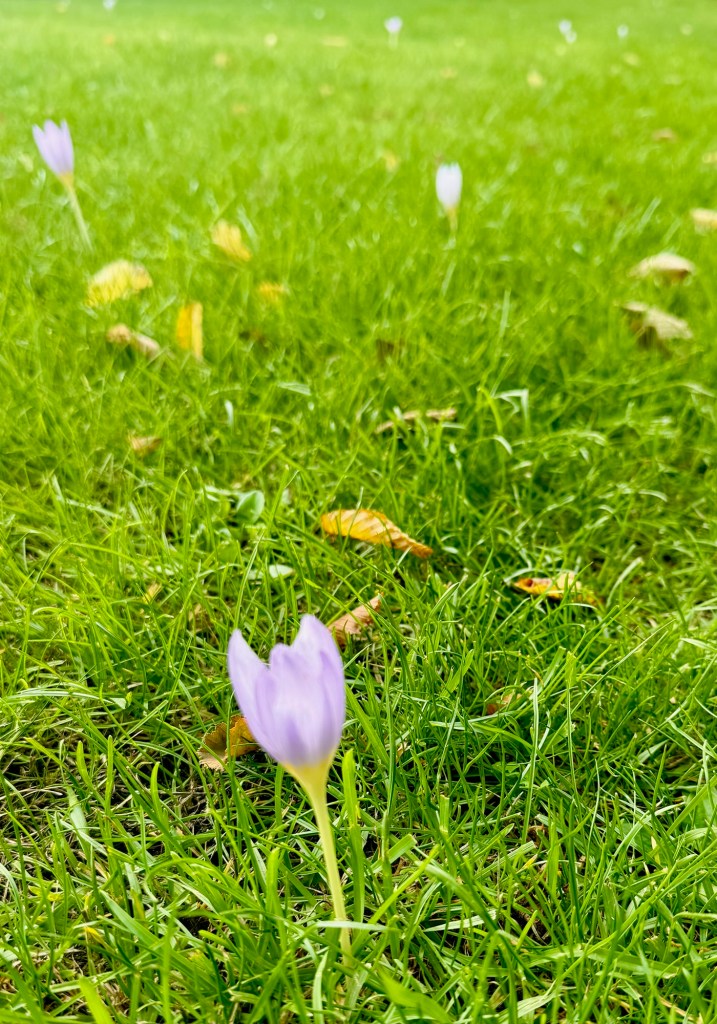
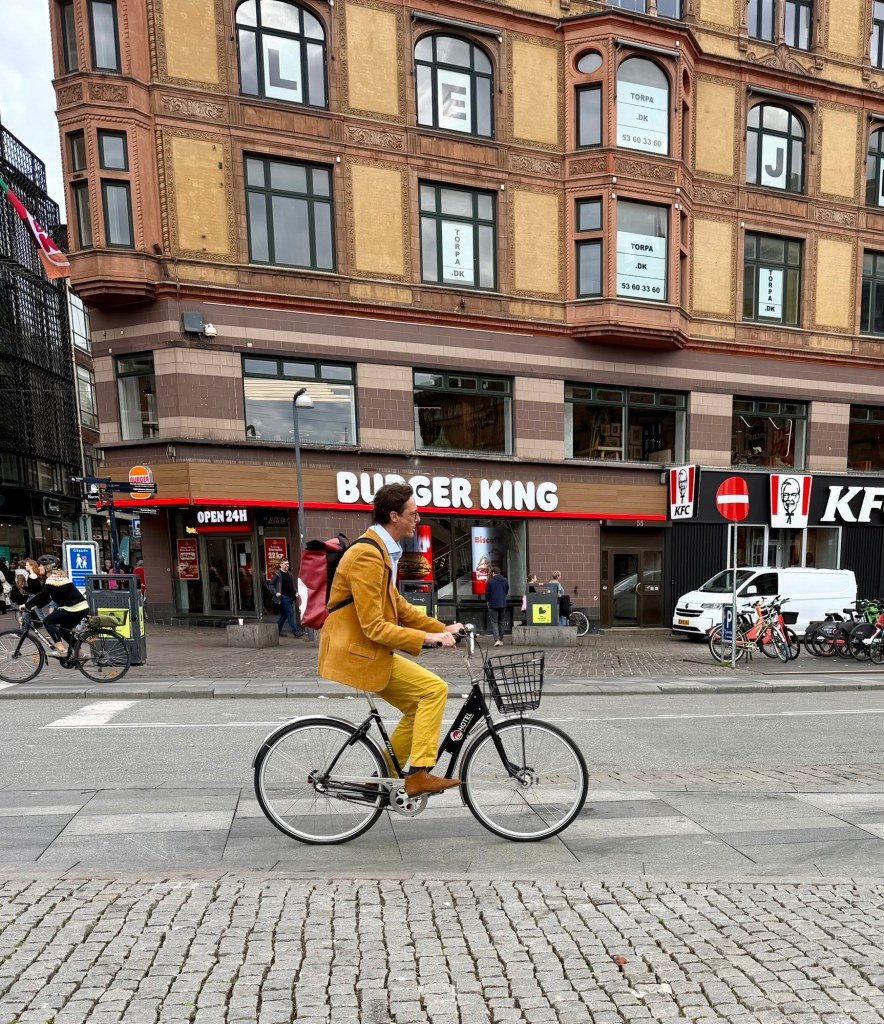
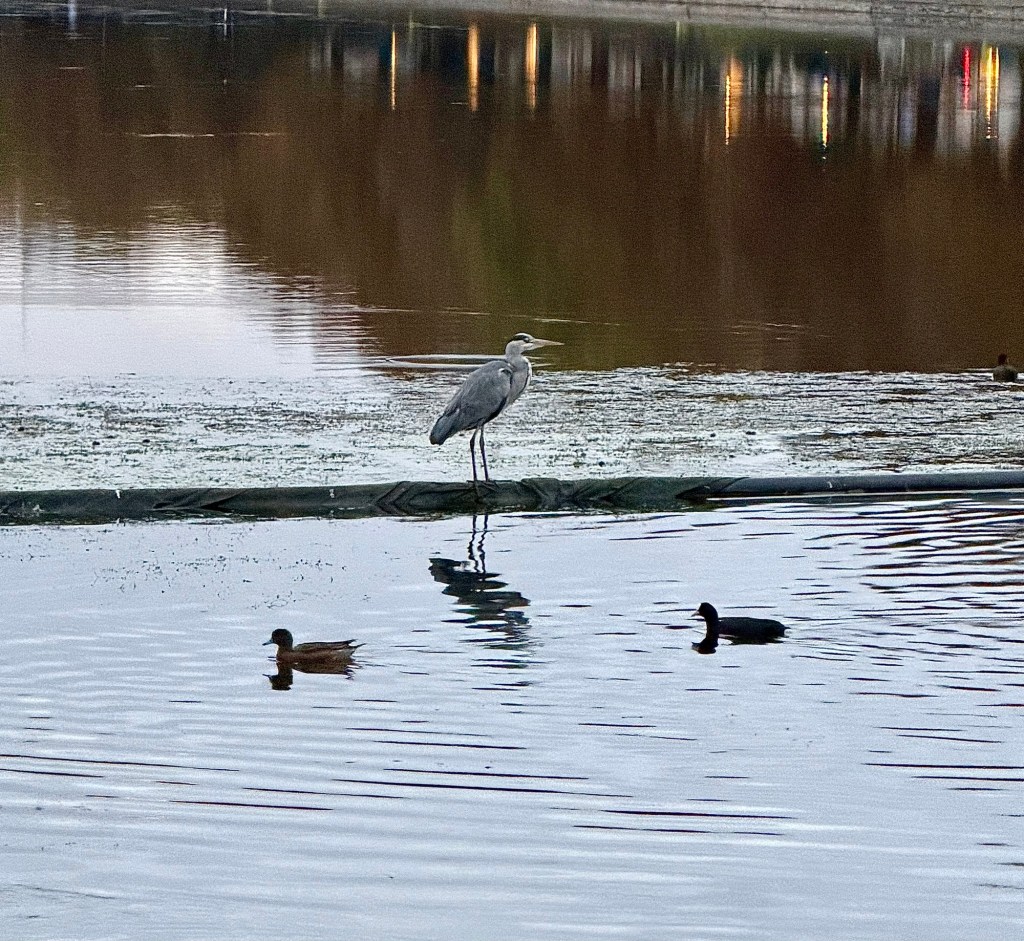
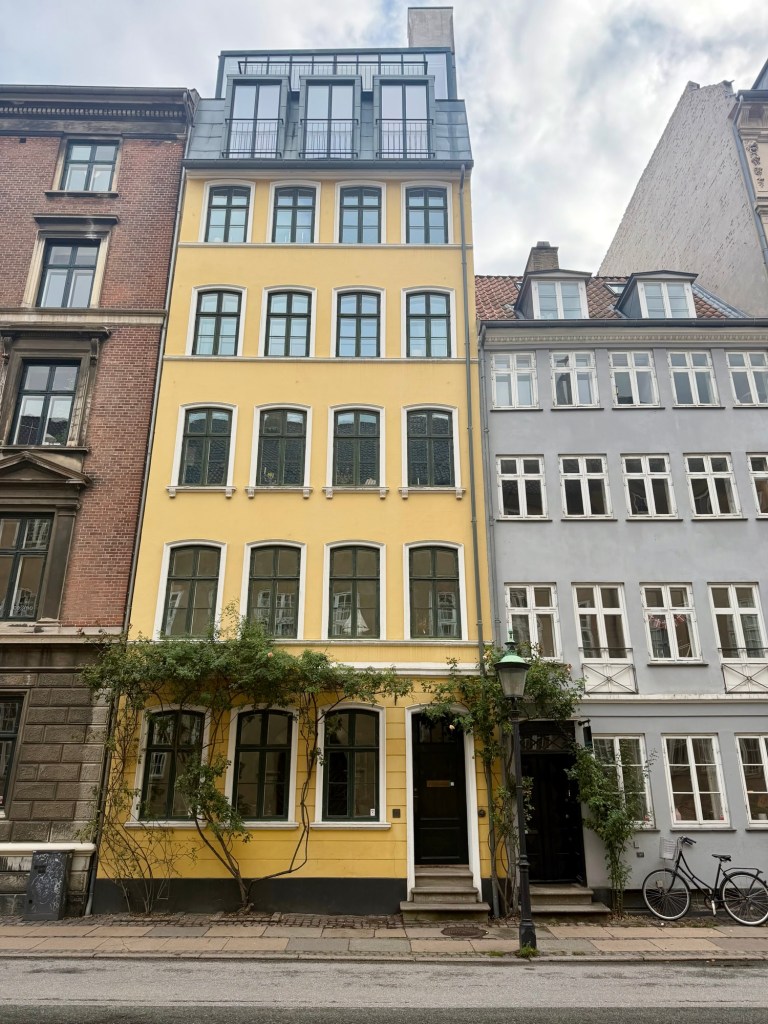
Hans Christian AndersonCrocusesCopenhageners are consistently well dressed!Torvehallerne Food HallGrey Heron
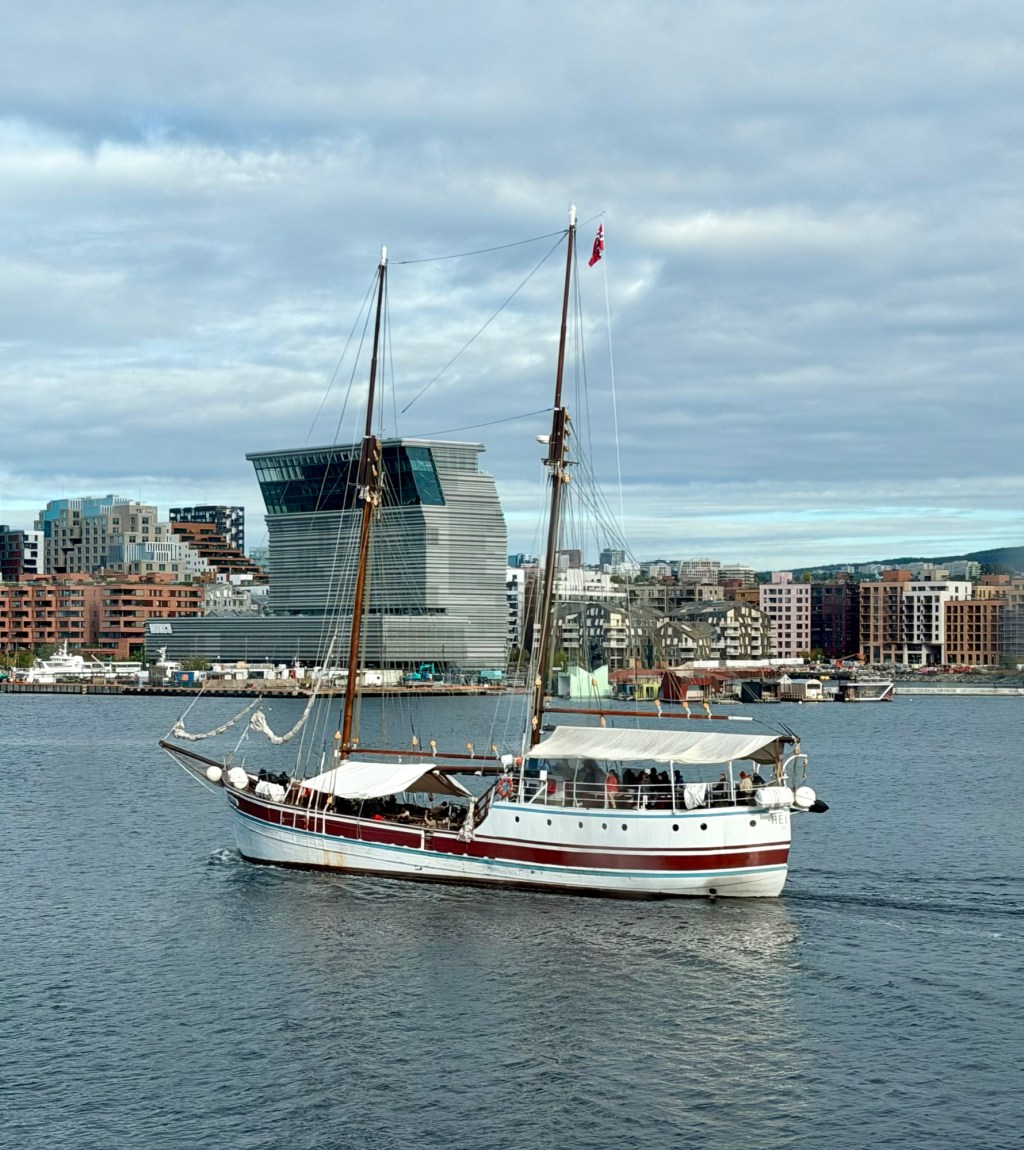
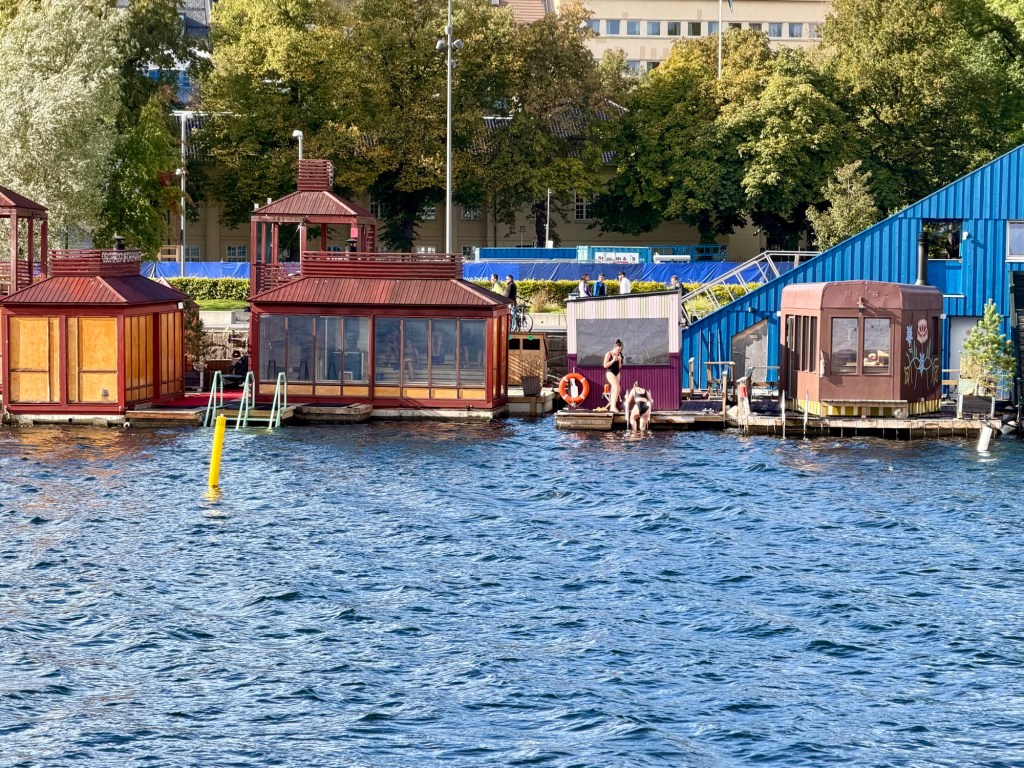
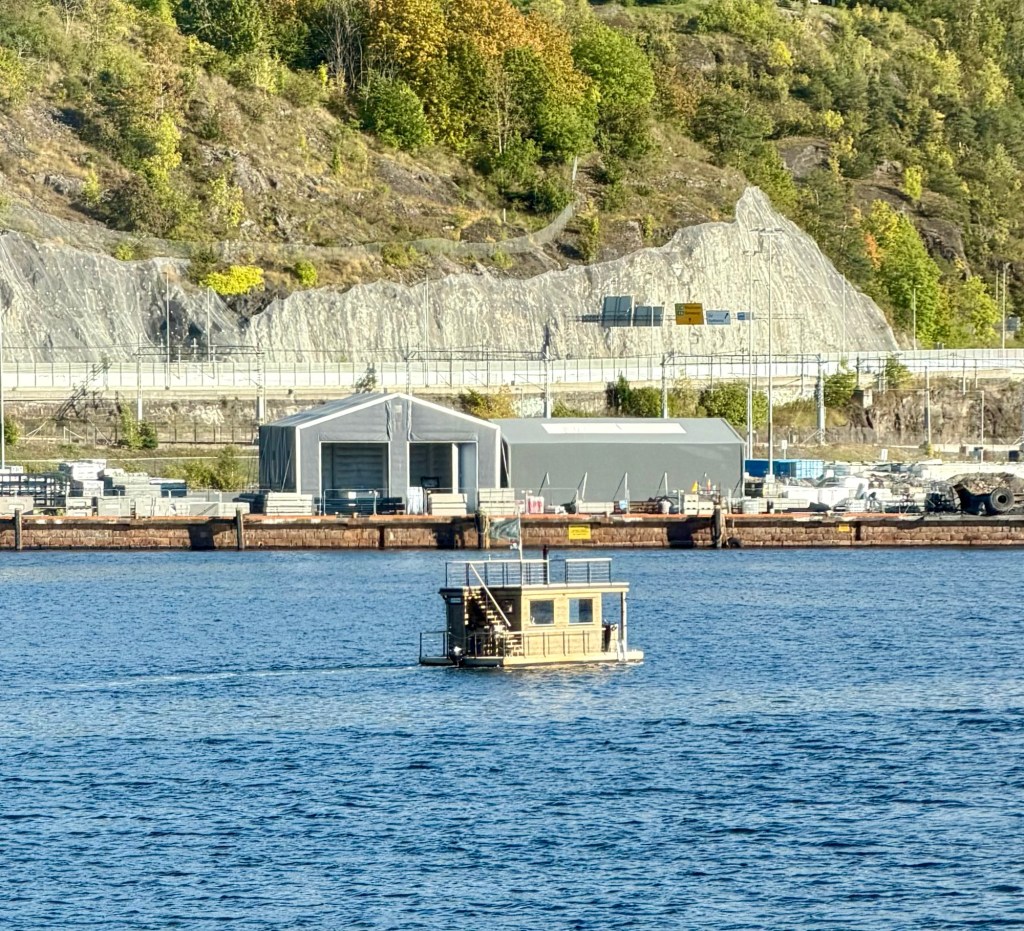
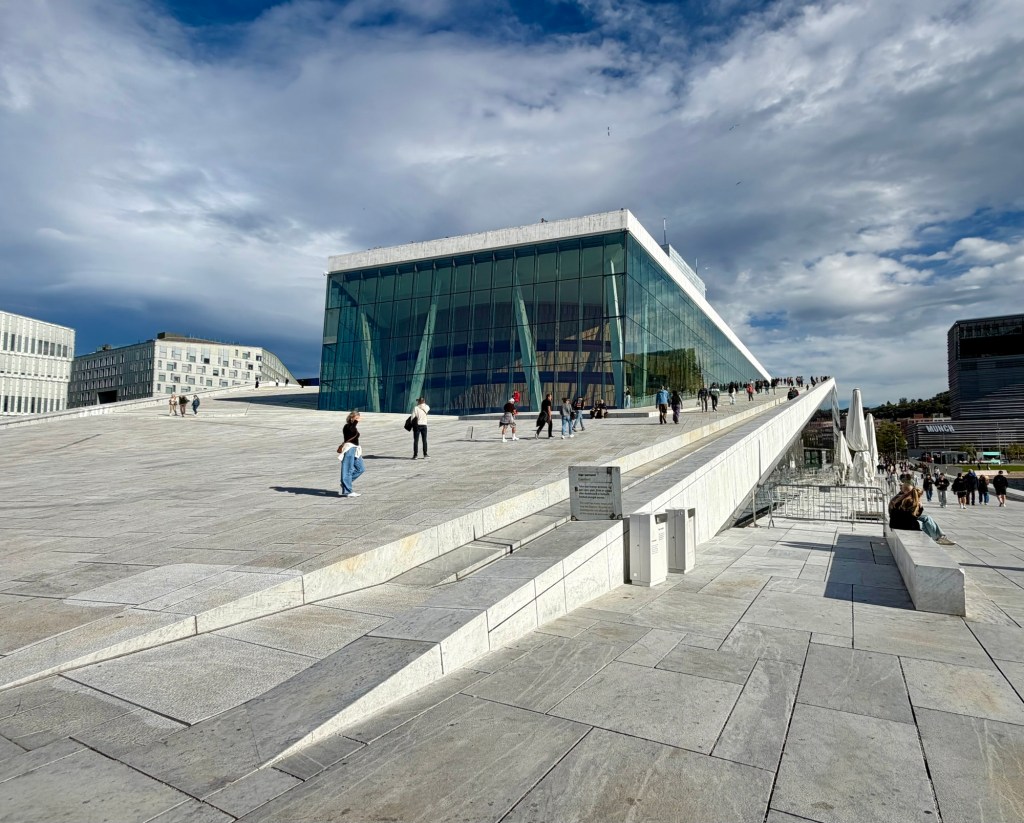
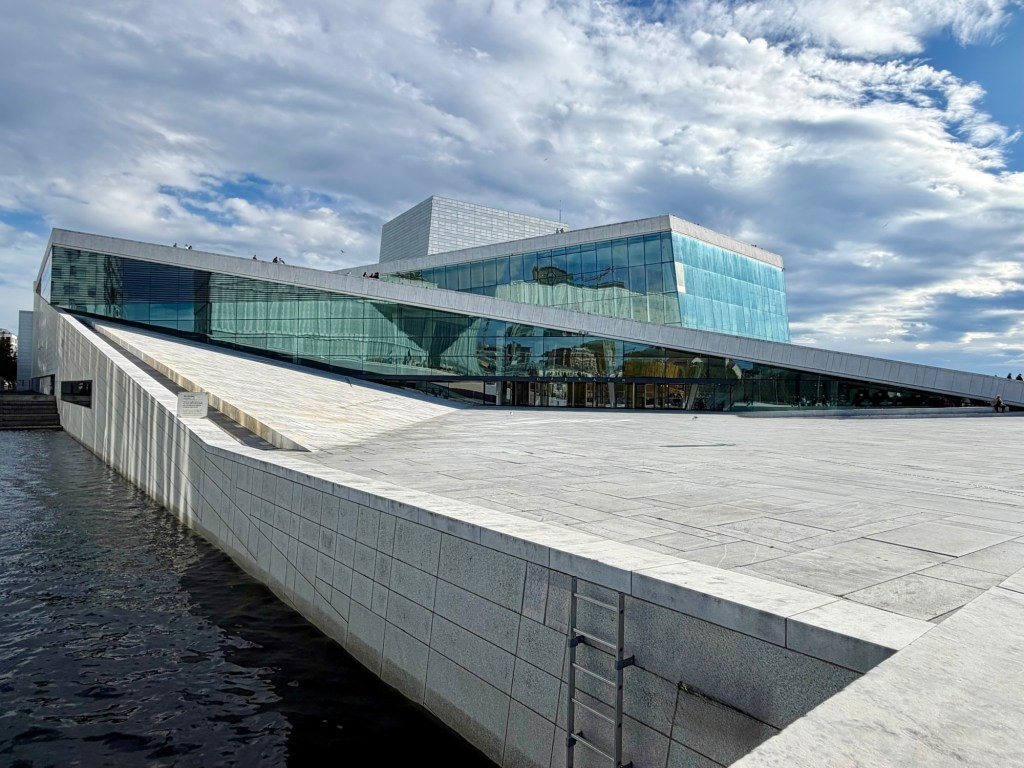
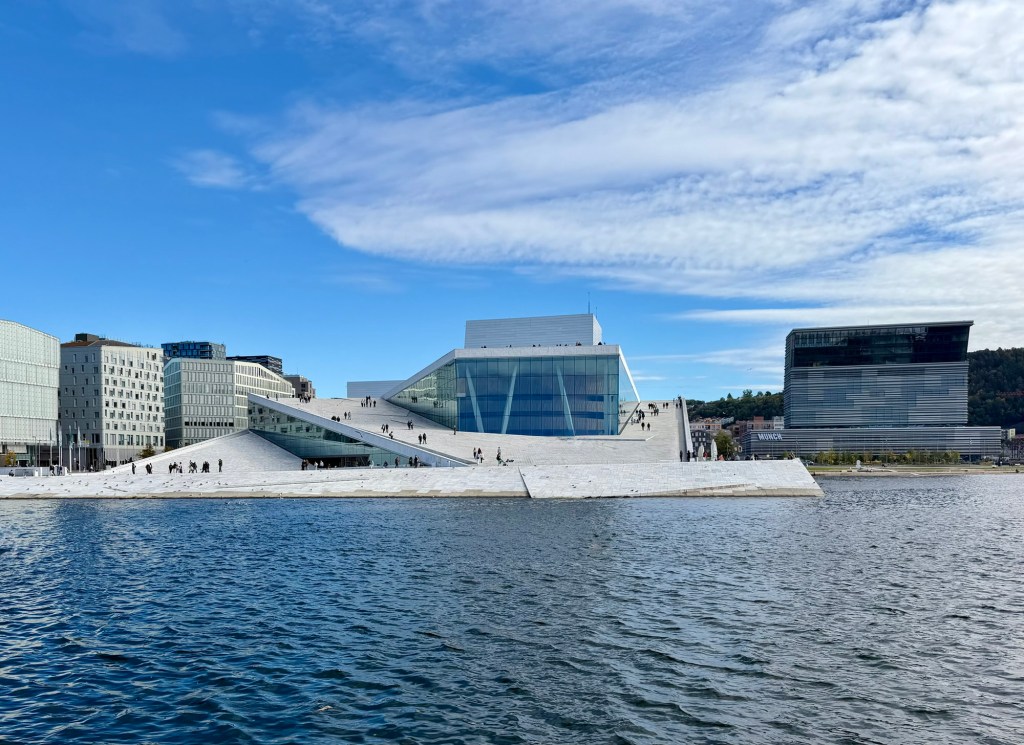
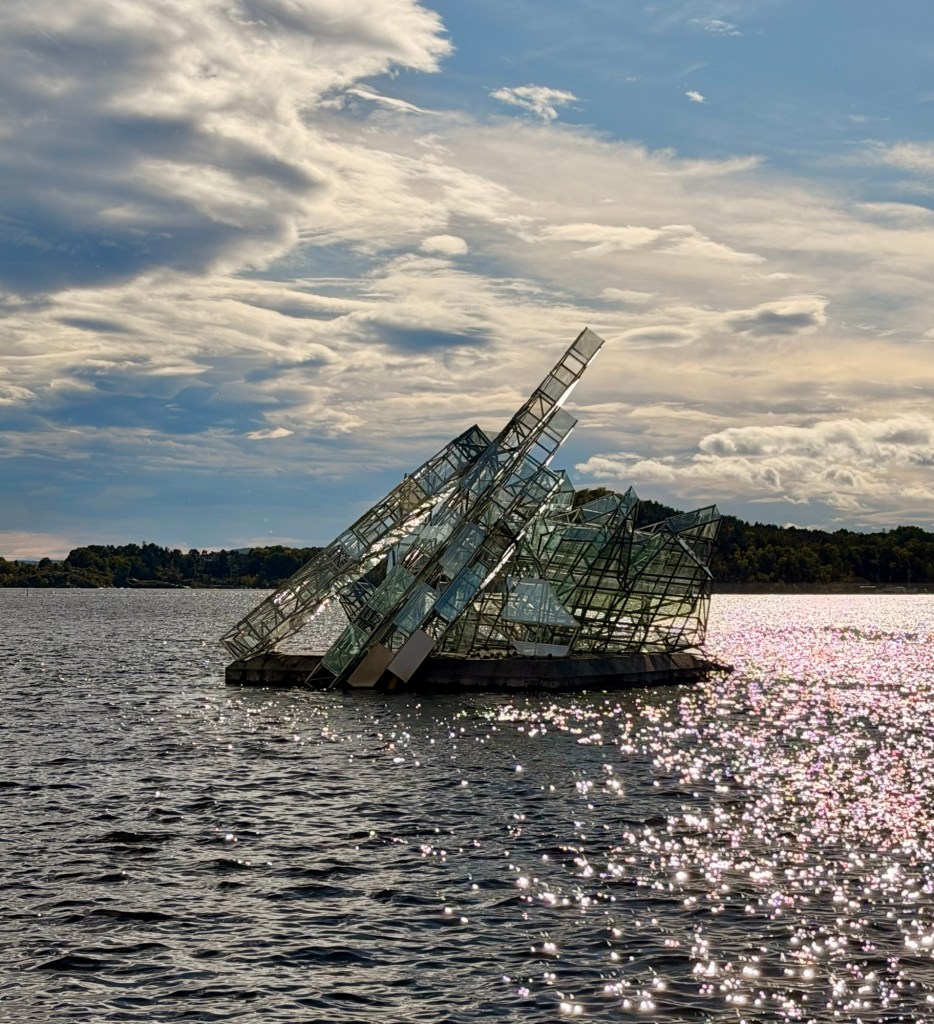
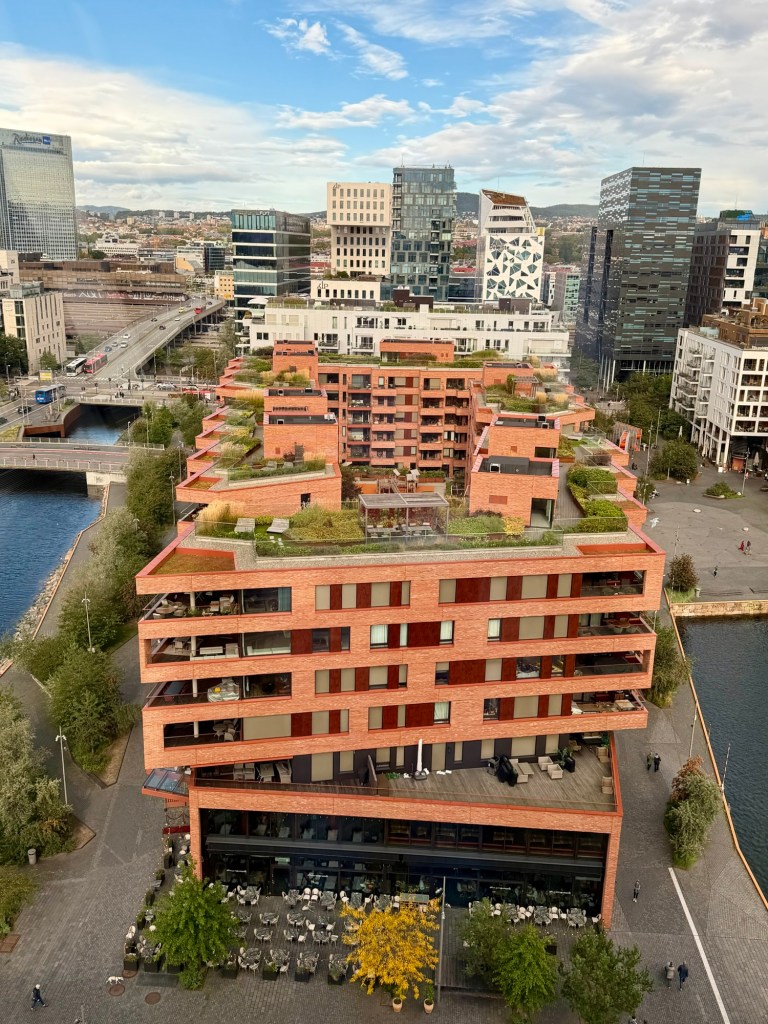
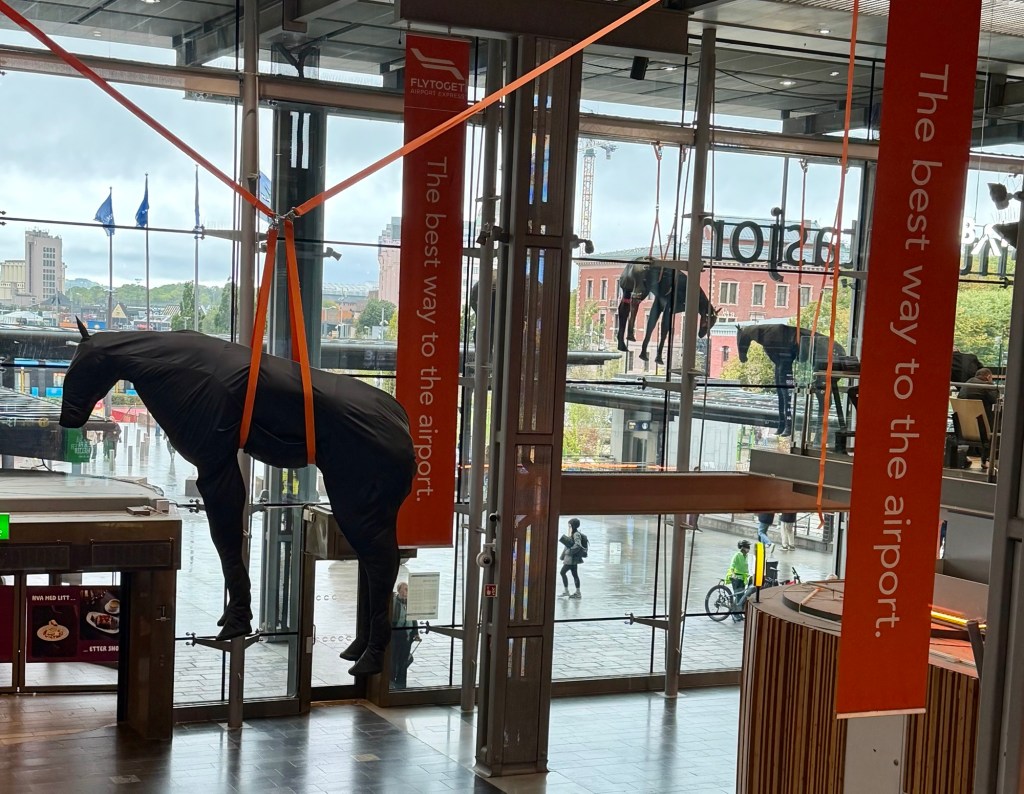
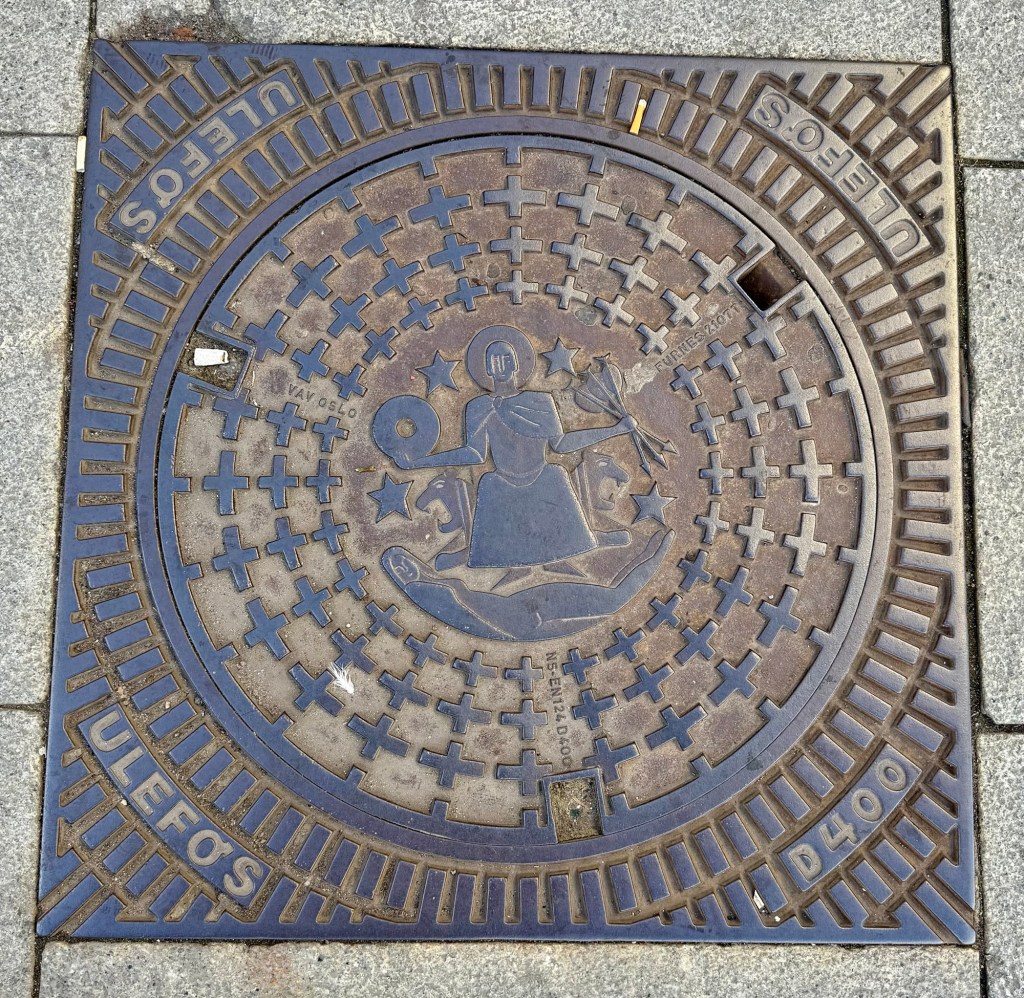
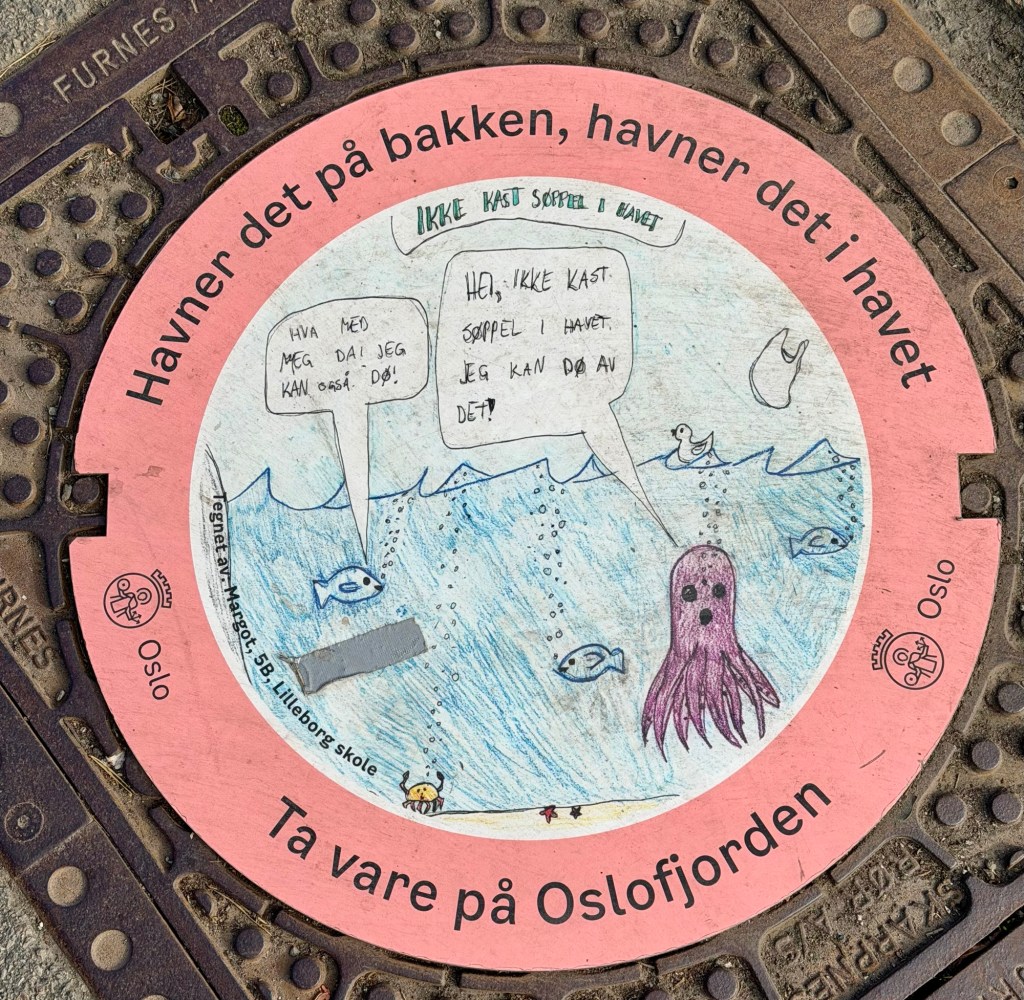
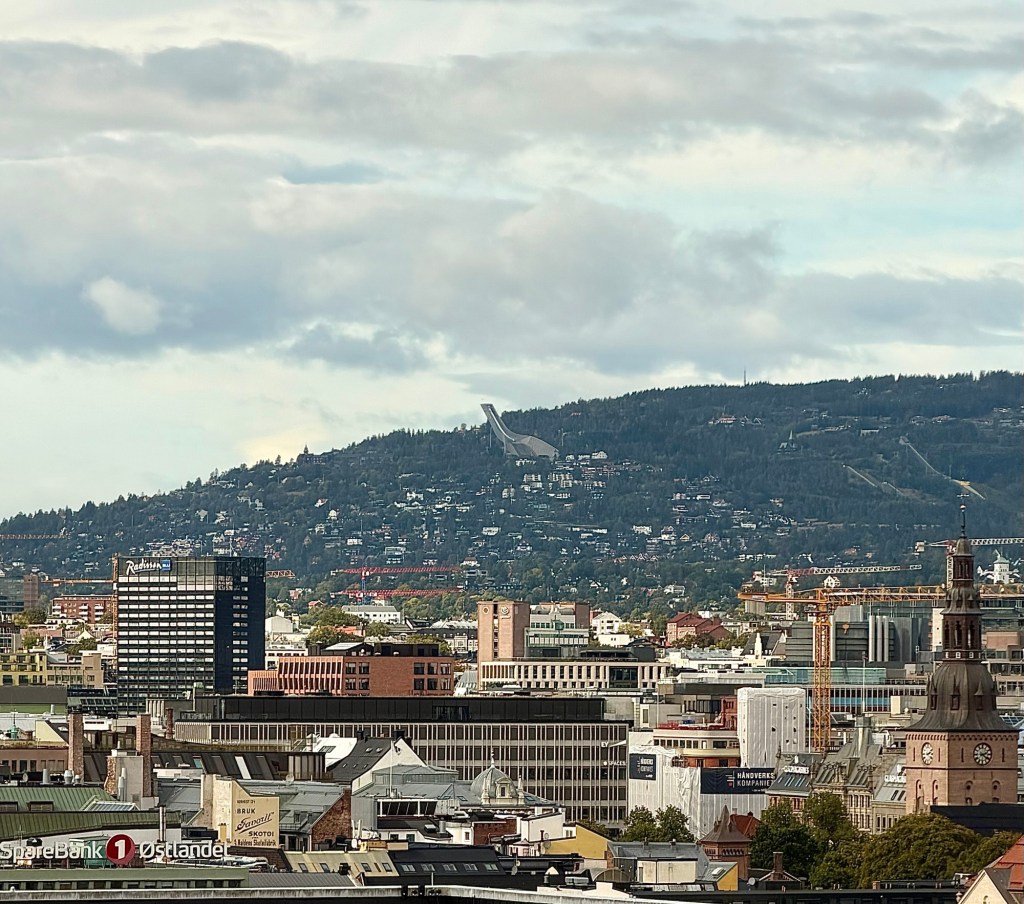
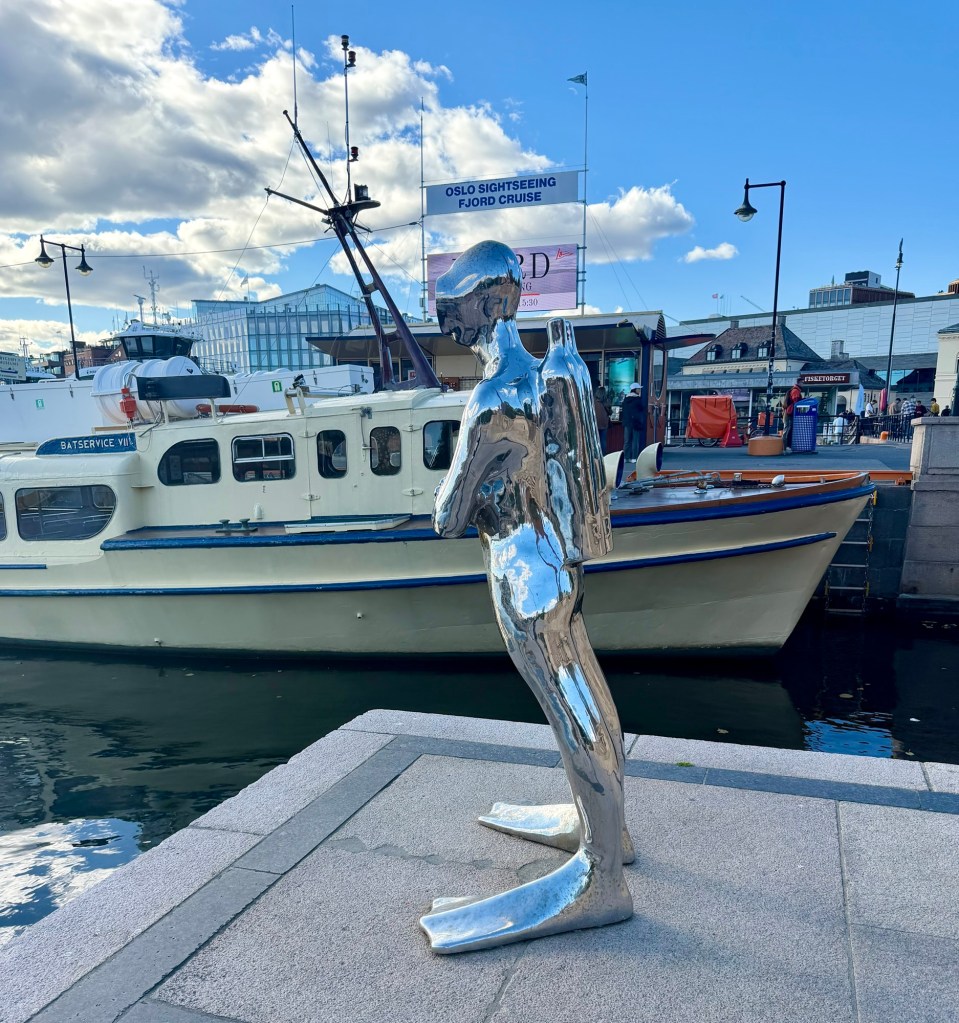
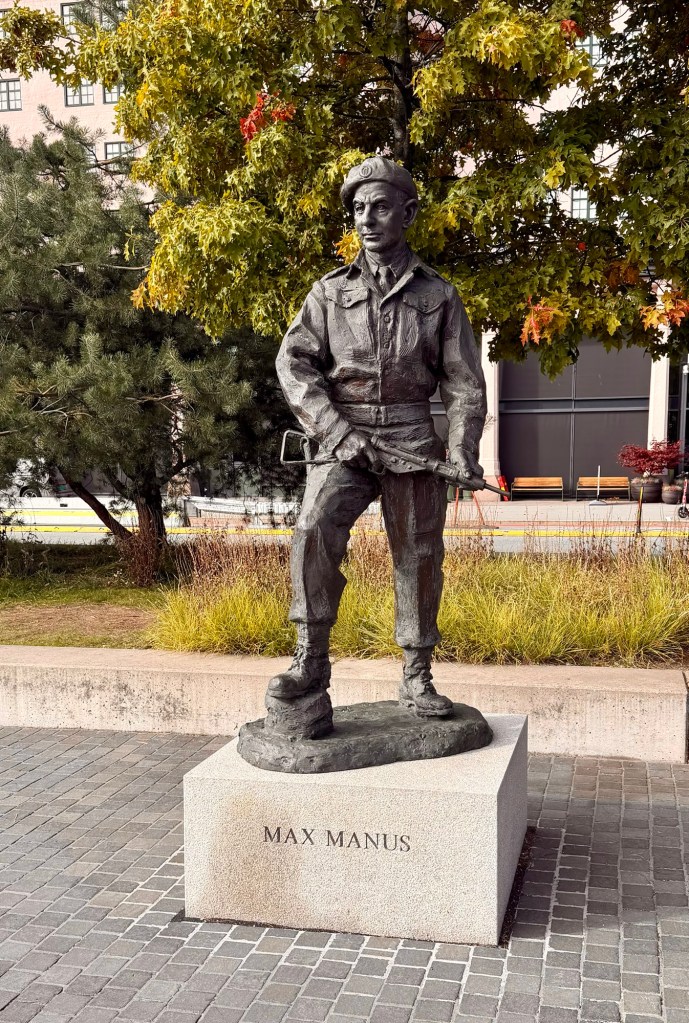
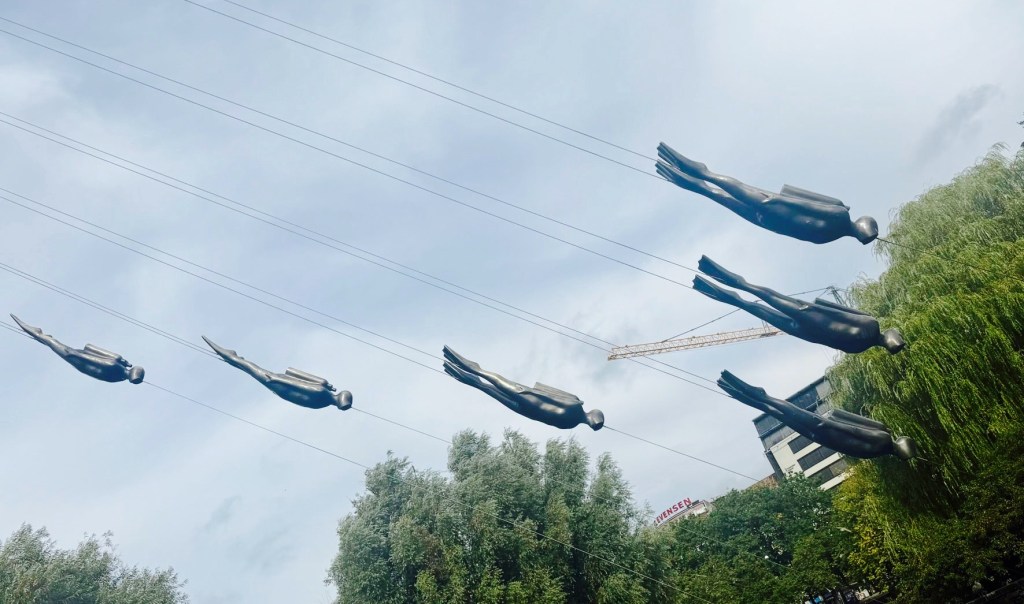
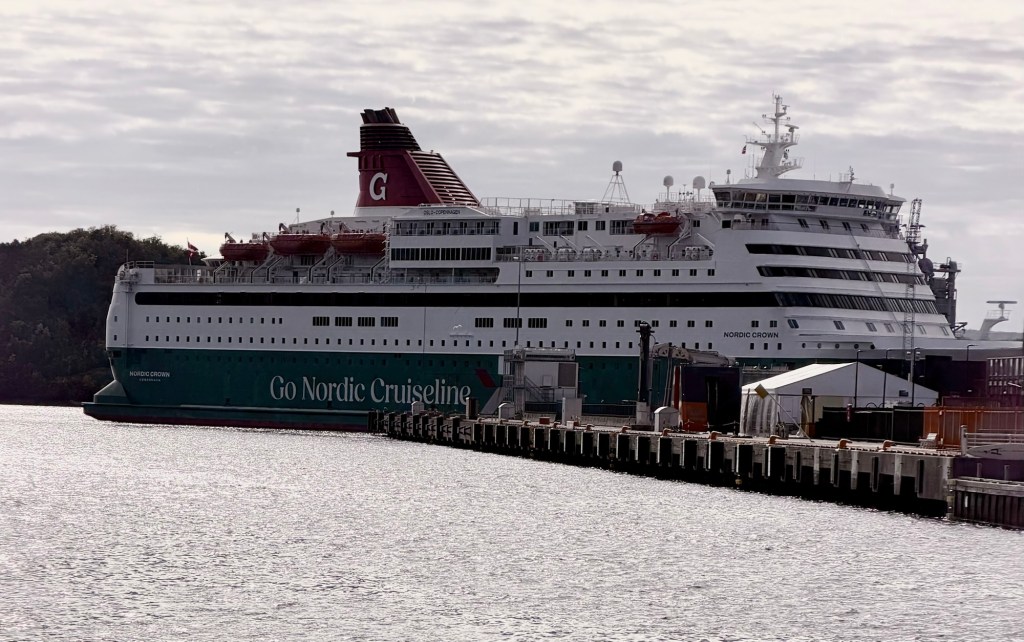
Saunas and swimmers—apparently this is a popular year-round thing.Rent-a-sauna boatIconic Opera HouseOpera HouseOpera House and MunchSheLies, floating sculptureModern architectureSuspended horses–Oslo train station. “The installation uses the horse as a historical symbol of labor, transport, and economic productivity to comment on modern society, human transit, and economic systems where people and movement intersect.” Um, okay 🫤A cast iron manhole cover featuring Oslo’s Patron Saint Hallvard, an innocent pregnant woman at his feet, the three arrows used to kill them, and the millstone used to sink his body into Drammensfjord. That’s the shortest version of the story I can offer!Manhole cover with student art: “If it ends up on the ground, it ends up in the ocean.” “Hey, don’t throw trash in the ocean. I can die from it!” What about me then? I can die from that too!”Holmenkollbakken (ski jump) off in a distanceDykkar, Oslo HarbourMax Manus, leading WWII Norwegian resistance fighter and master saboteur 🥇 Dykakrer, suspended over the nearby Akerselva RiverAnother ship for me–this time to Copenhagen.
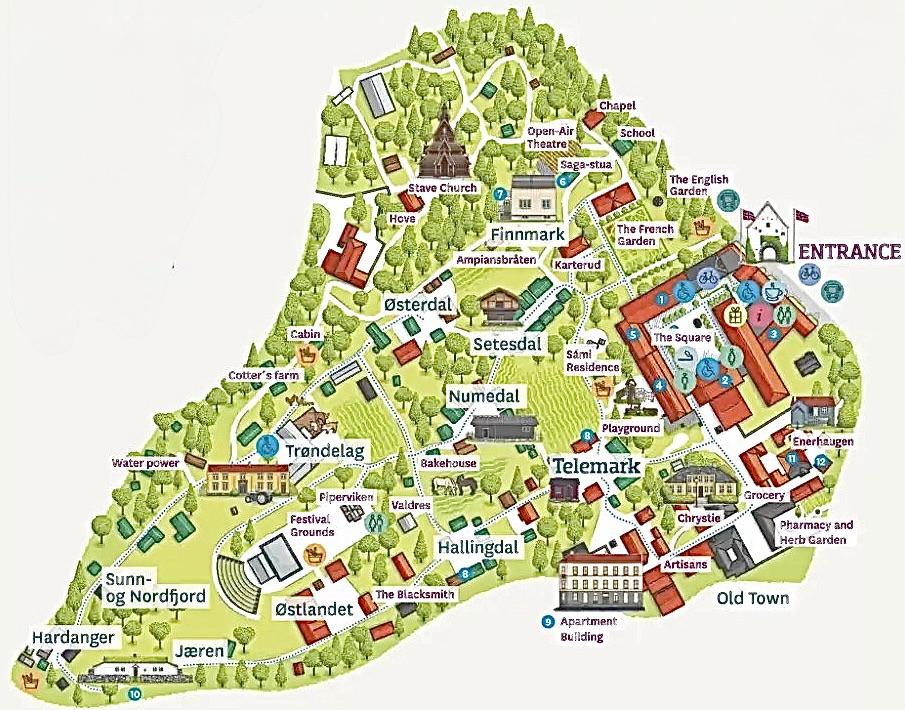
I had an enjoyable afternoon at the Norwegian Museum of Cultural History (Norsk Folkemuseum), a massive 35-acre park on the Bygdøy Peninsula. I was lucky enough to find a bus that took me straight there from Oslo Sentrum.
The museum showcases Norwegian cultural history dating back to the 16th century through a combination of open-air and indoor exhibits.
The outdoor area is divided into sections representing different regions of Norway and features over 160 relocated historic farmsteads, town buildings, and other structures.
Indoors, comprehensive exhibits explore Norwegian cultural heritage, everyday life, and traditional craftsmanship.
Open-Air Experience
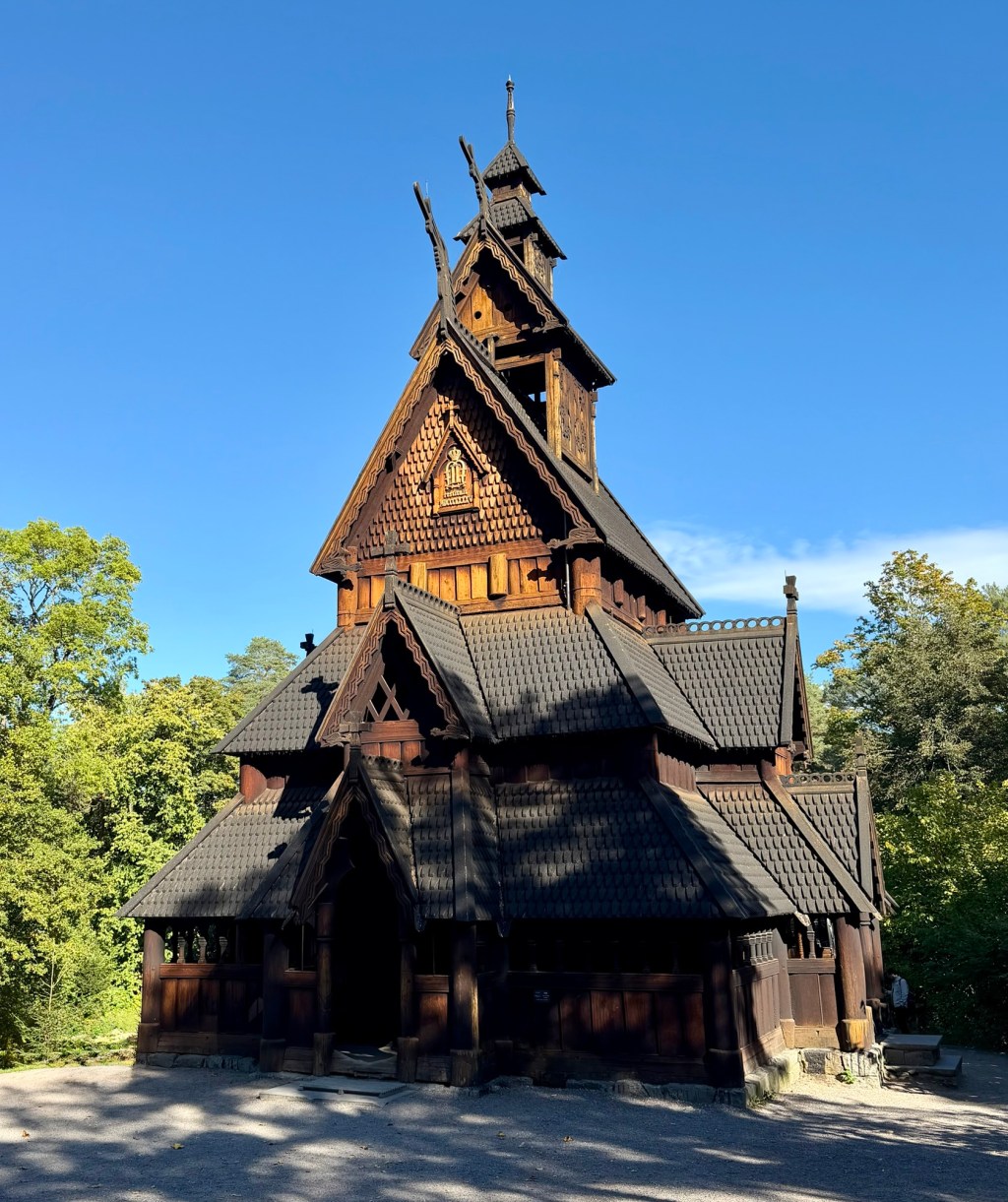
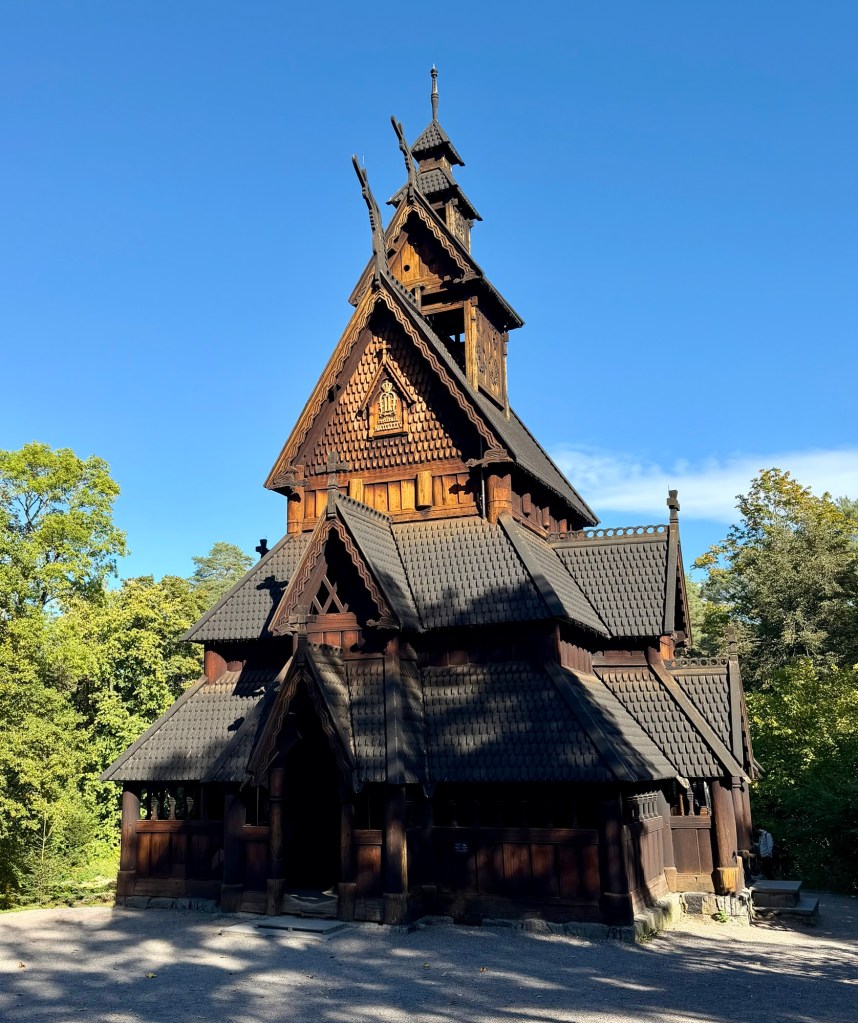
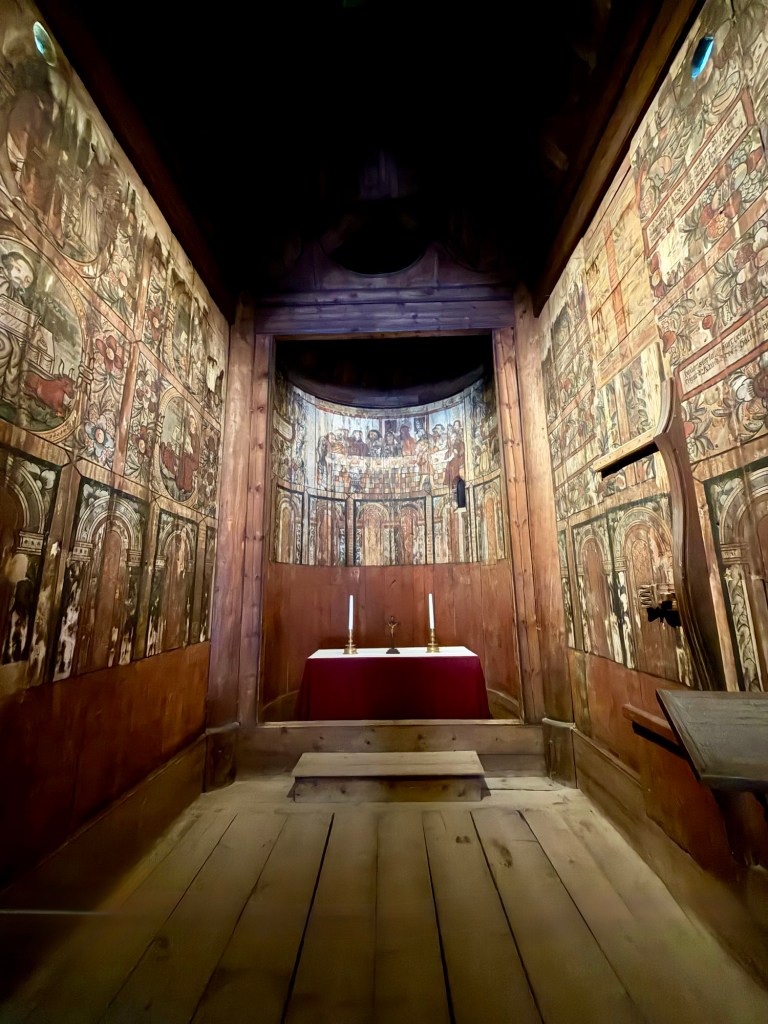
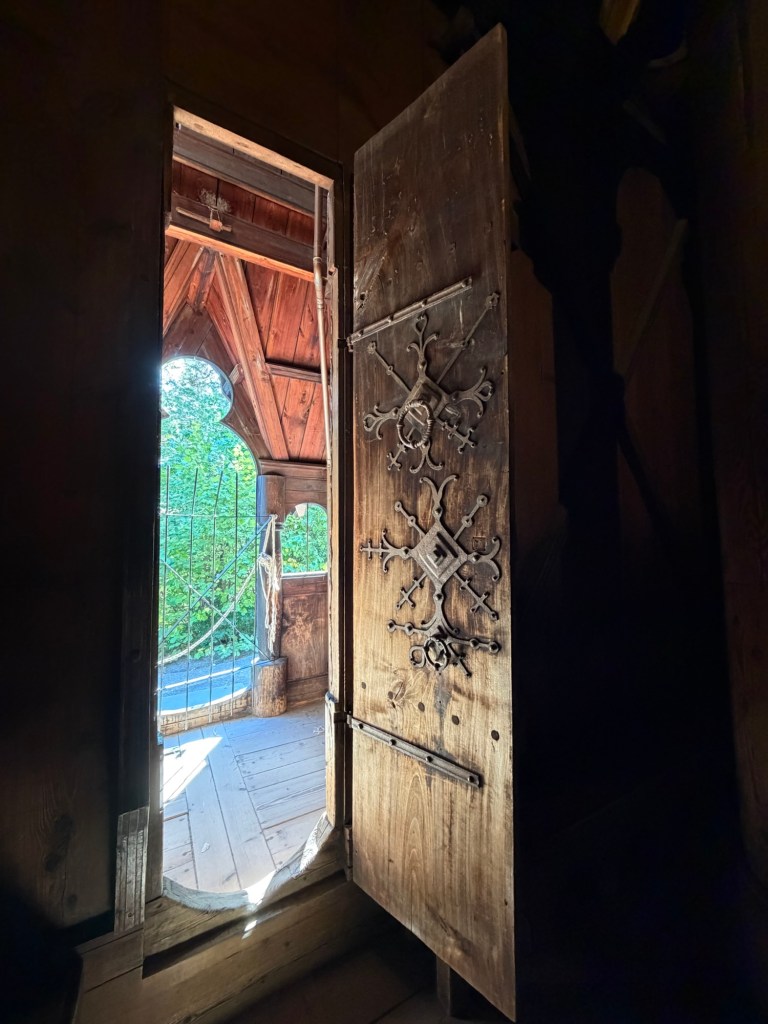
The most impressive building is the Gol Stave Church, built around 1200. In a state of disrepair it was nearly demolished, but King Oscar II bought the materials and paid to have it re-erected in Oslo in 1884.
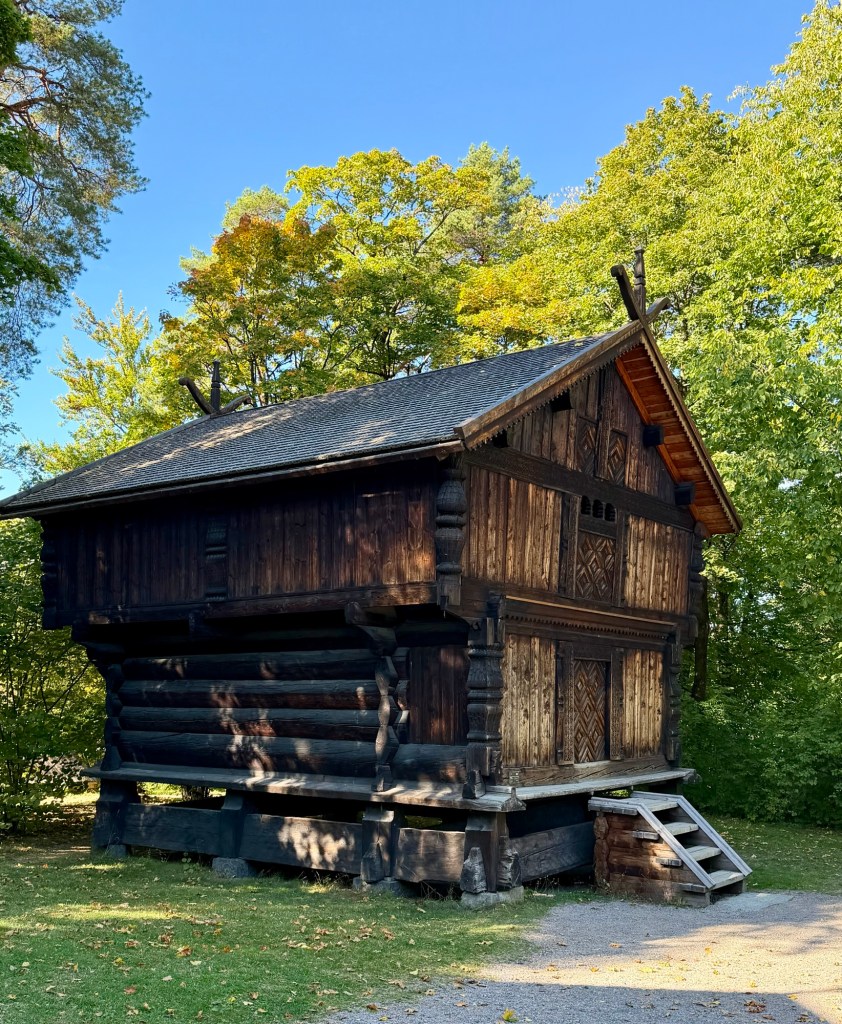
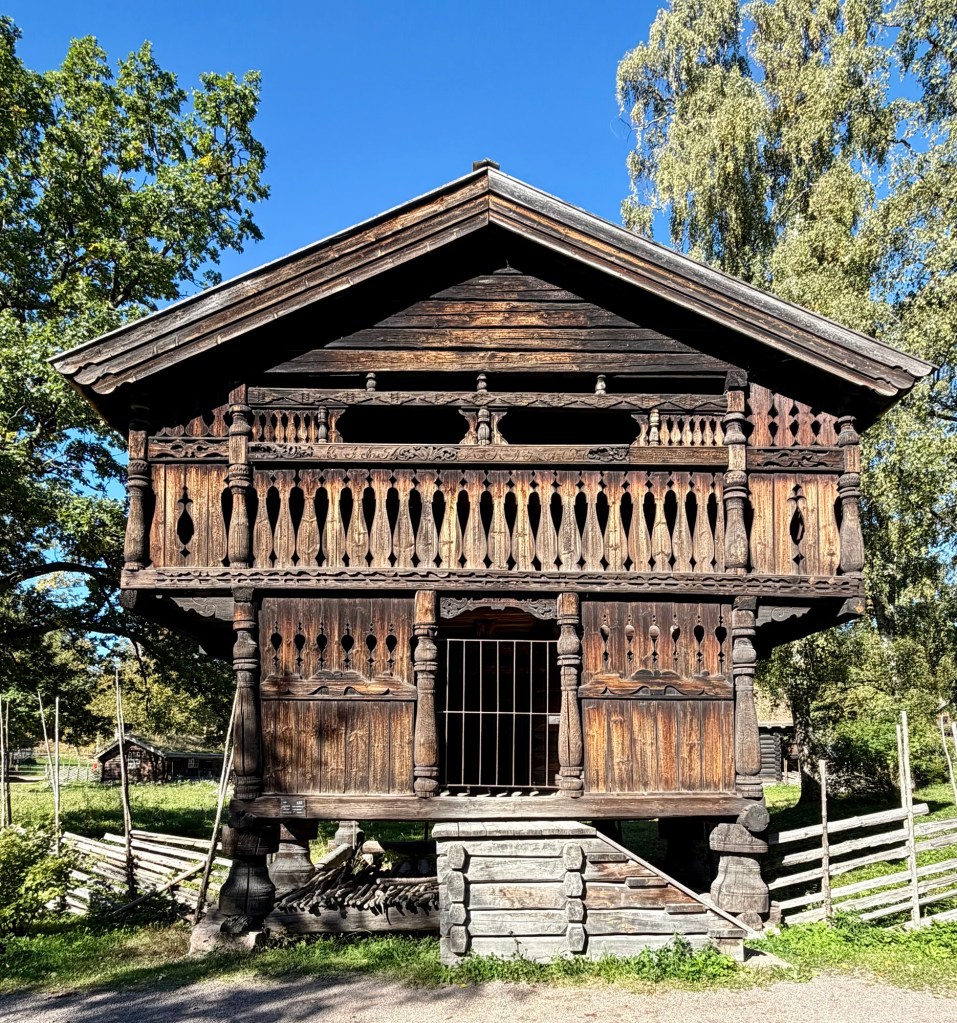
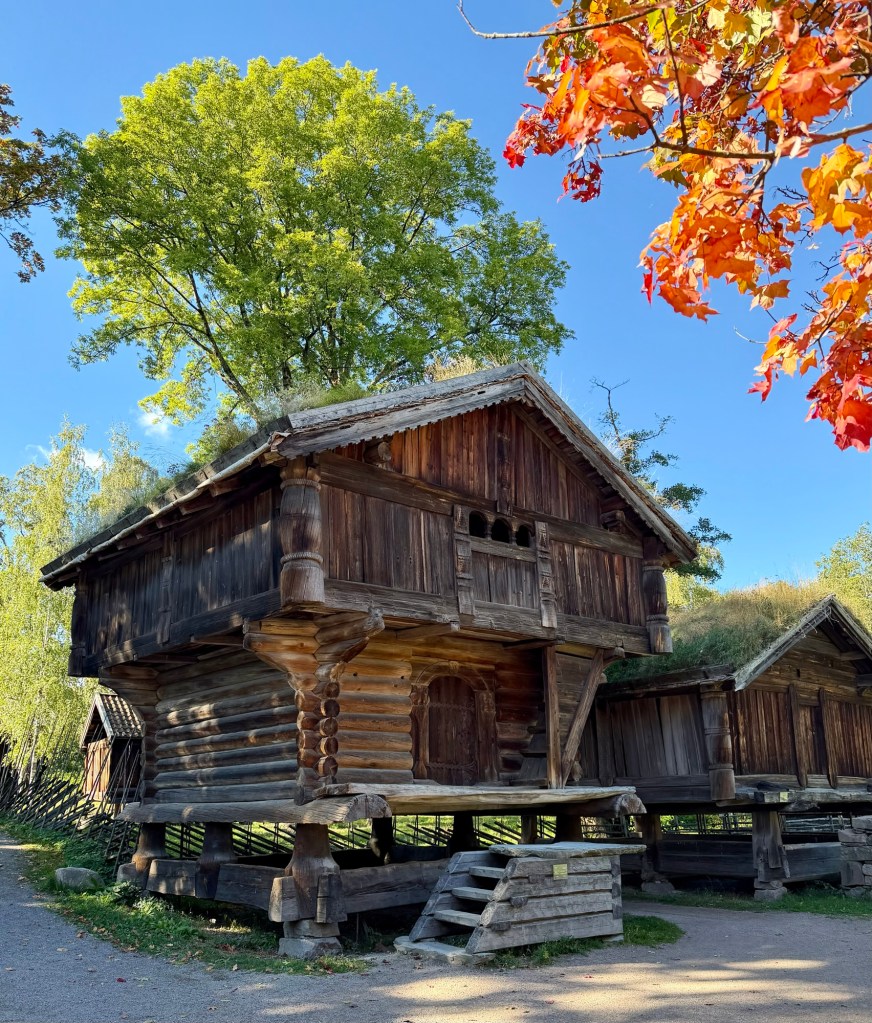
Other farmstead structures looked similar but had regional differences.
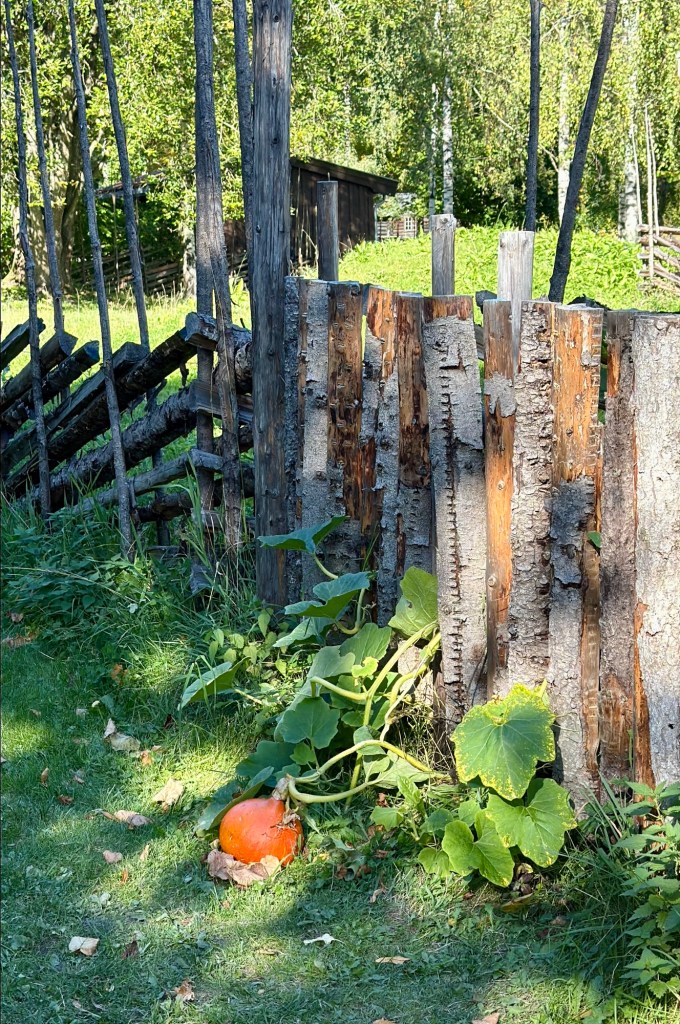
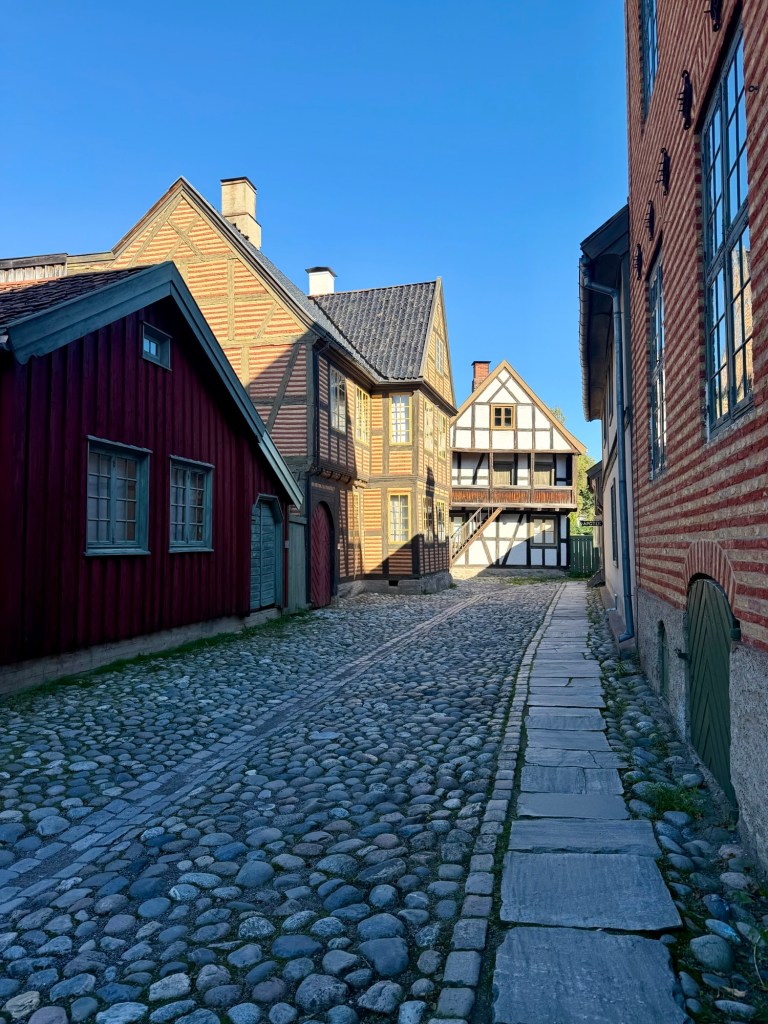
There were even live crops and animals. This pumpkin had made its way out of the enclosure. Recreated historic town with traditional houses, shops, and other buildings.
Indoor Exhibits
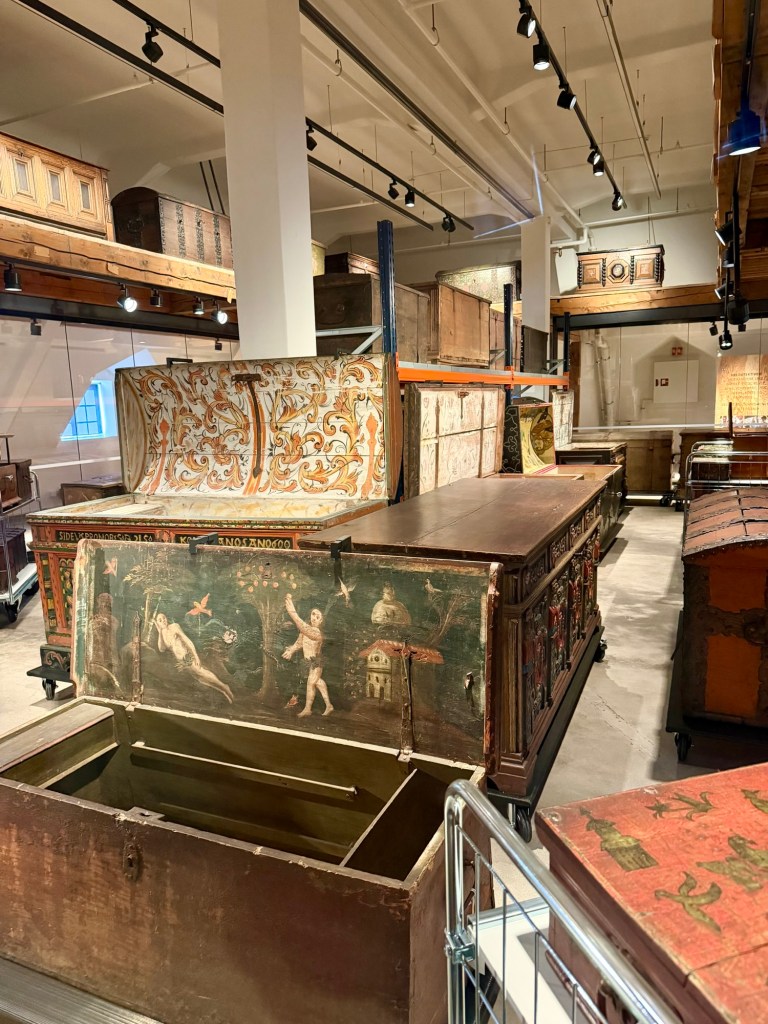
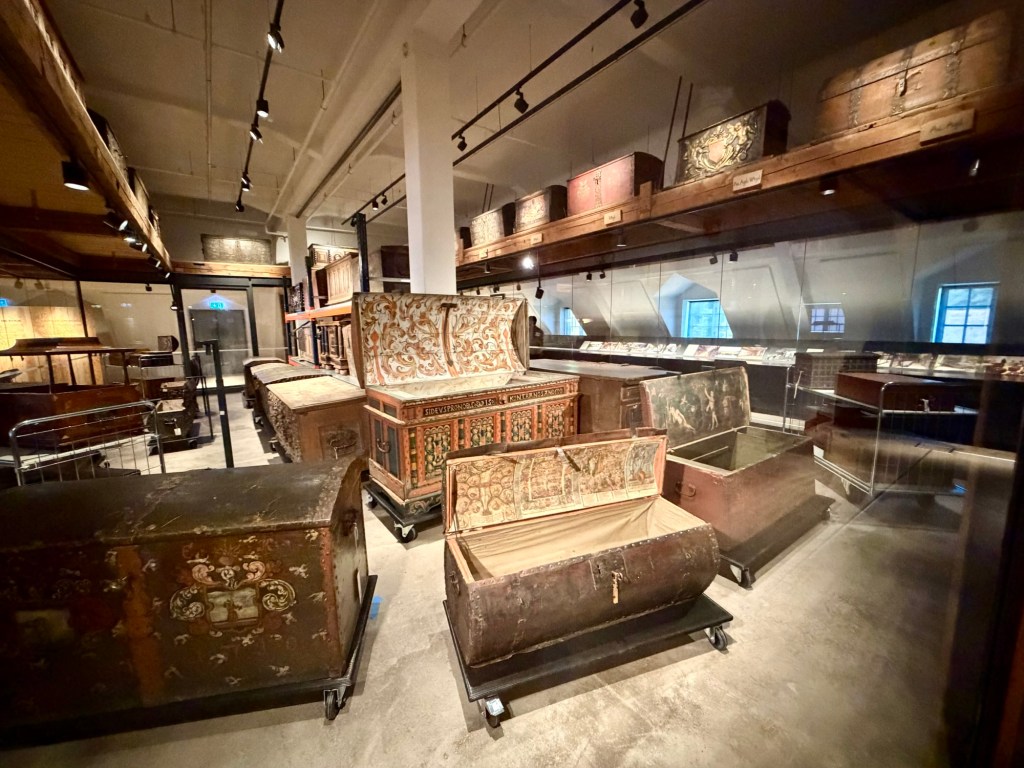
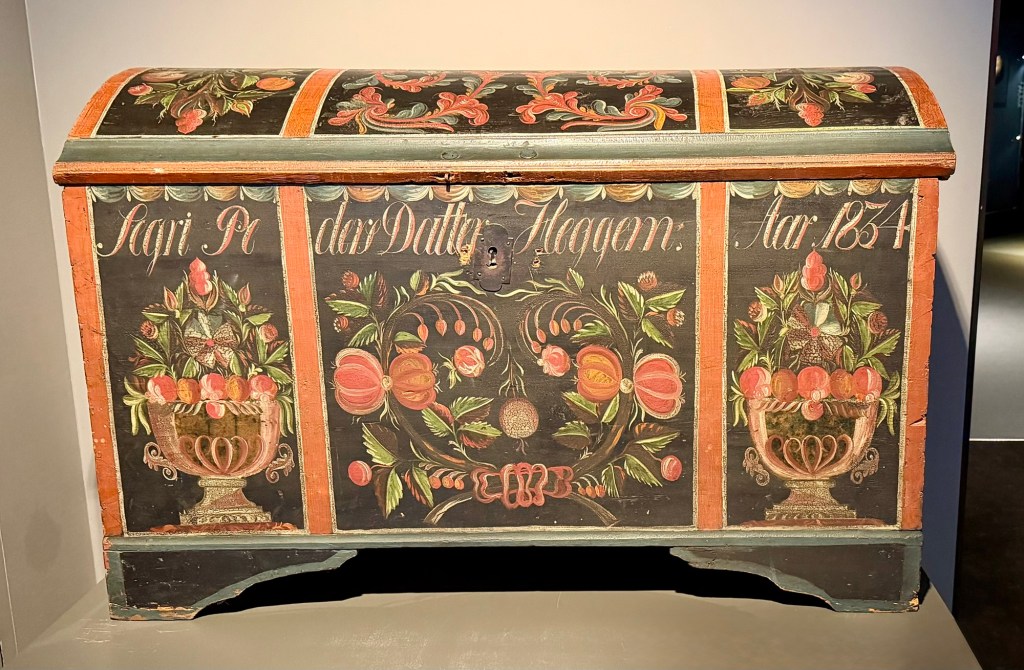
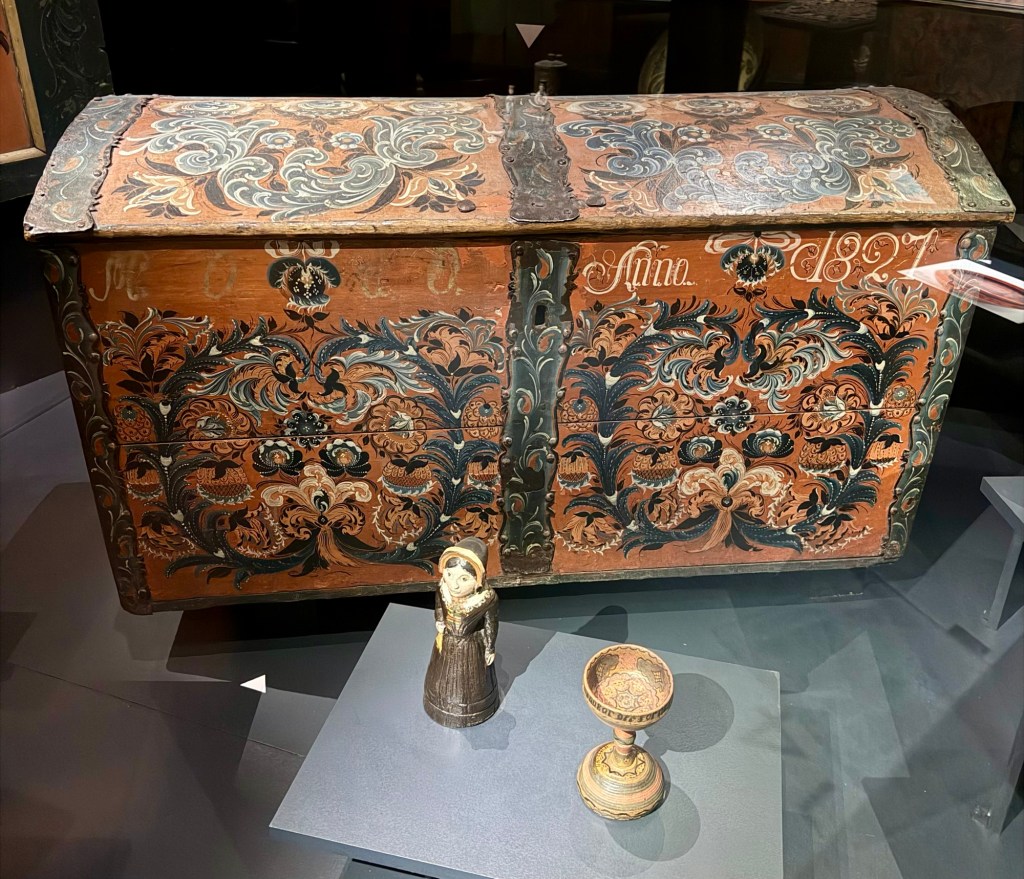
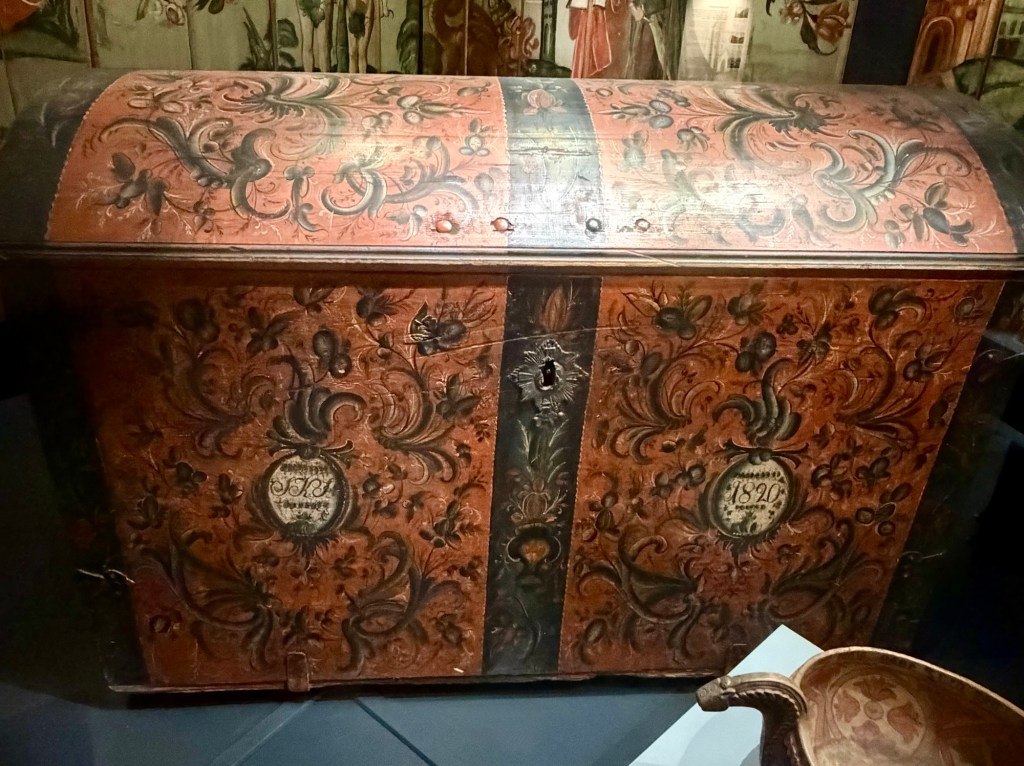
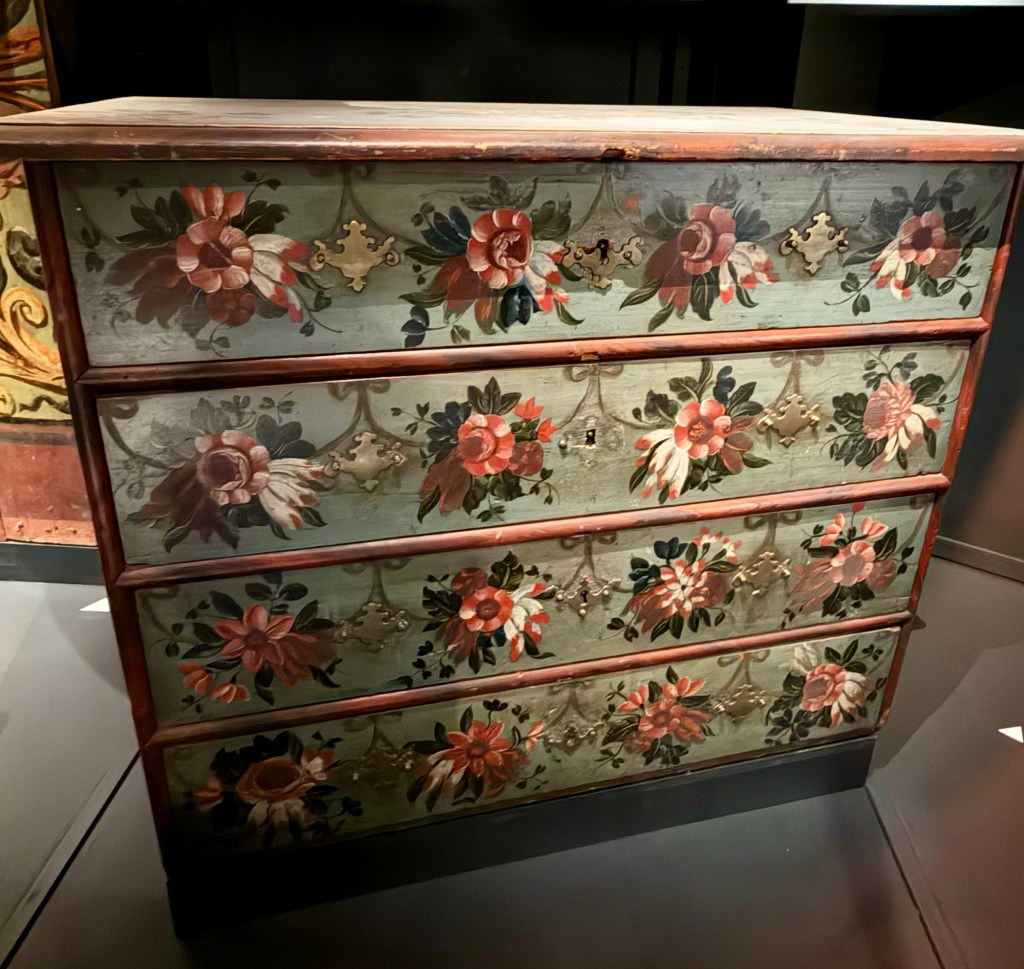
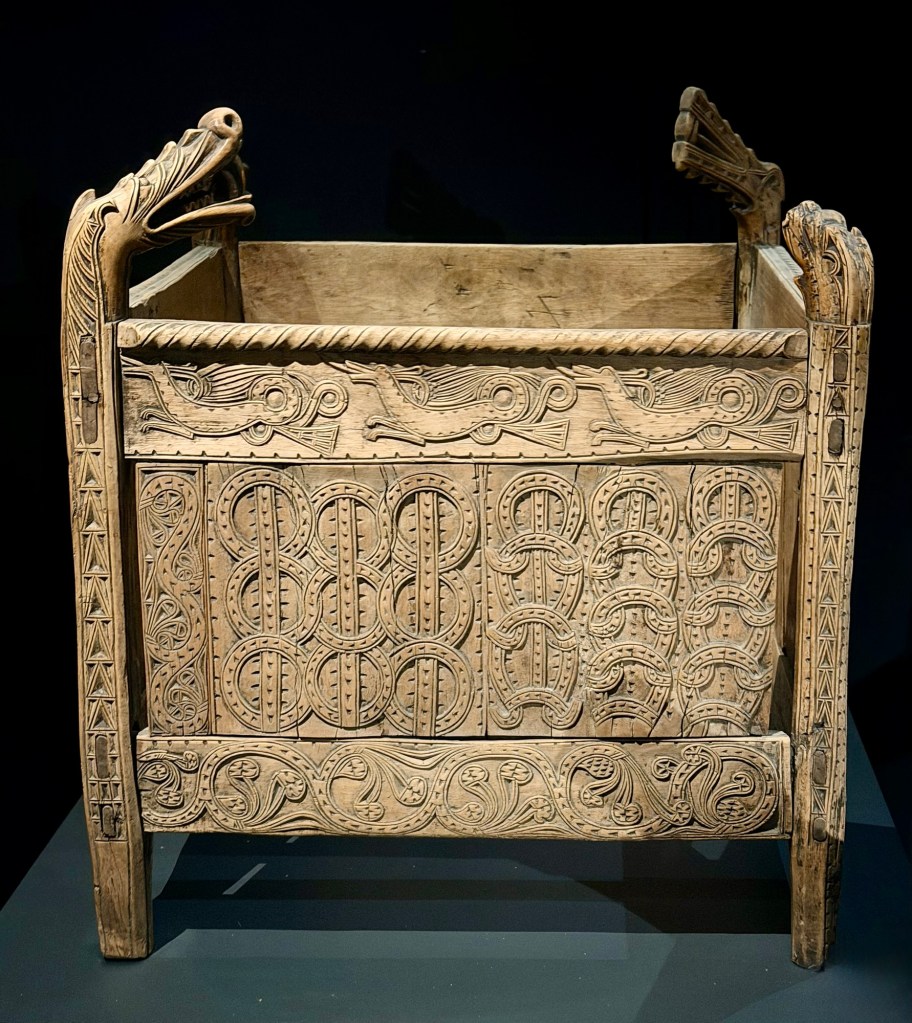
The museum has ~1600 various chests and boxes. The 63 in this room were from the 1500-1800s. Once a treasured item, they have little value as collectors’ items now. Apparently the museum has more in storage awaiting a new and improved chest room.
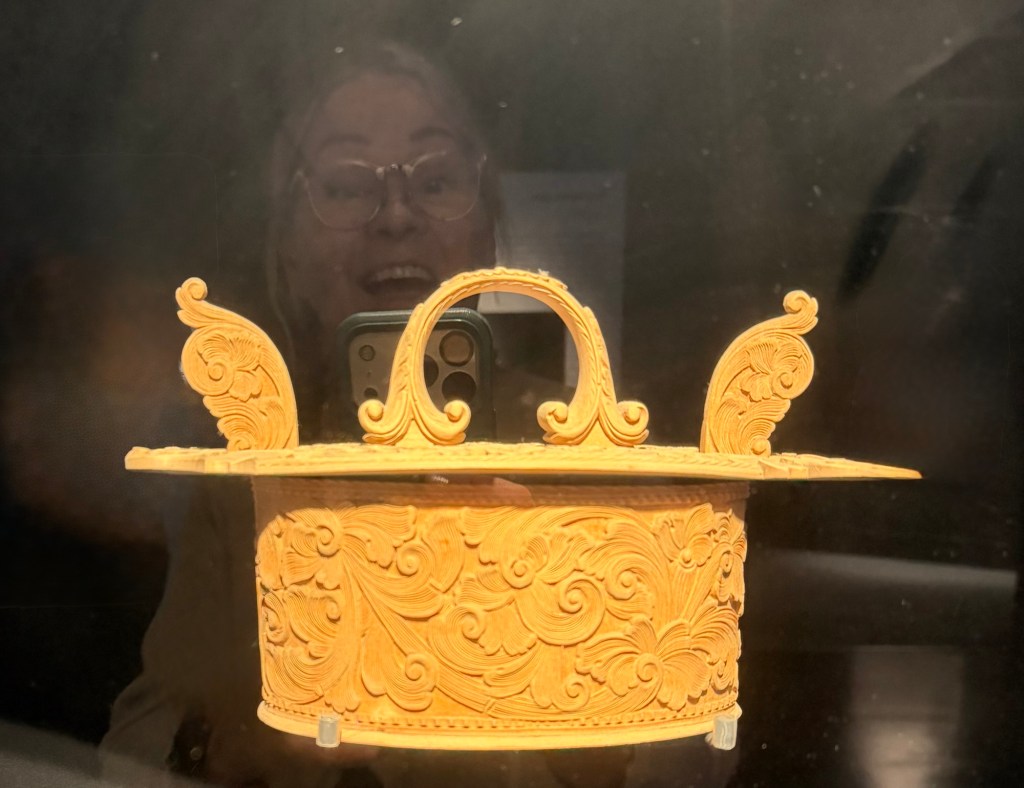
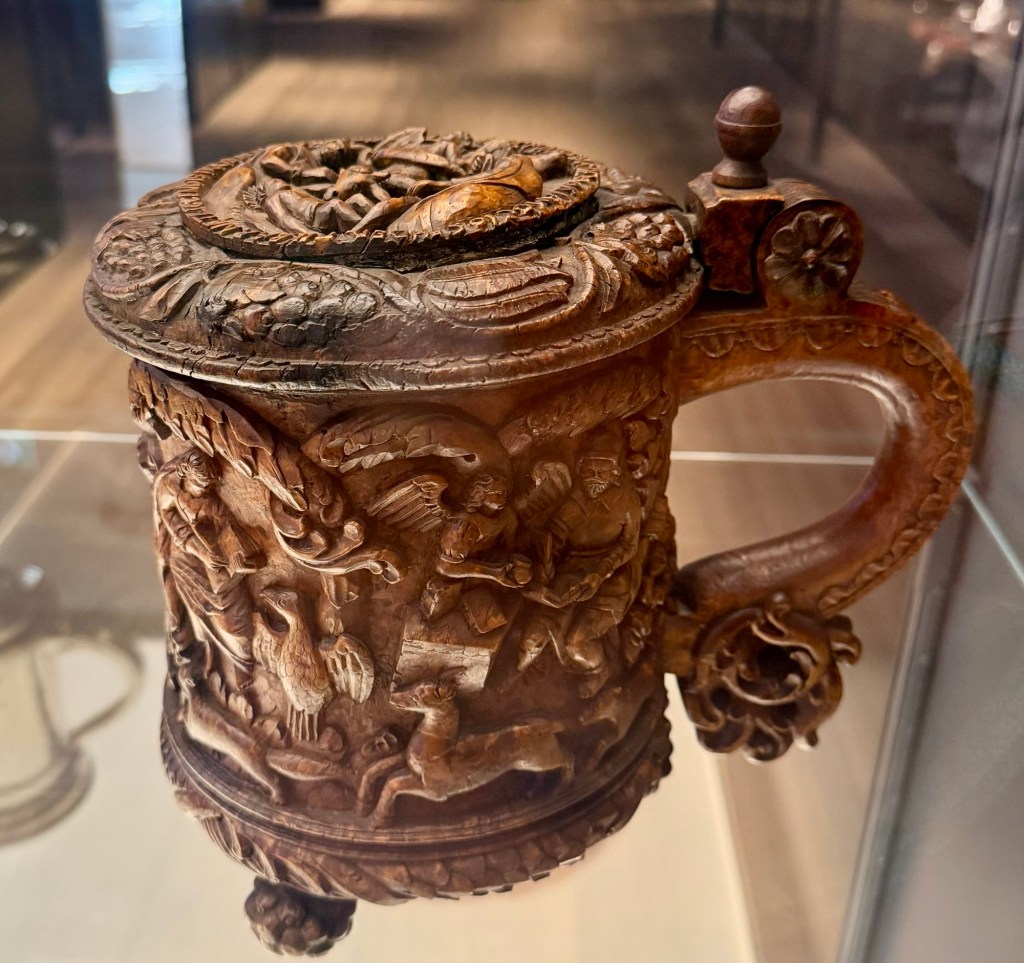
A small sampling of more chests and boxes that I liked:
I could NOT avoid capturing my reflection in the glass so….
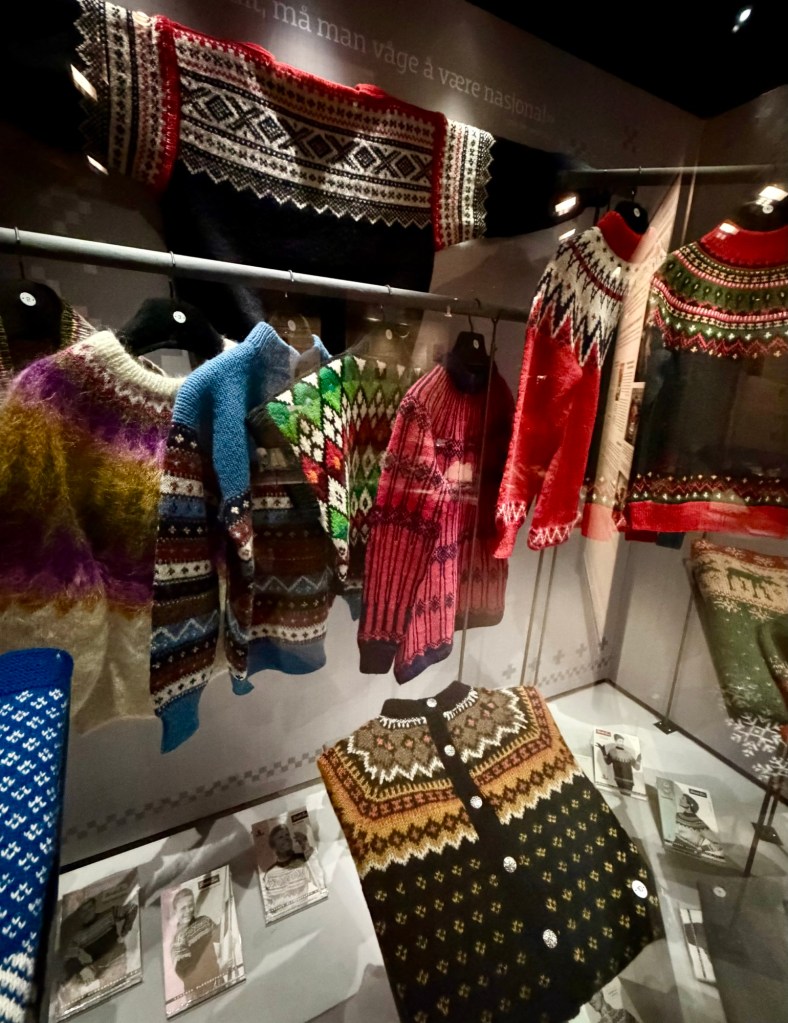
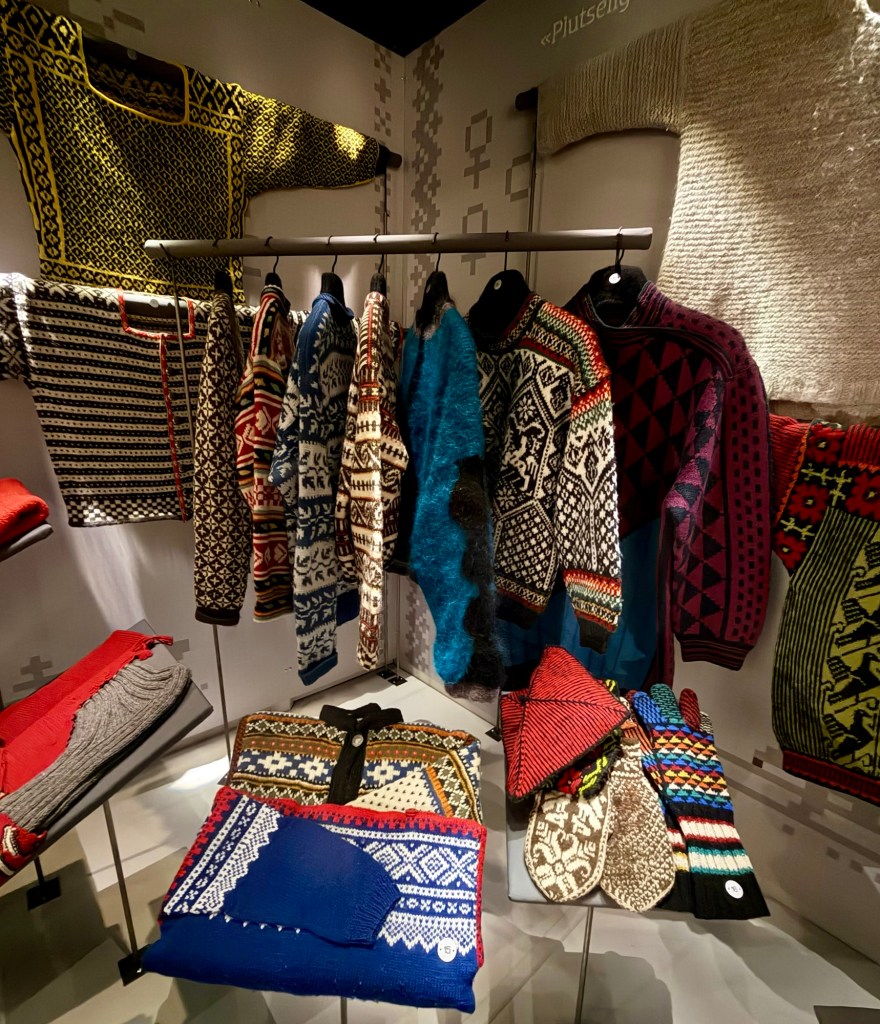
There was a small but “fantastisk” knitting museum.
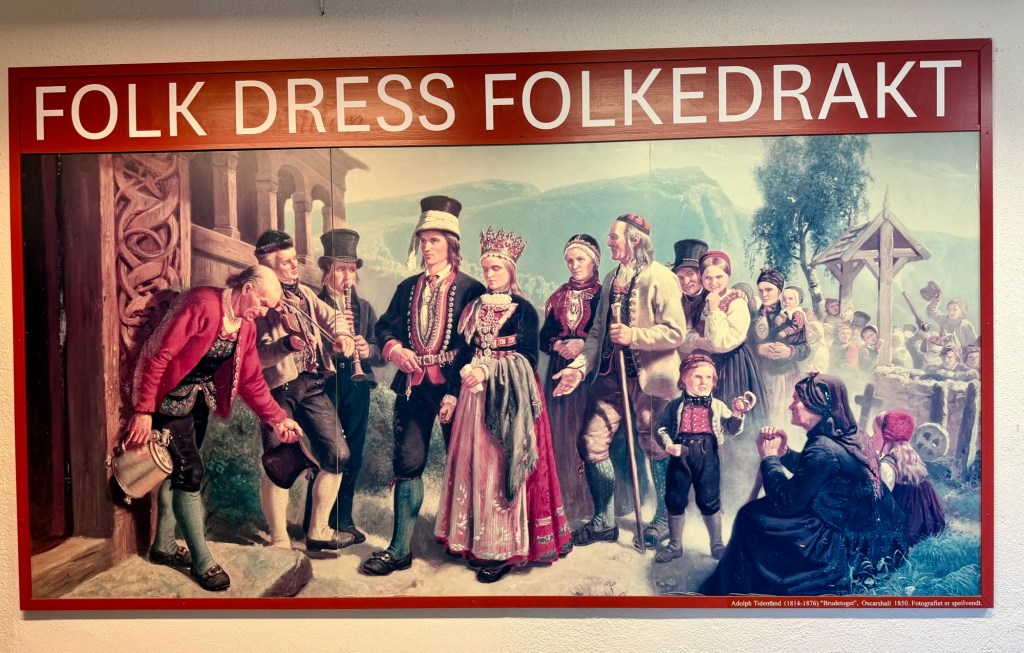
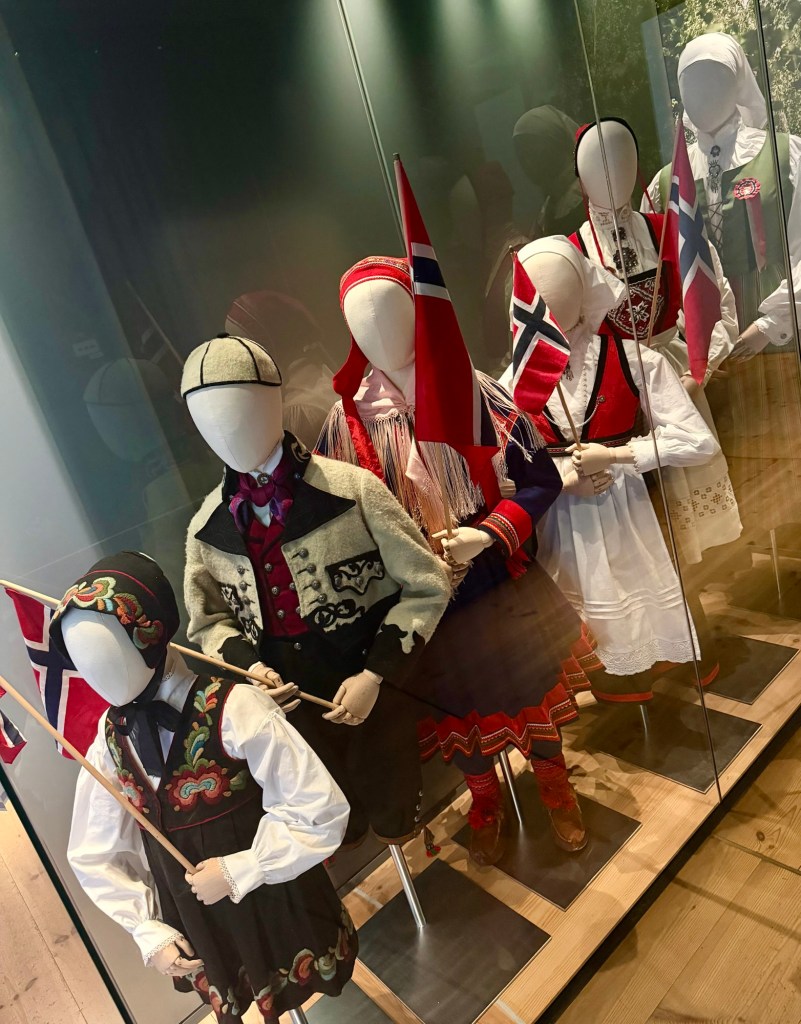
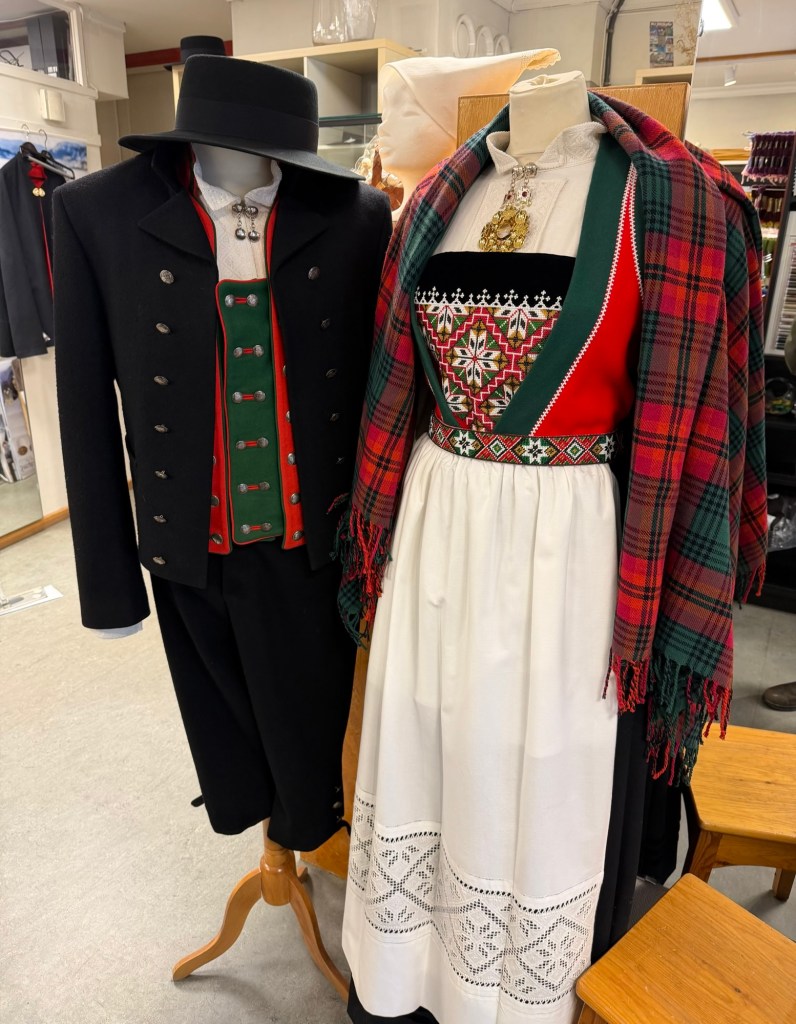
I was excited for the bunad exhibit, but it was limited. Whereas the value of antique chests has plummeted, Norwegian bunads have skyrocketed in value as highly collectible items (check eBay!), so I’d imagine that the museum receives very few donations of these.
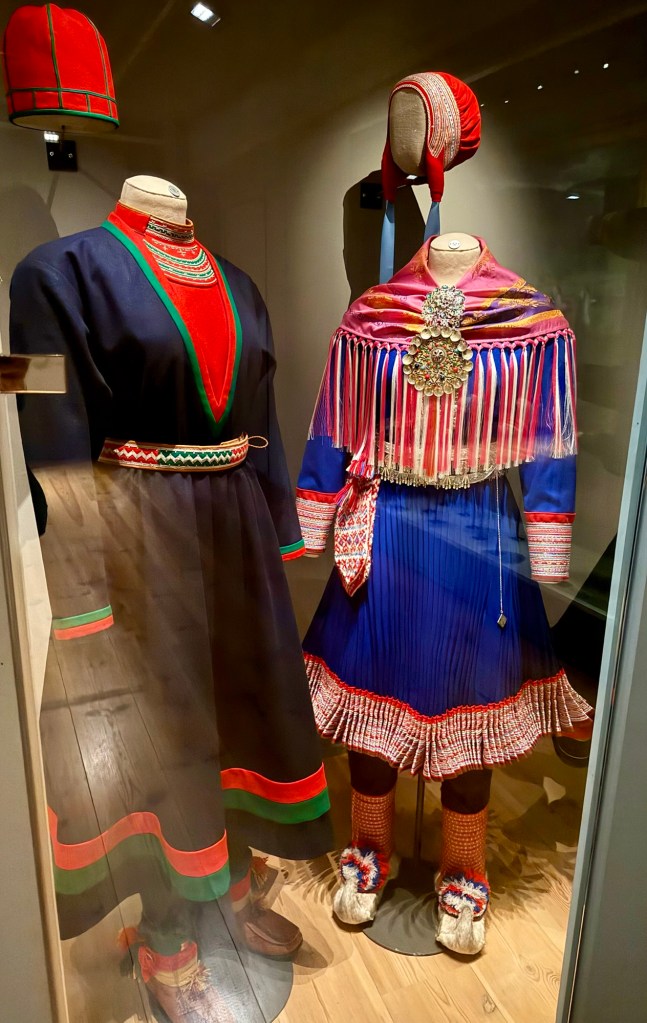
Traditional Sami bunads
I found traditional bunad jewelry in another section of the museum. Zoom in!
Other random things that caught my eye:
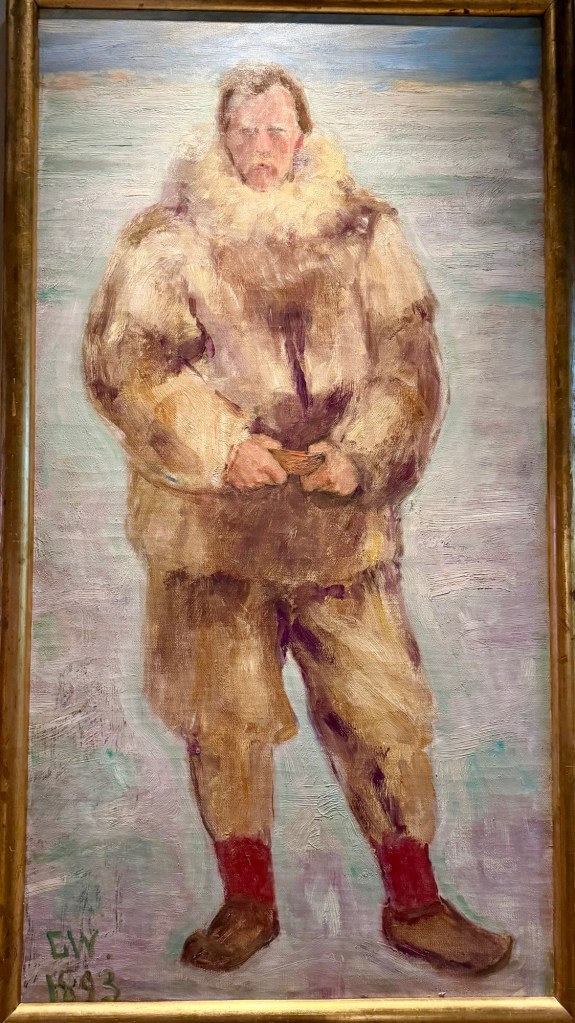
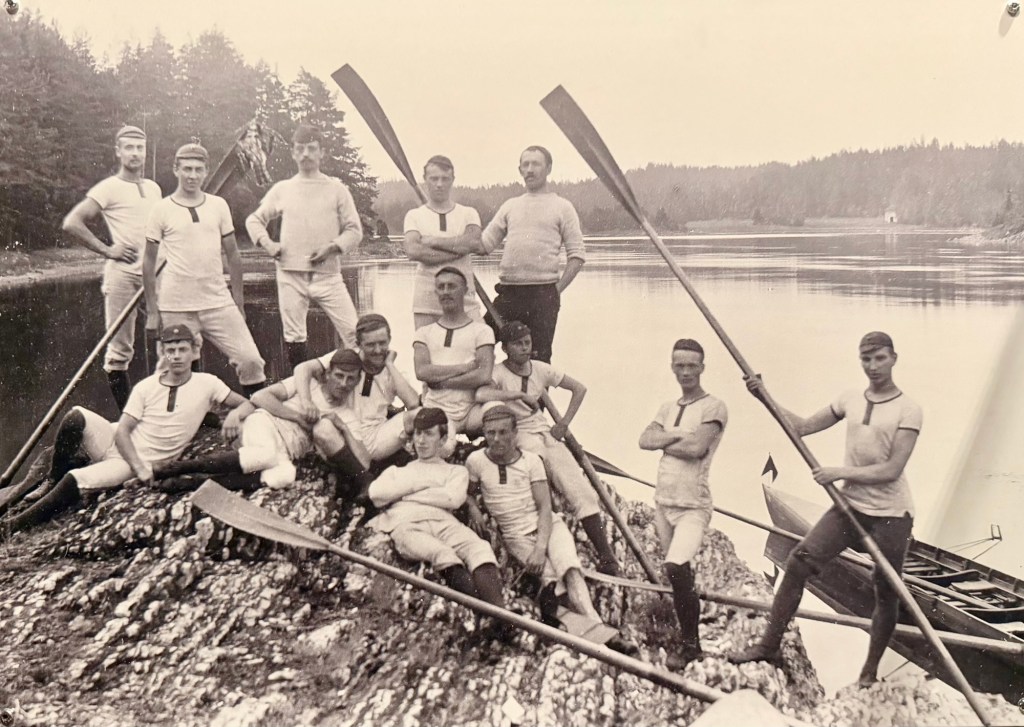
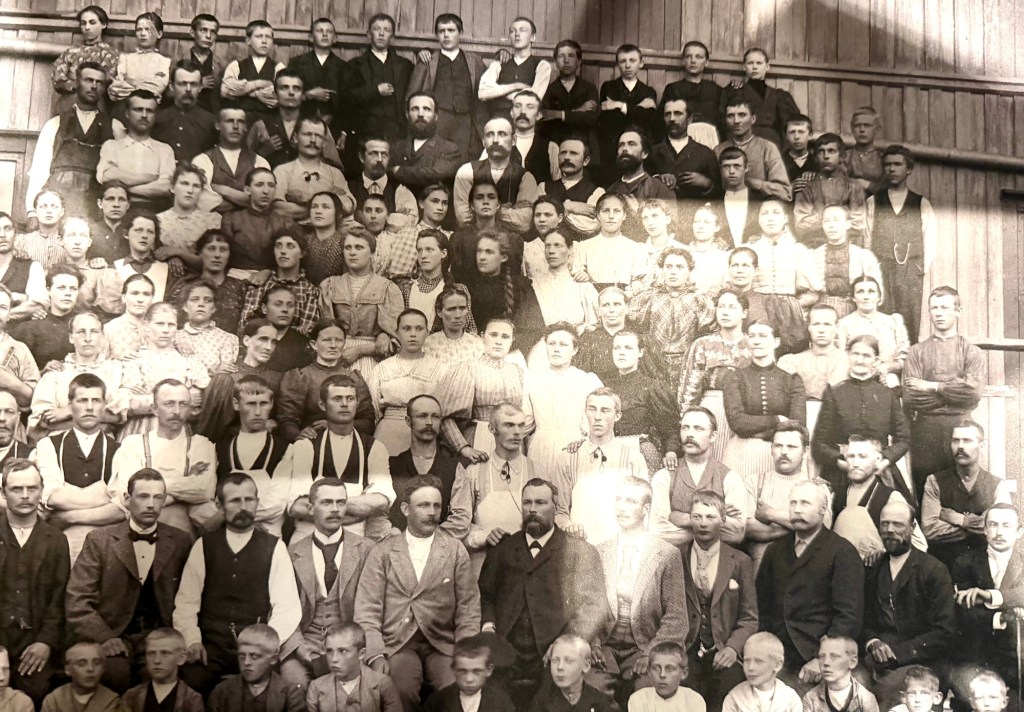
Fridtjof Nansen–polar explorer, humanitarian, diplomat, scientist, and Nobel Peace Prize laureate. I’m not sure just what is going on in this picture. 1897 Swedish tobacco factory employees. Note the child labour! 
In the end, I spent 4 hours here, and it flew by!
For a change of scenery, I walked to a nearby cove and caught a water taxi back. The Oslo harbour is a busy place!
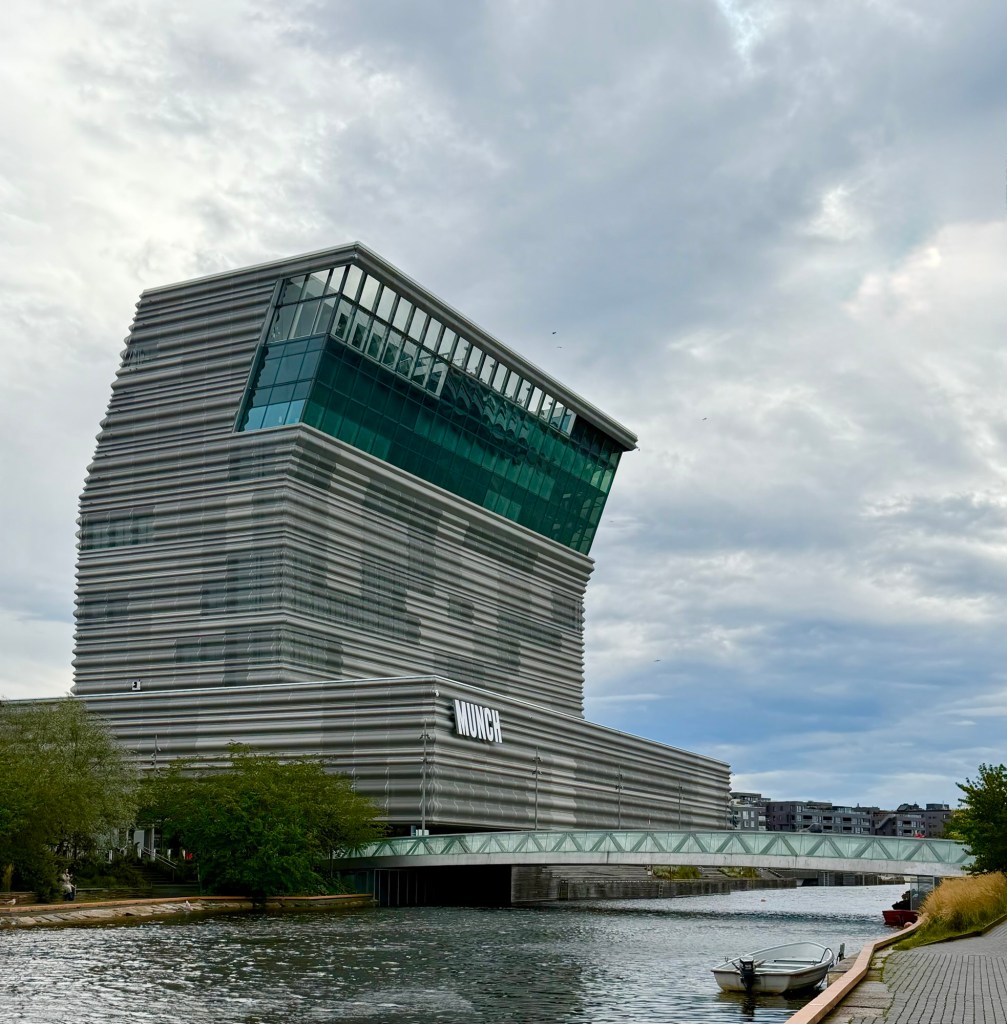
I walked to the Munch Museum this morning, a striking building with a forward-leaning profile. There are 14 floors and 11 gallery spaces, so a lot to take in.
Munch
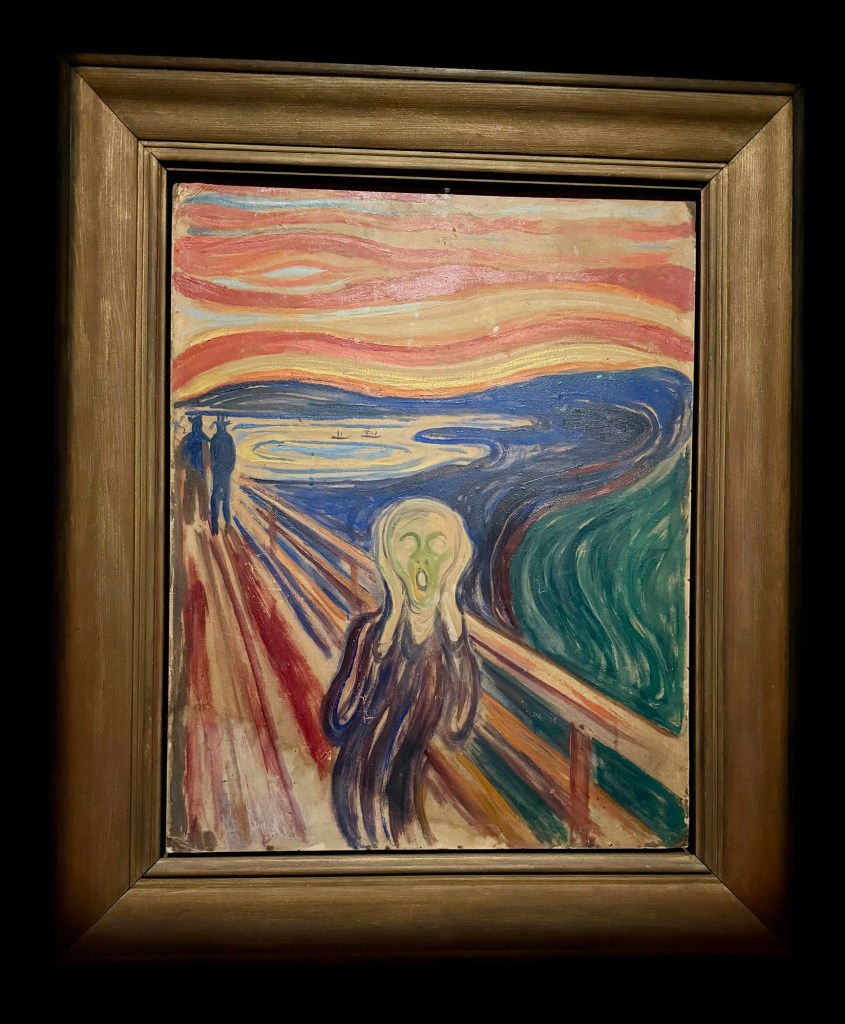
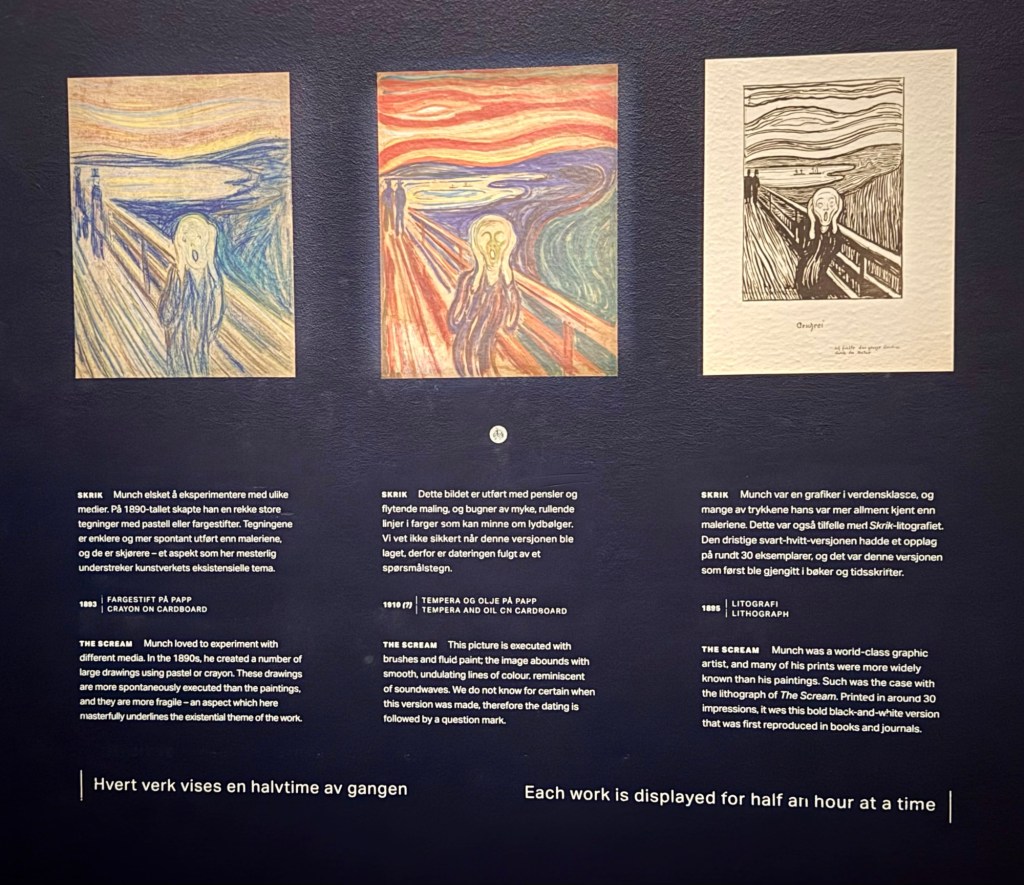
I was thrilled to view the oil version of The Scream—the most famous and least exhibited version. Copies are shown at timed intervals because the originals are too fragile to remain on display. Other versions include a lithograph print and a crayon rendering.
The Scream, oil versionThree versions of The Scream
I tried to take in all the exhibits, but I ended up walking out of a few. I like Munch, but too much of his familiar themes of isolation, anxiety, and psychological struggle can be a bit overwhelming and unenjoyable. The ghoulish white faces crop up in his paintings a lot.
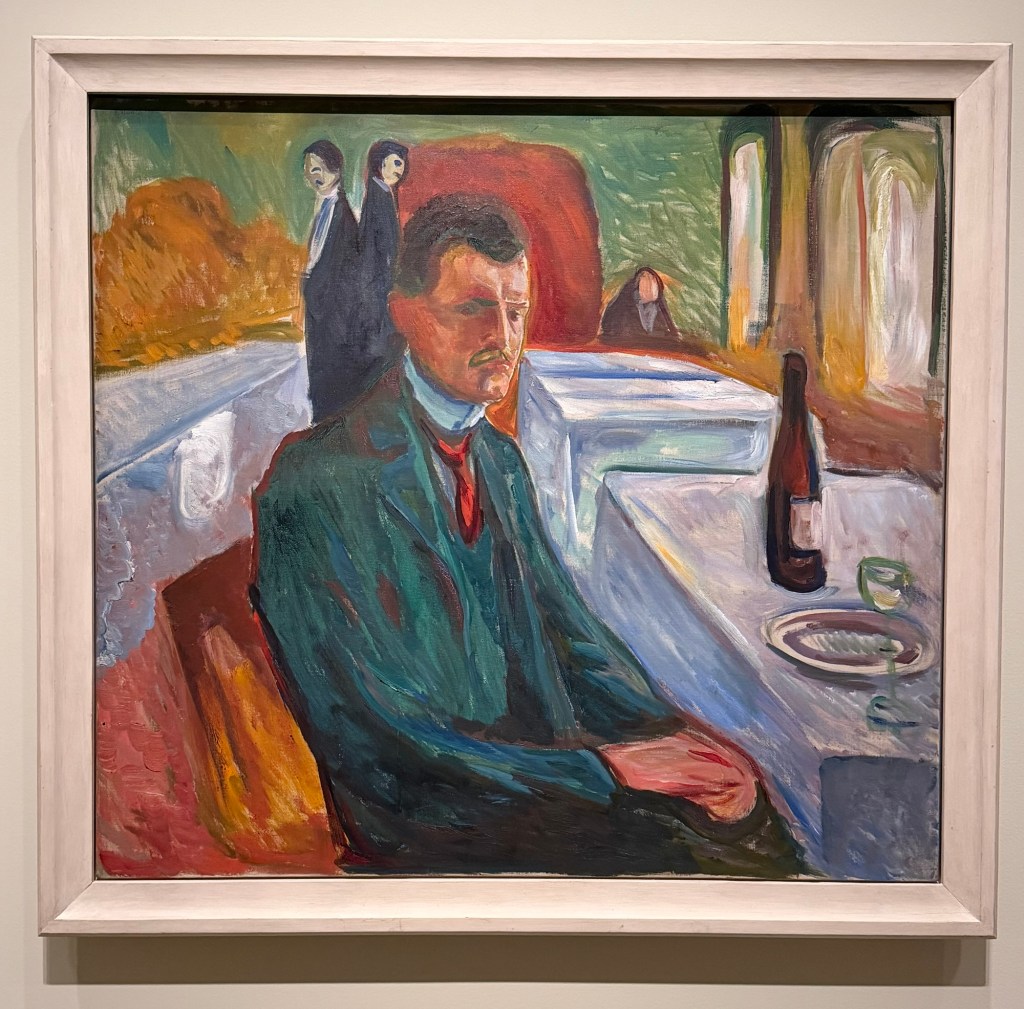
I joked to myself that Munch couldn’t even do a self portrait without spirits (both types).
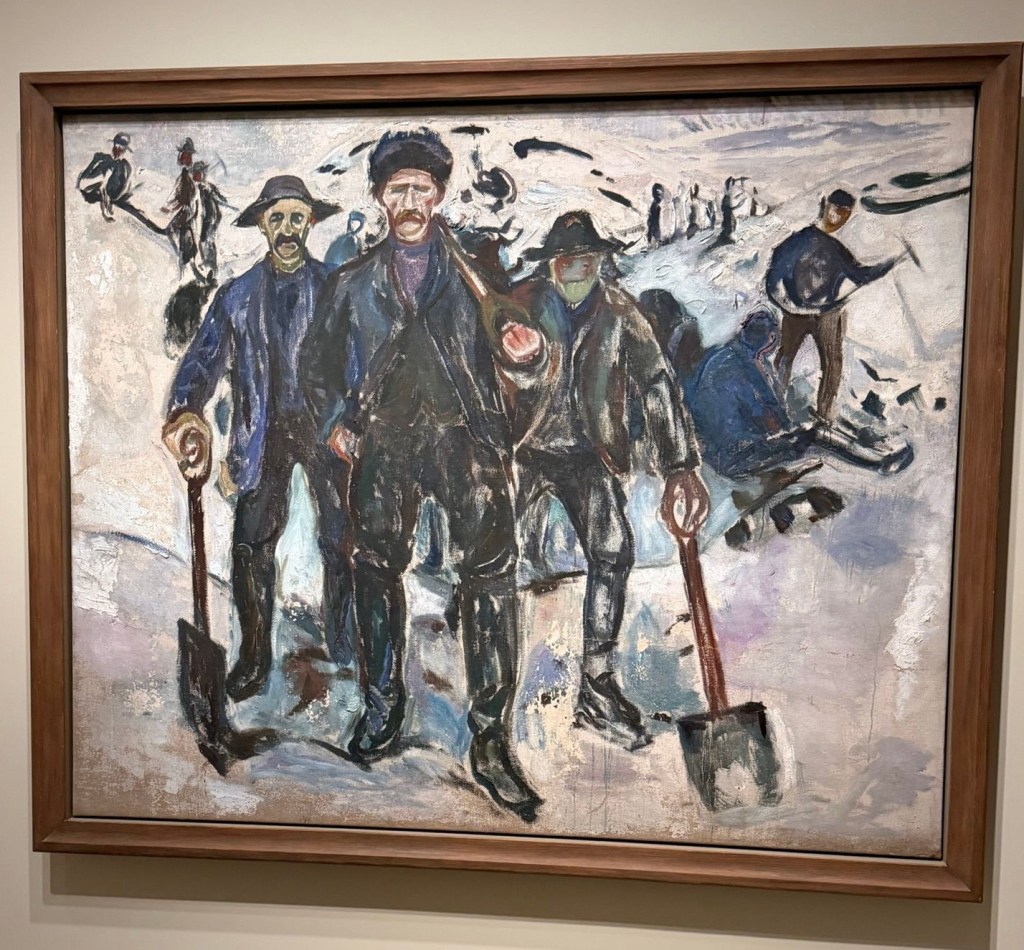
I really enjoyed the exhibition Edvard Munch and the Chocolate Factory, that showcased a collection of artworks created for the women’s canteen at a chocolate factory. The exhibition offered an interesting glimpse into everyday working life, especially his interest in workers, women, and children. The paintings actually absorbed traces of cocoa powder and cigarette smoke from being hung in the workplace.
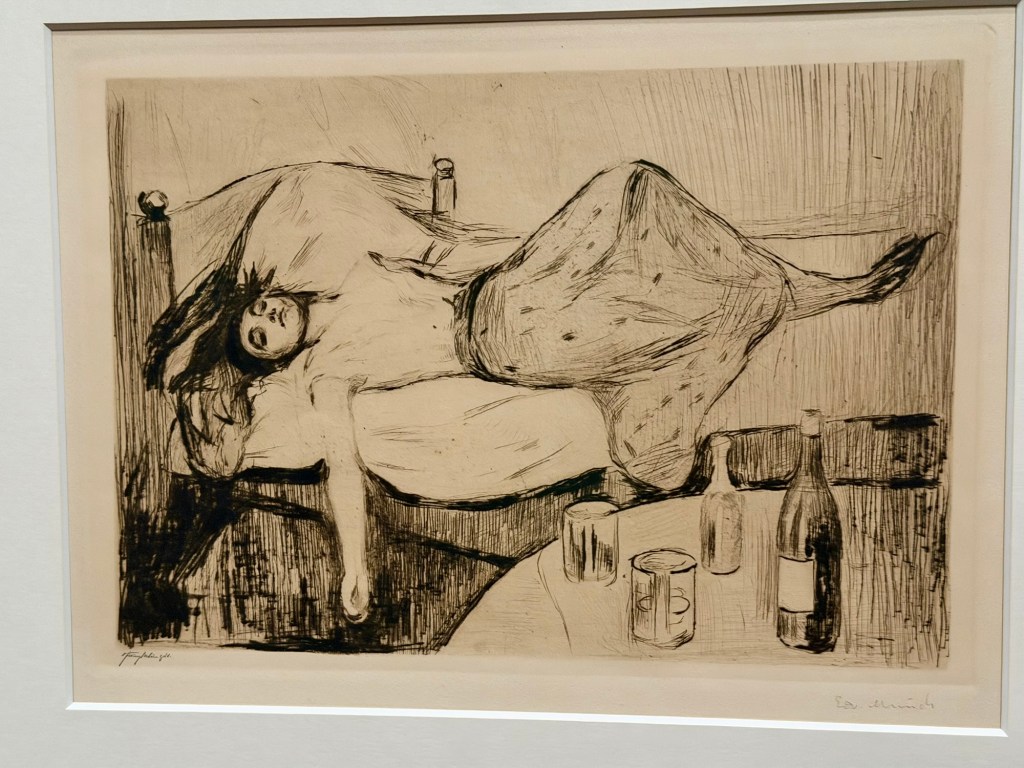
I especially enjoyed the works where Munch observed and represented ordinary people. The Day After needs no description.
At the top of Munch, I enjoyed panoramic views of the city and the harbour. Then I went down and had the best sticky cardamom bun ever in the café.
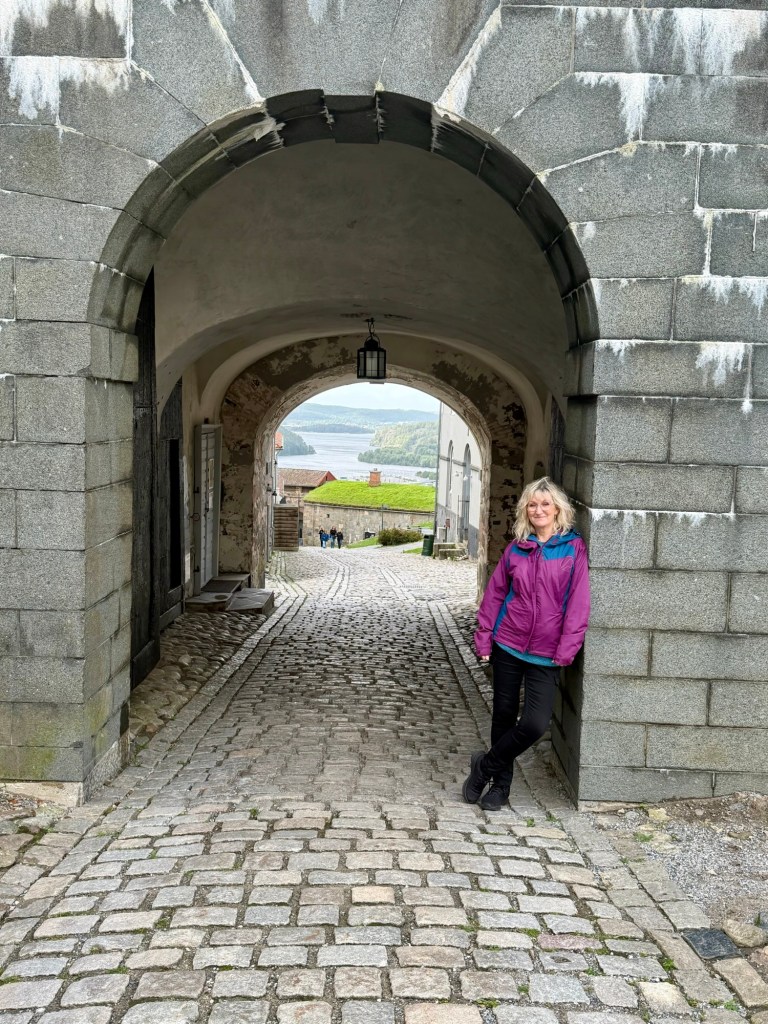
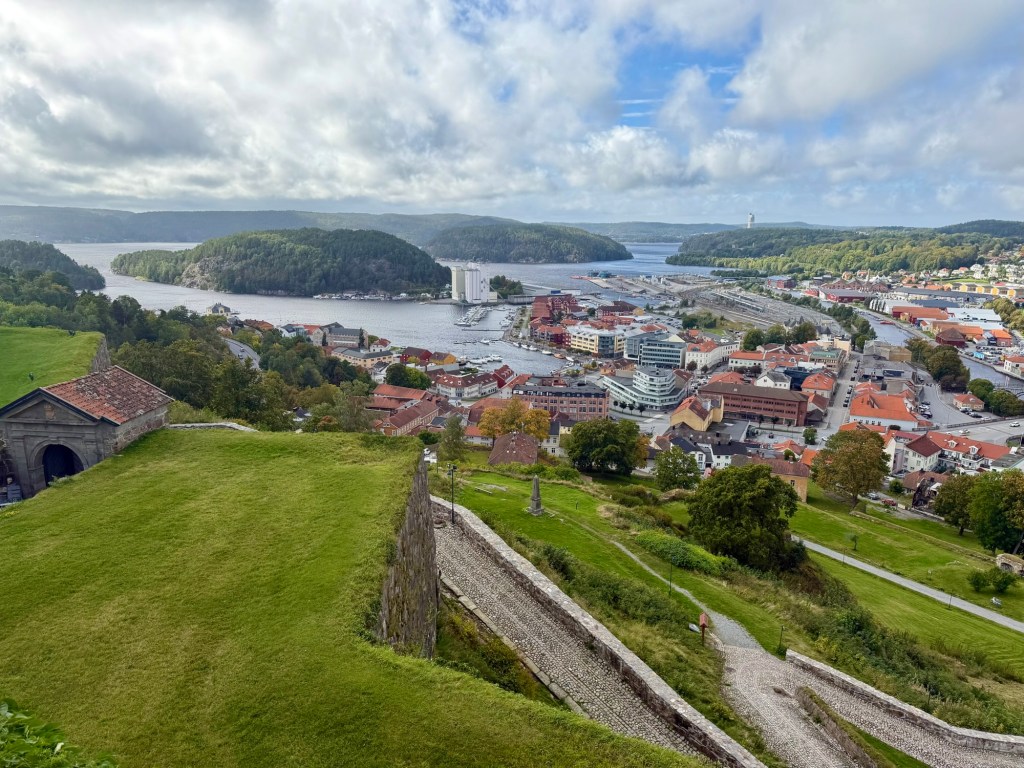
Today I had the pleasure of spending the day with my cousin Birgit, whom I’m related to on my paternal grandmother’s side. I took the train from Oslo, and she picked me up for a wonderful day visiting fortresses in both Fredrikstad and Halden.
Fredrikstad FortressFredrikstad FortressView of Halstad from Fredriksten Fortress
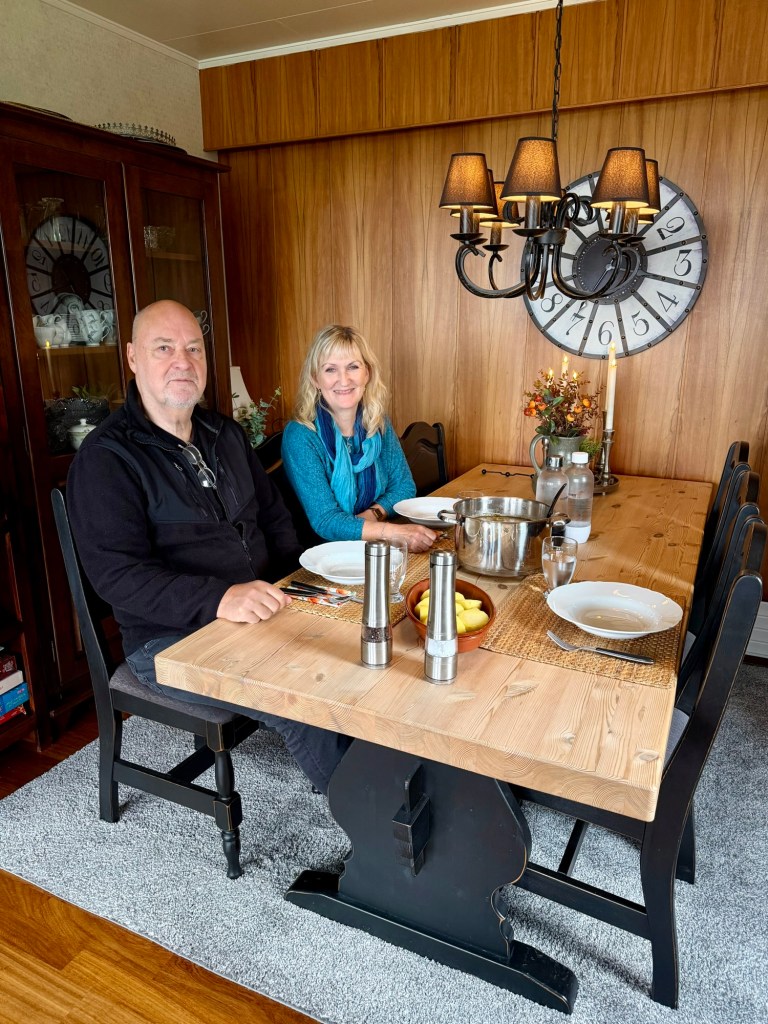
We ended the day with a lovely middag in her hyggelige home with her husband, Hans-Erik. I felt so welcomed—and even better, I spent the entire day speaking Norwegian! 🇳🇴
I’m incredibly grateful for their warmth and hospitality. Tusen takk, Birgit og Hans-Erik! ❤️
There is a partial train strike, which warranted me getting up at 05:30 this morning to catch an early bus from Geilo to Kongsberg, where I could board a train for the rest of the journey to Oslo.
Beautiful views from the bus—better than tunnels!
The bus ride took almost four hours, but it was quiet and the scenery was stunning. I realized later that, had I taken the train, I would have missed much of that scenery in exchange for tunnels.
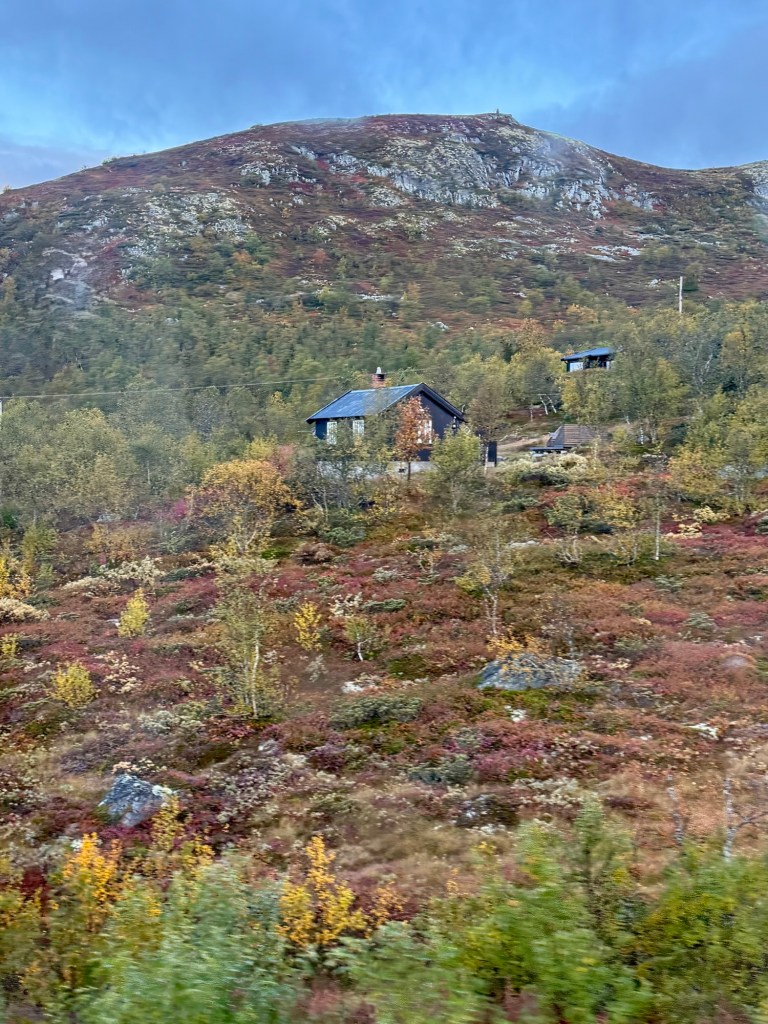
We traveled through the picturesque Numedal Valley, and I watched the landscape gradually change from rugged mountain terrain and rolling Alpine scenery to rivers, forests, and blazing autumn colours as we descended downward in altitude.
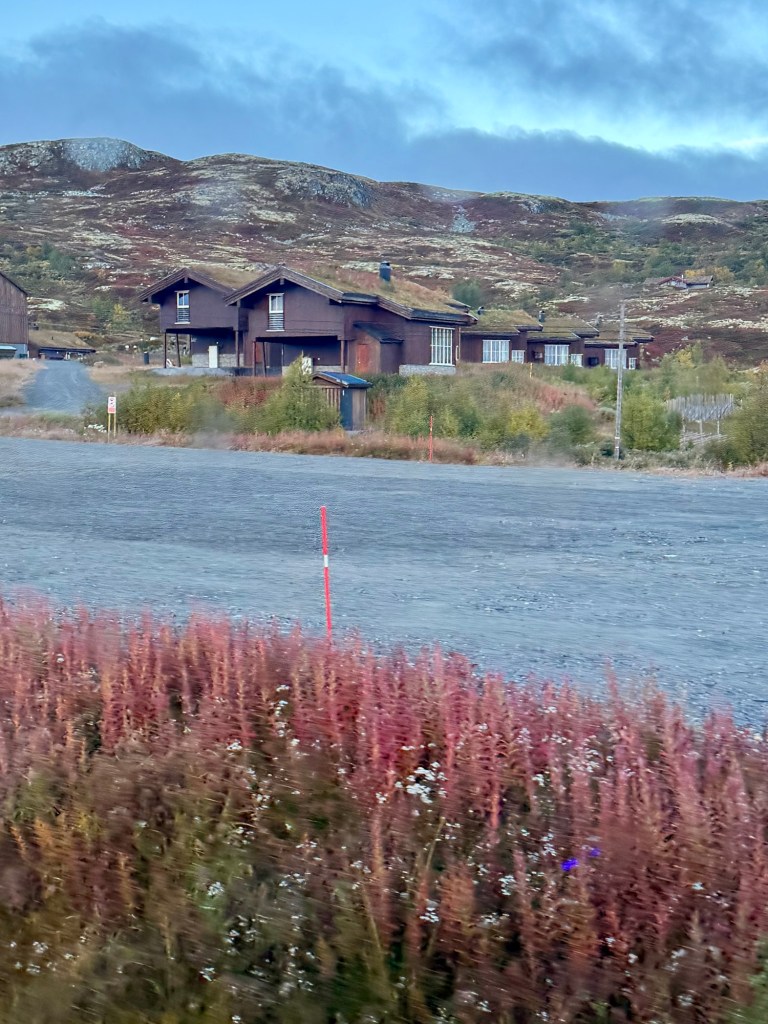
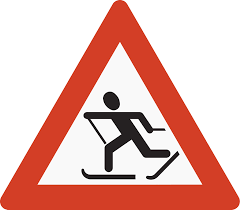
The Norwegians love their Hyttas! They are everywhere. These signs were everywhere too. If you have a hytta, you ski.
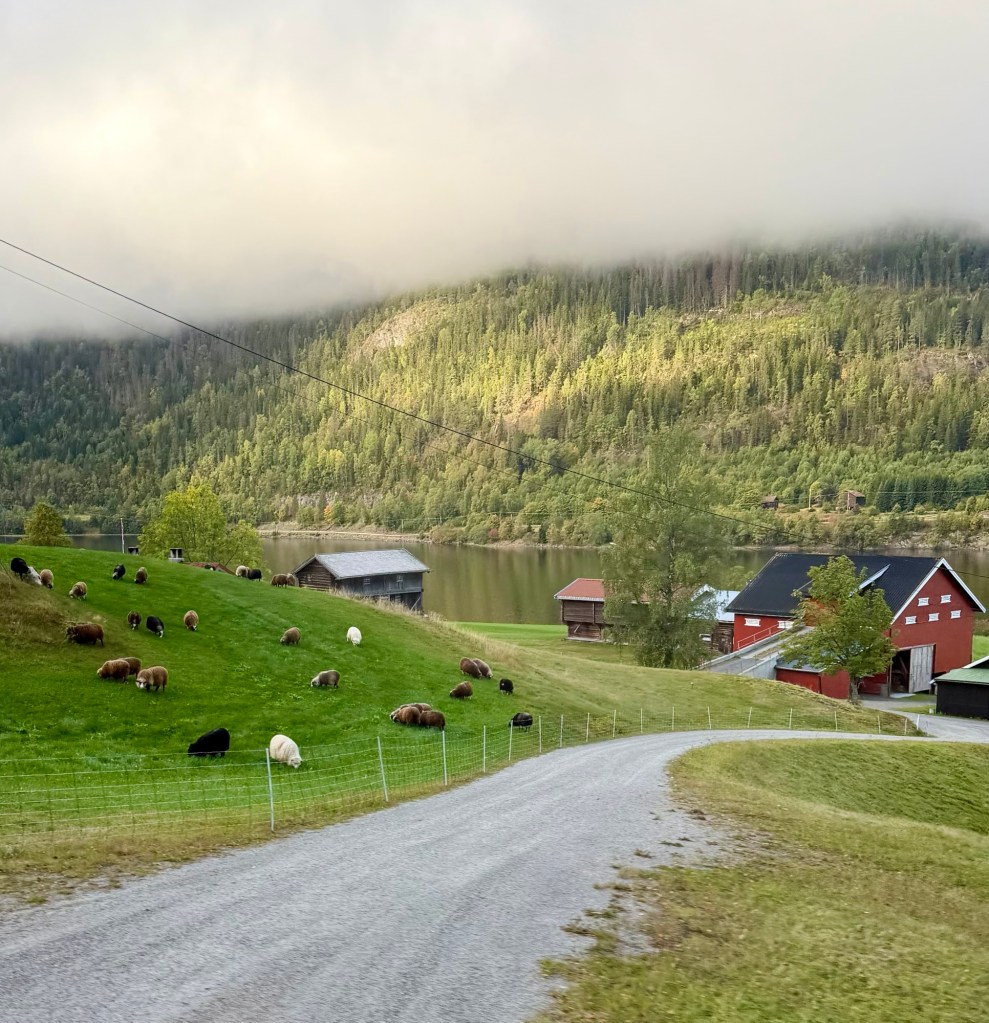
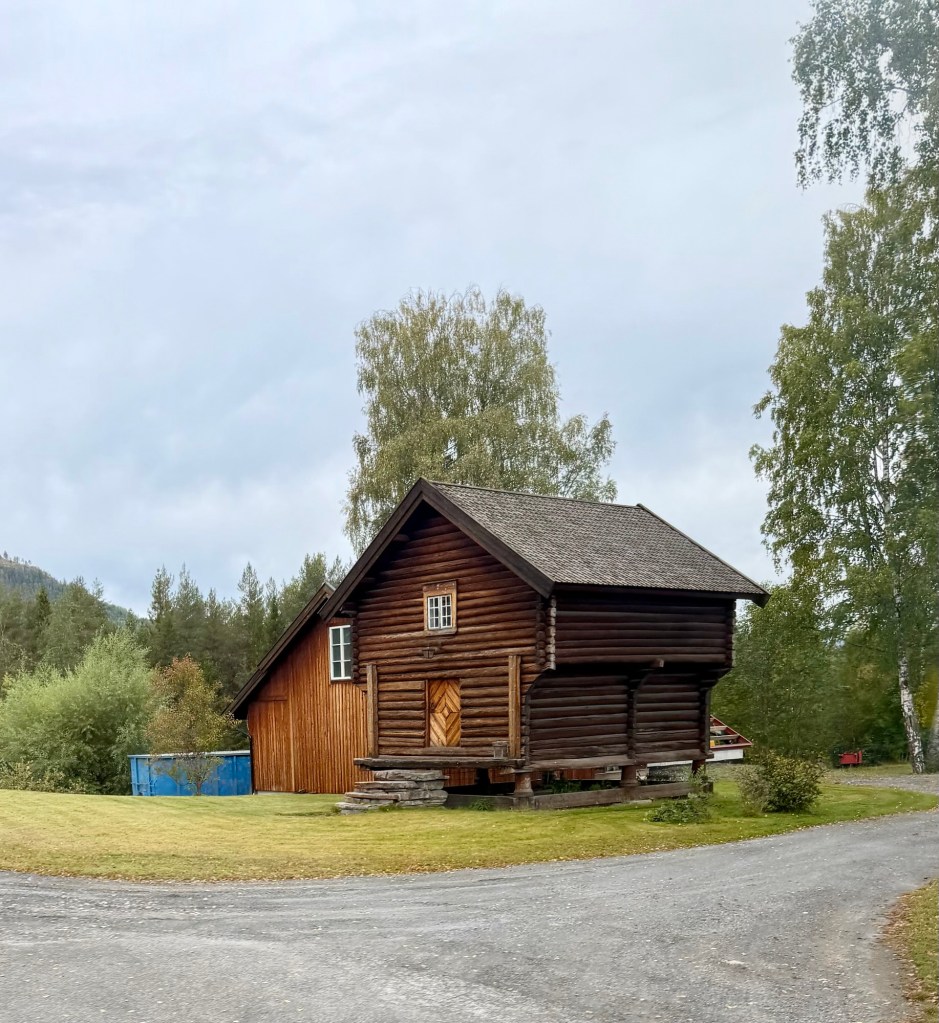
I passed through several small, quiet towns and farmsteads and spotted traditional wooden farm buildings, including stabburs, along the way.
Stabbur
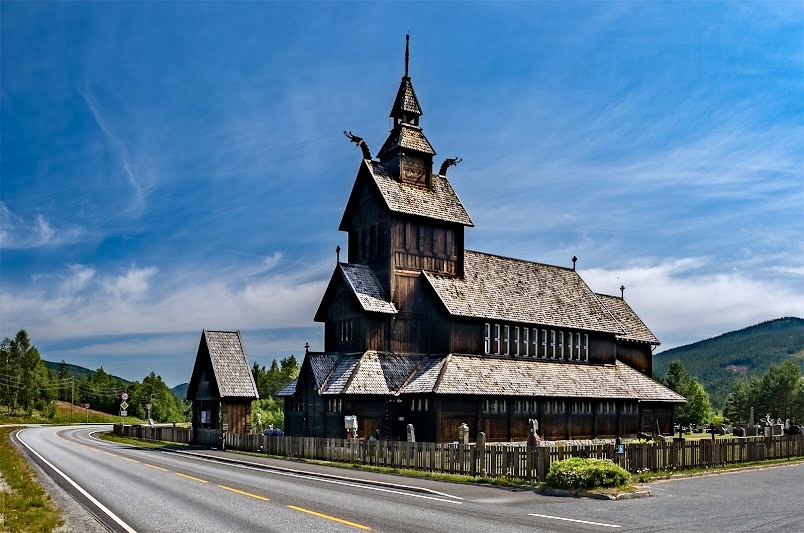
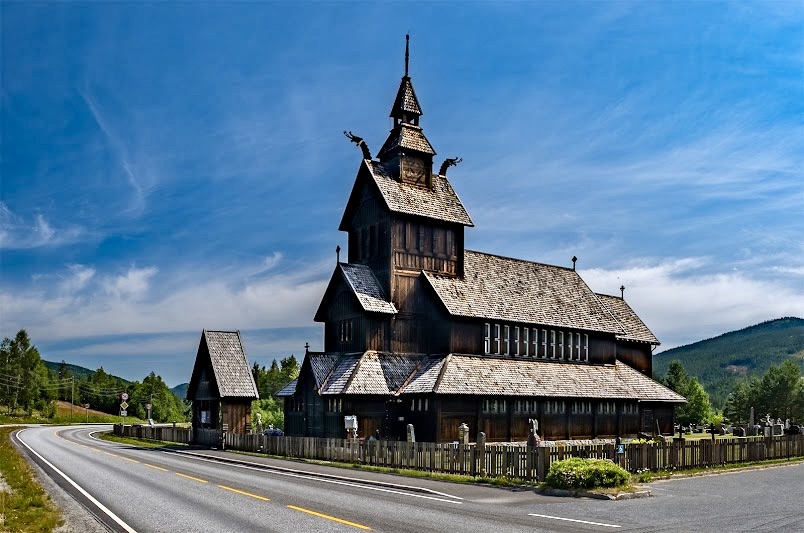
I was especially excited to spot a magnificent stave church right beside the road! I had no idea it was coming so I never managed to get a picture, but I have the memory and you can’t beat that. (The next time I’m in Norway, I’m doing a stave church tour.)
Uvdal Stave Church – not my picture but this is a what I saw!
I was honestly disappointed to leave the comfortable, quiet bus and board the crowded train. Once I made my way out of the enormous, bustling, and confusing Oslo station and got settled into my Airbnb, I unpacked and promptly set out for Vigeland Park.
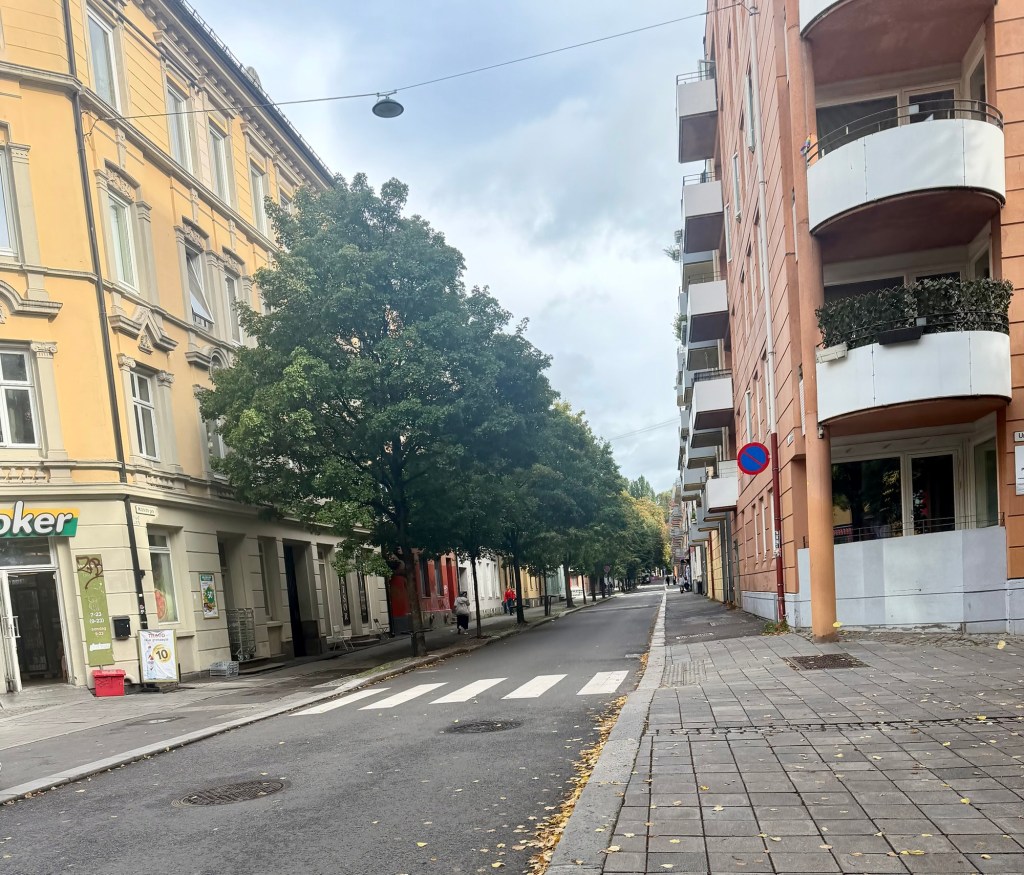
My condo is on this quiet street.
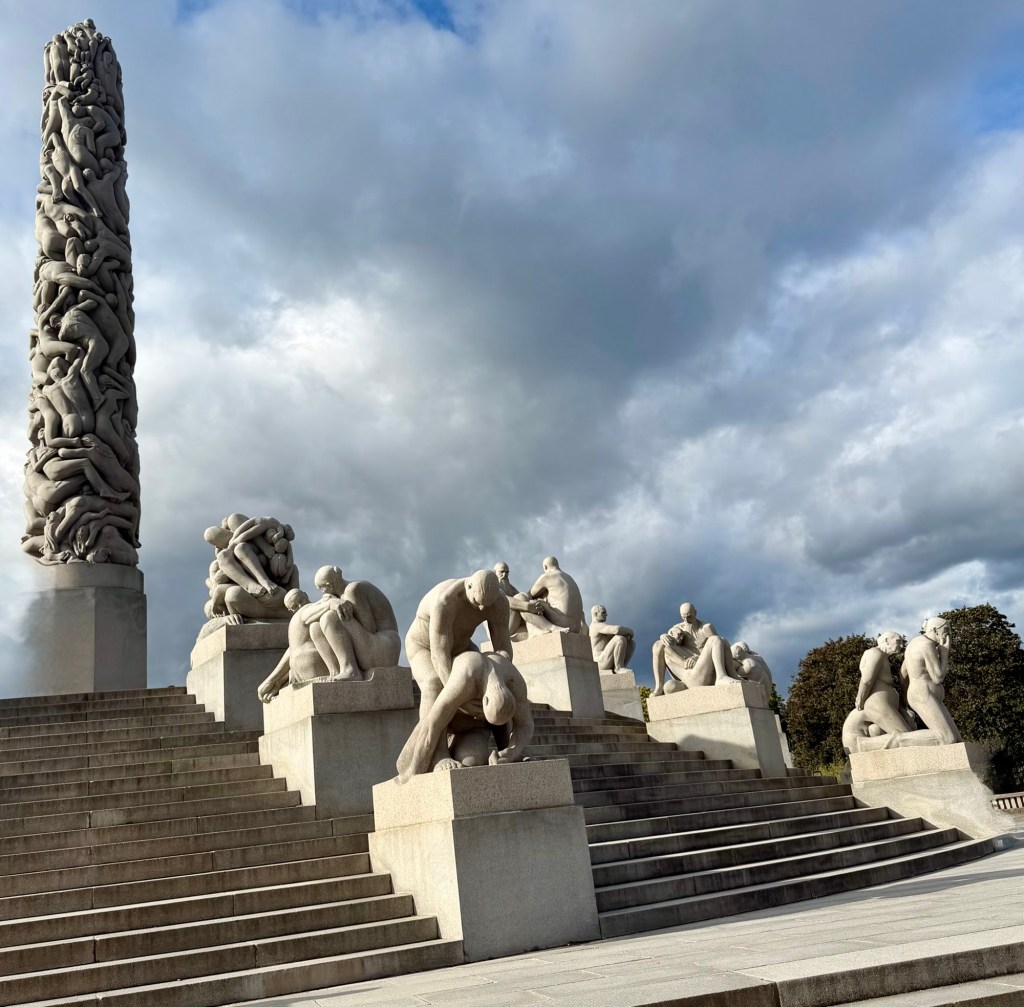
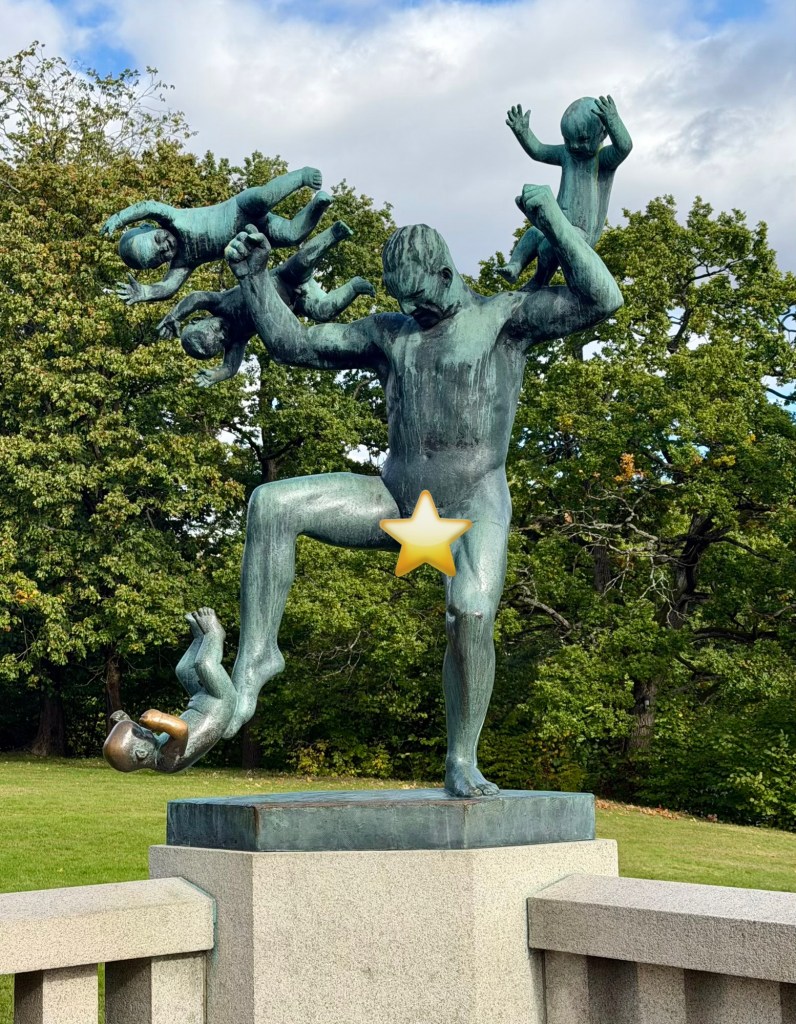
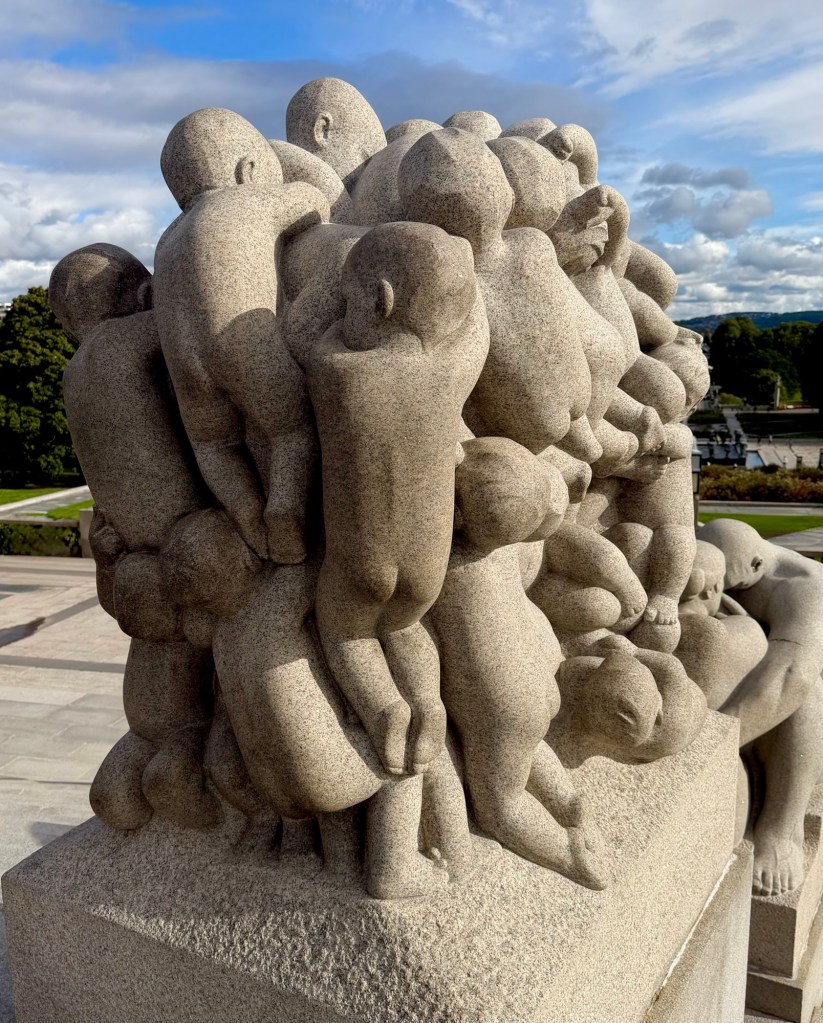
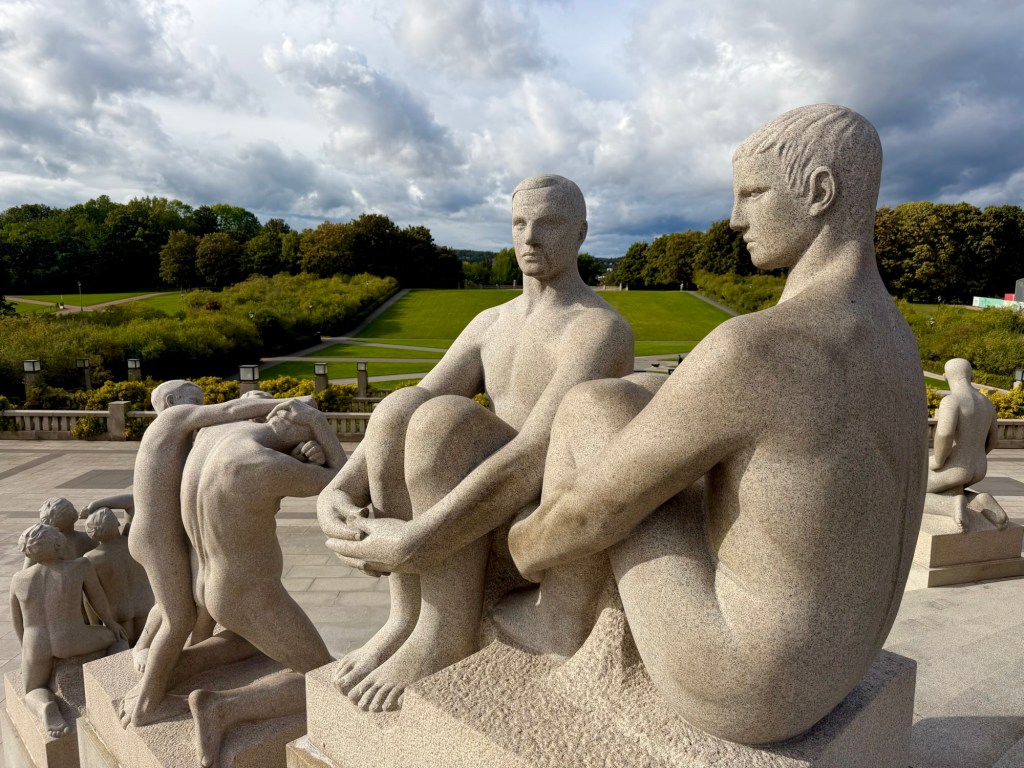
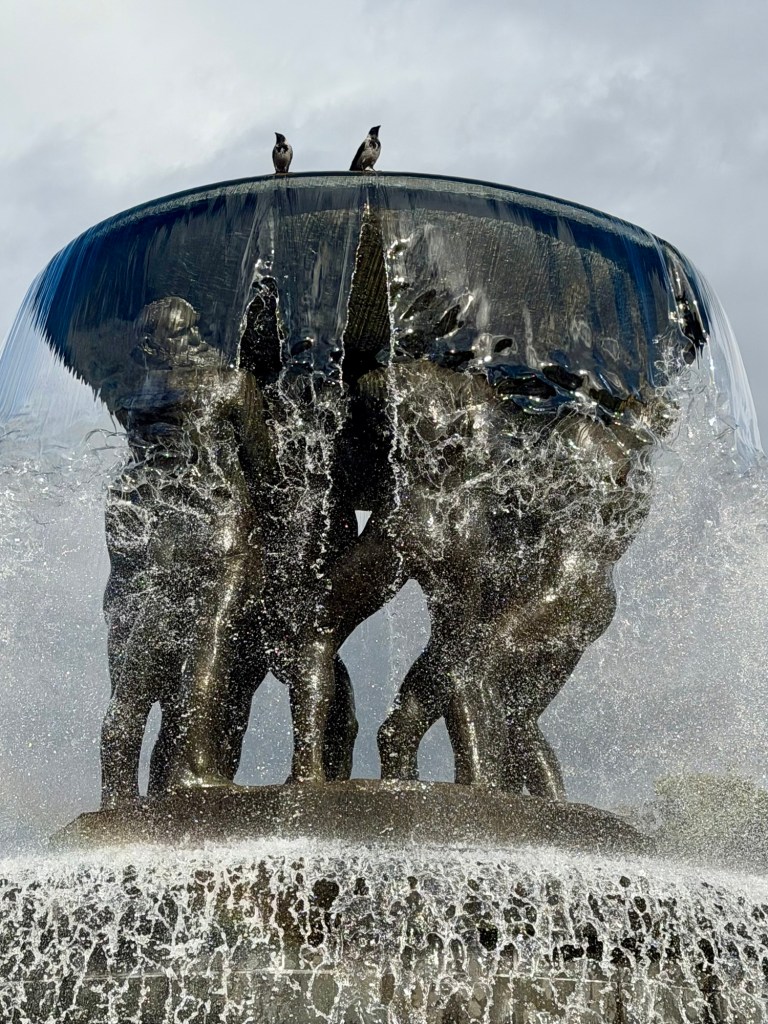
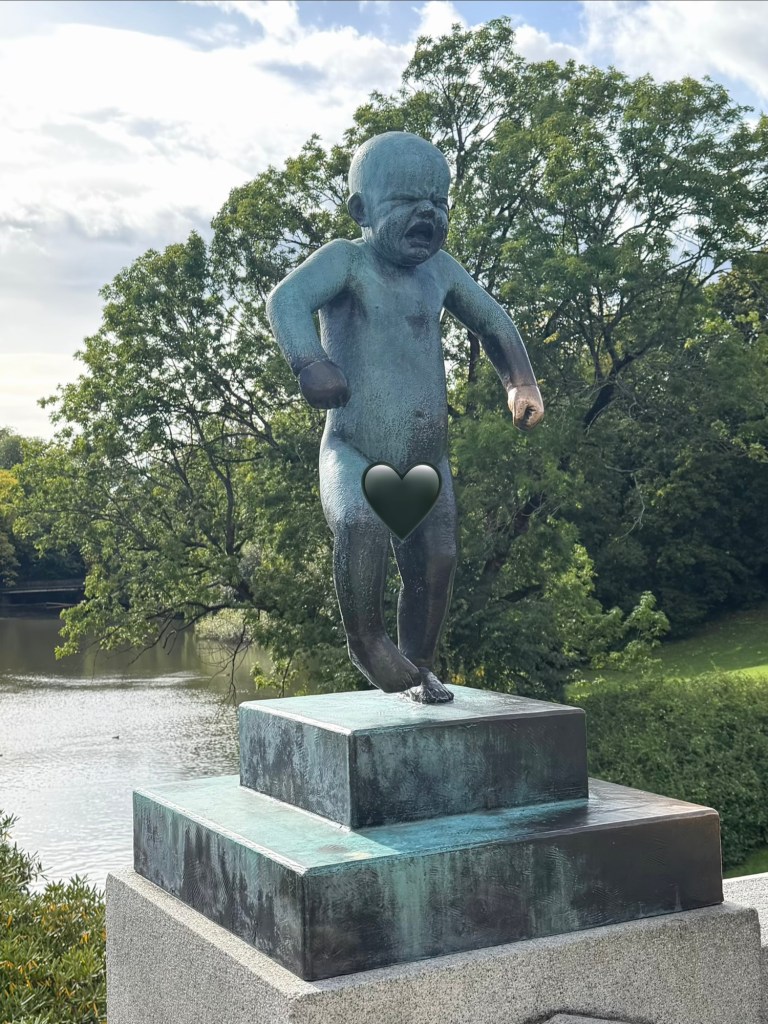
Vigeland Park is located within the beautiful Frogner Park and is the world’s largest sculpture park created by a single artist, featuring more than 200 bronze, granite, and wrought-iron works by Gustav Vigeland. It was quite the experience.
From there, I made my way into the busy central district and somehow managed to find my friend Diane, who was on the Hurtigruten and happened to be in town. We had dinner together, took a bit of a walkabout, and then went our separate ways. It was so nice to see a familiar face!
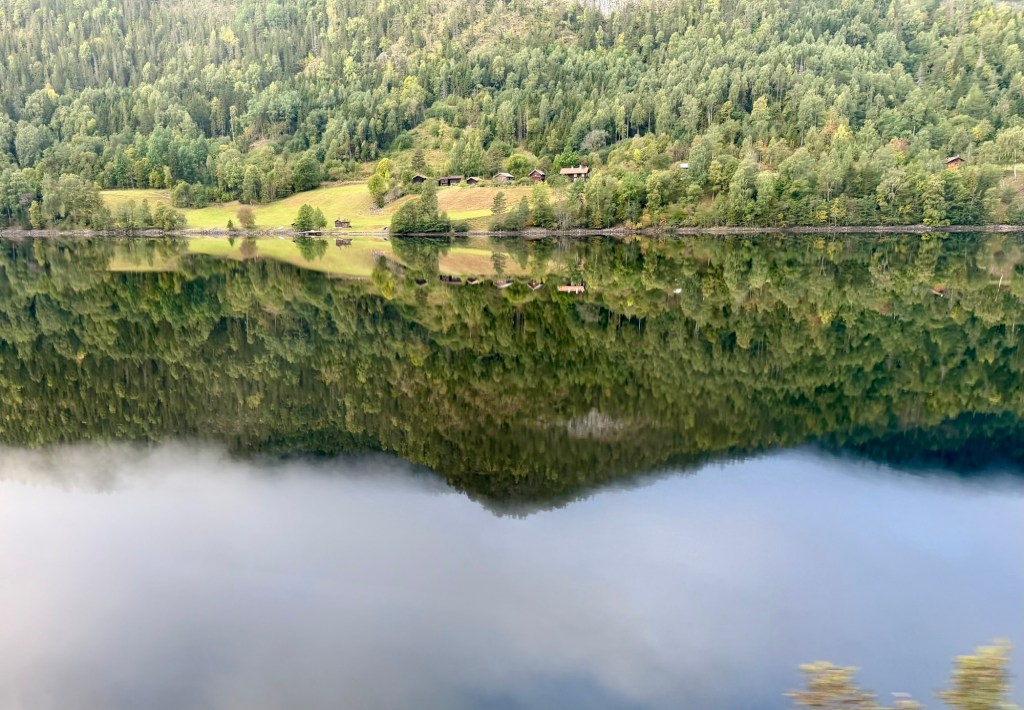
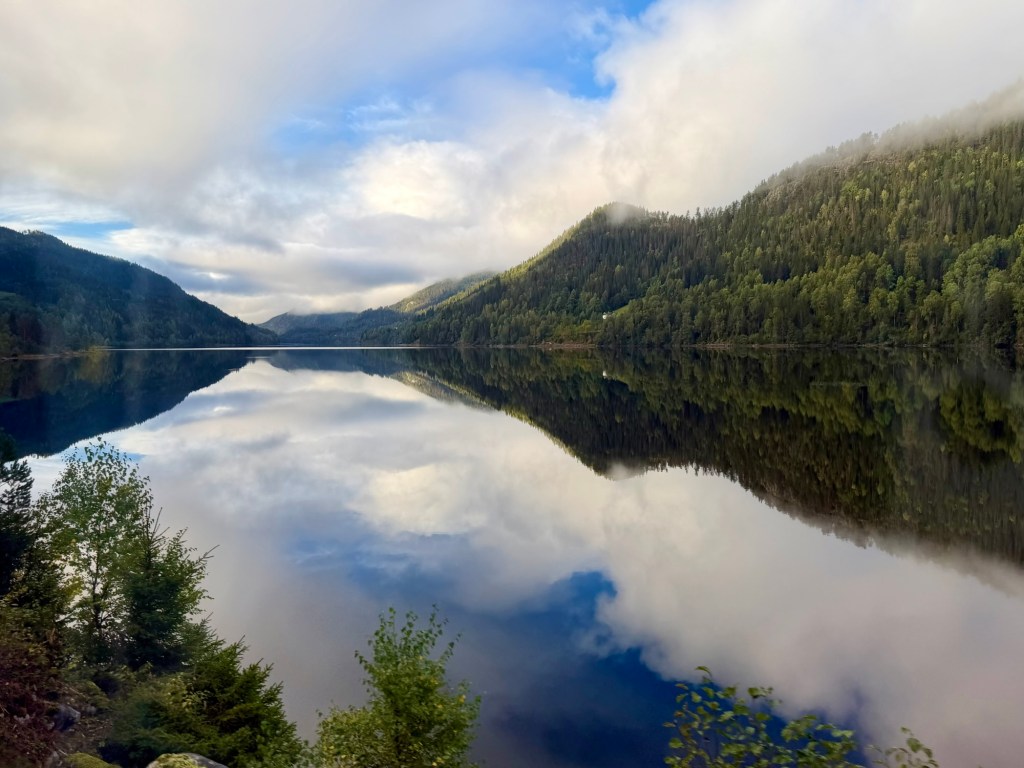
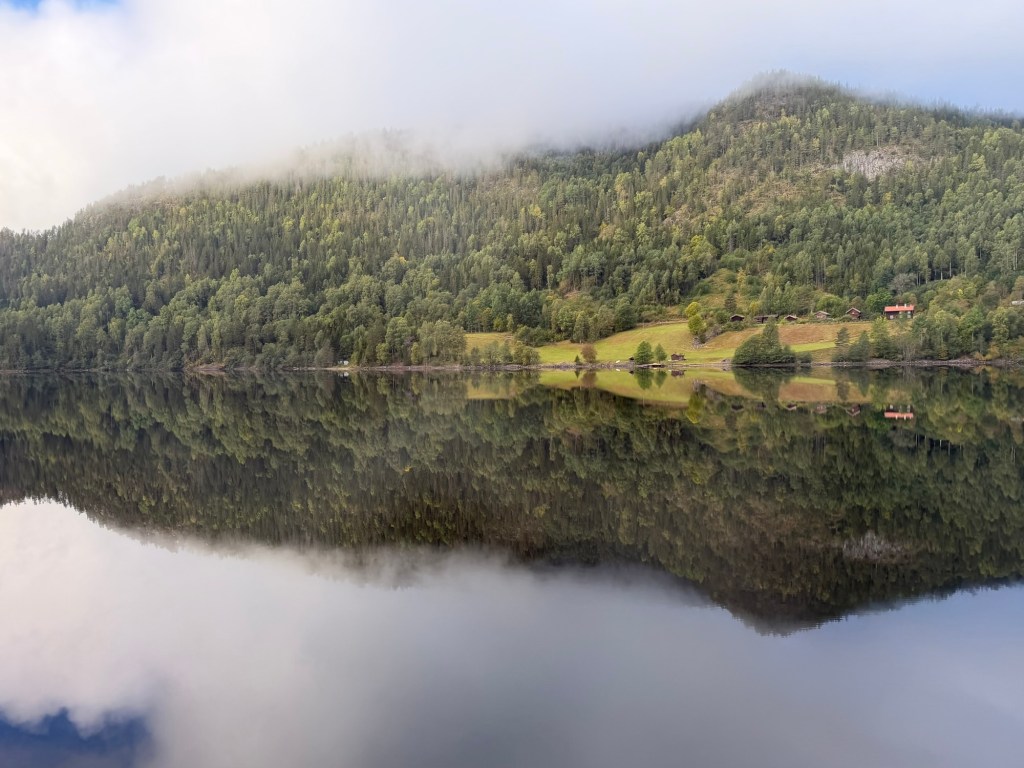
Some reflective water pictures from my bus window:
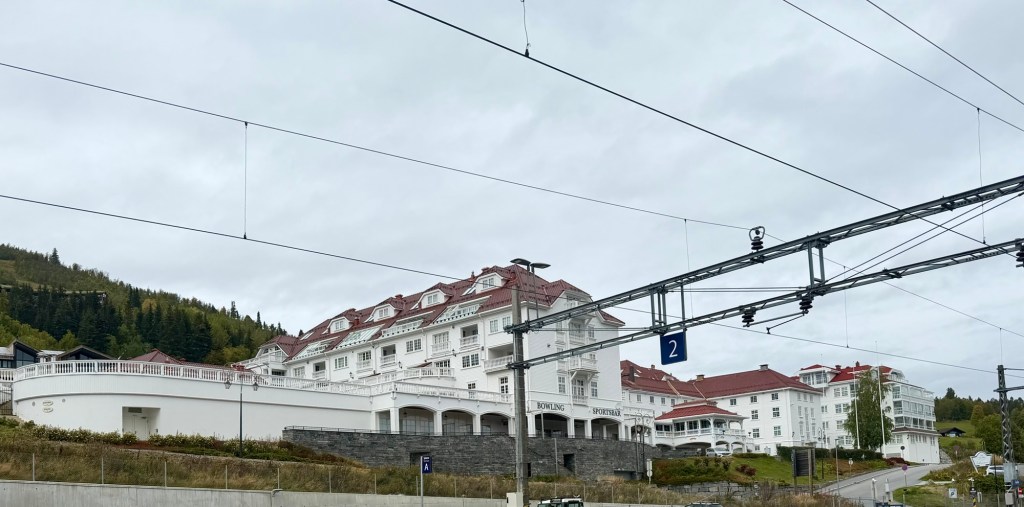
I am in the quiet ski town of Geilo, staying at the beautiful, historic Dr. Holmes Hotel. I say “quiet” because it’s not ski season yet, so there are only about 25,000 residents right now, but that number swells to 40,000 in winter.
My hotel from the train station
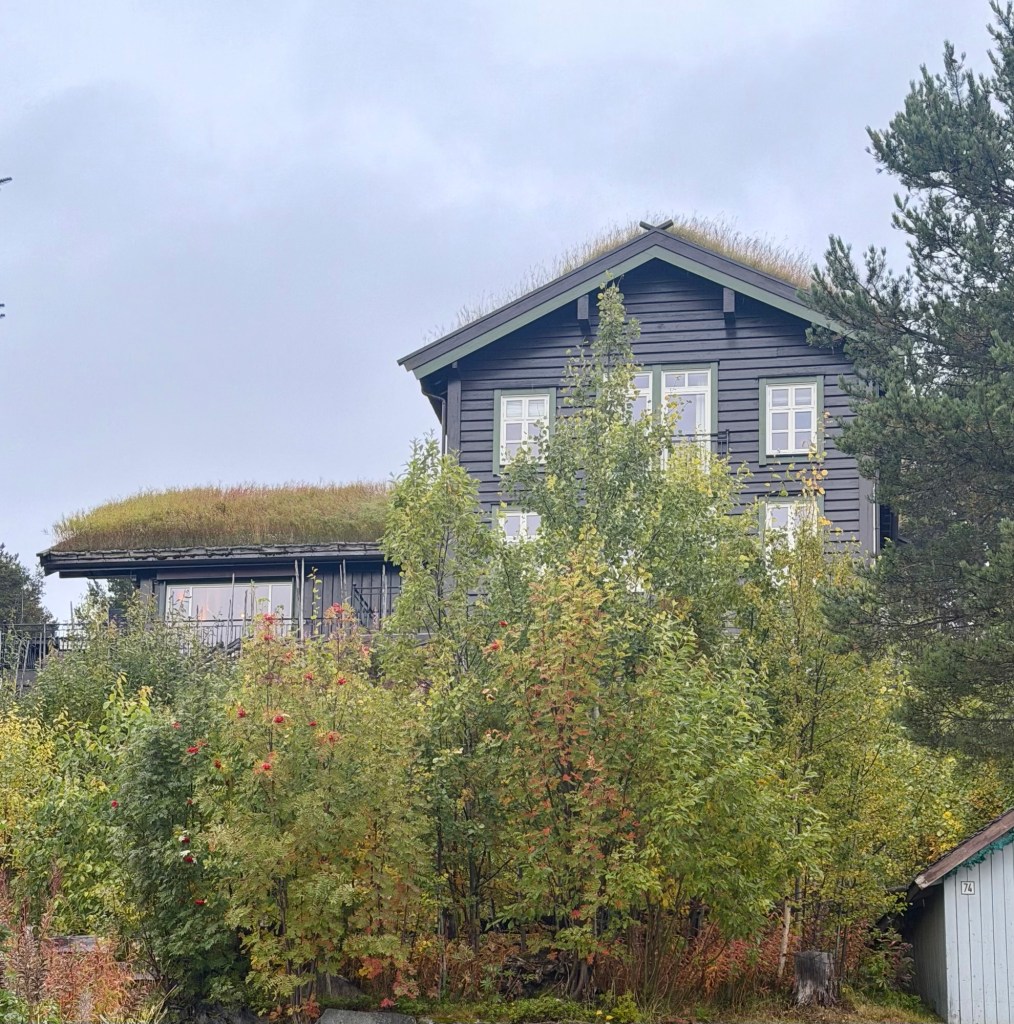
The houses and cabins here are painted in dark, earthy colours that blend in with the mountain landscape, and it’s obvious that this is an affluent community.
Sod roof house
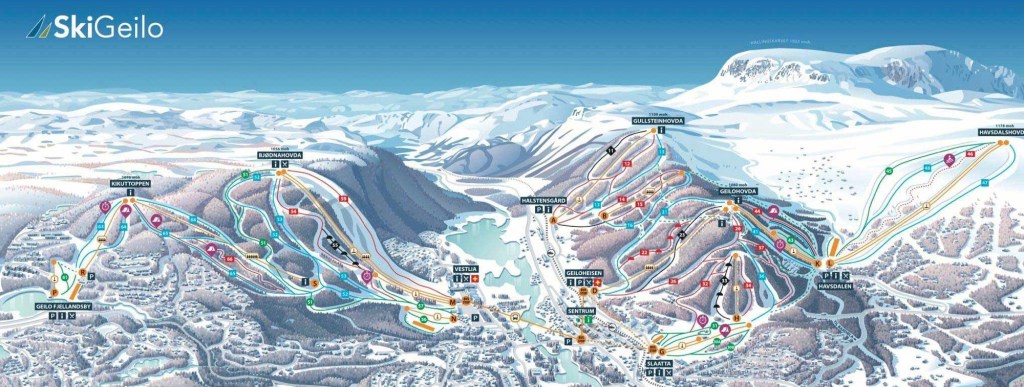
I feel surrounded by ski hills. There are 46 downhill runs and 20 lifts across both sides of the valleys here, plus three more ski resorts nearby.
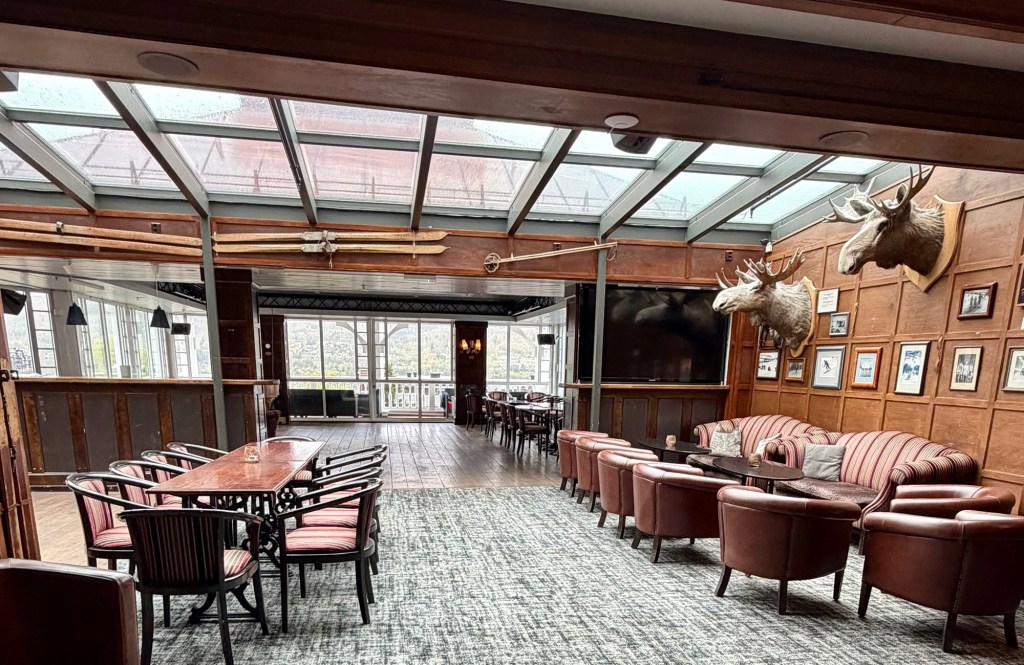
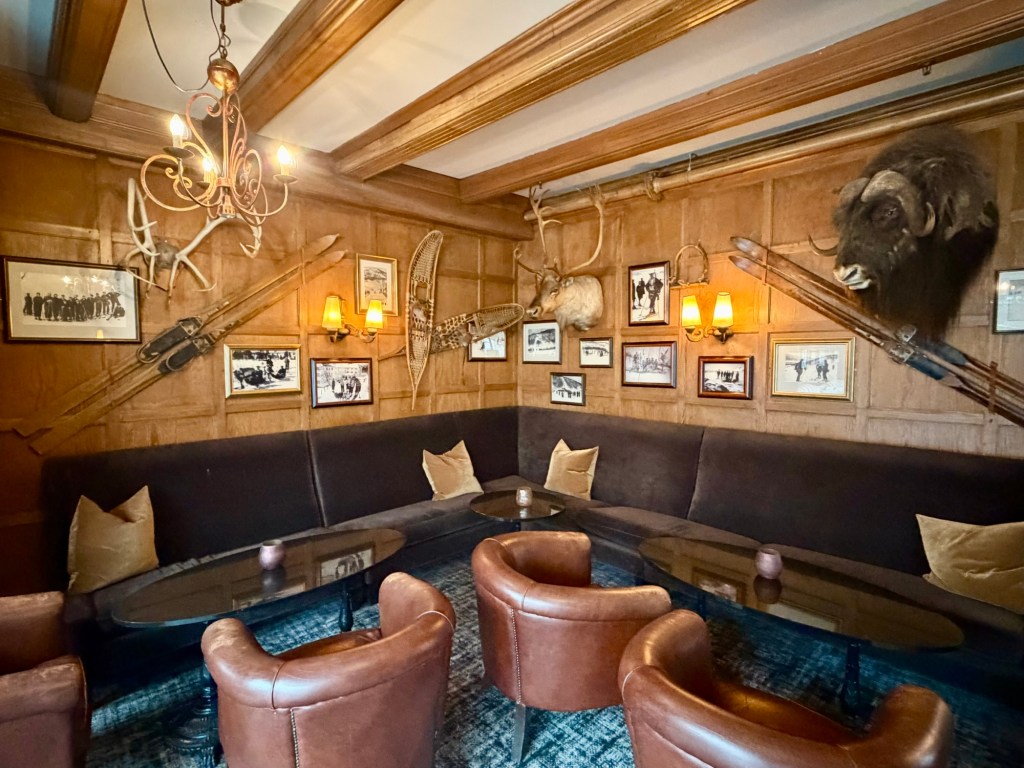
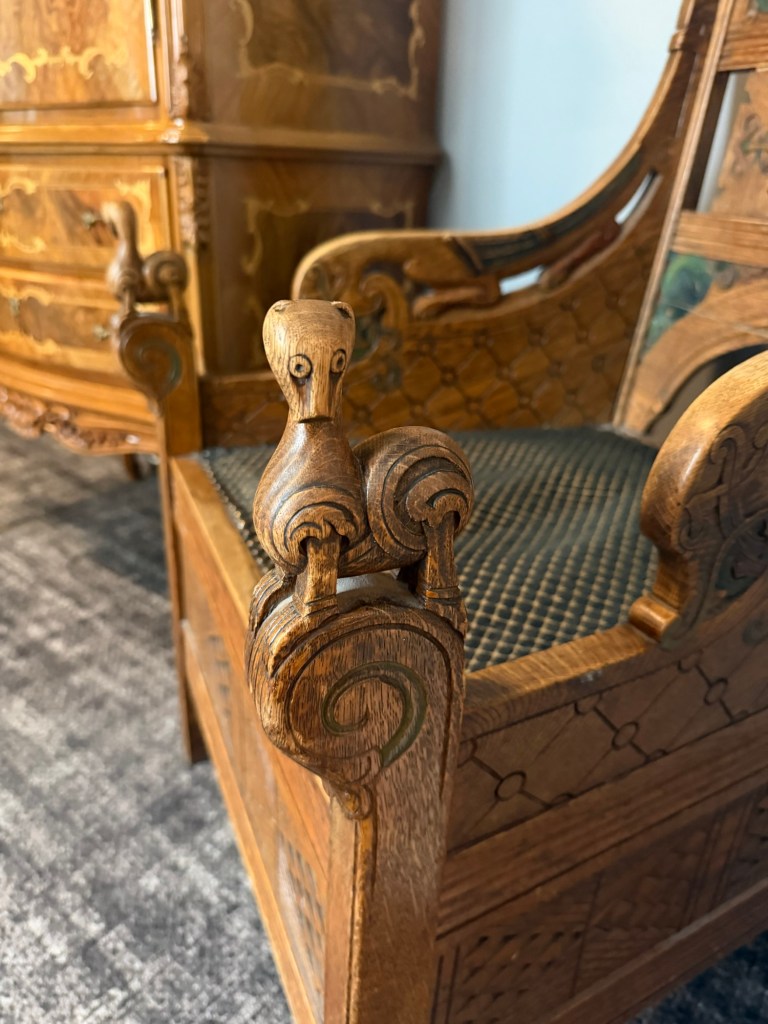
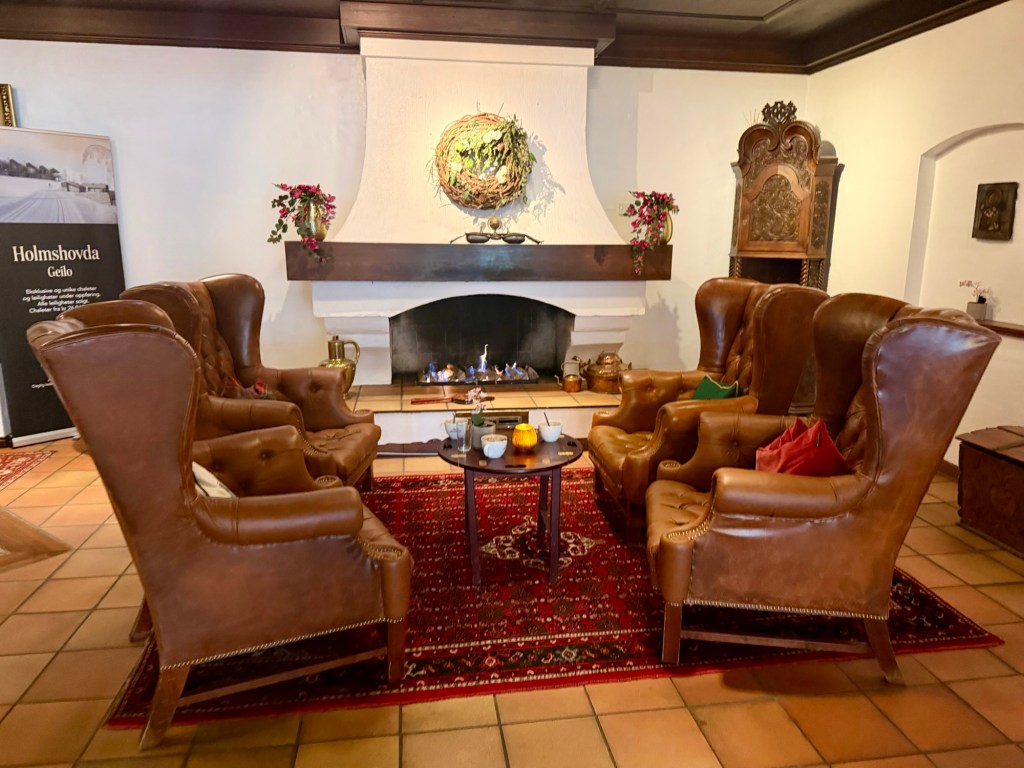
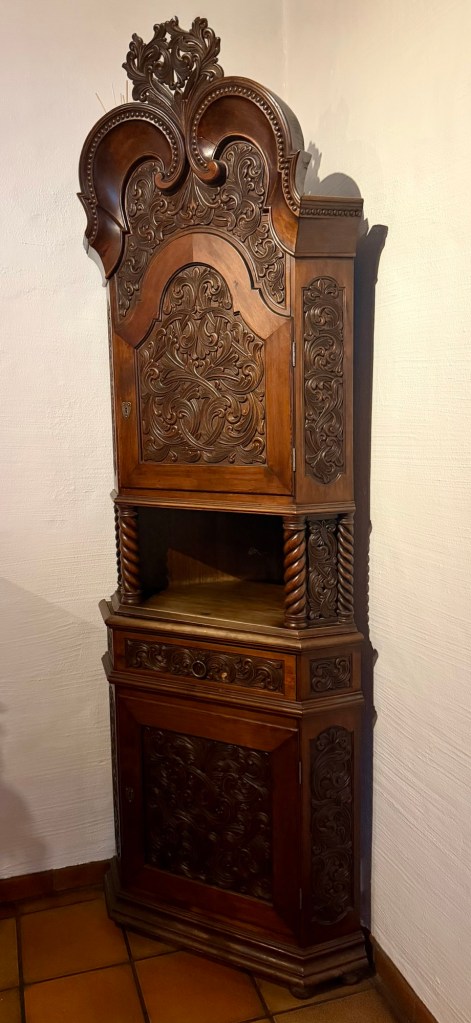
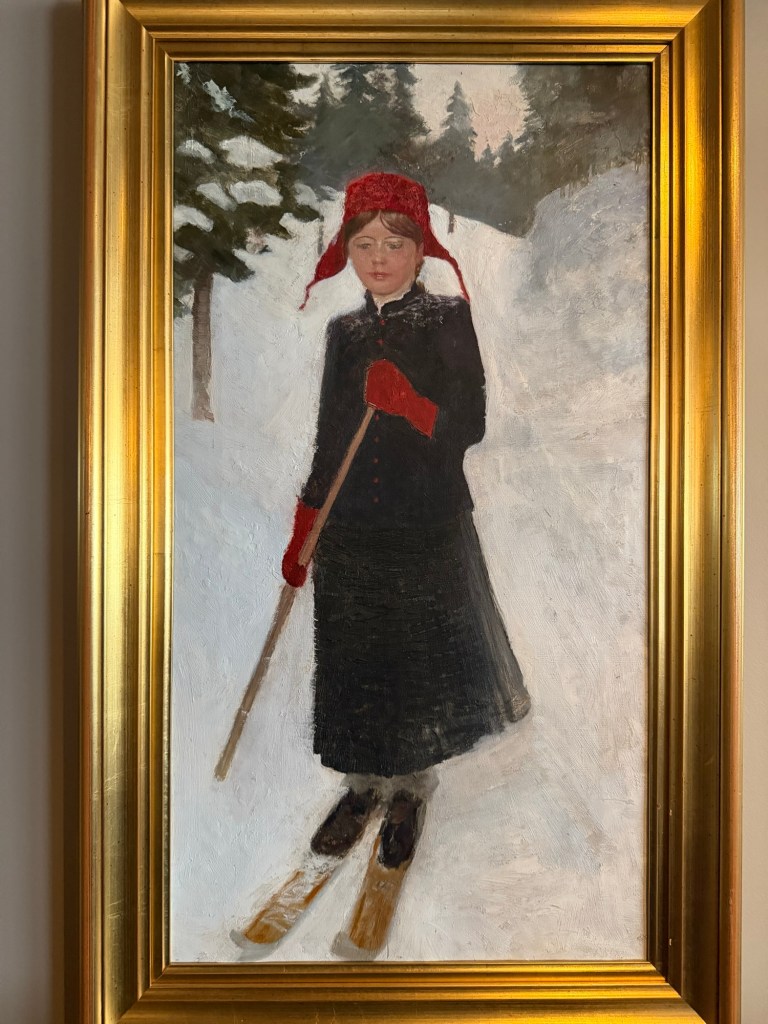
I’ve spent a lot of time viewing the countless pictures and works of art here at the hotel. There is also a lot of beautiful antique furniture.
Tomorrow: Oslo via a longer route (long story)…
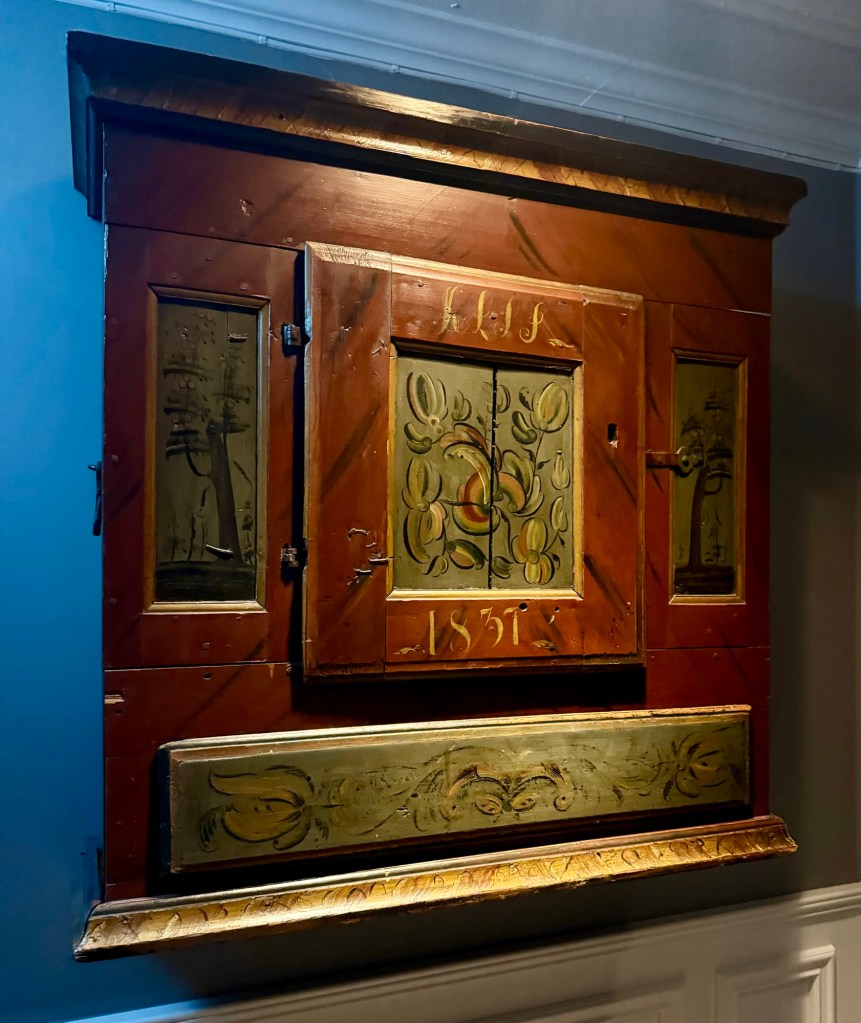
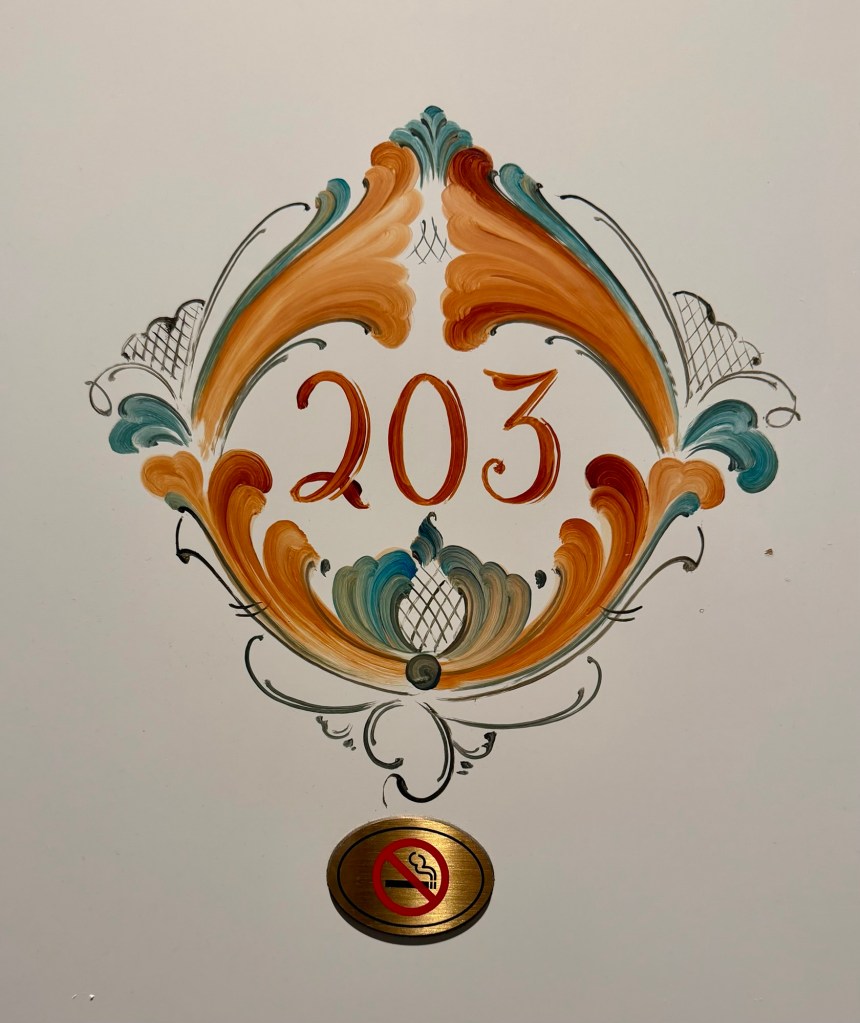
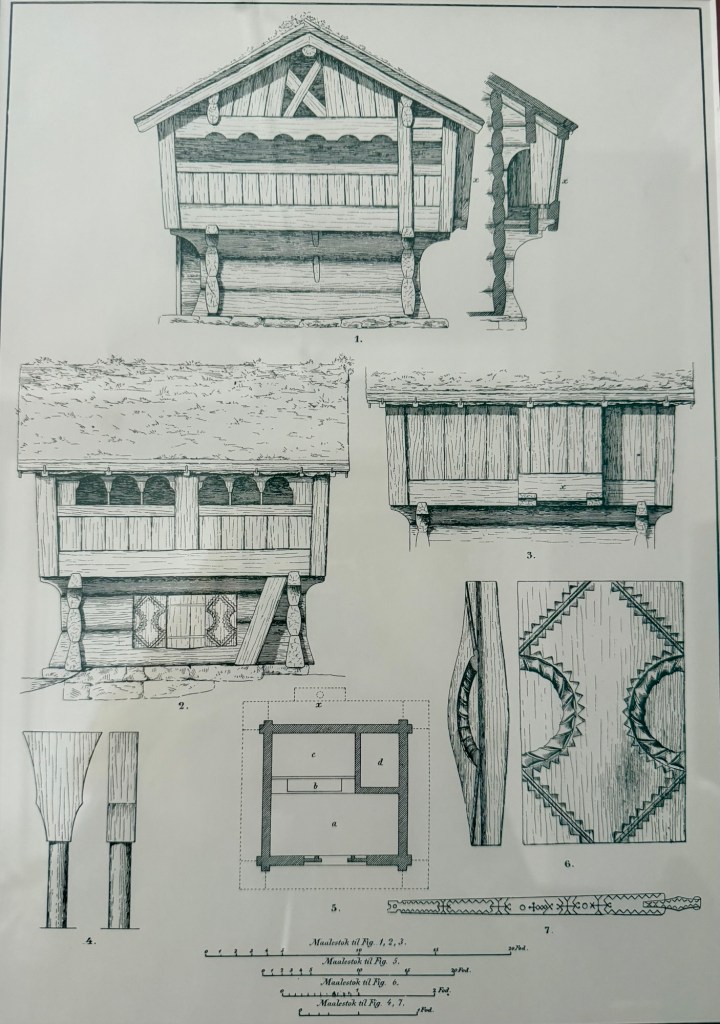
This is absolutely amazing!Zoom in to admire rosemaling from 1837. Every door number is rosemaled. Stabbur picture from my roomOne of many paintings I started with a doggie picture so I’ll end with one too.
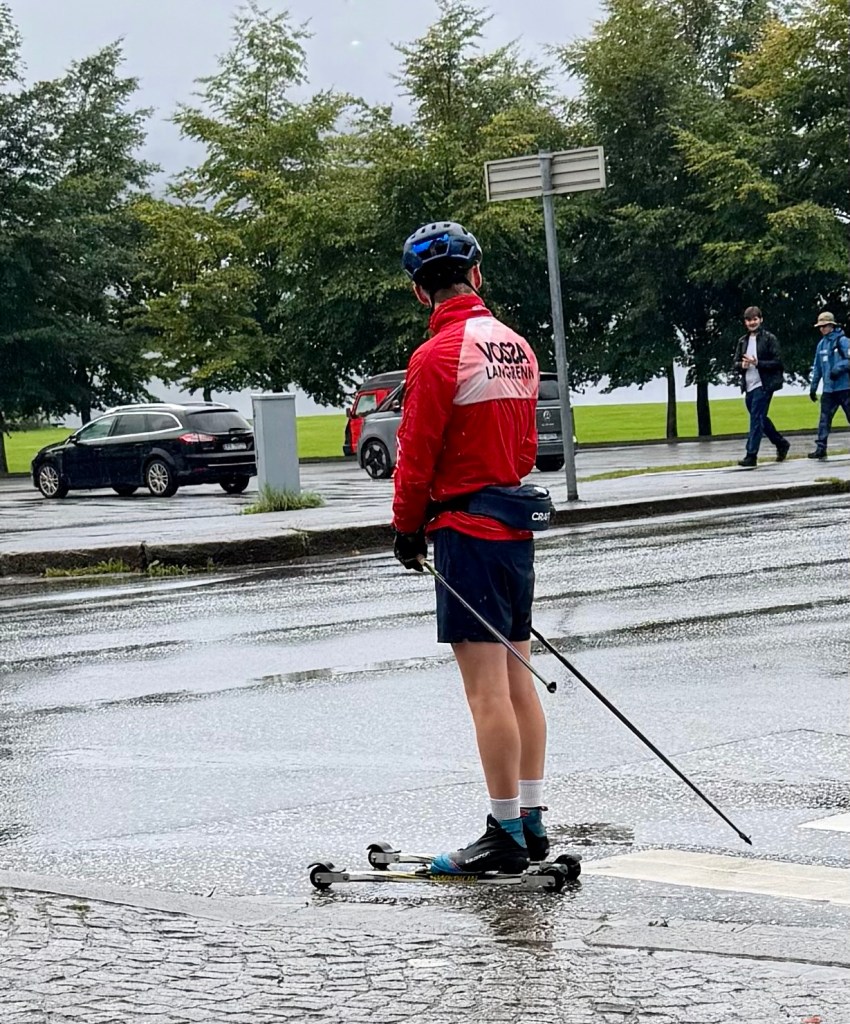
After the debacle that was yesterday, I had the opportunity to decompress with two nights in Voss. I scored a modern loft Airbnb, toured around town, and hiked out to Bordalsgjelet Gorge. I remember being here more than forty years ago, and wow, has it changed.
The Pros
The setting is spectacular. The town sits in a bowl surrounded by mountains, with a beautiful lake right alongside it.
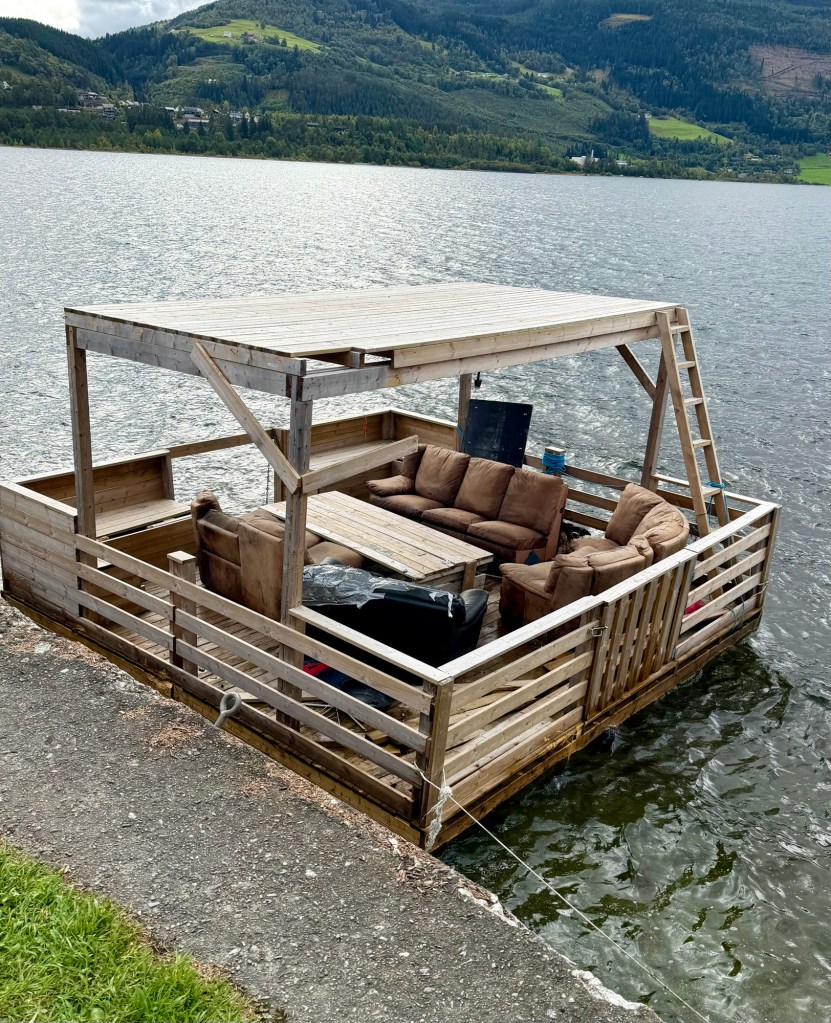
No sauna at the lake—just this chillax’n barge.
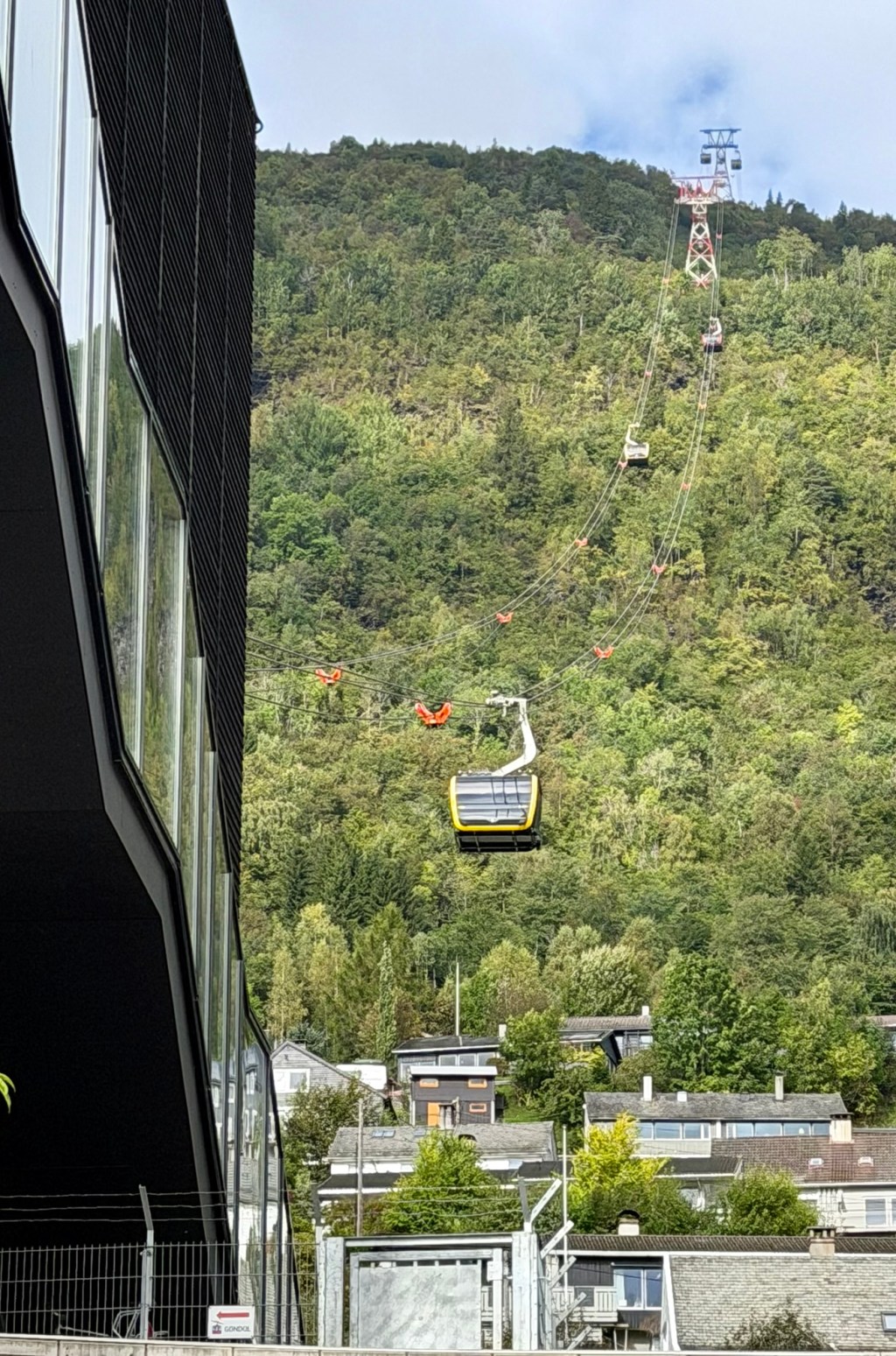
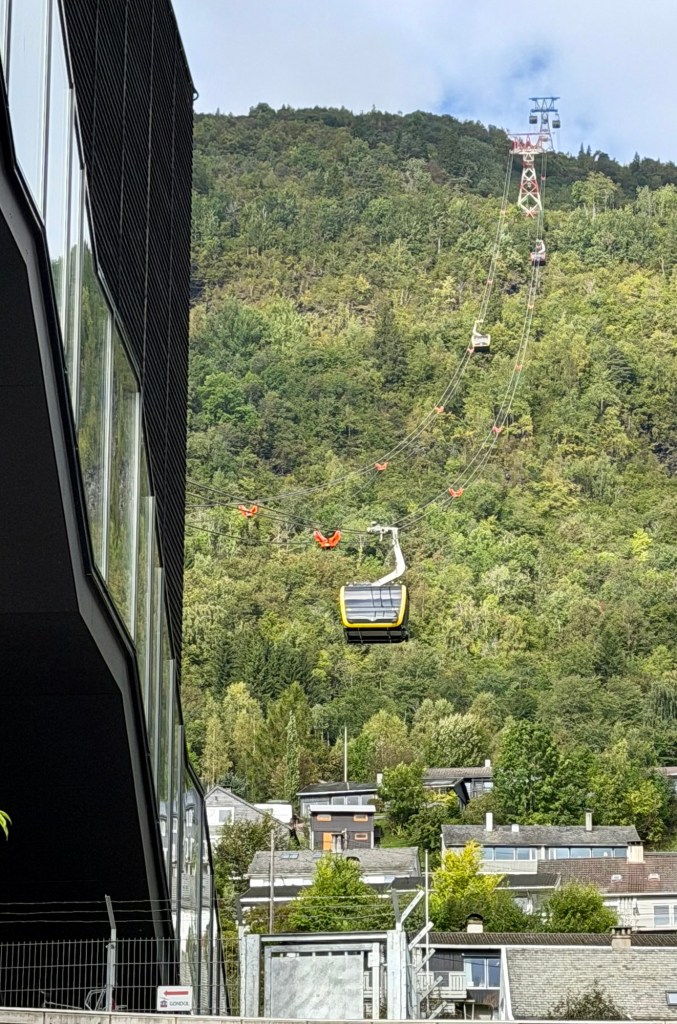
The gondola. There’s a gondola that climbs the mountain directly behind me, making Voss a popular ski destination in winter. Off-season it’s filled with sightseers and hikers.
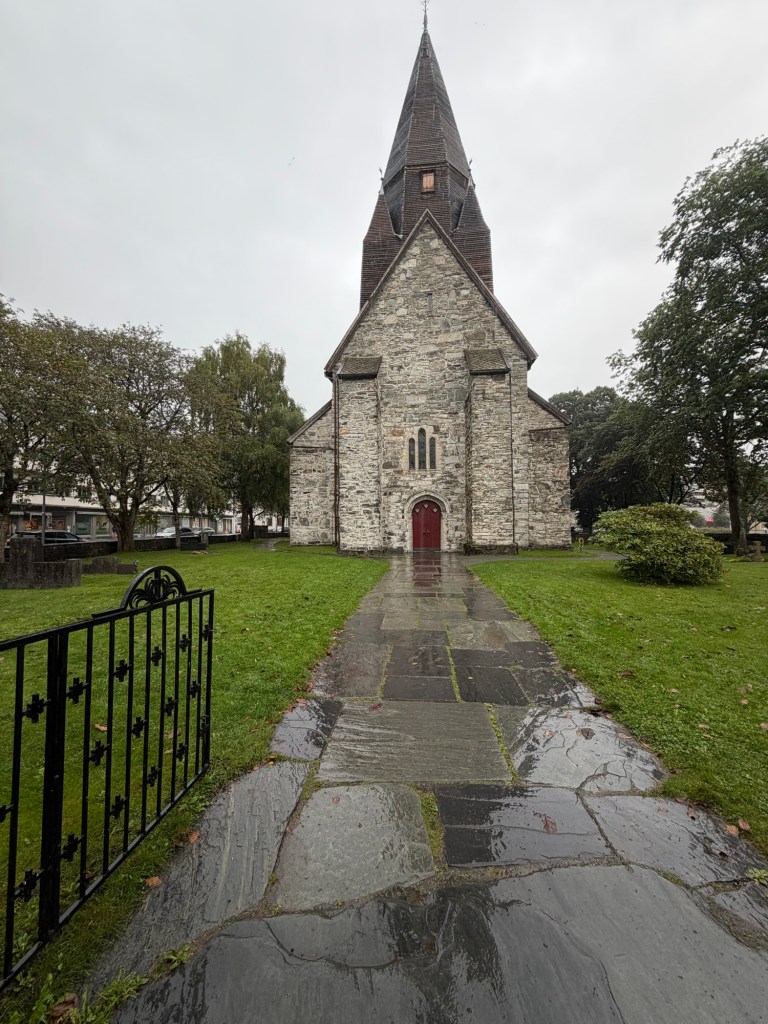
The church. Voss has a beautiful historic church that provides a nice contrast to the rest of the town.
The Cons
Tourists. Lots of them. Voss is one of the starting points for the popular “Norway in a Nutshell” tour, which heads from here toward Nærøyfjord, where you catch a ferry before continuing on the famous Flåm Railway to Myrdal. As a result, the town is packed with tourists. Think Banff.
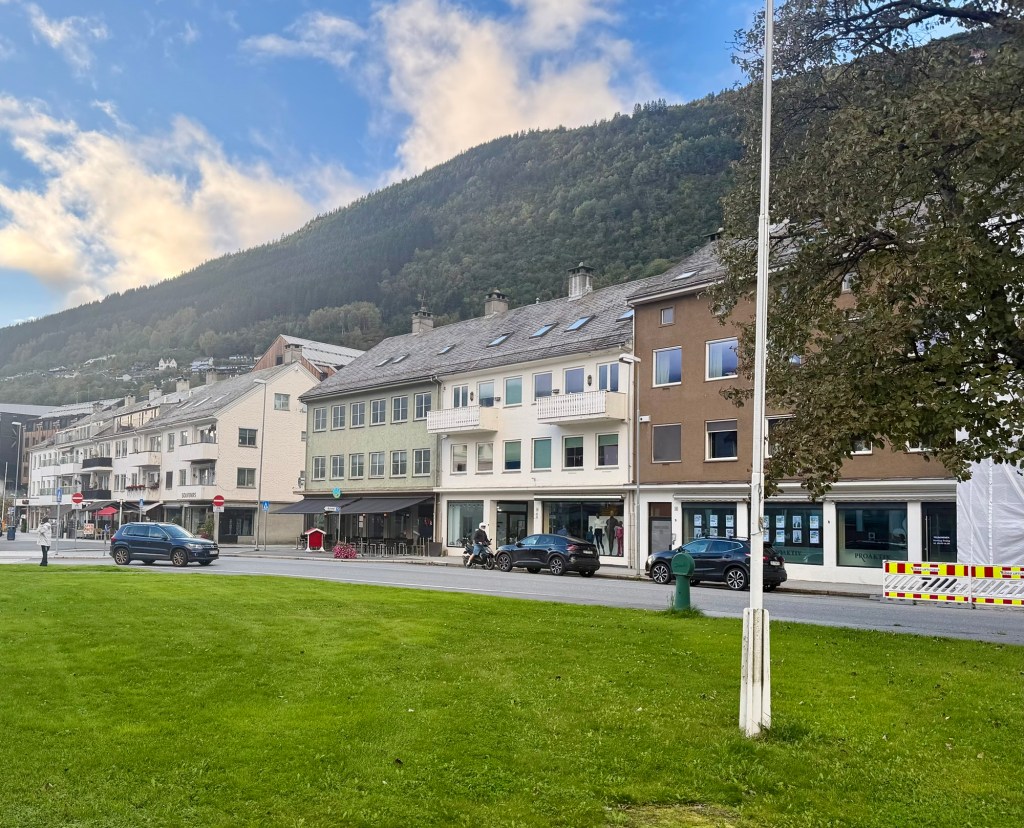
The architecture. This is where Voss really loses points for me. The town was heavily bombed during World War II and was subsequently rebuilt with mid-century utilitarian buildings that, to my eye, lack much character. Blah.
The noise. The vast majority of vehicles I’ve seen on my trip so far have been electric. Voss hasloud modded up cars, motorcycles, quads, and even gators ripping around at all hours of the day and night.
I don’t have much else to say about Voss, but I did manage to get over 11 km of walking and hiking in today, so mission accomplished. Sometimes a good long day on your feet is exactly what you need to de-stress.
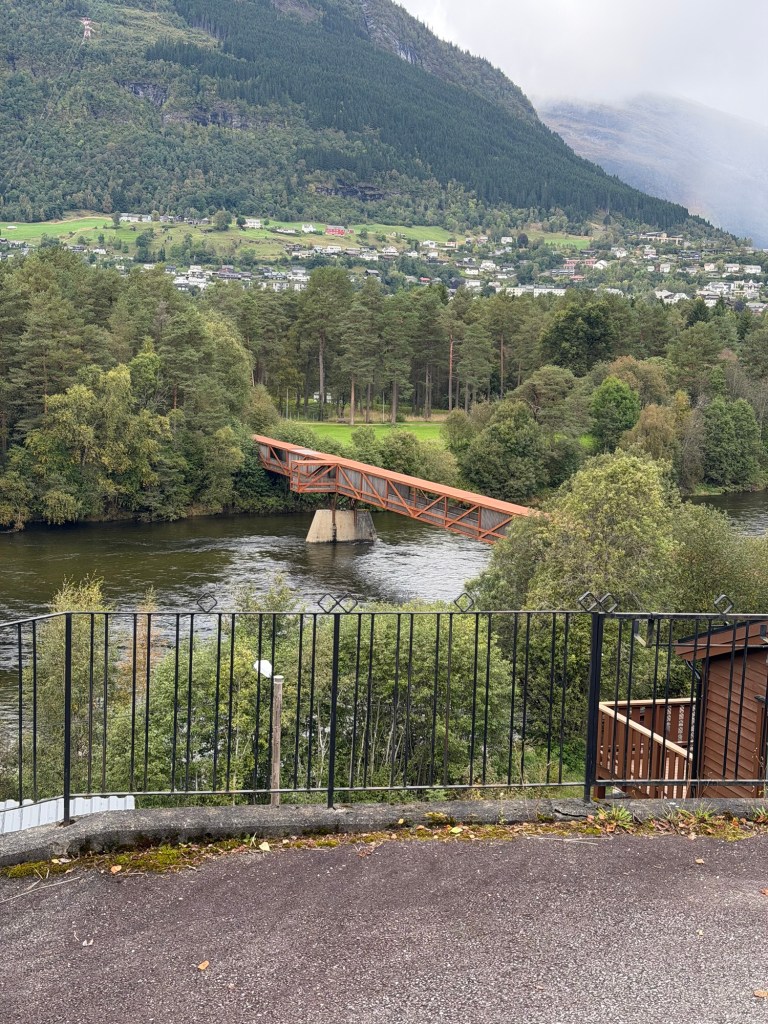
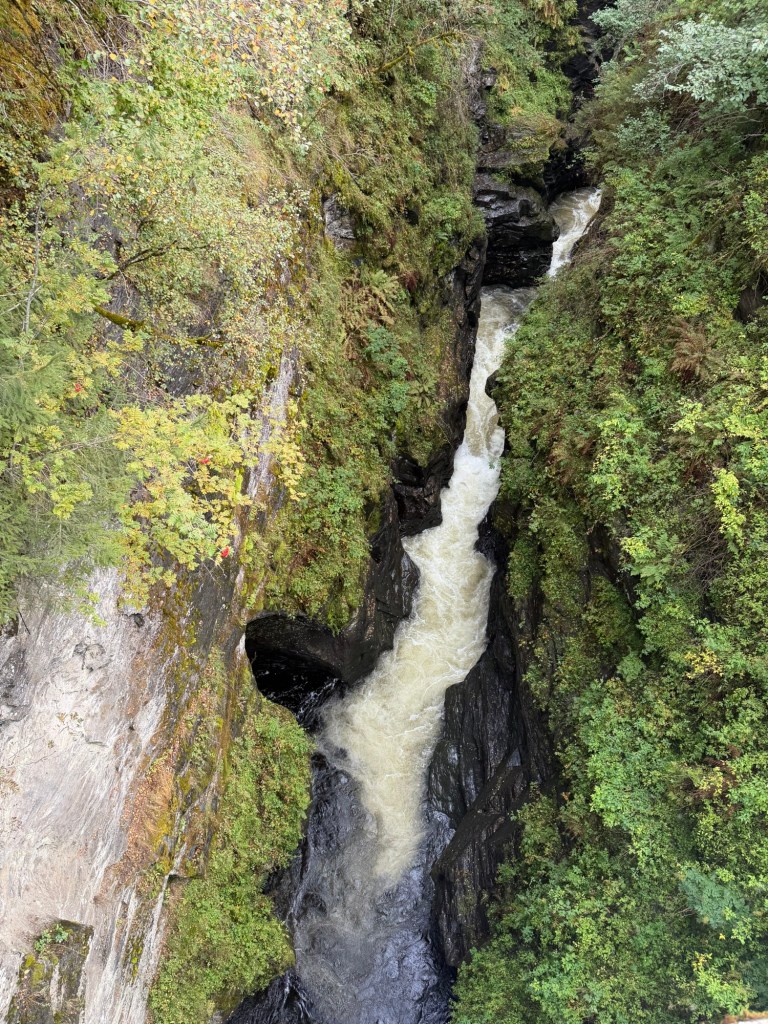
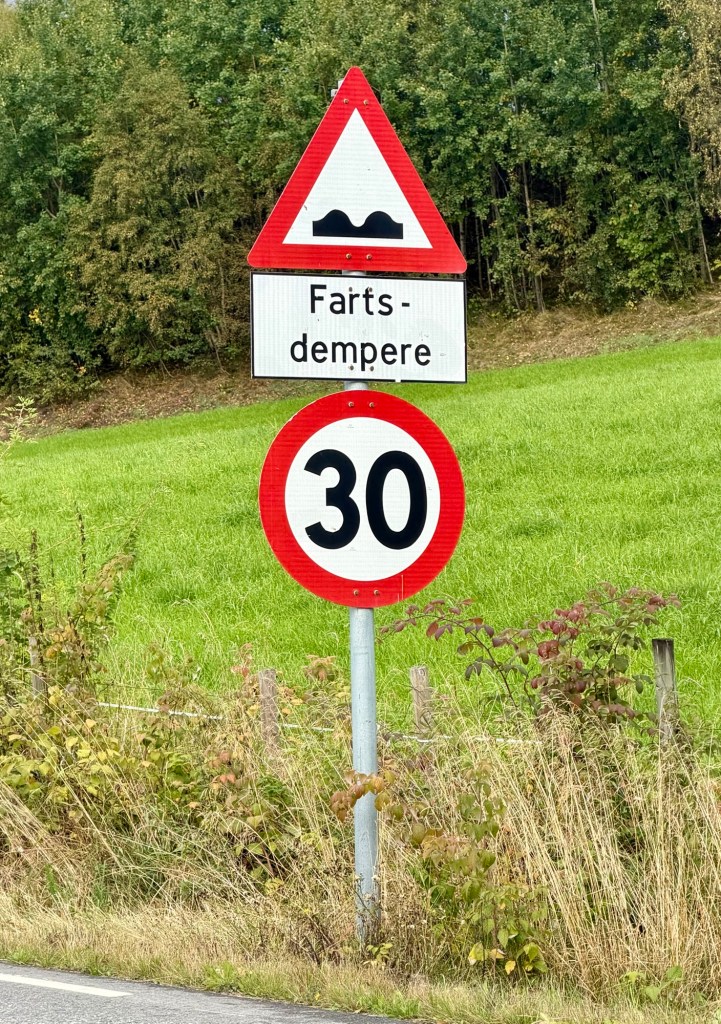
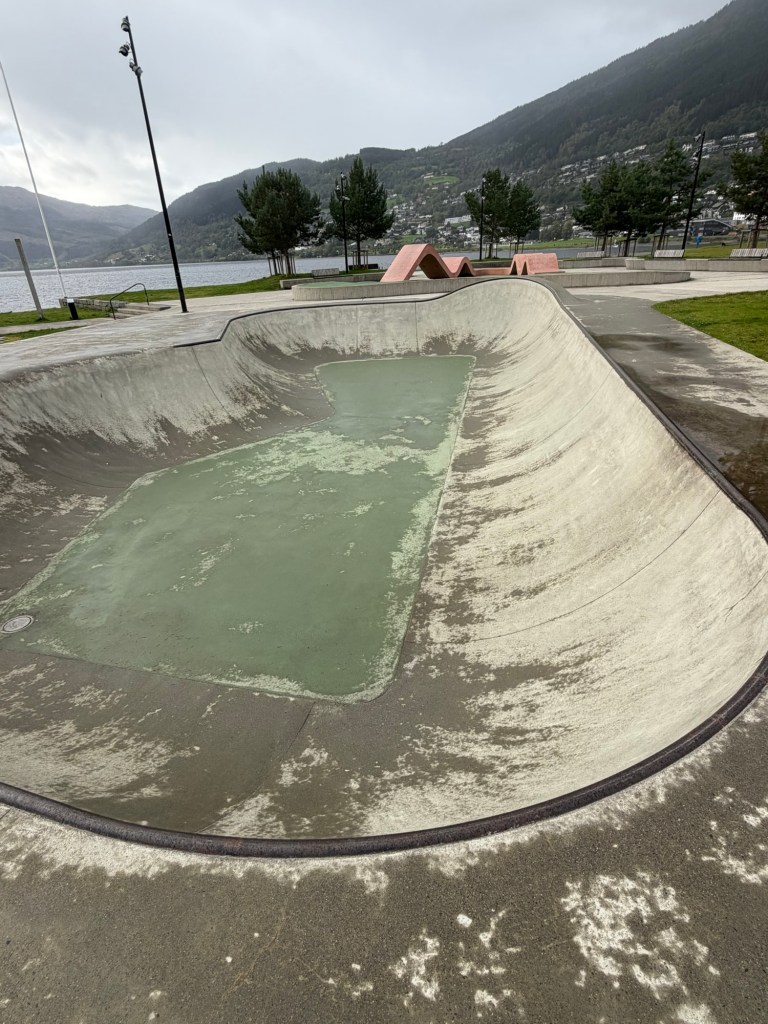
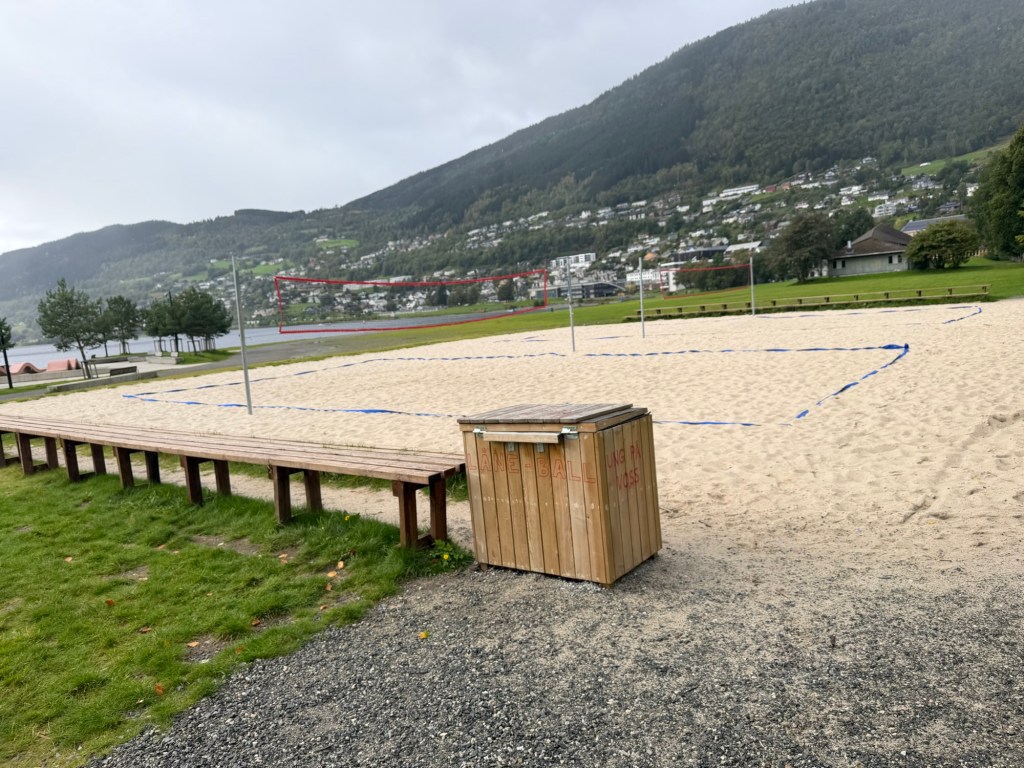
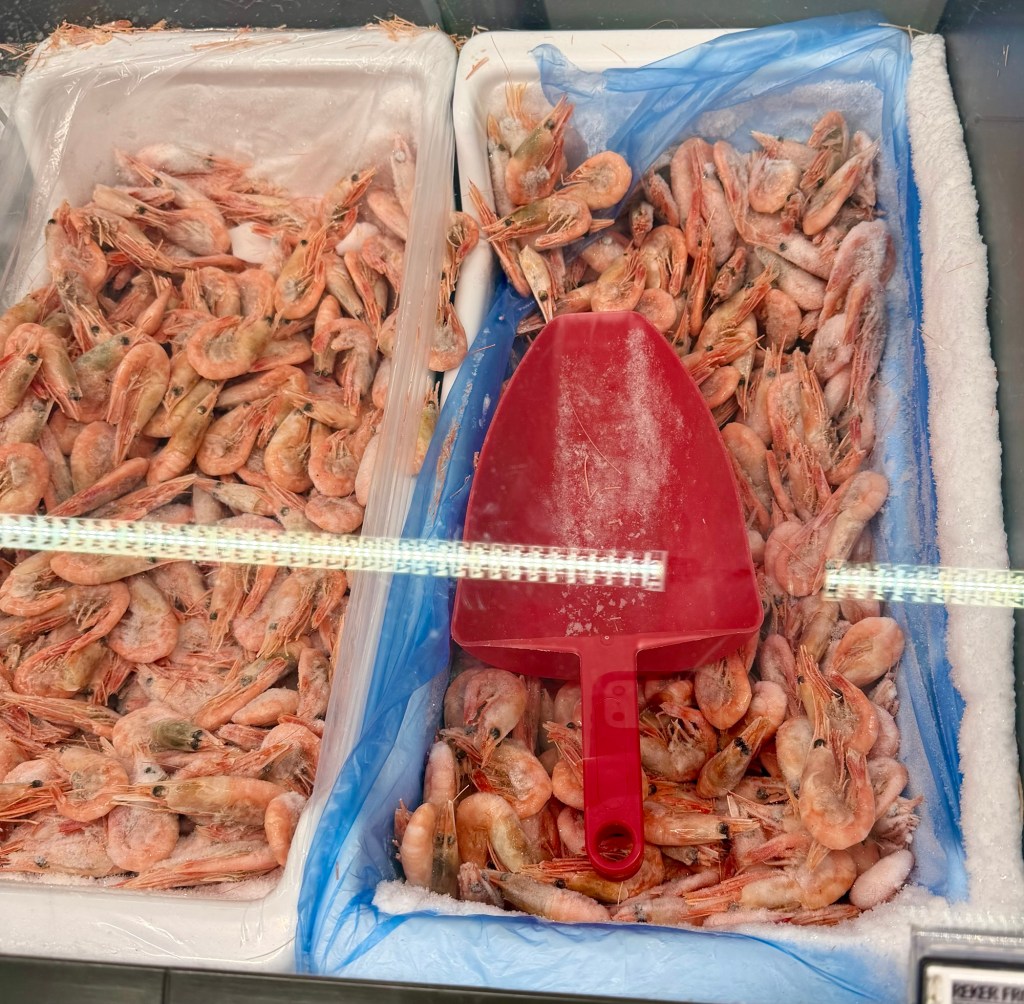
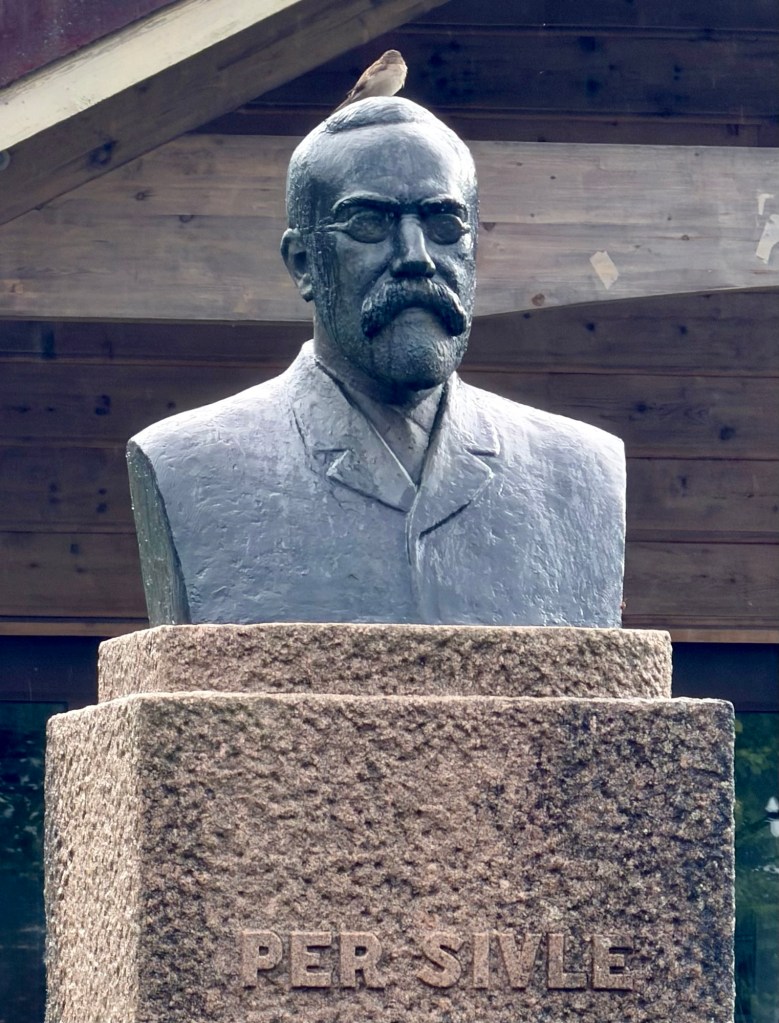
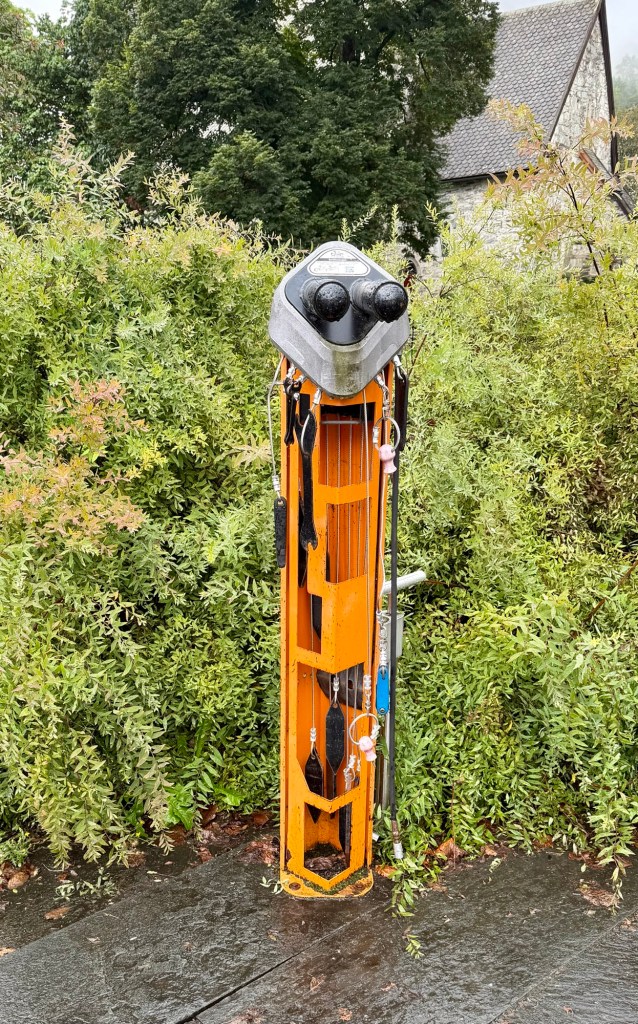
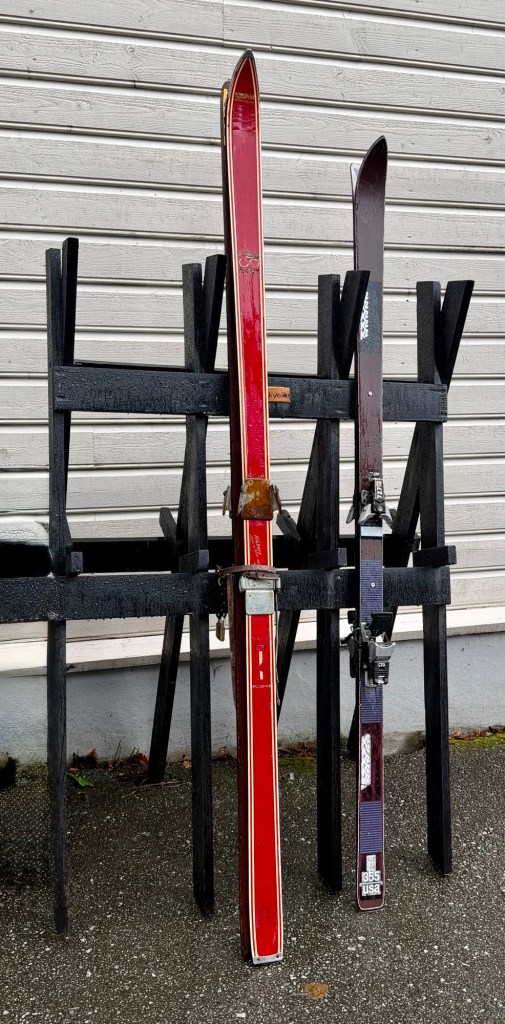
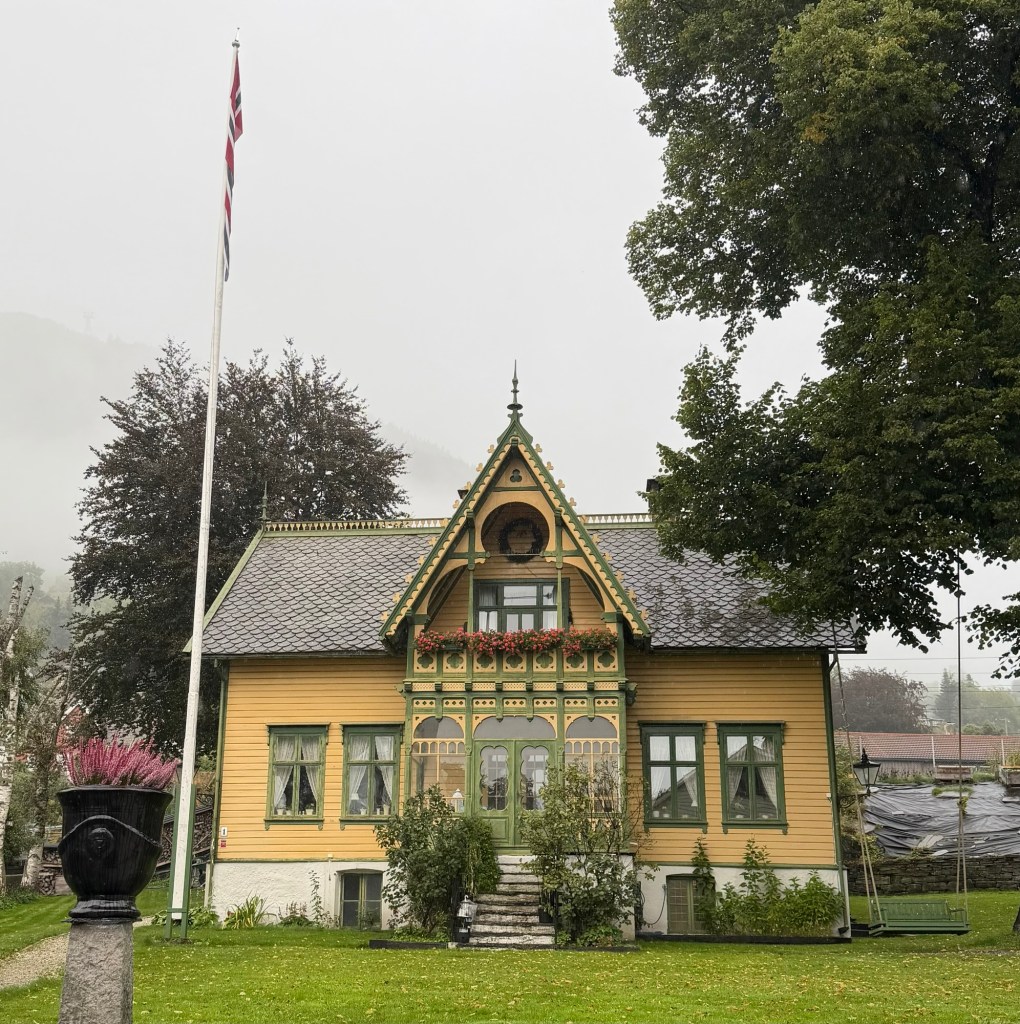
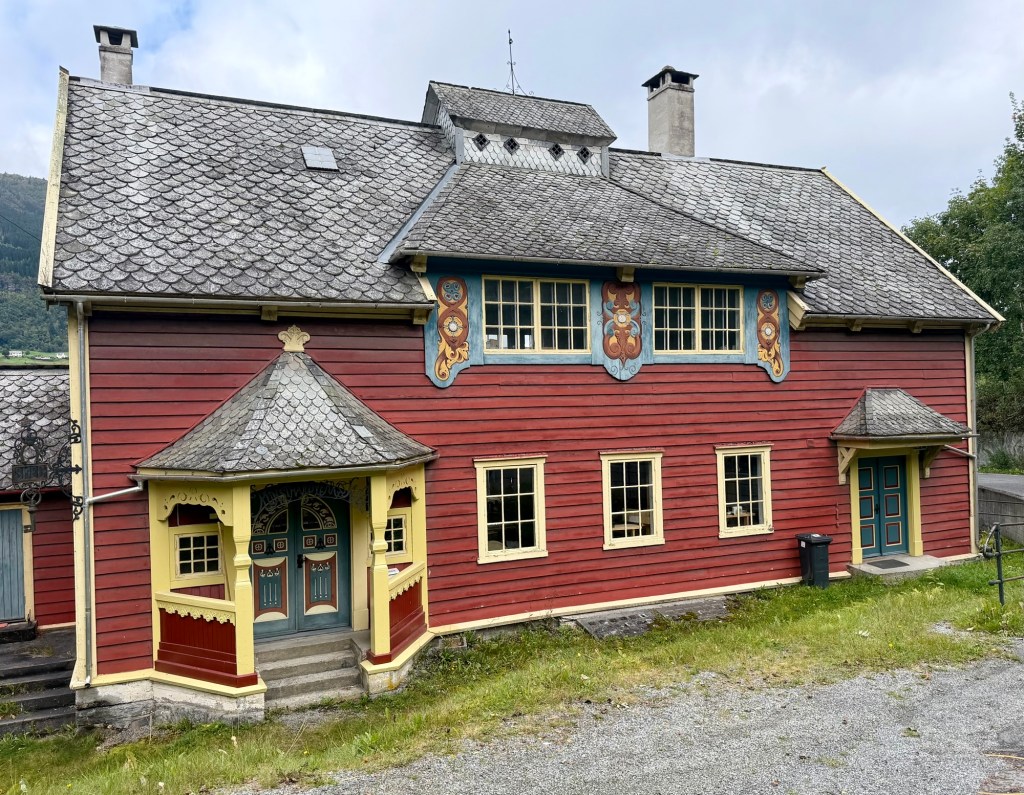
Heading up to the gorge, I took a shortcut through this bridge. The deep Bordalsgjelet GorgeWet, uneven trail Why do I keep pushing the limits with heights? 😂Voss BunadsSpeed bumps Skateboard park in front of a schoolBeach sports court in front of schoolBulk frozen shrimpWriter Per Sivle with a bird friendFix-it station for your bike, scooter, skis, otherVintage skis. I can beat the Solomon 737s on the right—I had 626s!Training for winter!1891 doctor’s villa, Swiss design1920 technical school, now a cultural hubThis says a lot!
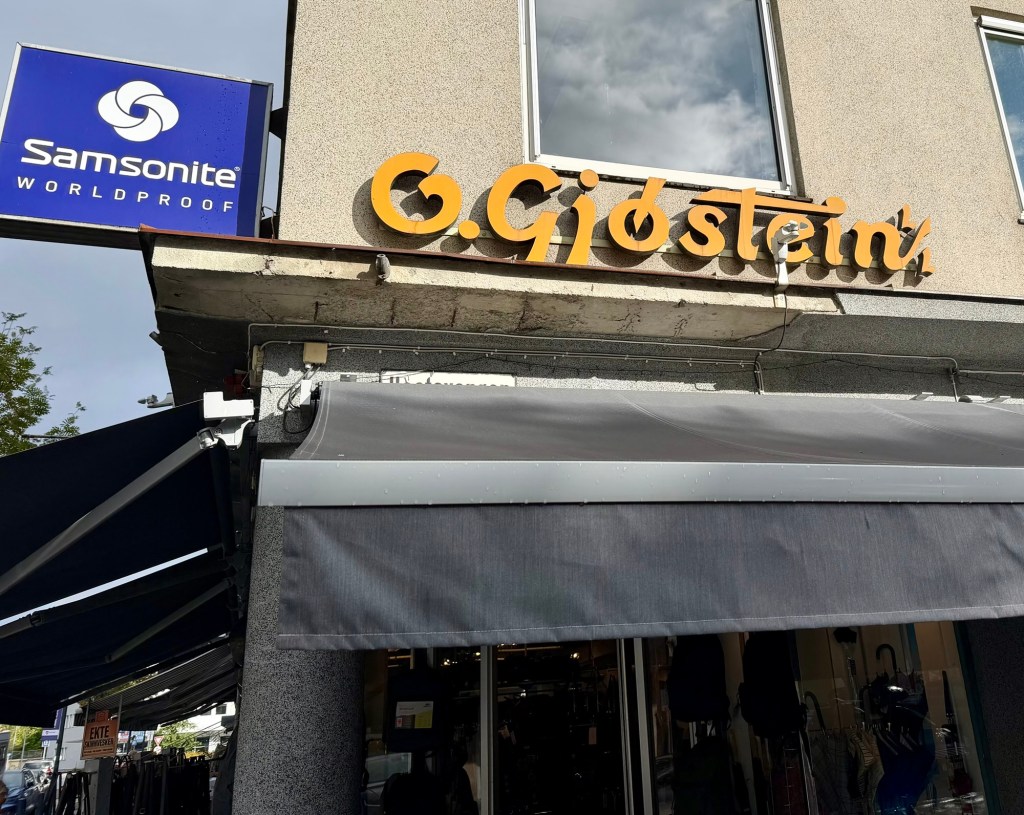
A final word about luggage: the salesgirls at the Dale store said that there was no luggage retailer in Voss (hence my trip back to Bergen). Today I found a luggage shop owned by a sweet older gentleman. It’s called Gjøstein. Spread the word!
This would have saved me a lot of train kilometres yesterday. 😧
Spoiler alert: I put on a lot of unanticipated kilometres by train today.
It was hard to leave the ship after all the exciting adventures, beautiful views, new friendships, and gourmet meals.
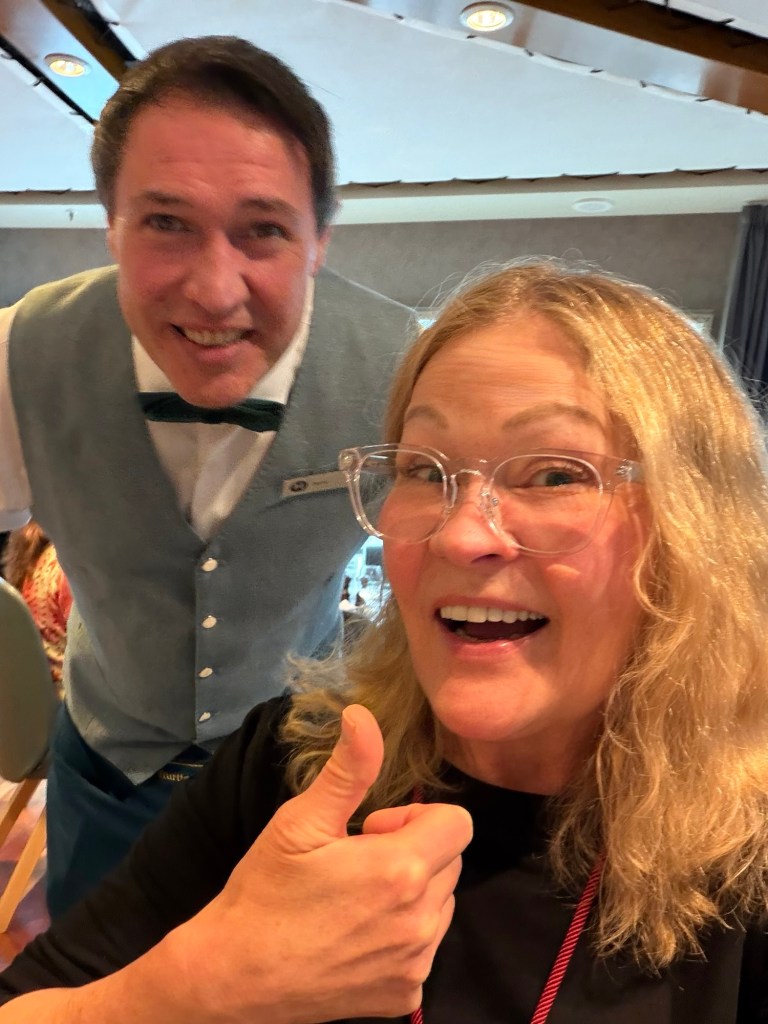
Nino: verdens beste servitør/the world’s greatest waiter. We communicated strictly på norsk. 
My plan was simple: take the train to Dale, visit the sweater outlet and museum, then continue to Voss, where I’d spend a couple of nights.
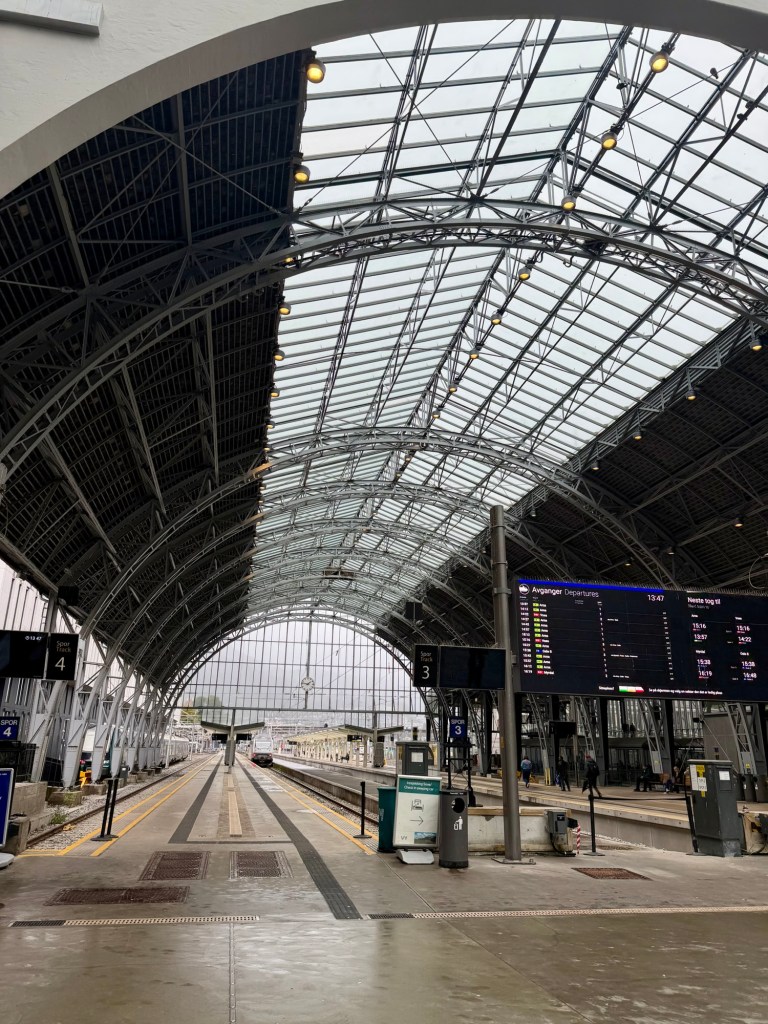
Bergen Train Station
I boarded the train without a problem and tucked my suitcase into the designated luggage area. The cars soon filled with ninth-grade teenagers who, I noticed, were much quieter than their North American counterparts.
When we arrived in Dale, however, someone’s backpack was blocking my suitcase, and I couldn’t get it out in time to disembark. Imissed my stop! A helpful inspector told me I’d have to wait 25 minutes at the next stop for the train back, and he even radioed ahead so I wouldn’t be charged.
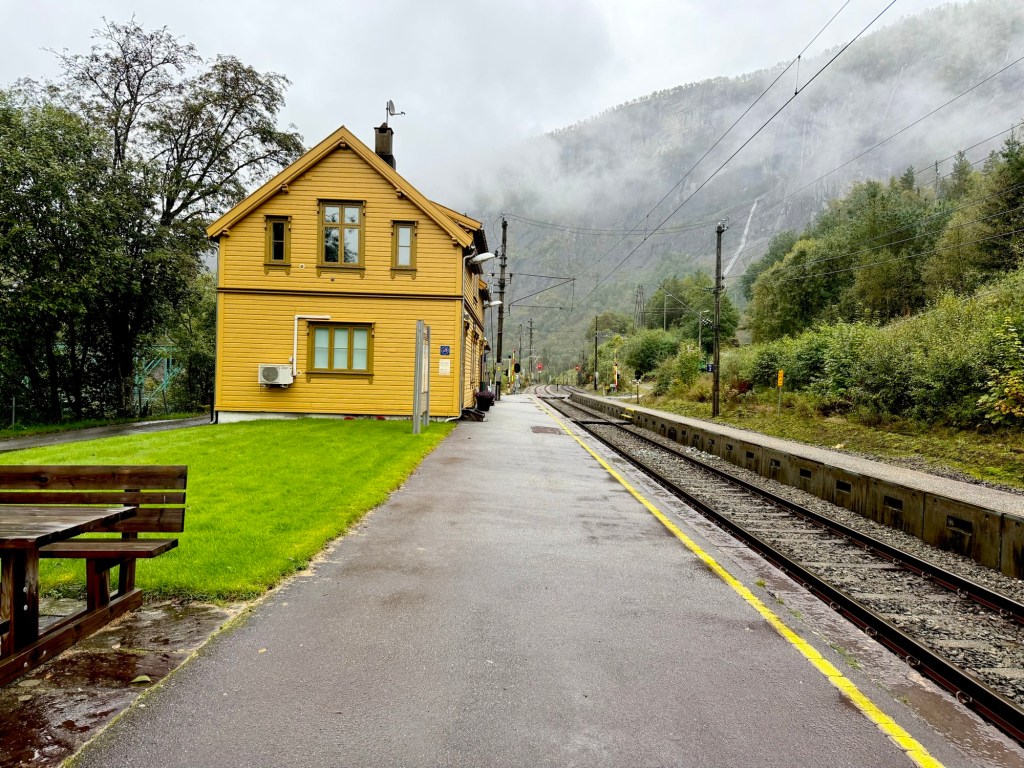
So, I found myself at the remote but beautiful Bolstadøyri Station.
Bolstadøyri
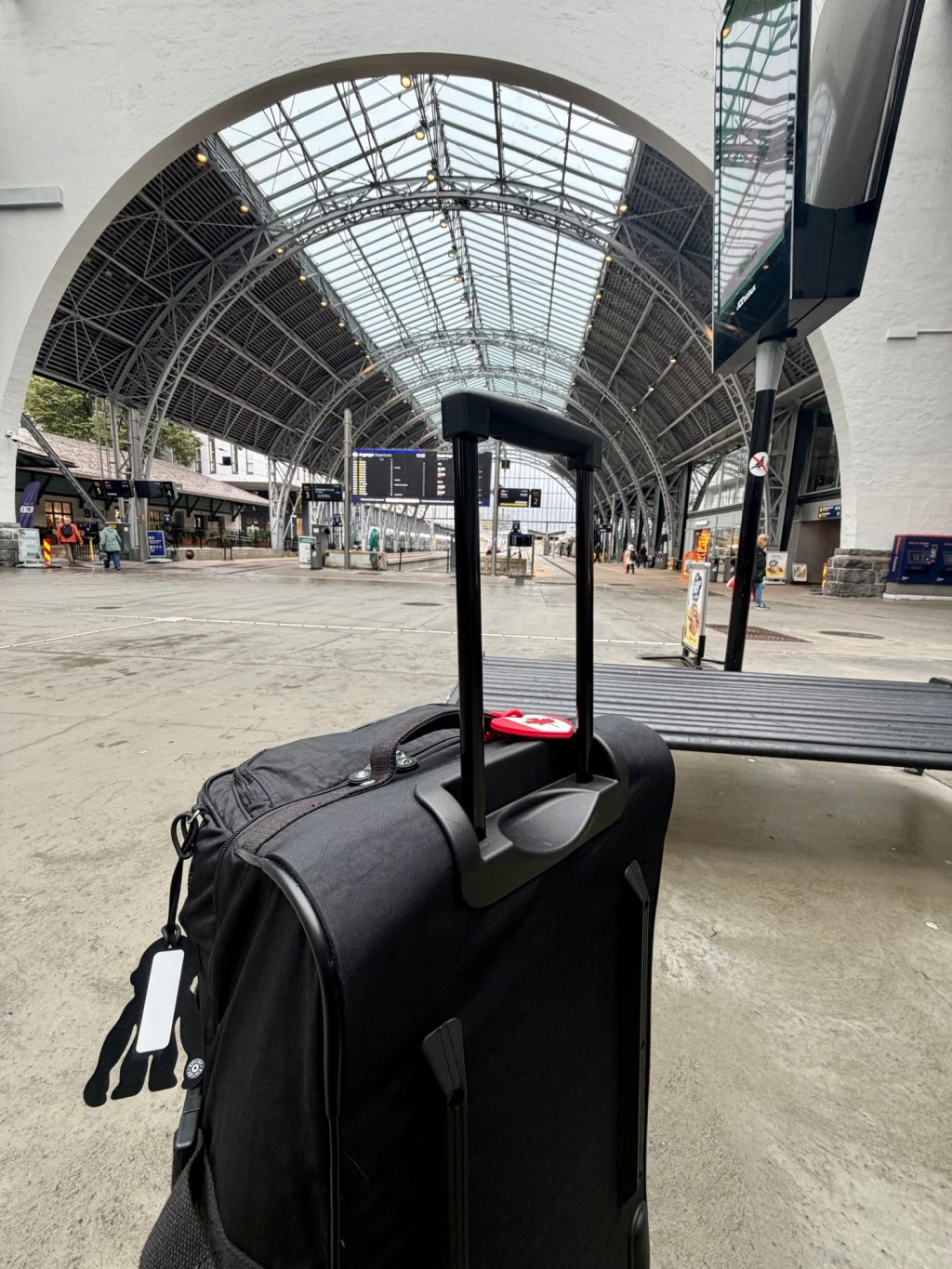
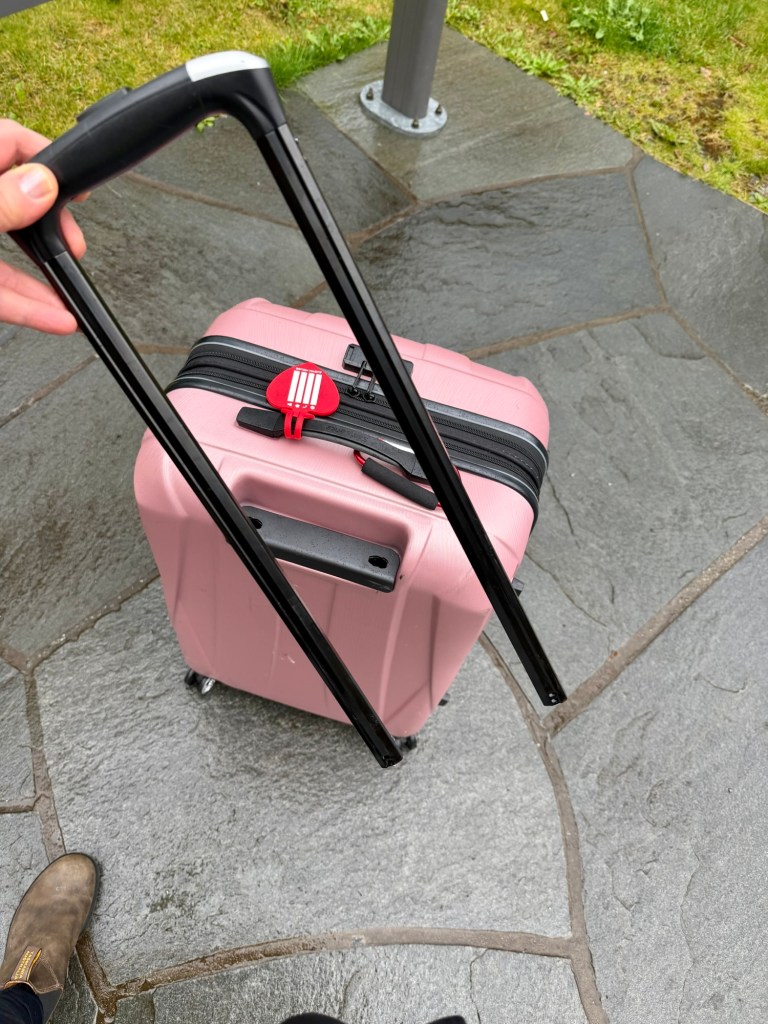
I hadn’t realized these smaller stations required physically crossing the train tracks via three steep stairs down and up, plus walking over tracks and gravel. For this trip, I had brought a brand-new hard-sided spinner suitcase that was already struggling with the ubiquitous cobblestones and uneven stone surfaces. As I pulled it up the steps from the tracks, the retractable handle promptly snapped off.
I googled Dale and found no luggage store or even a belt retailer that would help me drag the thing around until Oslo. I decided to visit Dale Sweater anyway and figure out my next move there.
The only entertainment at the Bolstadøyri train station.
Maneuvering my hard-sided suitcase in Dale was quite the experience. The sweater store wasn’t far, but I had to roll it downhill and nearly lost it. Ha ha!
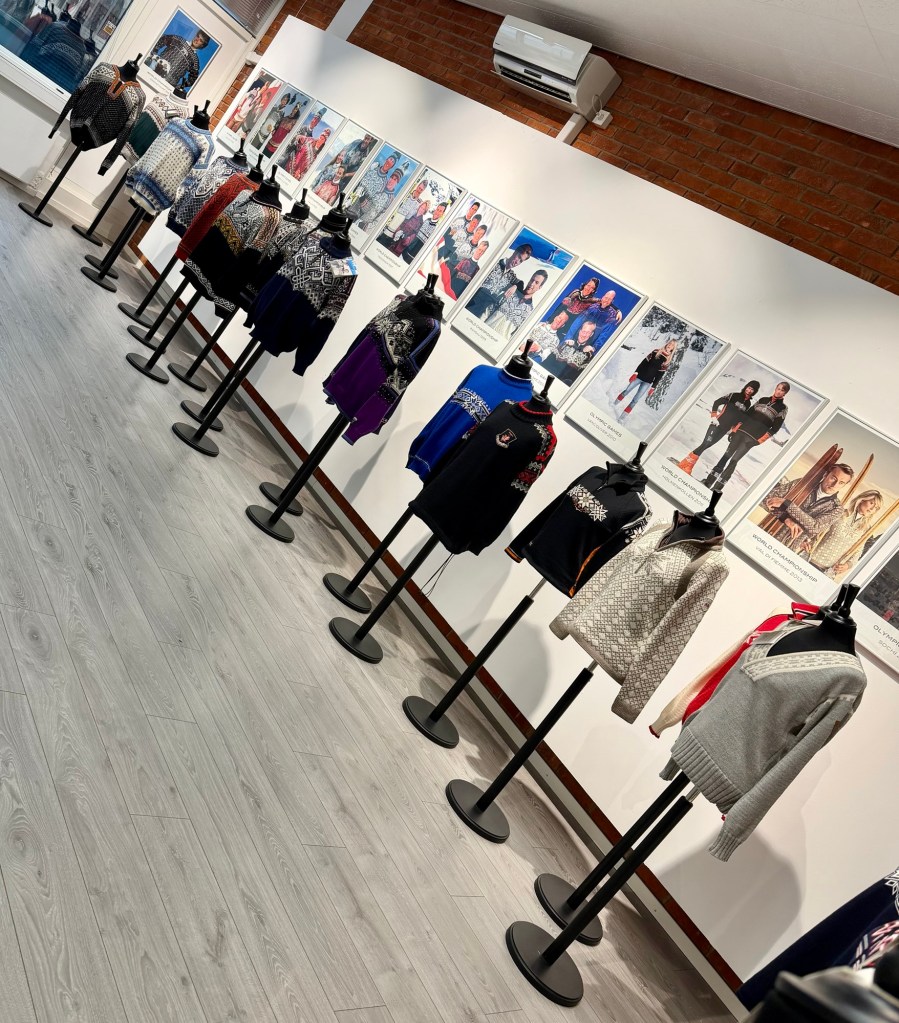
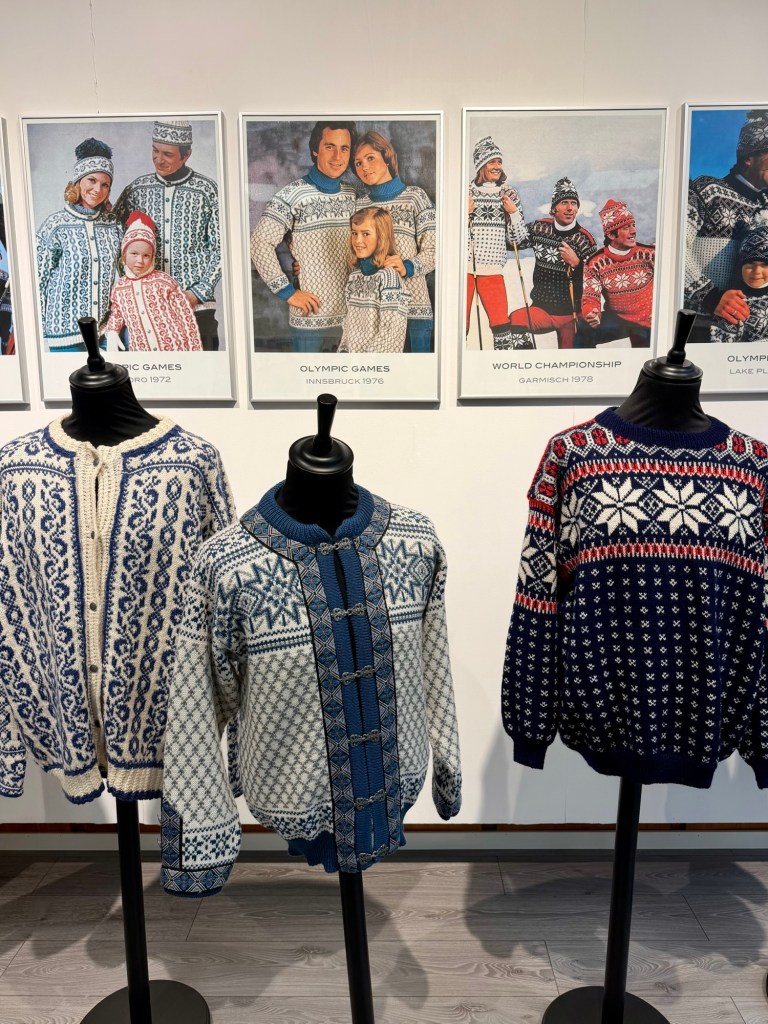
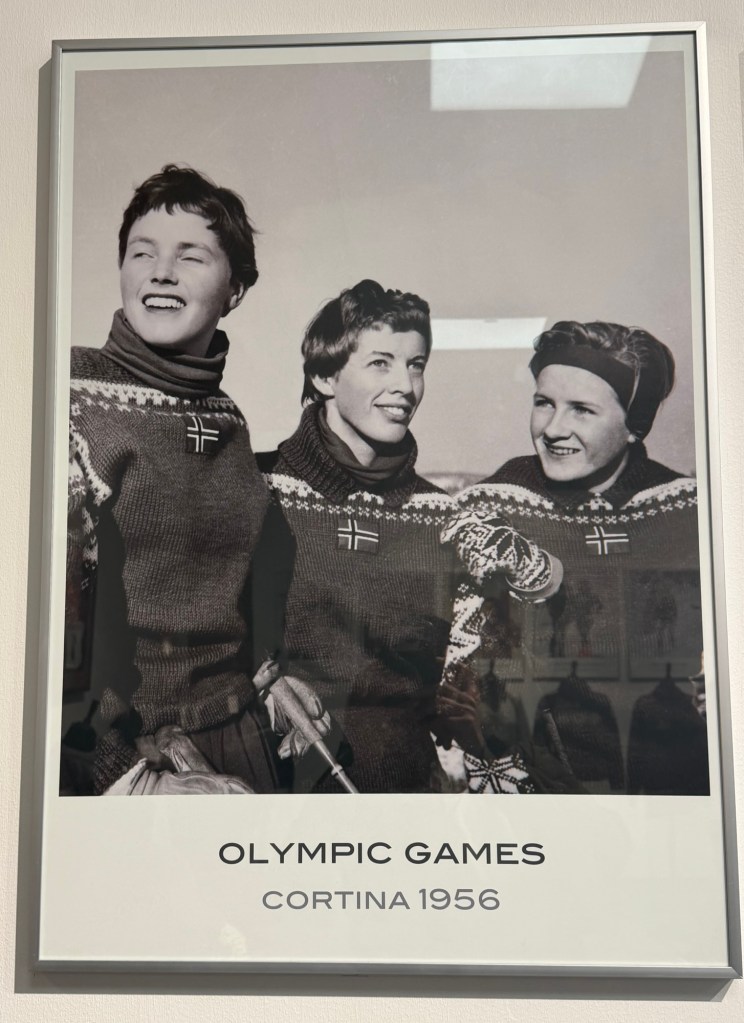
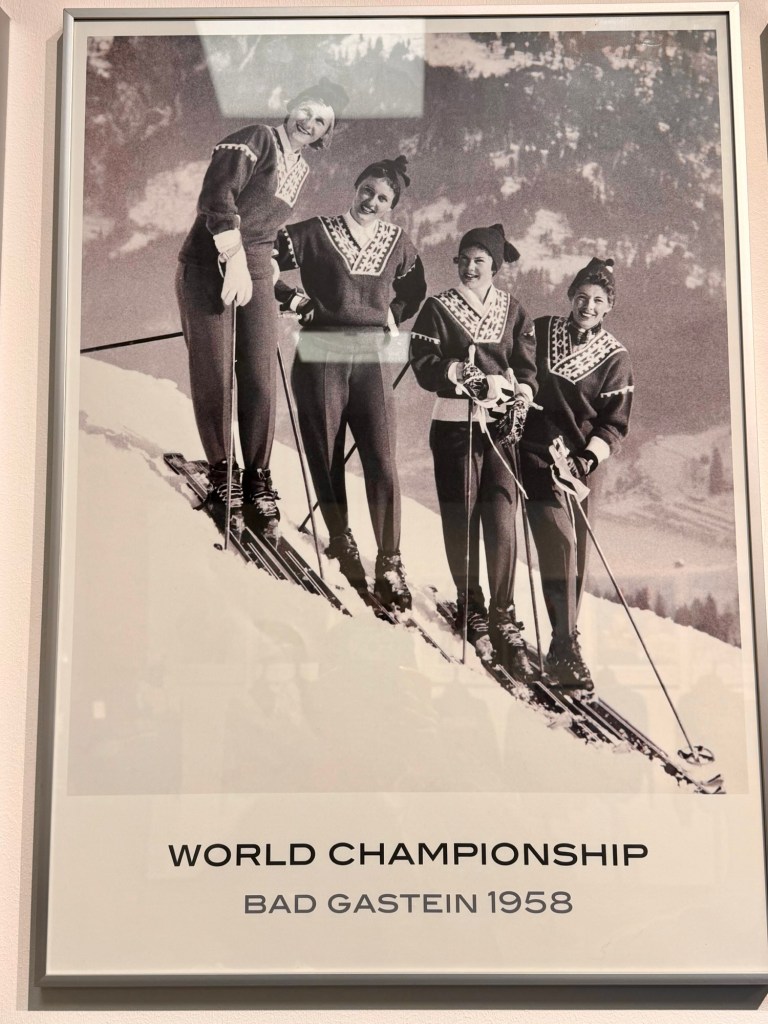
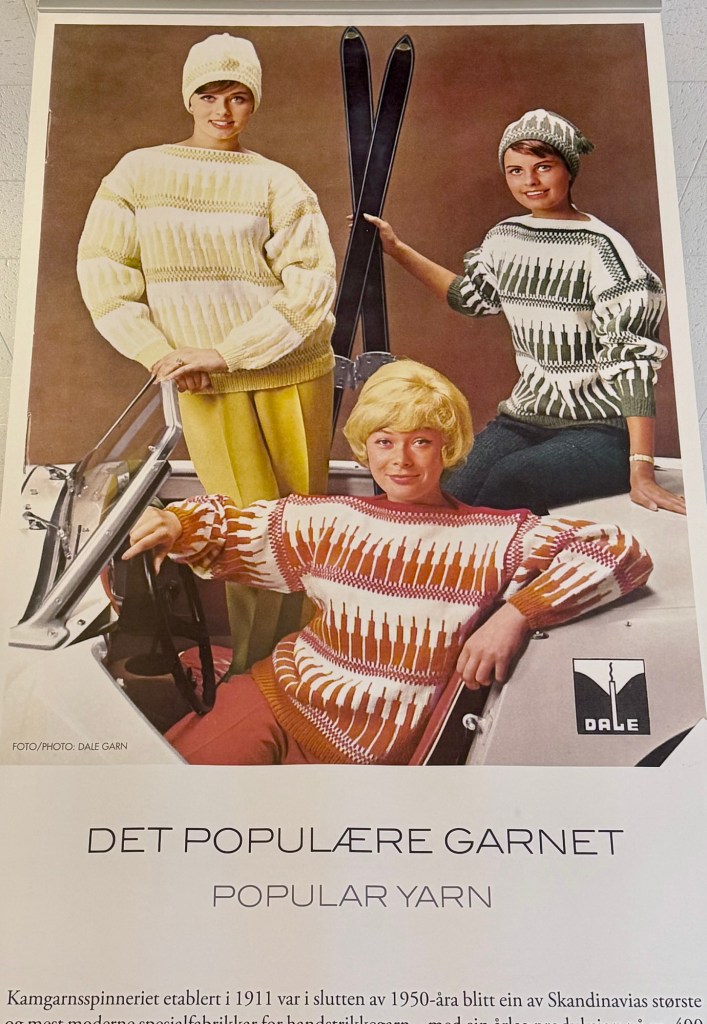
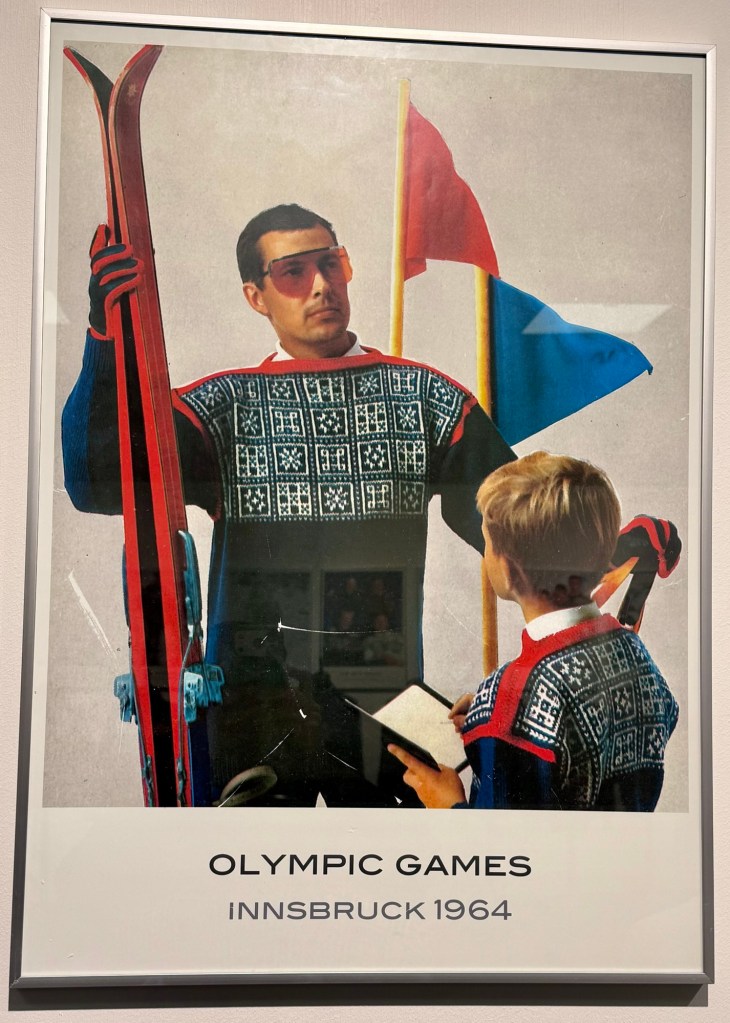
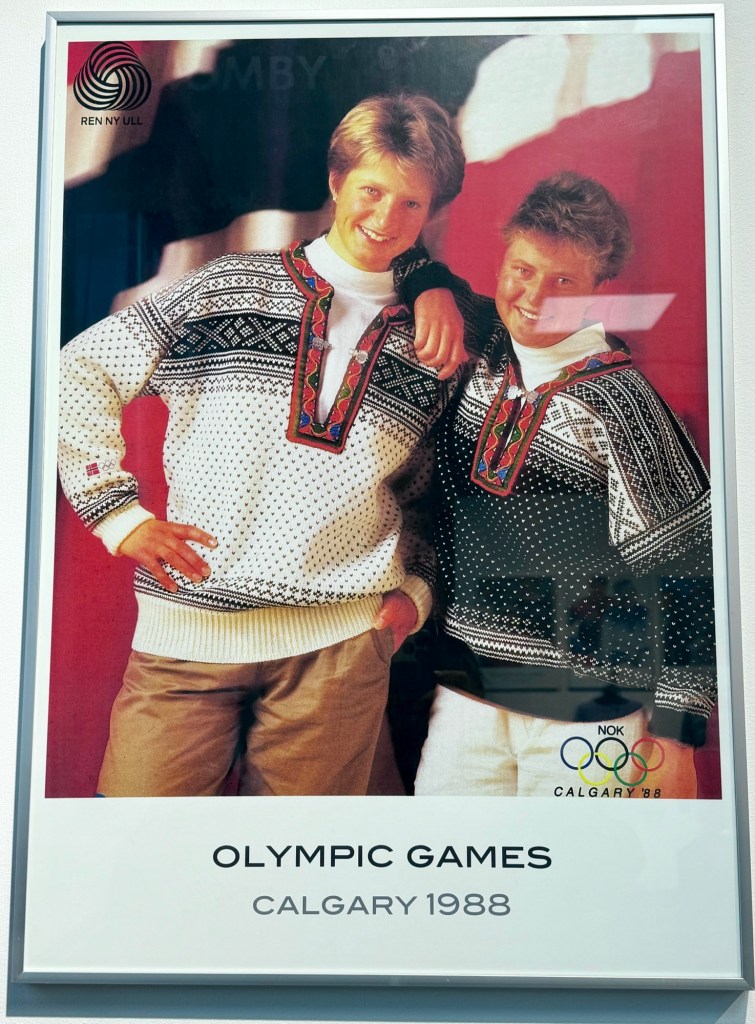
The young women at Dale Sweater were incredibly helpful. They found me a luggage store back in Bergen, conveniently located near the train station. I did some browsing first (no, I didn’t buy another Norwegian sweater!), and really enjoyed their Olympic sweater room. The museum was also mildly interesting.
Olympic Sweater RoomMay parents had matching sweaters like the one in the middle.
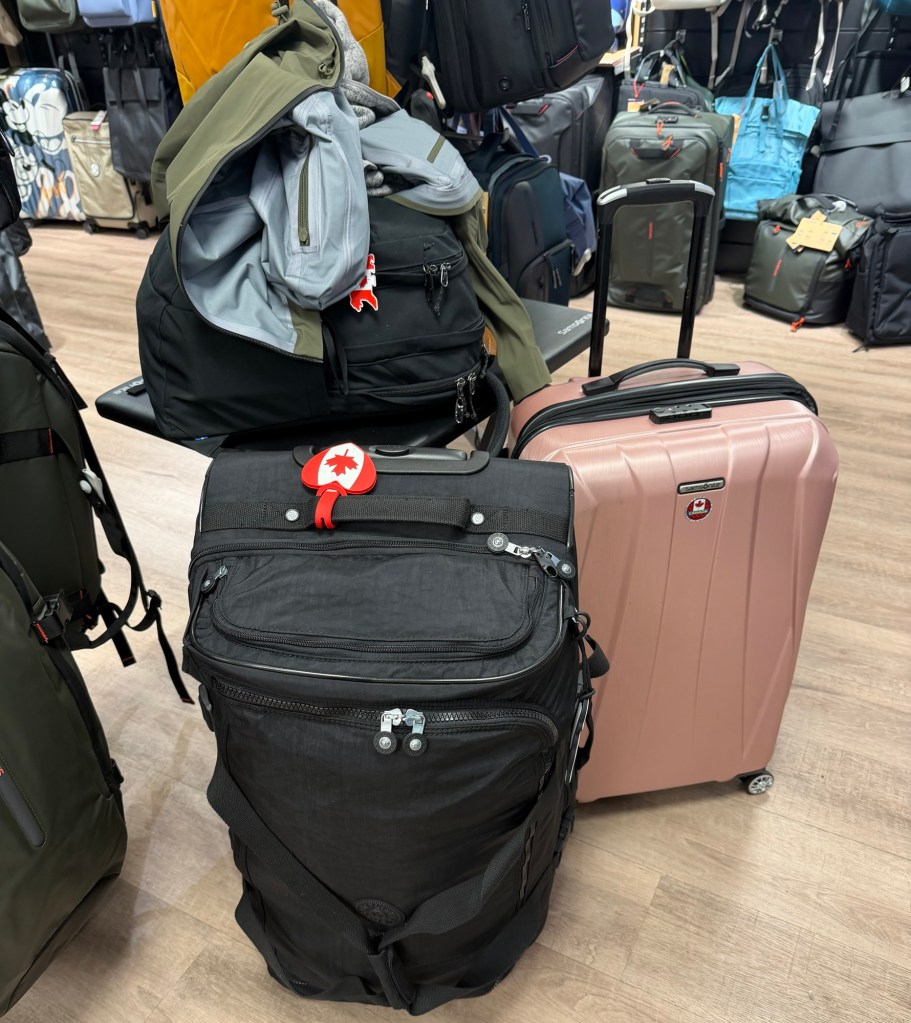
Somehow, I maneuvered “Big Problem” onto the Bergen-bound train, off the train, across to the shopping mall, and into the luggage store, MYBAG on the second floor. The women there were wonderful and recalled the same thing happening to another tourist just a few days earlier. They said I could transfer baggage in store and even offered to dispose of my suitcase if I bought a new one.
Out with the old, in with the new. Oh wait – it wasn’t even old. 🫤
I’m now traveling with a soft-sided, two-wheeled duffle bag—definitely better suited to the rugged realities of maneuvering around Europe. It’s a little outside my comfort zone, but I’ll get used to it (hopefully).
The train to Voss was quiet and relaxing after all the stressful events. Better days ahead!
The view looking out over the fjord is simply outstanding.
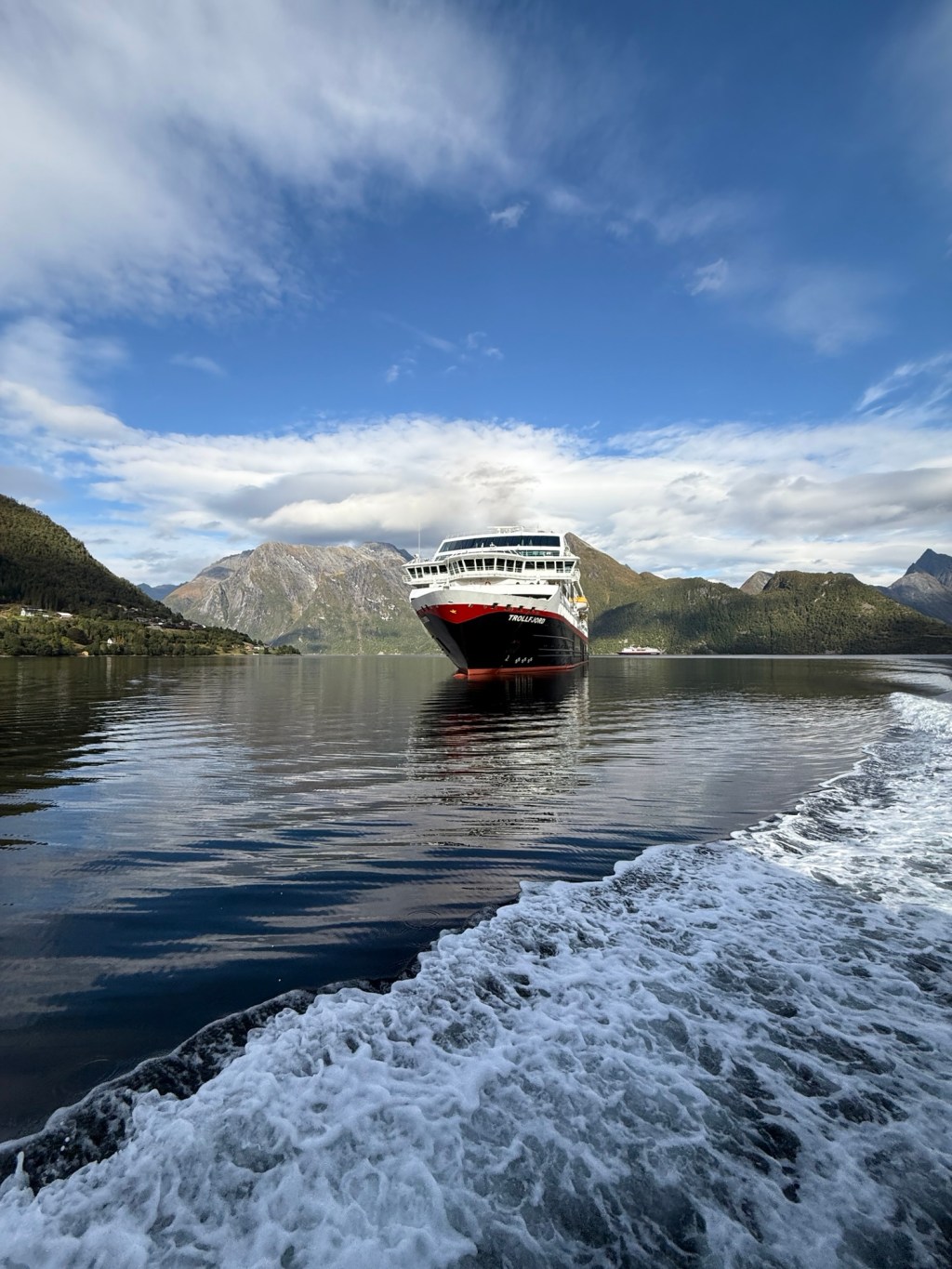
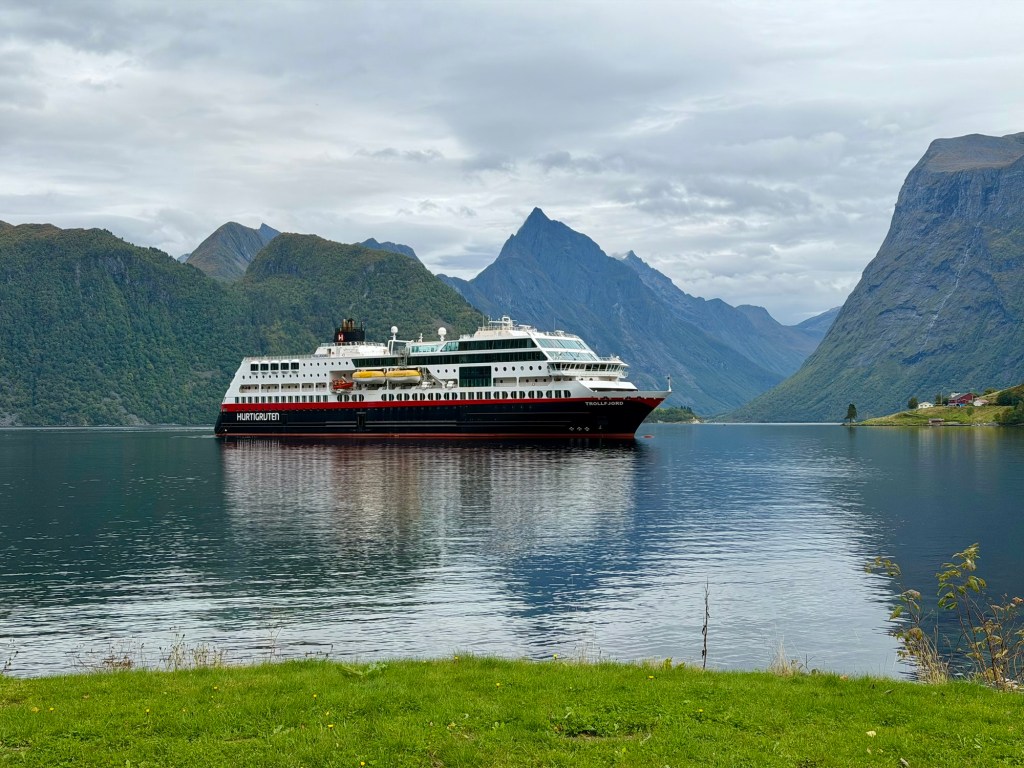
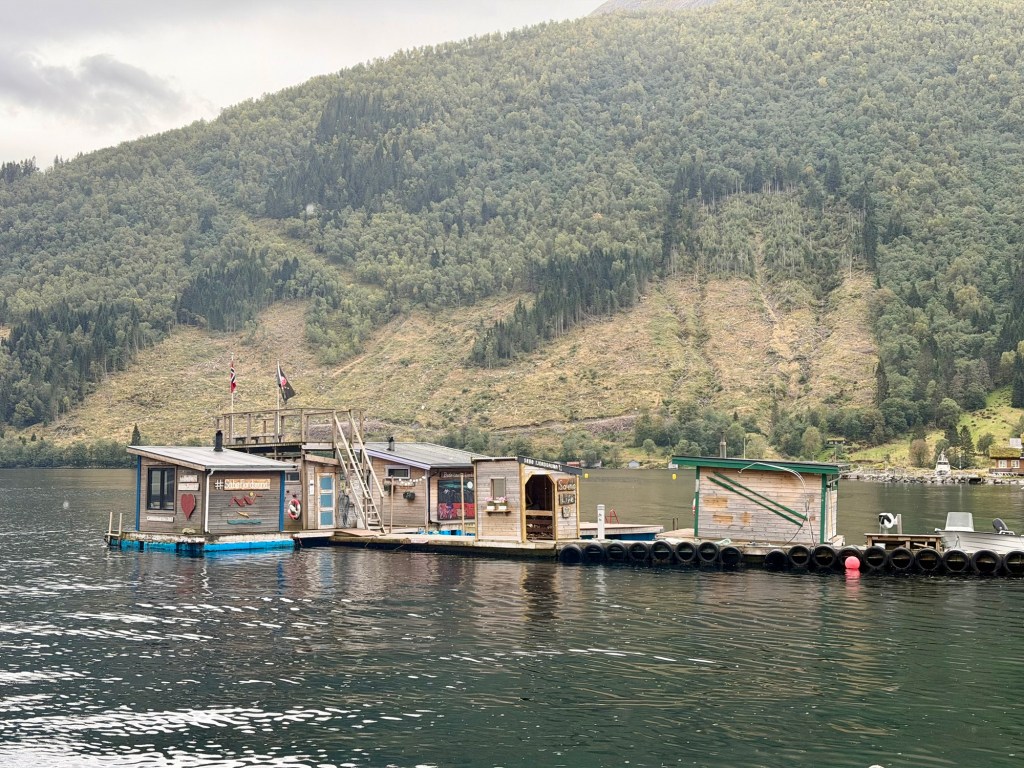
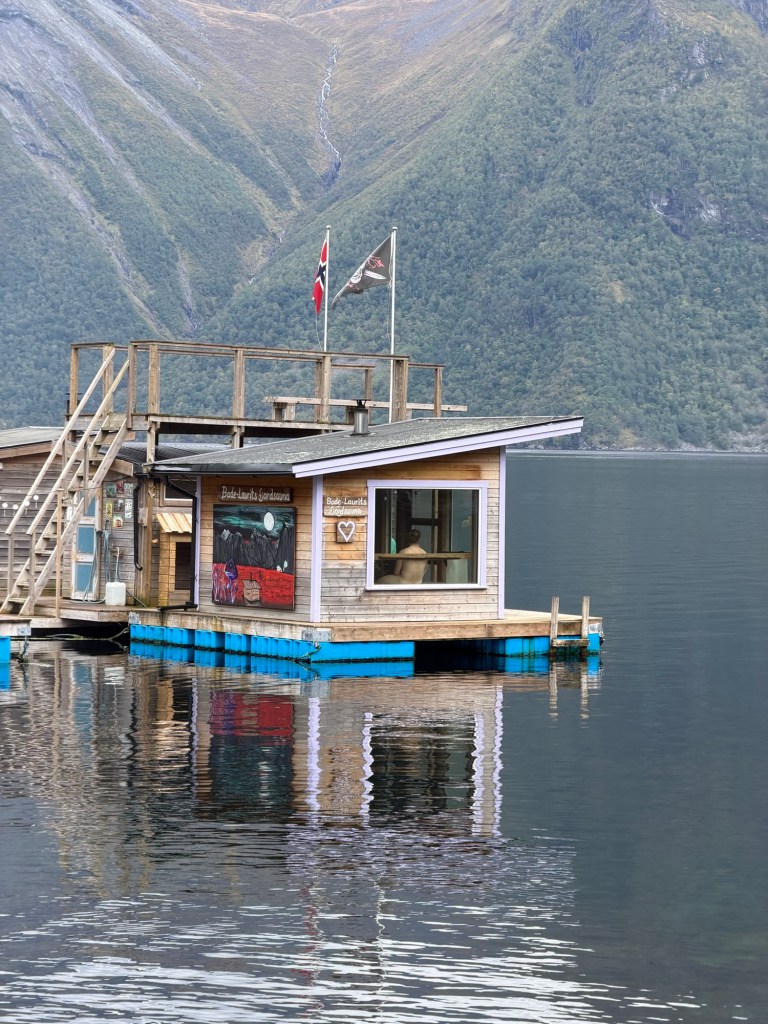
We sailed down the Hjørundfjord to Sæbø, nestled in an idyllic bay. Sæbø is an important ferry hub, but it’s also a tiny, warm and welcoming town, with floating saunas you can rent online. Of course, the locals follow-up by hopping into the ocean for a dip, regardless of the time of year!
Floating saunasSauna in use
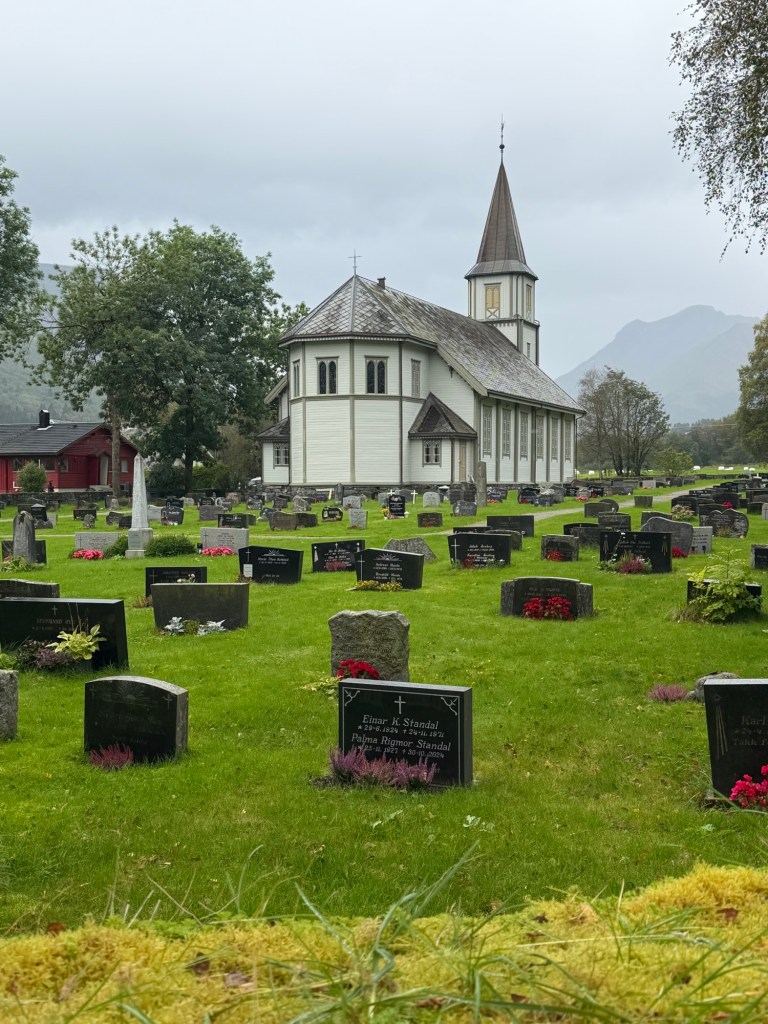
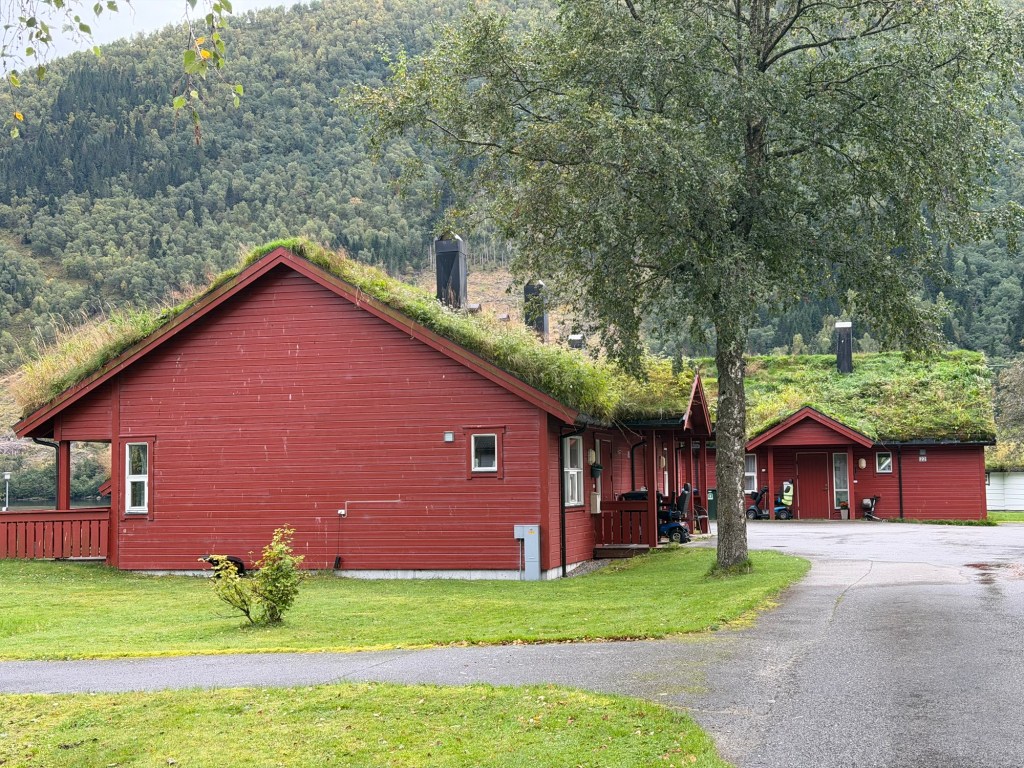
There are a handful of small shops, beautiful hiking trails, and a historic church. There’s even an assisted living facility that has authentic Norwegian cabins for some of the more independent residents.
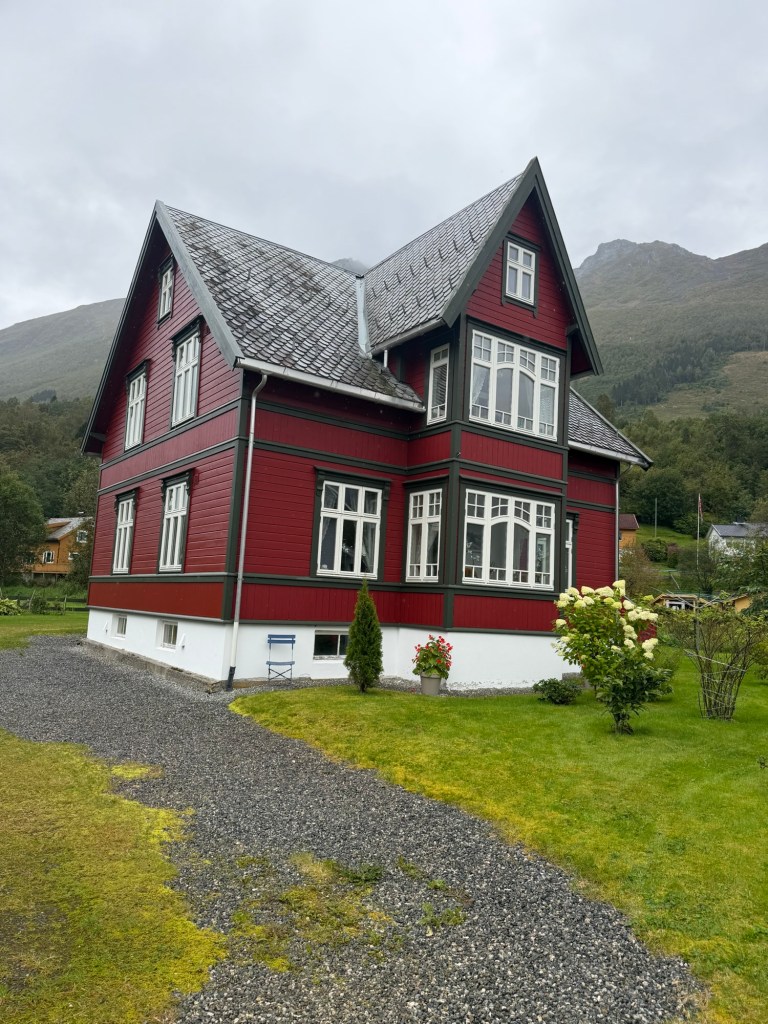
Træbø ChurchA well-kept homeSeniors’ residences
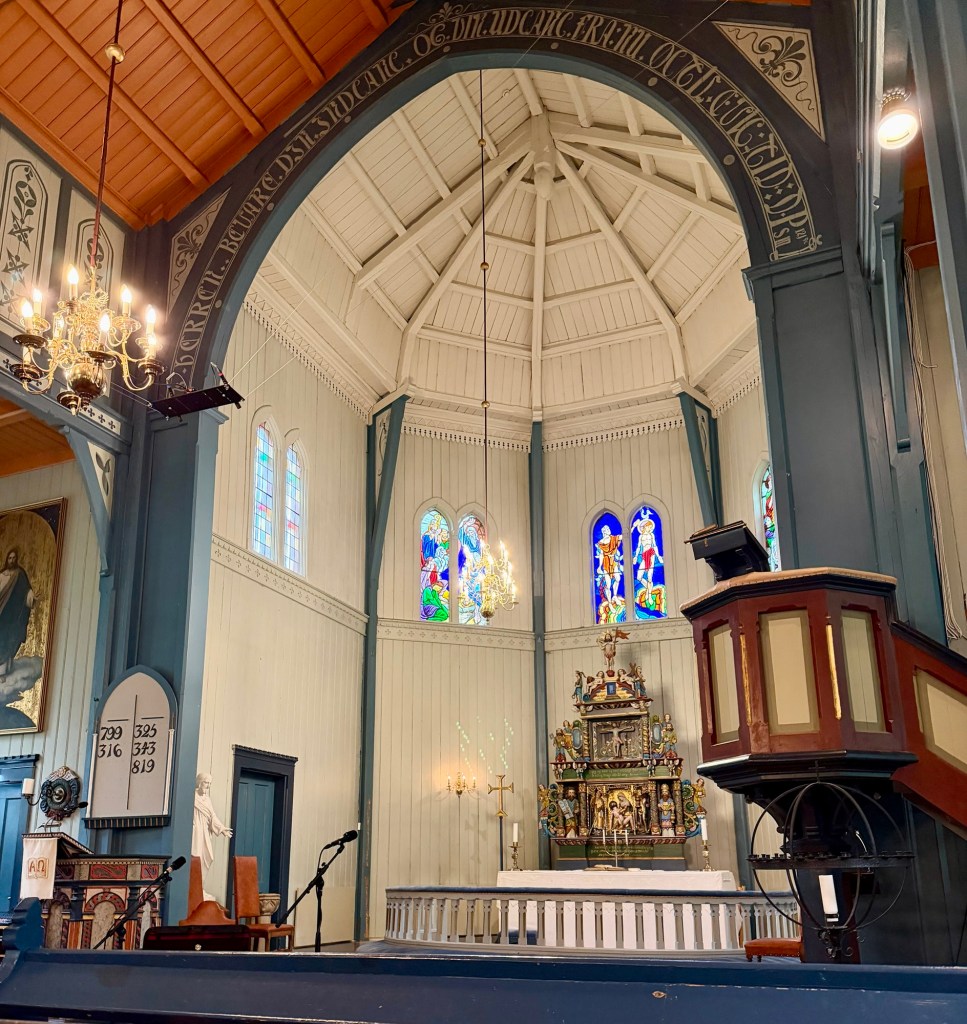
I took in the most wonderful concert at the church. It was well attended and so worth it. Two gifted musicians performed authentic Norwegian music on piano, Hardanger fiddle, and accordion. These happen to be some of my favorite instruments, which made the experience even more special. The young man was a professional whistler who could use his skills to harmonize with the young woman on the fiddle or even warble like a bird. His counterpart had a strong, beautiful voice that carried wonderfully as she sang a song about a milkmaid calling her cows. I’ll definitely be sharing some of the videos I took with my music-aficionado friends and family. (Sorry, no pictures of the musicians—people’s heads were in the way.)
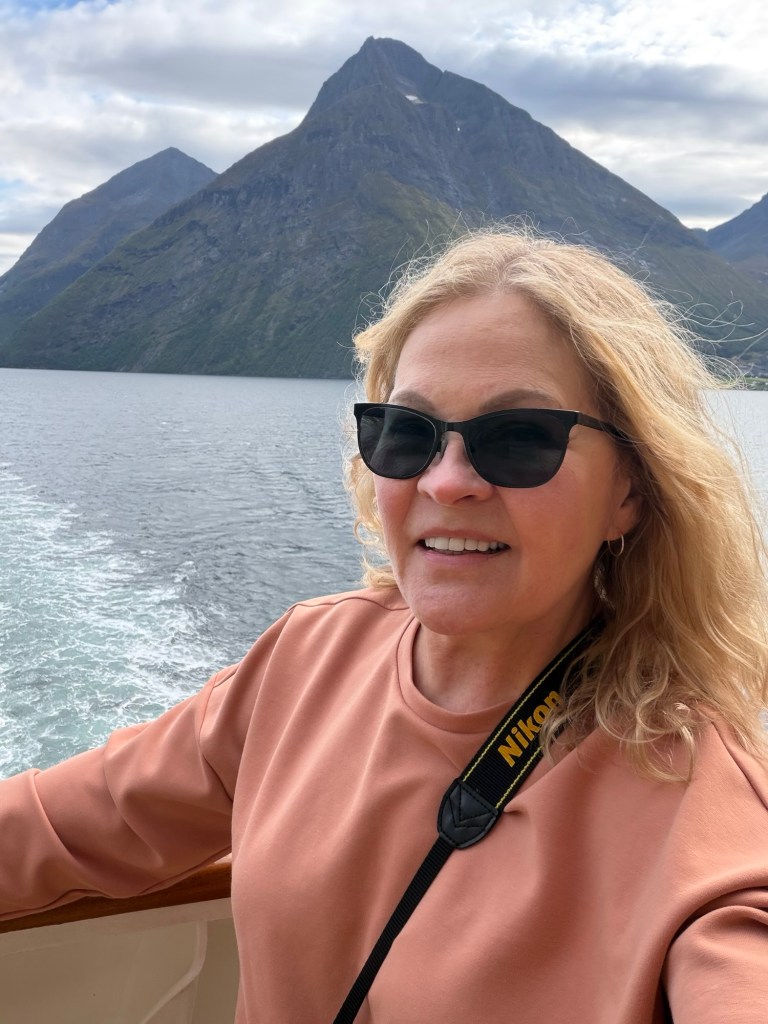
Inside the church. This shade of blue is used a lot in rosemaling. Marla likes fjords!
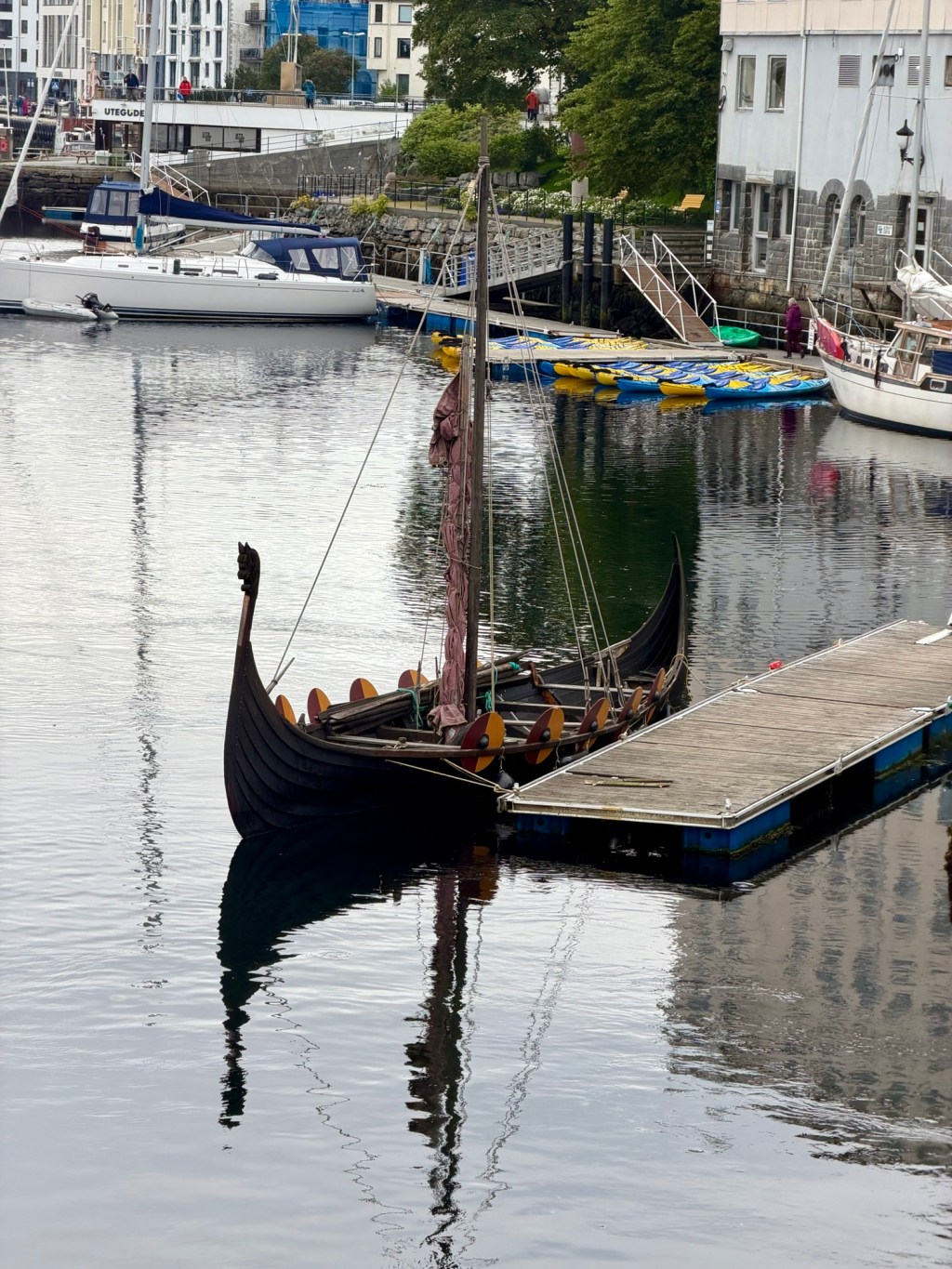
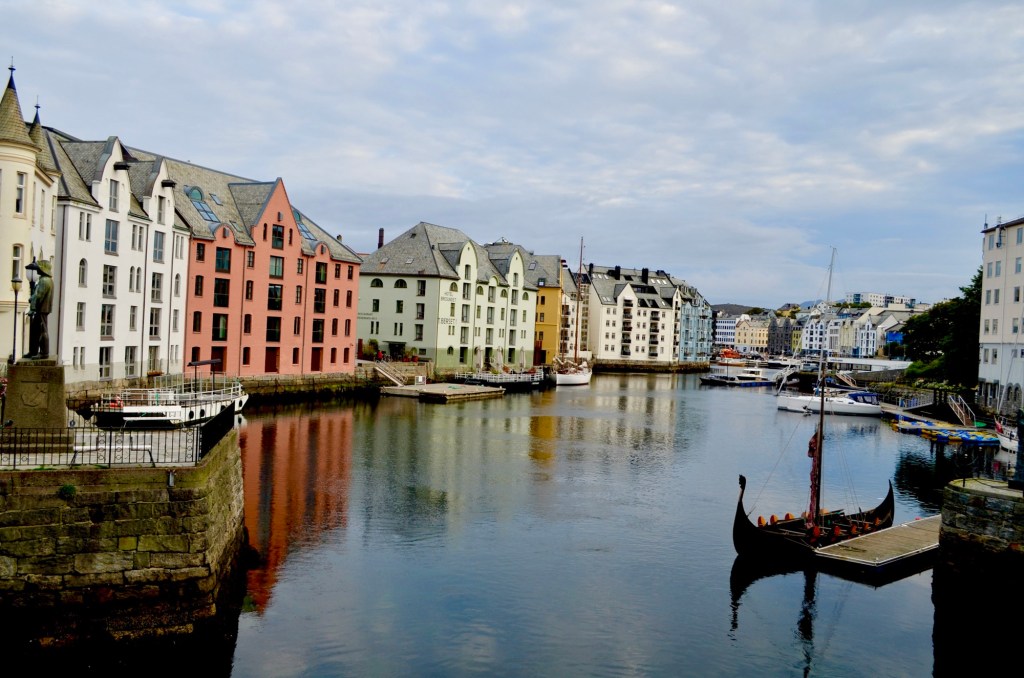
I had a couple of hours in Ålesund (~200 km north of Bergen) and was fortunate enough to explore the city early in the morning, before the streets filled with foot traffic.
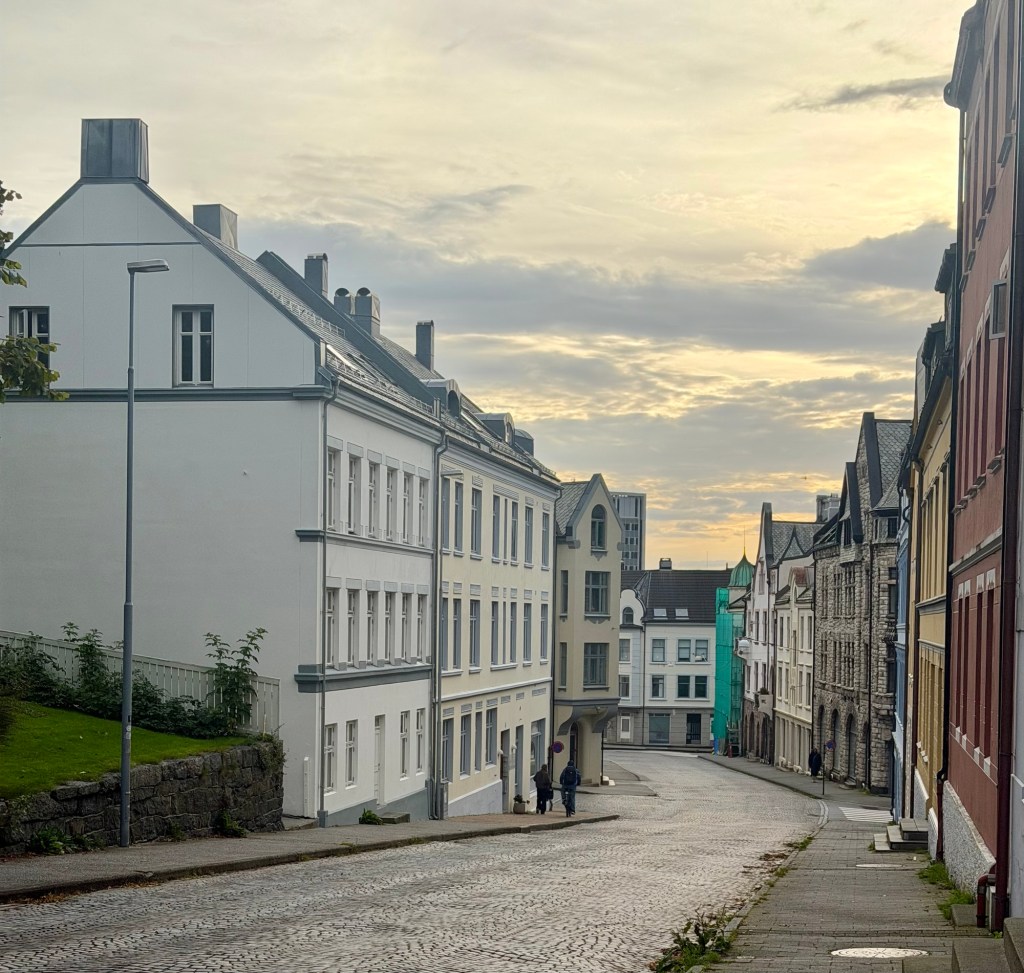
In 1904, a devastating fire destroyed most of the wooden town, including 10,000 homes. In the aftermath, the city introduced a new rule prohibiting the use of wood in construction. Young Norwegian and foreign architects were brought in to redesign Ålesund, and they embraced the fashionable Art Nouveau style of the day.
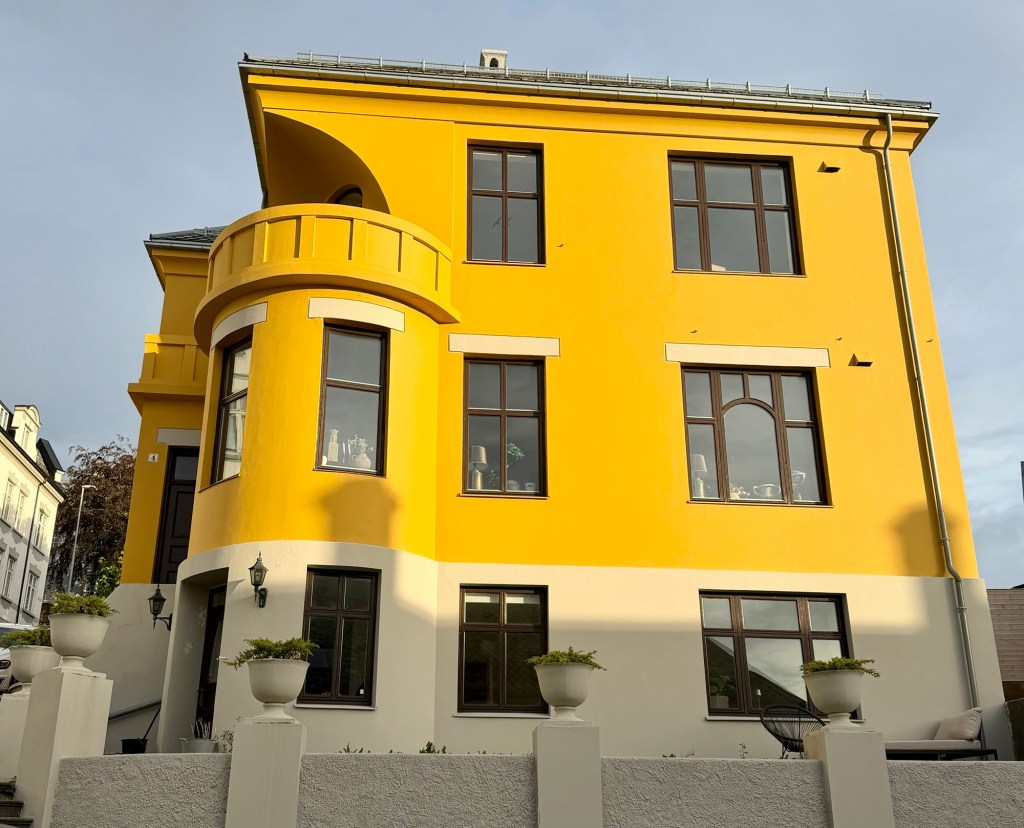
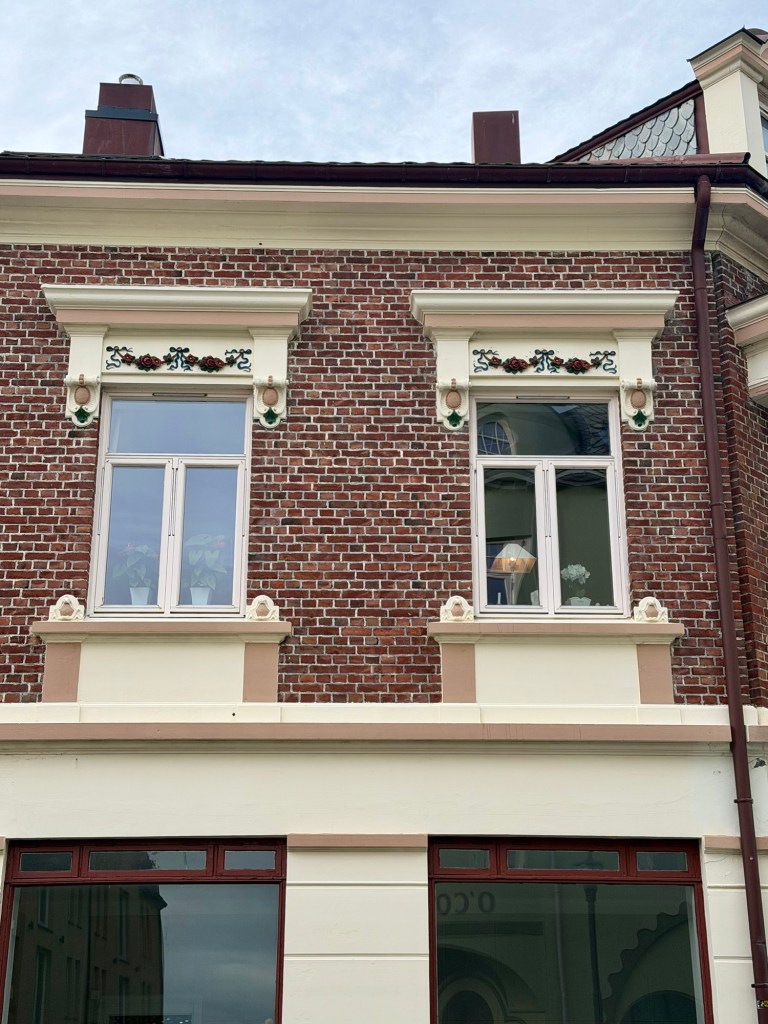
The city was rebuilt almost entirely in Art Nouveau, with distinctive towers, spires, and beautiful floral patterns. Unlike the geometric lines of Art Deco, Art Nouveau is characterized by flowing, curved forms inspired by nature.
Walking through the quiet streets, it was easy to appreciate Ålesund’s unique charm.
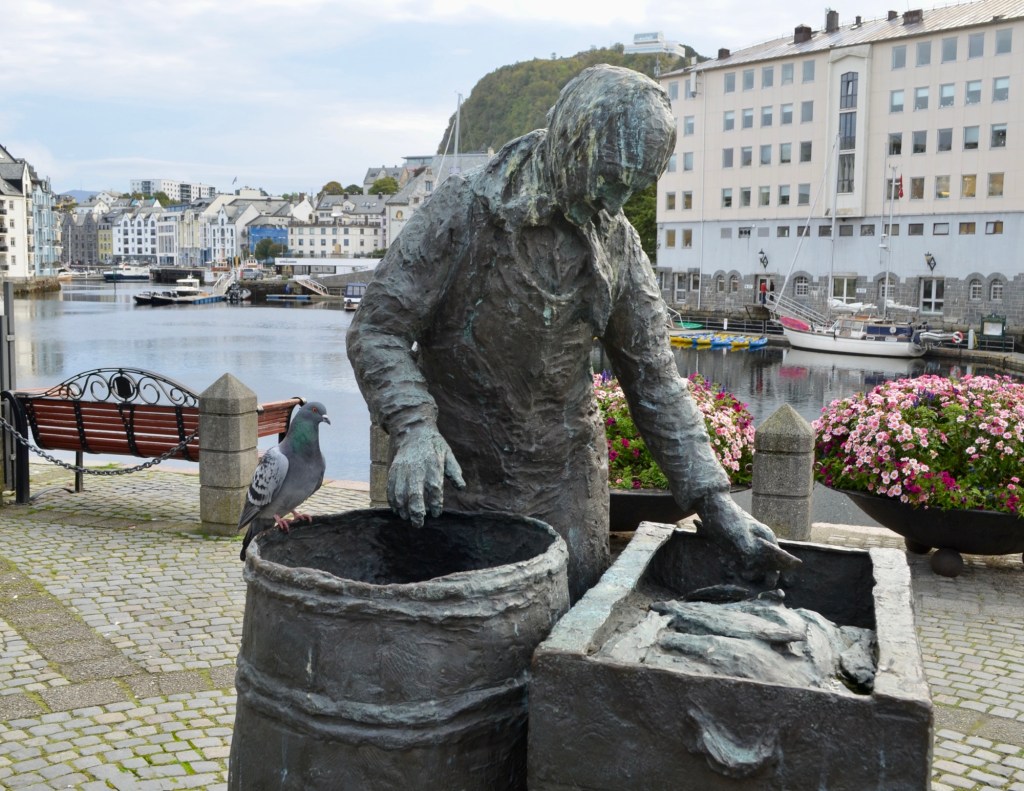
Sildekona (Herring Woman) has a feathered helper. New boyfriend 😂
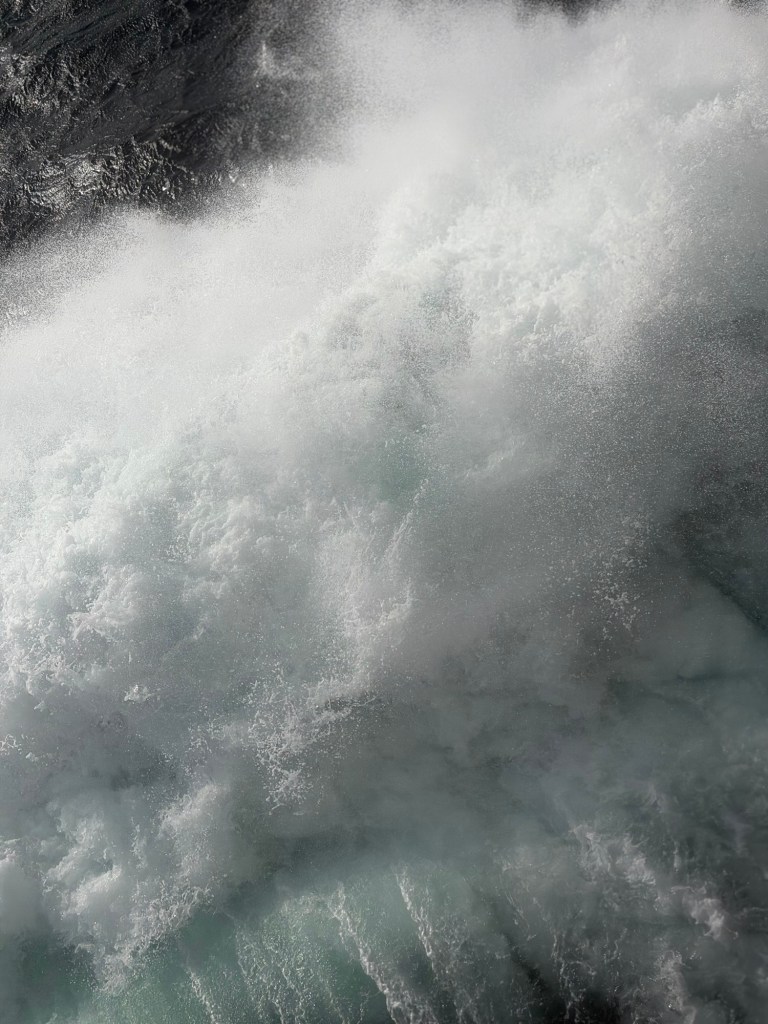
Wow! What a storm we sailed through this morning! The front end of the ship was crashing down into the waves—it was better than a carnival ride.
Looking over the railing before they closed off the outdoor deck.
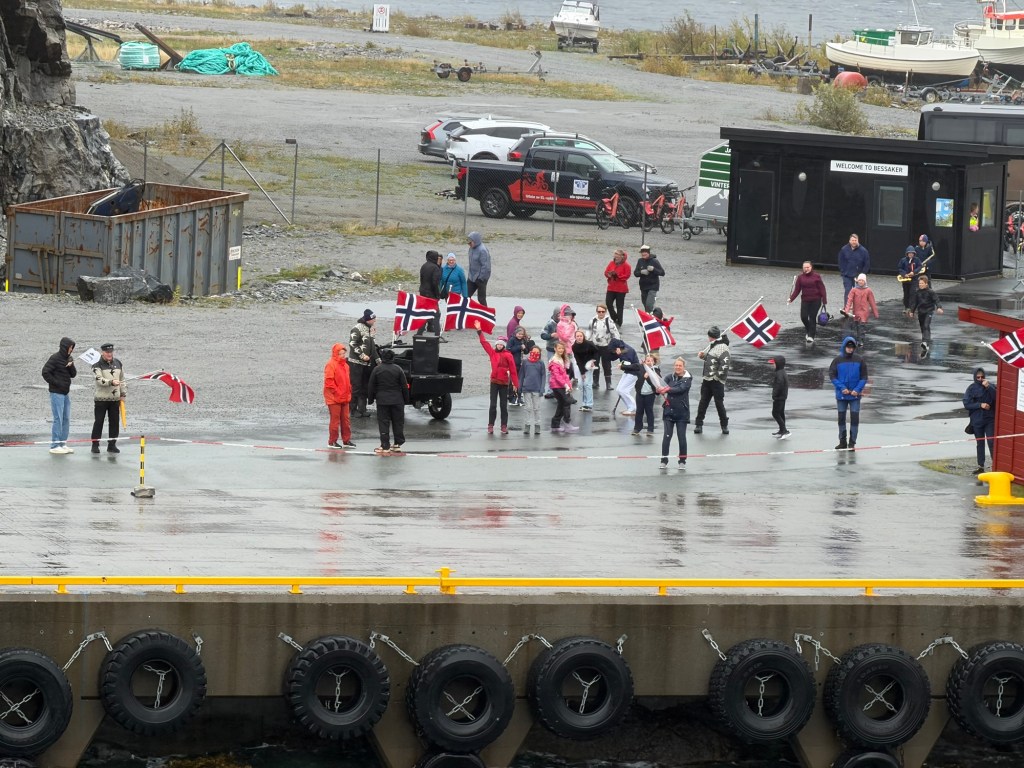
As the ship docked in foul weather and sideways rain (the first rain of my entire vacation), eager townsfolk were there to greet us, waving flags while children twirled batons and performed in a brass band. The population here is only 120 to 200 people, and I think the majority of them were there to welcome us!
Townsfolk running out to greet us. Our ship was late due to inclement weather so they were waiting in their vehicles.
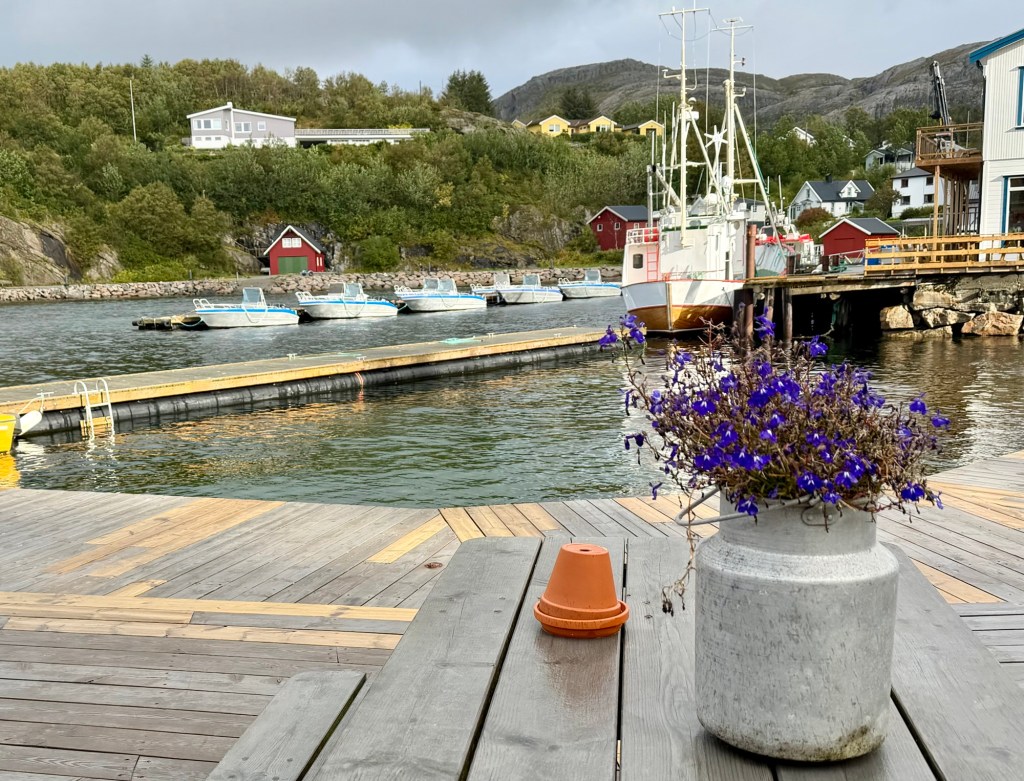
I walked a couple of kilometers into town through super-high winds and sideways rain, and I was completely taken aback by how friendly these villagers are. I bought a couple of pieces of rosemaling at a farmers’ market, climbed some steep stairs along the mountainside to take pictures, and took my time enjoying a small museum hosted from a local’s home. The rain even cleared up and the sun came out.
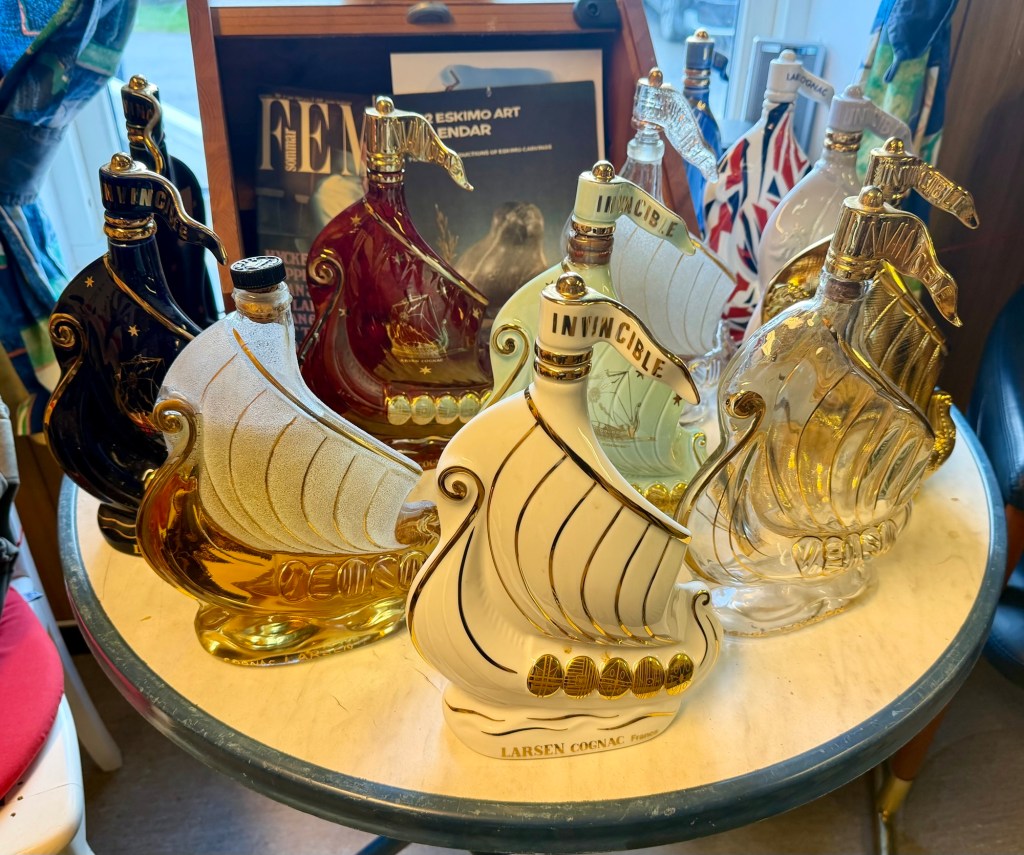
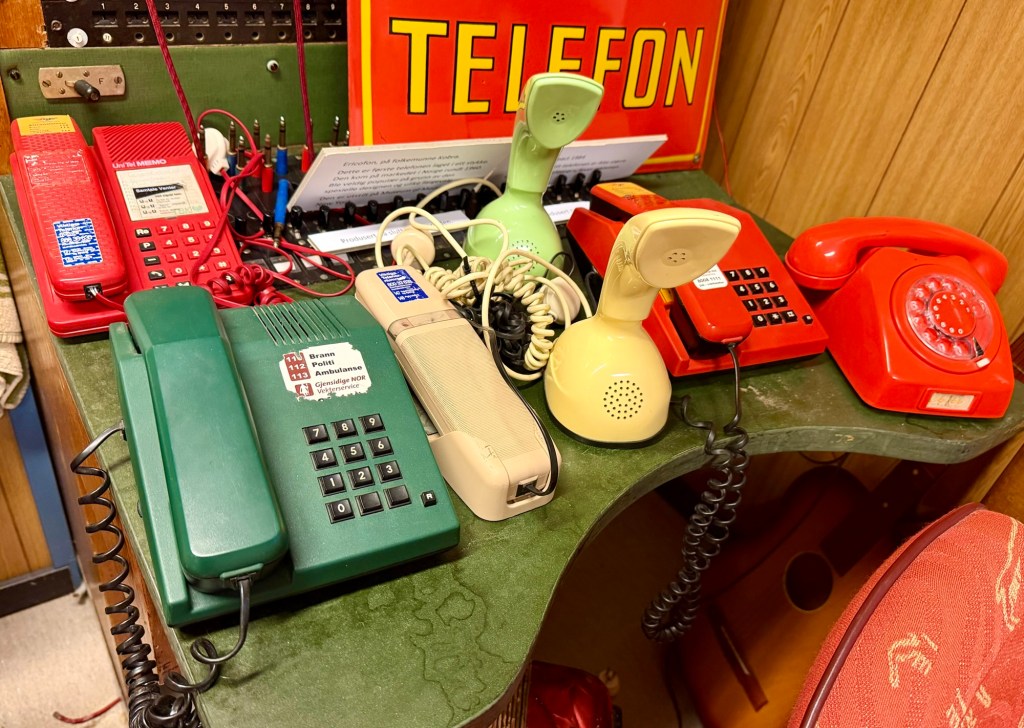
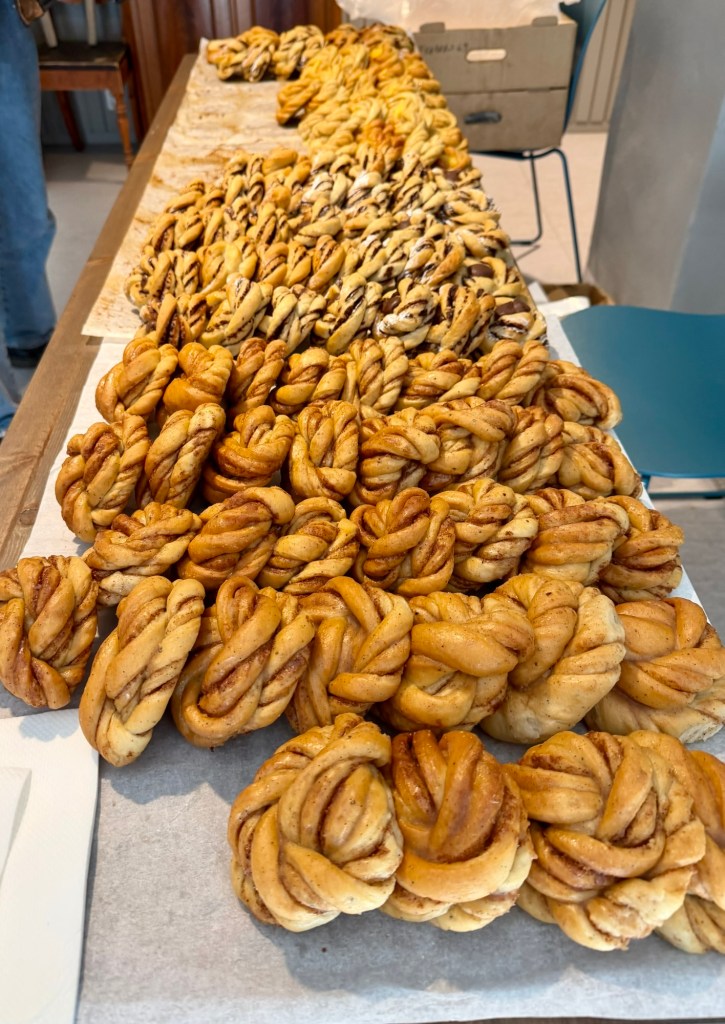
Koselig fire at the tiny outdoor marketAt the topGrocery store greeterCollectible Larsen Viking Ship bottlesVintage phones—I want the green one!Free cardamom buns for all! 😋
These people really take pride in their village, and I commend them for their warmth, hospitality, and sheer enthusiasm in welcoming us despite the miserable weather.
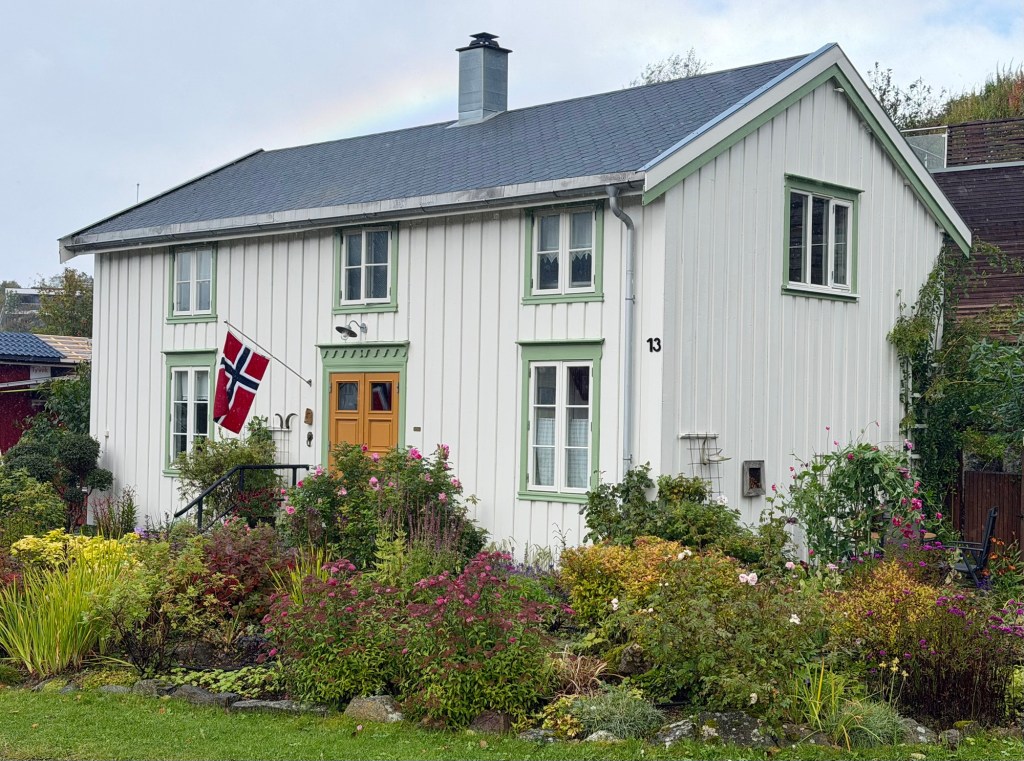
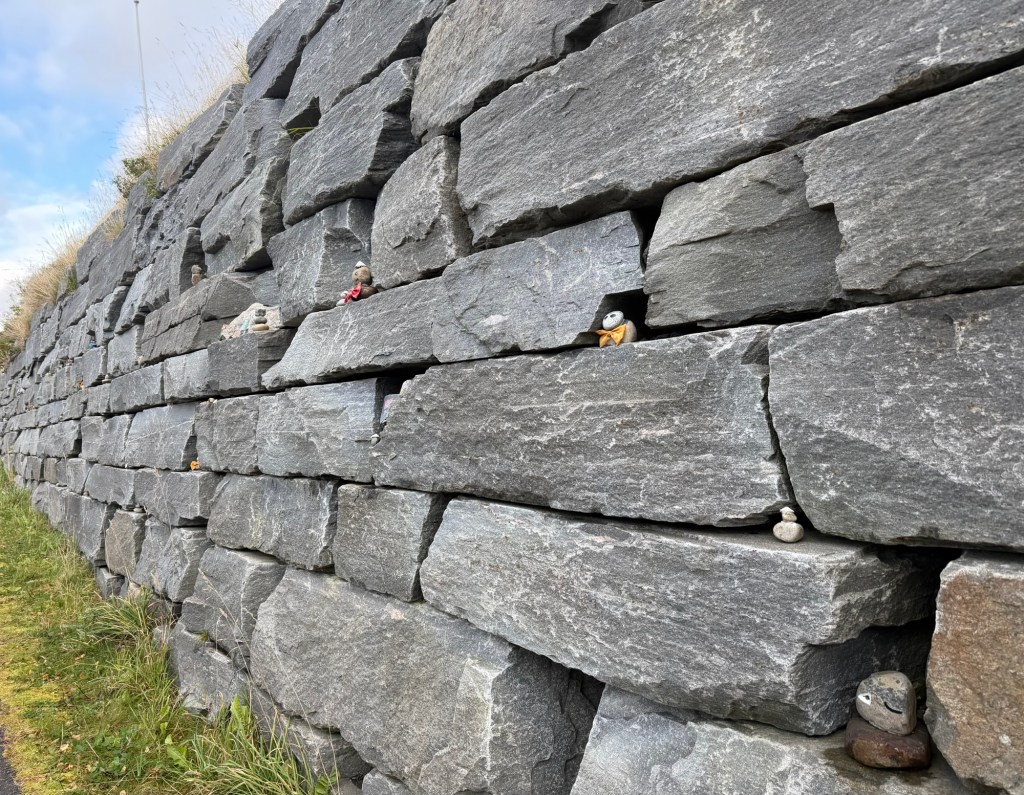
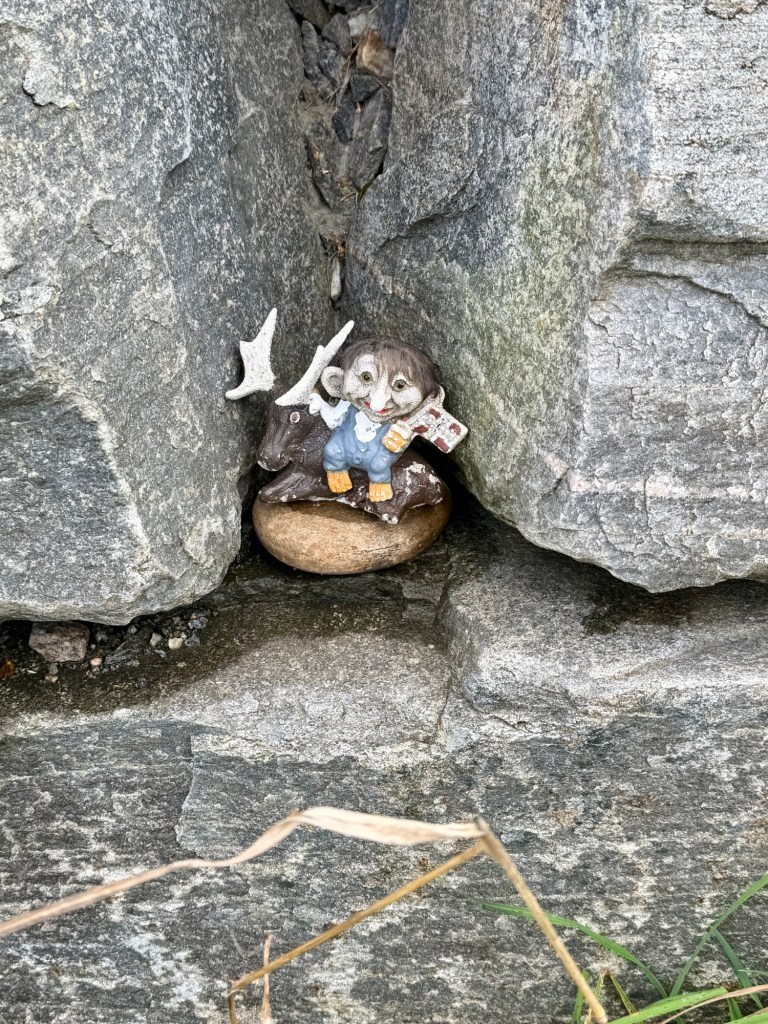
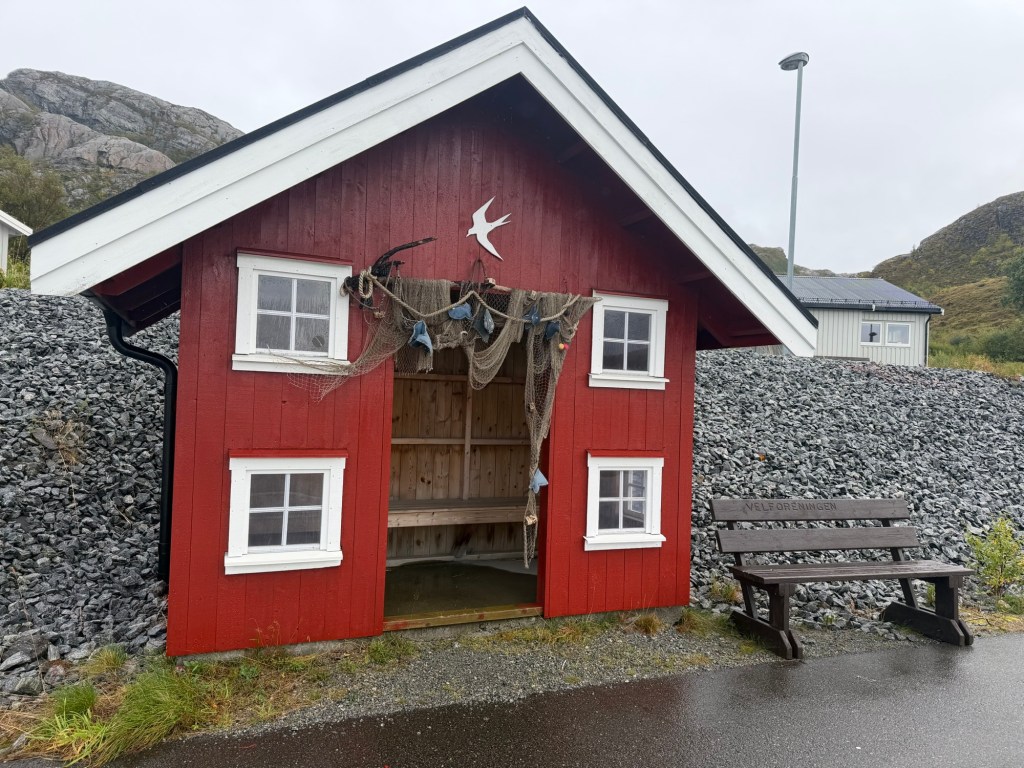
This house had a sign inviting people to visit the garden. Countless creatures hidden in the retaining wall rocks. Bus shelterTHOSE SWEATERS 👌🏻
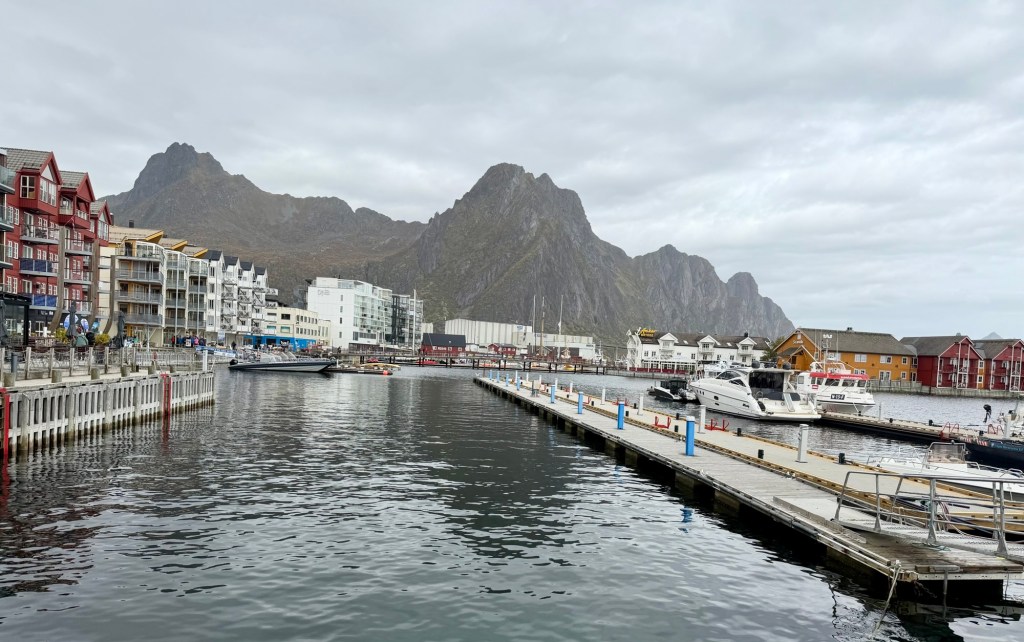
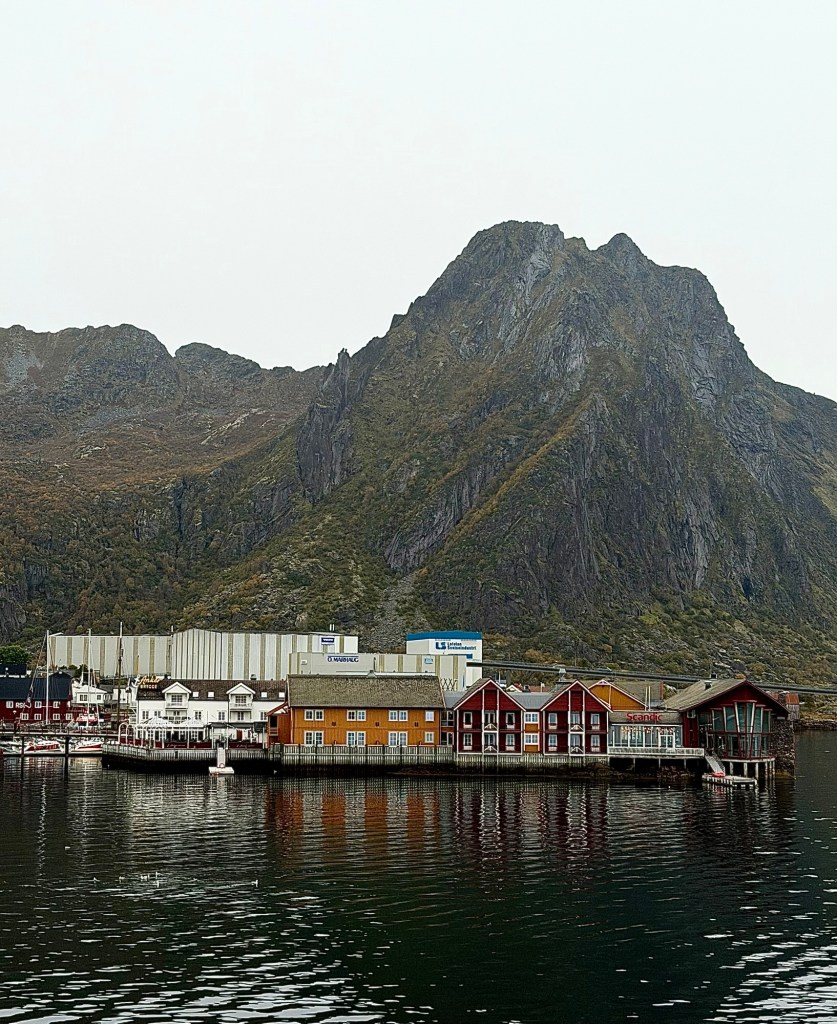
Today I visited Svolvær, a small town with large, jagged mountains erupting around it similar to other picturesque places in Lofoten.
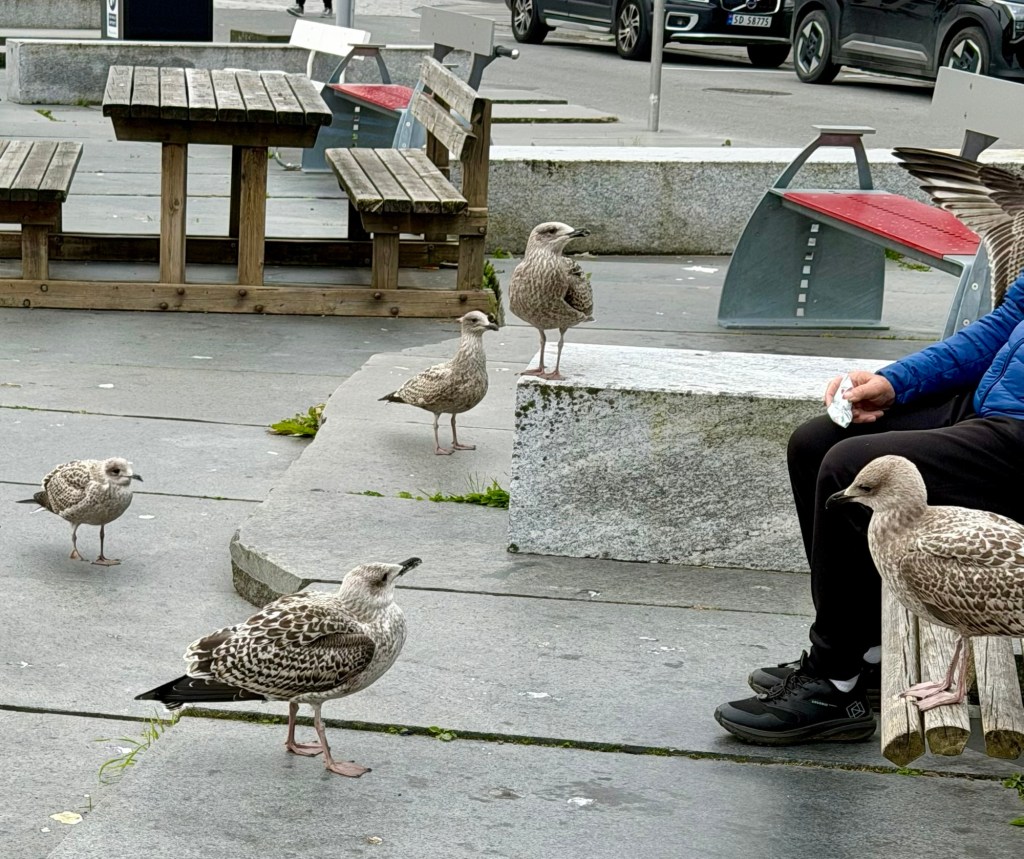
More crumbs please!
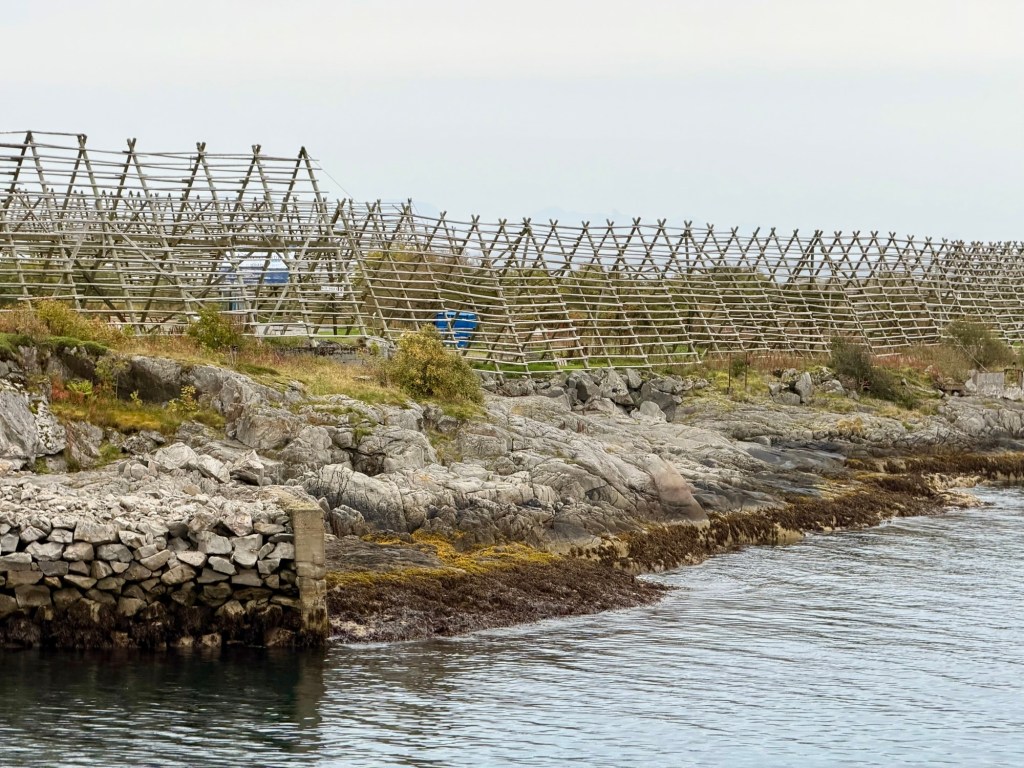
Apparently, the largest cod come from here, and rows upon rows of fish-drying racks make that obvious. I guess winter has the “smell of money,” as the locals say.
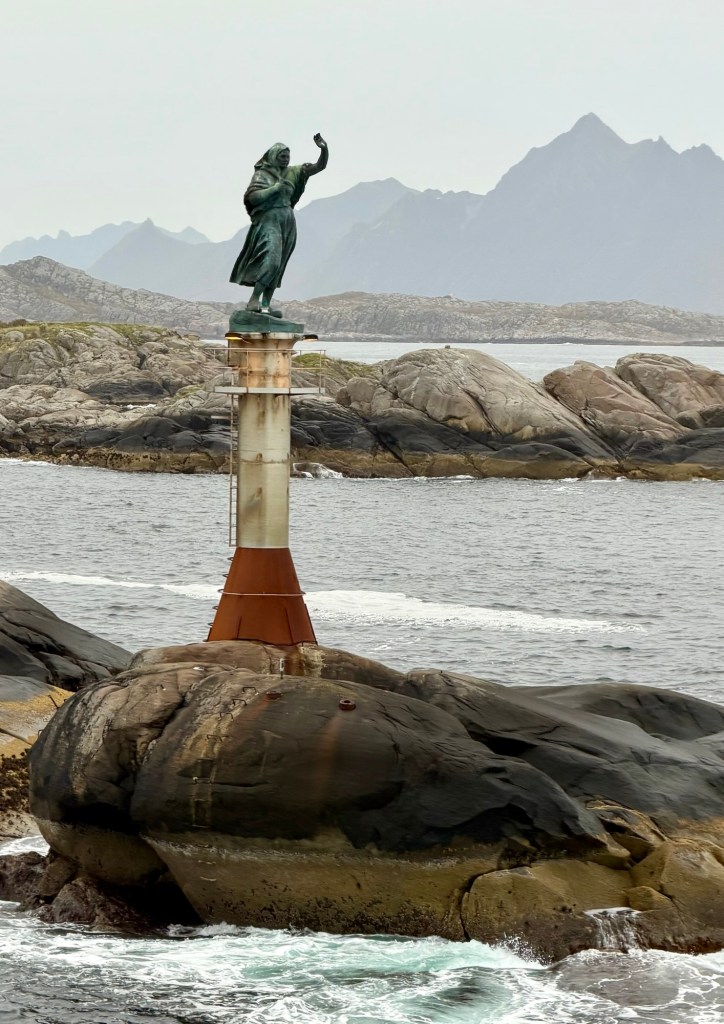
Sailing into the harbour, a statue of a fisherman’s wife looking out to sea stood at the end of a peninsula. Fiskerkona is a tribute to all the wives whose husbands were lost to the sea.
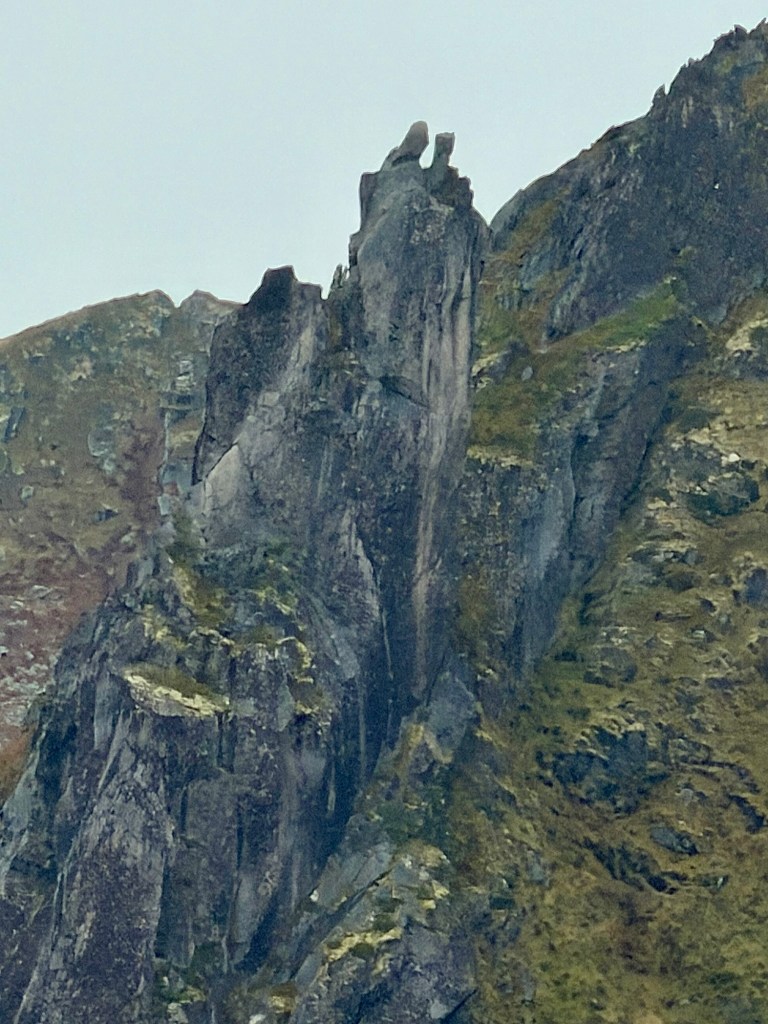
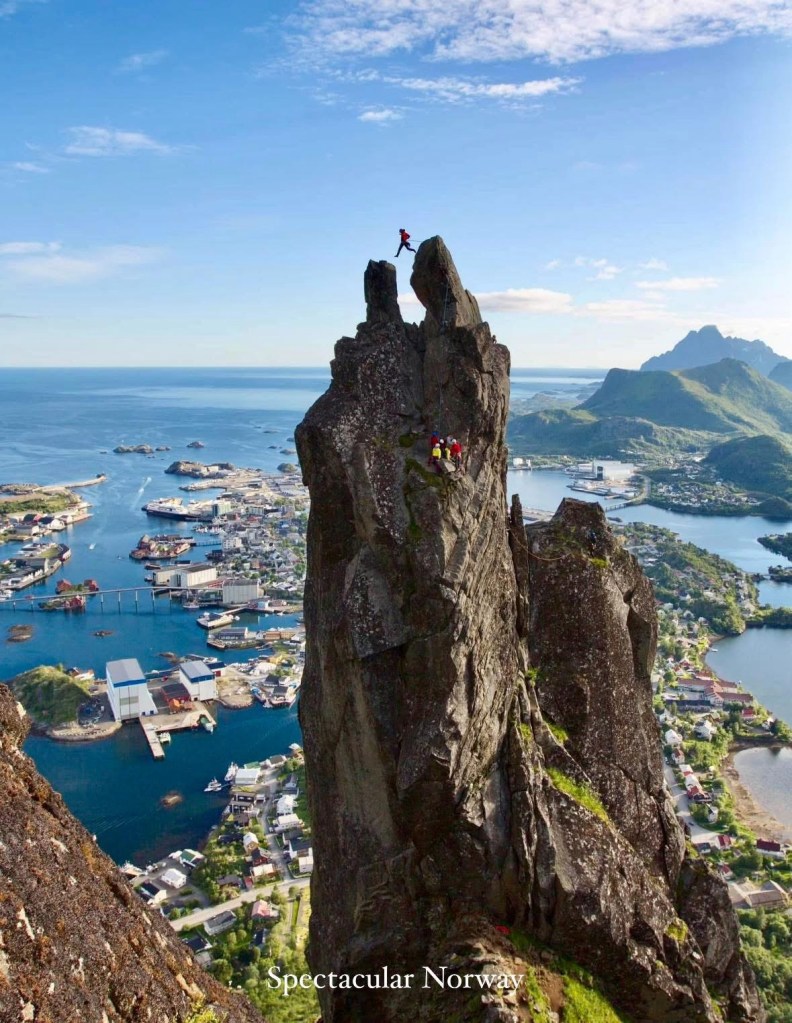
I looked up past the town to a protruding mountain with two spires. This famous landmark is called Svolværgeita because it resembles a goat with two horns. Apparently, a lot of tourists flock here to hike up the 356-metre ascent and then jump 1.5 metres from horn to horn. Yesterday’s steep bike ride was enough risk-taking for me, so nei takk!
Svolværgeita looks so tiny (zoom in).Closer viewNO. THANKS.
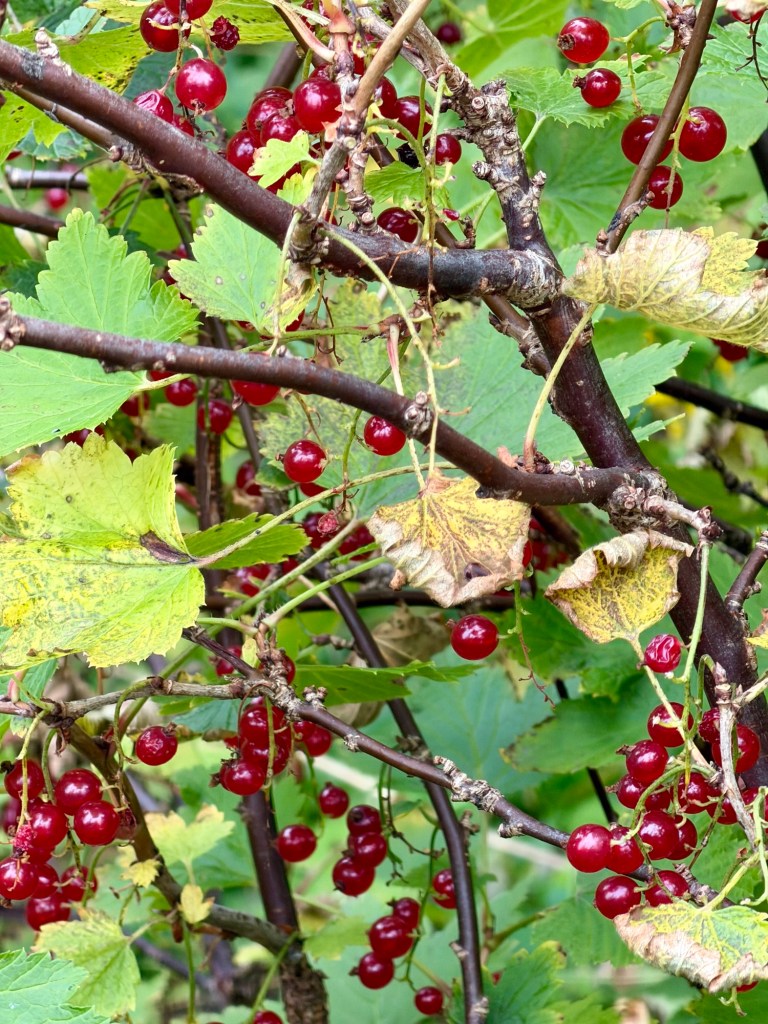
I walked around town and noticed Tyttebær growing everywhere. I’ve been enjoying these as a garnish on a lot of my gourmet food here on the ship.
There isn’t a lot to this town, but I enjoyed exploring around and speaking Norwegian. I even stumbled into a place called Ice Bar, where you can don a big, furry cloak, walk into a cold ice bar, have a hot or cold drink, and get your picture taken. I said, “No thanks. I can do this at home in Canada for free.”
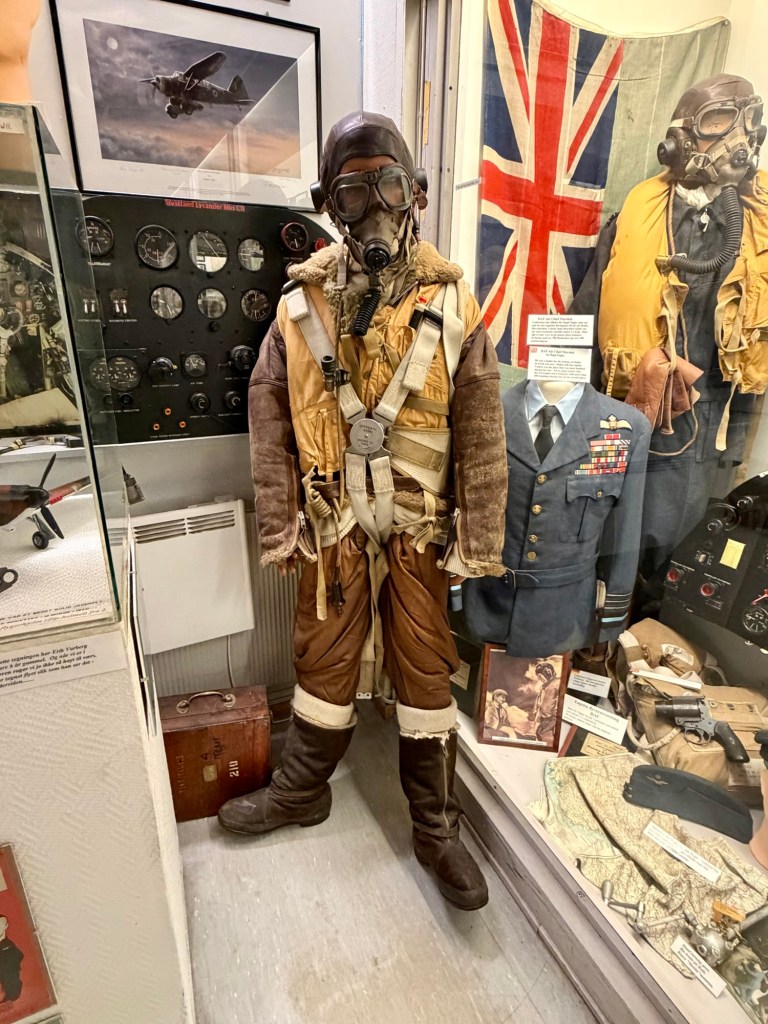
Before I boarded the ship, I paid a visit to the local war museum. This small venue hosts the largest collection of war uniforms in Norway.
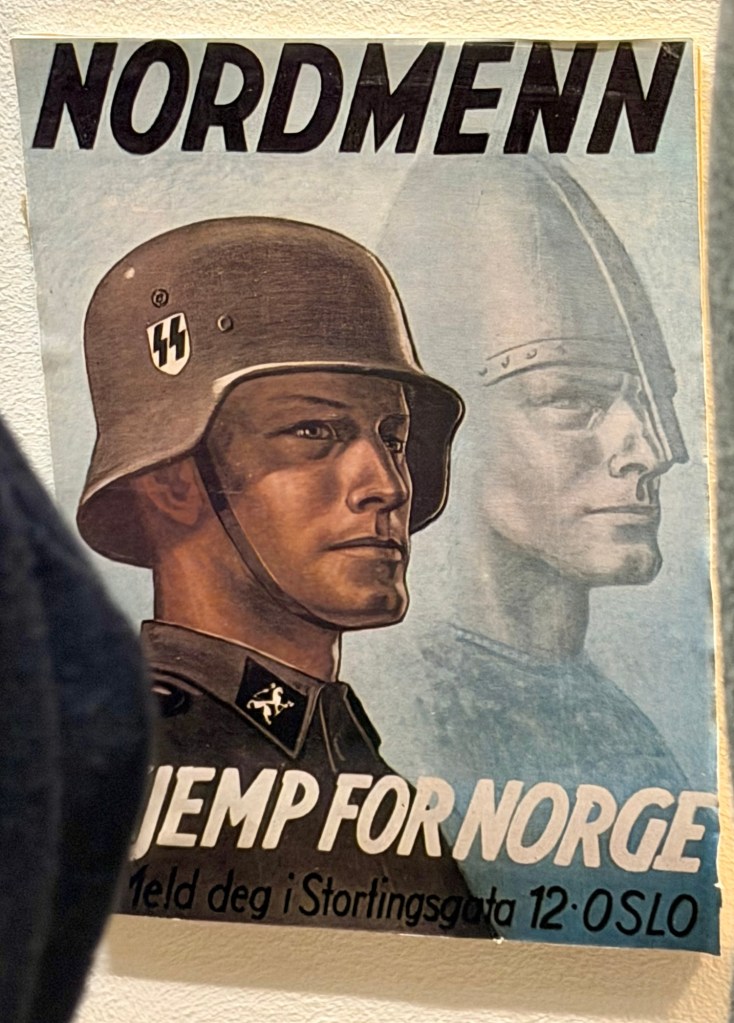
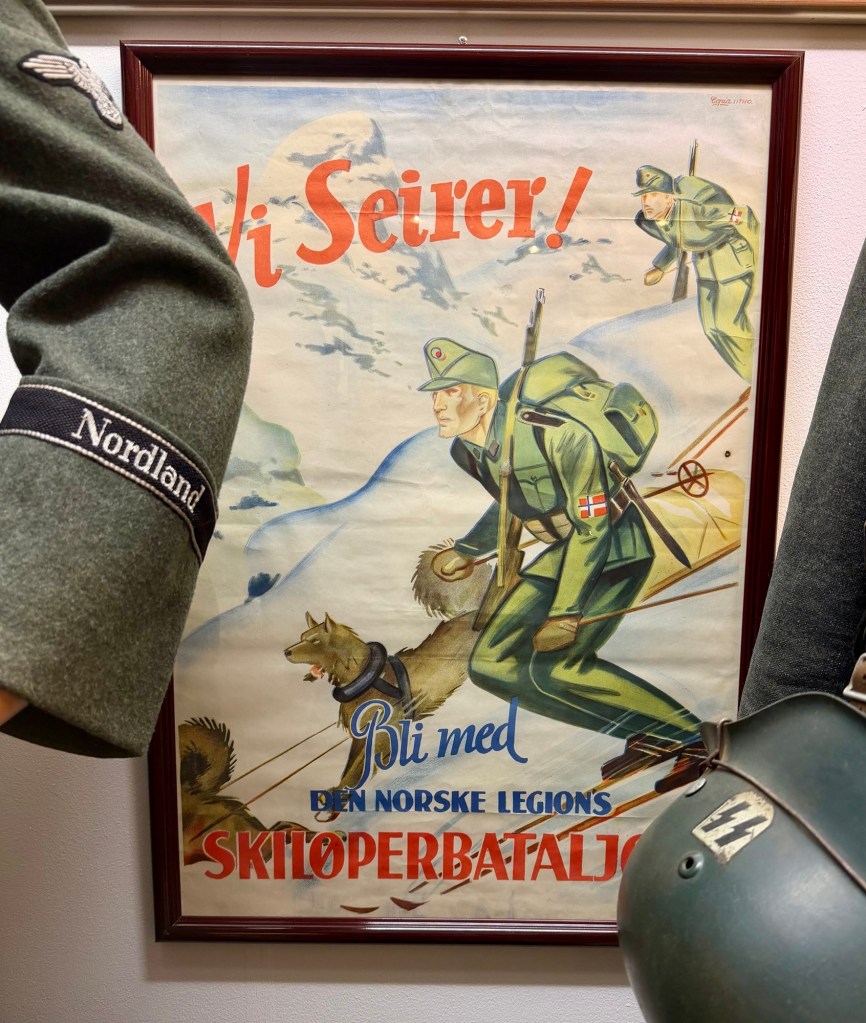
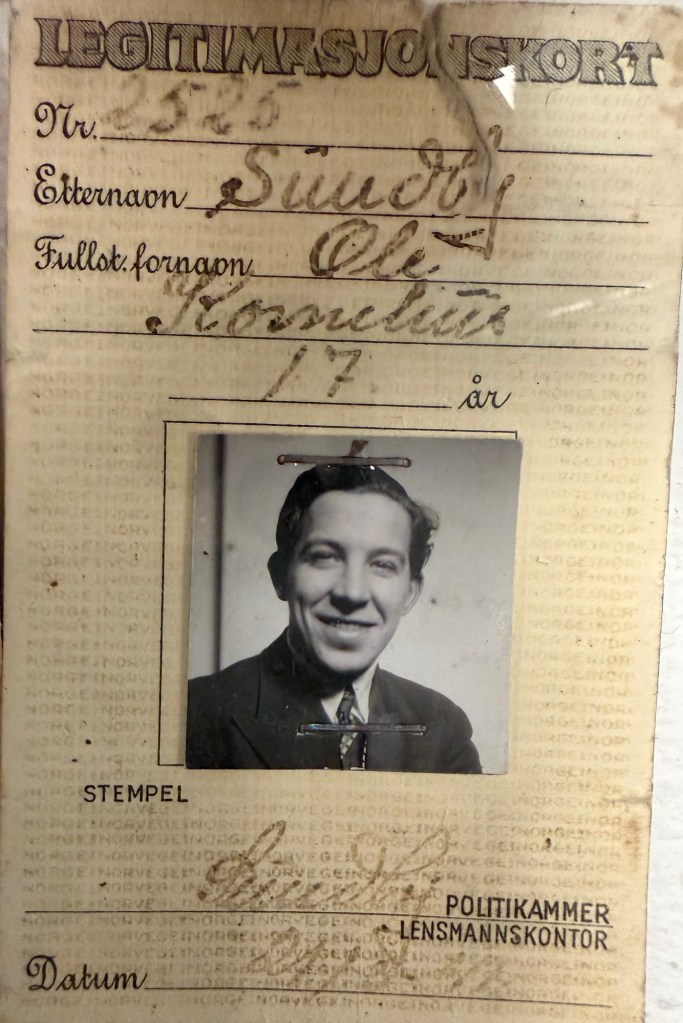
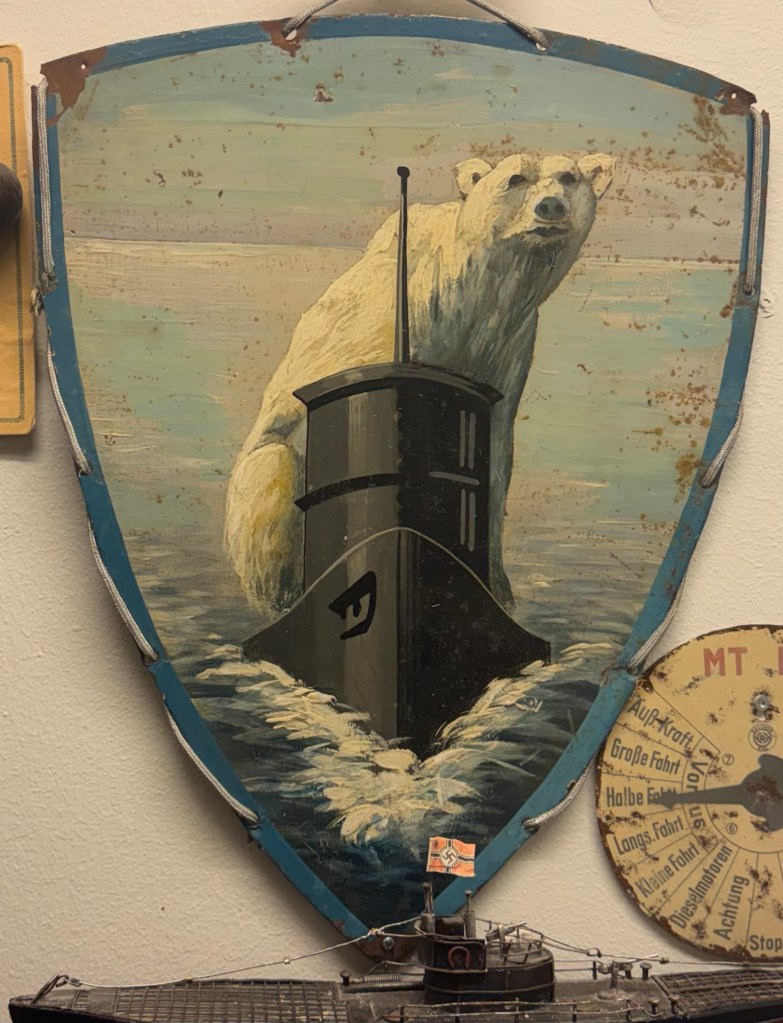
It was well done and there was a lot to take in. Although there was too much Nazi content for my liking, along with a couple of very depressing Holocaust pyjamas, the museum was definitely worth visiting overall.
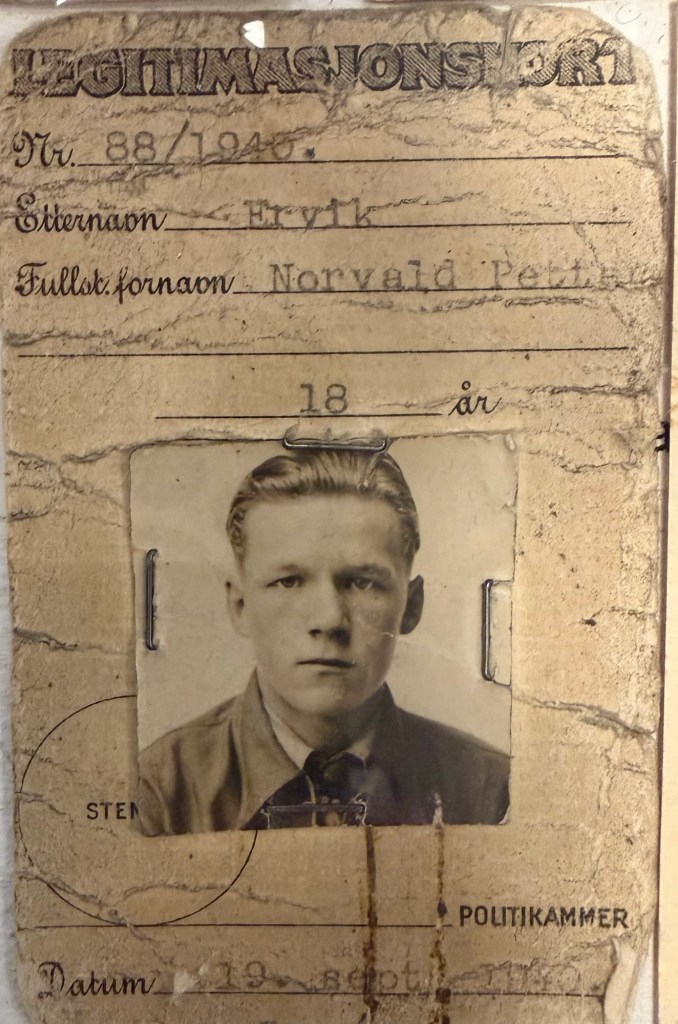
Now that’s an appealing recruitment poster!17-year-old18-year-old
I was supposed to go out on a fishing boat today, but the winds were too high, so my trip was cancelled. Apparently, I’ll be waking up to some huge swells in the morning—good times!
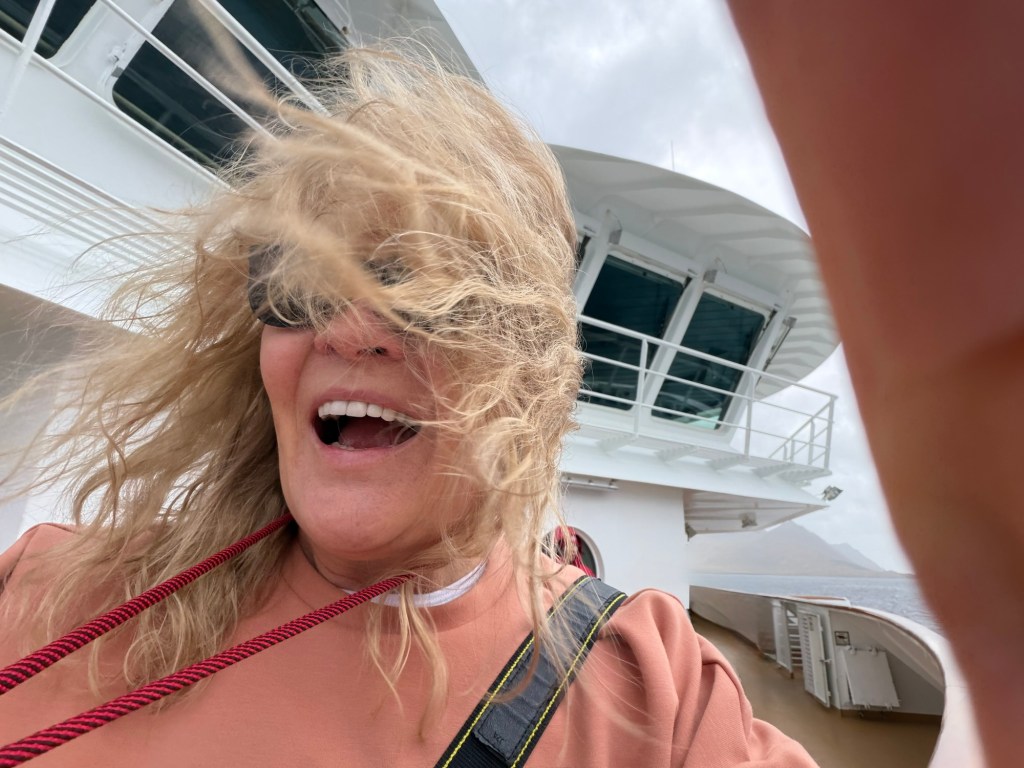
This was one of my more boring posts so here’s a picture of today’s wonderful wind. And oops, my finger is even in the frame. This thatched-roof home on an isolated island is idyllic compared to the big city. 👌🏻
I’ve had a cold waiting in the wings in my upper airways for the past few days. I’m drinking lots of fluids and making sure I get plenty of sleep. If I don’t, it could turn into a full-blown respiratory illness, and I definitely don’t want that!
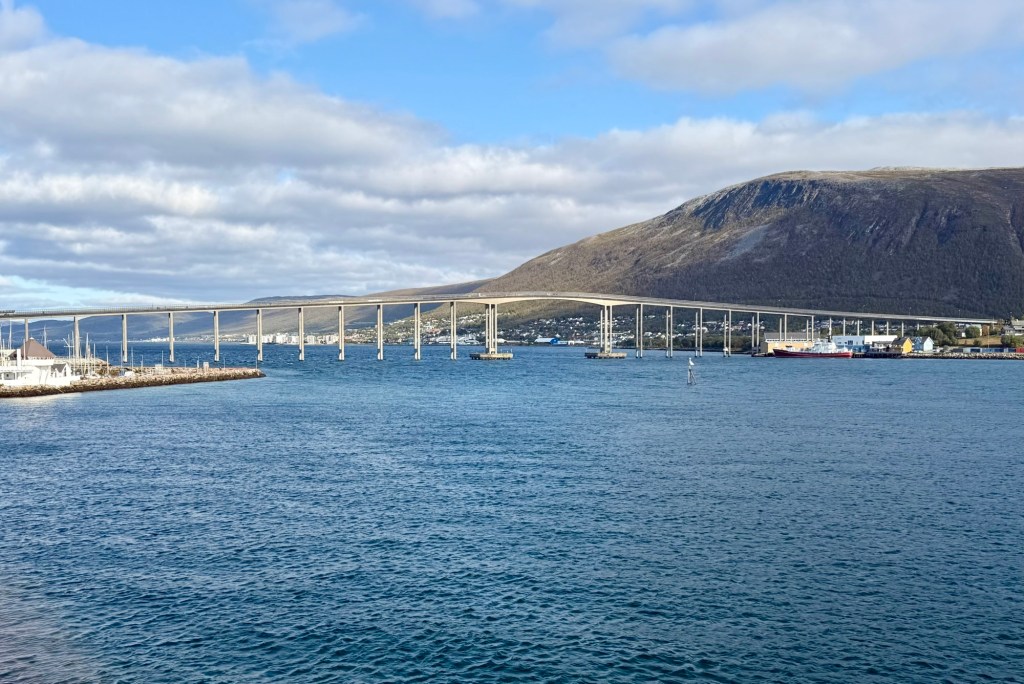
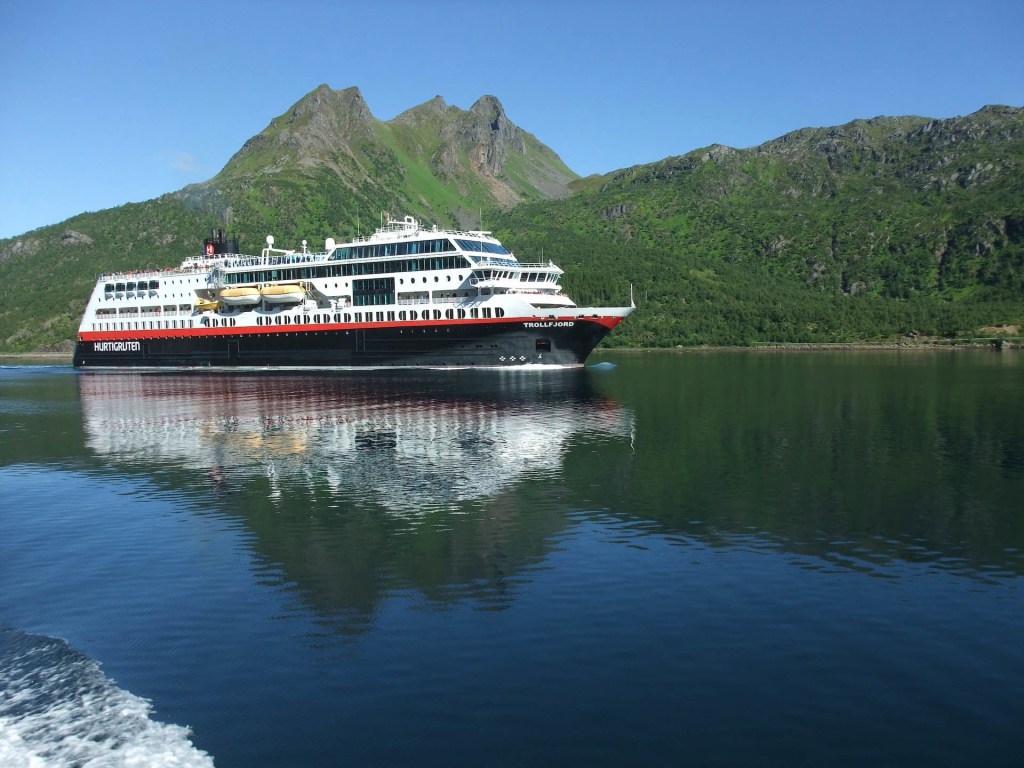
I made it through the long Barents Sea crossing again then awoke to the Hurty making its way down through the coastal islands where the water was blessedly still. We actually went under the spanning, arched Tromsø Bridge, which was quite an experience.
Threading the needle, Tromsø
We anchored in Torsken on the island of Senja, and I quickly disembarked for a 30 km e-bike trip. This ended up being one heck of a tour!
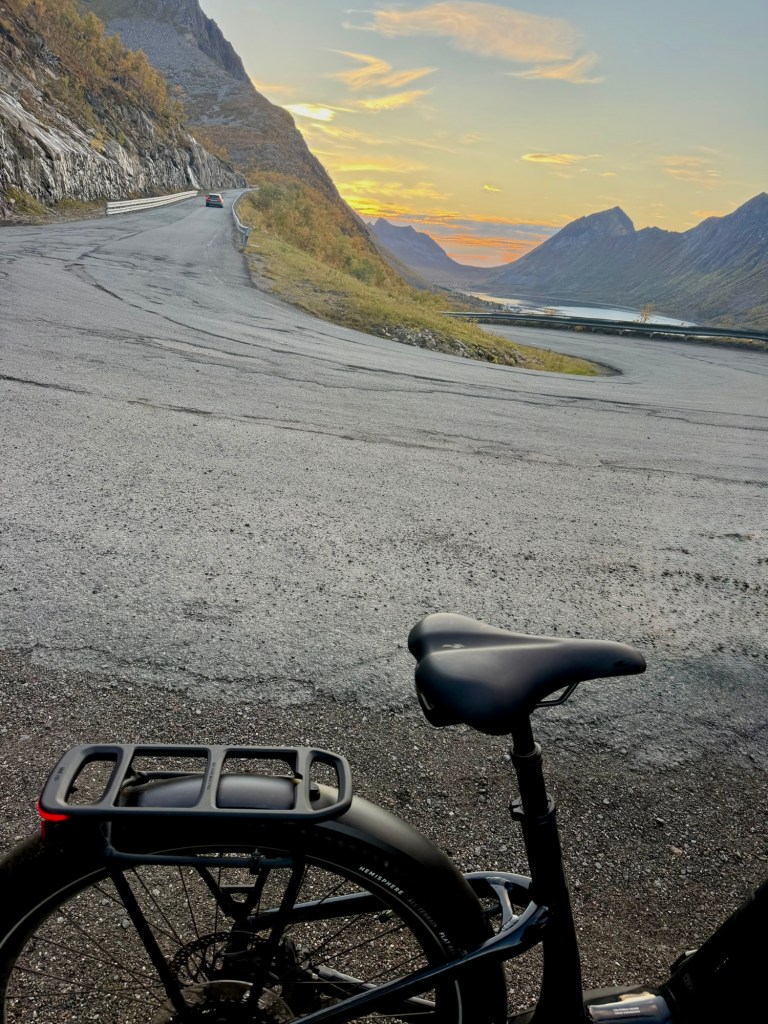
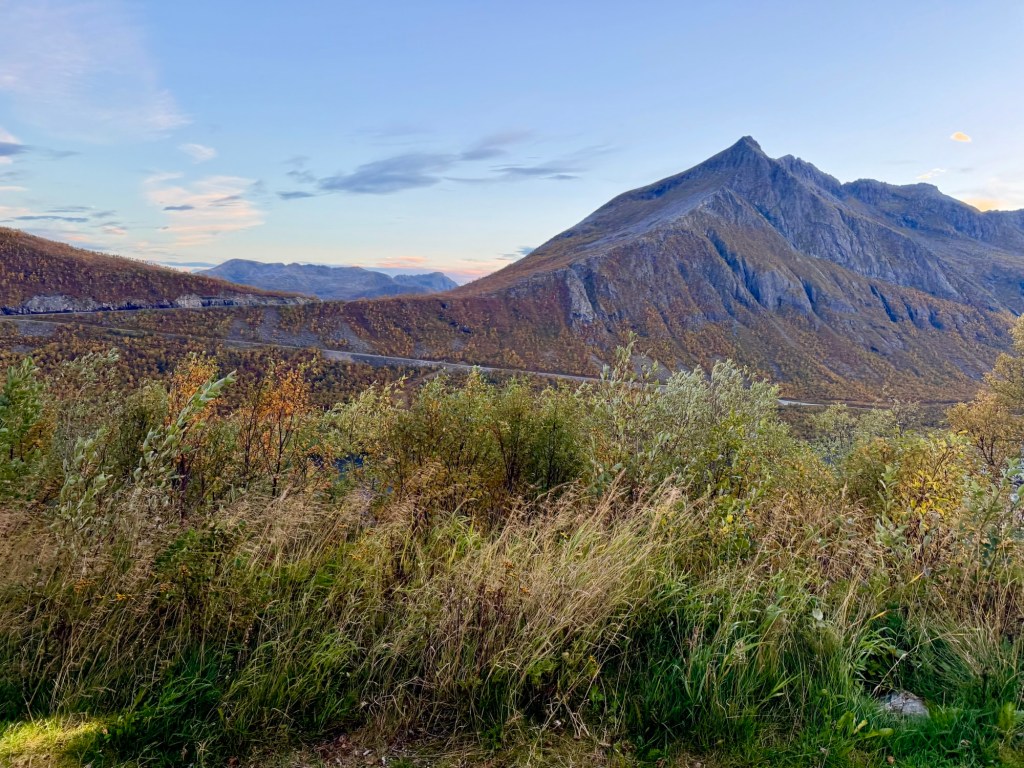
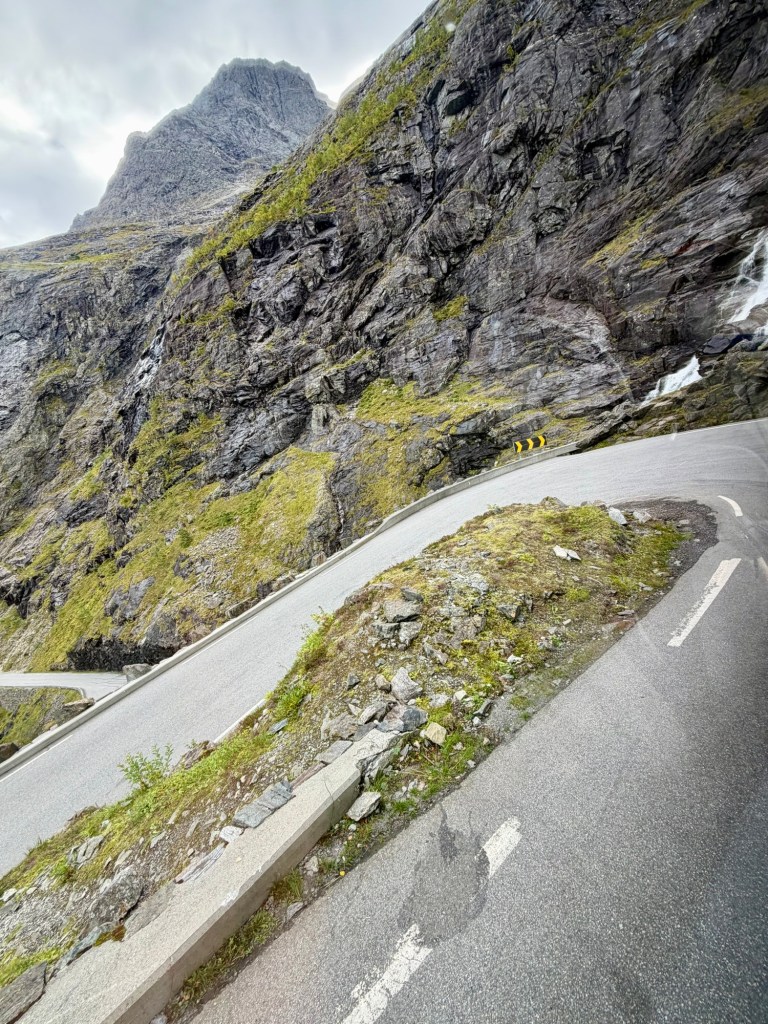
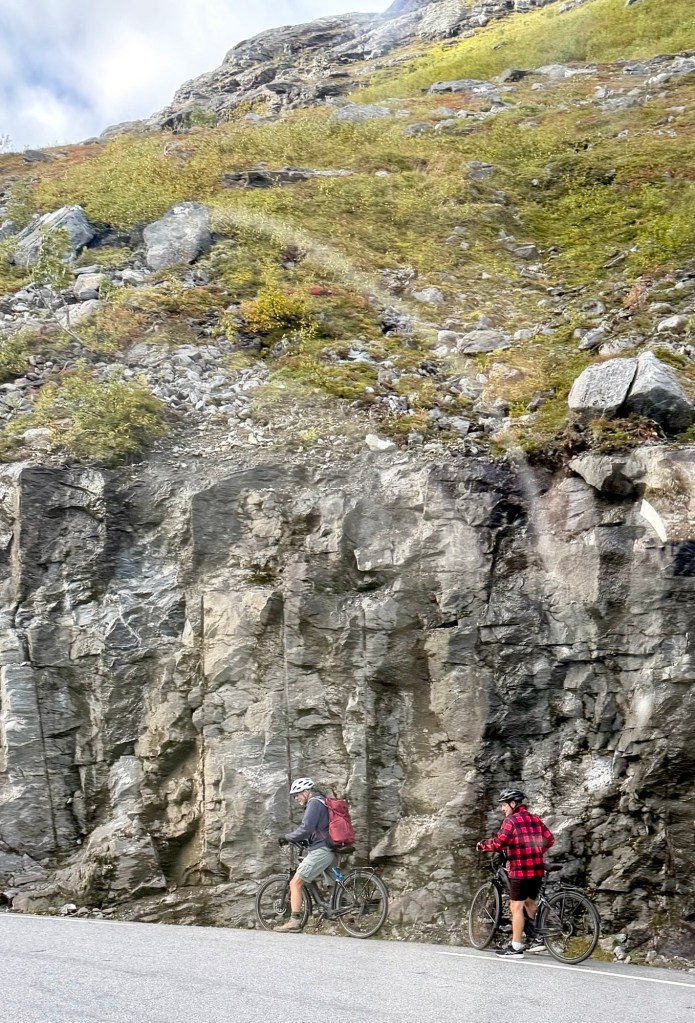
We rode up to a panoramic vista, then descended a mountain with an 8–10% grade. Like Trollstigen, the road snaked back and forth.
The first road down
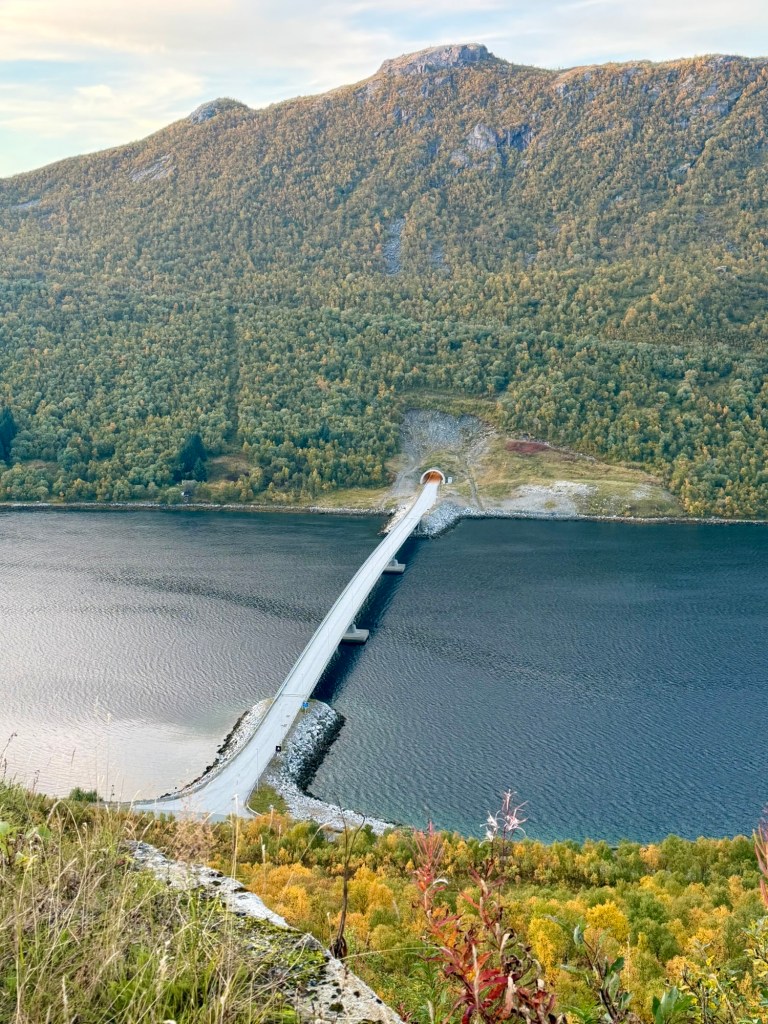
At the bottom, we passed a modern bridge and tunnel but continued along an old road, no longer in use.
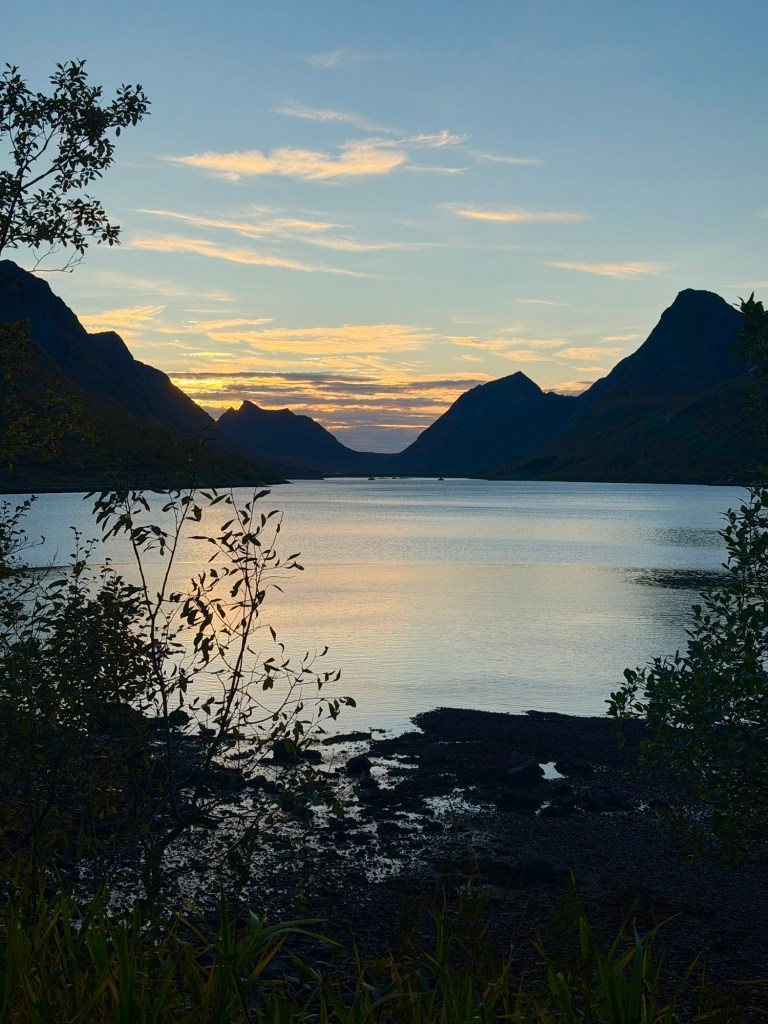
Looking out on Gryllefjord.
We had to cycle around huge boulders before heading up an even higher mountain and taking in more beautiful views.
View of the bridge and tunnel from the first descent. Note the road going up the mountain. I CYCLED THAT!
Down the other side we went, then we got to ride through Ballesvikskartunnelen and back out the Gryllefjord Bridge, which was cool! Heading back up the previous zigzagging road was hard work! These Norwegian e-bikes, unlike the ones in North America, lack an electric-only option. You still have to work hard—they just provide a bit of assistance.
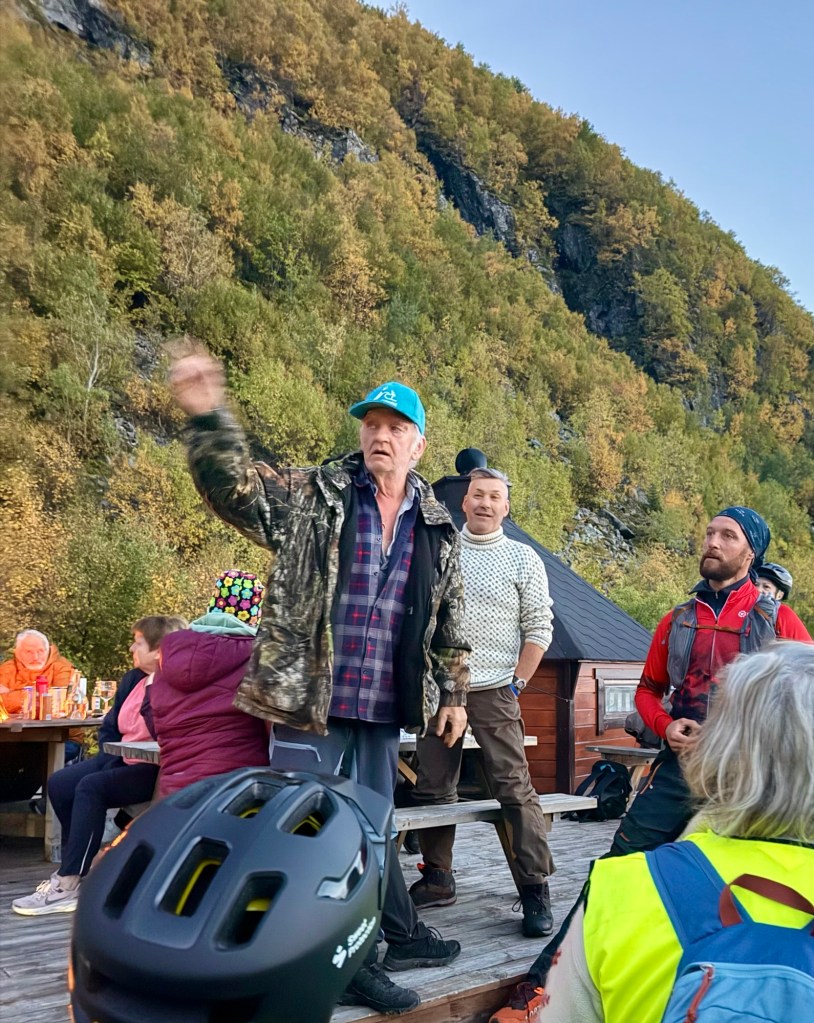
It was a relief to head back down around the coastline, although it was starting to get dark by this time. Then, the tour guide led us down a rocky path overlooking the water to a group of partying locals, who regaled us with some haunting local lore.
“They fed the fish bits of the dead fisherman andthere, out on the tip, the weather and winds still whine of the brothers who dwell in the hot pools of hell!”
It was beautiful cycling alongside the fjords, but after 40+ hours of rocking and rolling on the sea, plus a bit of motion sickness, a minor cold, and my fear of heights, this turned into a pretty challenging ride for me. At least I can say I did it!
Time for bed!
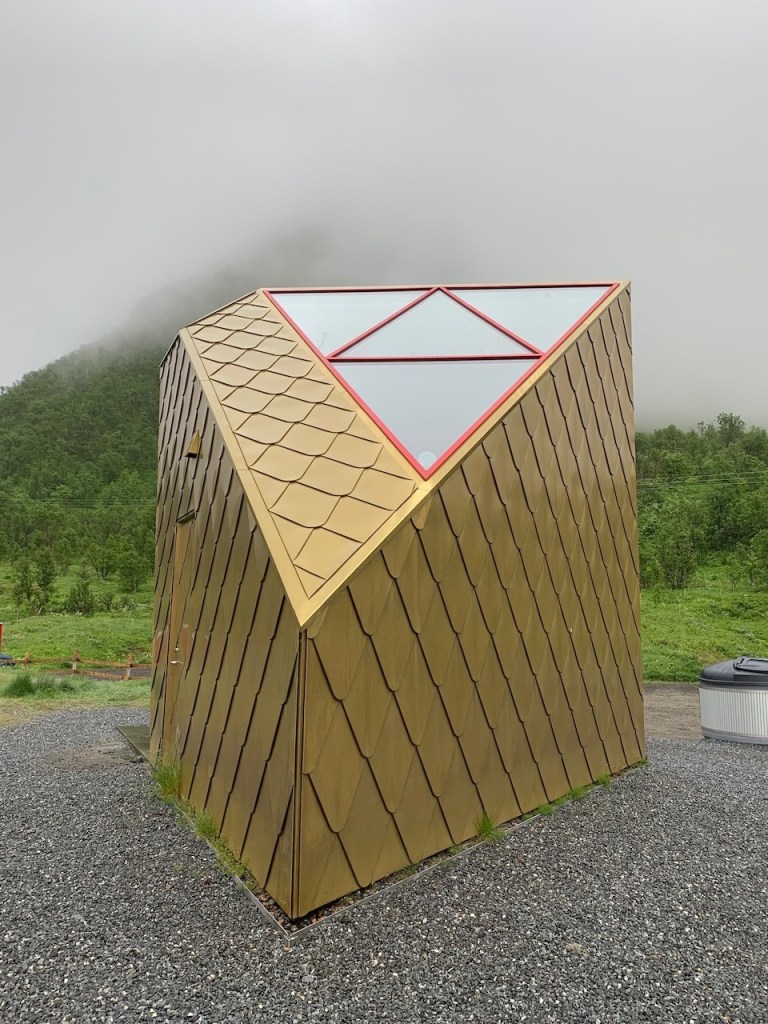
Fun fact: Gulldassen (which translates to “the golden crapper”) isn’t far from here. This designer toilet cost 3.75 million NOK and is apparently quite a popular tourist attraction. And now, a silver one is nearly complete.
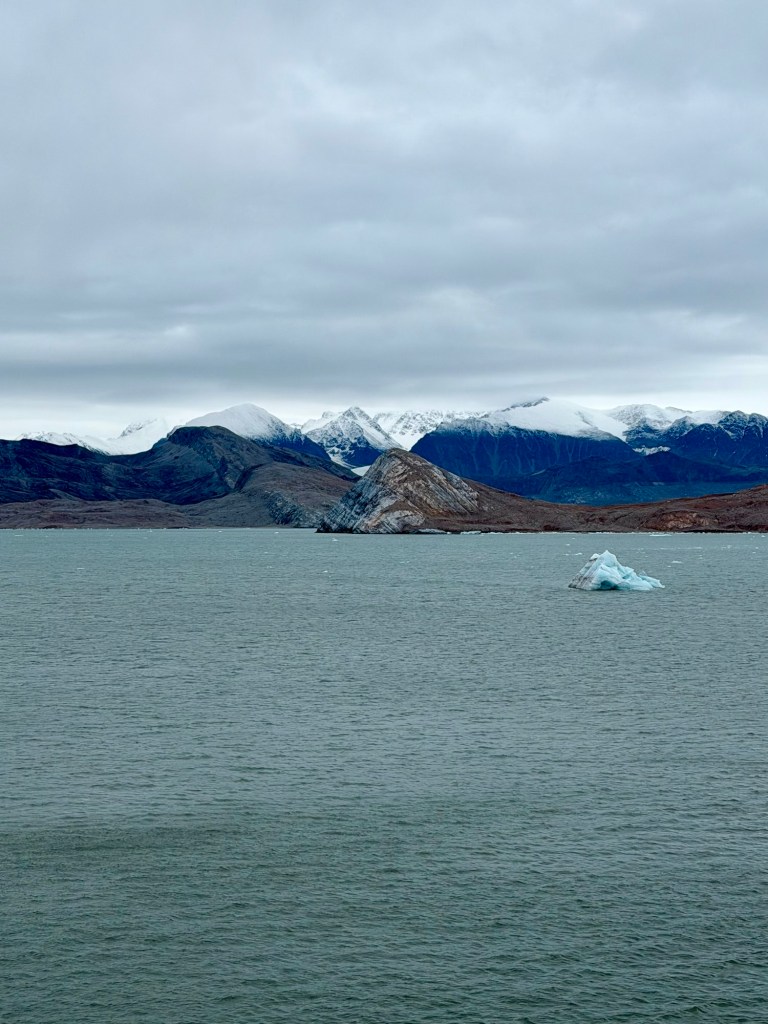
When I opened my curtain this morning, I was surrounded by glaciers, snow-covered mountains, and floating blue ice floes. What a way to wake up!
View out my window
The ship’s internet was turned off because our next destination, Ny-Ålesund, is more of a research station than a town. Passengers were also required to turn off cellular service and Bluetooth on all devices to help protect the limited bandwidth needed for sensitive scientific equipment. During the summer, more than 100 researchers from over 10 countries, representing 20 glaciology and climate institutes, work here.
Another day, another glacier
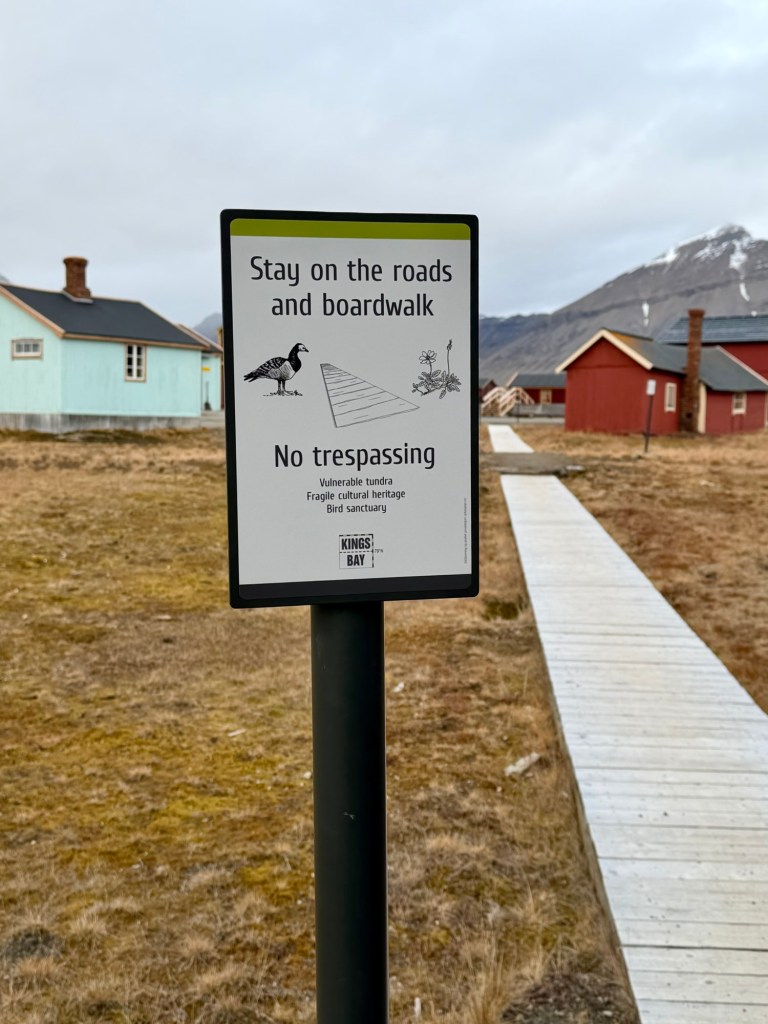
Before visiting, passengers had to attend a mandatory orientation. We learned that we needed to be very quiet because of the abundant wildlife, be respectful of the landscape, and stay on the wooden walkways.
Simple rules to protect a delicate ecosystem
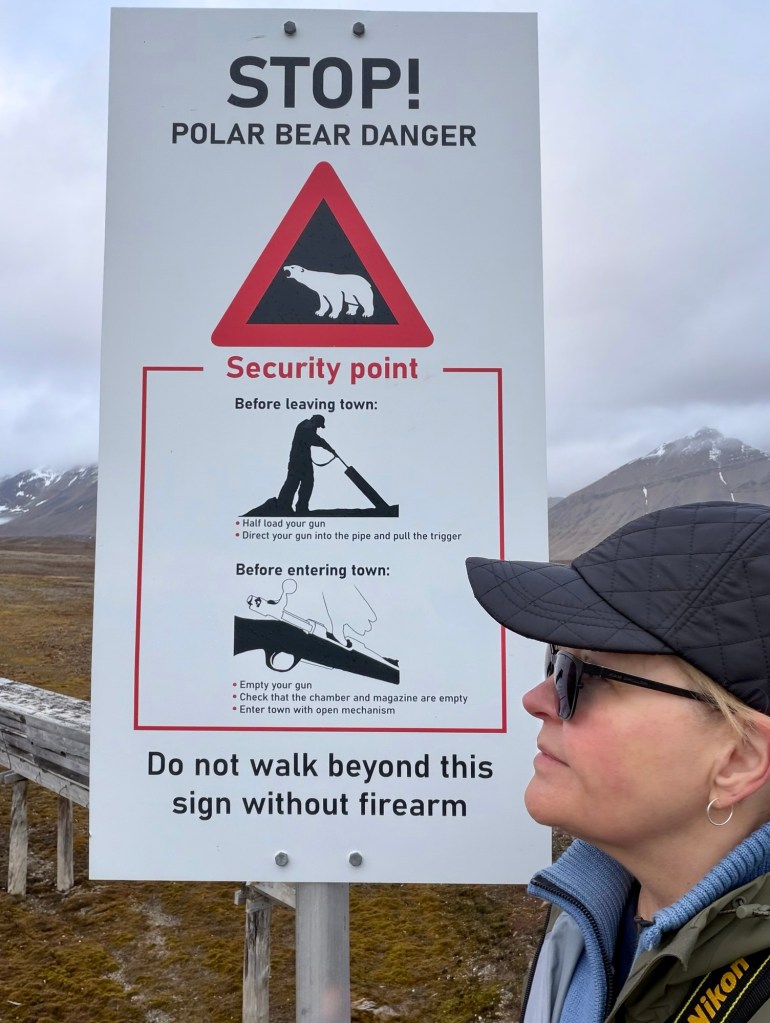
Most importantly, we were told that if the ship sounded one long horn, it meant a polar bear was nearby, and we were to run back to the ship or the nearest building. All the doors here are kept unlocked for exactly this reason!
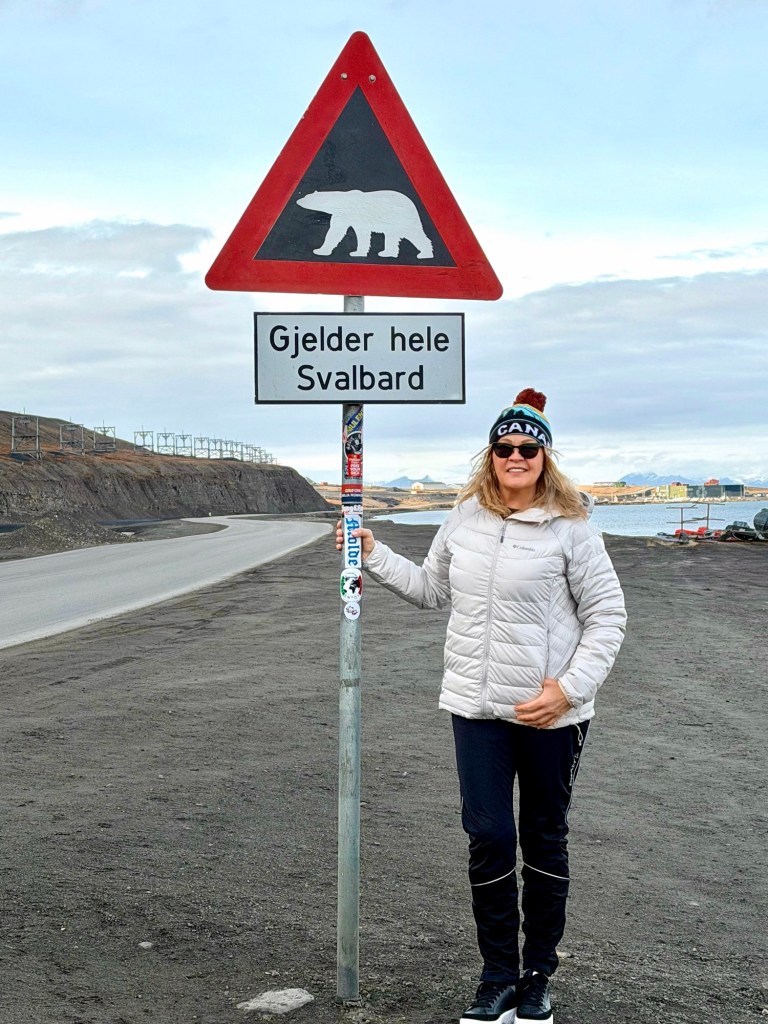
Hooray for polar bear danger
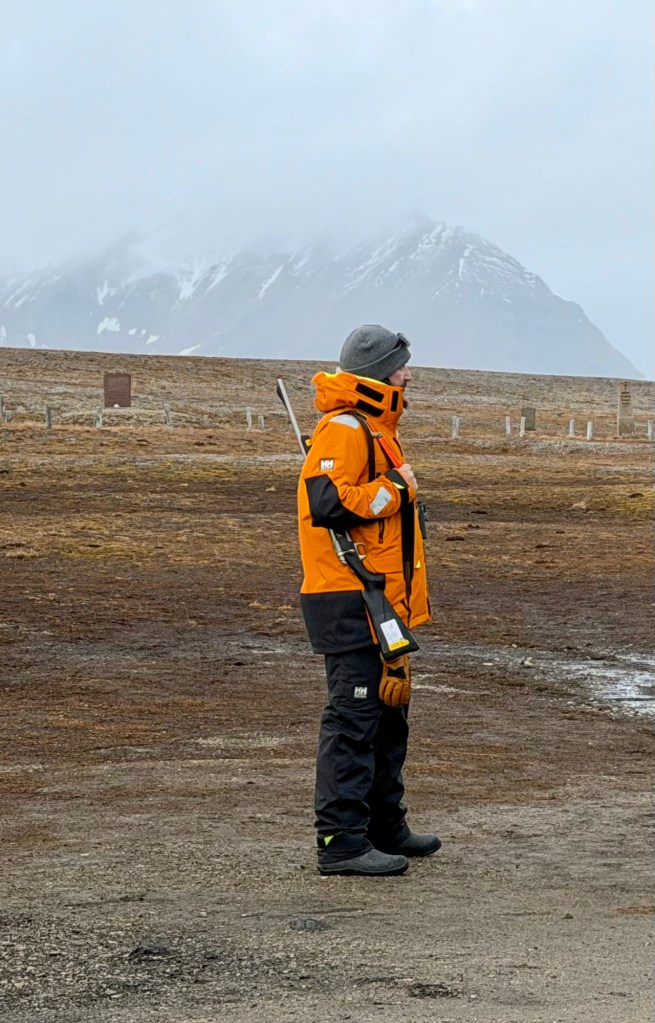
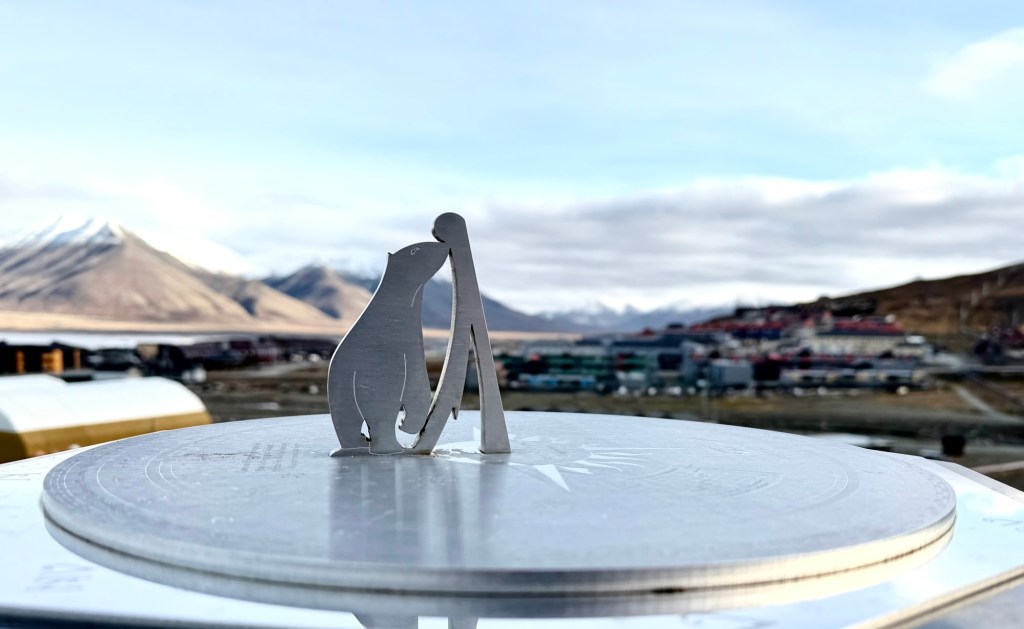
I ventured around “town” on foot, encountering armed security at each boundary. This is absolutely necessary, as apparently not everyone follows the rules anymore. I would love to have this job, but alas, I’m obviously too old to live on Svalbard!
This is the coolest job on Earth. Not only do you get to scold ignorant tourists, but you get to look badass doing it!
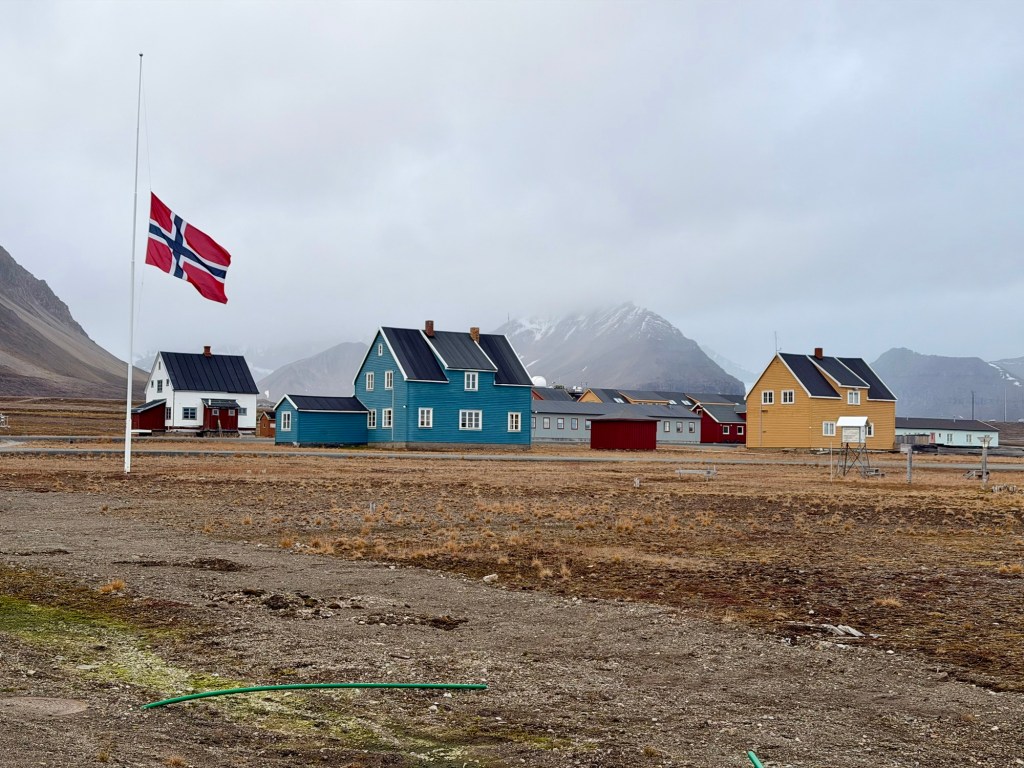
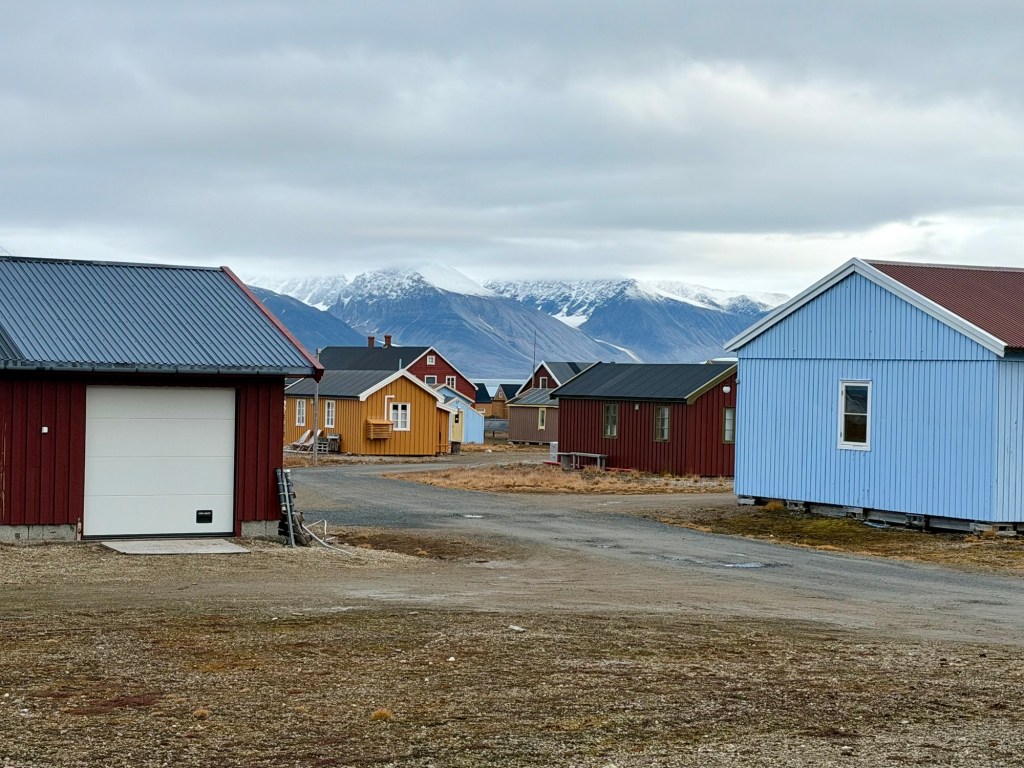
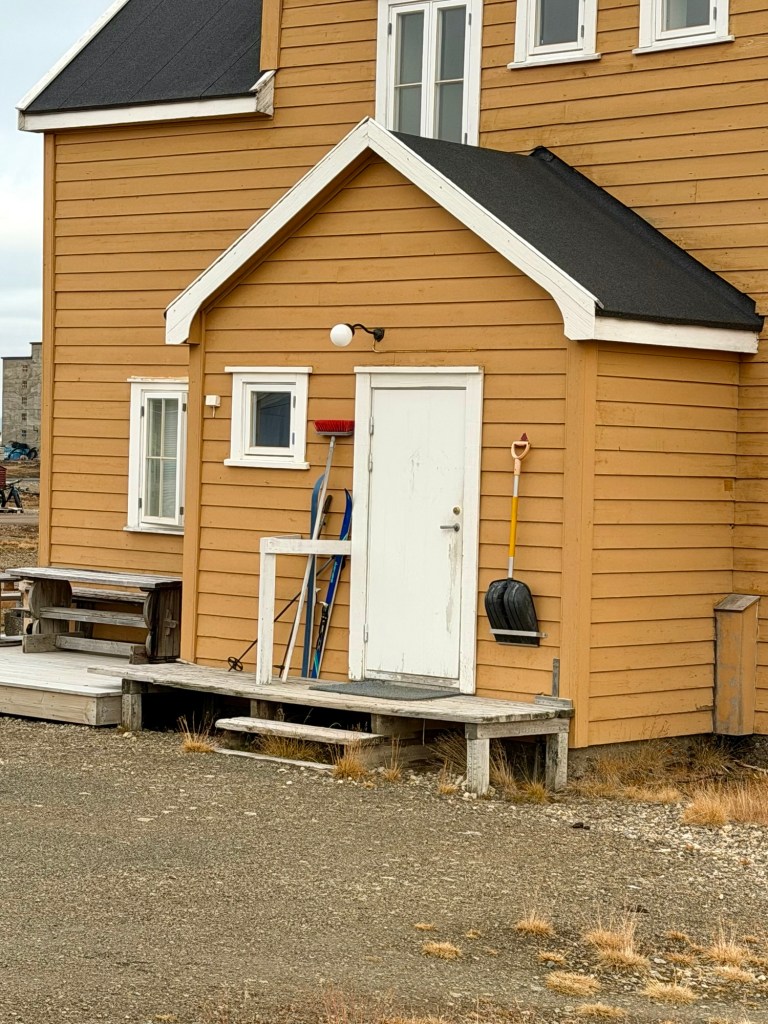
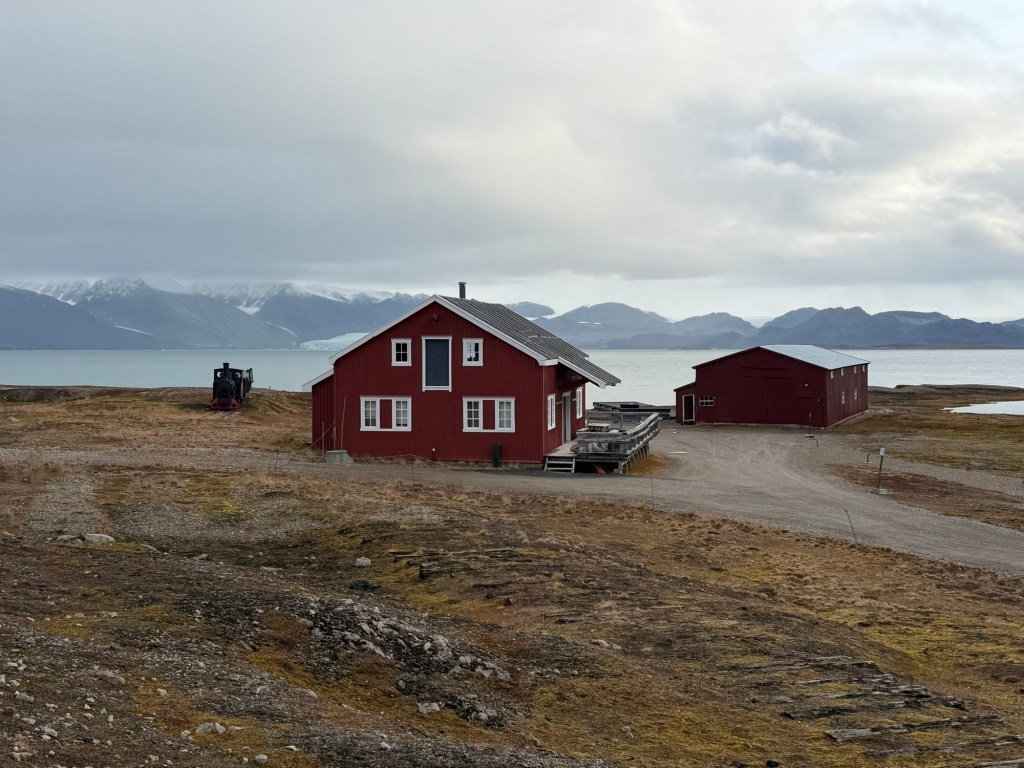
Ny-Ålesund definitely has the feel of a temporary settlement, with only the basic necessities of life available here.
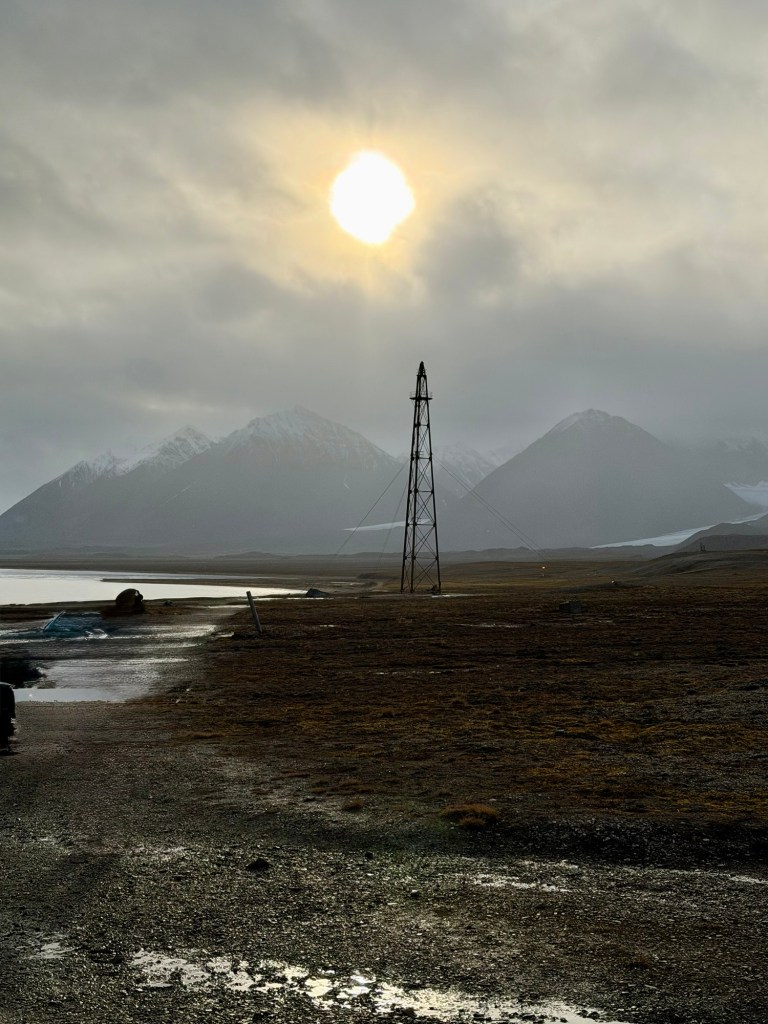
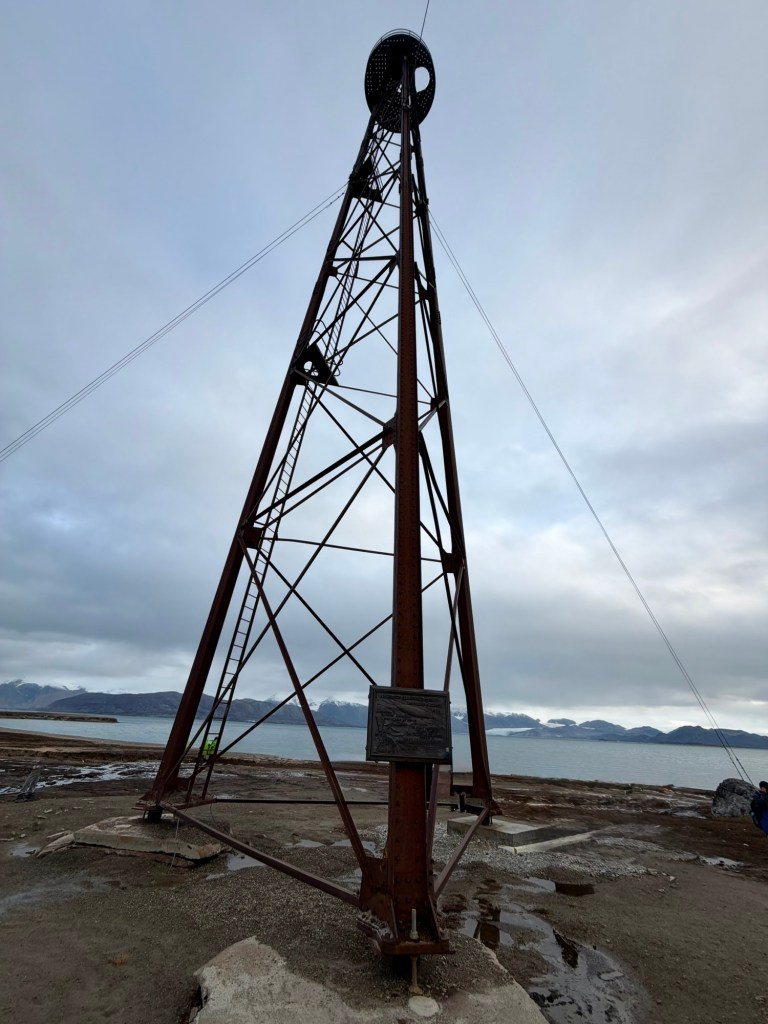
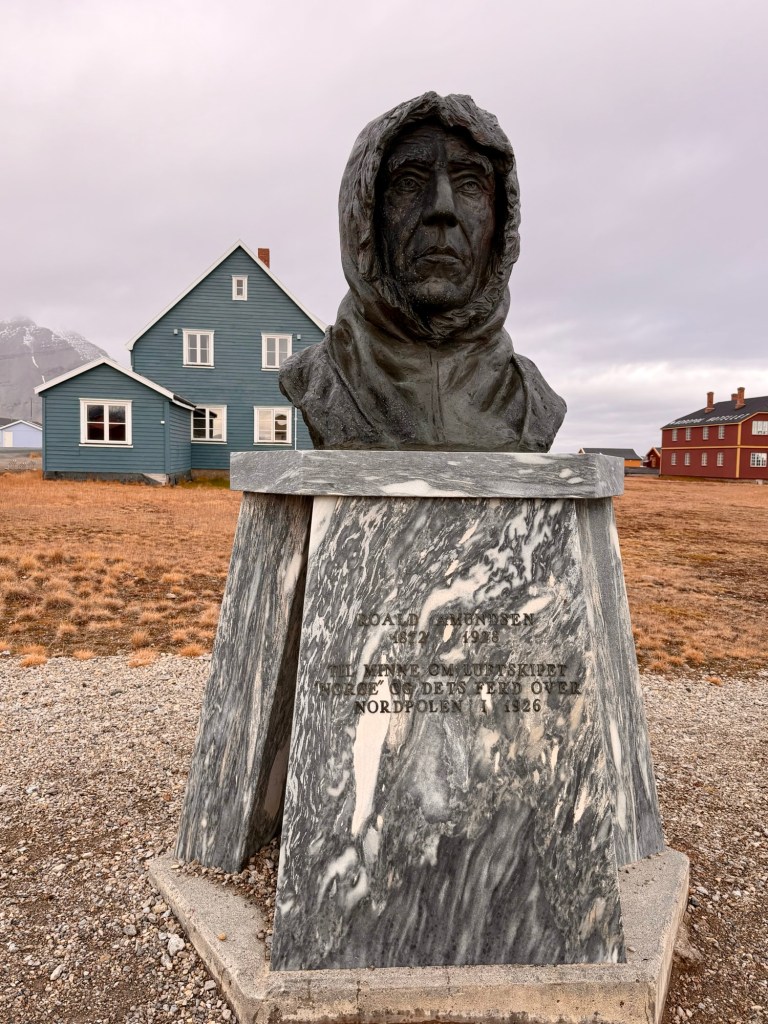
The highlight for me was walking out to the mooring mast used by Roald Amundsen’s airship Norge.
The airship was tethered here before embarking on its historic 1926 flight across the North Pole. We had to walk in pairs, with armed guides at both the front and back of our group, since polar bears frequent this area.
Amundsen’s mooring mastAmundsen chose Ny-Ålesund as a base for his 1926 expedition to the North Pole.
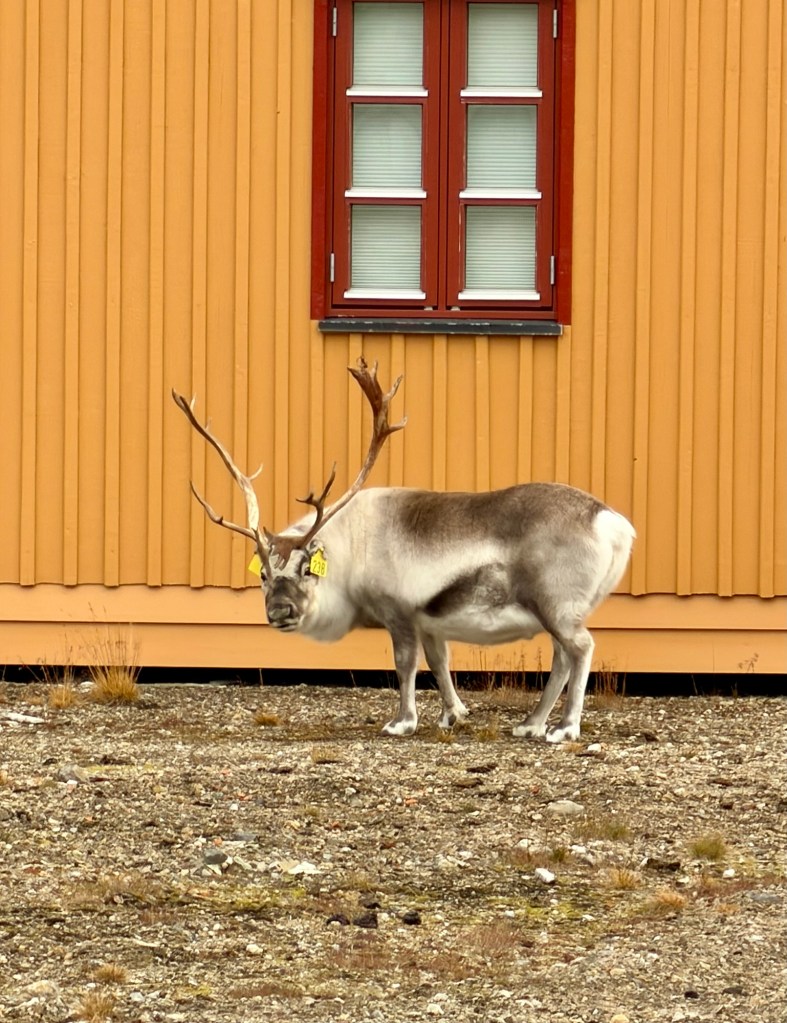
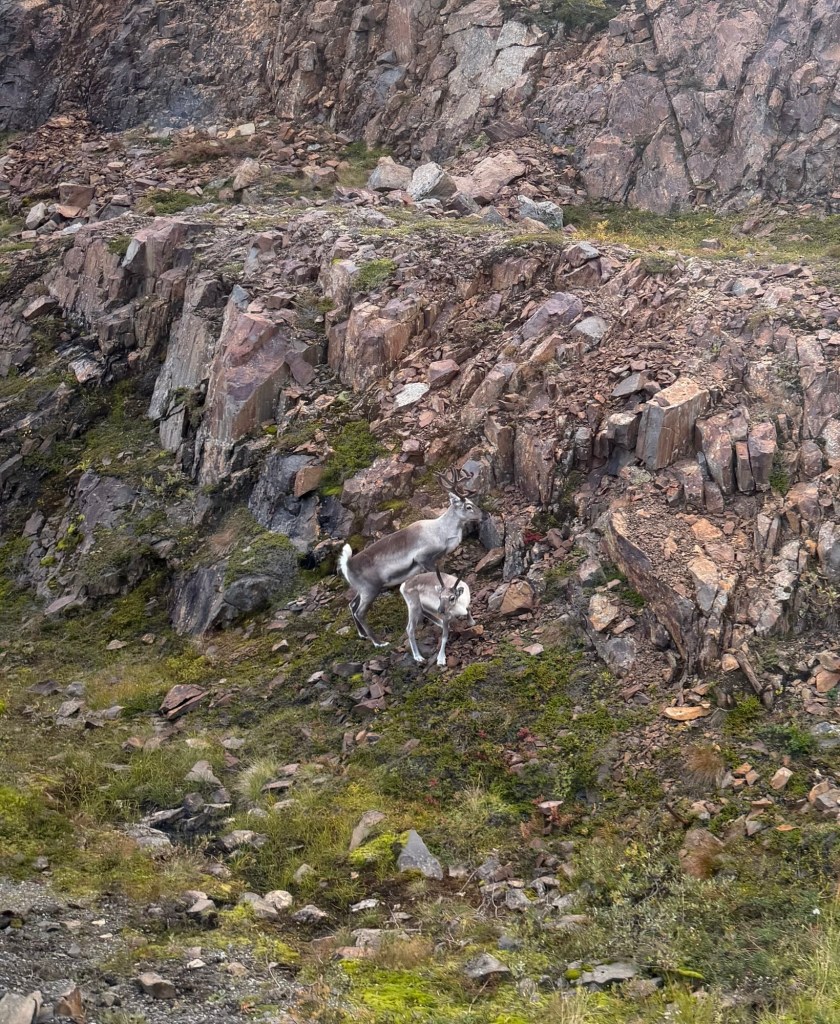
I saw a lot of reindeer within and surrounding the town, as well as some seals along the water. Remember Bergmann’s rule from school—the idea that animals in colder climates tend to have more bulk—and Allen’s rule, which says that animals in colder climates tend to have shorter, more compact appendages? They certainly apply here! Compared with reindeer in Canada, these Arctic reindeer are rounder and fatter, with shorter ears and legs. They’re actually kind of funny-looking!
Short-legged, chunky reindeer 😂
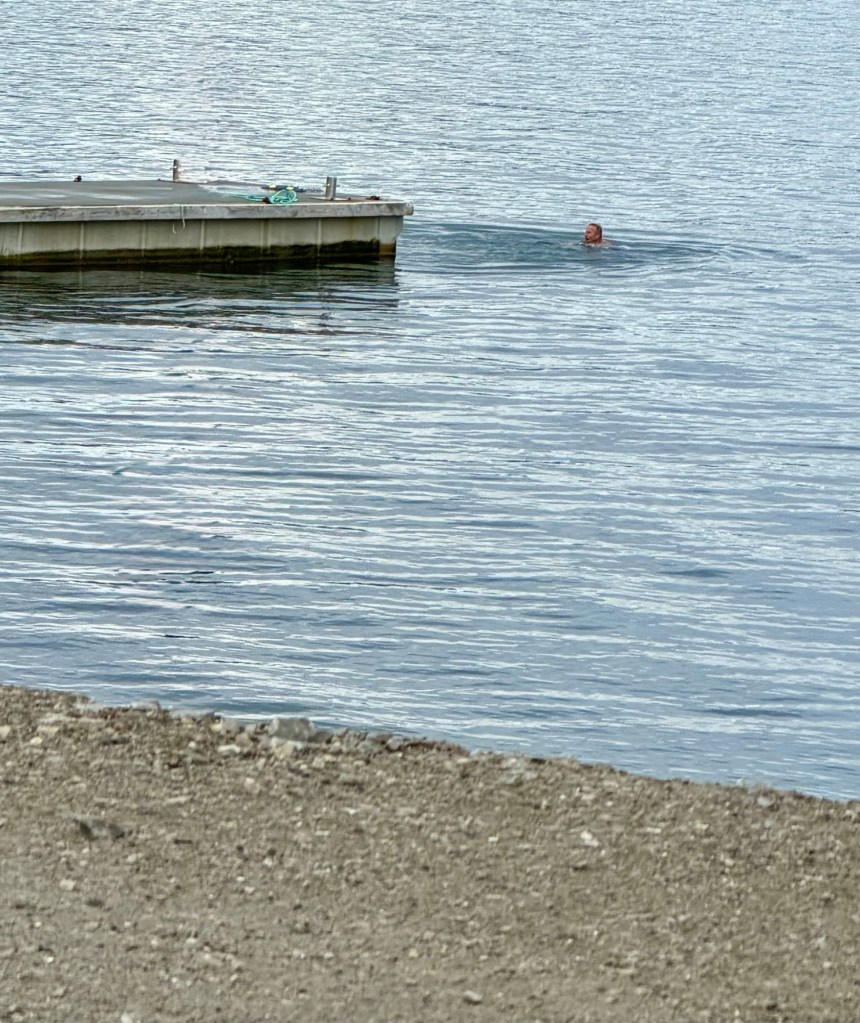
As I headed back to the ship, I watched someone go for a swim. It was a positively balmy 6°C here today!
Good on you, buddy!
A few more pictures from around town:
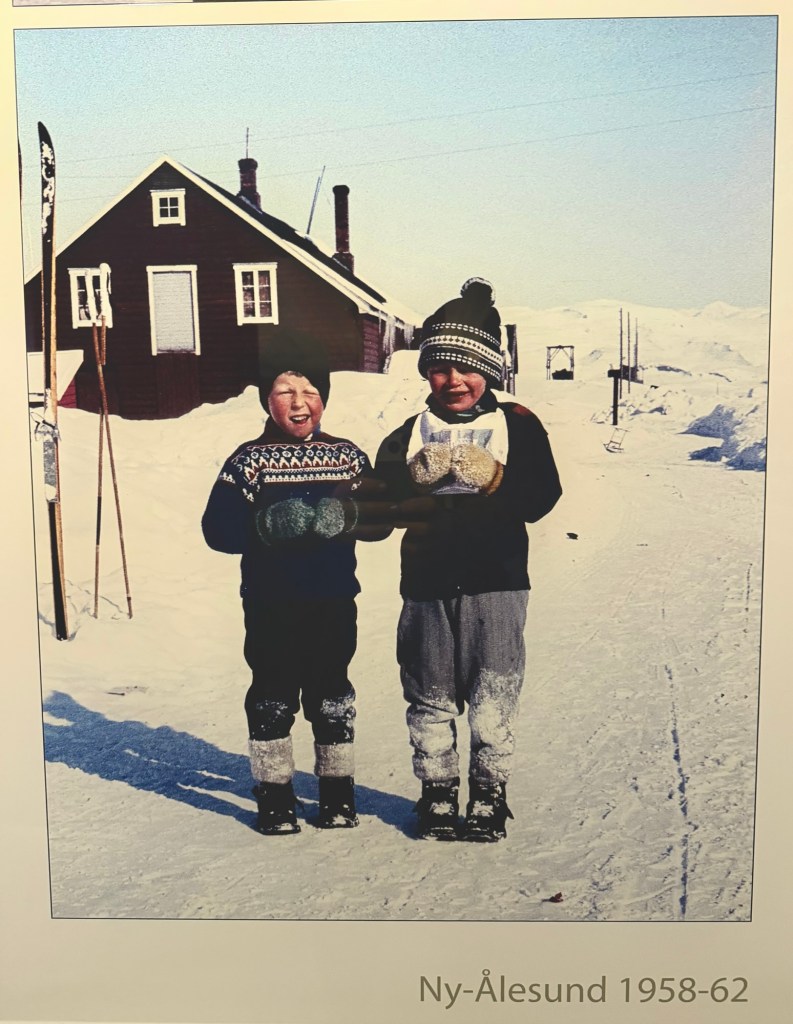
An image from the small museum here
Well, I can say that I made it 1200 km from the North Pole! Time to head back south.
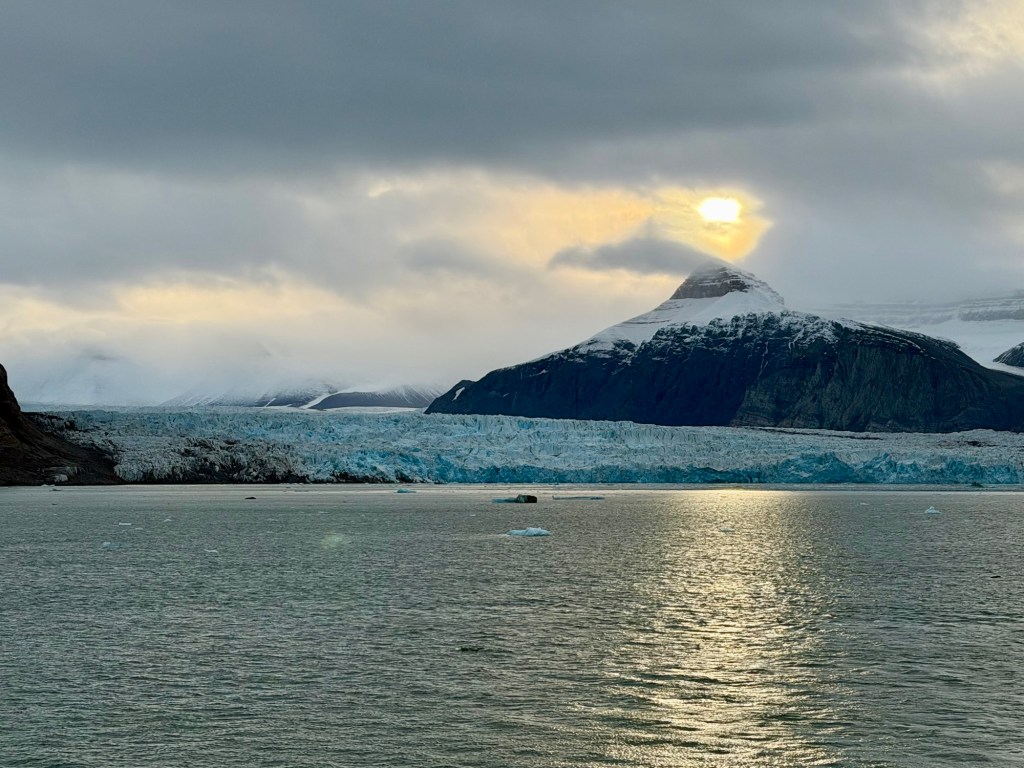
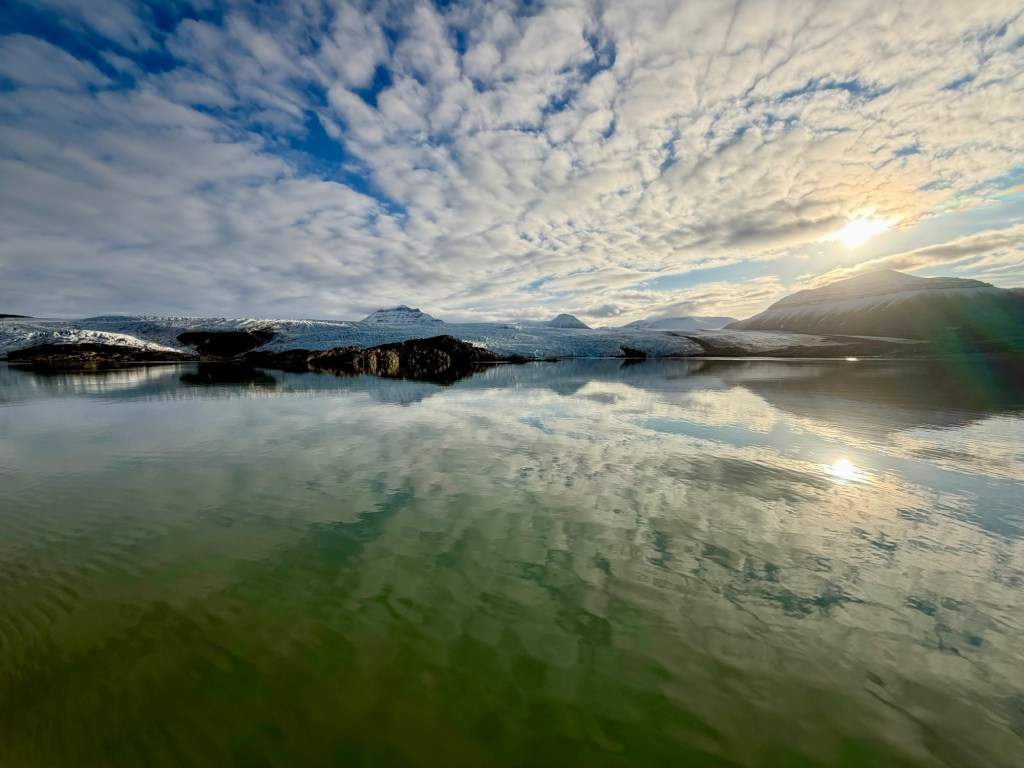
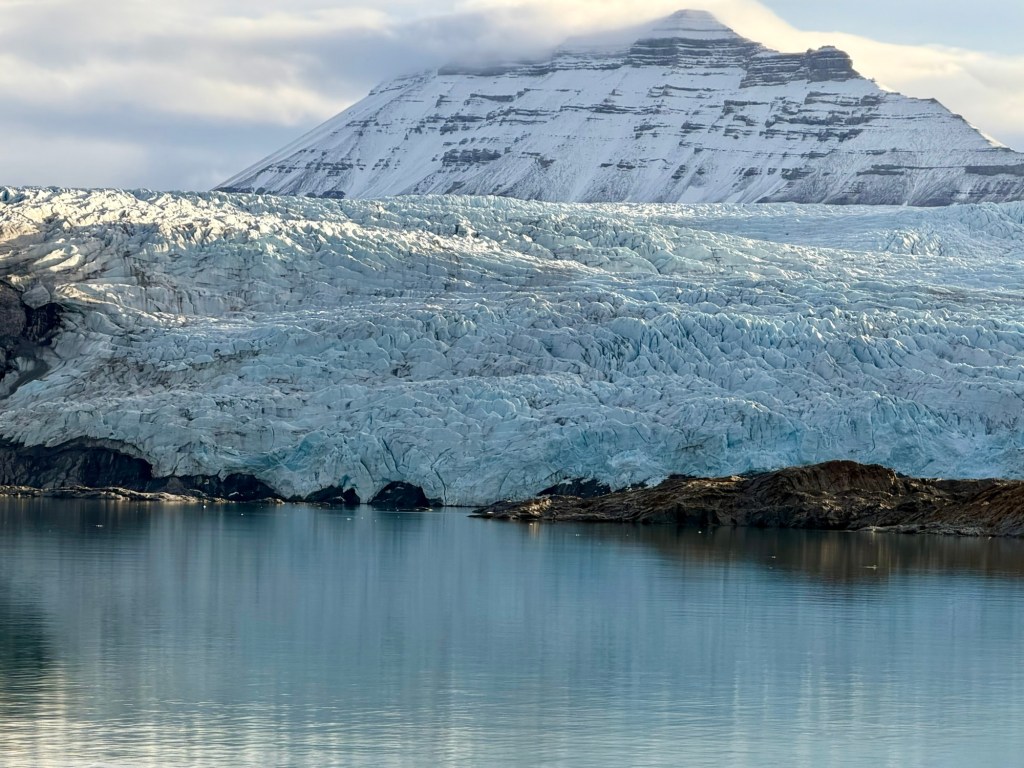
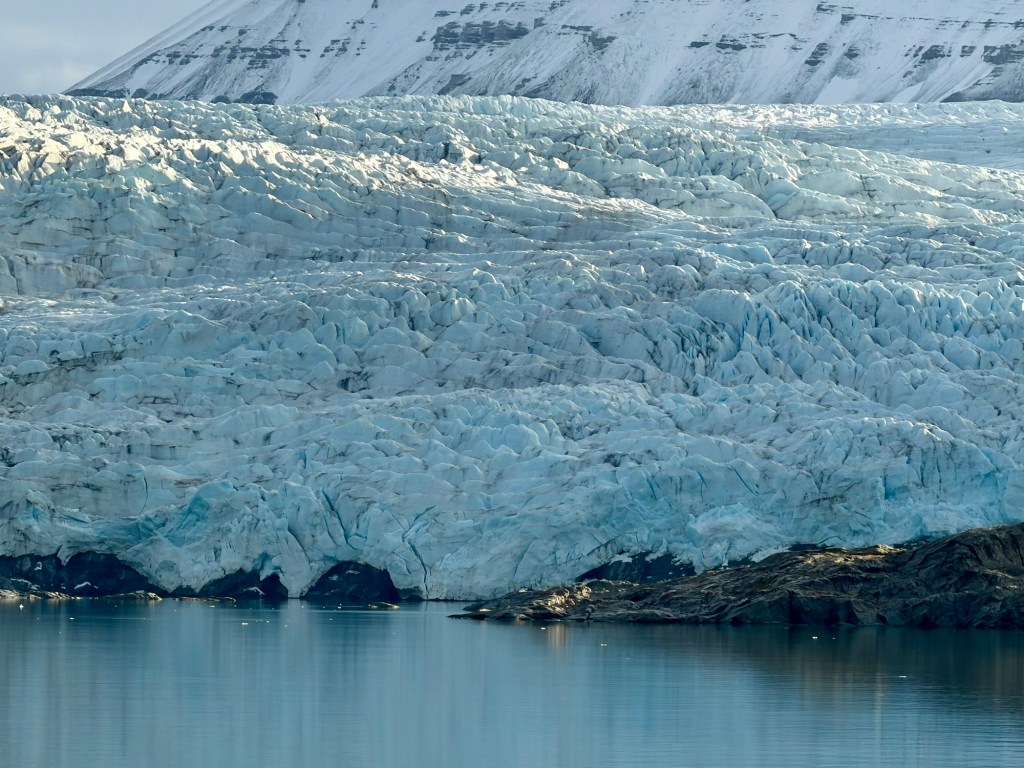
It was nice to wake up to land! In fact, the Hurty made a detour before Longyearbyen and took us to the Nordenskiöld Glacier via Billefjorden. This glacier is massive (11 by 25 km), and I was fortunate to see its spectacular, nearly 5-km-wide front.
Beautiful Nordenskiöld Glacier So many colours, especially with changing light.
Later, as we sailed into Adventfjorden, I was excited to spot the Seed Vault, which houses more than 1 million dormant seed samples of crops and trees from all over the world. It was pretty small in the distance with only the entrance visible, but seeing it has been a lifelong dream.
Seed Vault
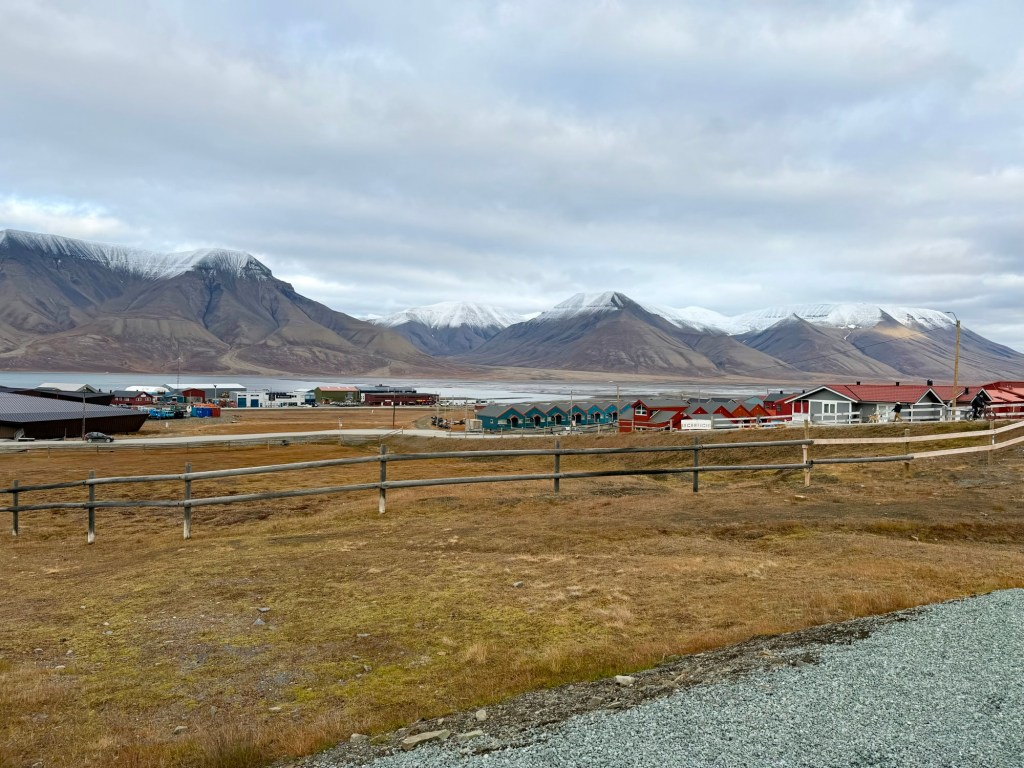
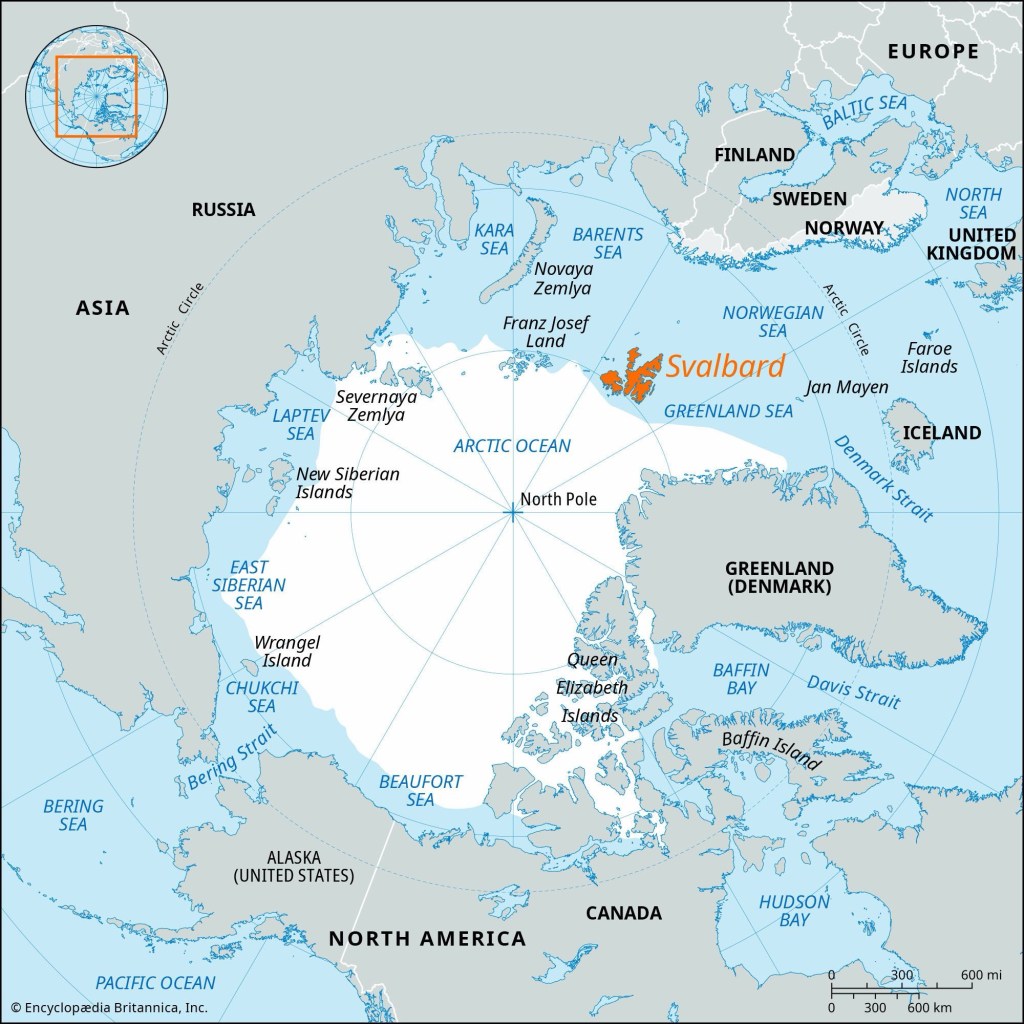
We docked in Longyearbyen, the world’s northernmost permanently inhabited town, just 1,300 km from the North Pole. The town sits in a valley surrounded by glaciers and steep, flat-topped mountains.
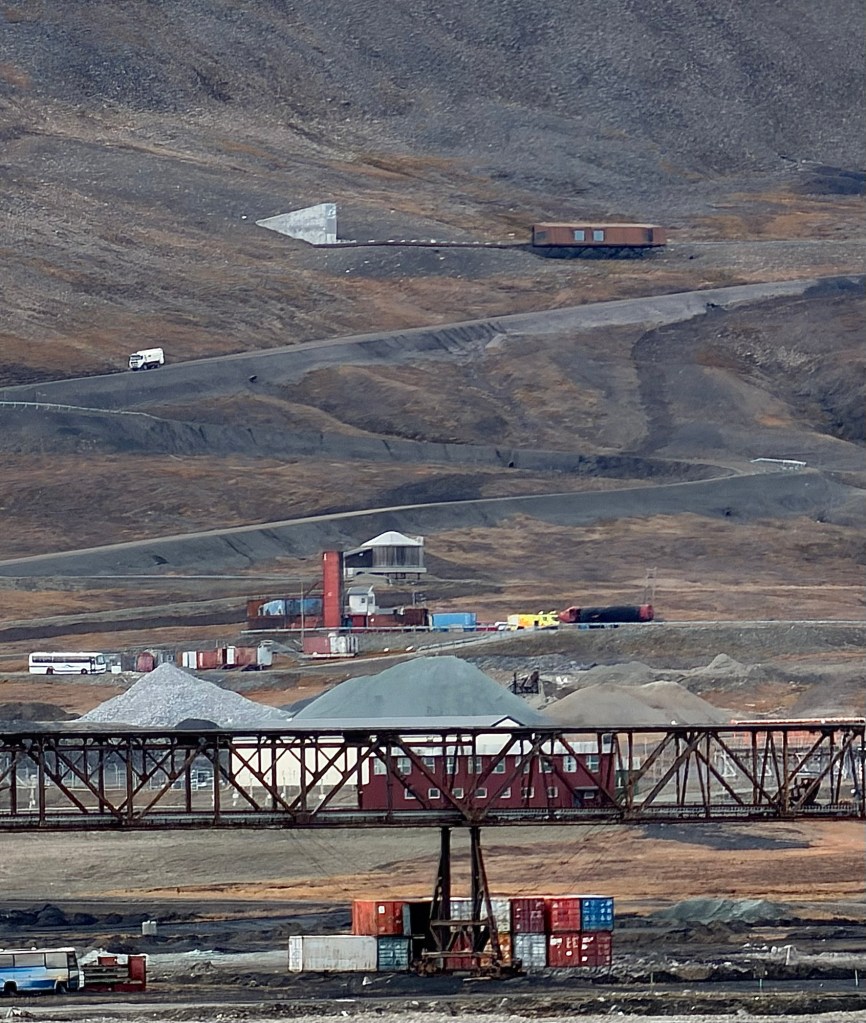
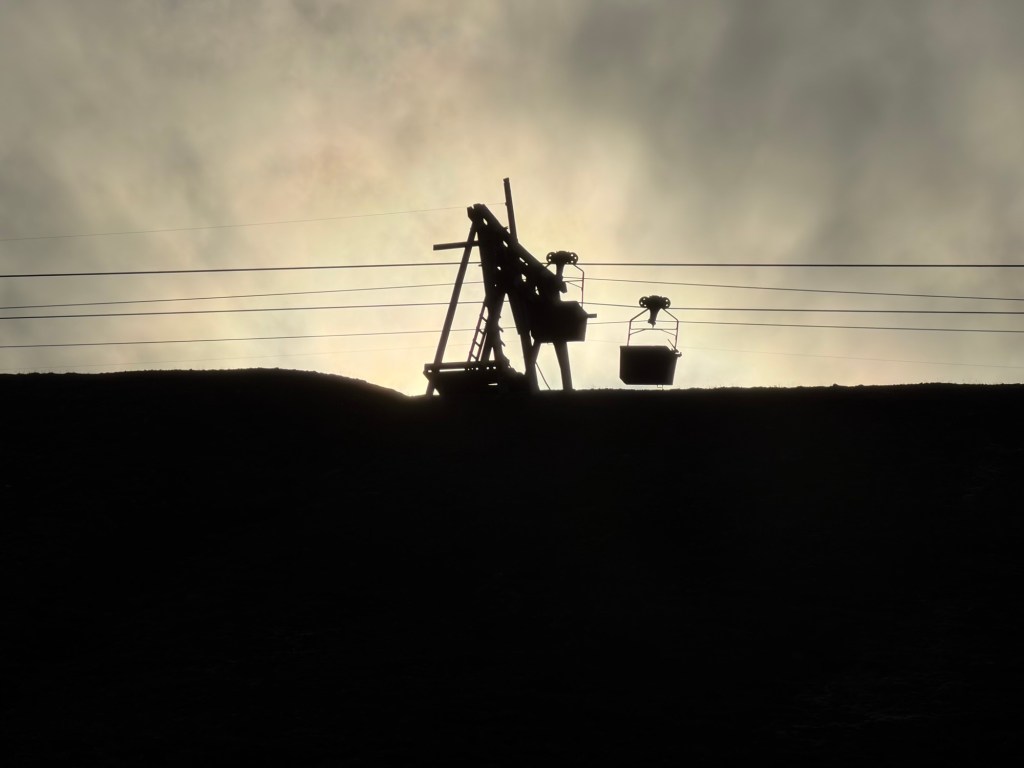
Longyearbyen was established as a coal-mining centre in the early 1900s, and mining continued until June 2025, when the town switched to diesel fuel.
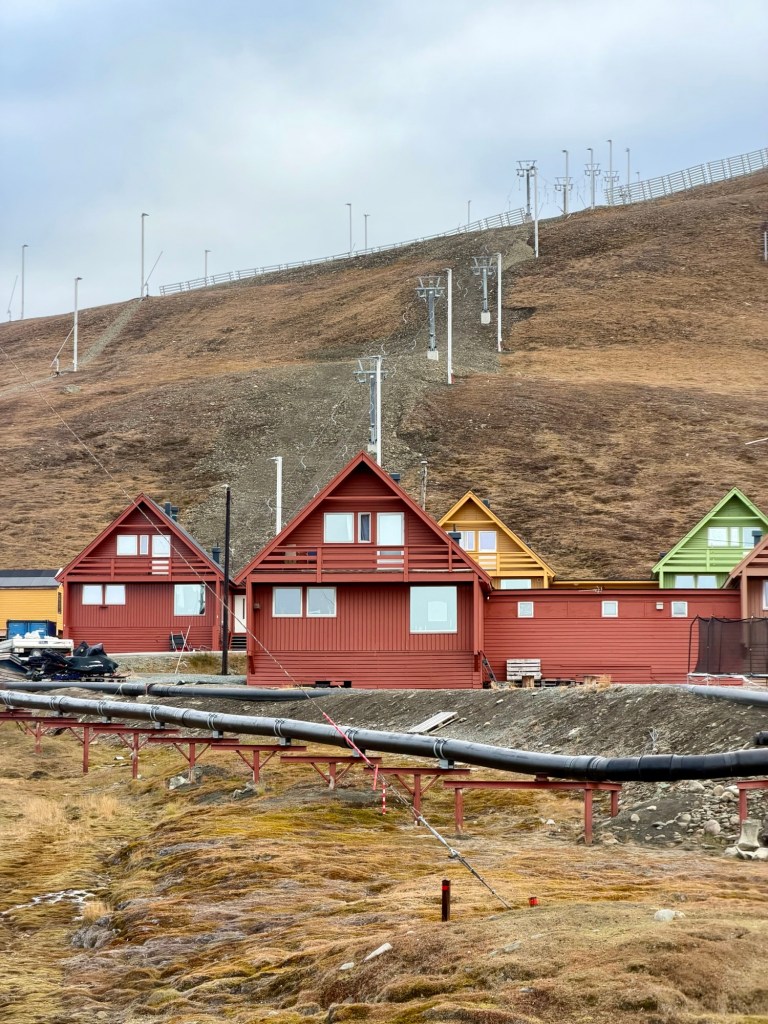
A large network of cable lines sits frozen in time on wooden trestles, while rusted buckets remain as a last vestige of the coal-mining operation.
Research and education are important industries up here. Students from all over the world come to study at the University Centre in Svalbard. The median age of the population is 33-35 years old so this is a youthful, vibrant town!
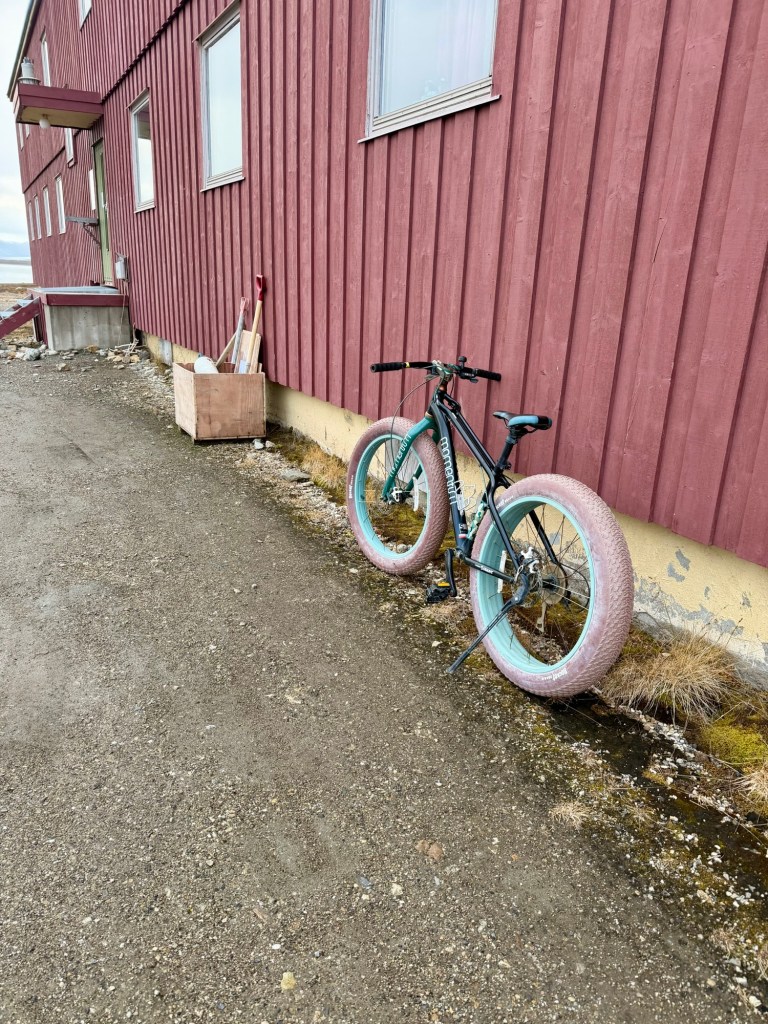
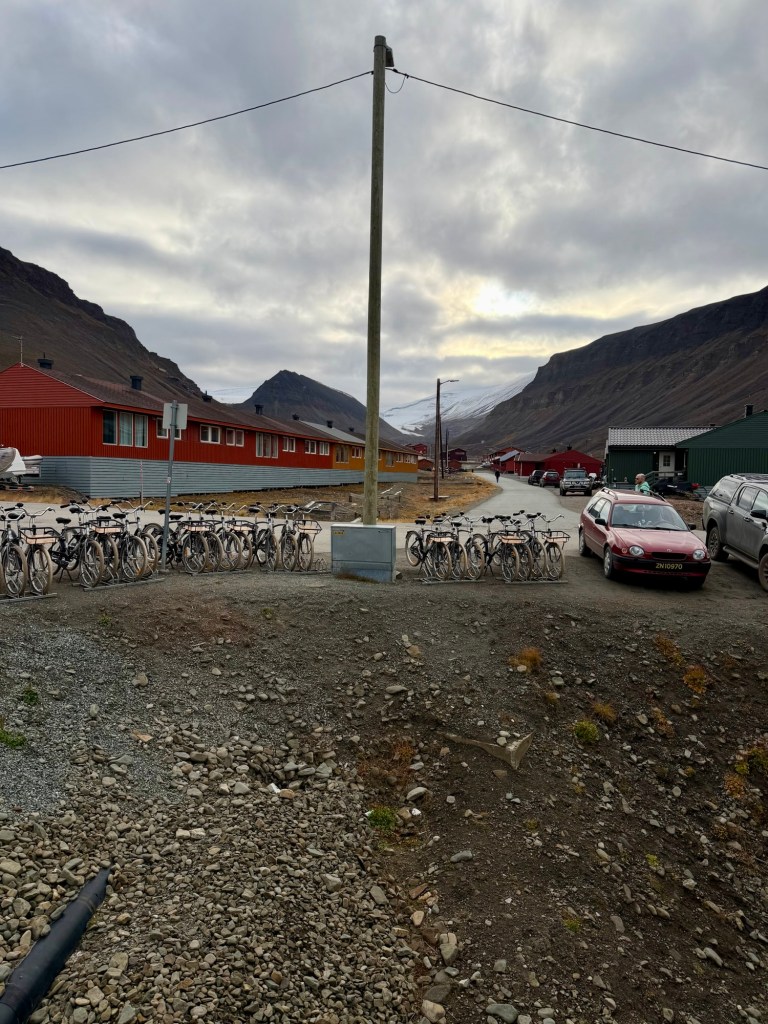
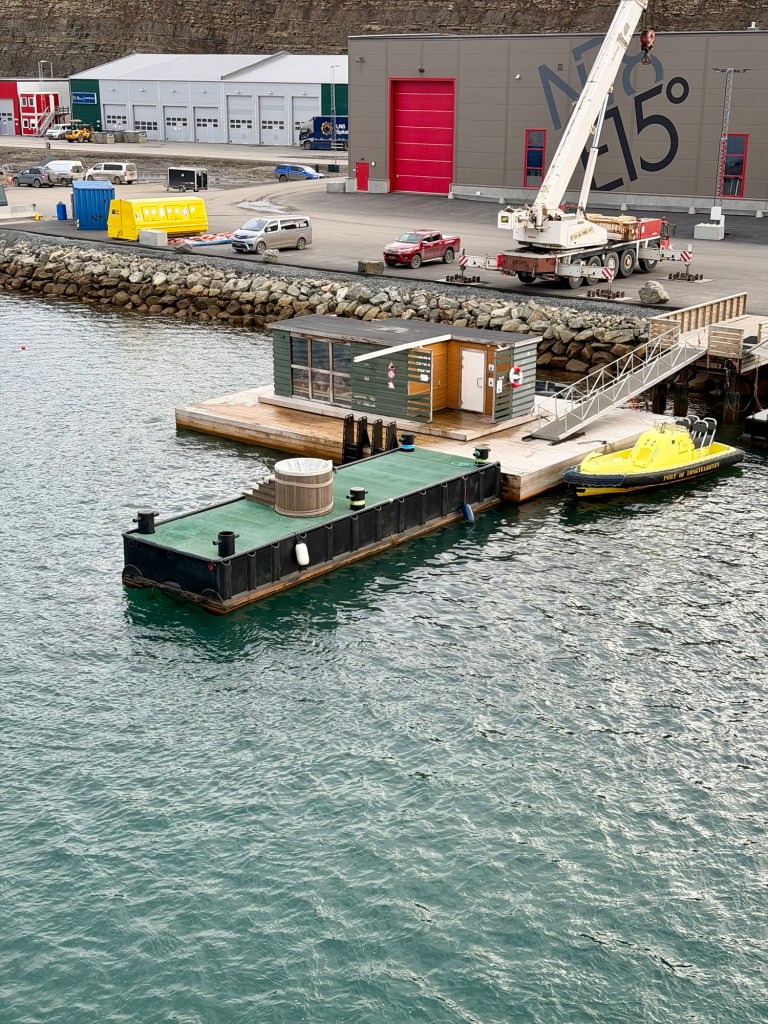
Lots of bikes everywhere!The sauna and cold plunge were busy nonstop today (though I waited until there were no people to take this picture).
Droves of people were out walking and riding bikes, likely making the most of the daylight before the Polar Night period sets in. I watched a daycare group, and the little ones were all wearing reflective vests, playing freely in a huge outside yard with various play structures—one even had caribou antlers over the entrance.
There were a lot of vehicles out and about with noisy studded tires, even though it was a balmy 9°C today; however, snow could arrive any time and it’s illegal to drive in inclement conditions (including black ice) with regular tires.
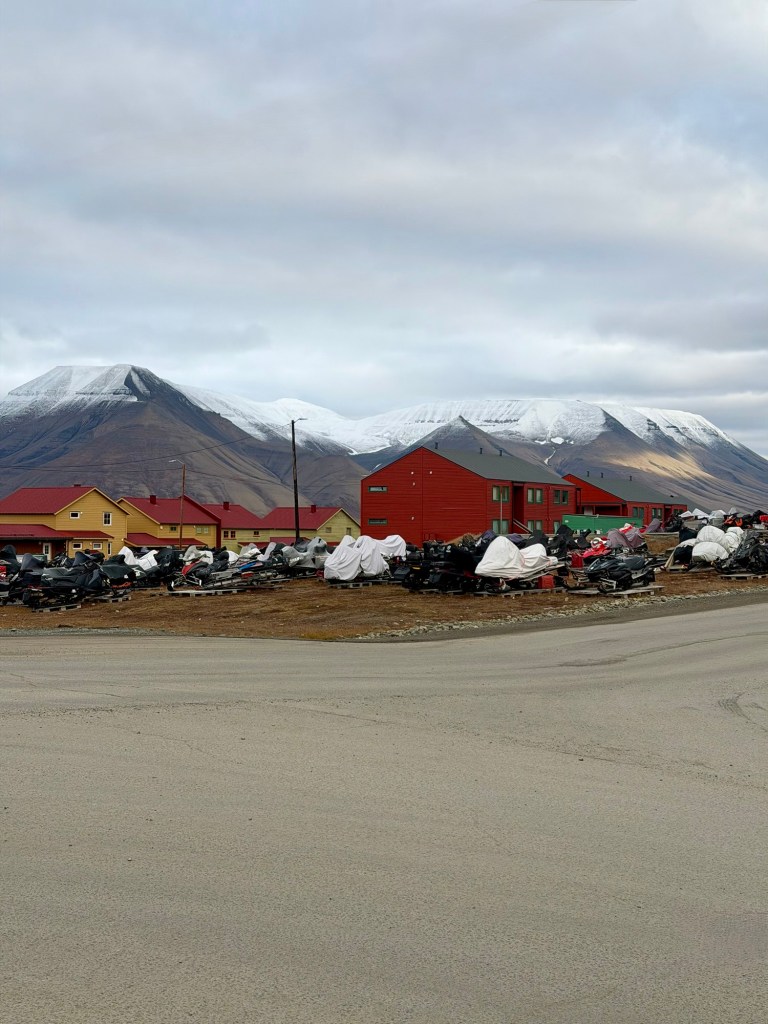
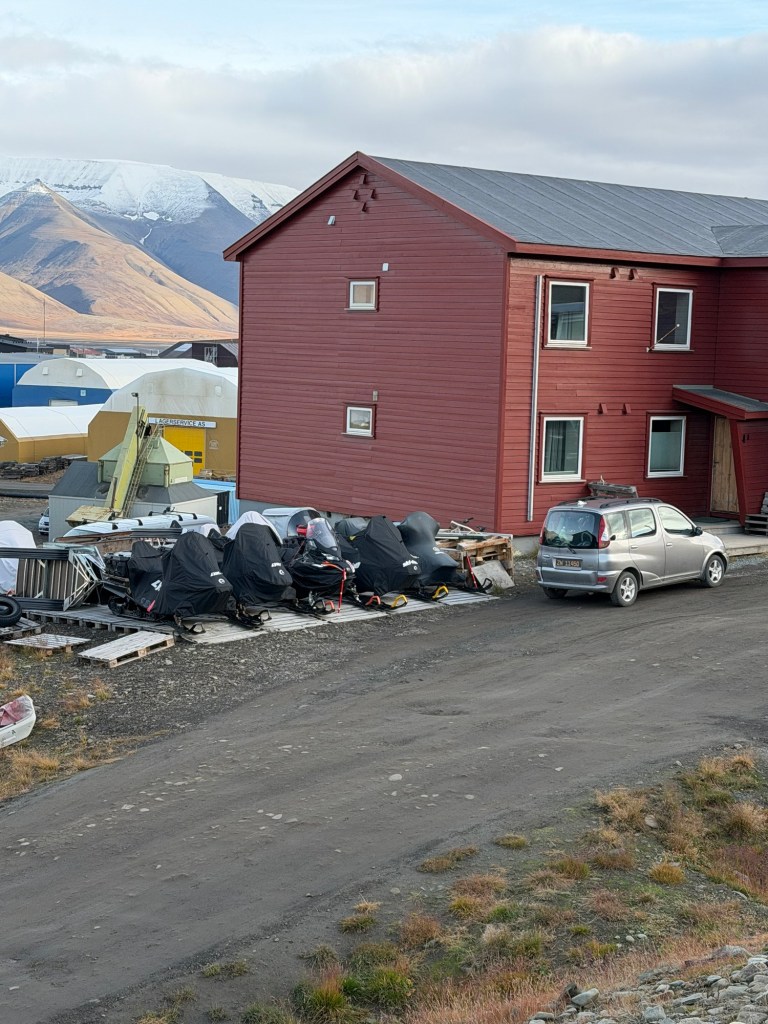
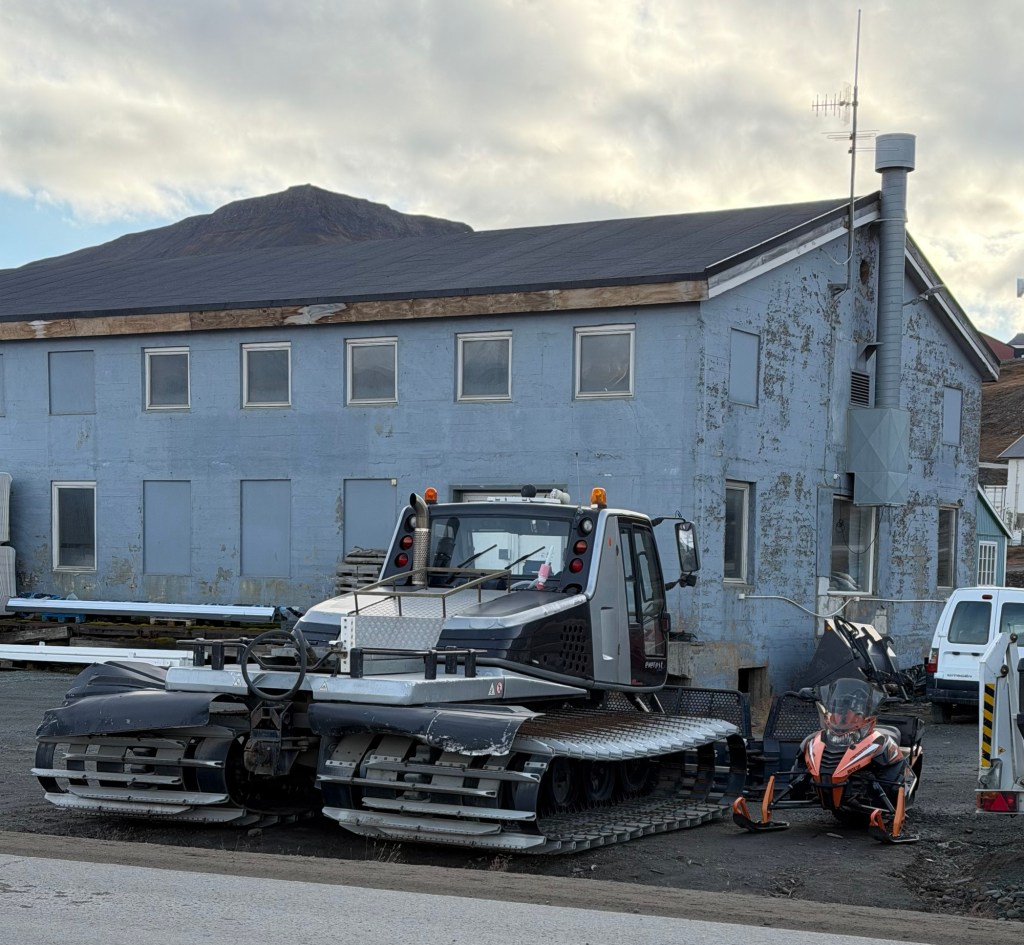
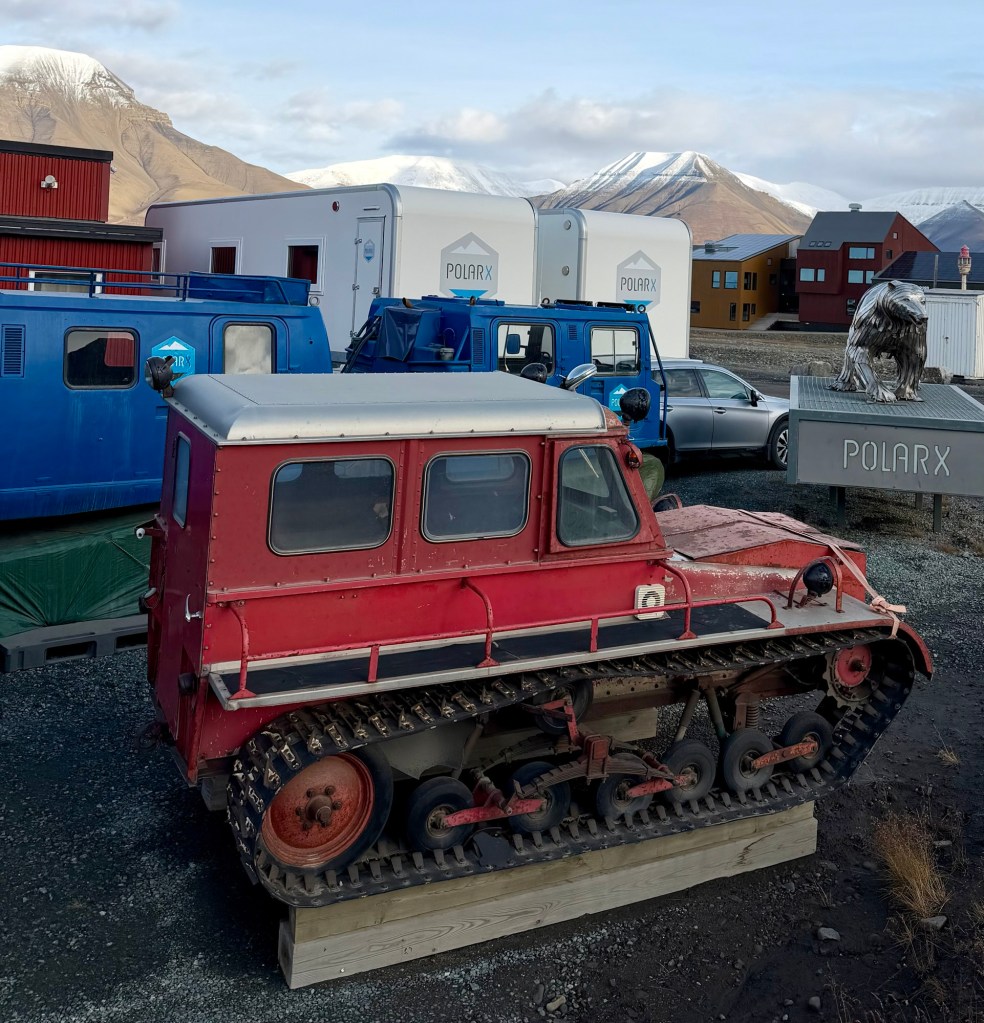
Beside every apartment building, parking lots were full of snowmobiles. There were also a lot of larger snow cats around town. I’d love to see this place in winter.
After 14k hilly steps, I’m looking forward to catching a Roald Amundsen biopic on the ship tonight.
Some interesting quirks about Longyearbyen:
There are only a few named streets; the rest are just numbered.
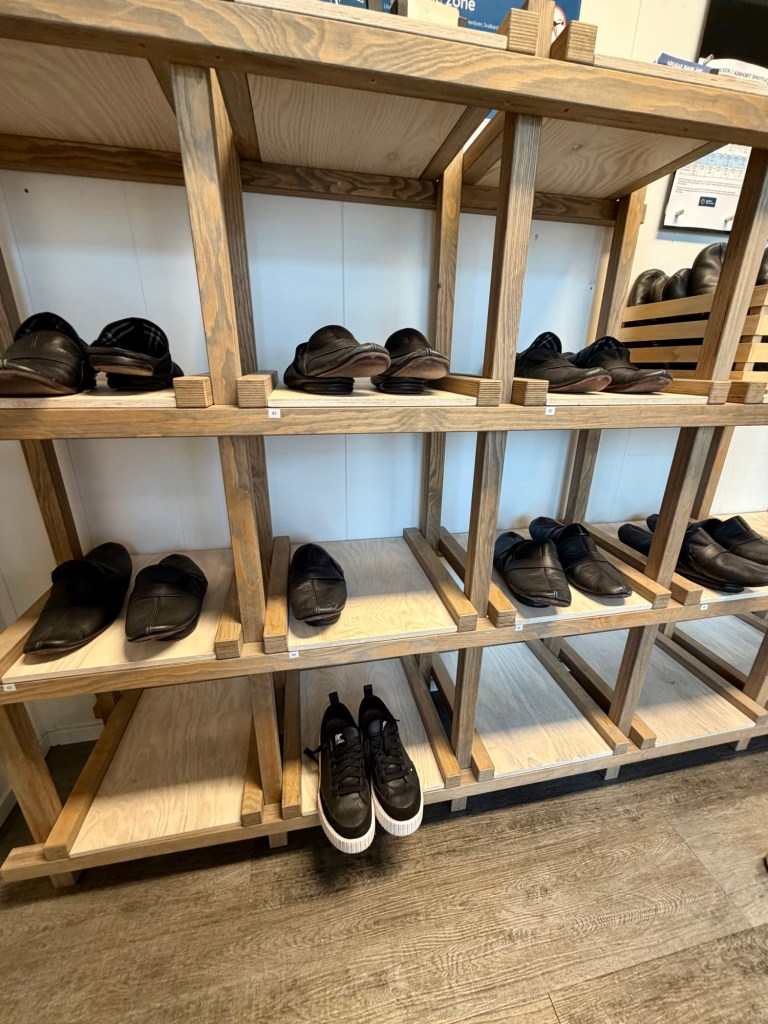
You must take your shoes off in most places.
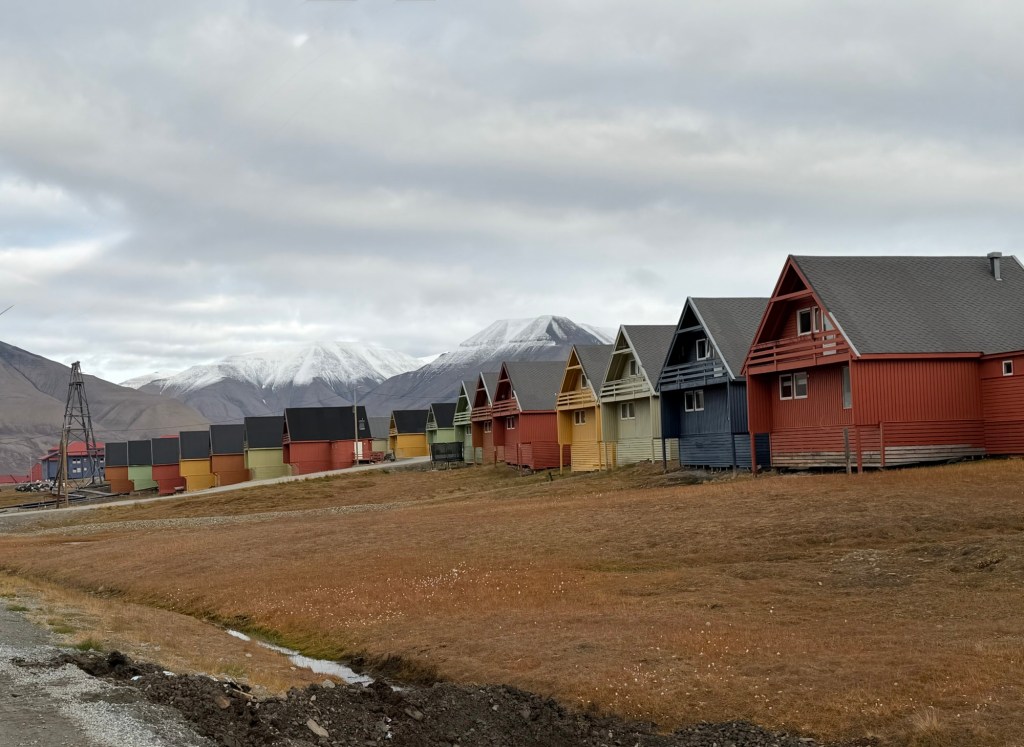
An artist put together a colour palette for Longyearbyen’s houses and buildings. Only approved colours are permitted.
It is famously forbidden to die or give birth here because the town has only basic medical facilities. Since the permafrost prevents bodies from decomposing properly, chronically ill residents must leave for the mainland. Pregnant women must do the same well before their due date.
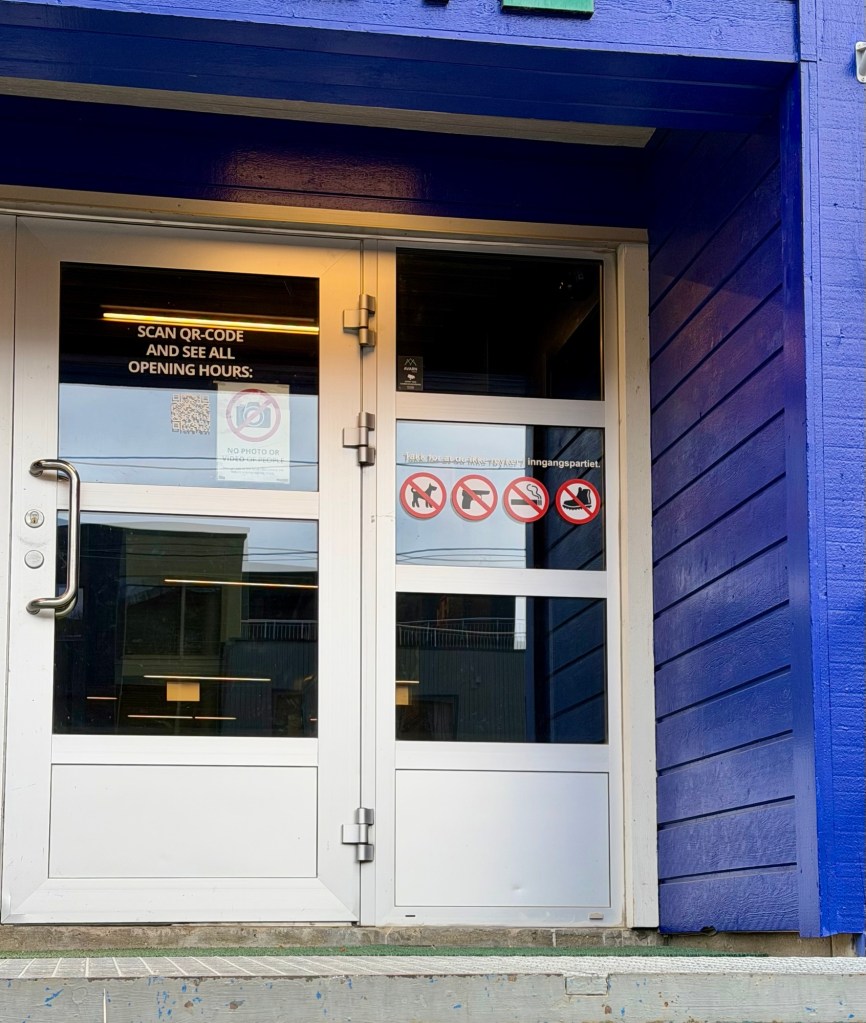
Residents are required to carry rifles outside the city limits due to the presence of polar bears, though weapons are banned inside premises.
No dogs, guns, smoking, or footwear allowed.
Cats are banned to protect the fragile local bird populations.
There is a local ski hill run by volunteers.
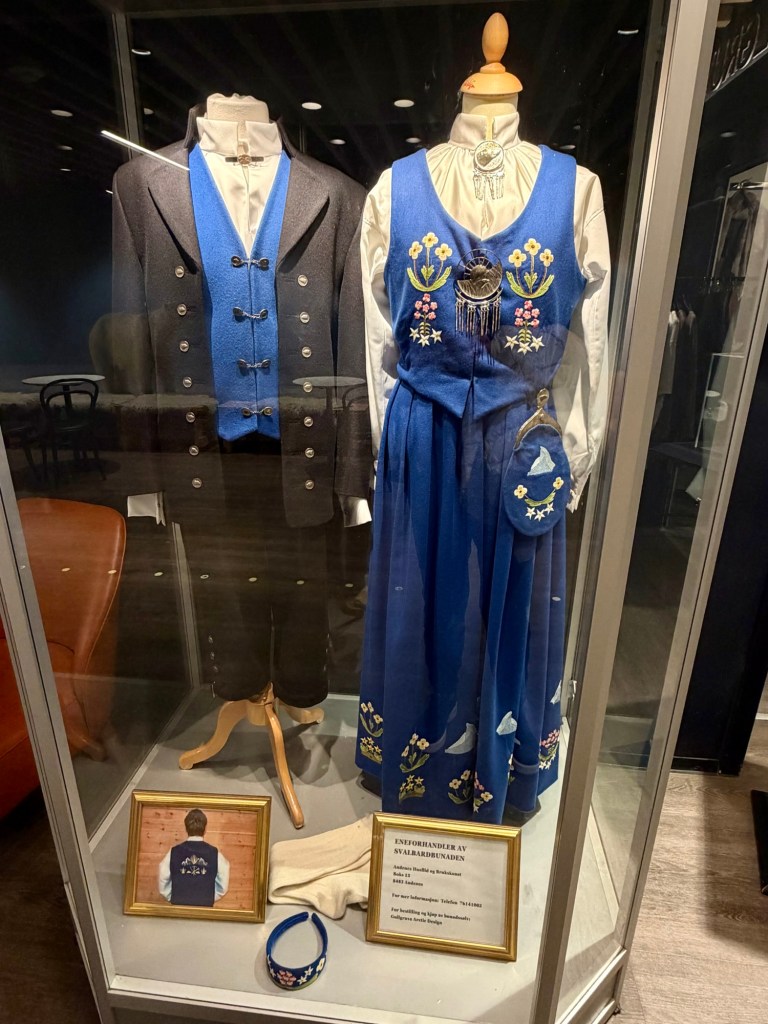
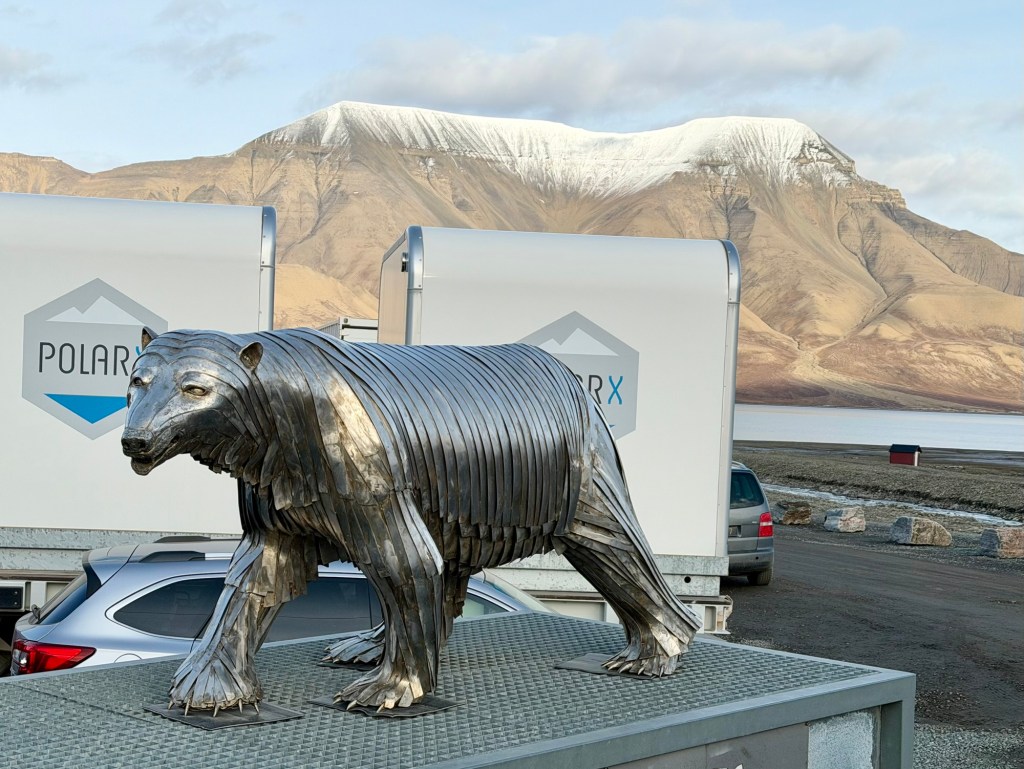
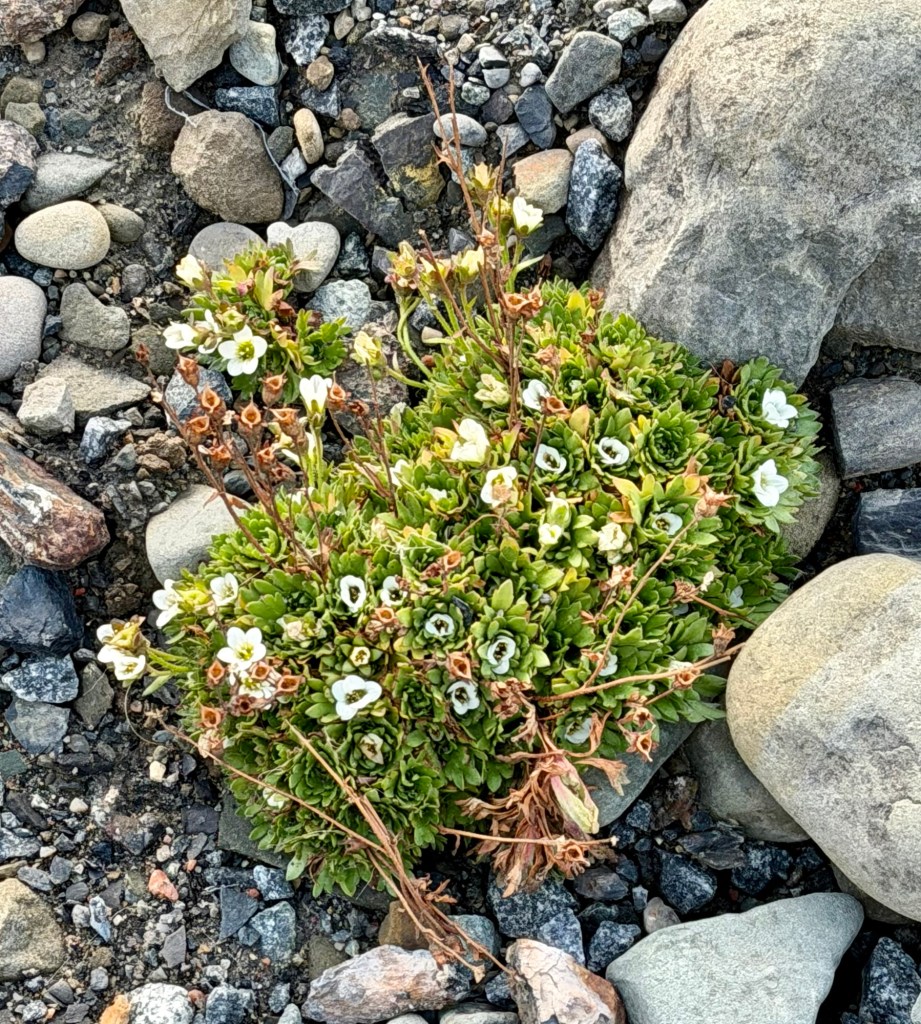
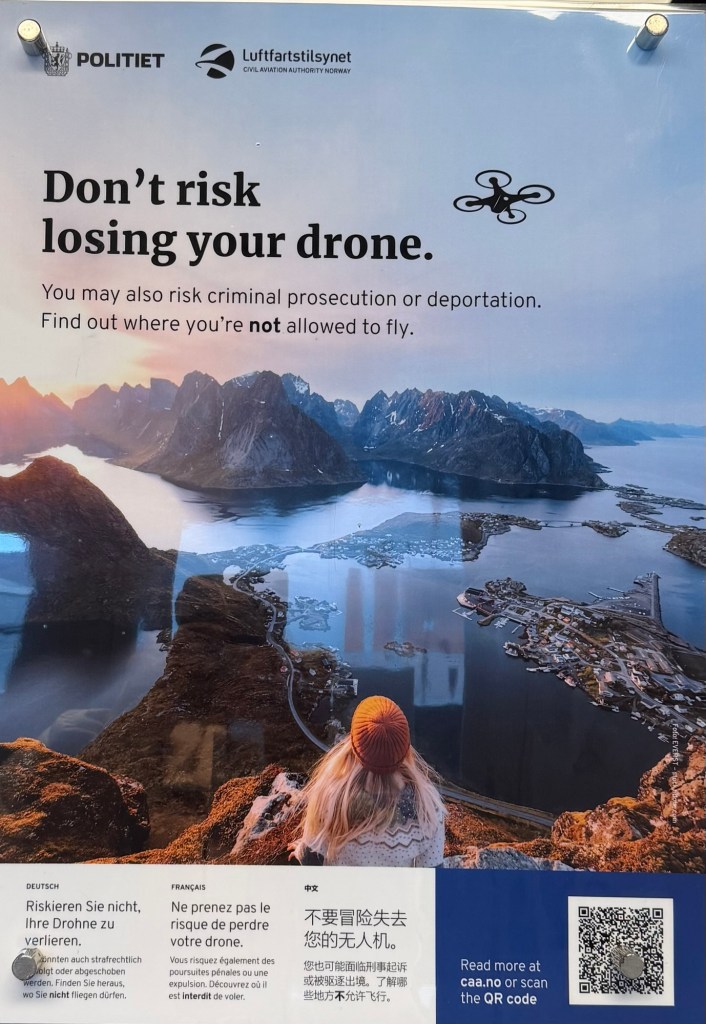
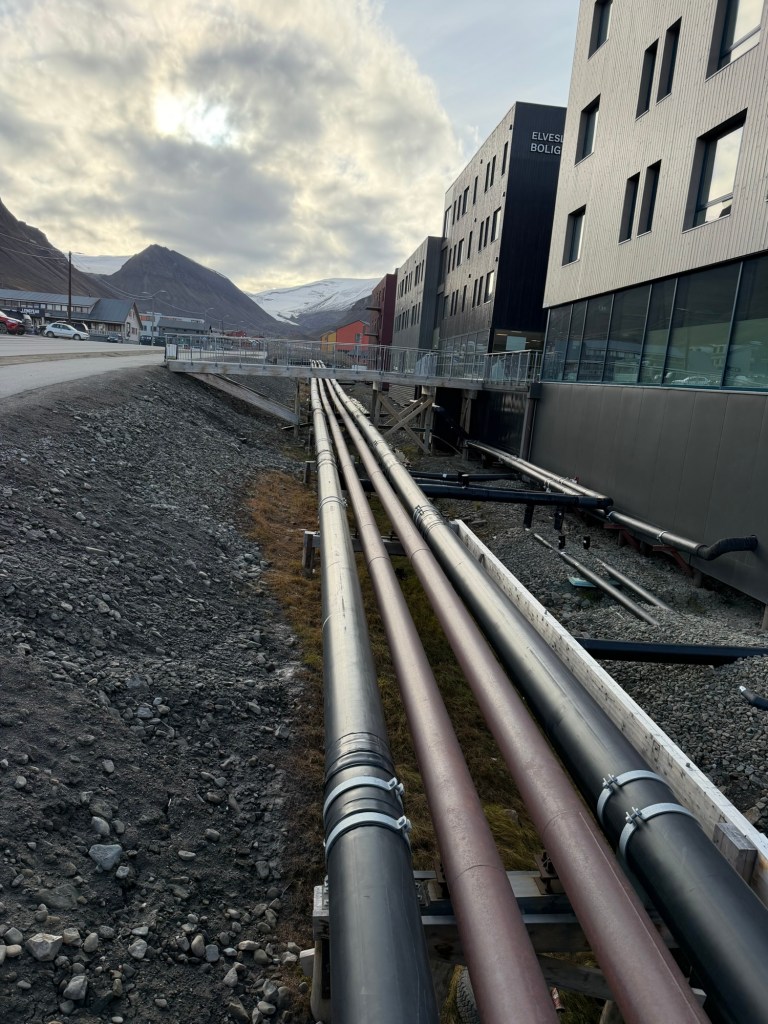
Longyearbyen Ski Hill behind the housesThe ubiquitous selfie spotBeautiful Svalbard bunadsPanzerbjørnPolar flowers Strict drone rules…deportation!??Big black pipes visible everywhere give Longyearbyen a distinct industrial look. These carry hot water, fresh water, and wastewater.
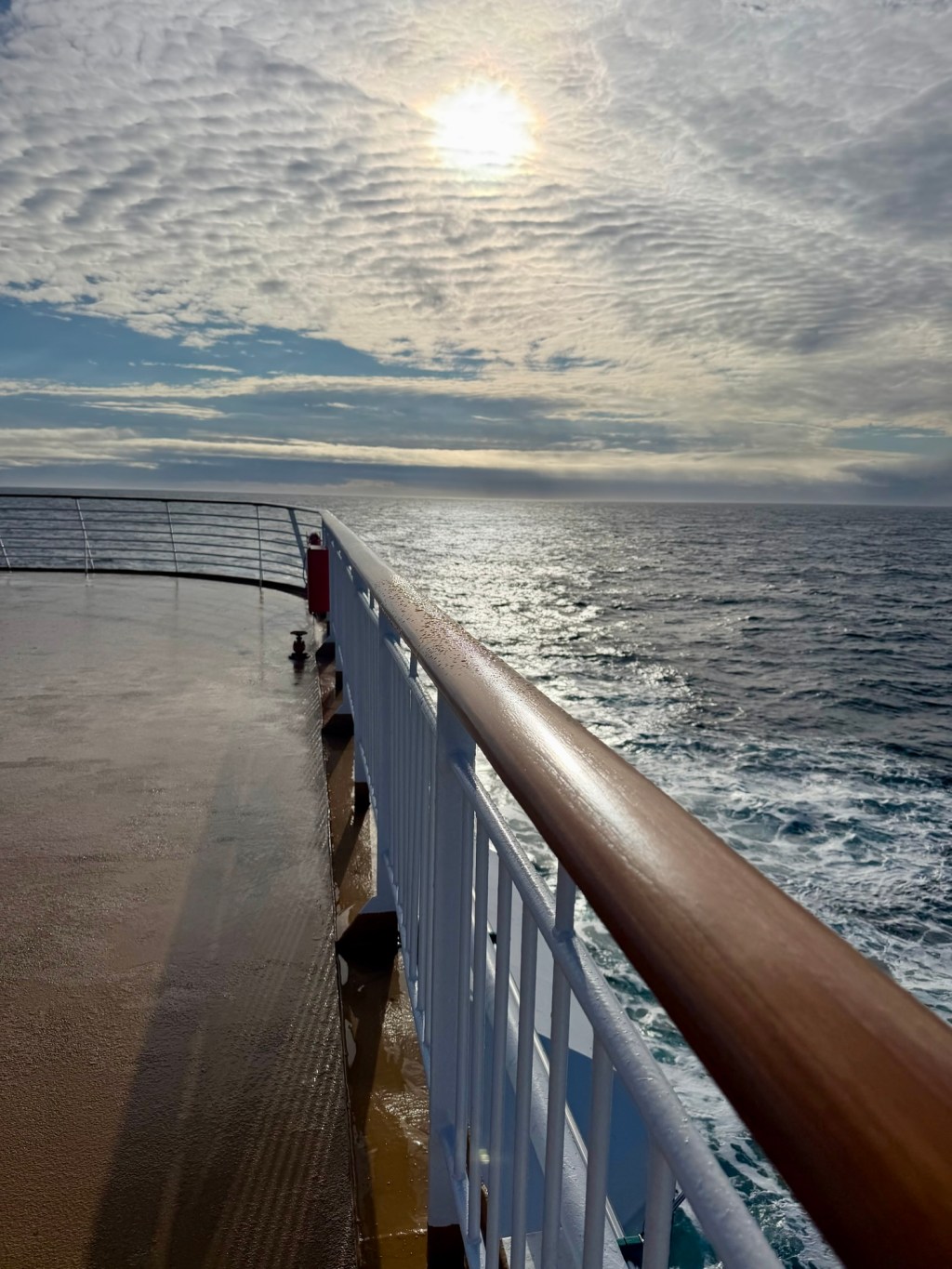
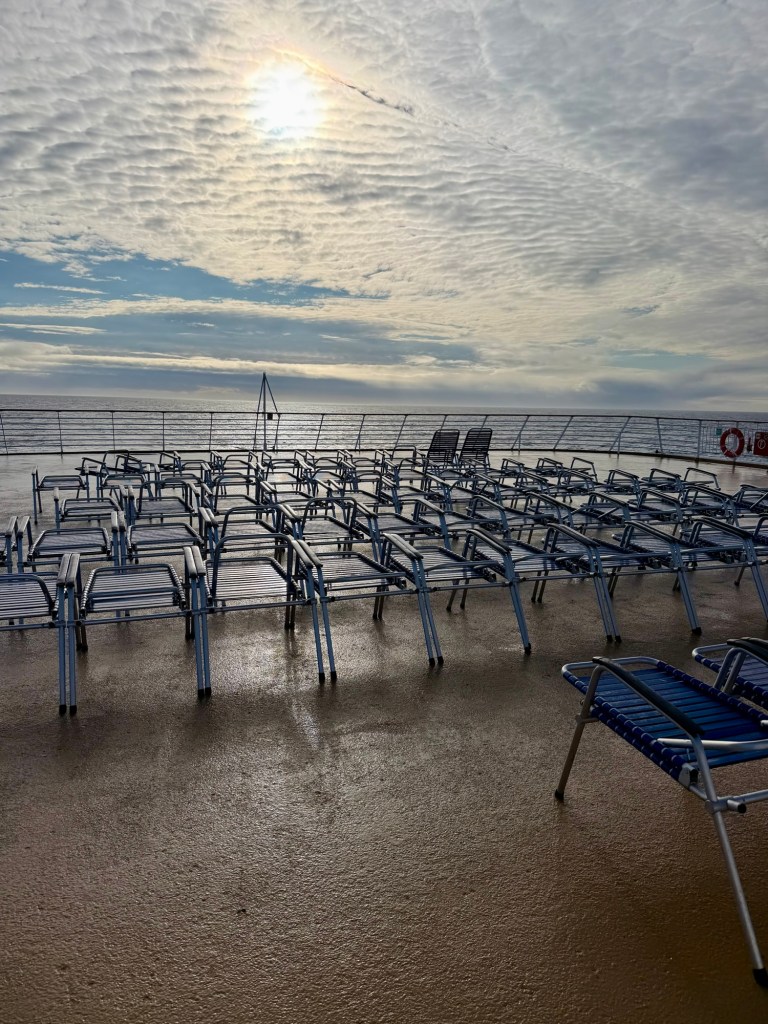
Chairs on the stern looking back at the nothingness
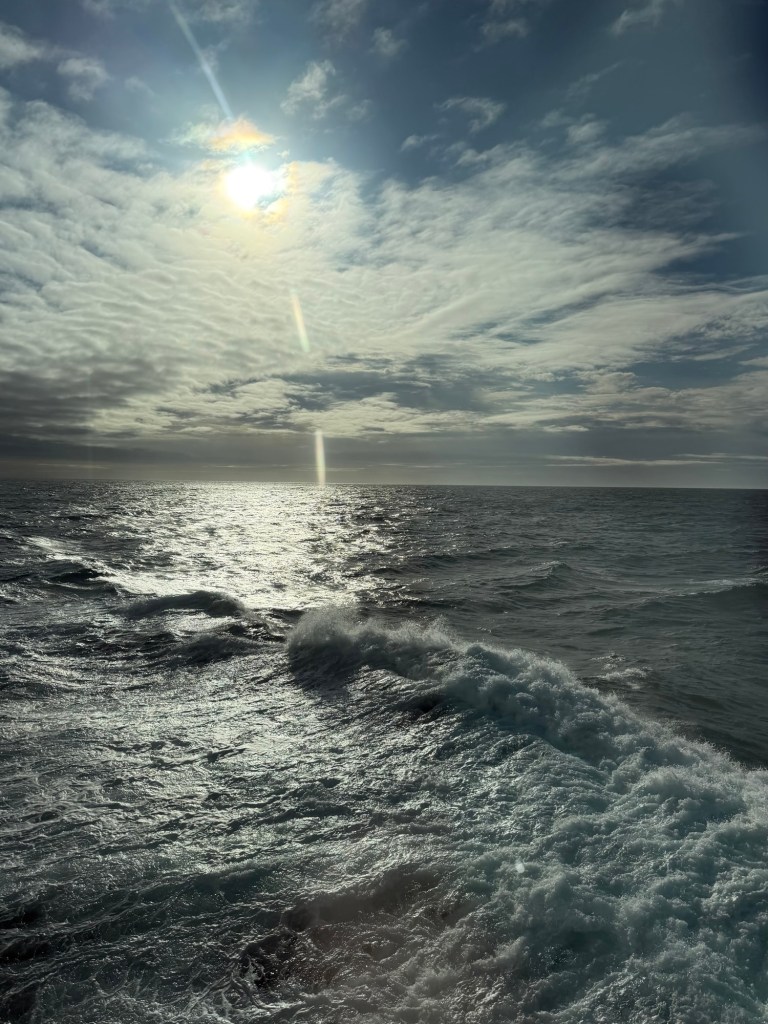
My ship departed at 4:00 p.m. yesterday, so when I awoke, we were already well out to sea. A big bonus was that I didn’t wake up feeling sick today. There are big swells with whitecaps, and the ship is rocking and rolling, but I’m doing better with it. Maybe my Nordmann genetics have kicked in, and I’m building up some immunity to seasickness. Hopefully I won’t get ill again—especially since I’ll be doing this long crossing again in a few days.
Water, water, everywhere, Nor any drop to drink…
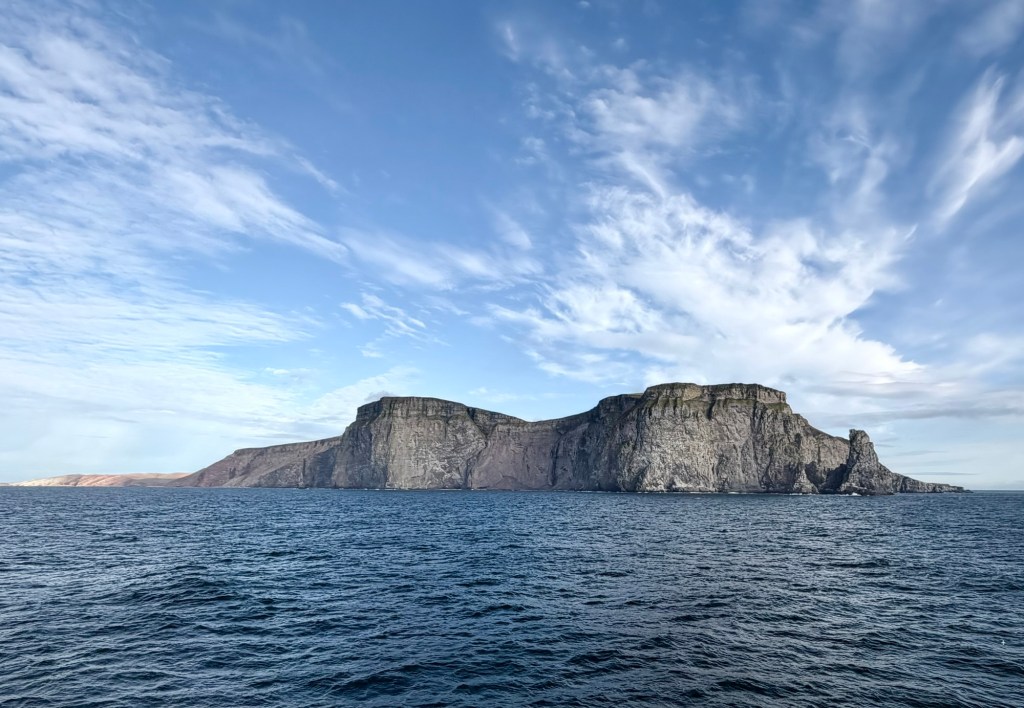
The crossing from Honningsvåg to Svalbard takes 36 to 40 hours, so I’ve had a full day of looking out onto an endless horizon, save for Bear Island/Bjørnøya at the midpoint. I did spot a whale and some dolphins today, but they didn’t surface long enough to get a picture.
Bear Island, a 20 km long rock island with 9 semi-permanent residents working at a meteorological station.
This was a good catch-up day for me. I even had an afternoon nap, totally out of character for me. More excitement tomorrow when I finally reach Svalbard!
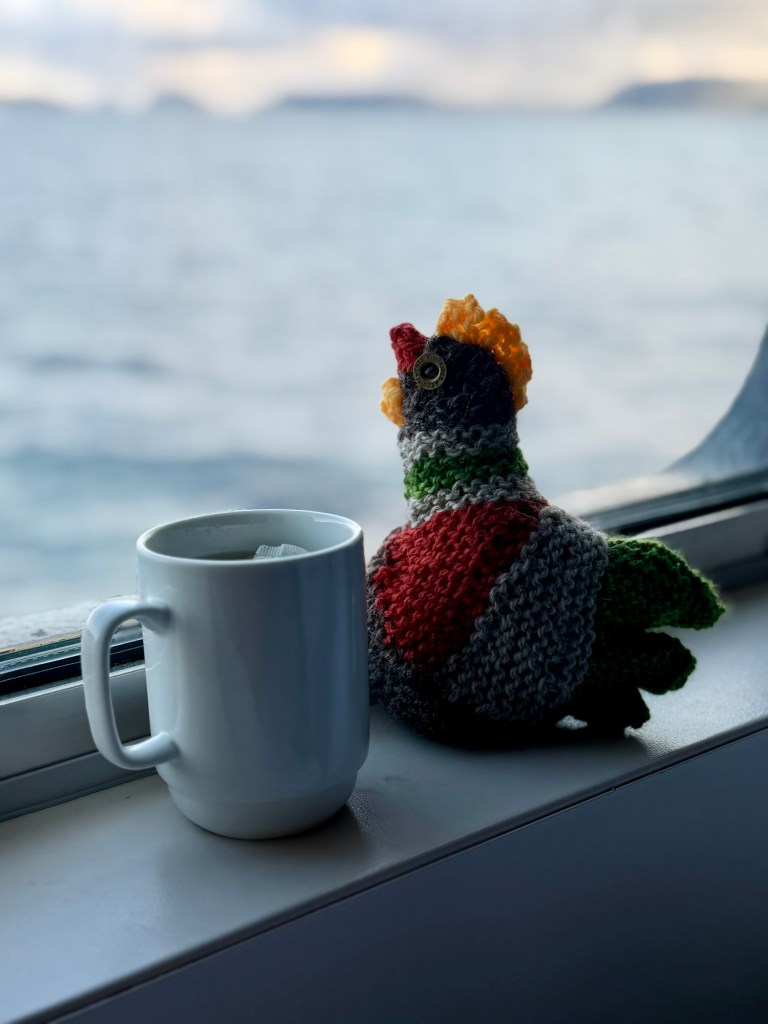
The Hurtigruten sailed through rough seas last night, so I experienced seasickness for the first time. I teetered into the breakfast smorgasbord, but my usual fish favourites turned my stomach, so I had a nice bowl of barley porridge with mountain berries then went back for a snooze in my cabin.
It was a tea in bed kind of morning.
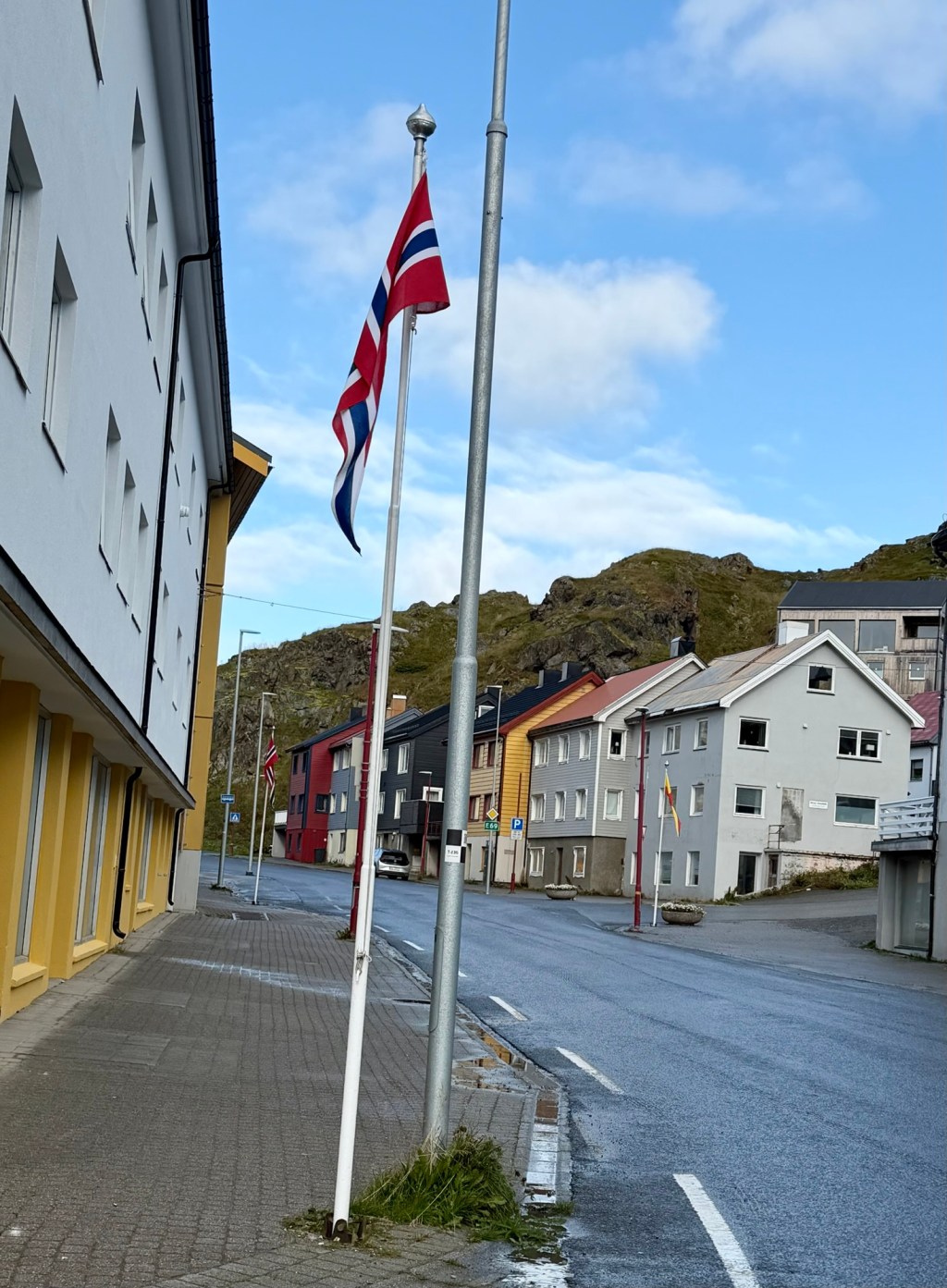
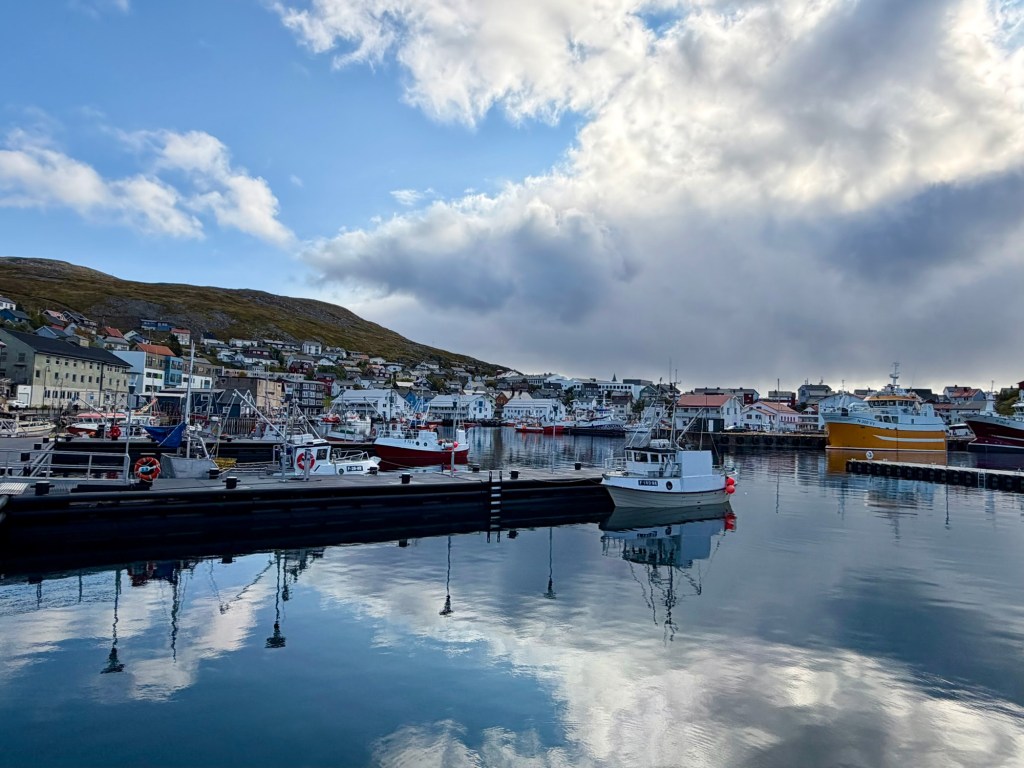
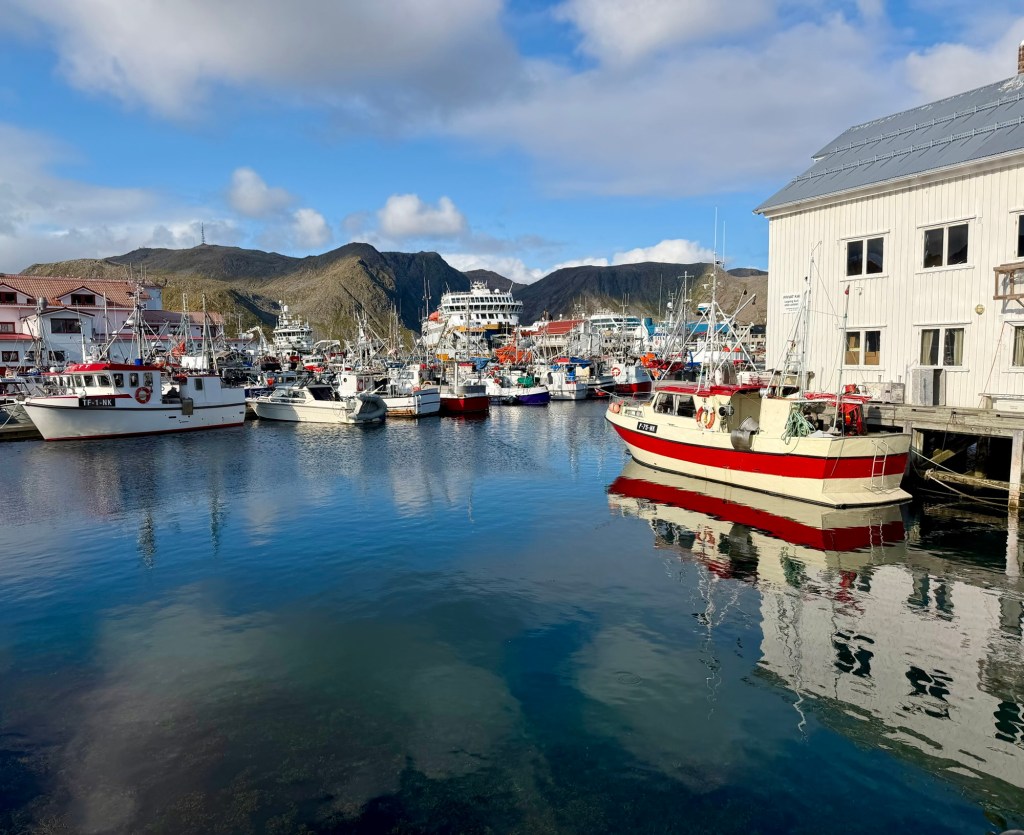
When I woke up again, we had arrived in charming Honningsvåg, the northernmost town in Norway.
I had a bus tour at 1:30 PM, and I was determined to make it, so I got up and headed into the dining room at lunchtime. I was still extremely queasy, so I ended up with a banana and two slices of rye bread. Then I asked a waitress to bring me some peanut butter, made myself a sandwich, and forced myself to eat half of it.
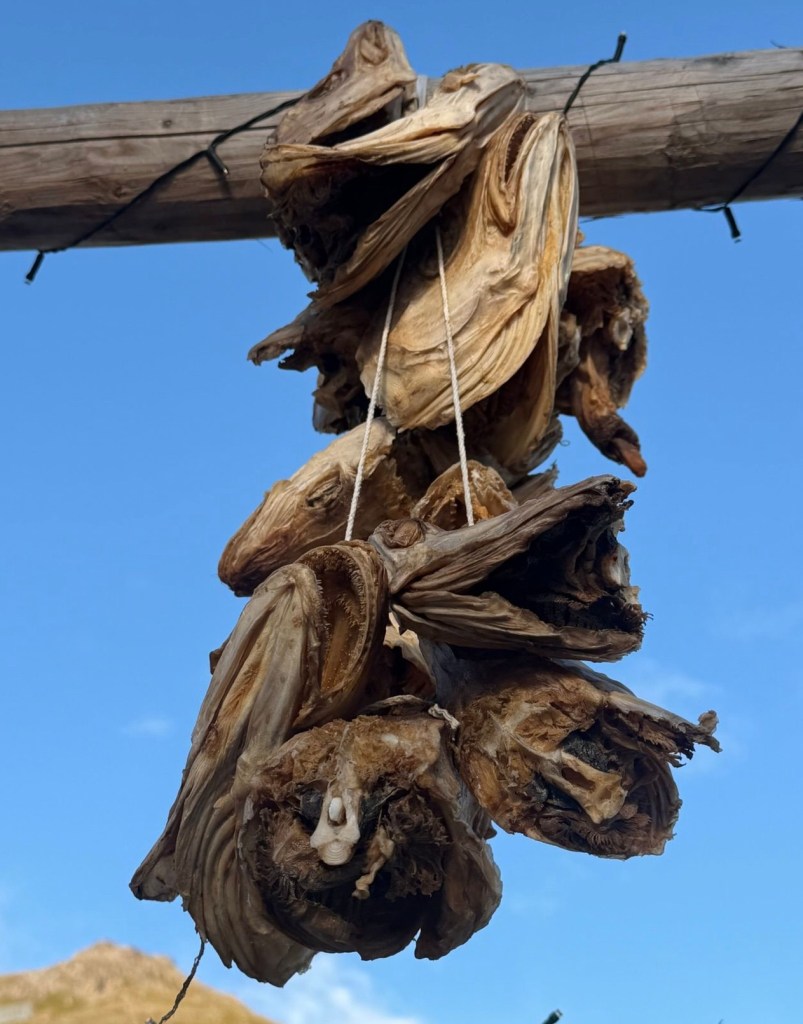
Encountering a rack full of dried fish heads did not help my nausea.
I went for a short walk and felt marginally better. I stopped into a 7-Eleven and asked if they had ginger ale. Doing this completely in Norwegian, the cashier picked up on the “ale” part and started telling me that the liquor store was closed. I explained that ginger ale was brus (pop), not øl (beer). Apparently, they don’t have ginger ale here, but he did sell me an energy shot containing ginger and lemon. There’s no caffeine in their energy drinks here, and they contain very little sugar.
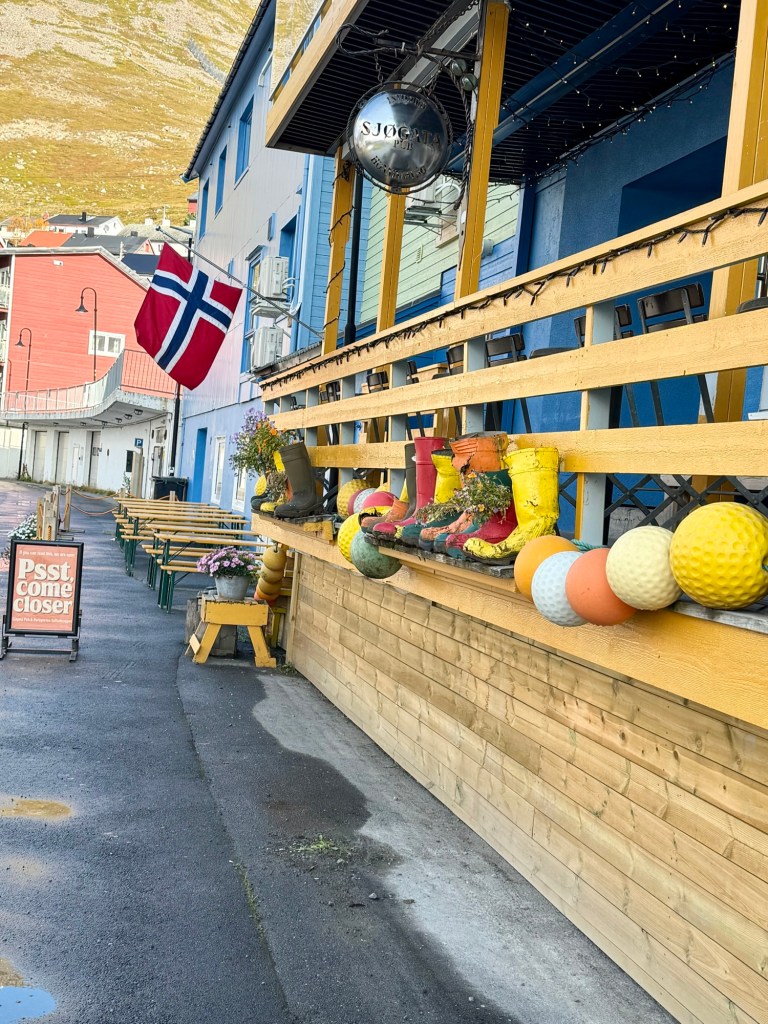
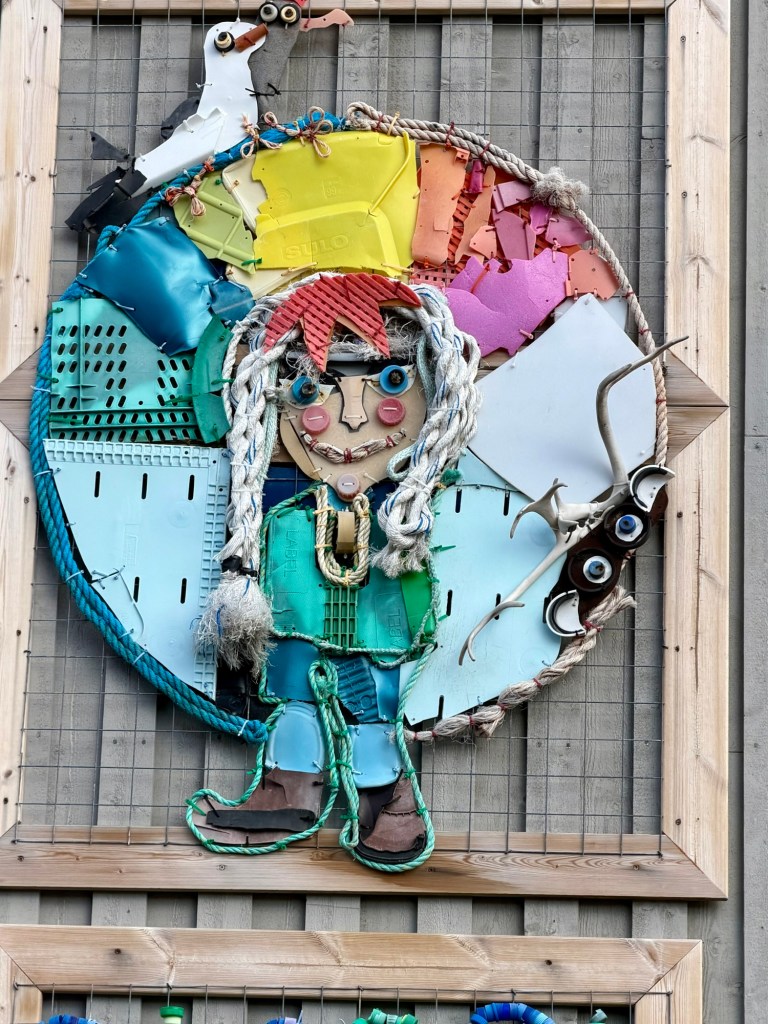
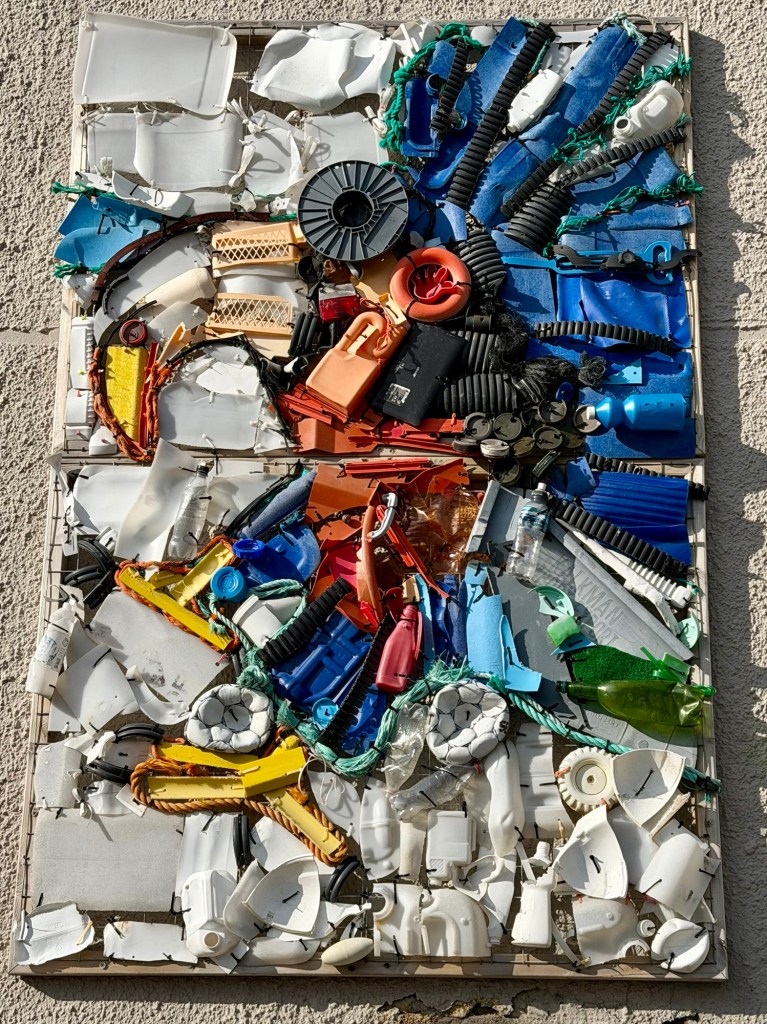
Along my walk, I enjoyed the recycled art created by local students who scavenged beaches for discarded garbage. This initiative is called Global Challenges.
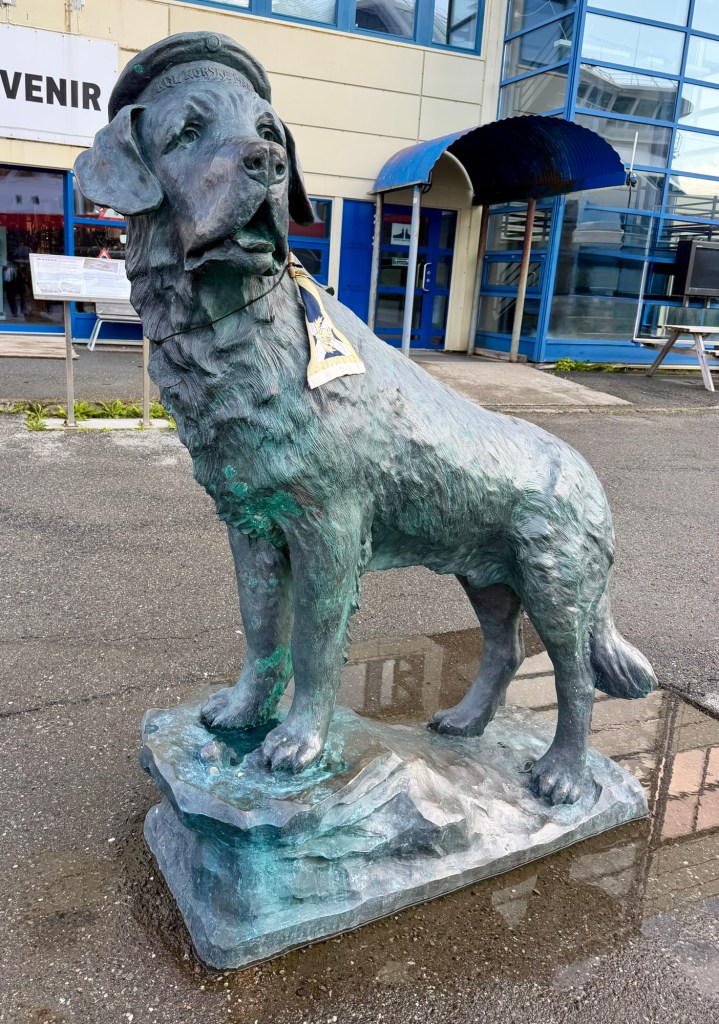
I had read previously that Honningsvåd had a copper statue of Bamse, the heroic Saint Bernard who served aboard the WWII Norwegian minesweeper Thorodd, so I was thrilled to locate it. He had saved the lives of two sailors and died in Montrose, Scotland while still on duty; while his statue in Honningsvåg faces Scotland, an identical one in Montrose faces Honningsvåg.
Alas, lovely Bamse.
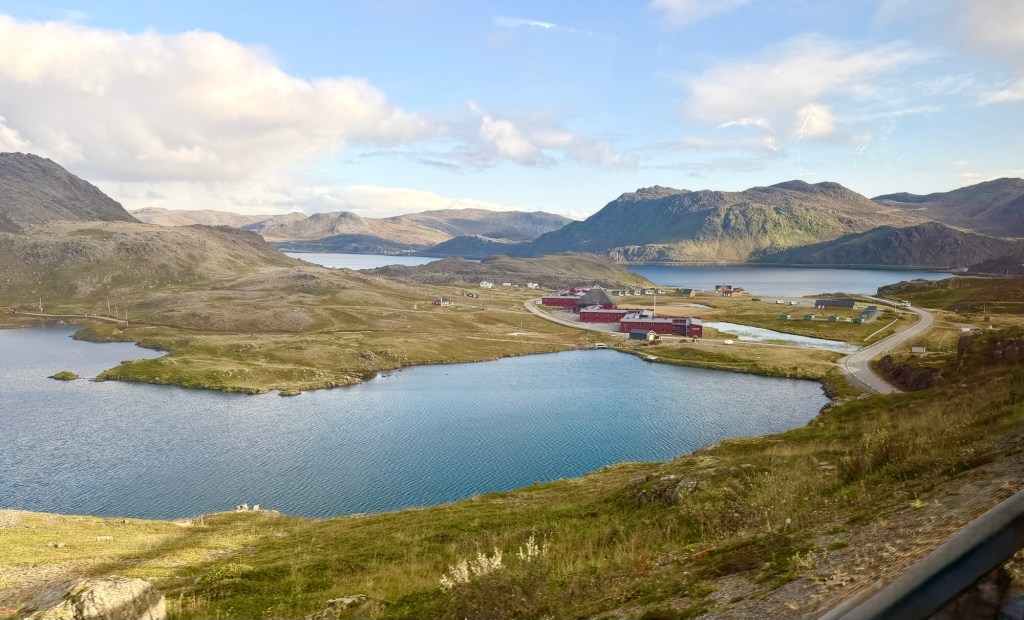
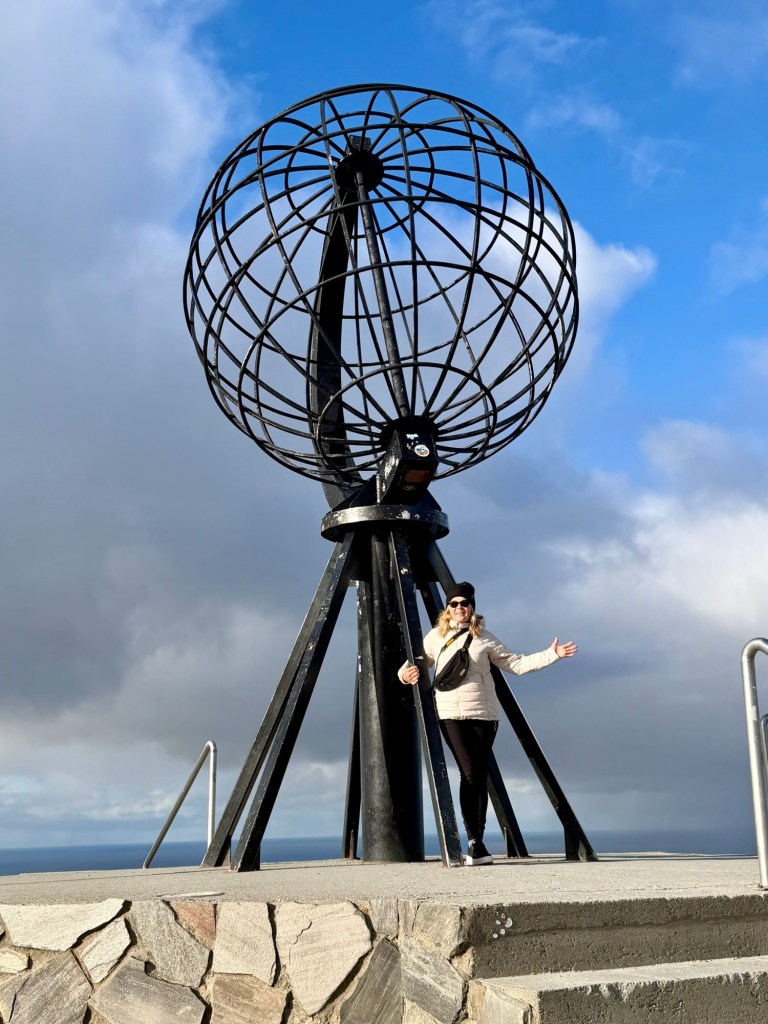
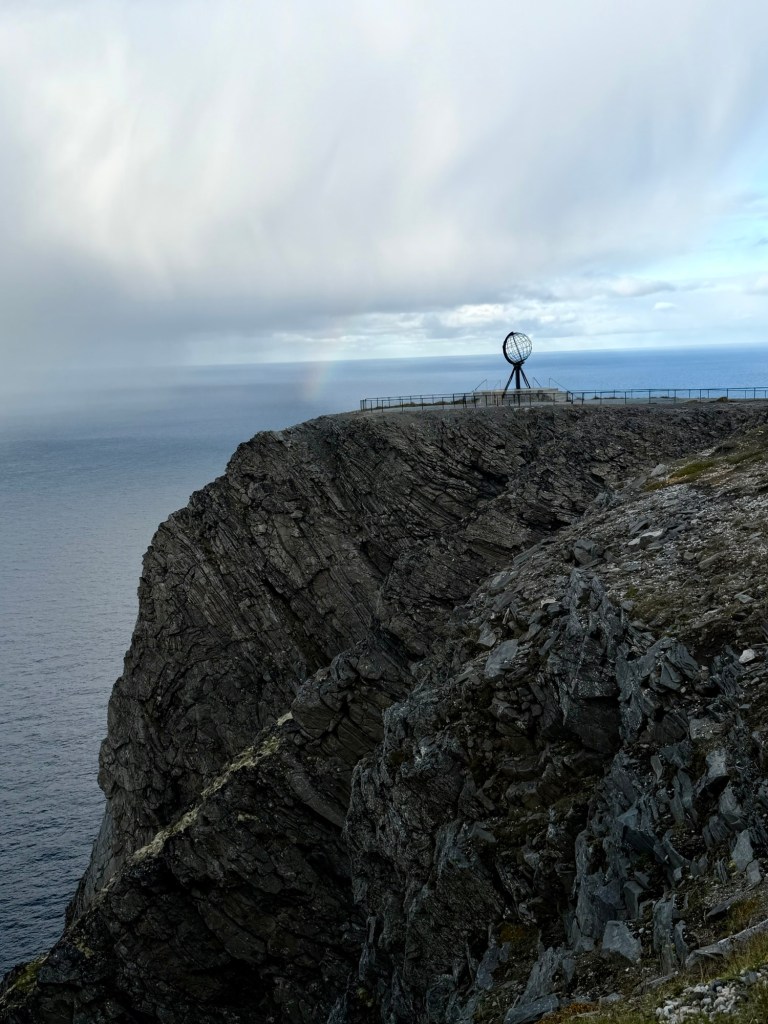
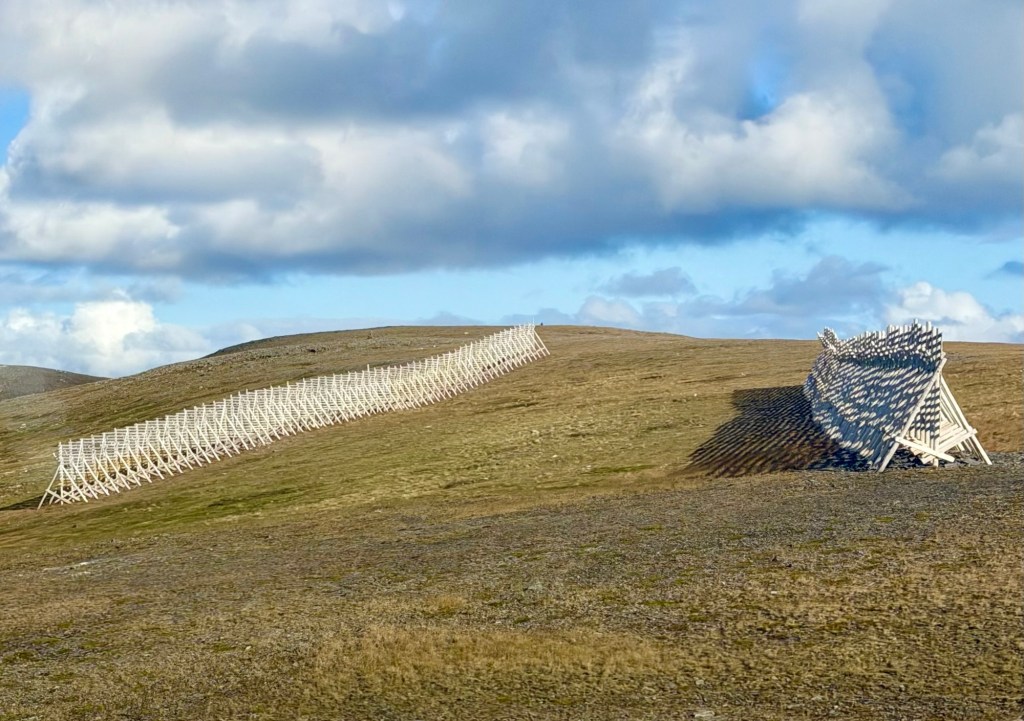
I was glad to make my bus tour, even though I was still feeling a bit green. We drove to the North Cape, the northernmost point in Europe accessible by road. Being high in the Arctic, there  were no trees, so the landscape was completely otherworldly.
Nordkapp round monument
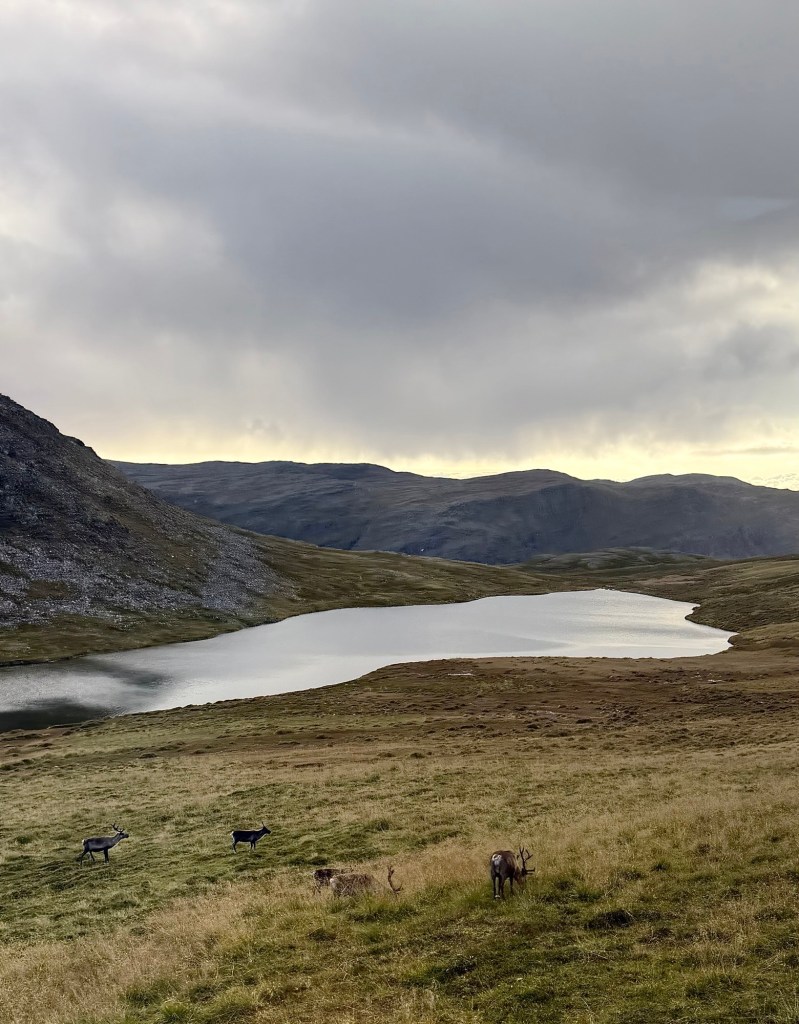
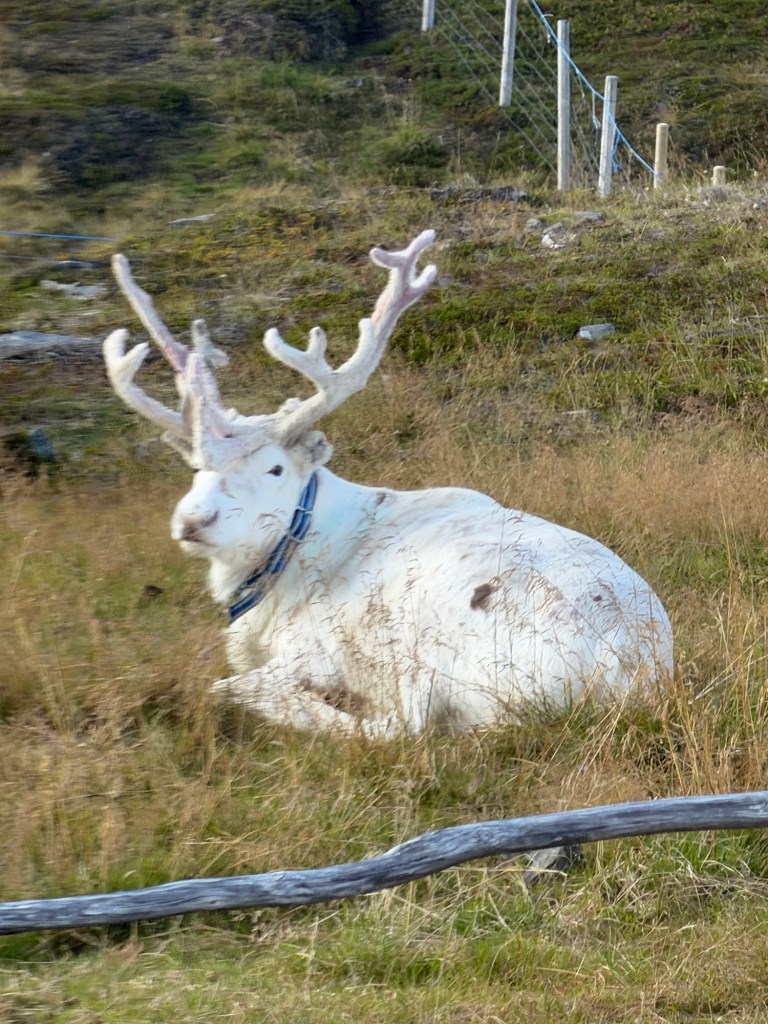
I saw a lot of reindeer along the way. Most were earthy shades that camouflage with the landscape, but the odd one was white which is caused by a genetic mutation called leucism. Not to be confused with albinism, leucism reduces pigmentation in the skin and hair but doesn’t affect the eyes. Interestingly, some leucistic reindeer have hearing problems or even deafness.
Reindeer camouflaged against the backdrop Reindeer grazing on lichen and moss
We passed a touristy Sami roadside kiosk that had three tired looking, roped-up reindeer, one of them a big white beauty. I was actually glad that the bus didn’t stop here.
Back on board, we had a Sami dinner. Whitefish and Reindeer sure tasted good after half a peanut butter and banana sandwich!
A few fun facts about this area:
The police work two hours a week.
It’s fairly mild in winter, but there are gale-force winds that can make the wind-chill bitterly cold.
There’s a tiny beach that locals have nicknamed Copacabana Beach. The water reaches a balmy 10°C in summer.
The ubiquitous fish drying racksNext: Polar Bears
I have a long 36-40 hours ahead of me crossing the Barents Sea. I’m hoping for smooth sailing… wish me luck! 🤢
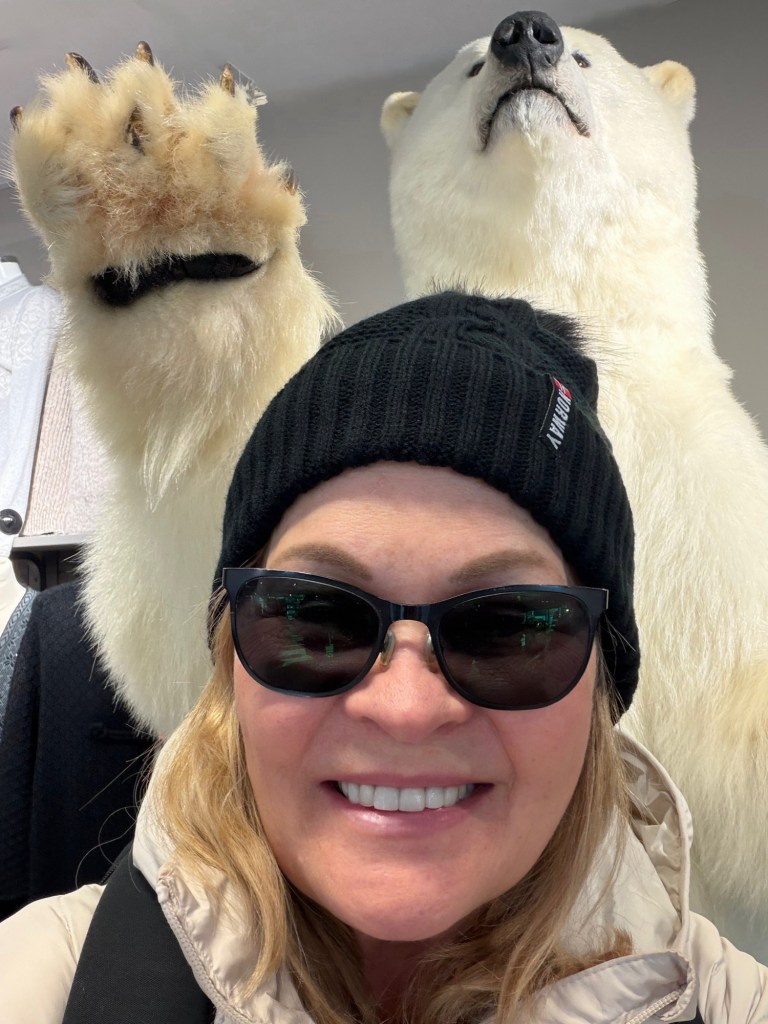
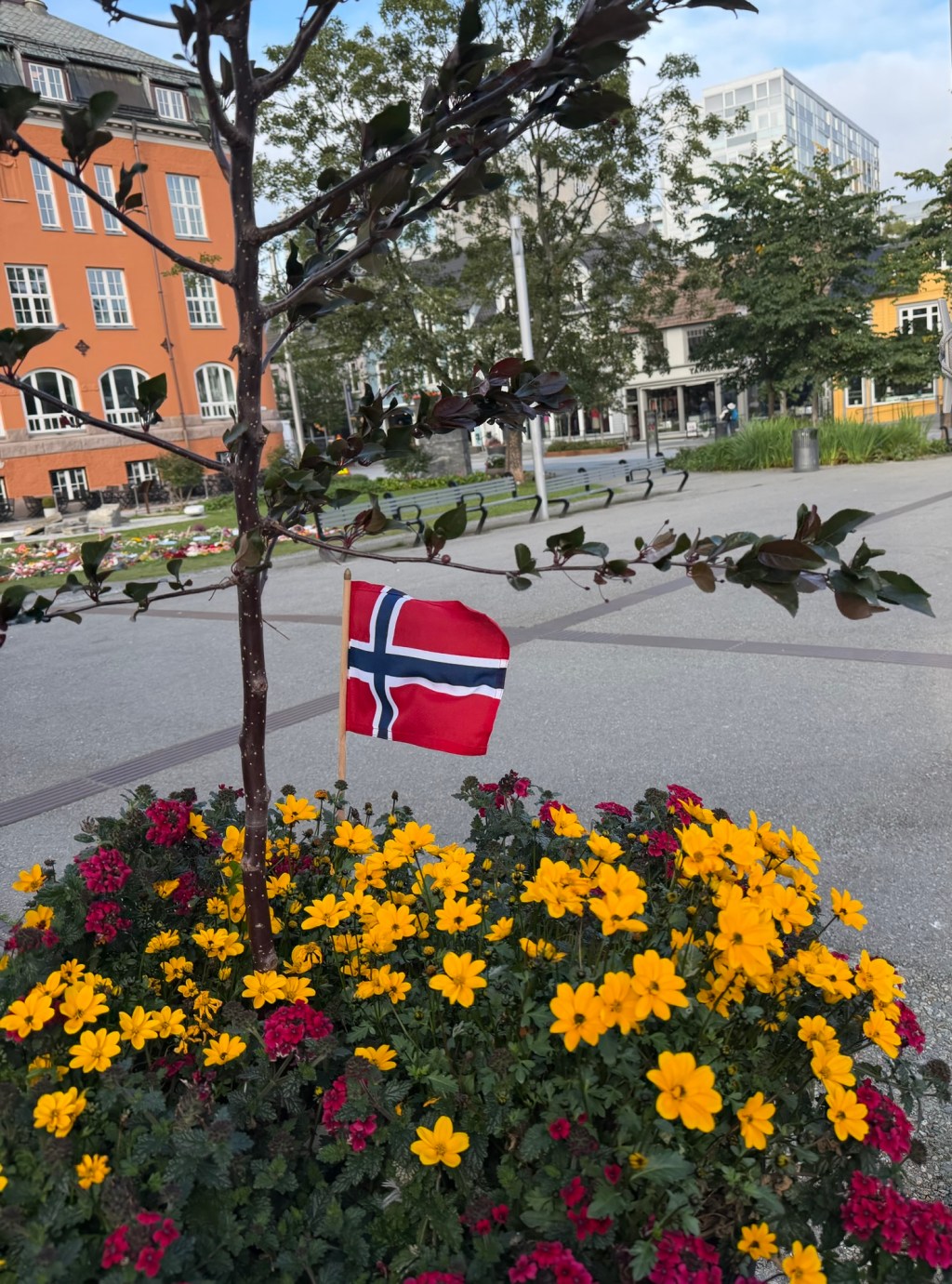
Today the Hurty landed in Tromsø, Norway’s Arctic hotspot and a surprisingly modern city that is home to the world’s northernmost university, UArctic. I couldn’t help wishing I’d been able to find a hoodie with that emblazoned across the front!
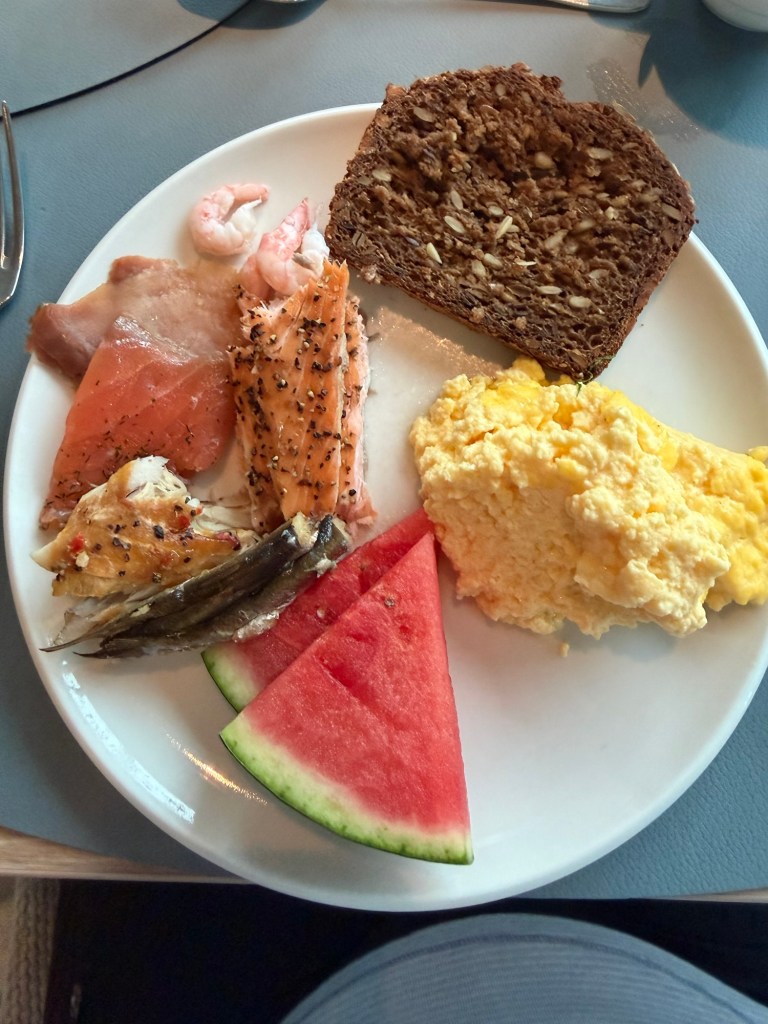
My breakfast of champions
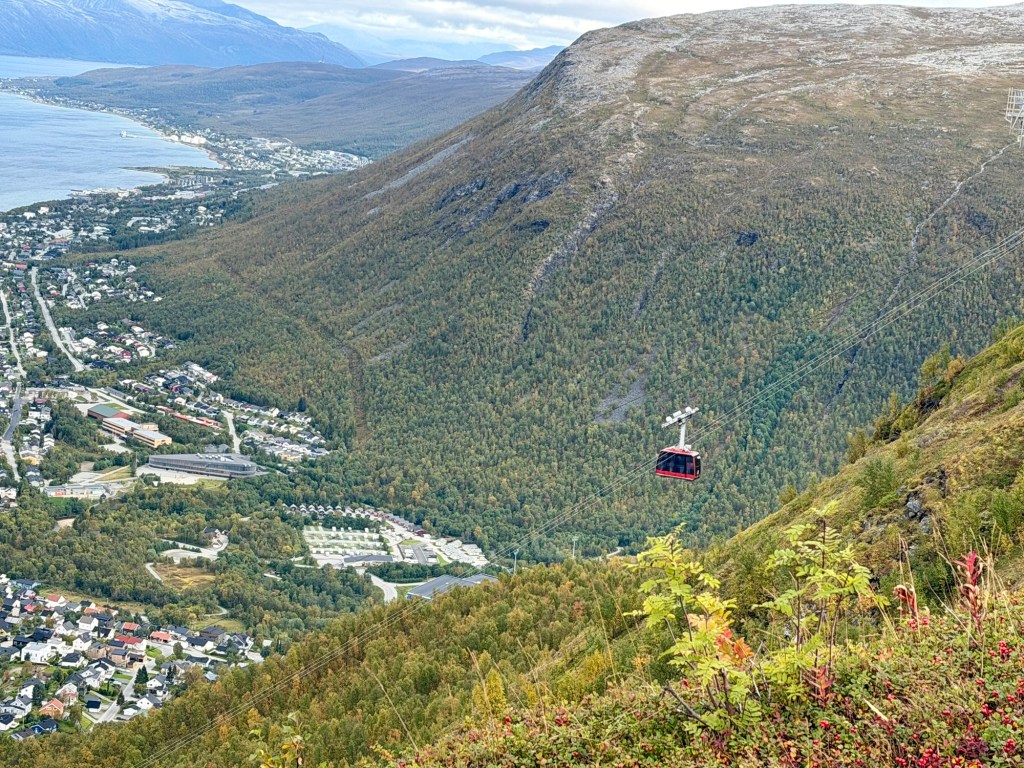
After a bus ride that made good use of Tromsø’s many underground tunnels — including one that goes beneath the sea — I boarded the Fjellheisen gondola, following a breakfast that would have made my dad proud. The spread included dansk røgbrød, sardines, baked salmon, cured salmon, smoked salmon, smoked mackerel and shrimp. Basically, my breakfast was an entire Scandinavian buffet though I forgot raw vegetables.
Marla continues to challenge her fear to heights.
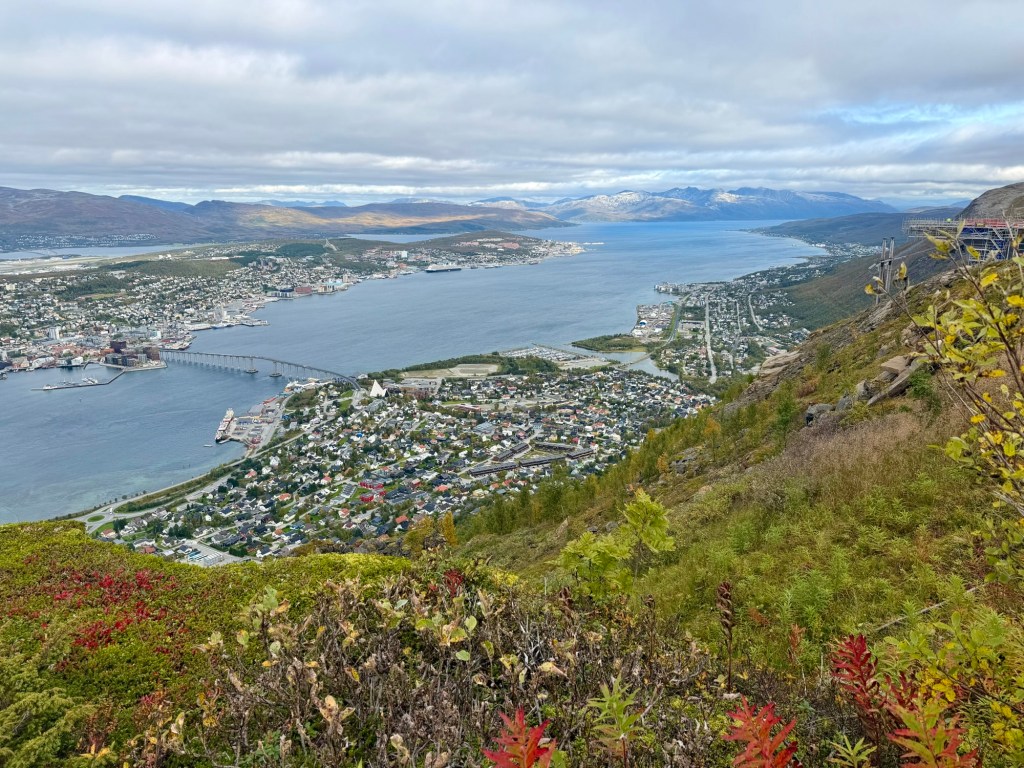
With an ascent of 421 metres, the gondola didn’t challenge my aversion to high places as much as the Bergen experience, and the reward was a commanding view over Tromsø and the vast Arctic backdrop.
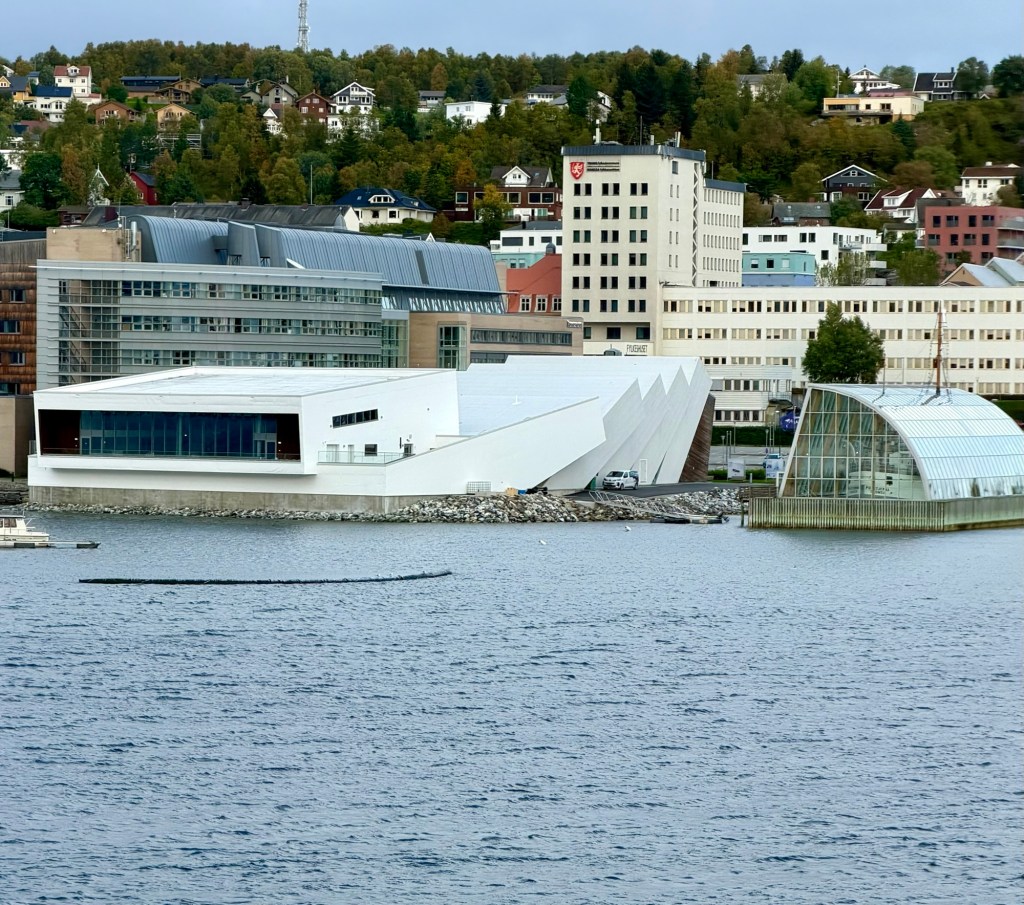
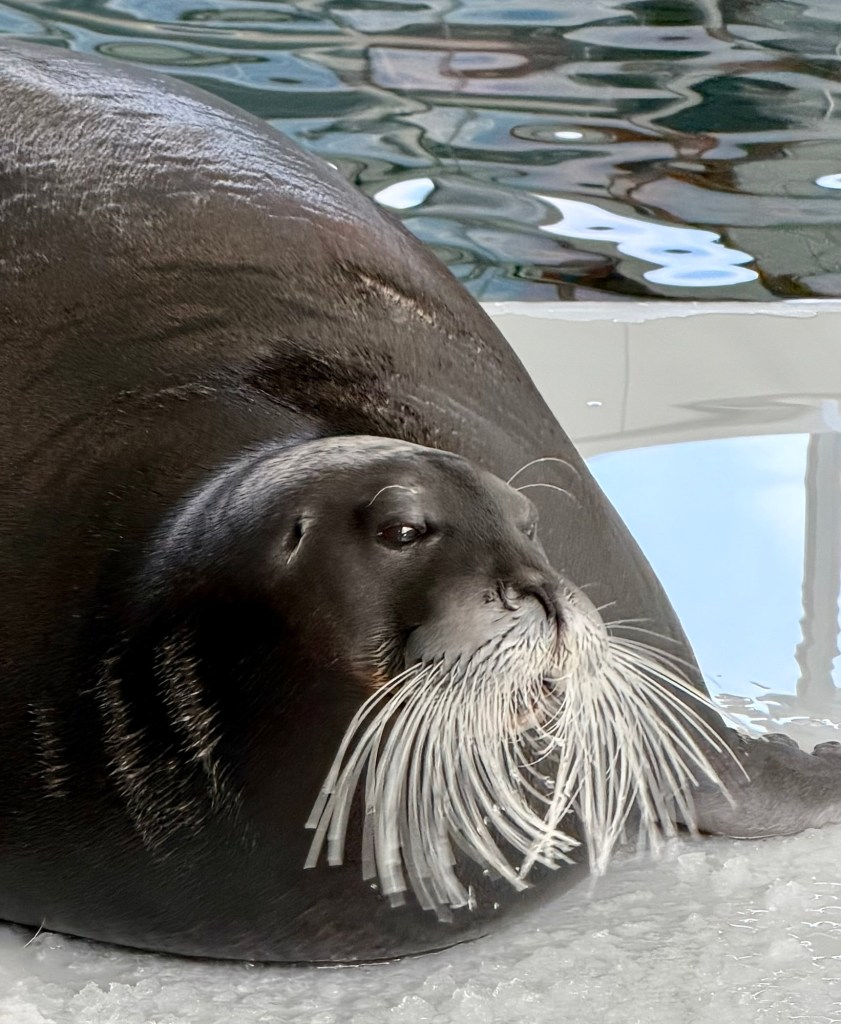
Next came Polaria, the Arctic aquarium, which houses a permanent group of resident seals — including bearded seals, harbour seals and a ringed seal — as part of its public exhibition and education programme. I have mixed feelings about the whole experience, so I’ll just leave it at that.
Quite the mustache!
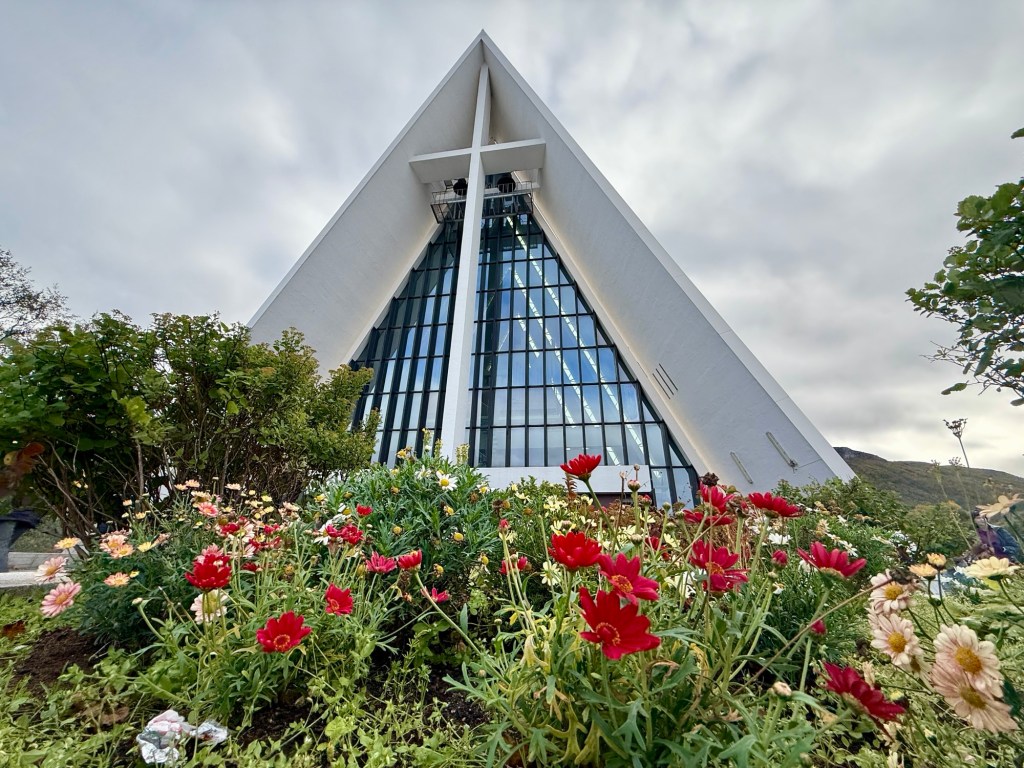
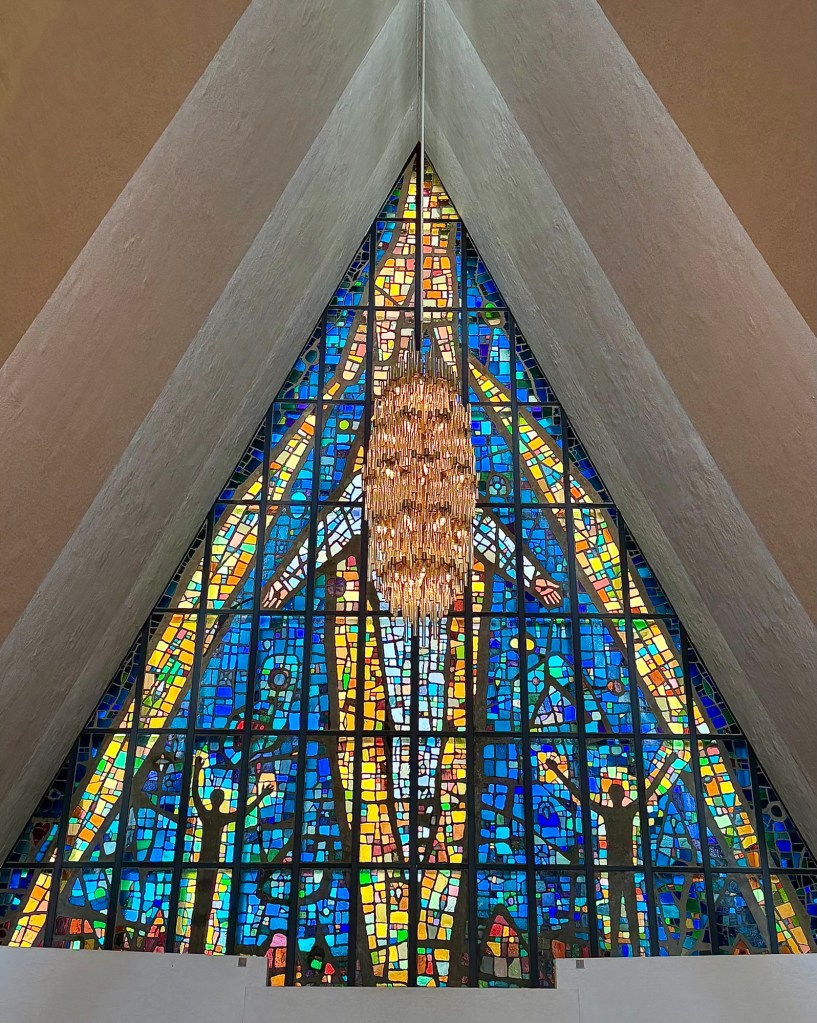
I was thrilled to visit the beautiful Arctic Cathedral. Unfortunately, it was absolutely teeming with tourists. My ship has only around 350 guests, but there was another mega-cruise ship in town which rather changed the atmosphere everywhere I went.
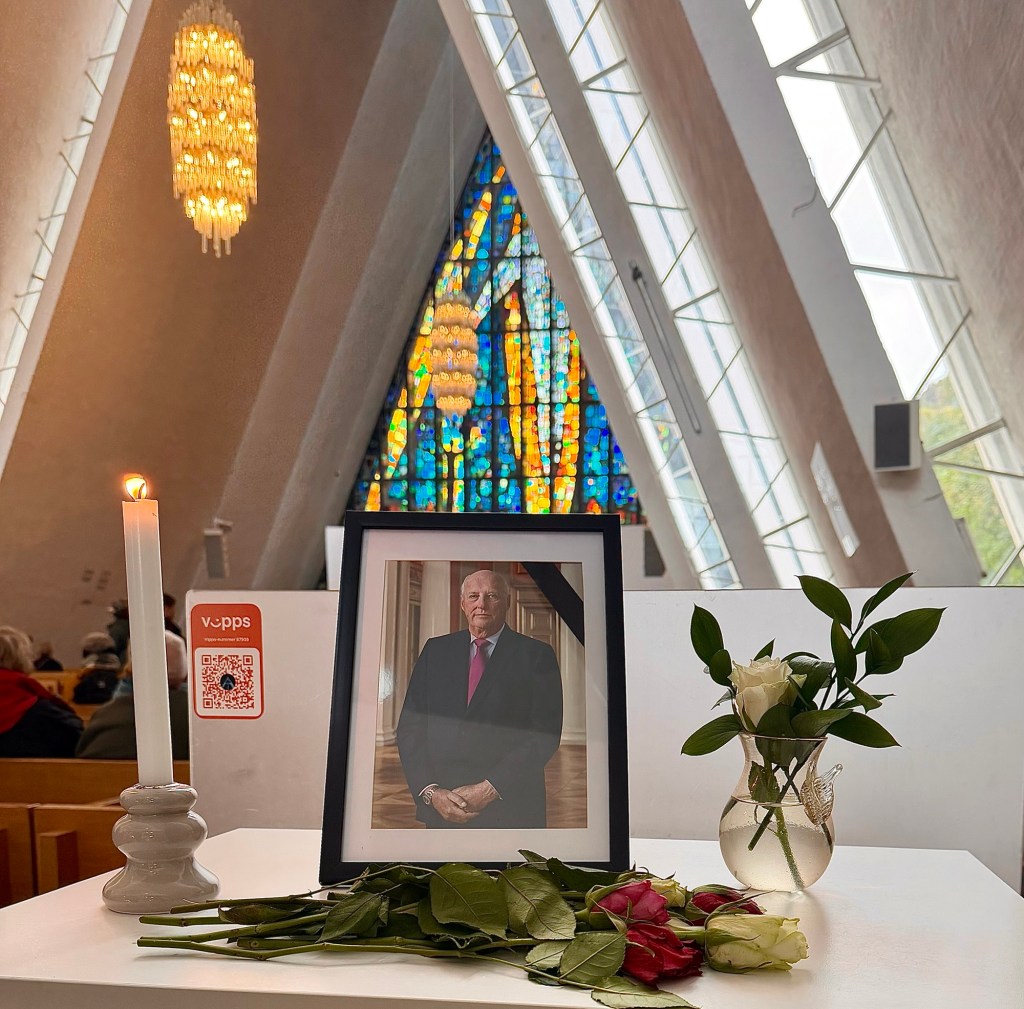
Arctic CathedralTribute to the late Kong Harald
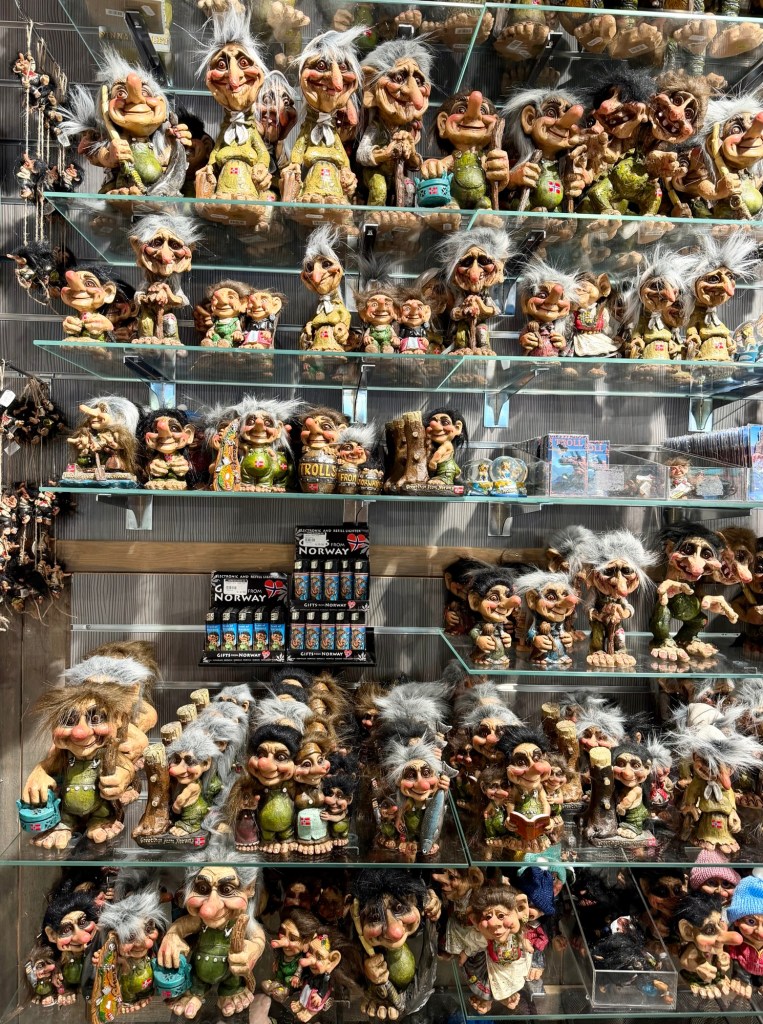
I spent quite a bit of time wandering around Tromsø after my various adventures. I found the centre surprisingly heavy on souvenir shops, especially those selling Sami-themed goods that didn’t always feel authentic. That said, I absolutely love the vibe here — there’s something about the mix of modern Scandinavian architecture and the Arctic feel that really appeals to me.
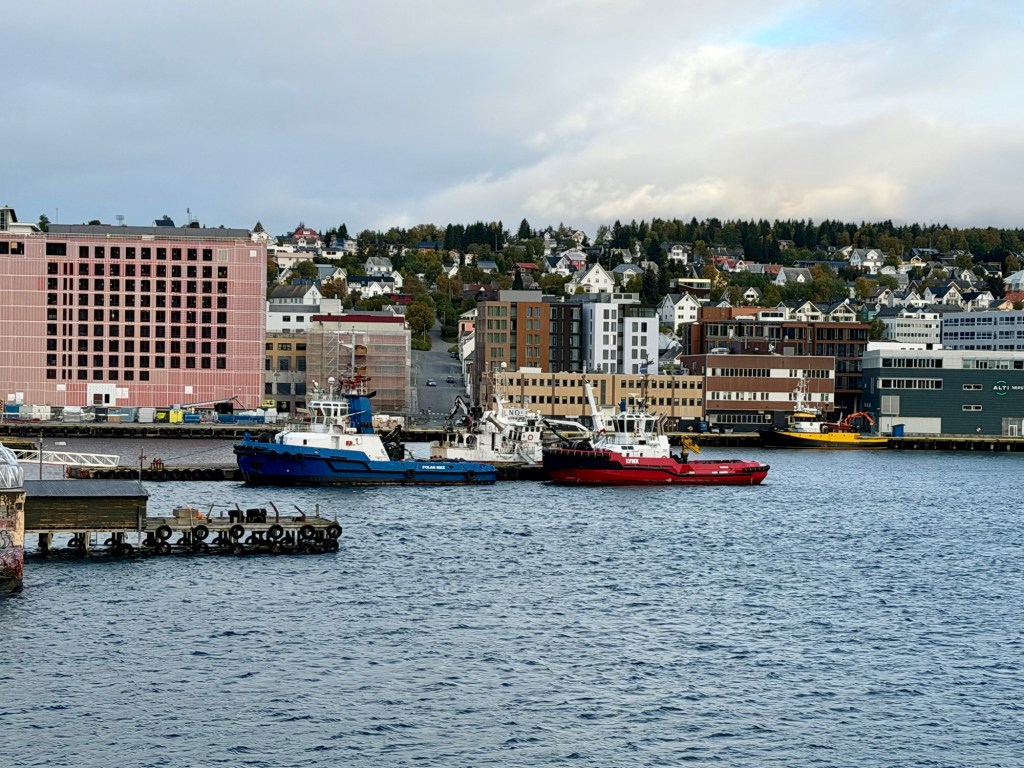
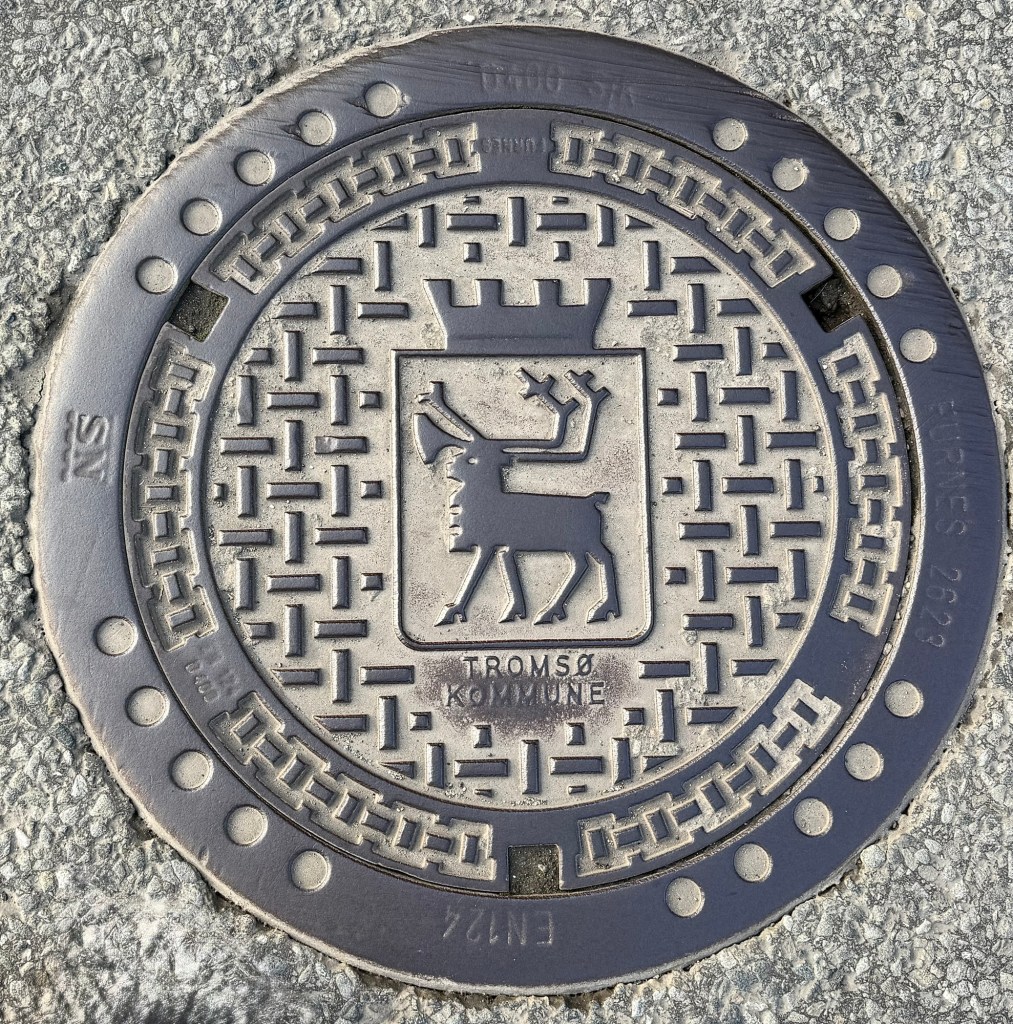
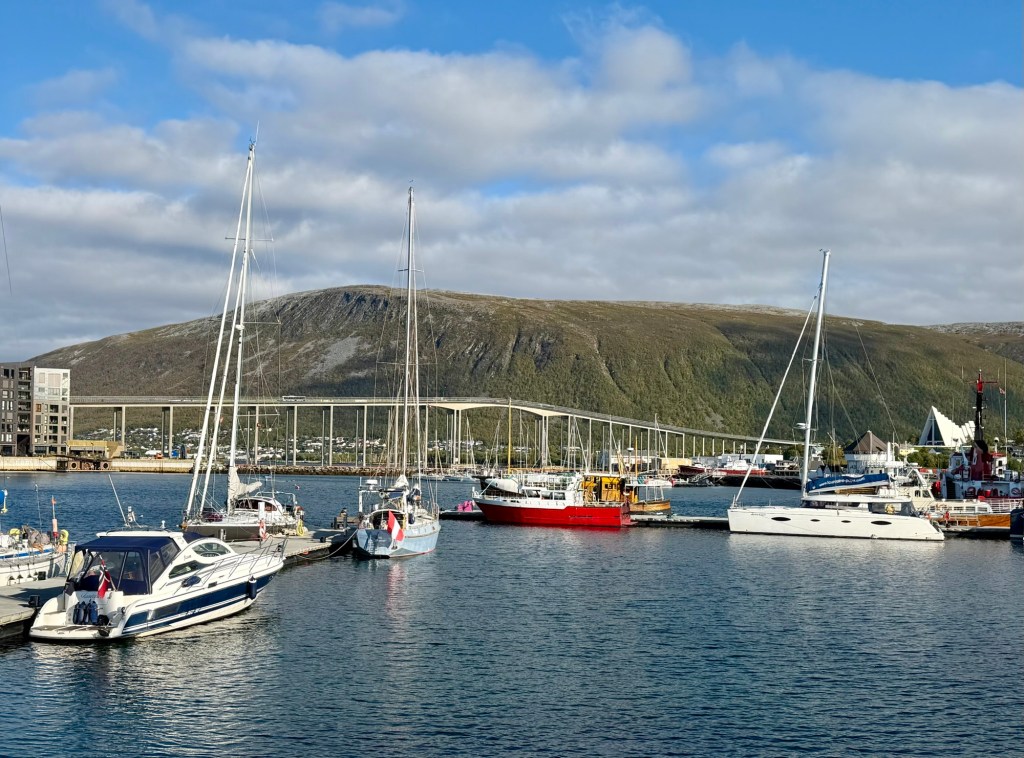
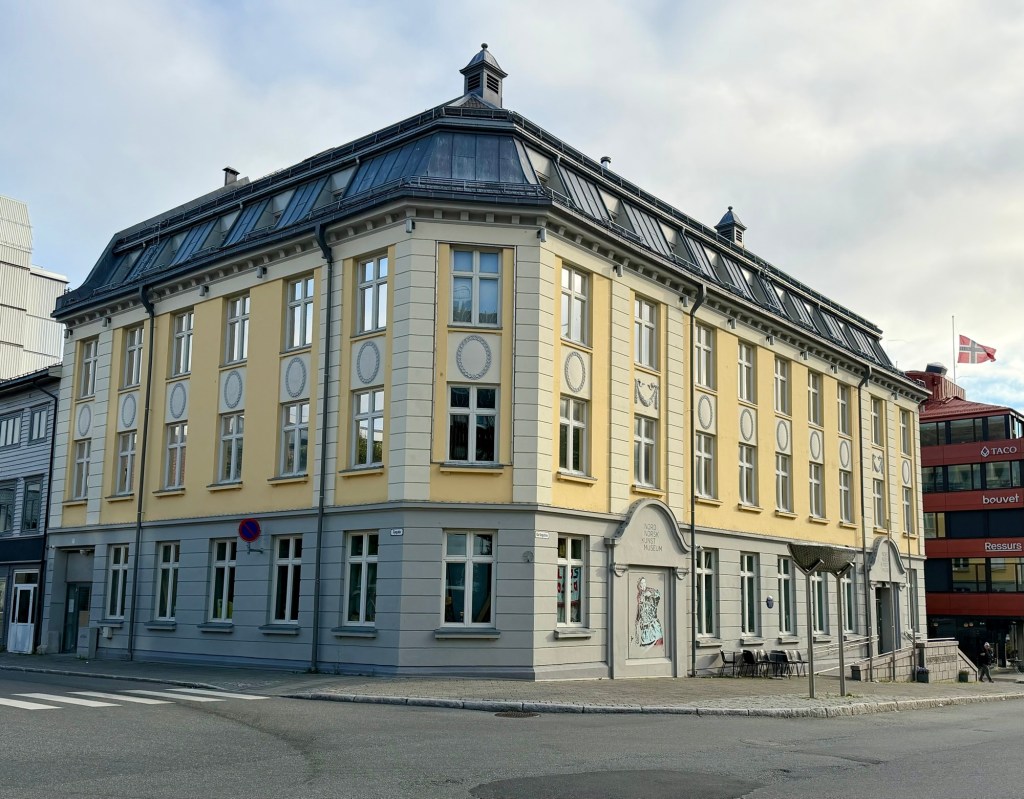
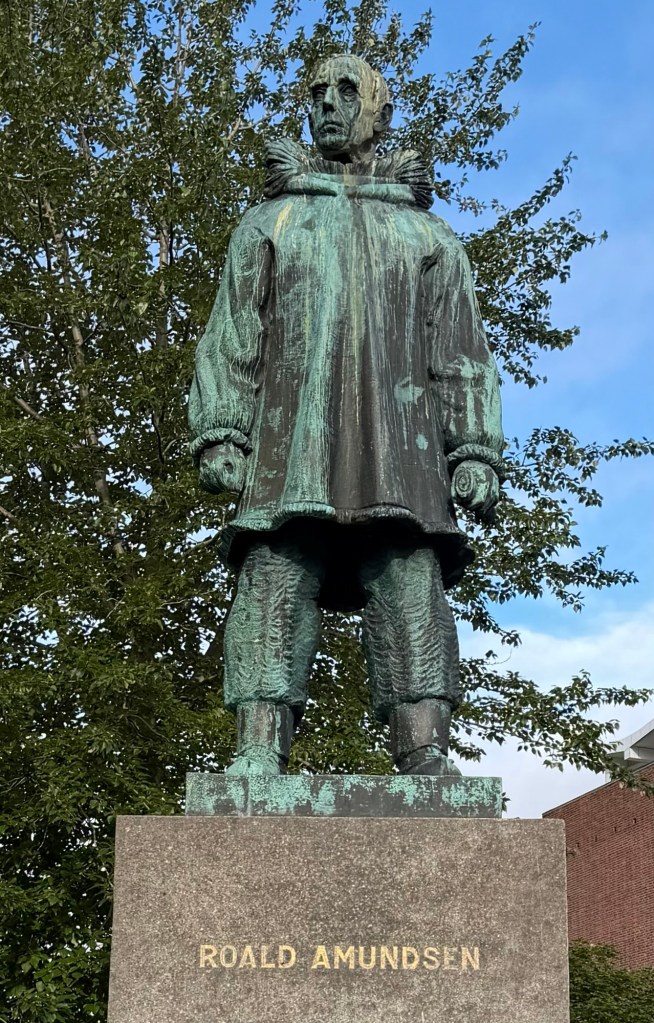
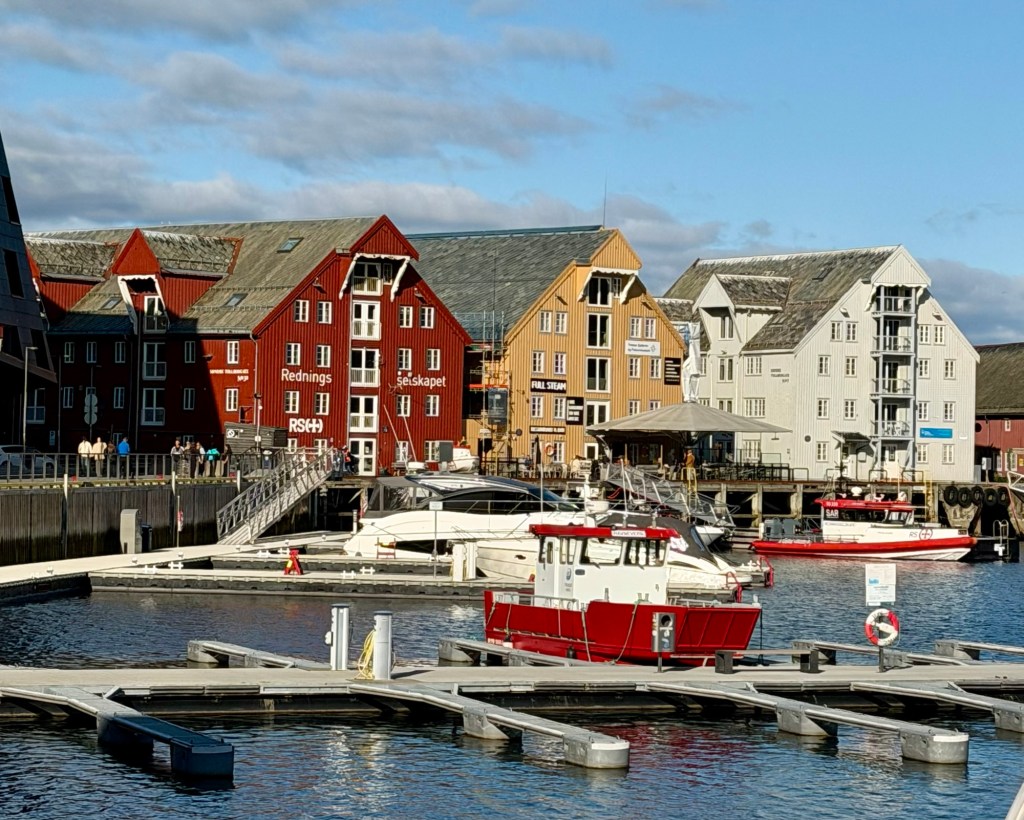
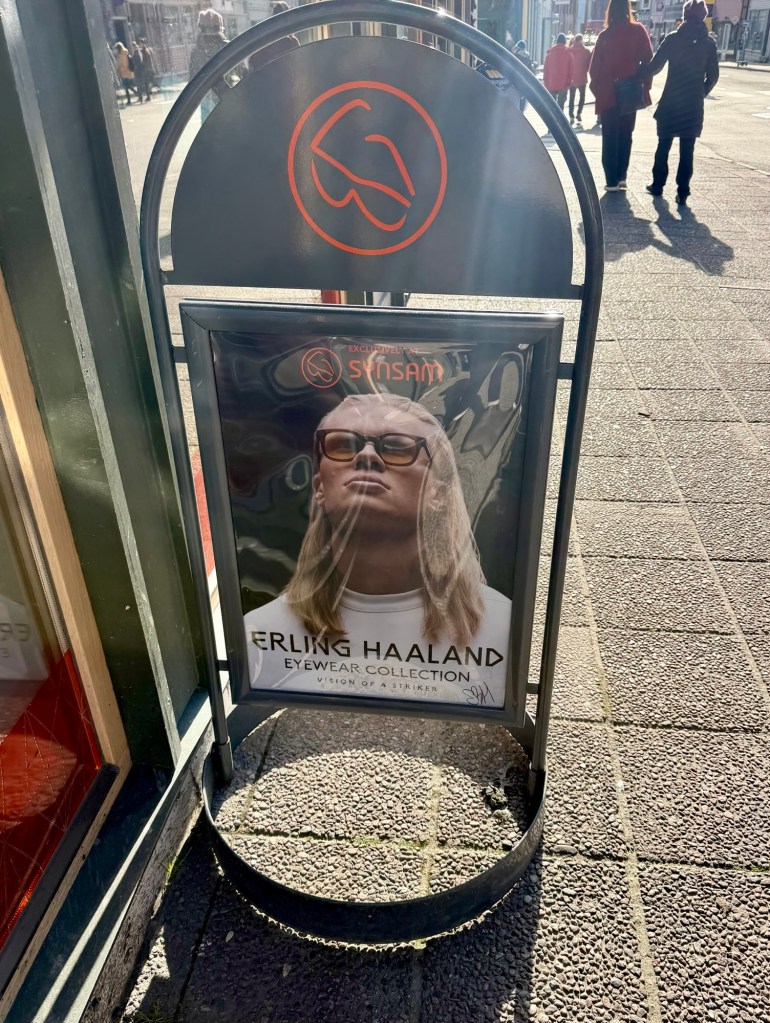
Trolls!The Tromsø manhole cover has the identical reindeer and crown as its official coat of arms.The iconic Tromsø Bridge in the backgroundNord Norsk Kunst MuseumA bronze statue of legendary explorer Roald Amundsen, whose expeditions often began in Tromsø.Traditional wooden warehouses on the historic Tromsø Harbour. I mentioned the significance of the colours in yesterday‘s blog. I am seated with three other solo travelers. I have to say that we are getting on really well. Ha ha ha Haaland, HEY! 🎵
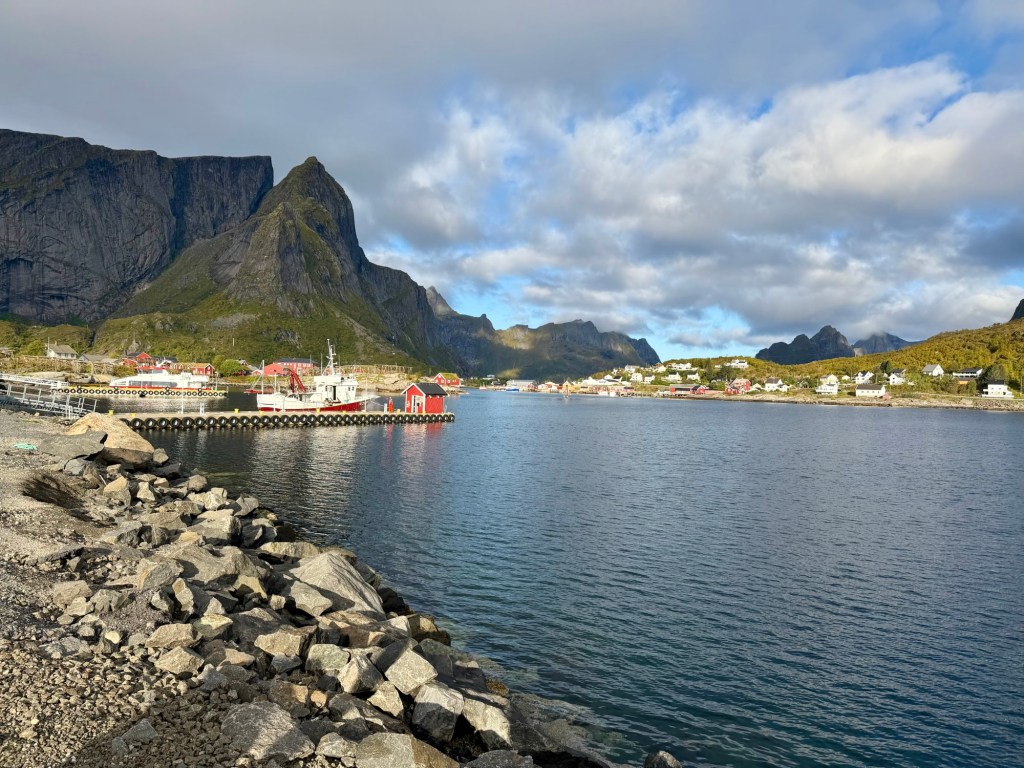
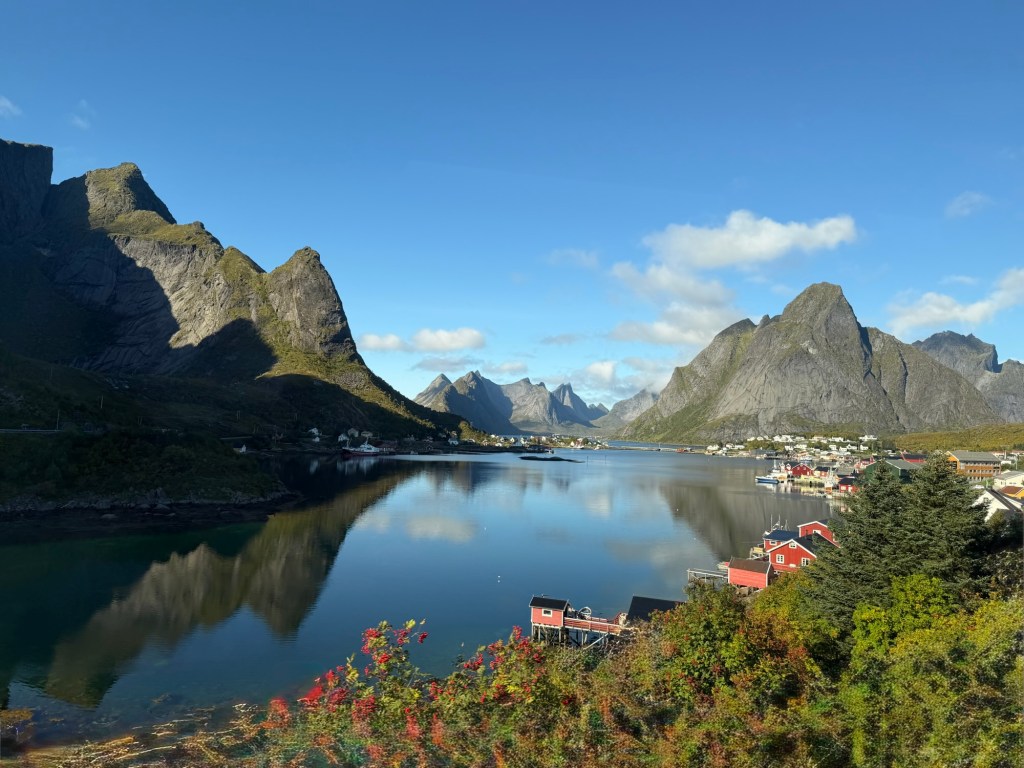
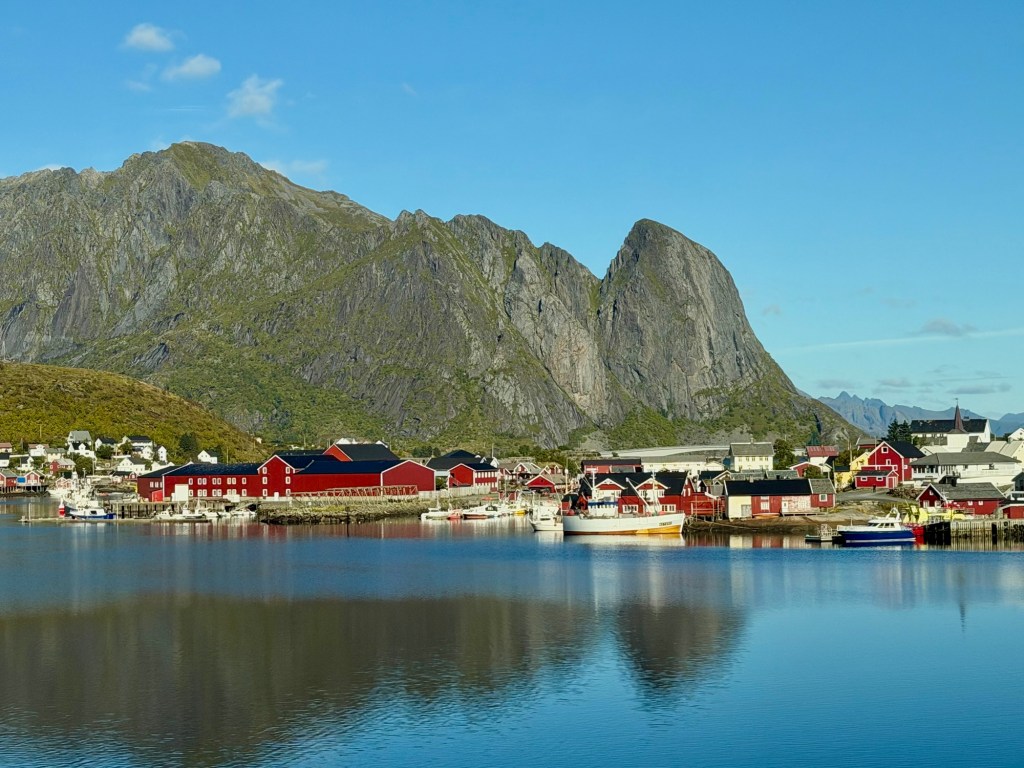
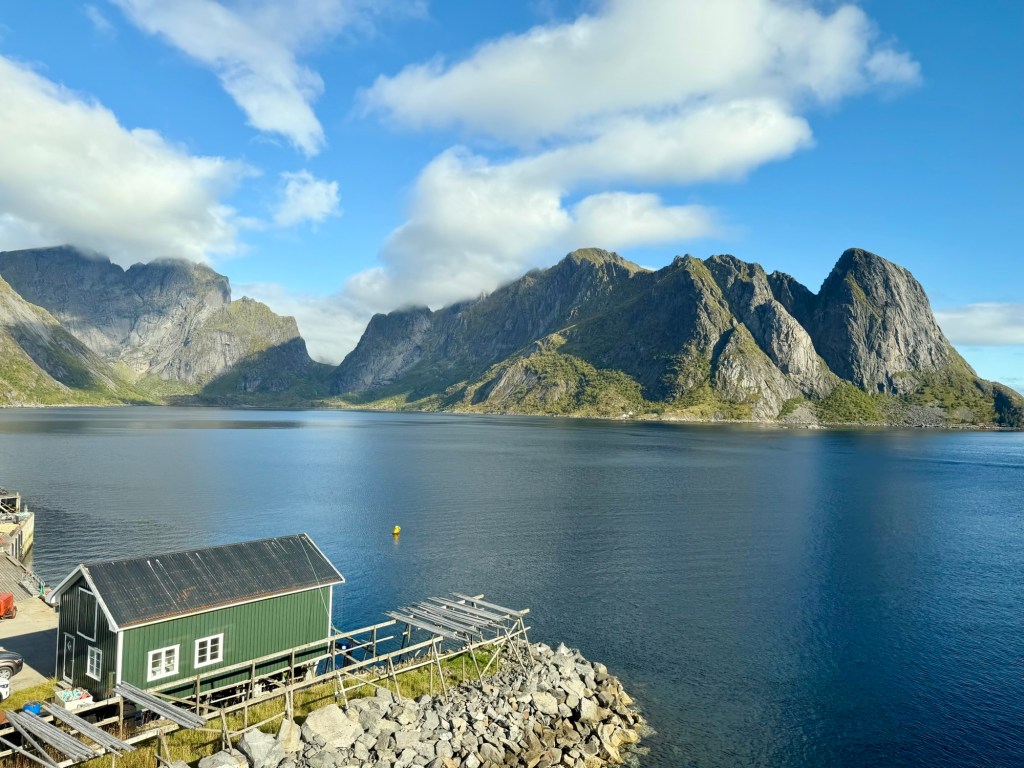
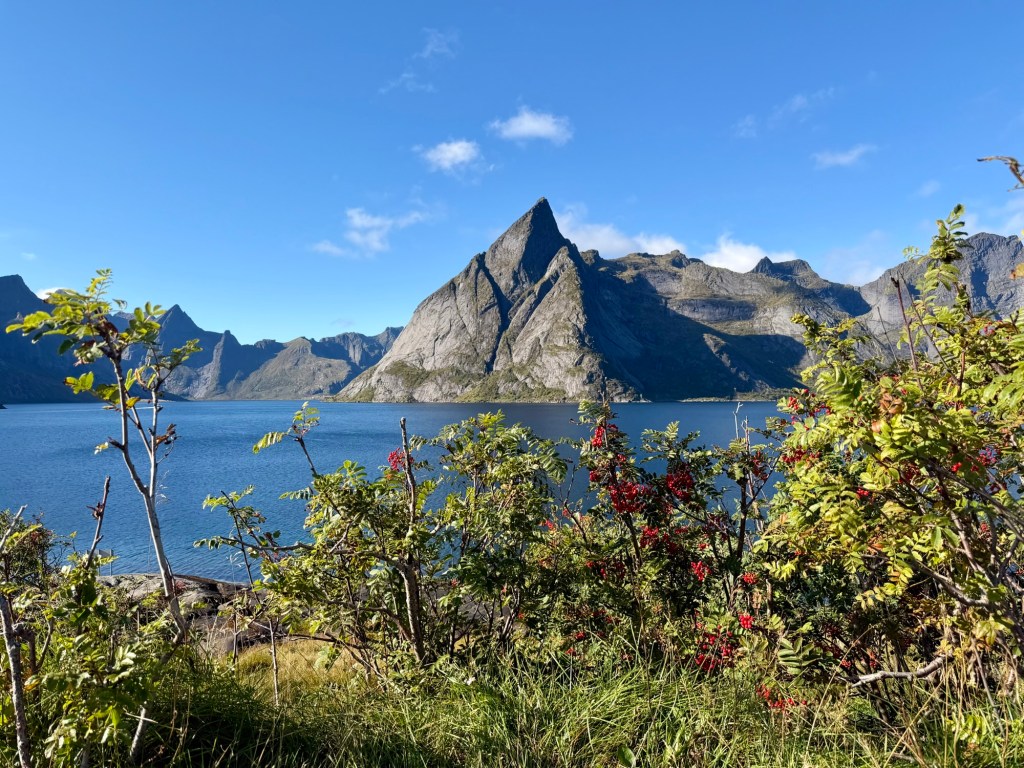
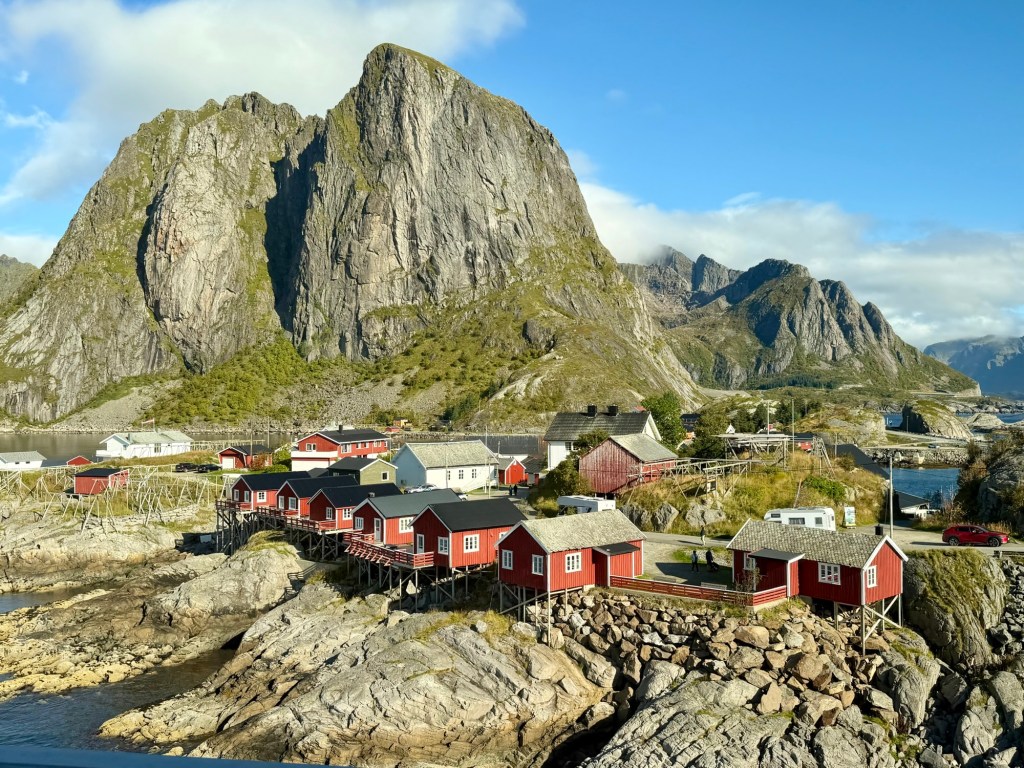
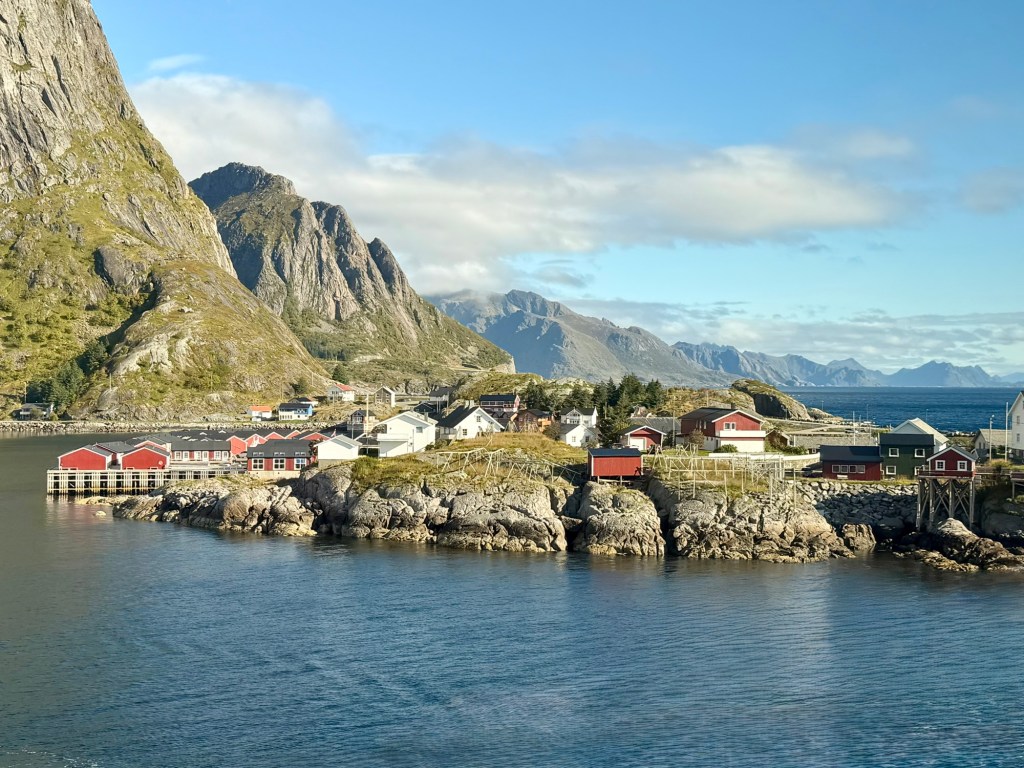
Early this morning, the Hurty docked in the fishing village of Reine on Moskenes Island, at the southern tip of the Lofoten Archipelago. I immediately noticed a similarity in the geography here to Gros Morne, Newfoundland, with its striking glacier-carved mountain peaks towering up directly beside deep coastal waters and fjords.
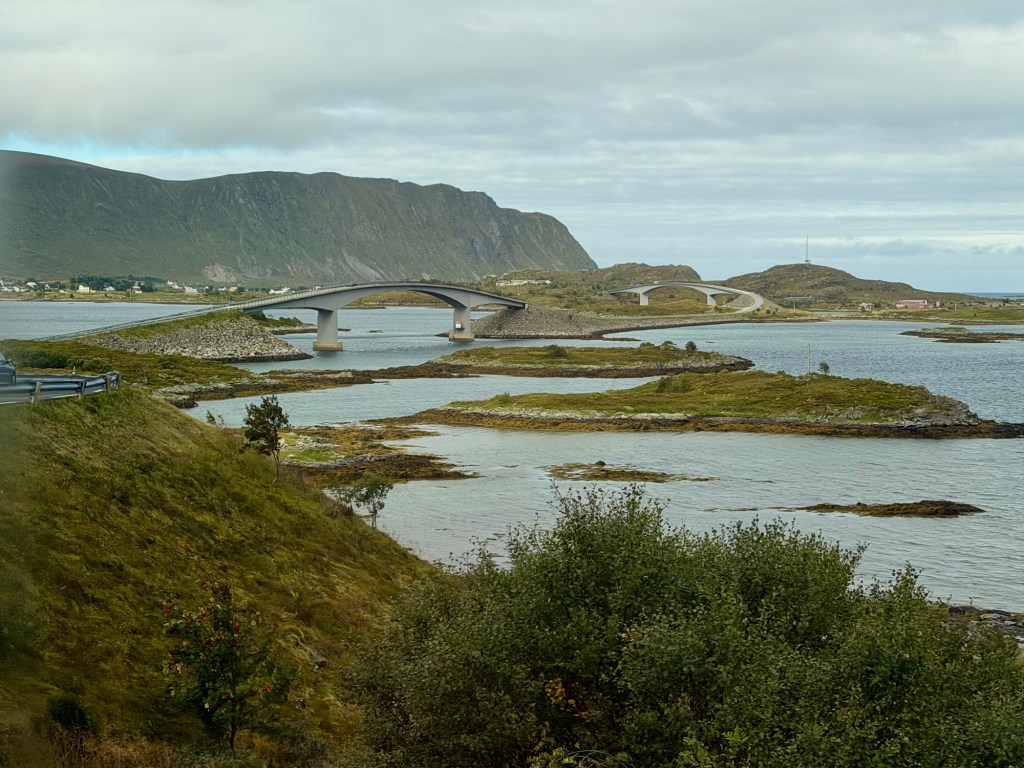
Reine consists of a chain of islands linked by arched bridges and winding coastal roads. I hopped on a bus tour that wound its way down the narrow highway to the town of Å. There, I visited the local fishing museum and sampled cod liver oil — the best I’ve ever tasted! (I wish I had room in my suitcase to bring some home.) Cod liver oil is an important staple here, especially in winter when there is little sunlight.
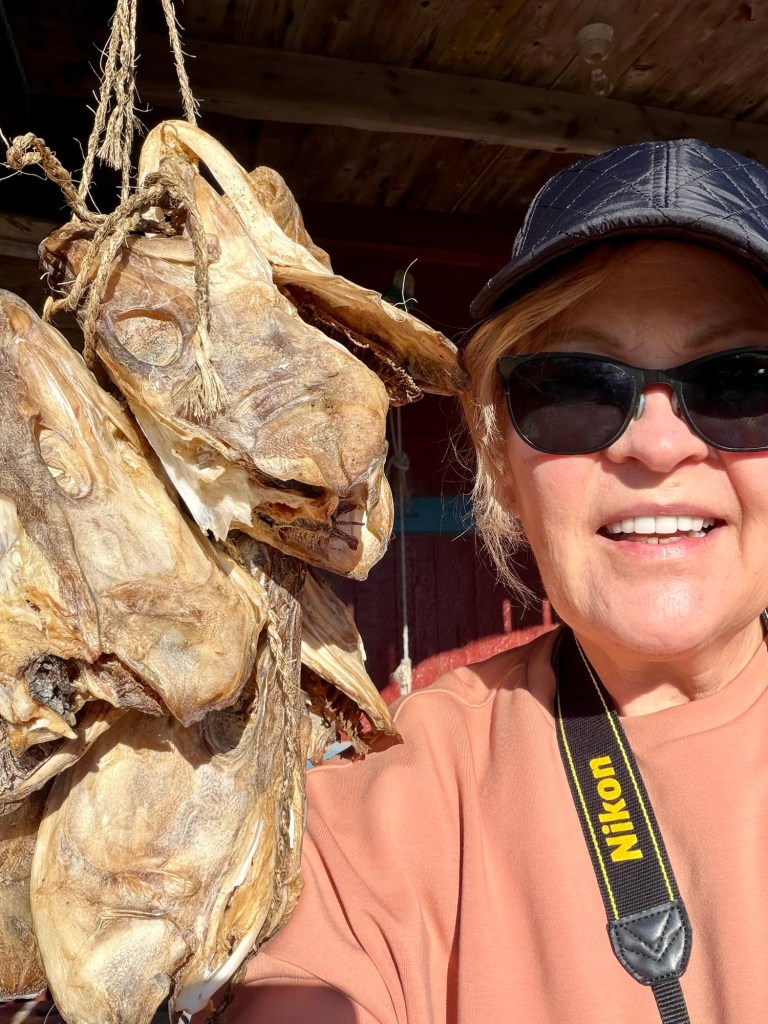
Dried fish heads! One is actually touching my head! 
Historically, cod liver oil was even used to paint houses. Red paint, made from cod liver oil and iron rust (and sometimes animal blood), was the cheapest and most common. And often stinky! Yellow paint, made from Italian clay, was a status symbol for the wealthy. White was reserved for the highest tier, the landlords, and contained zinc imported from Sweden.
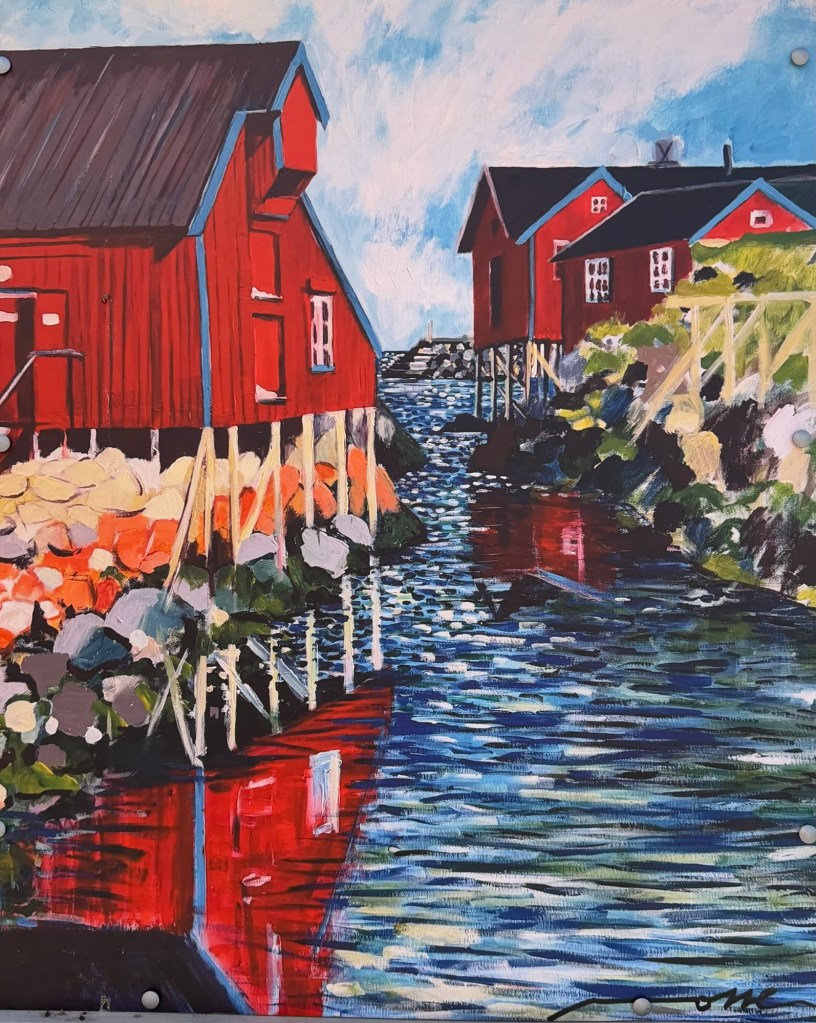
Local artwork
Thankfully, there is no socioeconomic link to paint colour today. And you won’t find many wild colours here; they wouldn’t be approved by the local kommune.
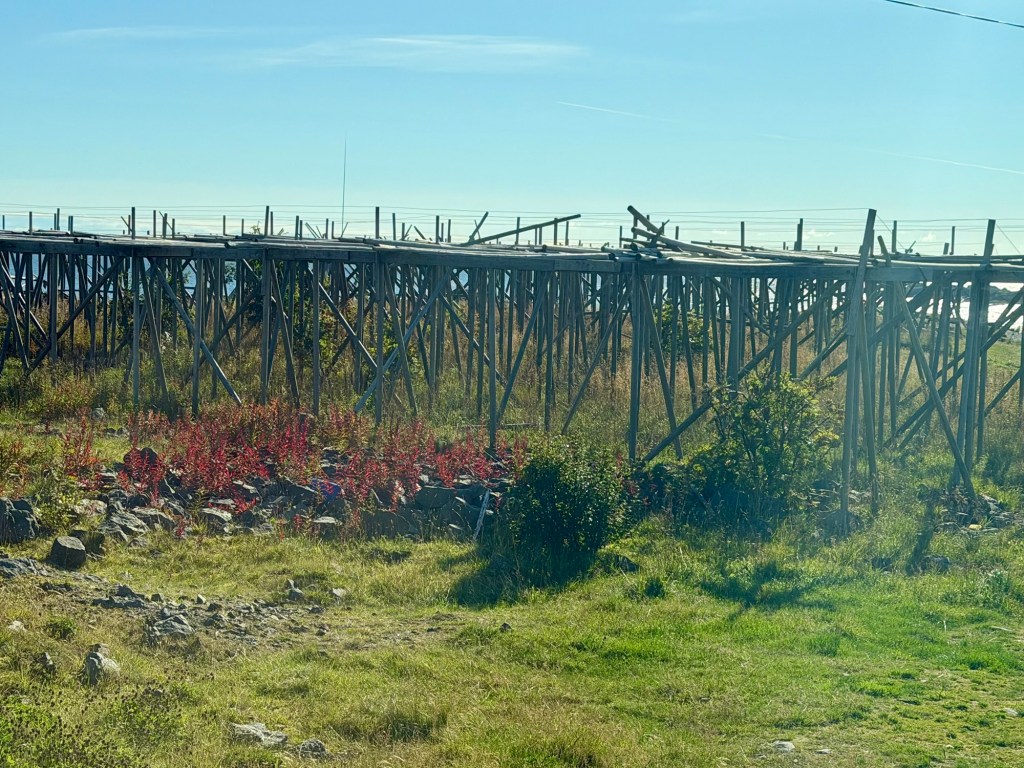
Stockfish racks for drying Arctic cod are a ubiquitous sight all over Lofoten. Cod fishing is open from January to April, after which the fish are dried for 2-3 months. Properly dried cod can remain edible for 10-15 years!
Stockfish racks
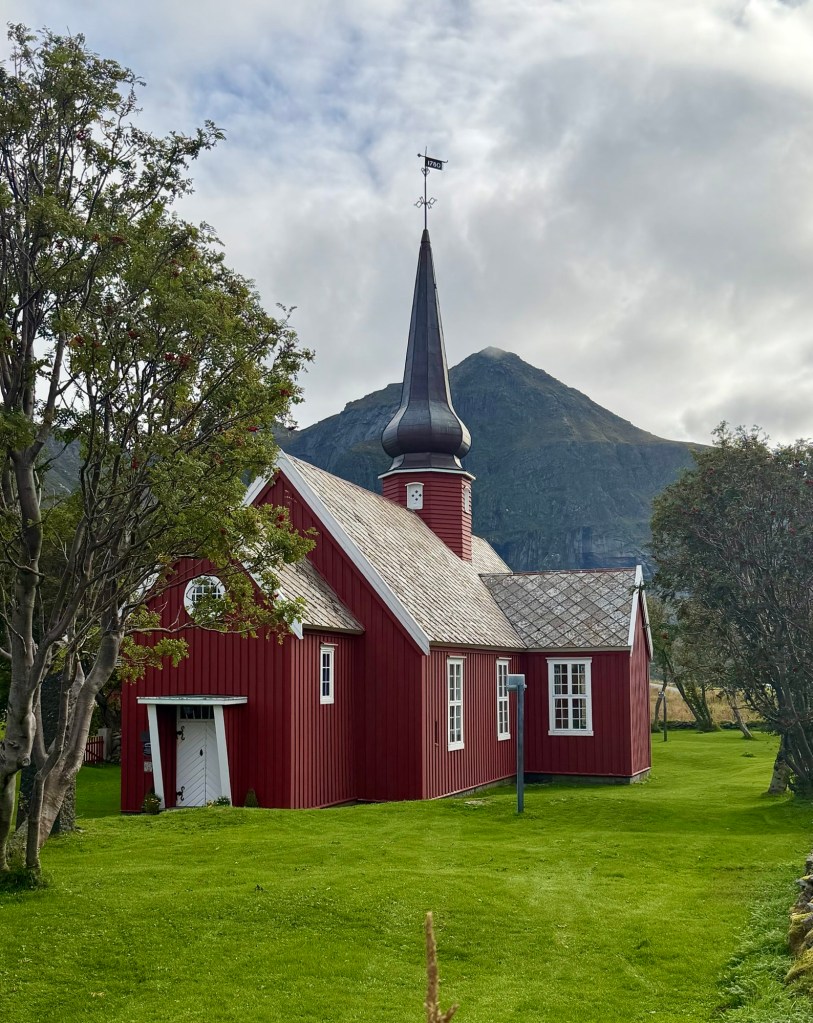
We travelled through several high-tech tunnels and over a handful of state-of-the-art bridges before ending up at the historic Flakstad Church on the island of the same name.
Modern bridges connect the islands. Flakstad kirke
Fun fact: the sun shines 24/7 until the end of August, so sheep roam freely around Lofoten, helping keep the vegetation under control. I even spied them grazing in campgrounds! Their meat is naturally salty because they graze on grass alongside the sea. Mutton is not in my plans anytime soon. 
We passed Reinebringen, a 448-metre mountain with 1,978 stone steps climbing 1 kilometre straight up. These were built by Nepalese Sherpas who were compensated well by the Norwegian government. I saw plenty of hikers making their way up; this is considered an easy one-hour hike. 😂
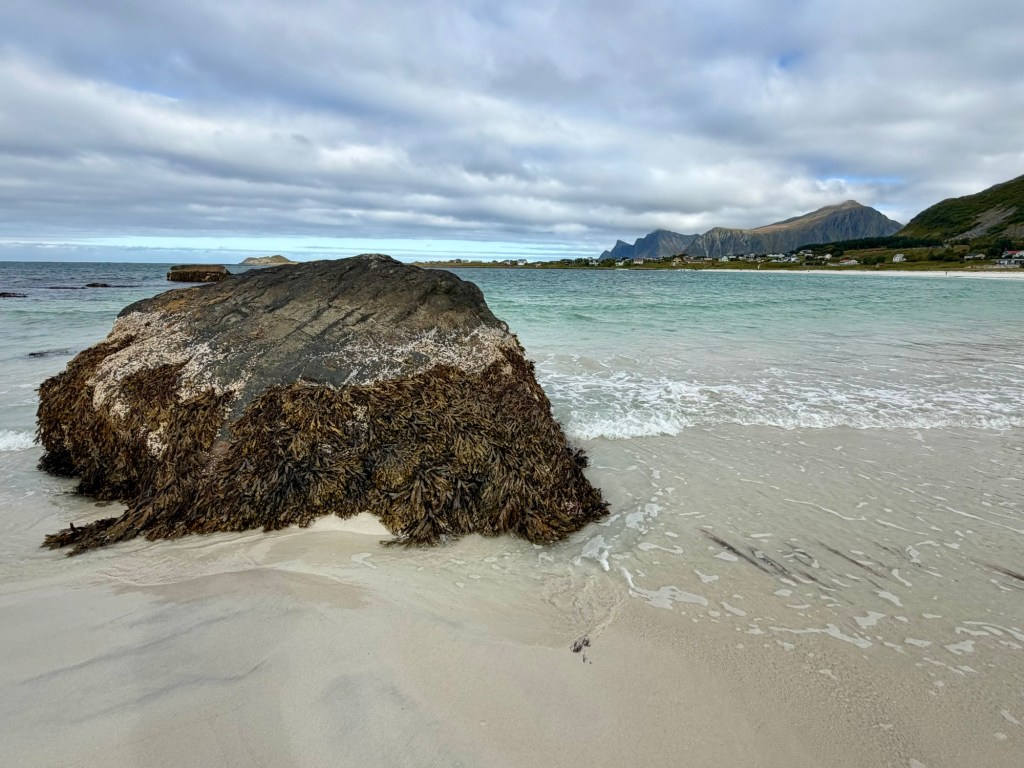
I got to walk around beautiful Ramberg Beach. If the temperature was 20° warmer I would have sworn I was in Hawaii.
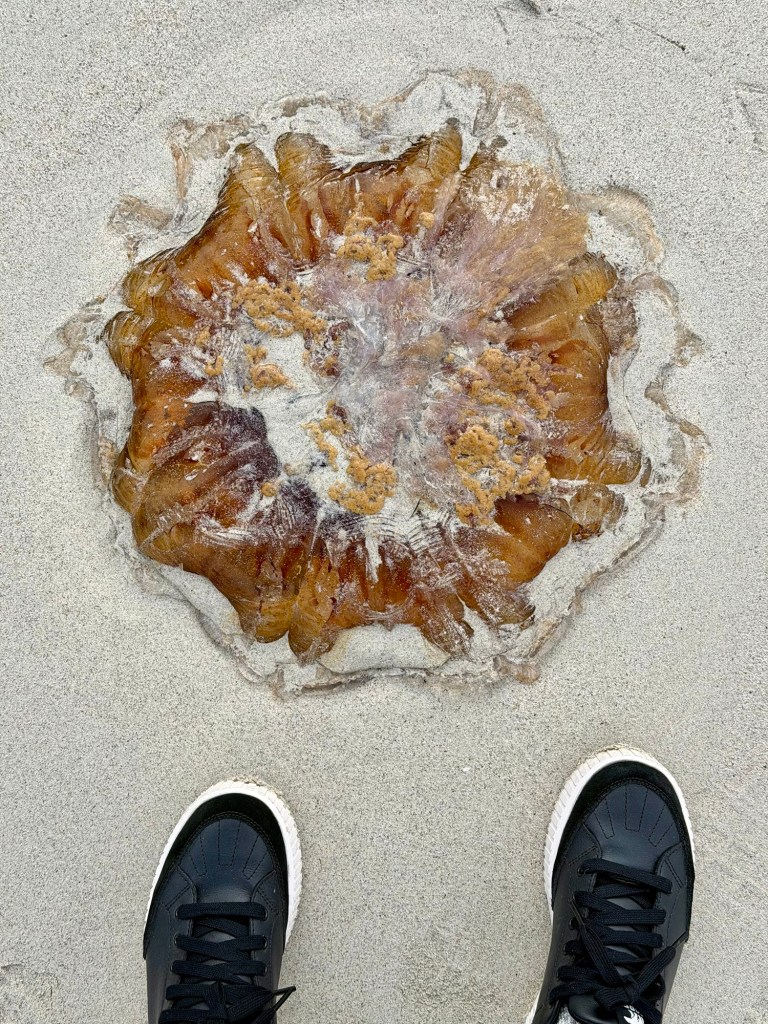
RambergstrandA high silica content makes the sand light.RIP giant jellyfish that accidentally washed up. There were many and various jellyfish casualties today.
Lofoten has several grass-roofed houses (sorry, no picture). The roofs can withstand gale-force winds while helping regulate the temperature inside. To prevent a roof from blowing away, a sheep is sometimes placed on top! The sheep must weigh more than 70 kilograms or it could be carried off by a sea eagle. Cats are obviously kept indoors.
With only about 25,000 inhabitants but more than 1 million visitors a year, Lofoten’s infrastructure is under serious strain. Wastewater is the biggest problem resulting from this massive tourism. It was really busy today; I’d hate to see what summer is like.
I definitely understand why Lofoten is considered one of the 10 most photographed places in the world.
Today, the Hurtigruten stopped in the remote municipality of Træna, just south of the Arctic Circle. This tiny archipelago is made up of hundreds of rocky islands, though only the four main islands are populated. We anchored off Husøya, the largest settlement, with a population of just 405. When passengers came ashore, we nearly doubled the town’s population!
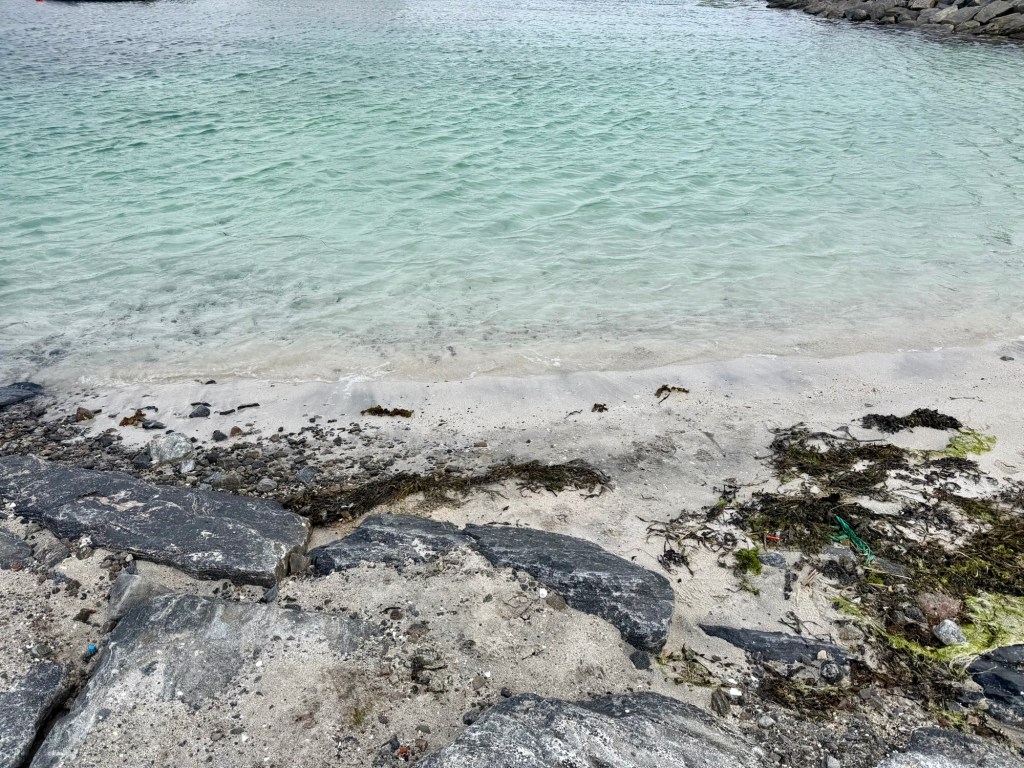
Husøya’s beautiful sandy beach
Once off the ship, I set out to explore this tiny island on foot. I covered more than 13,000 steps (yes, I count them!) while wandering around town and taking in just how quiet everything was, even with gale-force winds howling around me.
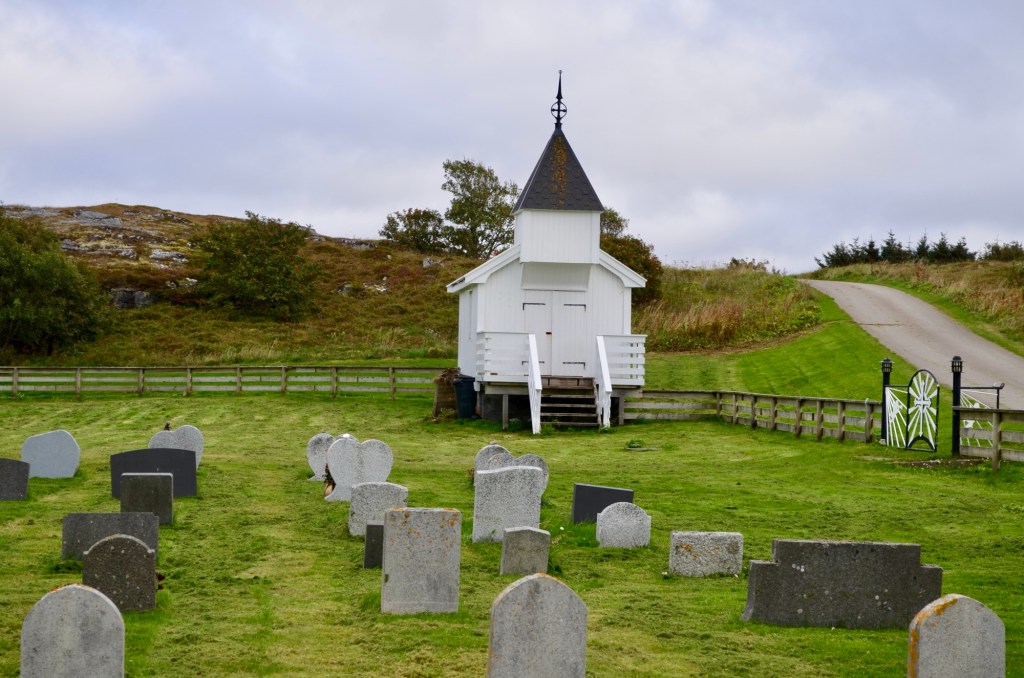
I visited two churches: the typical-sized Træna Kirke and the tiny historic Peter Dass Kapellet. Along the way, I came across a neatly kept graveyard with a tiny, church-like building. It turned out to be a cemetery chapel. It took some digging to find its name, but it’s called Træna Gamle Kirkegård. And, for the record, a cemetery chapel is simply a small chapel used for burials or funeral services.
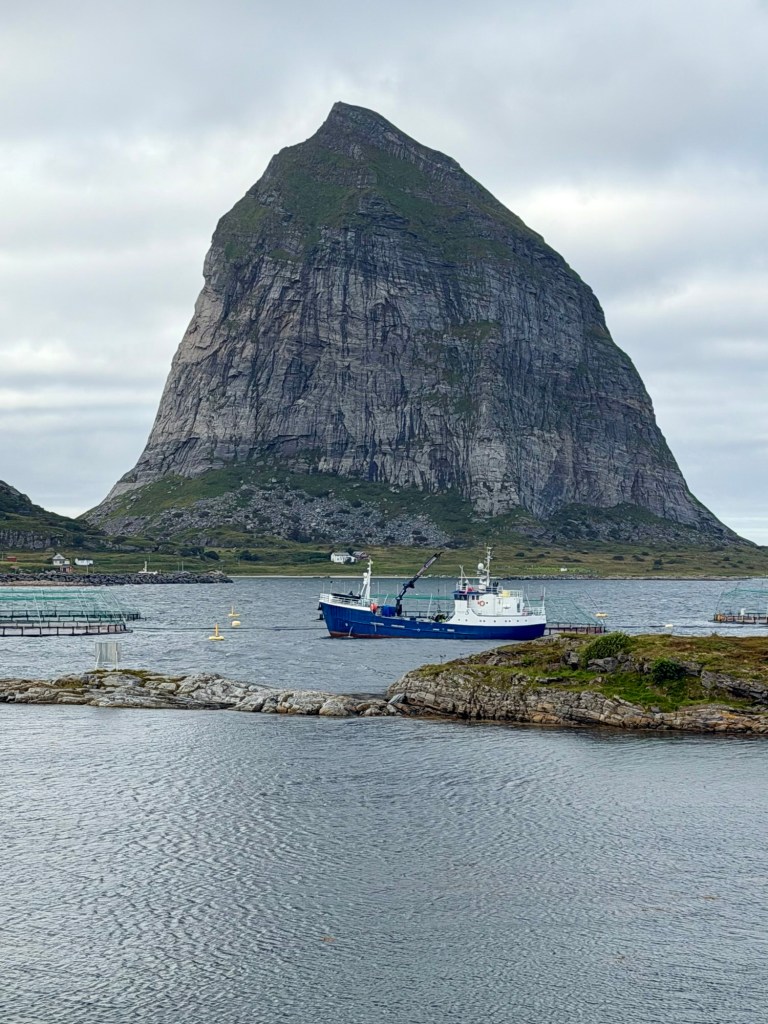
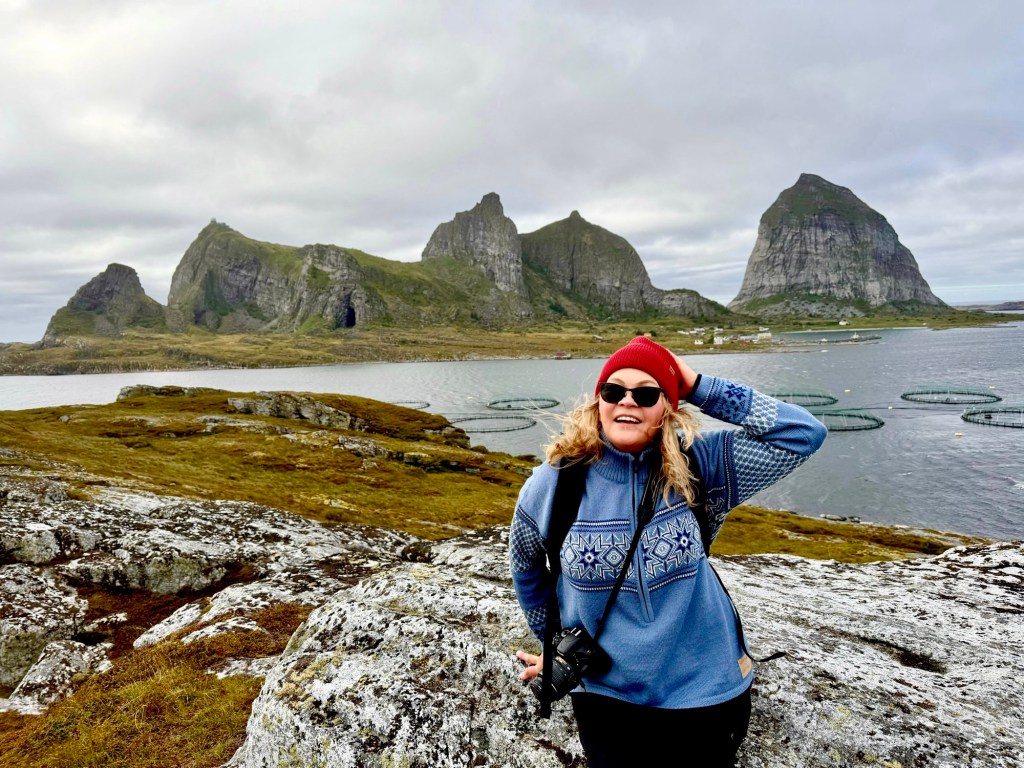
Getting to Peter Dass Kapellet required a fairly steep hike uphill. Once I reached the summit, I stopped to take some photos. From up there, it seemed I could see forever; there were endless rocky islands rising from the sea in every direction. Far below i saw a fish farm, a fishing trawler, and a handful of compact modular accommodations set apart from the main village.
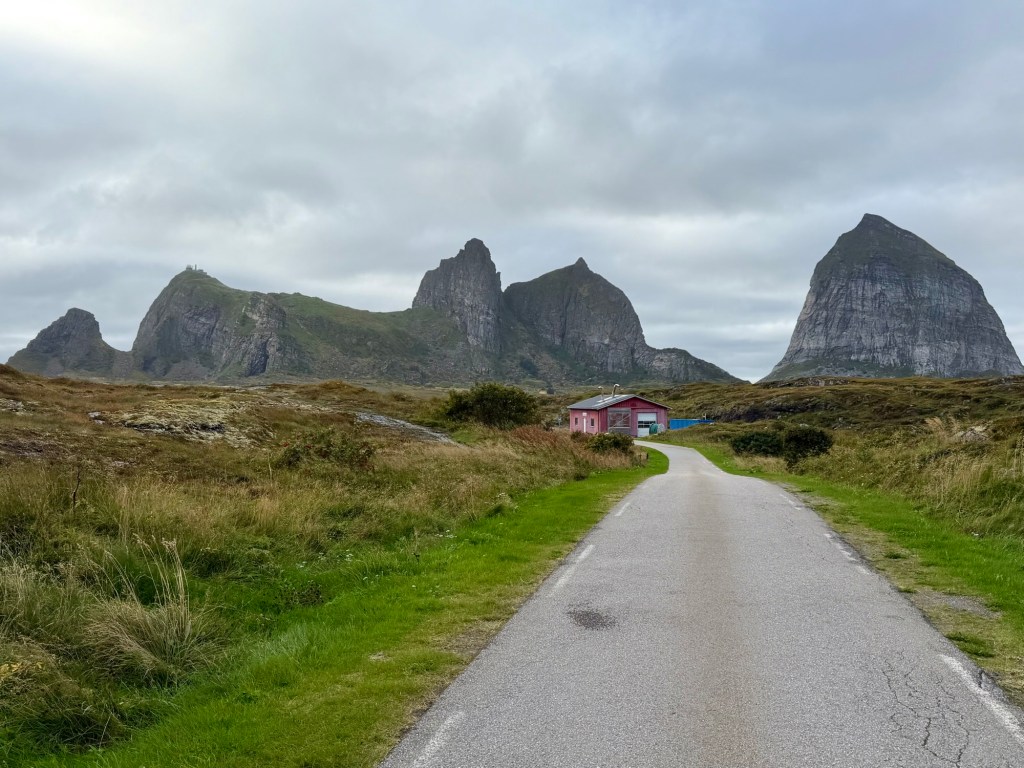
I was amazed by the way Træna’s mountains rise dramatically and almost vertically from the sea, with some reaching more than 300 metres.I seriously had to hang onto my toque in the gale force winds at the top.
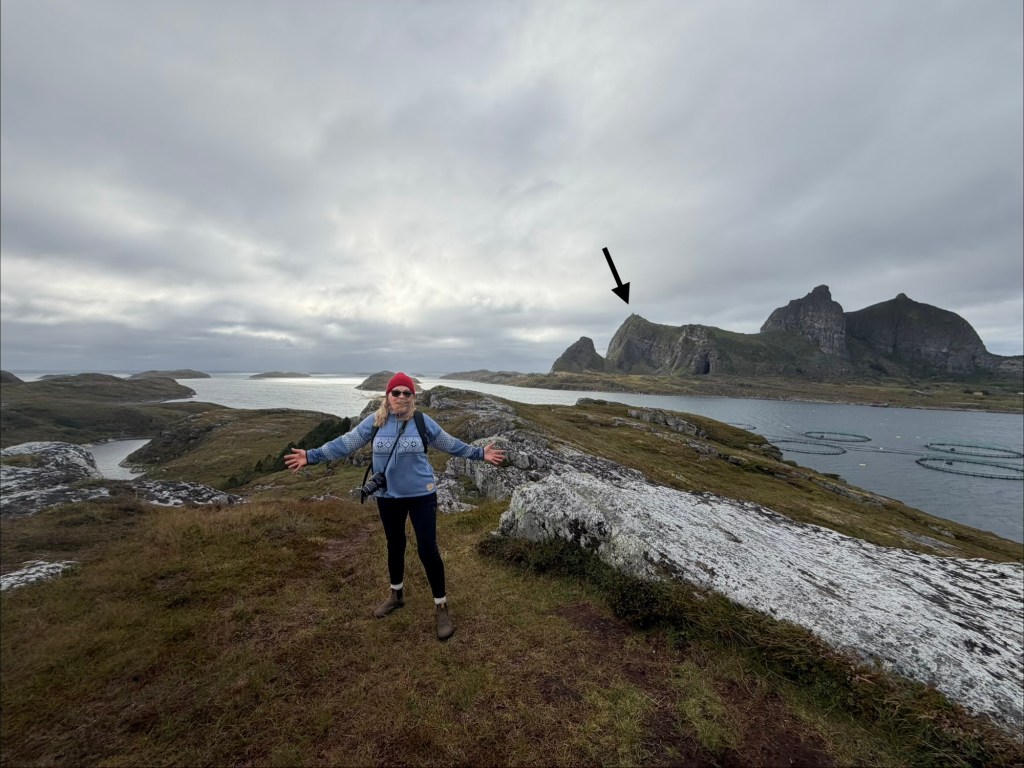
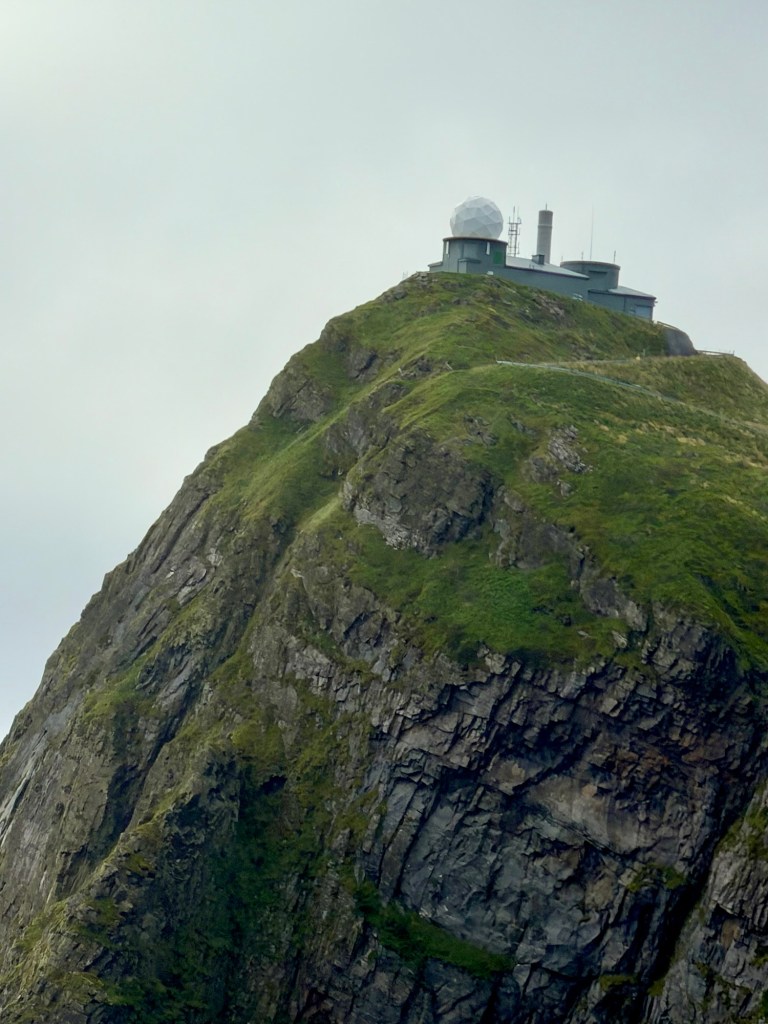
Directly ahead, the island of Sanna rose dramatically from the sea. At its summit on the peak called Gompen sits a radar station 243 metres above sea level. You can actually hike up to it along a construction road, with a scenic natural feature along the way that includes an unlit tunnel. The hike is about 5 km round trip, but you’ll need a headlamp to navigate the pitch-black 700-metre tunnel.
The arrow points to the radar station on Gompon. Closer view of the golf-ball like radar station.
Back on board, there was plenty of excitement about crossing into the Arctic Circle, and we gathered on the top outdoor deck for a celebration. Once the ship’s crew had been introduced and deployed to their stations, loud music started playing and shots were handed out.
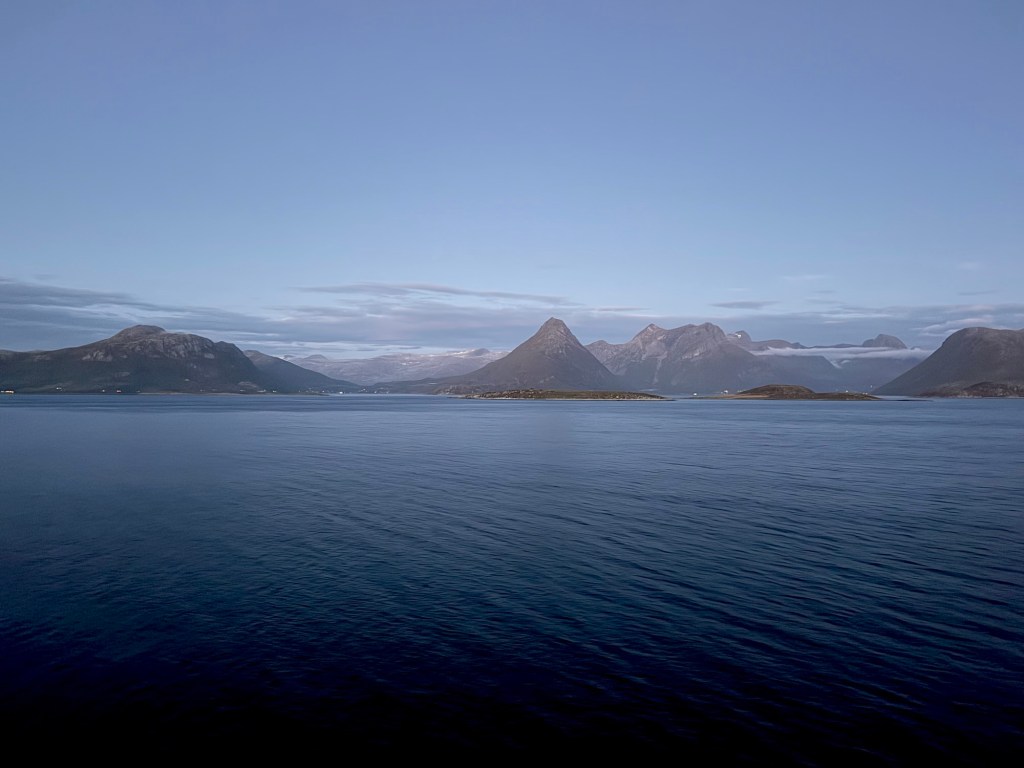
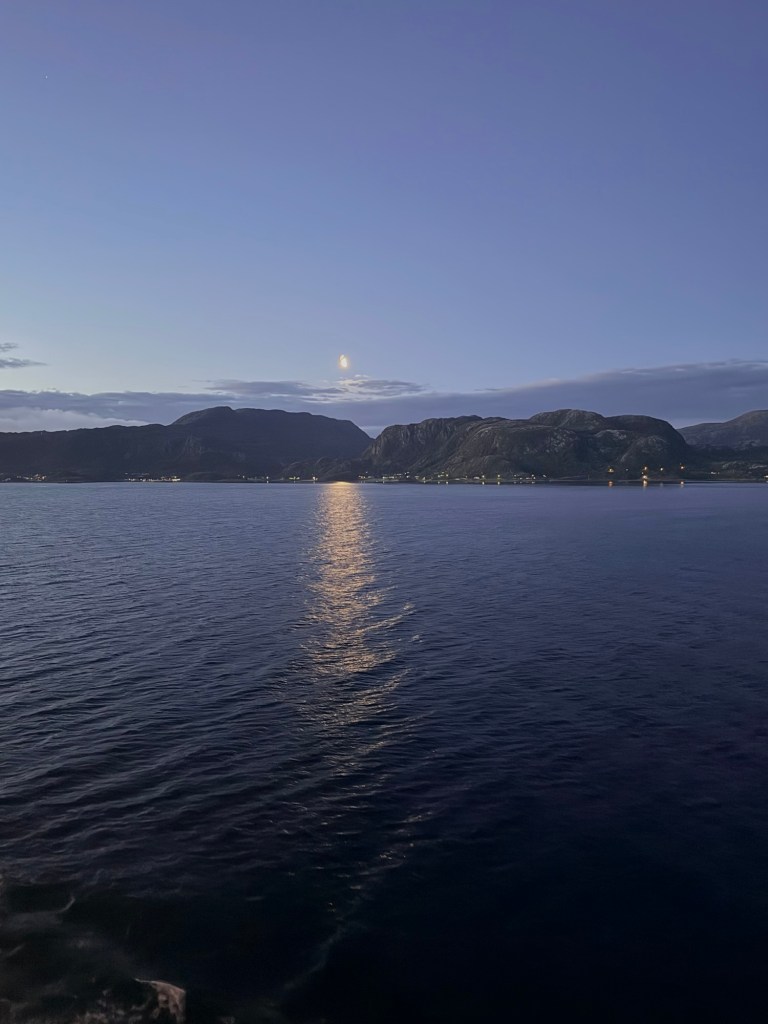
Evening views as we entered the Arctic Circle
I spotted my friend Diane, a fun, independent, like-minded traveler, and we escaped down a couple of decks to the wonderfully quiet lounge (everyone else was still up on deck celebrating). The singer was amazingly talented and hilarious, so what was supposed to be an early night turned into one that lasted until almost midnight.
I slept great… until about 1:20 a.m., when I suddenly felt a whole lot of rocking and surging. I peeked out my window and, sure enough, the ocean was churning with whitecaps and water was splashing up against the ship’s topsides. I’d wisely chosen a midship cabin, so I couldn’t help but wonder how those at either end of the ship were faring!
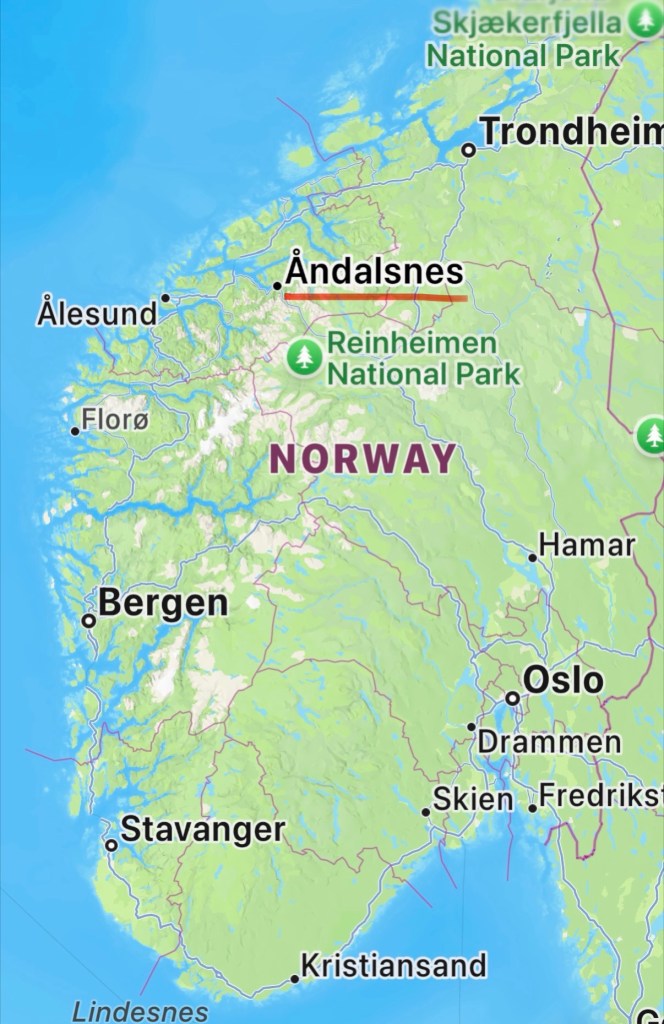
When the Hurty pulled into Åndalsnes this morning, it was hard to believe it was the same ocean. The water was placidly calm, like nothing had happened.
After a hearty breakfast (including a heap of raw vegetables), I hopped on a bus heading into the spectacular Romsdal Valley, a landscape deeply woven into Norwegian troll folklore.
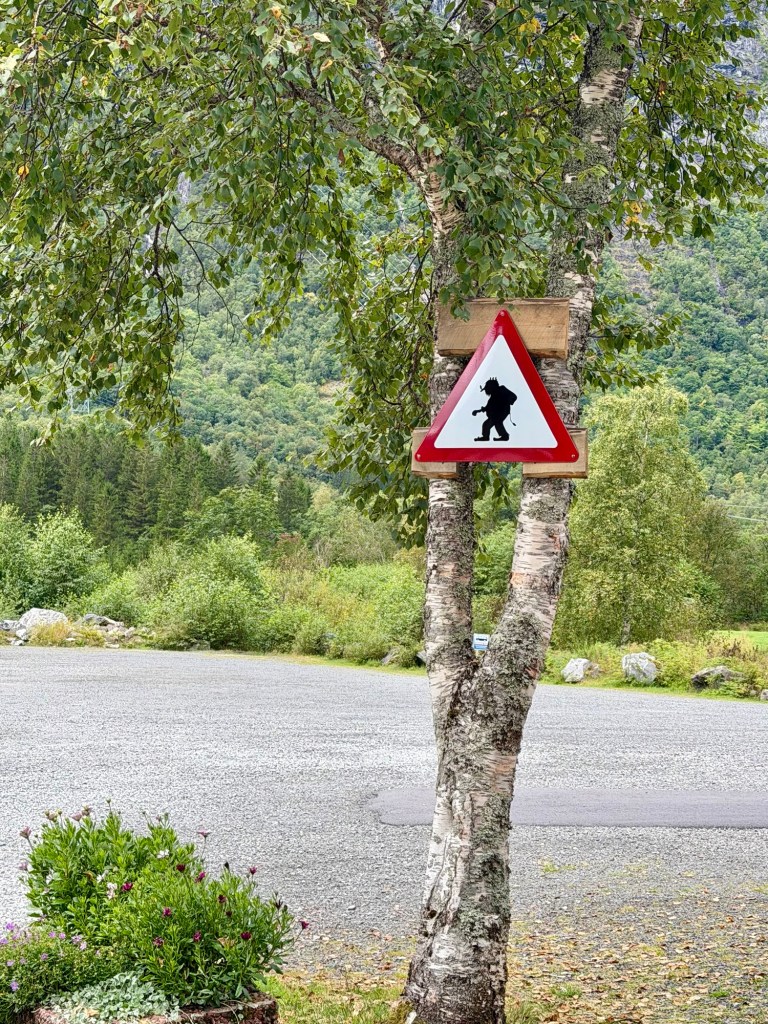
Beware of trolls hiking in the Romsdal Valley.
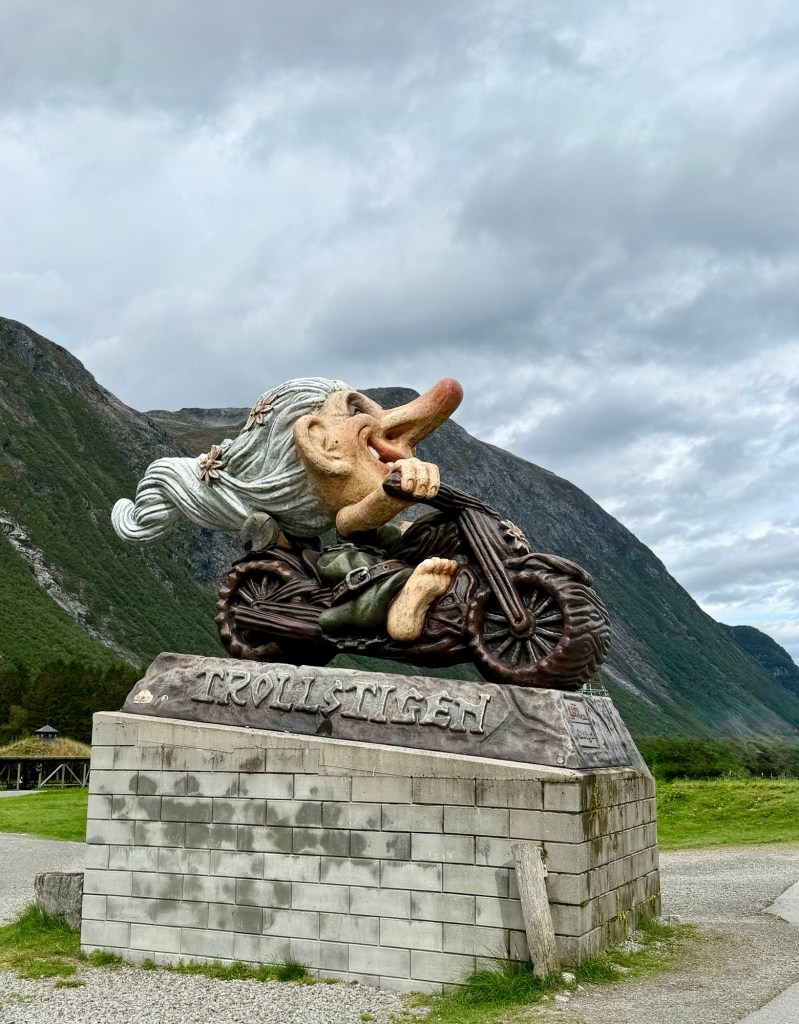
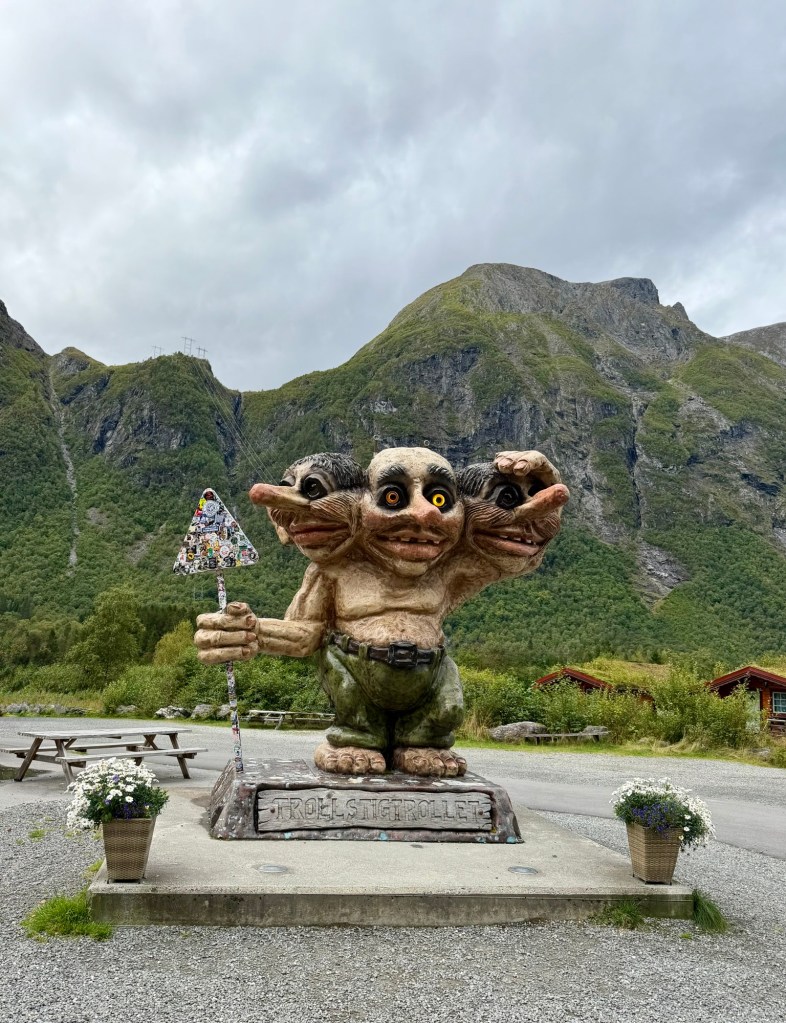
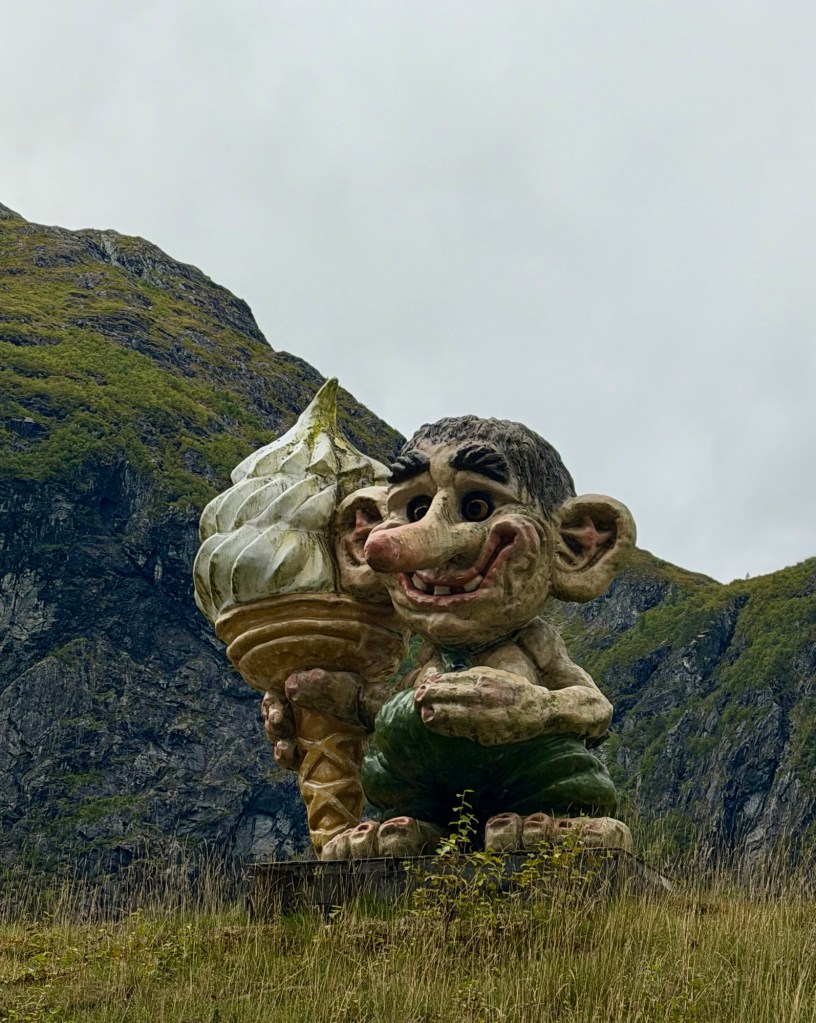
In fact, the rest stop where we paused was flanked by a trio of enormous, rather gaudy trolls. Clearly, trolls are everywhere around here.
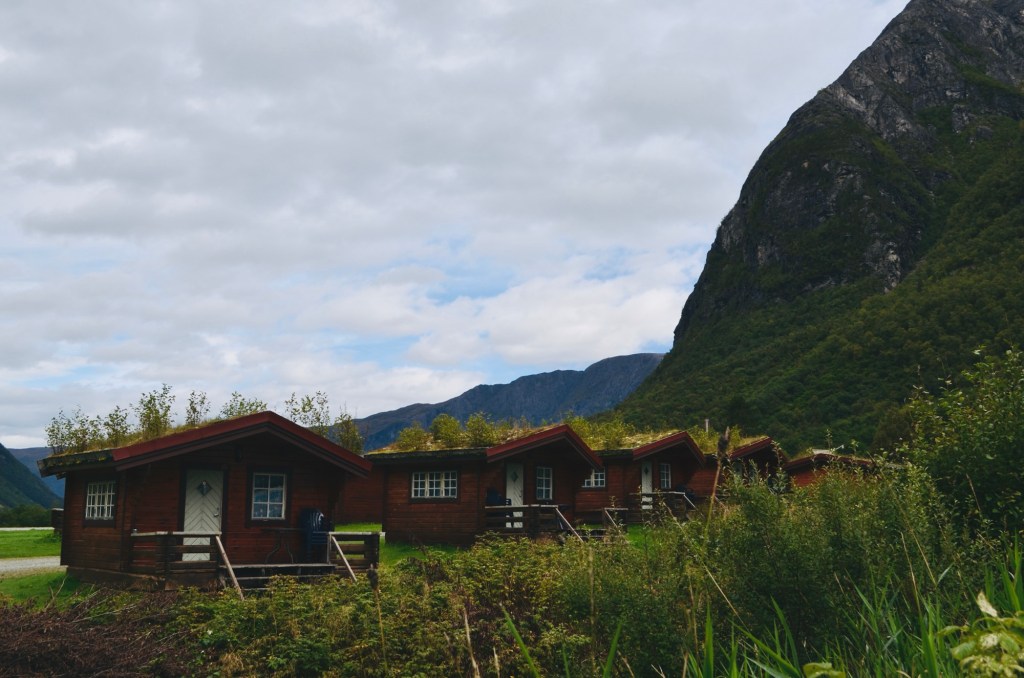
The adjoining campground had little hyttas—cozy Norwegian cabins that looked remarkably like the ones my family stayed in during a family trip back in the day.
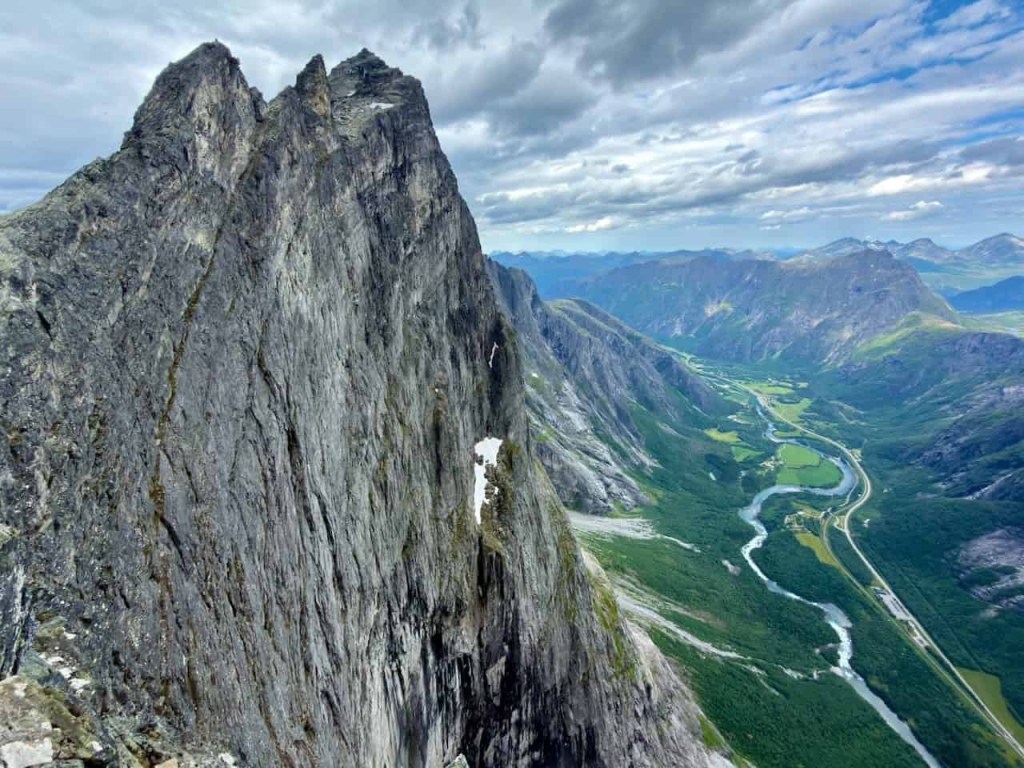
Then came the attraction of the day: Trollveggen (the Troll Wall). Its towering, jagged spires are an absolutely commanding presence. Part of the Trolltindane Range (yes, pretty much everything starts with “Troll” around here), Trollveggen is a massive vertical rock face with a sheer drop of roughly 1,000 metres and overhangs reaching up to 50 metres.
Not my picture but you get the picture.
According to local Norwegian folklore, Trollveggen isn’t ordinary stone at all. Long ago, the trolls gathered in the Romsdalen Valley for an important wedding. They partied and reveled all through the night, apparently forgetting one very important thing: trolls and sunlight don’t mix. (You already know this if you thoroughly read my previous Troll Museum post!) When dawn finally broke, the entire party was turned to stone.
And that, according to legend, is how the Troll Wall was born.
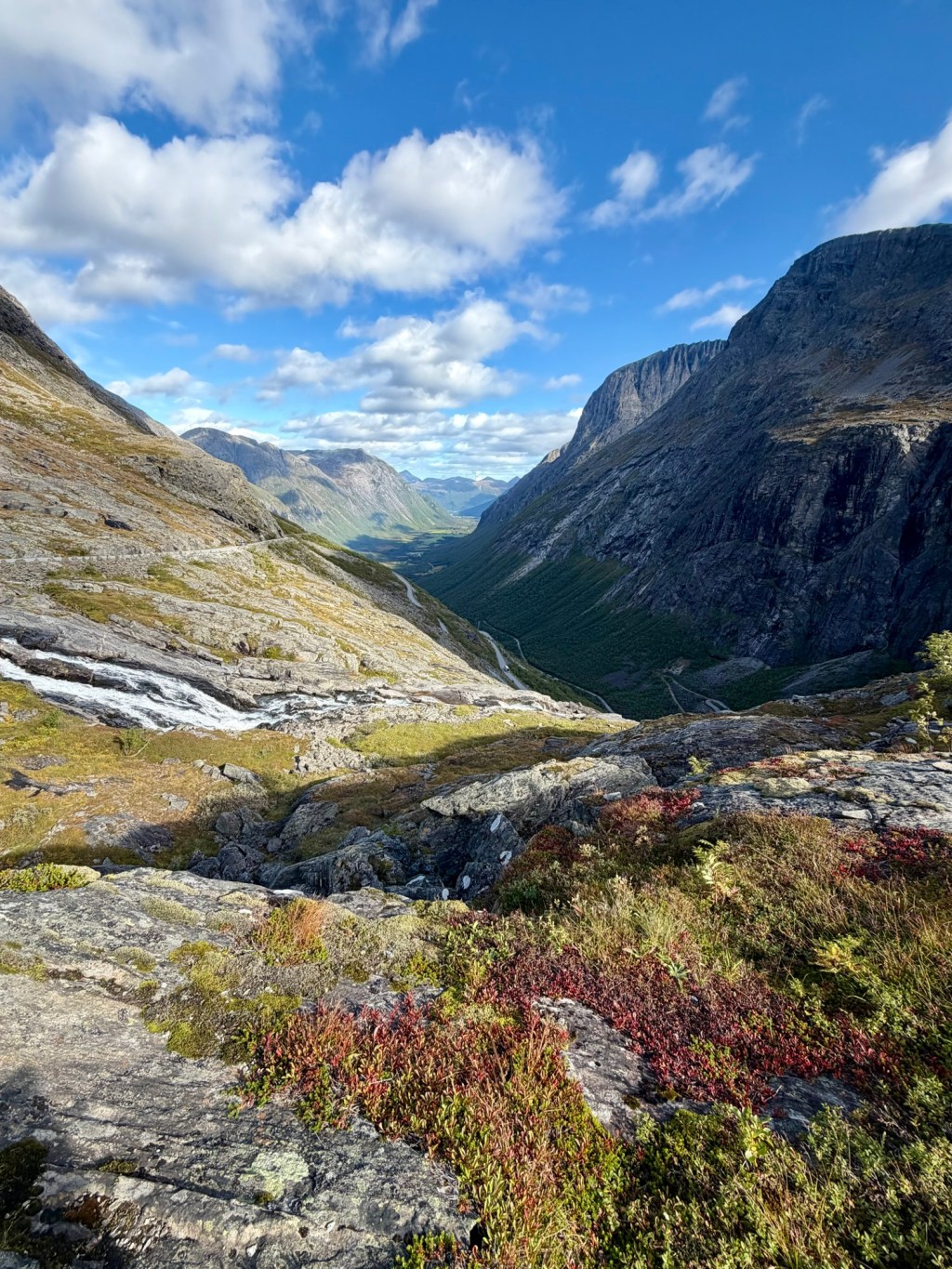
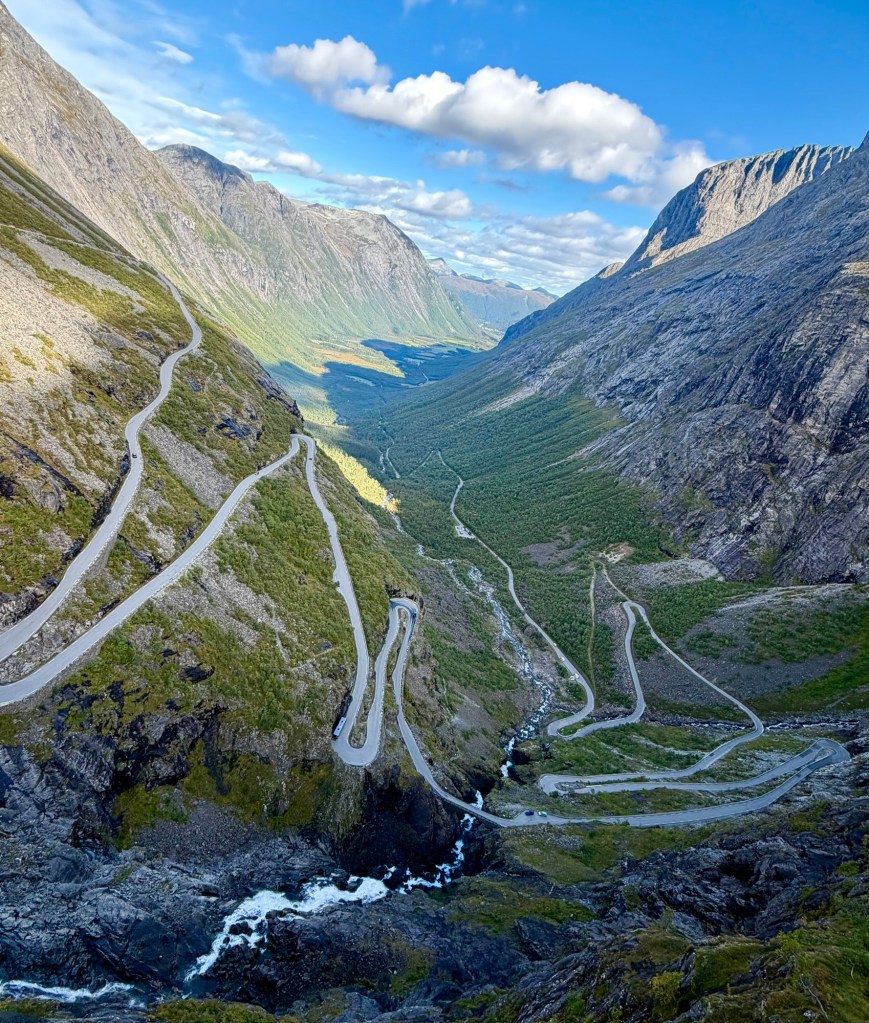
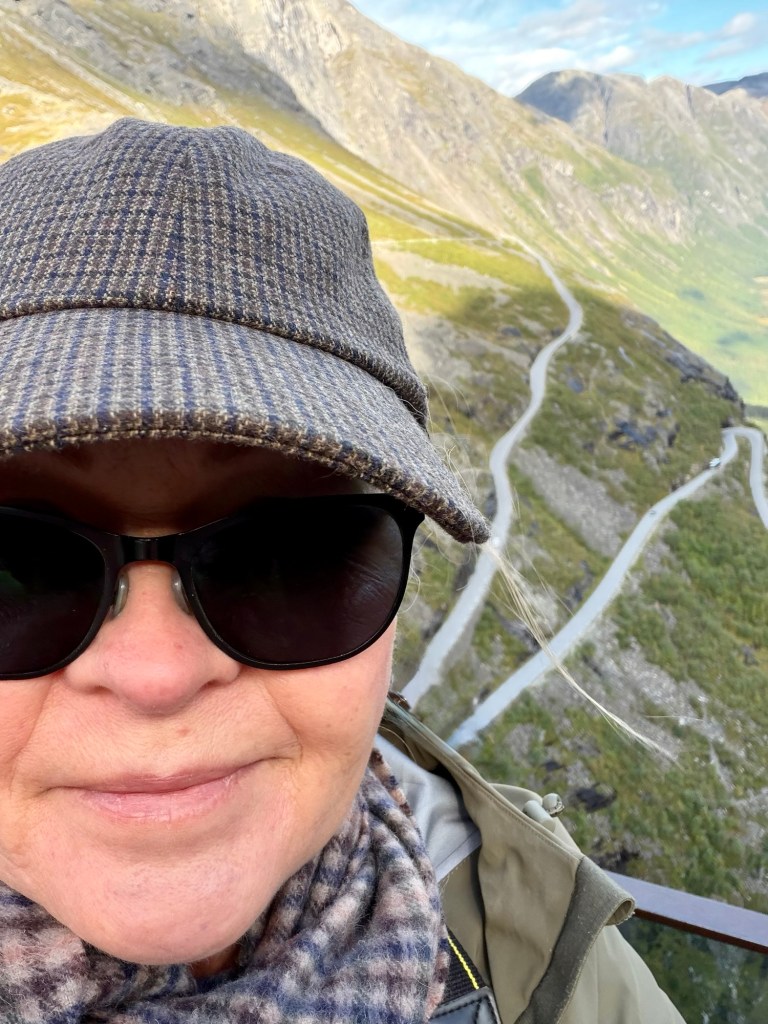
At the base of Trollveggen, my bus began the climb up Trollstigen (the Troll’s Path, or Troll’s Tail), one of Norway’s most famous mountain roads. The road snakes dramatically up the mountainside through 11 hairpin bends, with sections reaching a 10% incline. It’s narrow enough that cars heading uphill sometimes have to yield to oncoming traffic by pulling over—or even backing up—to one of the widened bends.
View from the top From the top I watched two large tour buses pass on a curve like this.You couldn’t pay me enough….
I remember my family driving this very road in a VW van back in 1977. And apparently it was even narrower and more treacherous then. 😳
Despite the spectacular panoramic views over the Romsdal Valley, the ride pushed me a little outside my comfort zone. I’m not exactly a fan of heights!
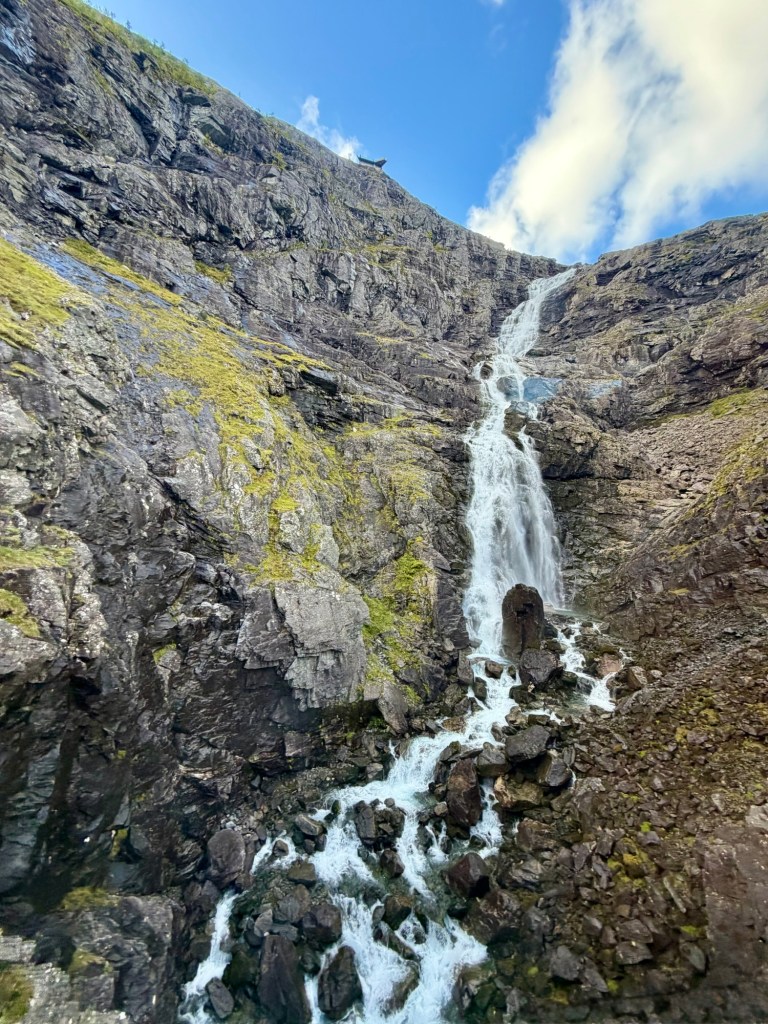
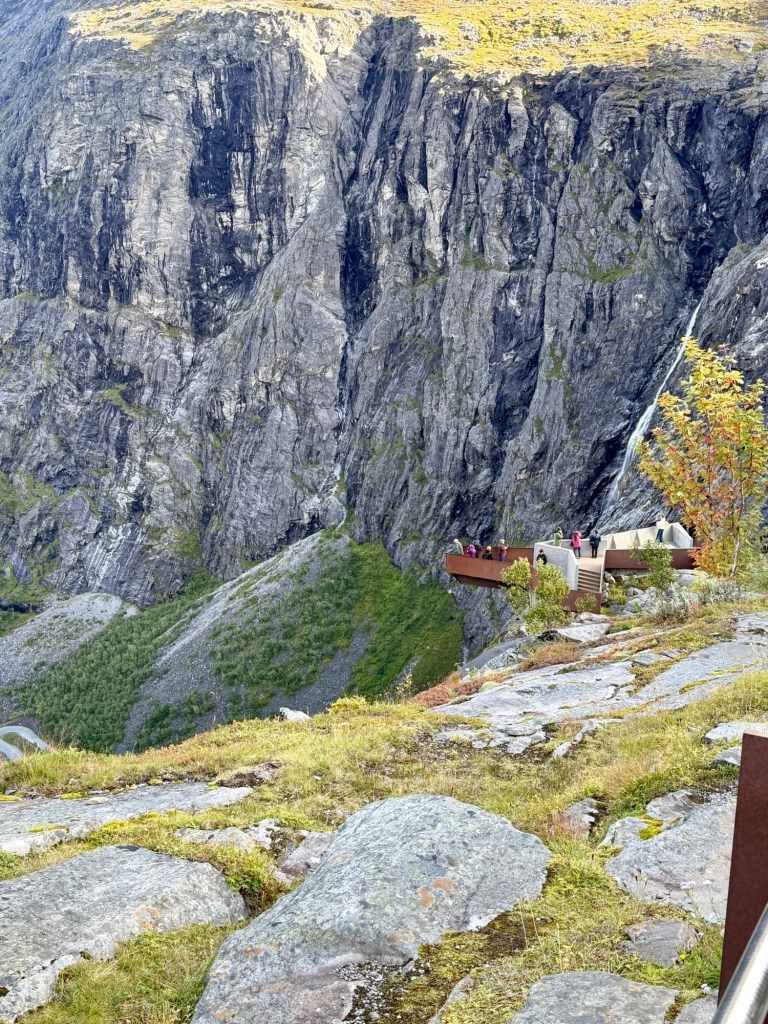
And speaking of heights… I spotted a viewpoint jutting dramatically out from the mountainside, waaaay, waaaay up at the top.
Up and to the left is the jutting viewing platform. The viewing platform from above.
My first reaction was a very firm: ABSOLUTELY NOT!
But after a little reflection, I reminded myself that one of the great things about this trip has been pushing beyond my comfort zone.
So…I did it.
I stepped out onto the viewpoint very briefly. 😂
I neglected to angle my phone toward the steep valley below in the 30 seconds I was up there. 😂
And then there’s this fun Norwegian fact: BASE jumping is generally legal across Norway, with one very notable exception—the Troll Wall. BASE jumping from Trollveggen has been strictly prohibited by law since 1986, following multiple deaths.
So guess what I spotted at the top of Trollveggen??? Yep. A BASE jumper.
Sorry, no picture. At that distance, the jumper looked like a tiny speck of pepper against the vastness of the mountain. Plus I chose not to watch.
I had planned to walk to the Jektevik Ferry Terminal from my hotel, but that was before I actually arrived at the hotel and discovered that the vast majority of the streets and sidewalks in the vicinity are cobblestone, many downright jagged and bumpy. So, this morning, I had a conversation with the front desk attendant (completely in Norwegian) asking for her recommendations. I didn’t want to blow a suitcase wheel this early in my journey!
This is some of the smoother cobblestone in the area.
After our conversation, I settled on a “fairly smooth” route and walked the short 1½ kilometres to the terminal. Unlike the crowds of people I saw piling into taxicabs at the hotel, I actually needed to get some walking in before embarking on lazy ship life.
Off to a drizzly start. 💧
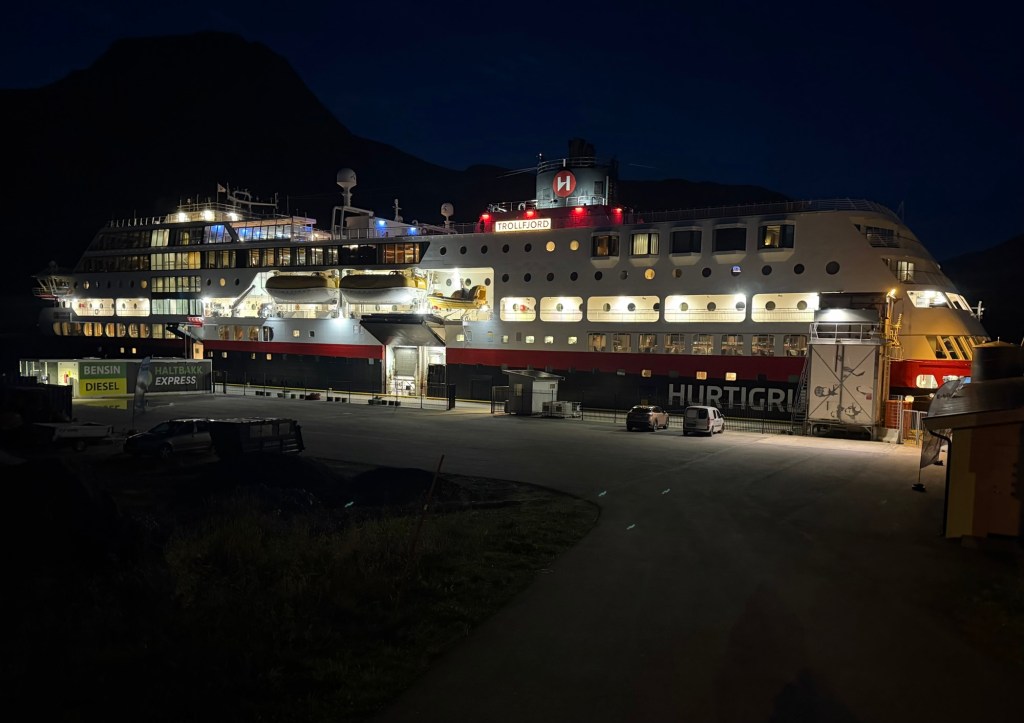
Once on board, we weren’t allowed into our rooms for two hours, so I managed to meet some new people and get acquainted. Bonus on this cruise- no kids.
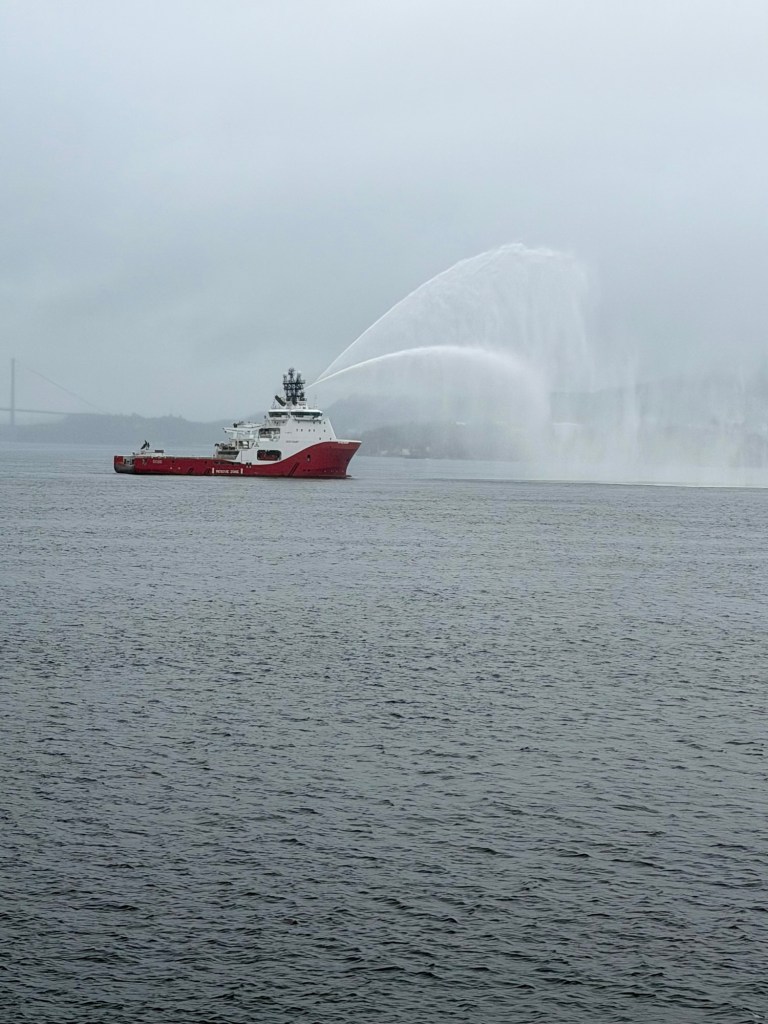
The tugboat that led us out “saying goodbye.”
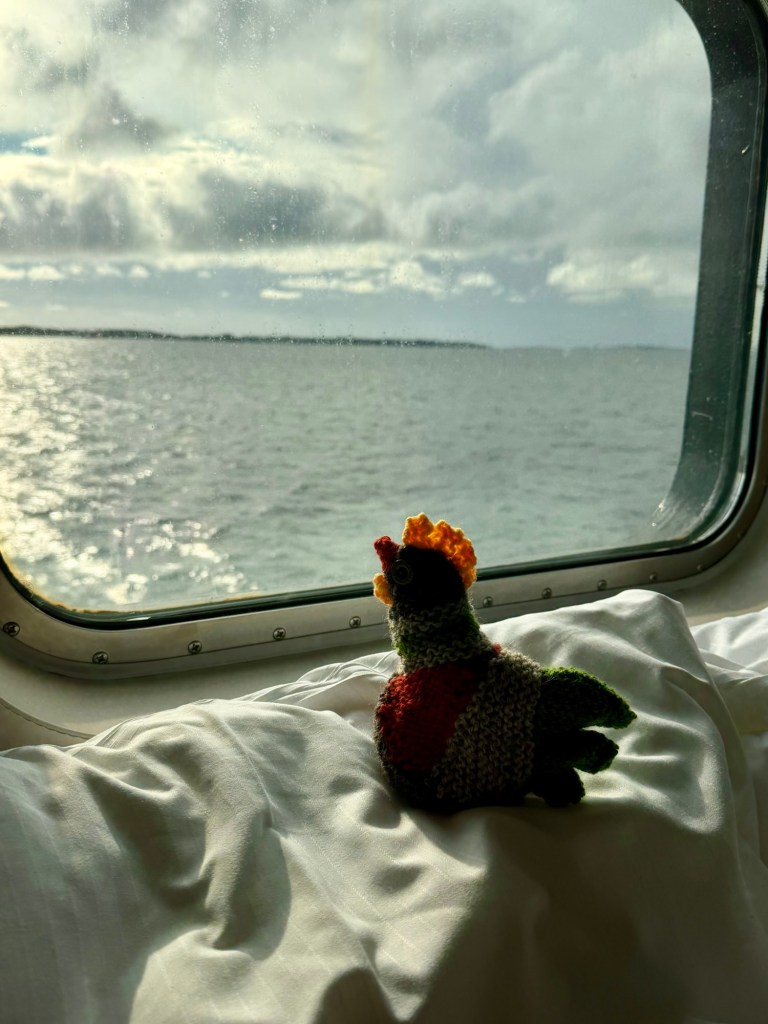
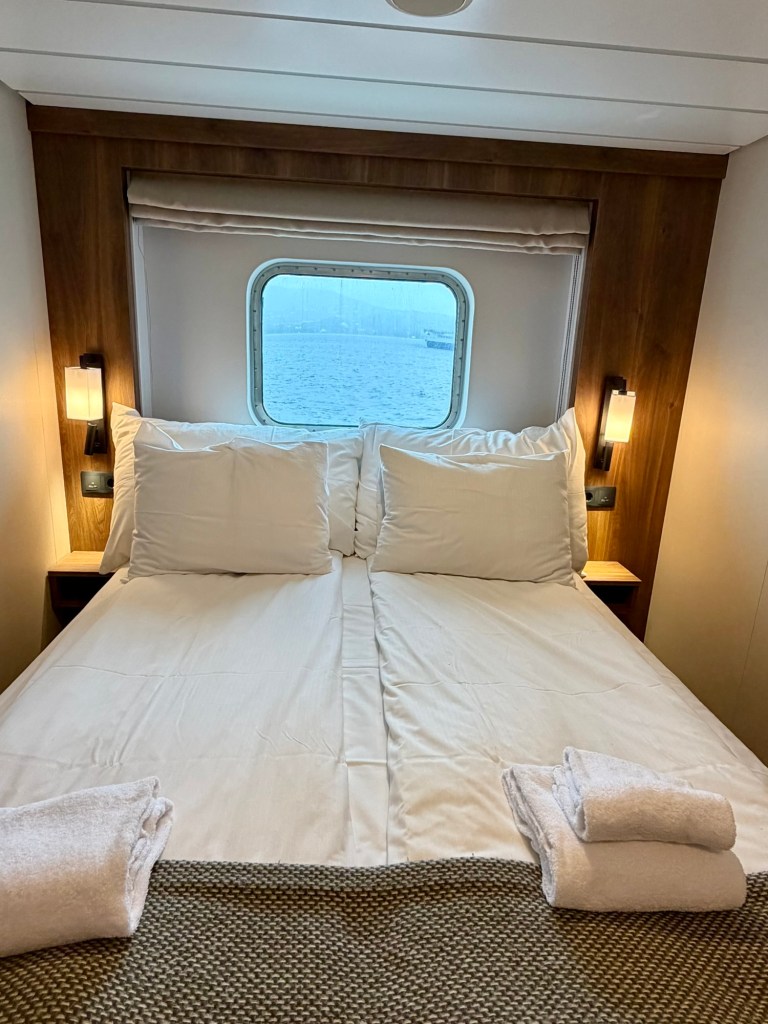
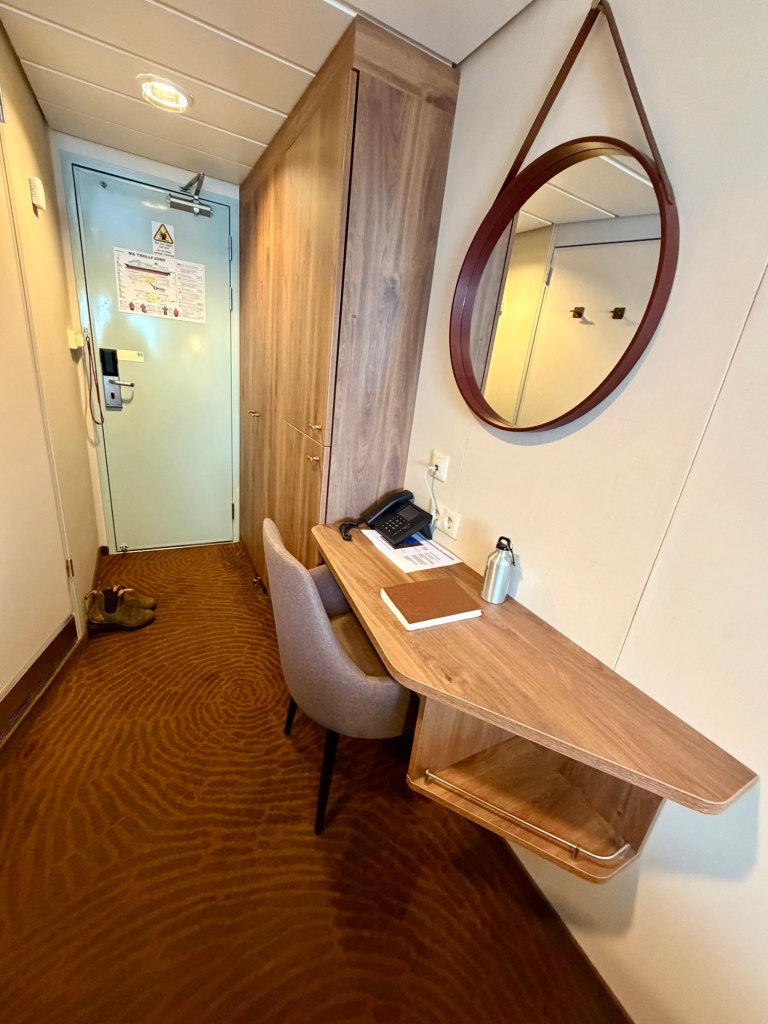
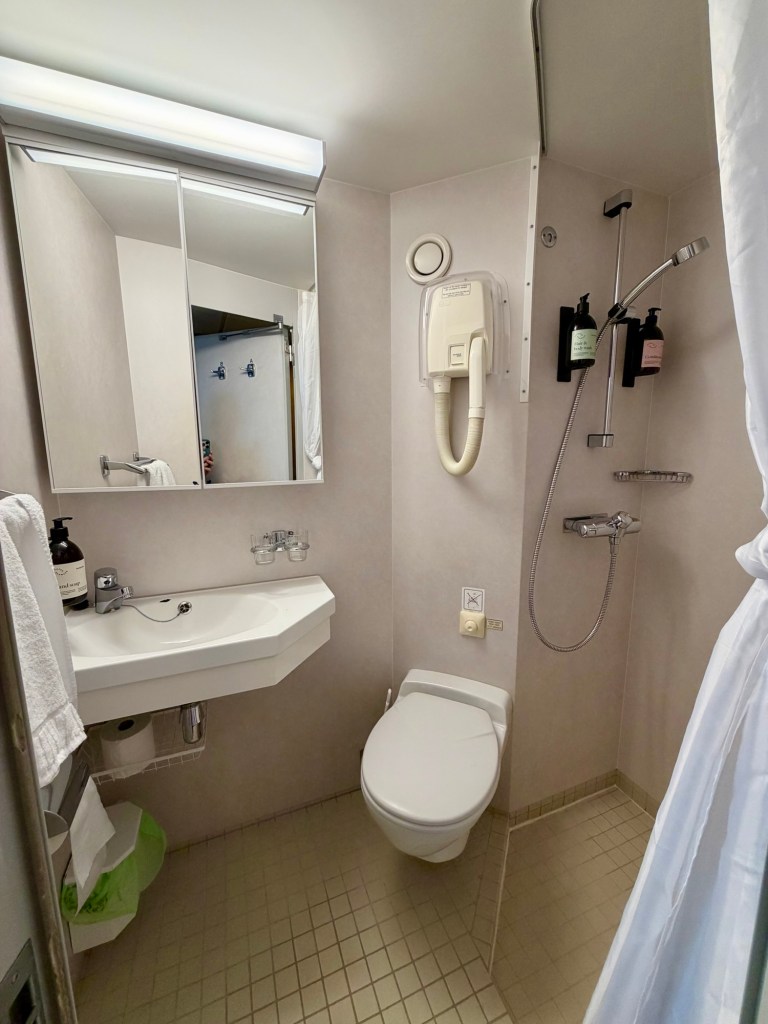
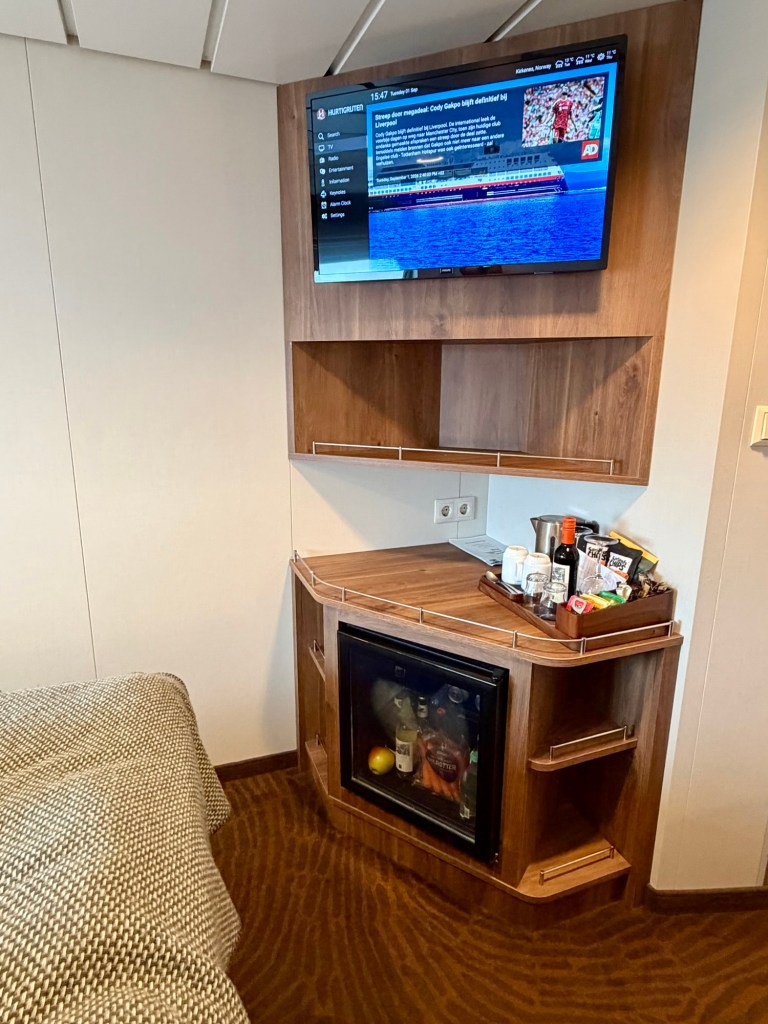
I am very pleased with my room. It has a good-sized window that Hilda, my emotional-support chicken, can look out. I’ve already had a meal that can best be described as healthy gourmet. I think I can get used to this life!
I just hope I don’t get seasick! 🤢
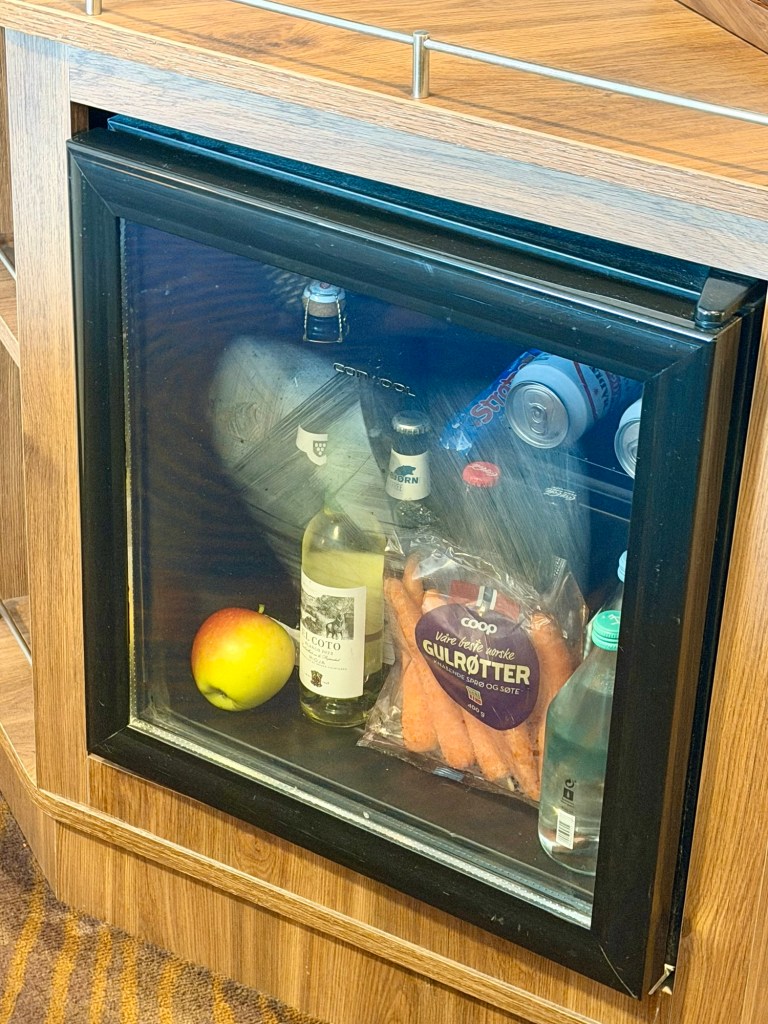
Hilda basking in the glory of the North SeaMy ultra comfortable queen bedThe walls are metal so I’ve already hung magnet hooks for my hats and fanny pack. The heated floor in the bathroom is nice. Minibar I’ll never use along with TV I’ll never watch 😉 I stand corrected: I actually popped a bag of carrots, two apples, and a package of leftover brunost into the fridge 😂
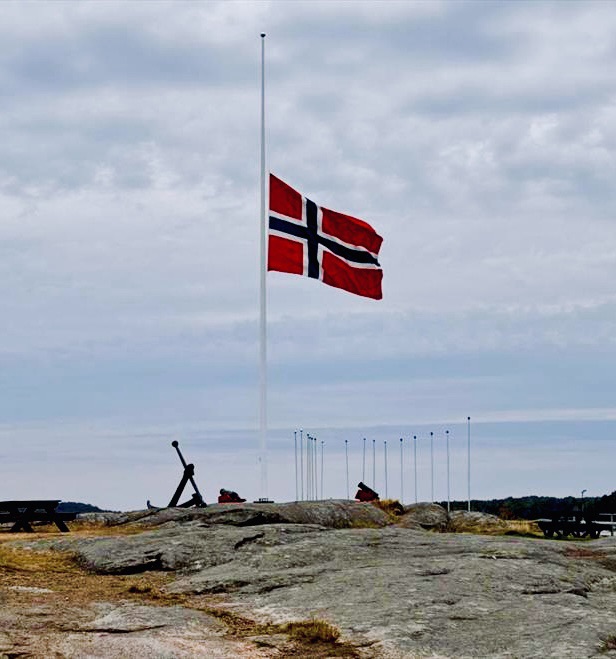
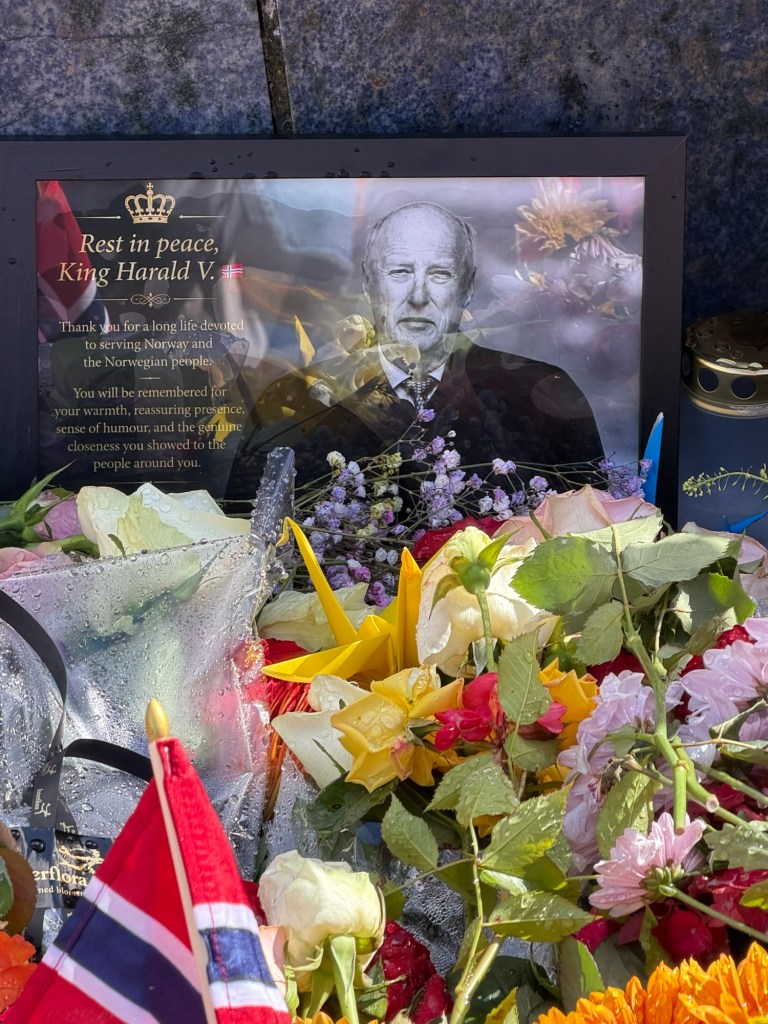
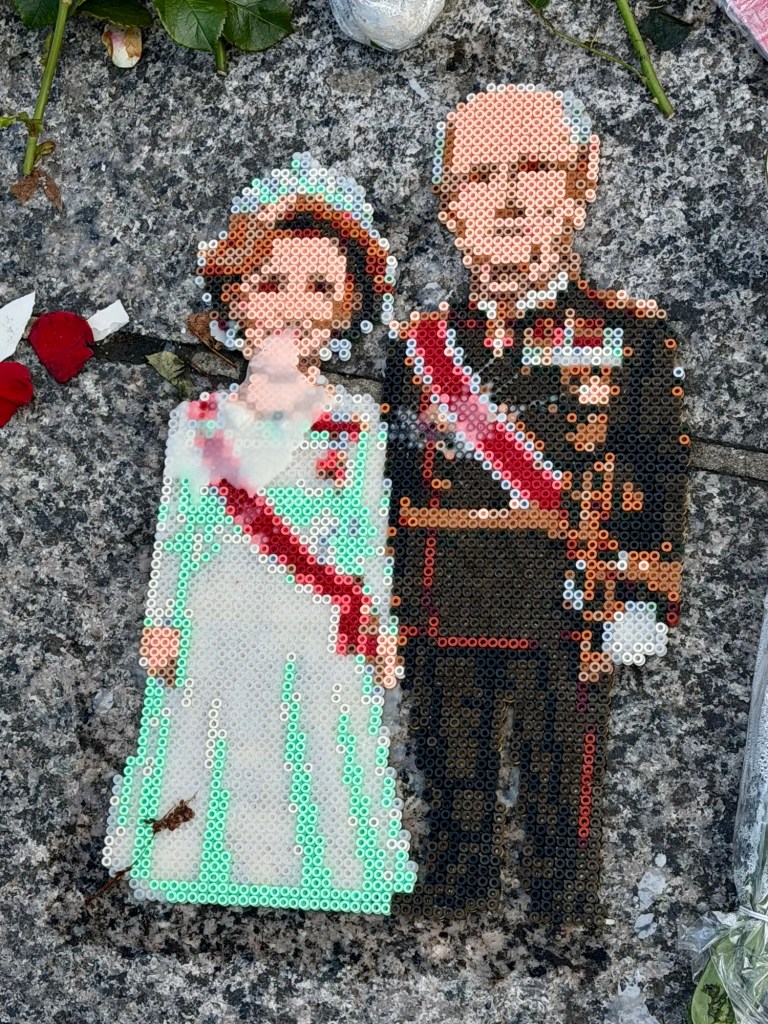
Norway’s beloved King Harald died on the very day I arrived. He was a deeply popular king, known for championing unity and inclusivity.
Kong Harald helped usher the monarchy into the modern era in some wonderfully unconventional ways. He attended public school and married a commoner—although, if you read the tabloids, you might say the monarchy has become even more modernized. 😉
And here’s a fun fact: Harald was a three-time Olympian, representing Norway in sailing. Even after becoming king, he continued to compete and went on to win a World Championship.
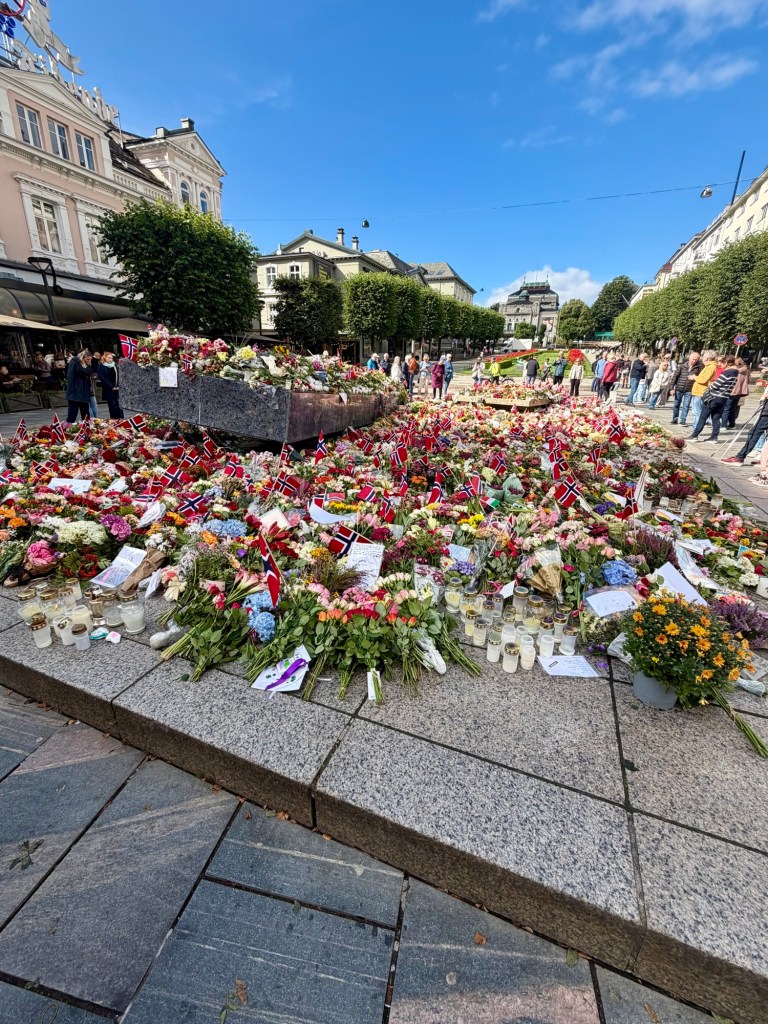
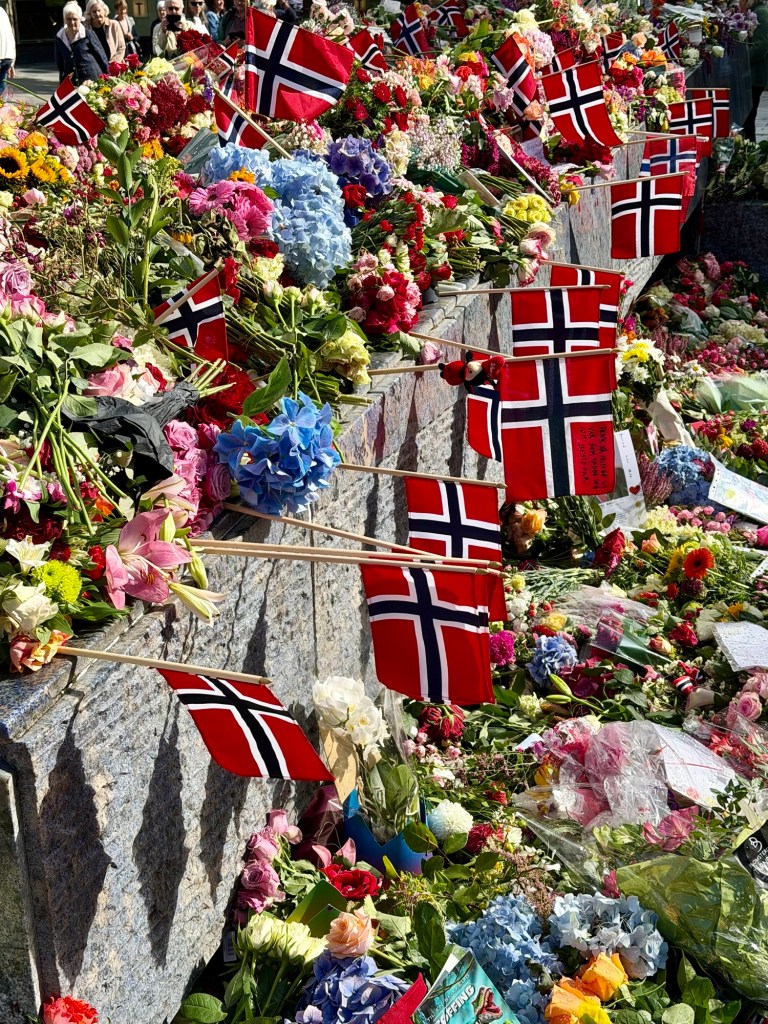
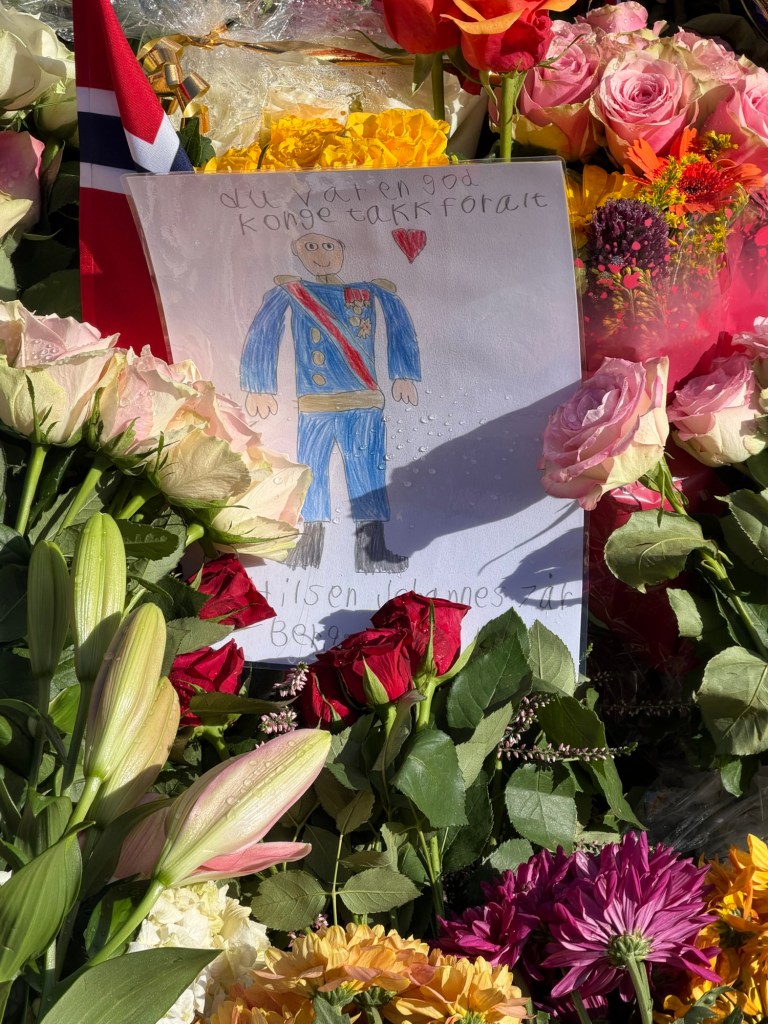
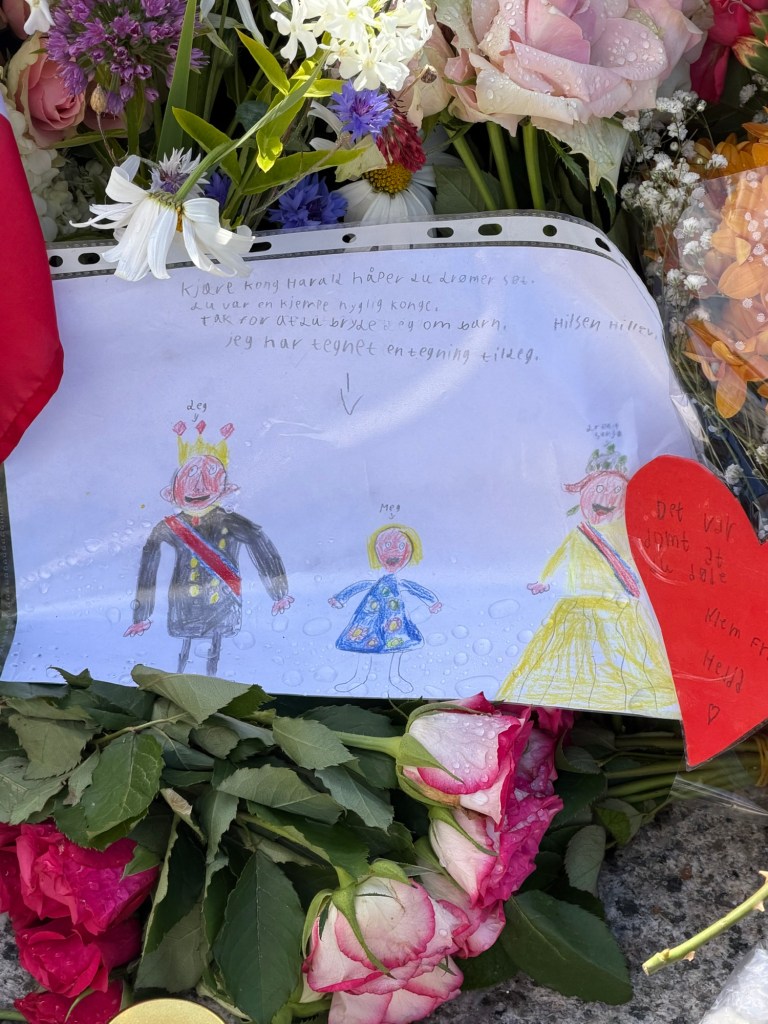
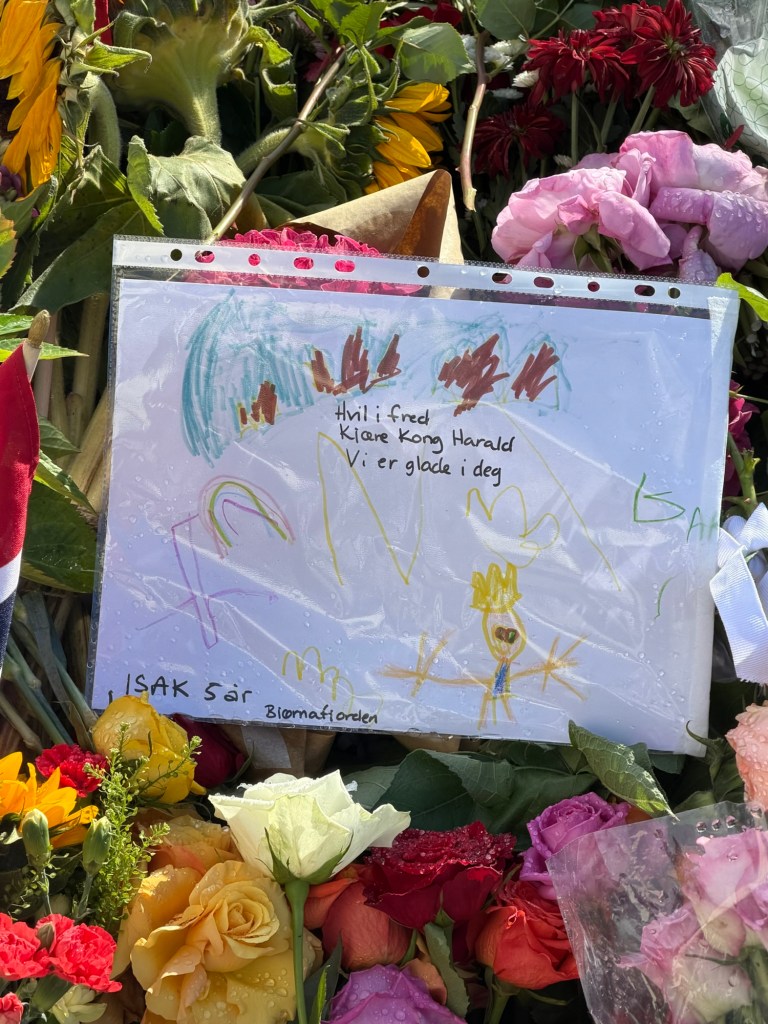
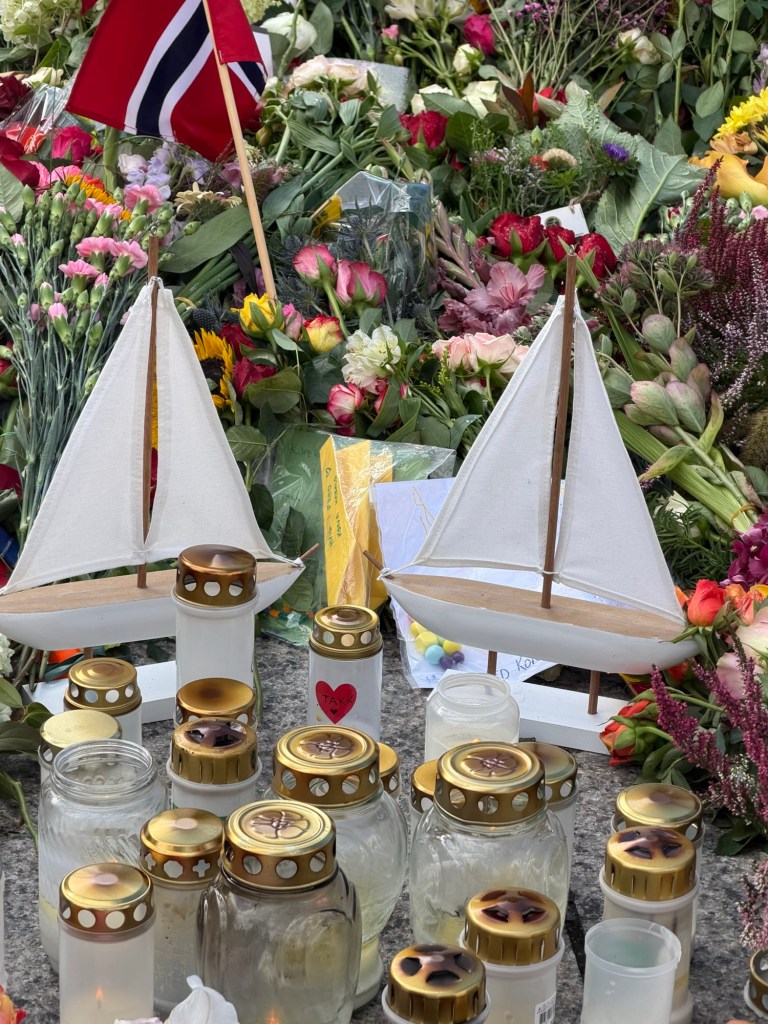
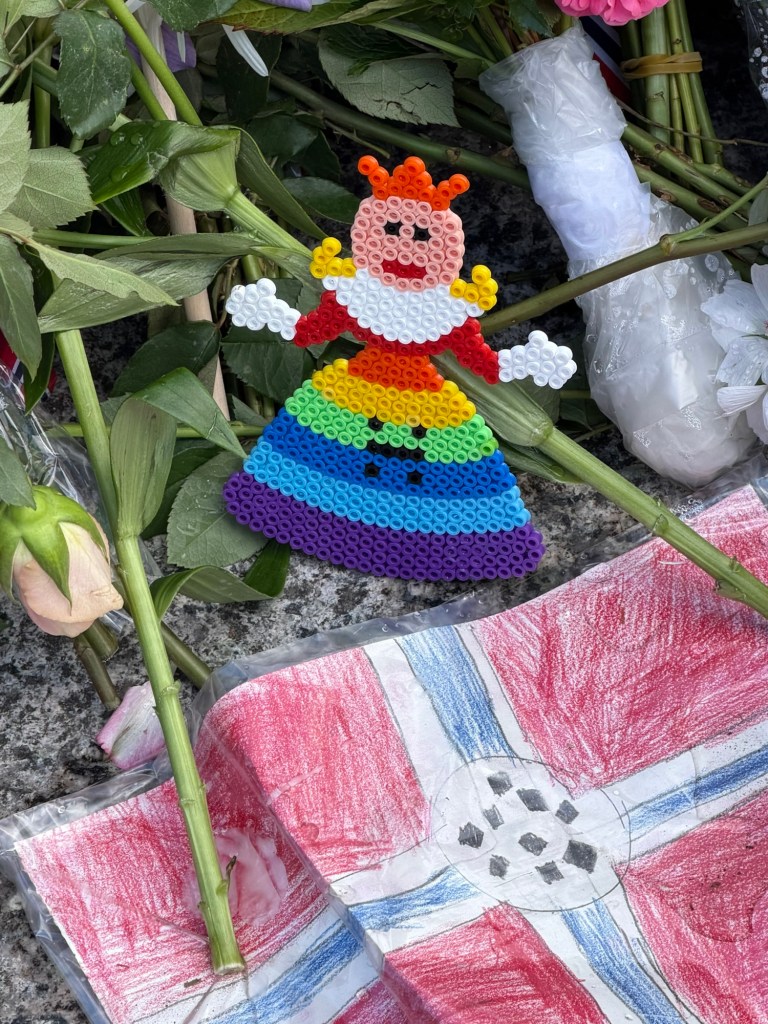
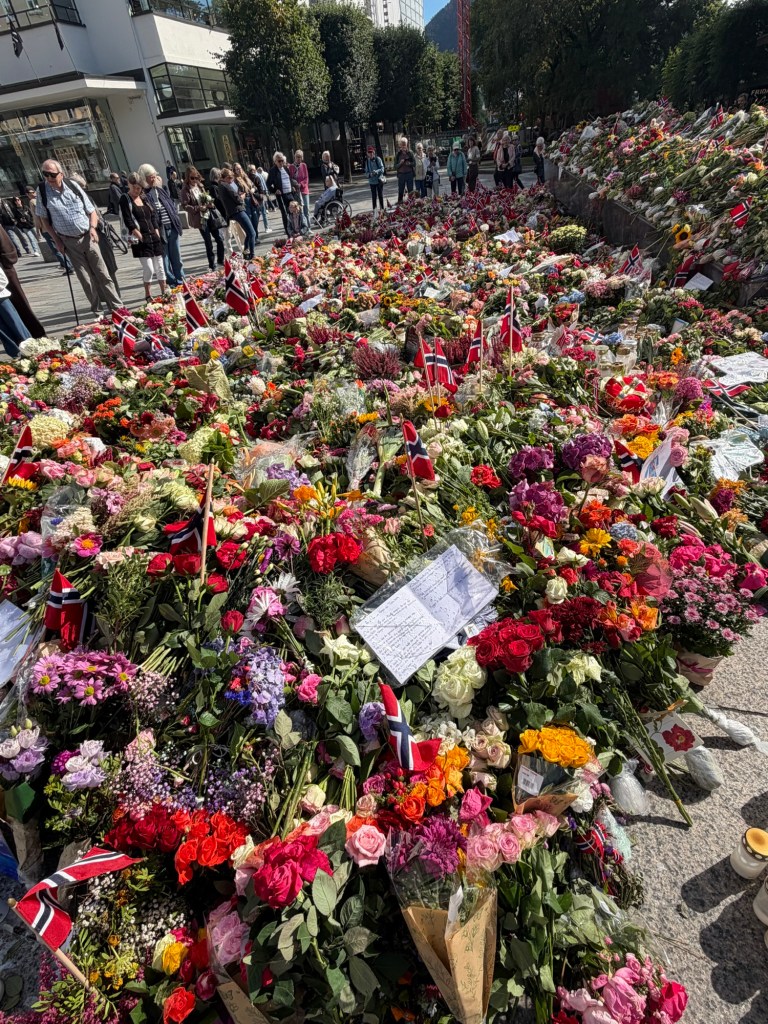
Here in Bergen, I was privileged to witness a beautiful people’s memorial at the Blue Stone in King Olav Square. I have never seen so many flowers gathered in one place in my life. Apparently, the mountain of flowers in Oslo is exponentially larger.
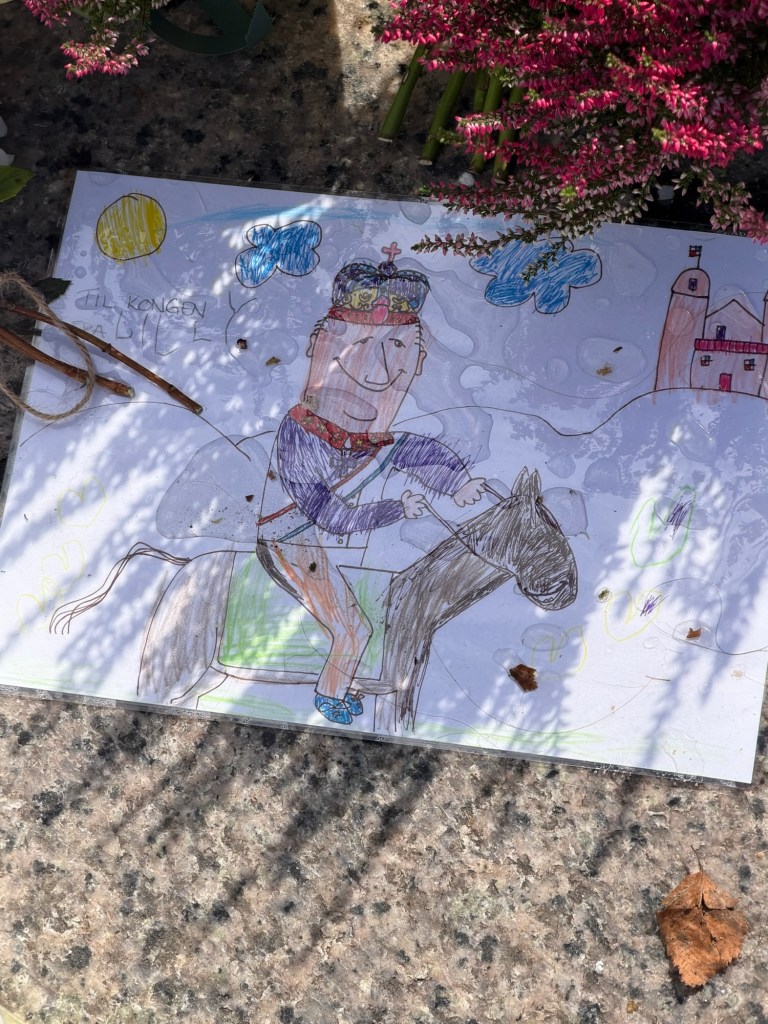
The memorial was especially moving because so many people left personal tributes, including an incredible collection of children’s drawings and artwork (a fraction of it shown below).
Here are a few pictures from this very special moment in Norway.
You need to see this in person to appreciate the sheer magnitude of it. Sailboats honouring Kong Harald’s successful sailing endeavors. Kudos to the Perlor Bead artist who created this! I hope it ends up on King Haakon’s Christmas tree!
A note on the Blue Stone (Den blå stein): This 9-meter-long block of Brazilian sodalite rests on a stone base, giving it its distinctive slant. It was gifted to the city of Bergen by Kavli, a local food company, to celebrate its 100th anniversary.
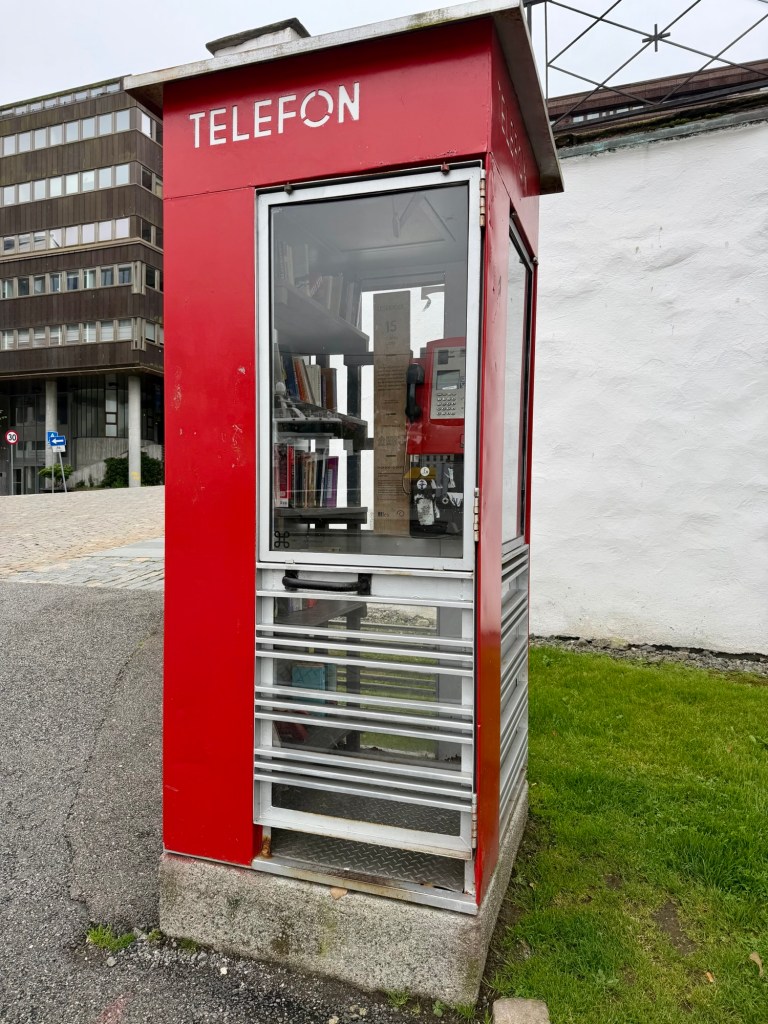
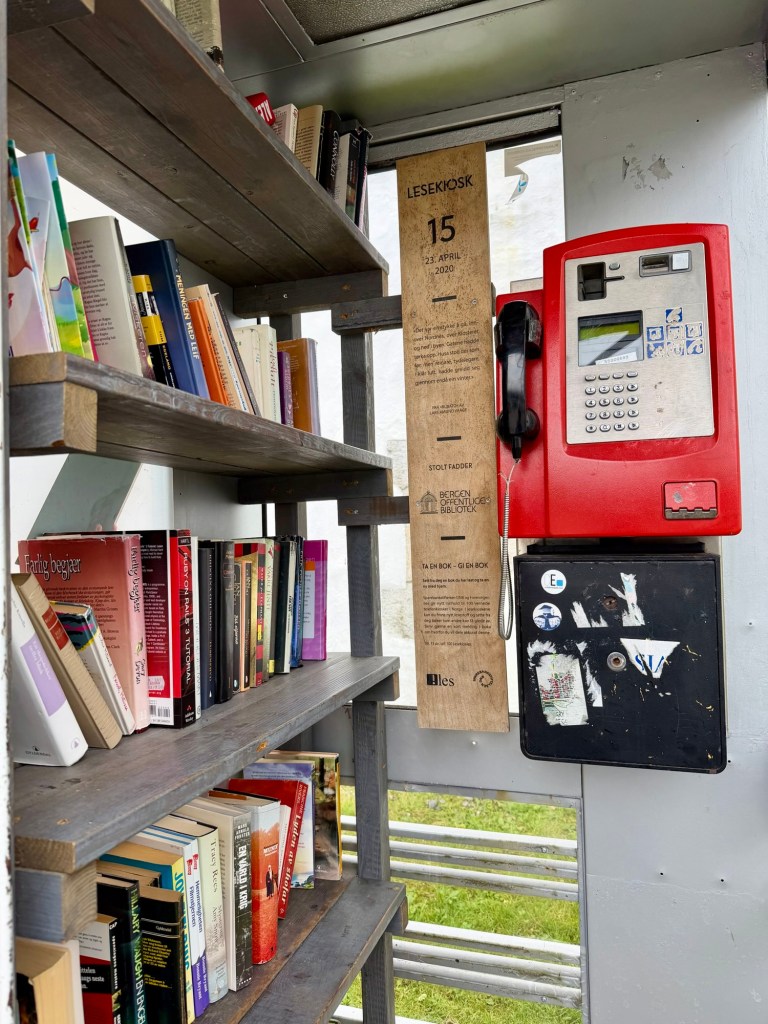
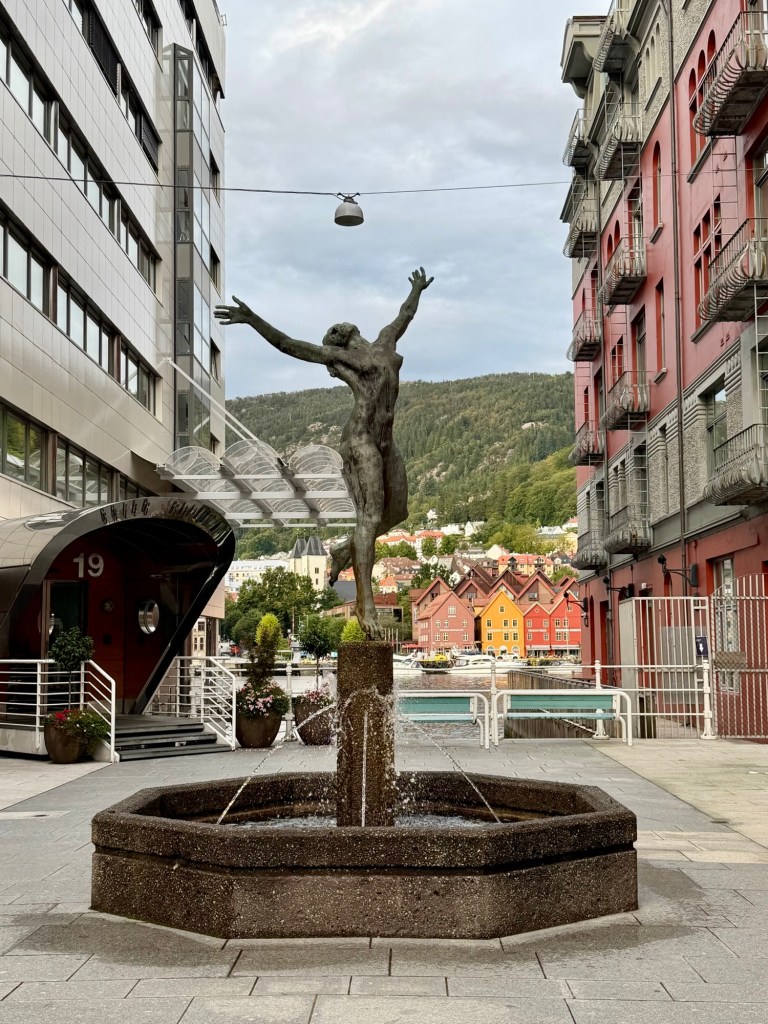
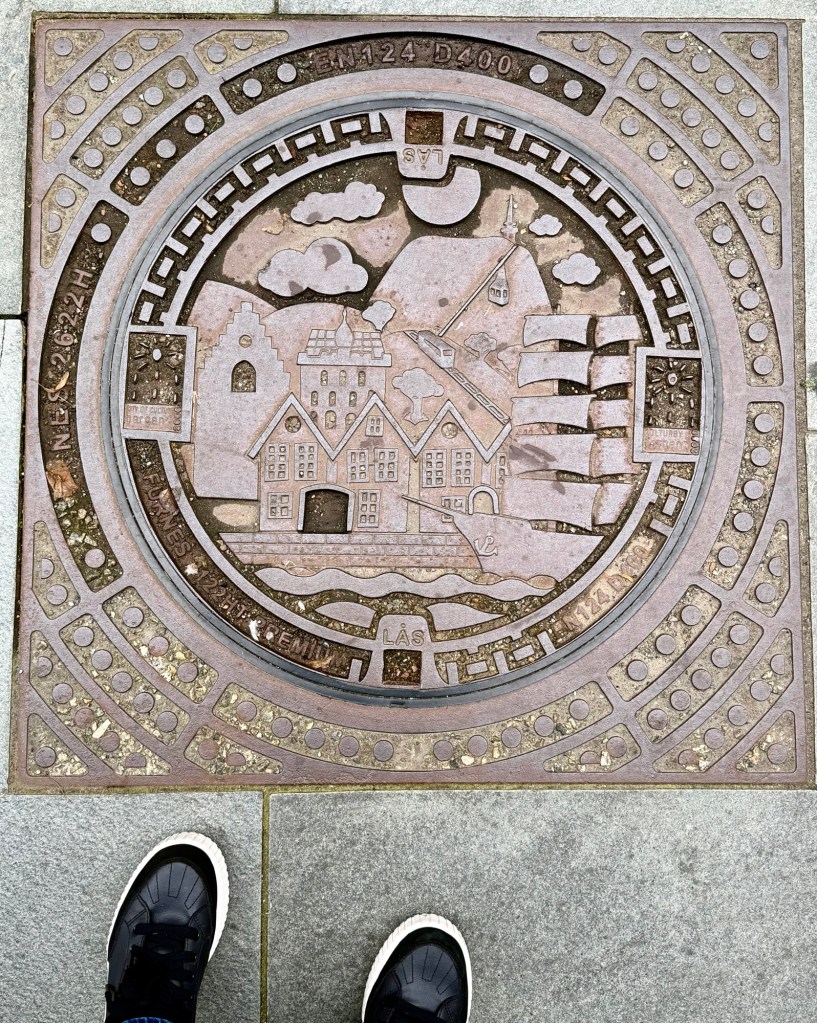
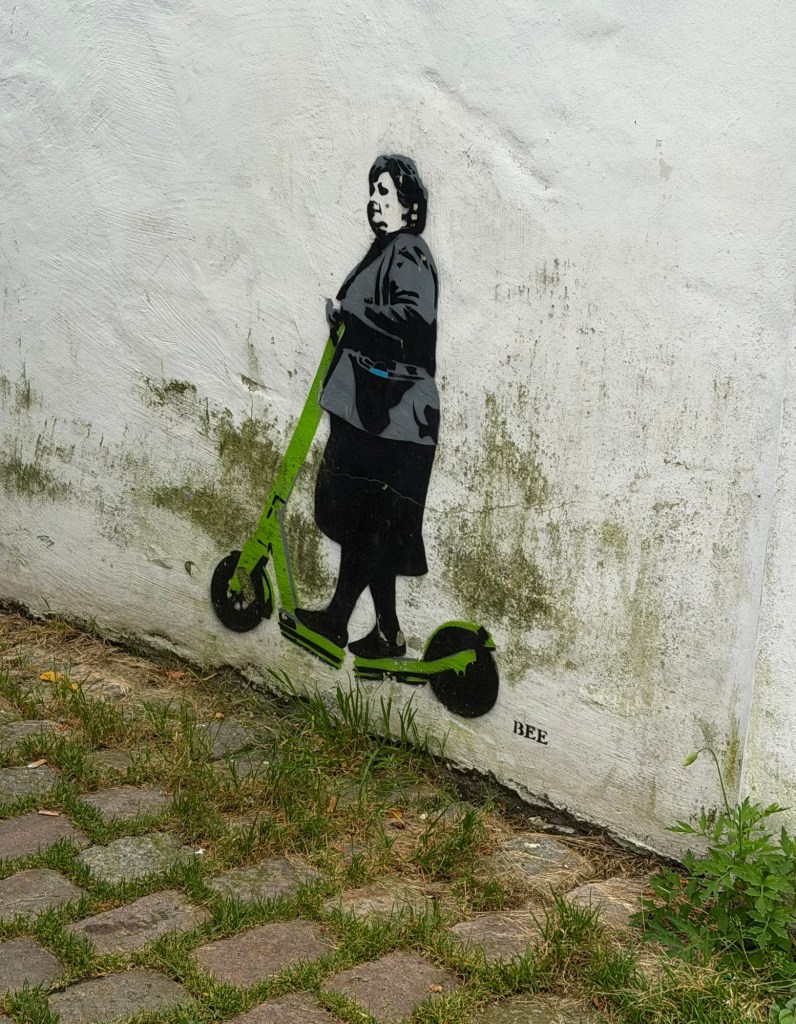
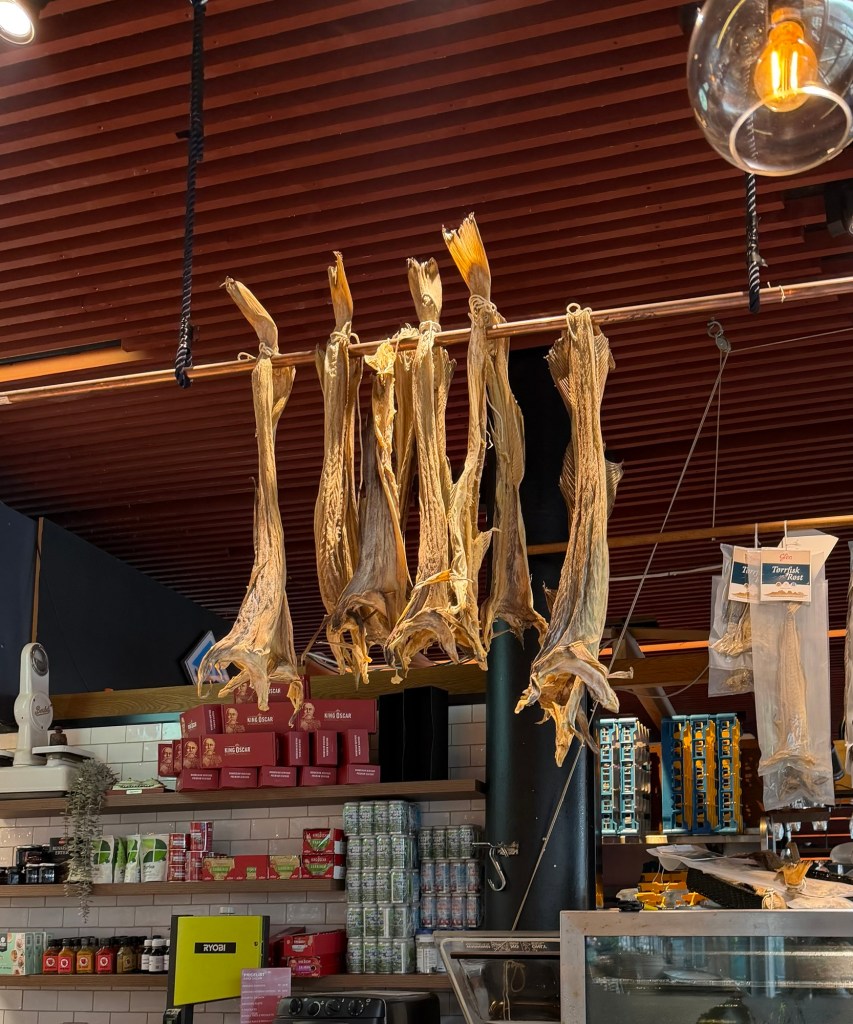
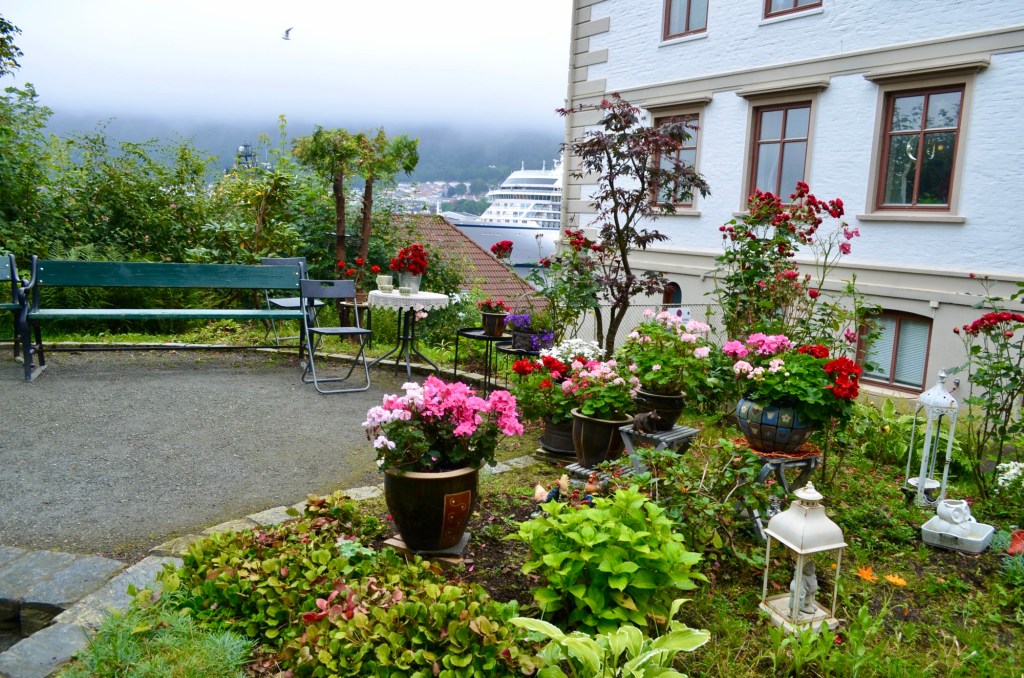
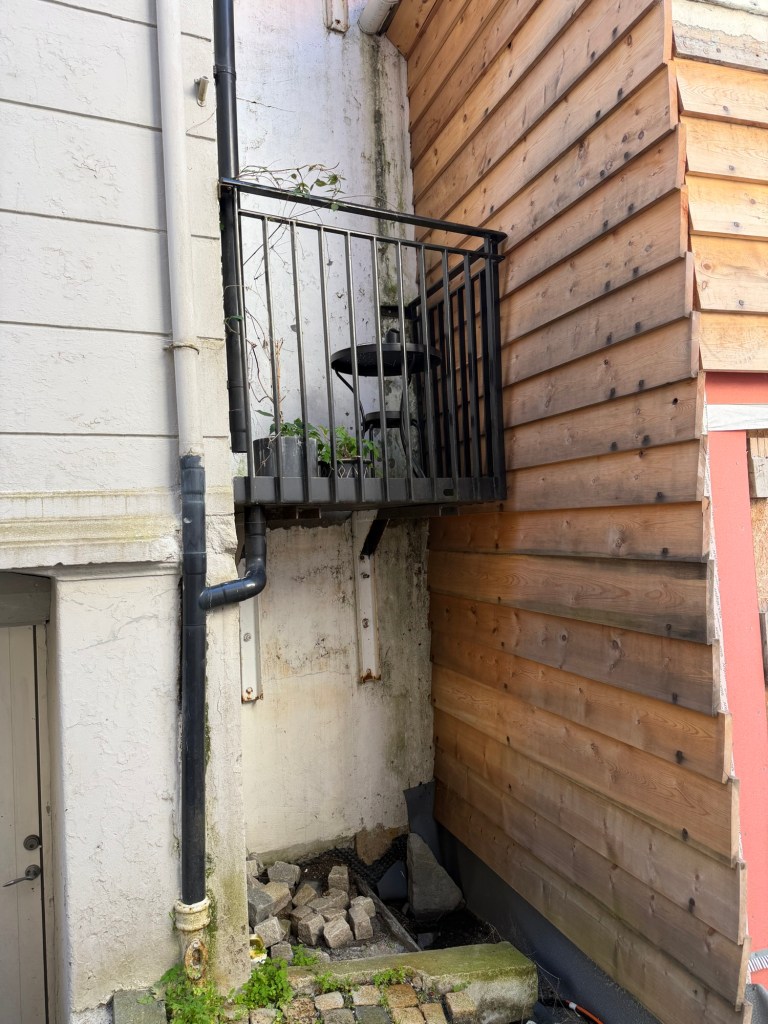
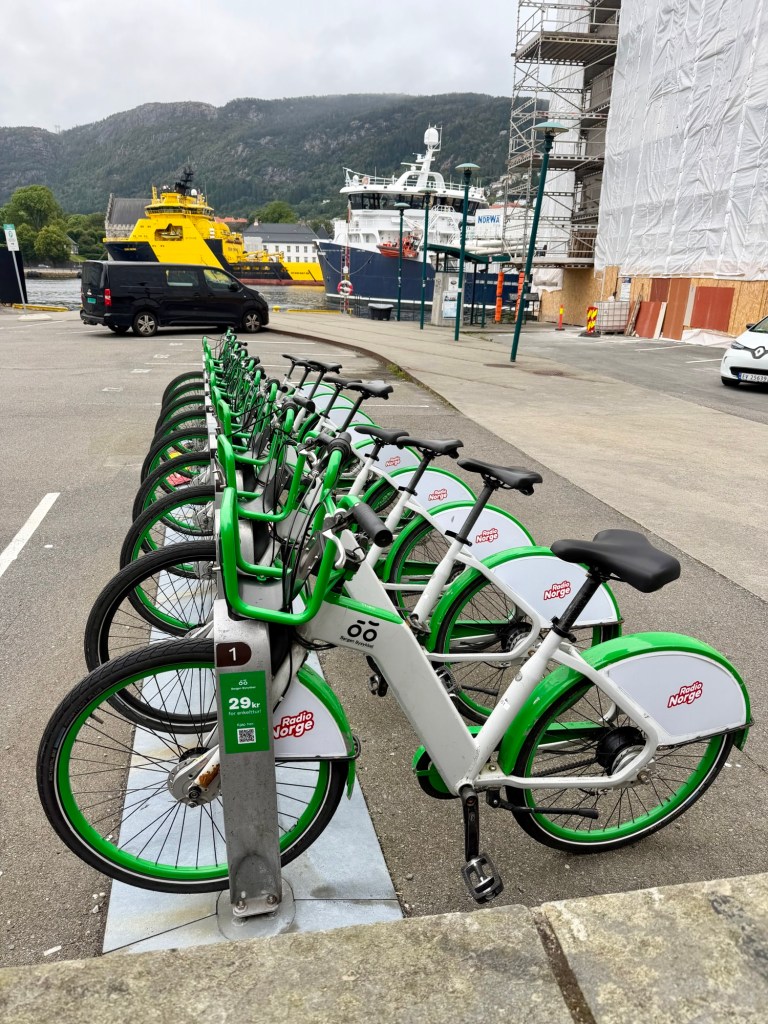
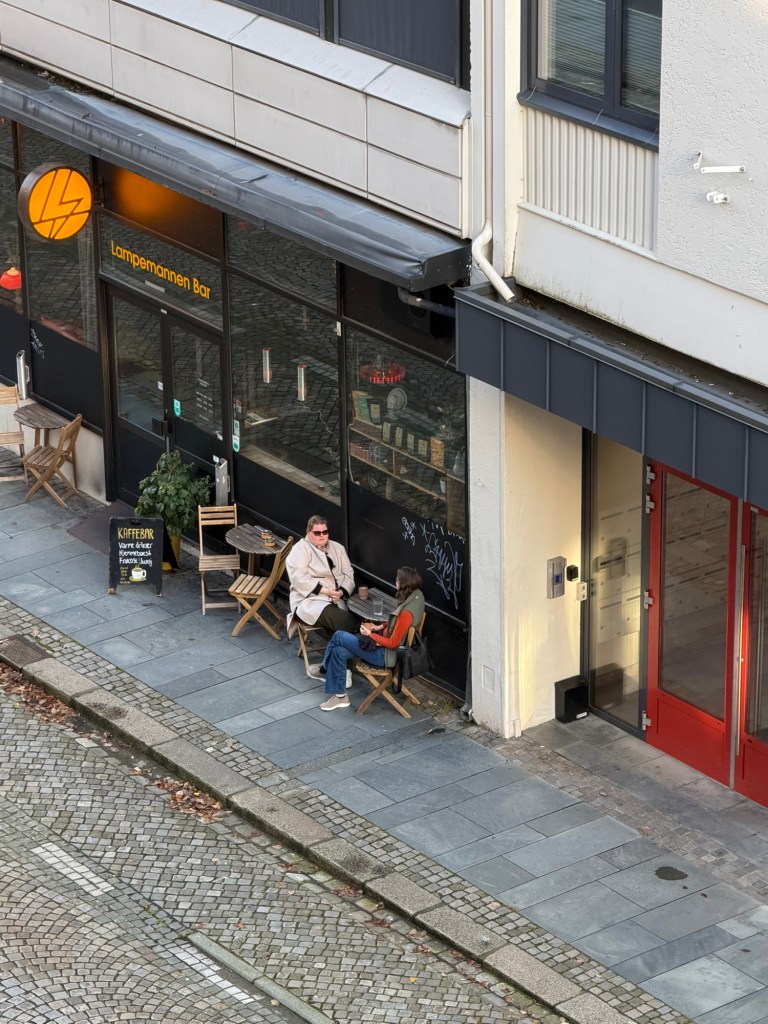
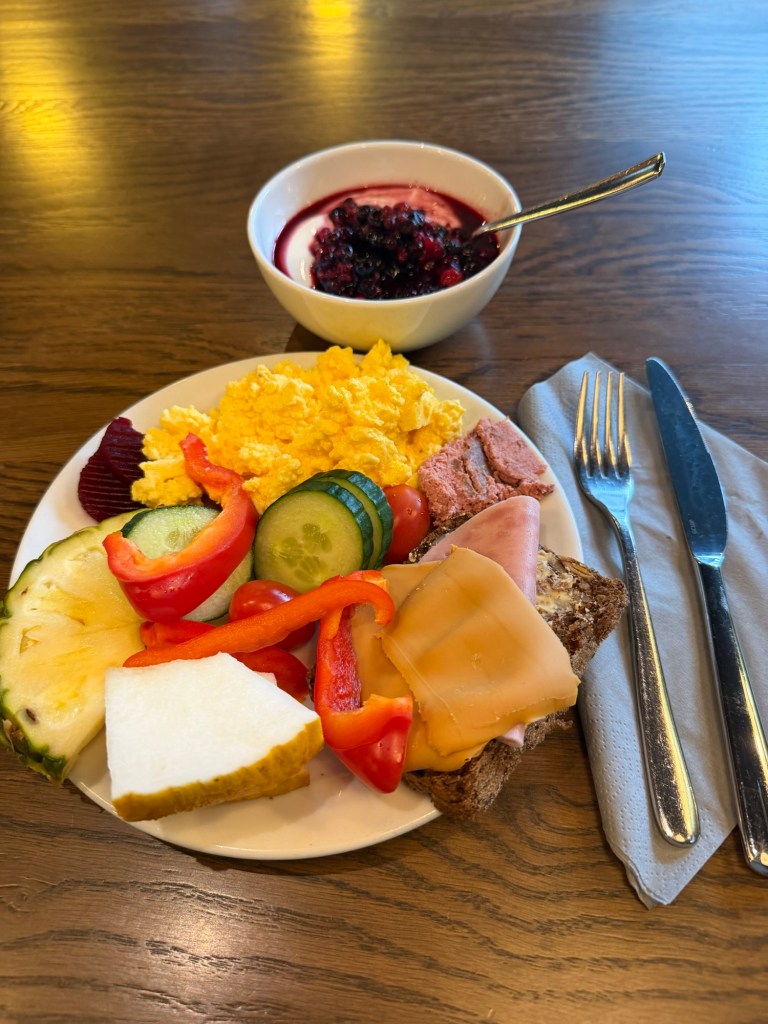
Free libraries housed in phone booths. I ❤️ this idea!A magnificent statue across from my hotel. Beautiful manhole covers with a Bergen scene showcasing the top attractions. “Full Speed Ahead” by street artist BEE. The stencil shows a woman resembling former Norwegian Prime Minister Erna Solberg riding a bright green electric scooter.Dried fish at the Fisketorget. Yum 😋 Beautiful plants and flowers everywhere.Innovative use of small space.E-bikes and scooters EVERYWHERE. A lot of people use these to get to and from work. Even the food delivery guys use them.A+ grade for recycling and conservation efforts. ♻️ Hearty babies who sleep outside 💪🏻Hearty people who drink their morning coffee outside when it’s 8° C. Vegetables (including pickled beets) for breakfast. Pate too and brunost too! 🤤
I’m inspired by the Norwegian culture. Guess what I’ll be doing when I get home?
I’ve had three busy days with a lot of walking in Bergen, so I’m looking forward to putting my sore feet up when I board the Hurtigruten tomorrow.
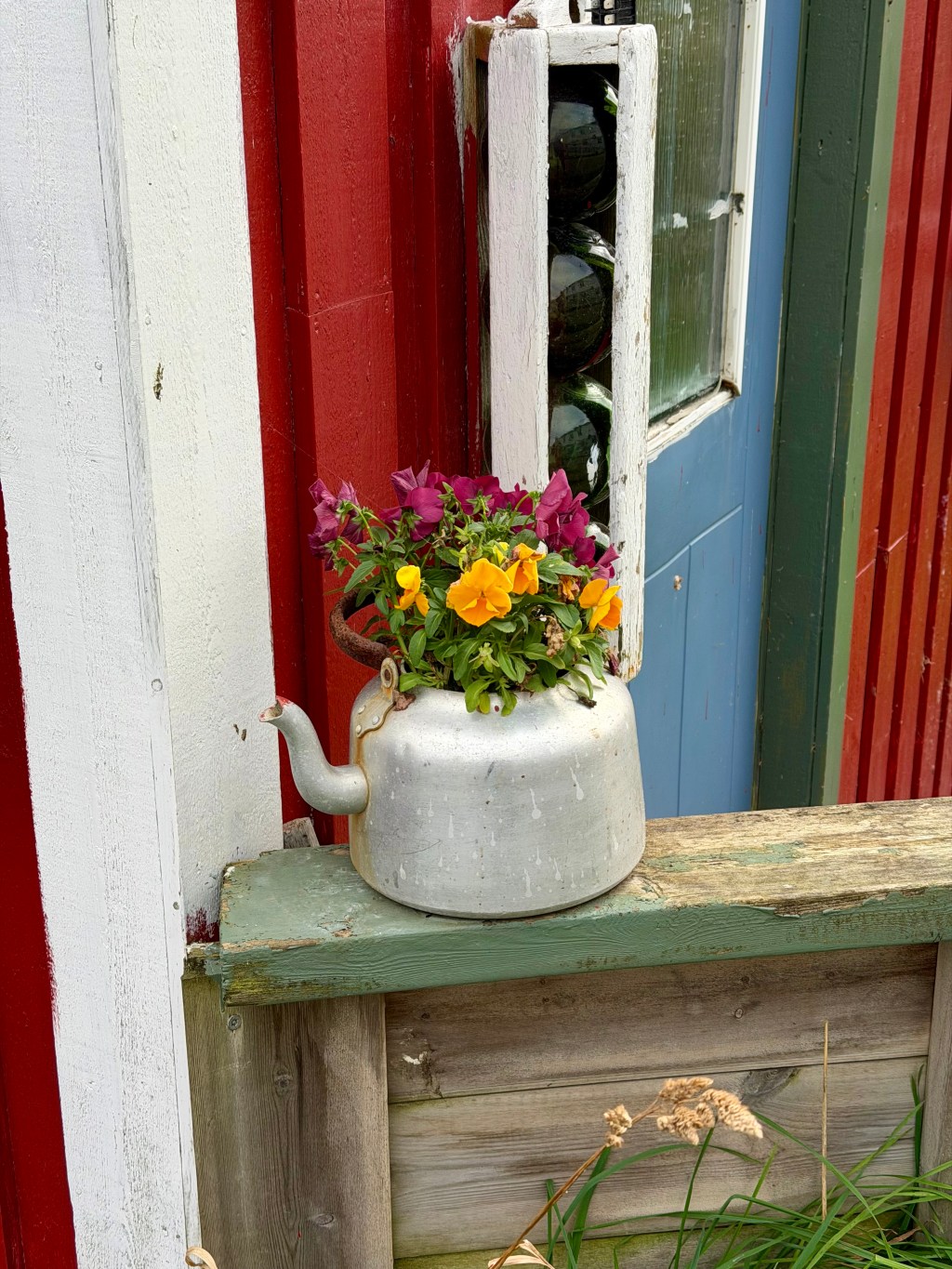
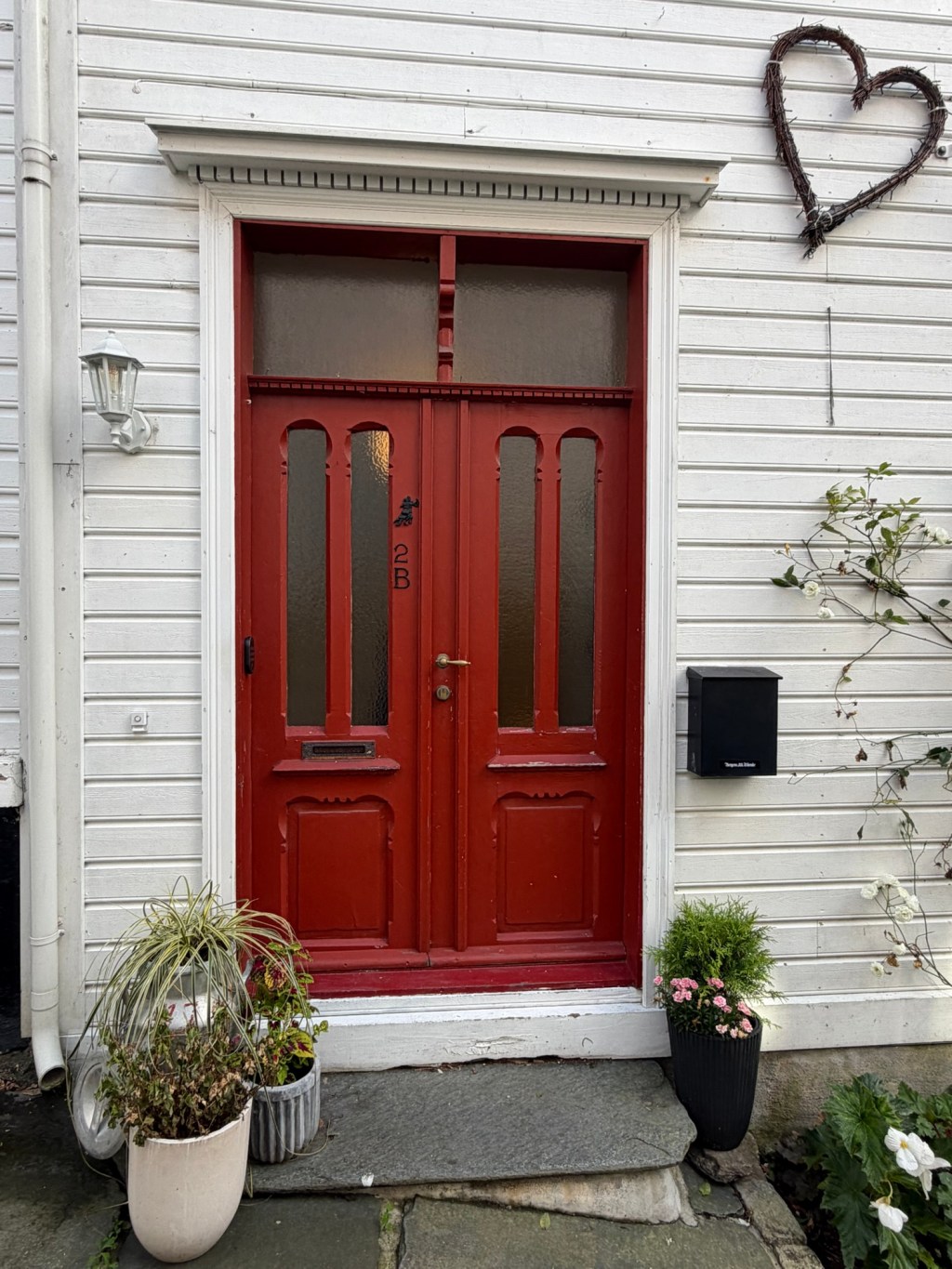
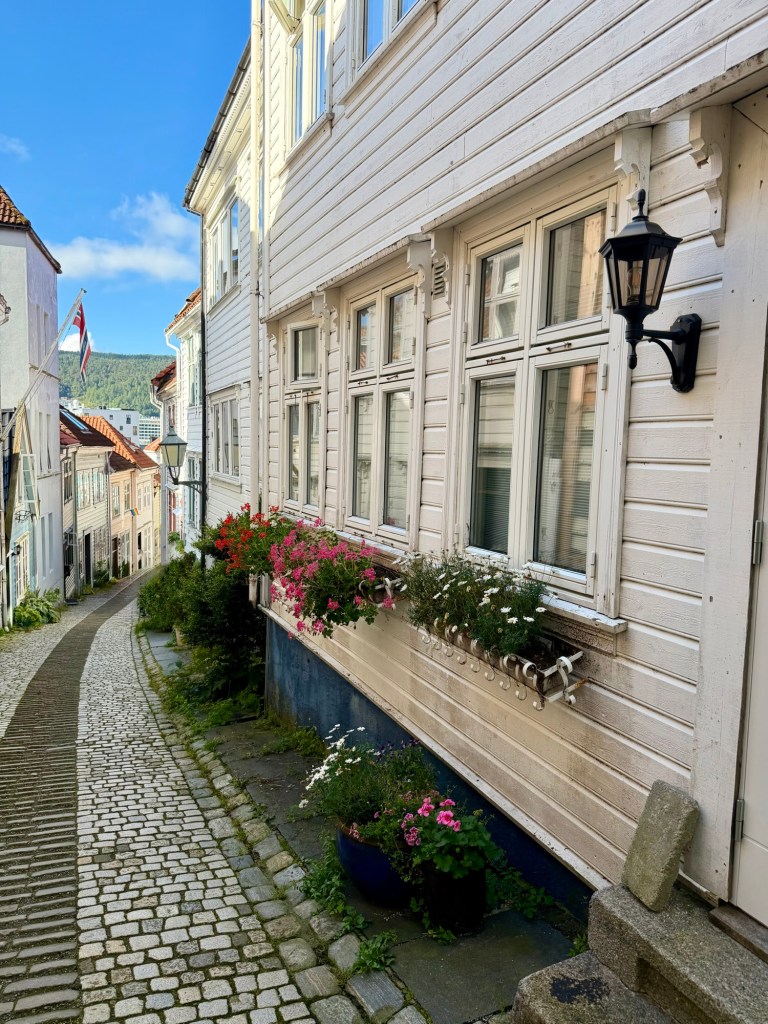
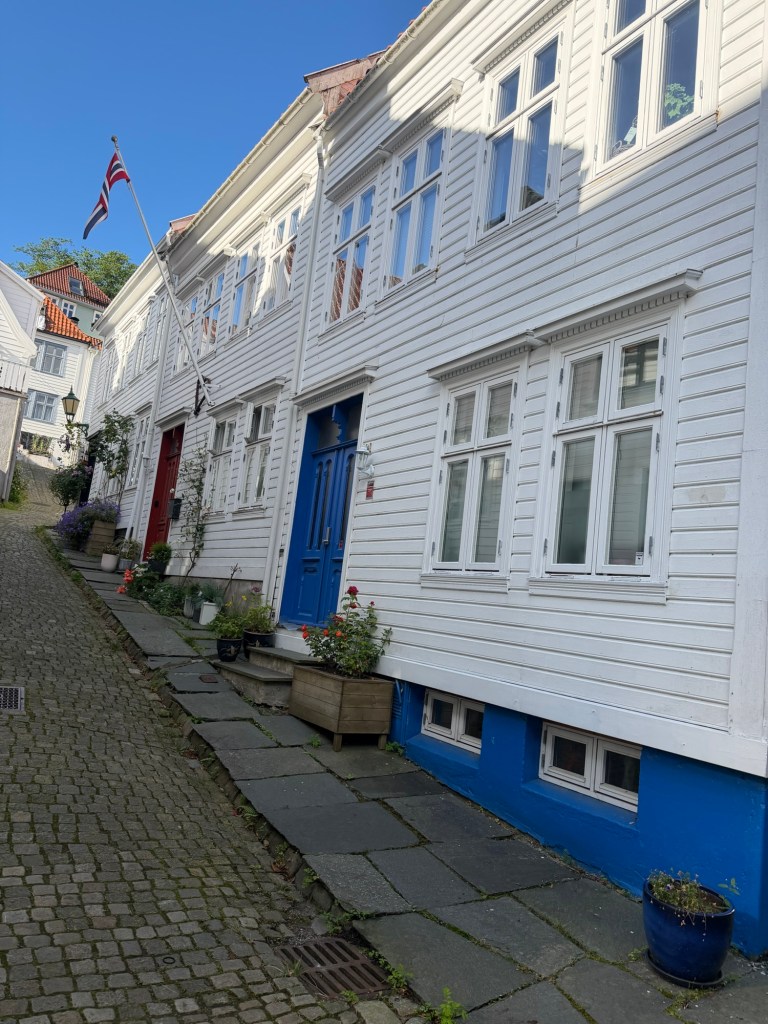
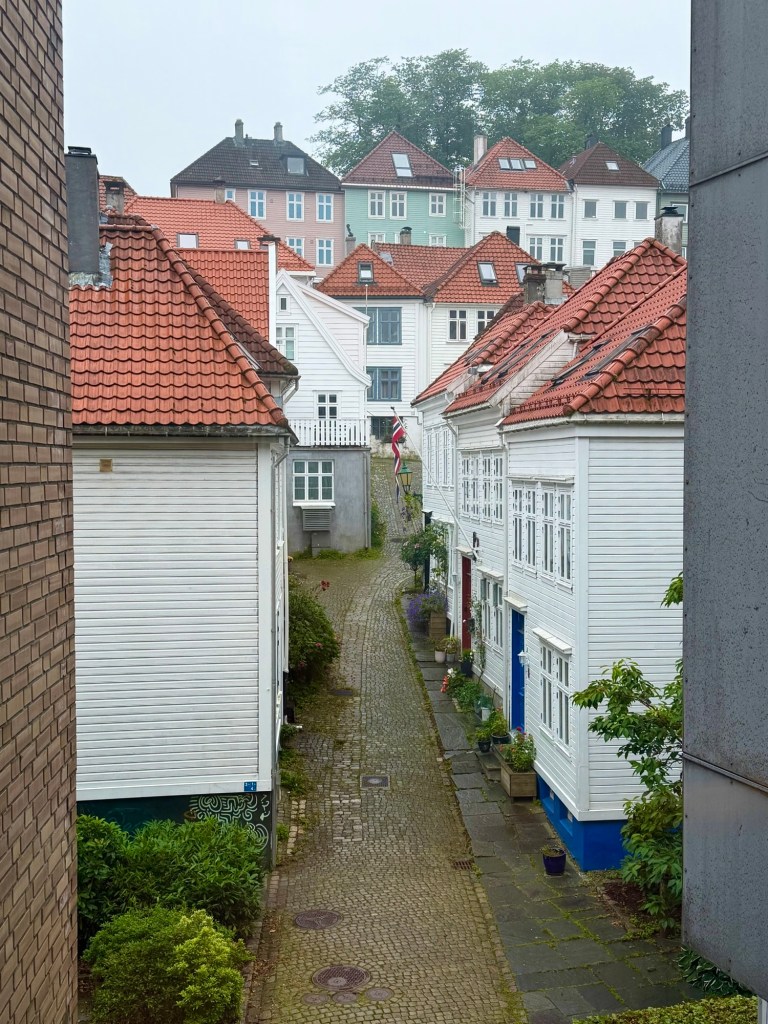
The streets in the area around me are all cobblestone, with many narrow walkways flanked by heritage homes on either side. These homes are impeccably kept, often with beautiful flower pots by the front door.
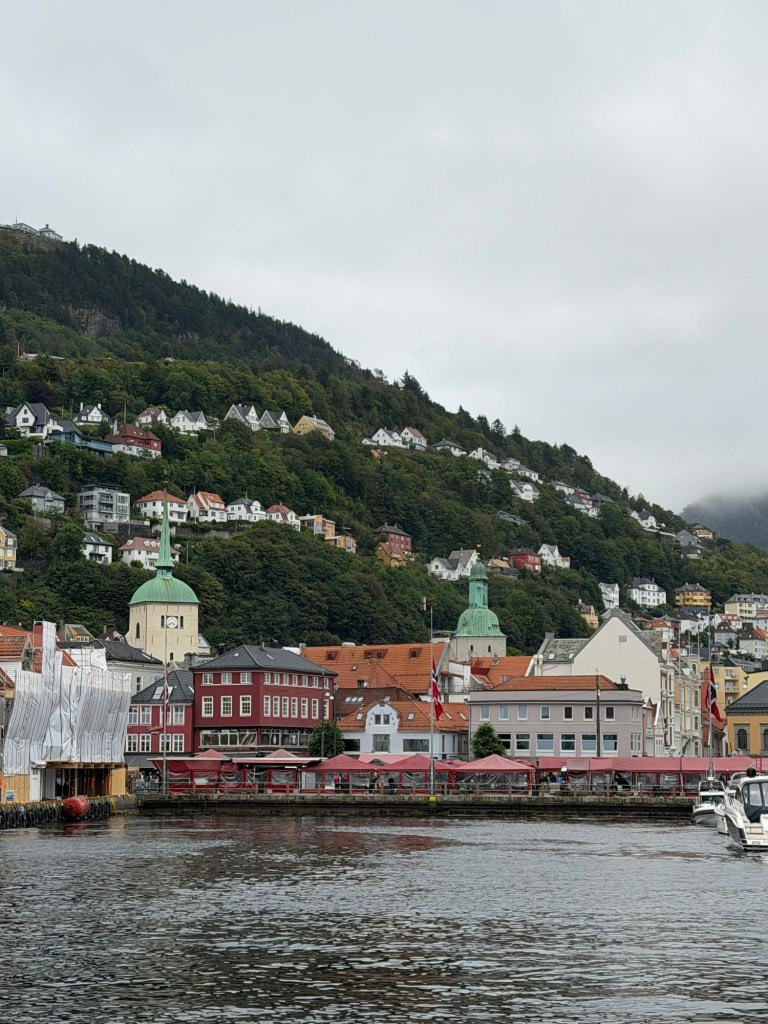
I’m also just one short block from the harbour, my favourite place to sit and eat lunch.
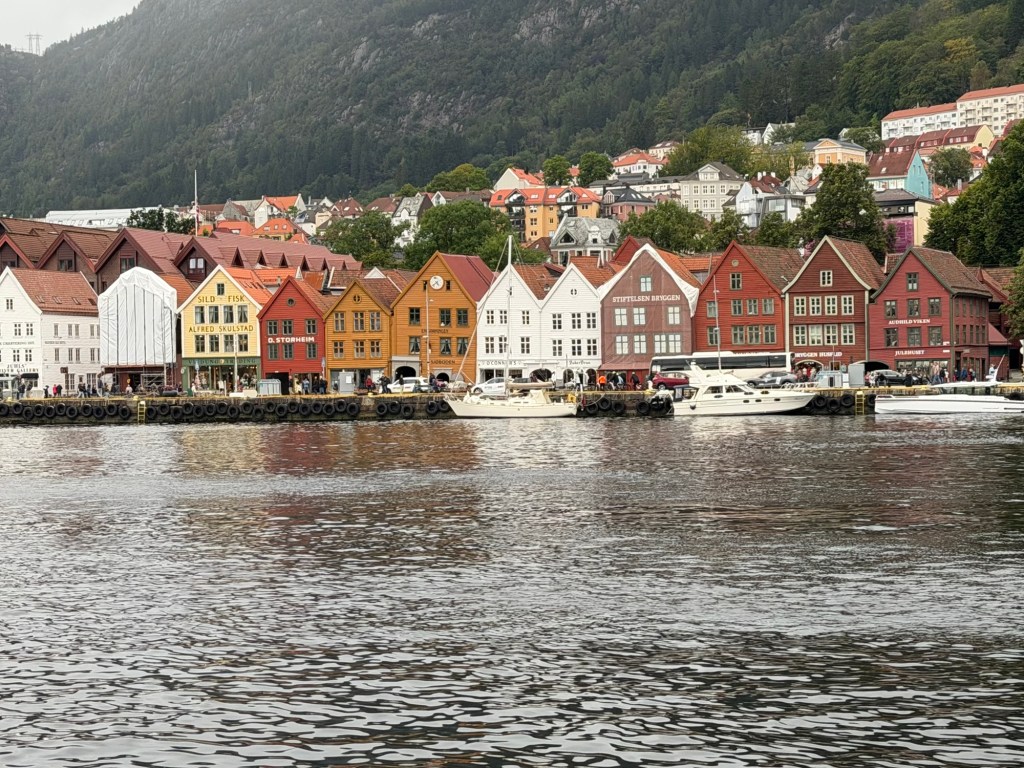
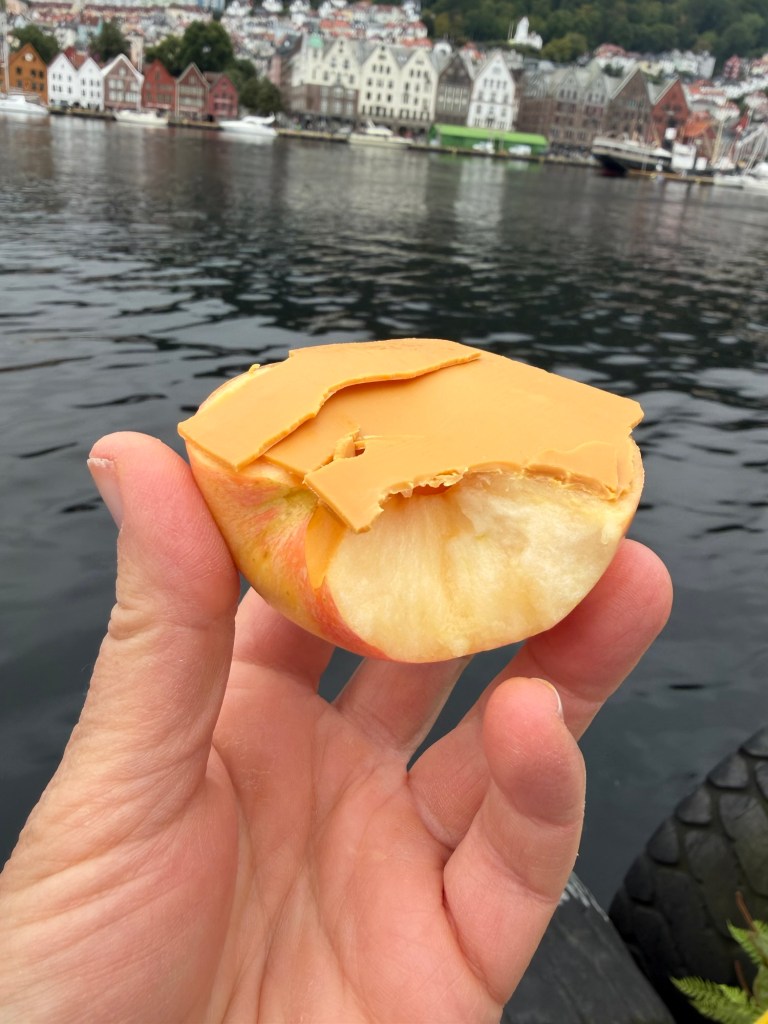
I’m right across from the BryggenI could live on brunost and apples!
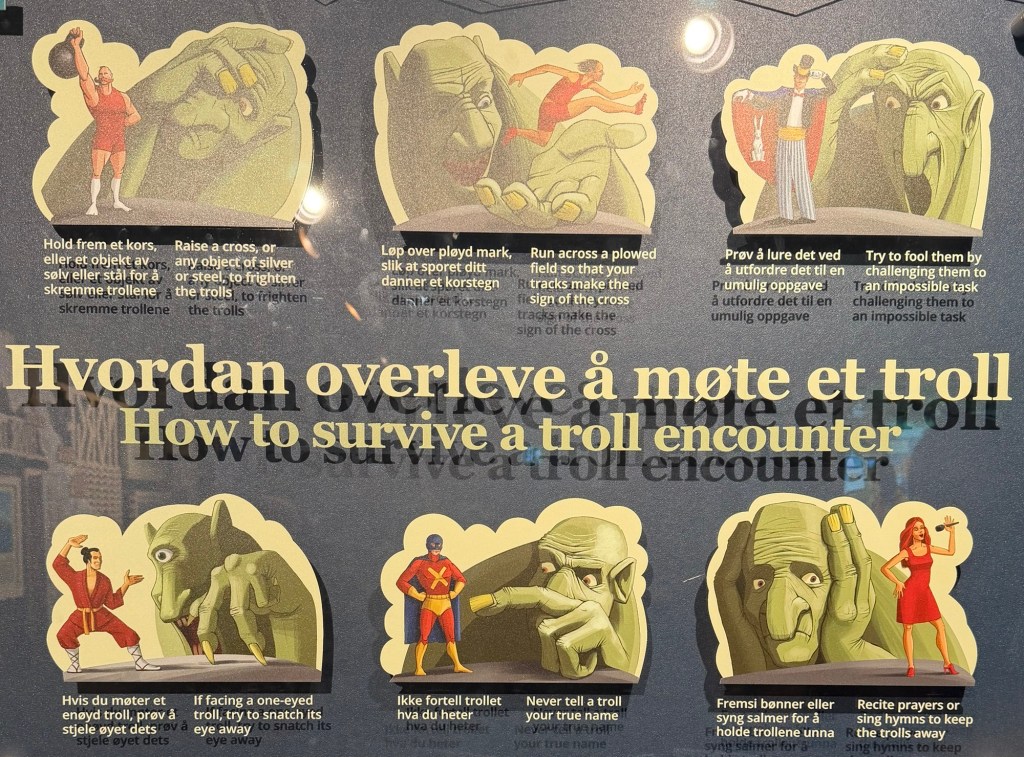
I found the Fisketorget (fish market) and Bryggen (the historic, iconic harbour district) to be extremely touristy and busy. Away from the crowds, I visited the delightful Troll Museum. I learned about trolls in Norwegian culture, from folk tales to the works of icons like Ibsen and Grieg. There was even an interactive display about Peer Gynt.
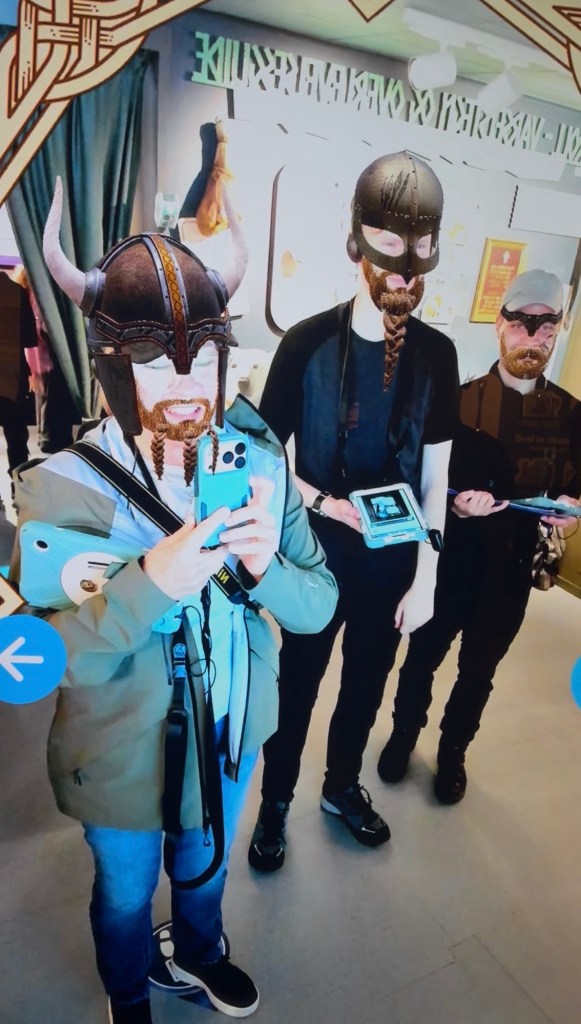
I Viking’d myself with a couple young norsk guys. 😂Zoom in…important info!
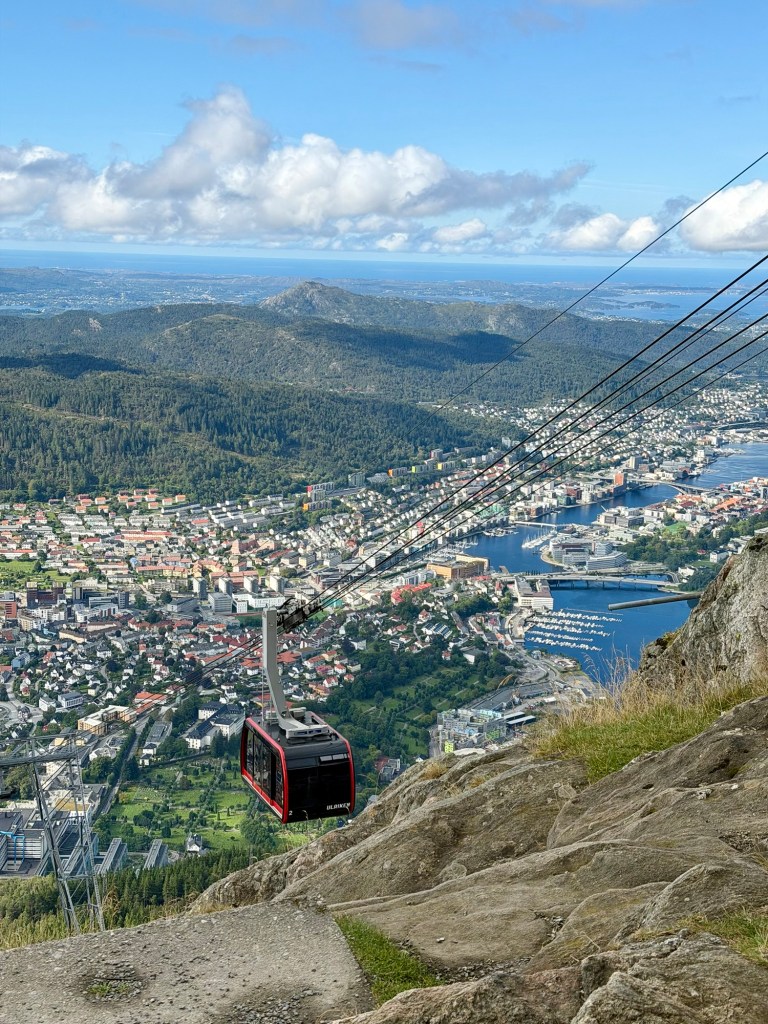
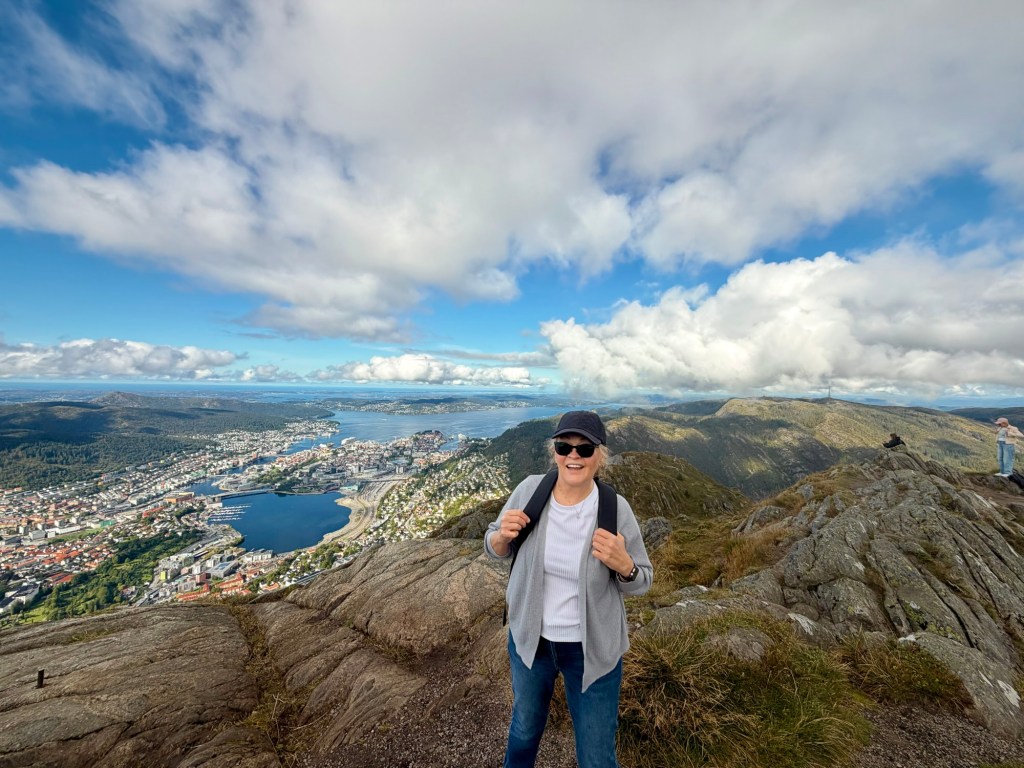
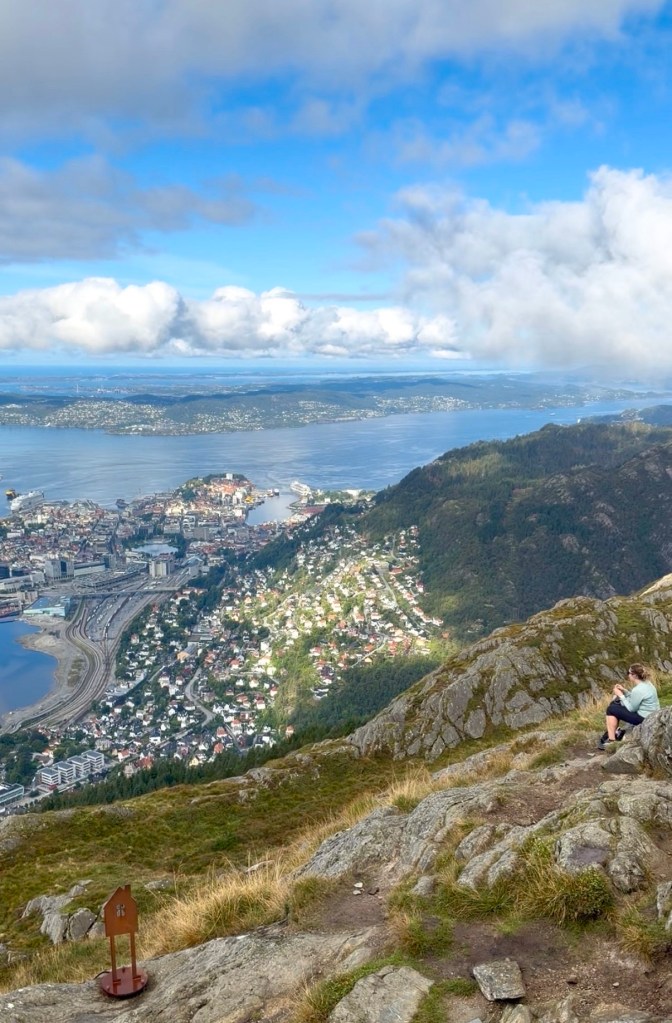
I took the cable car up Ulriken. At 643 metres, it’s the highest of the seven mountains surrounding Bergen. For the record, I do not like heights, so this was definitely outside my comfort zone.
An unusually clear day for Bergen A kind woman offered to take my picture. I asked her to please do it quickly as I was hyperventilating. 🫤
At the top, I managed to venture near the mountain’s edge to take a picture. To my surprise, I found a Norwegian woman sitting right at the edge of the cliff — KNITTING!
Knitting 693 meters up
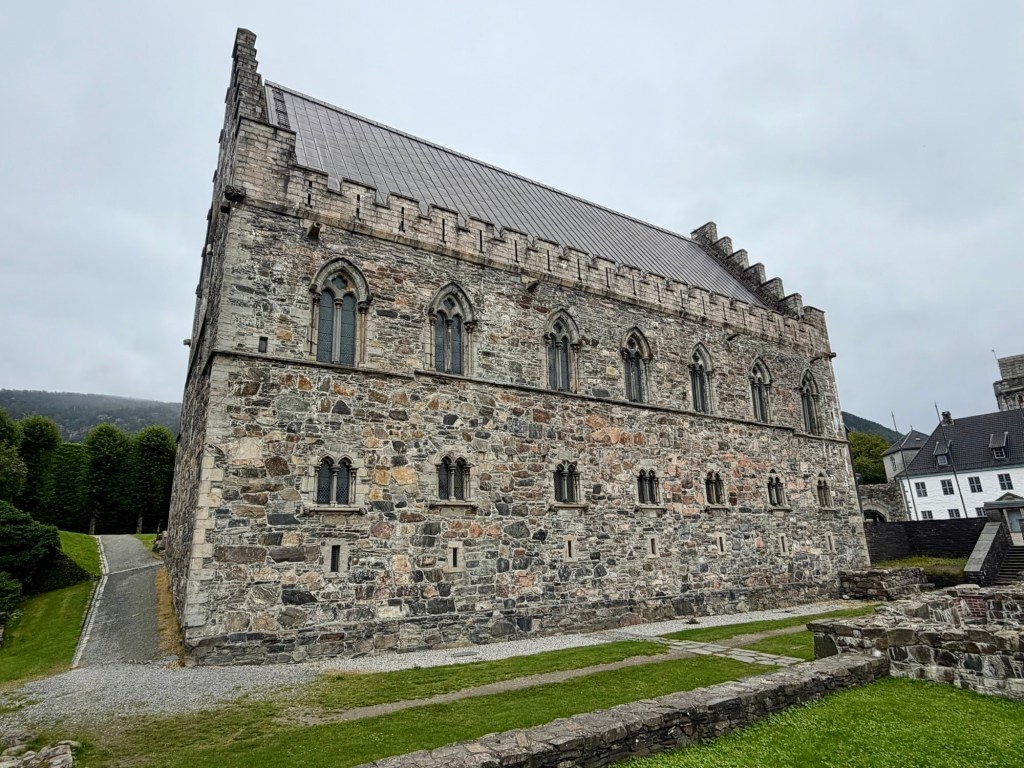
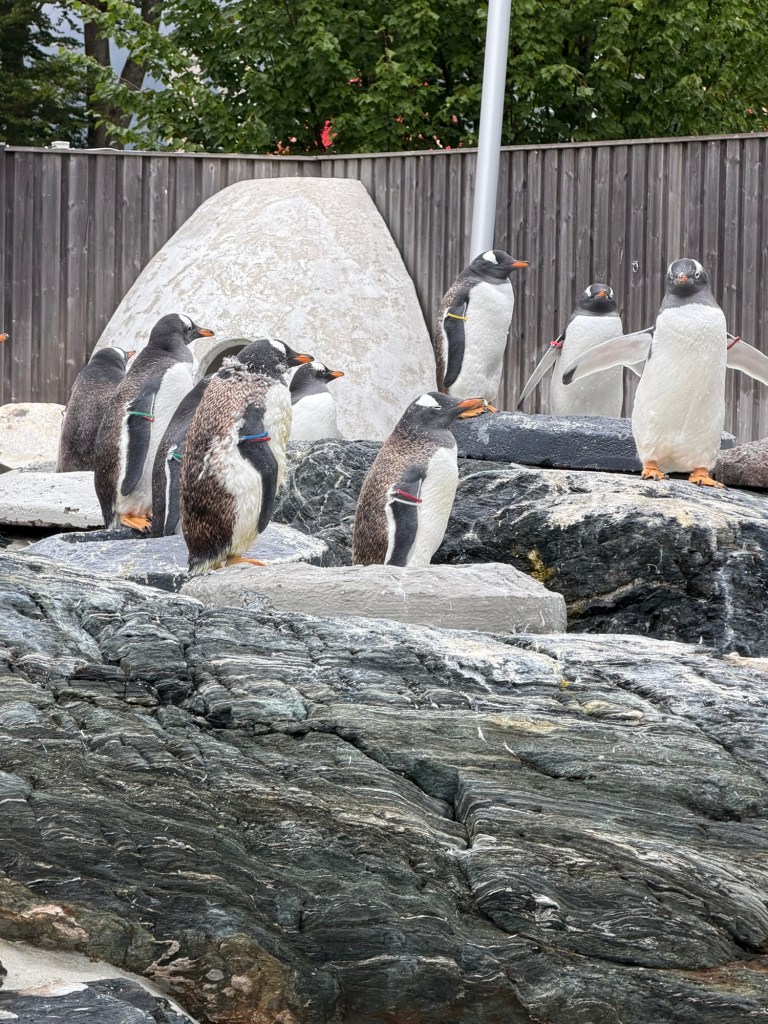
I also visited other places, including Akvariet (the aquarium) and Bergenhus Fortress.
Håkonshallen, Bergenhus FortressAkvariet penguins
16,000 steps a day, sore feet, and so many wonderful memories.
Well, it’s taken me a few days to start feeling normal again after emerging from my zombie-like state following a Calgary → Halifax → Amsterdam → Bergen journey on virtually no sleep.
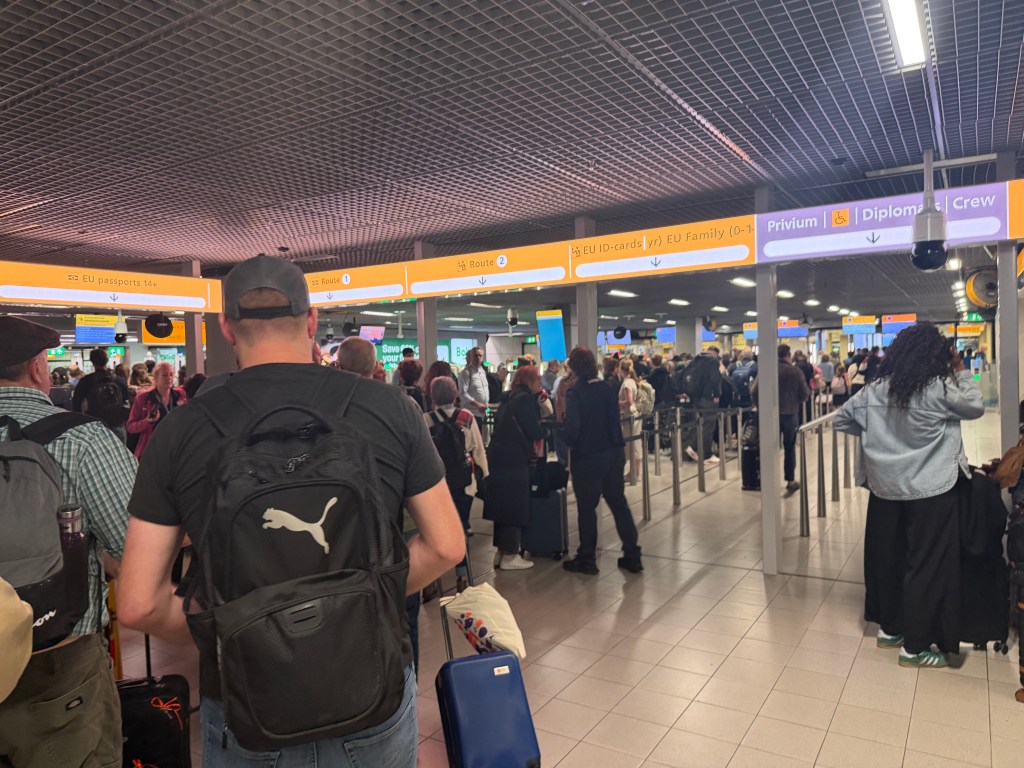
No amount of preparation could have prepared me for Schiphol Airport.
It’s enormous, which means there are a lot of people. The airport also has an impressive level of automation throughout its operations. Upon arrival, non-EU visitors are required to register at self-service machines that scan your passport, take a facial photo, and scan your fingerprints using a biometric scanner.
There are virtually no personnel or help desks in sight.
The lineups were unbelievable, but I eventually made it through the first self-service kiosk—only to discover that I had to go through essentially the same procedure at the next kiosk before I could even claim my luggage.
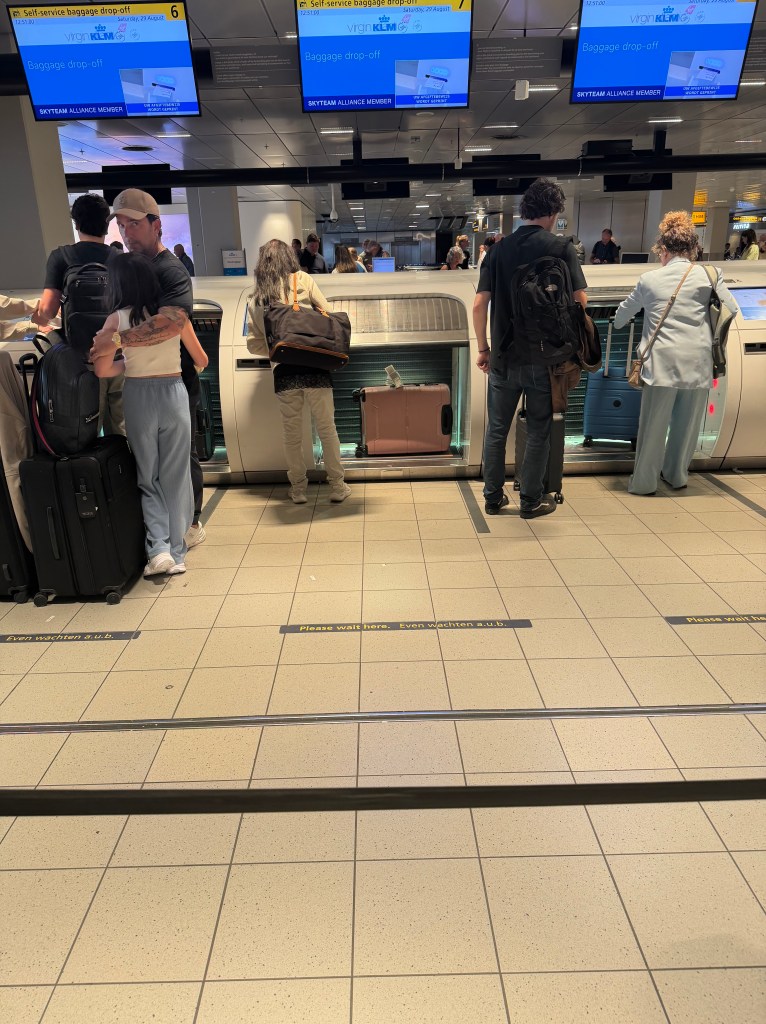
Once I had my suitcase, I needed to get back upstairs to check in again for my flight to Bergen. I stumbled around in circles for a bit before finally finding the right place.
I generated a baggage tag using my boarding pass, attached it to my bag, and placed the luggage into a machine that promptly swallowed it and sent it off toward the airplane.
No stress! 😅
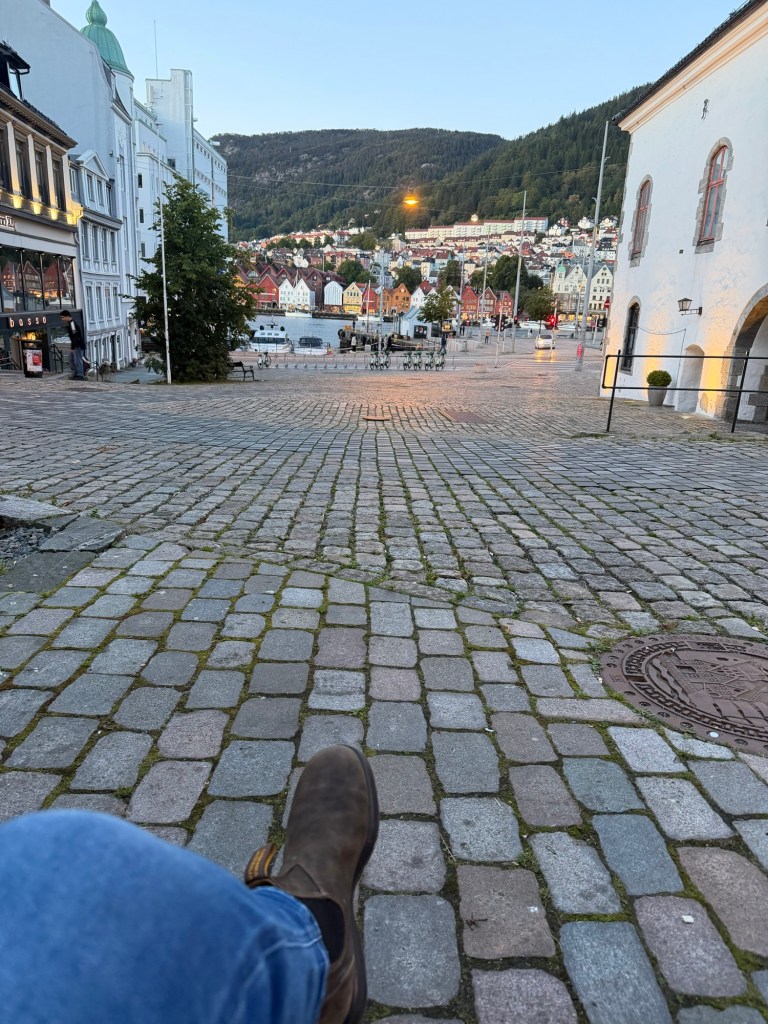
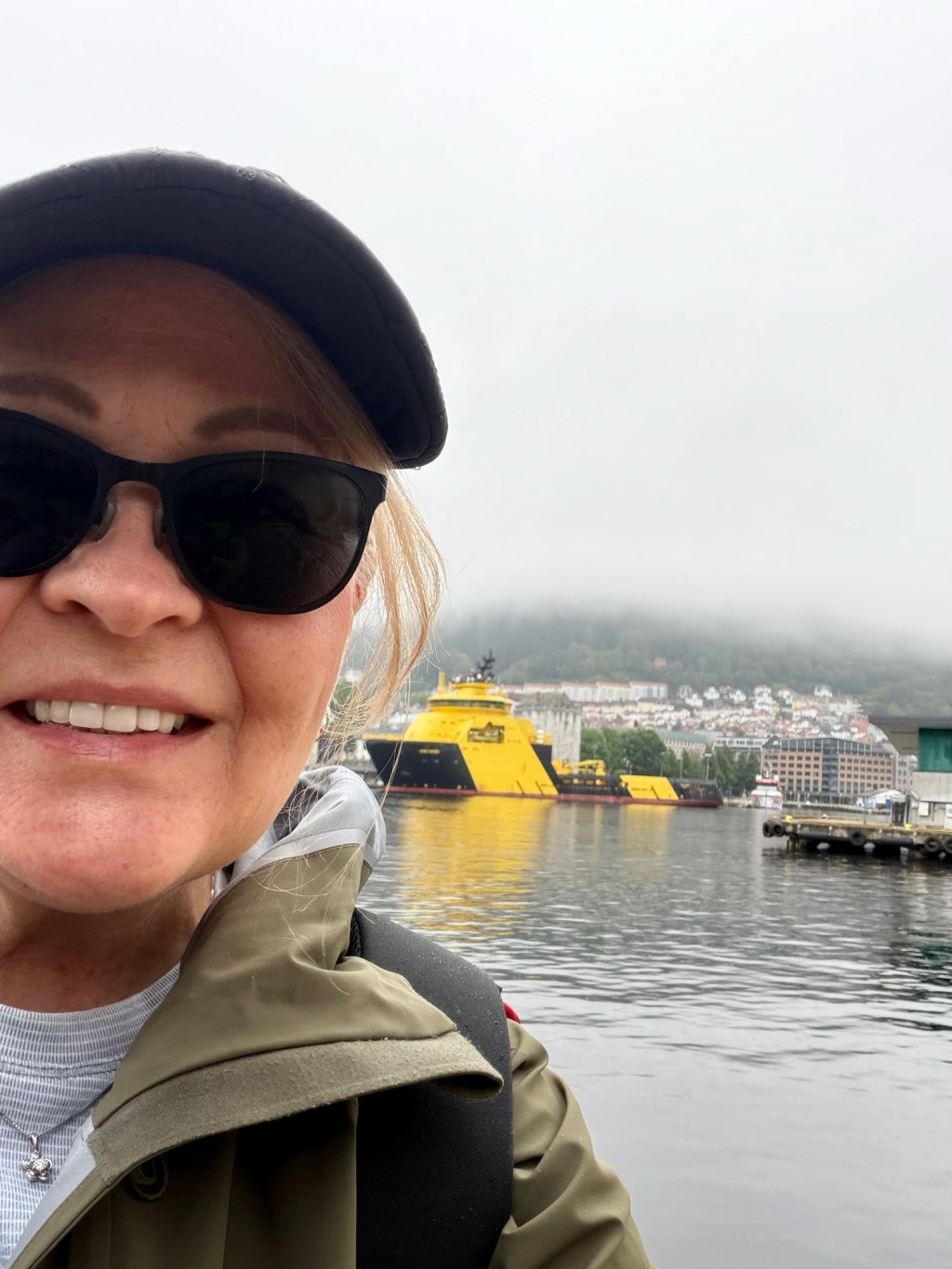
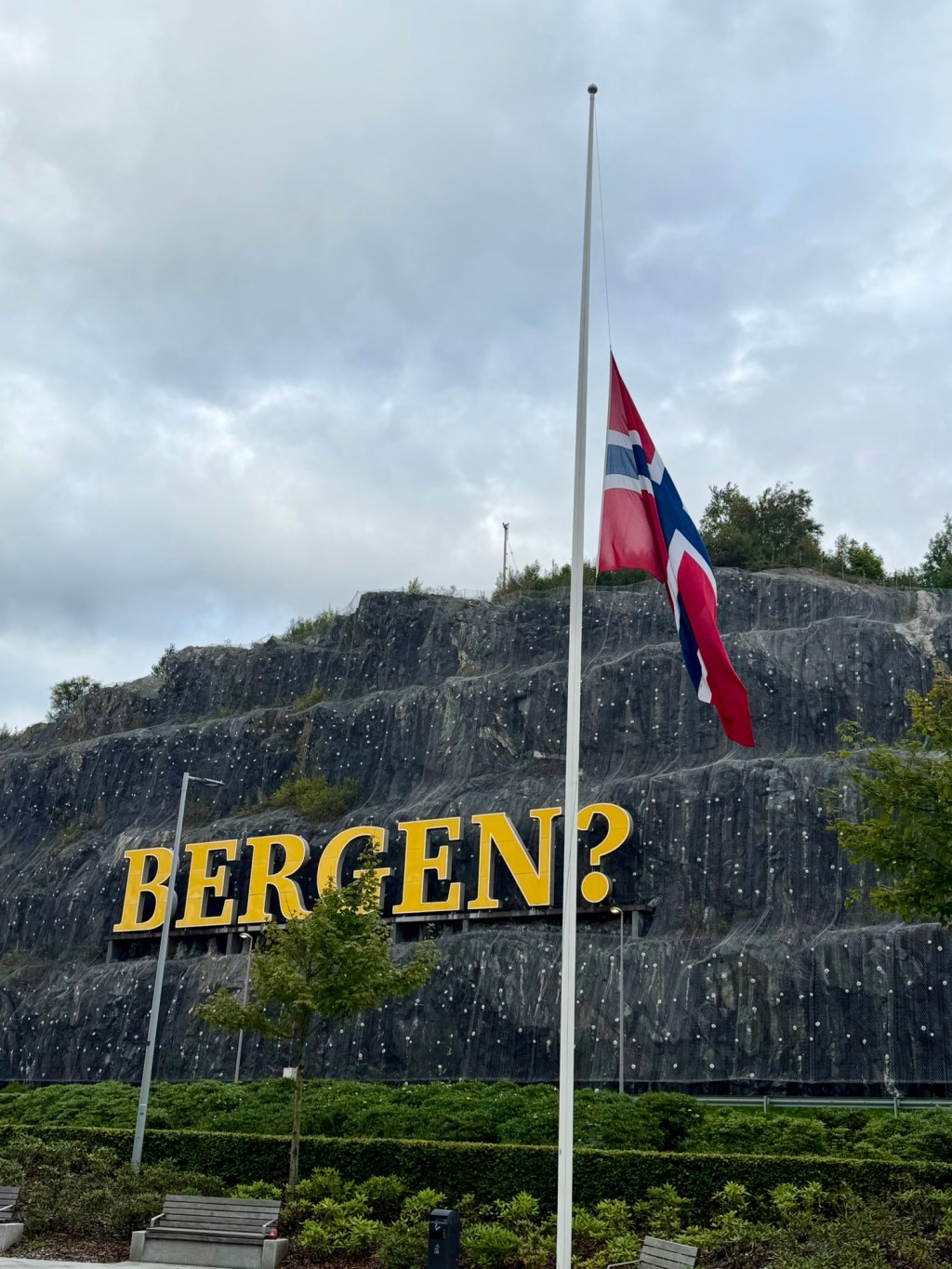
I finally make it to Bergen after a delayed KLM flight, and the long daylight hours made for a beautiful harbour walk. The streets around my hotel are cobblestone.
I’m currently plowing my way through my autumn checklist—a “honey-do” list posted in my laundry room that has to be completed before winter. And, of course, there’s only one “honey” in this household to complete it!
I’ve also been packing my suitcase, and already it’s too full. Off to a great start! No panic! (Ha ha.)