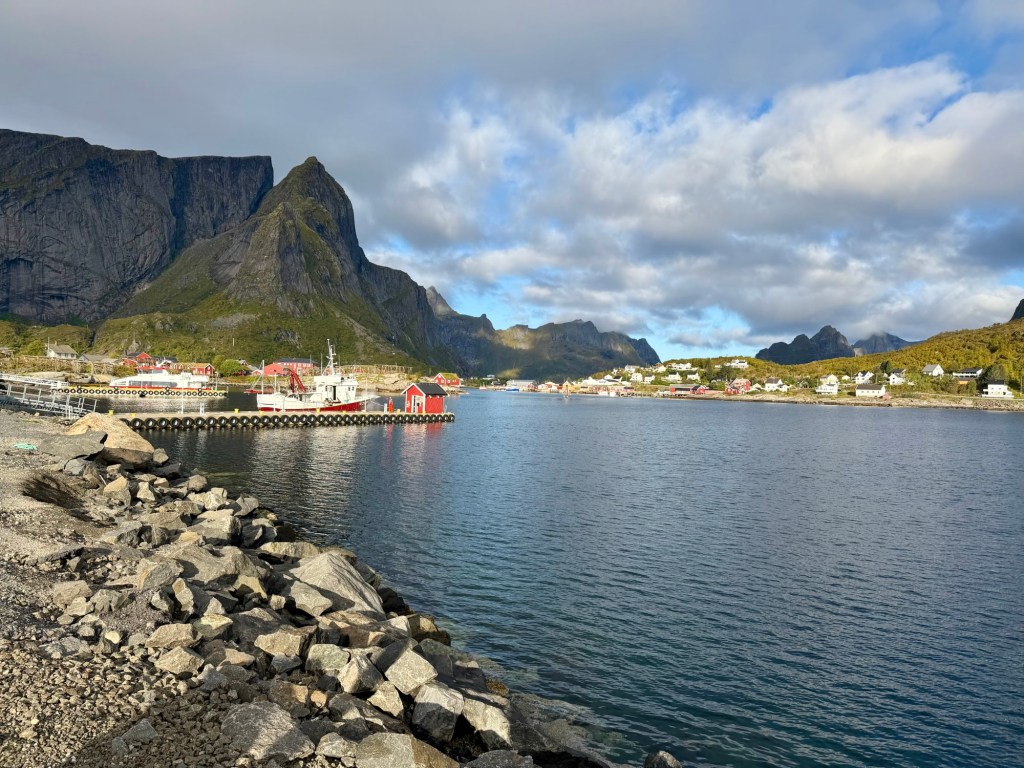
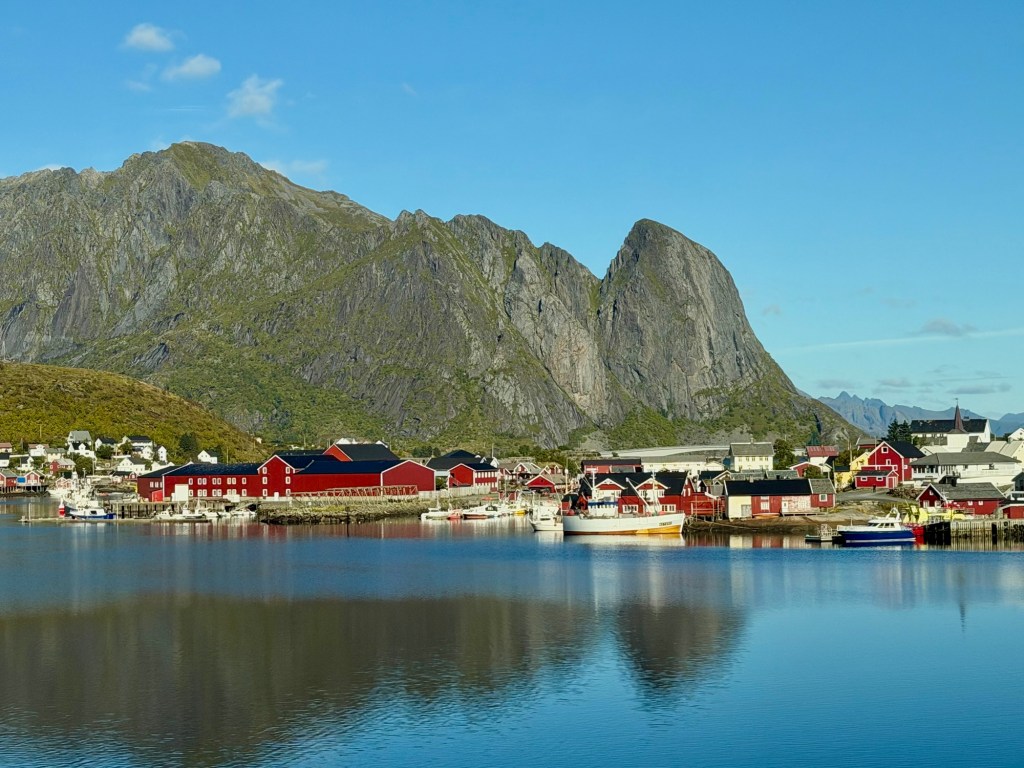
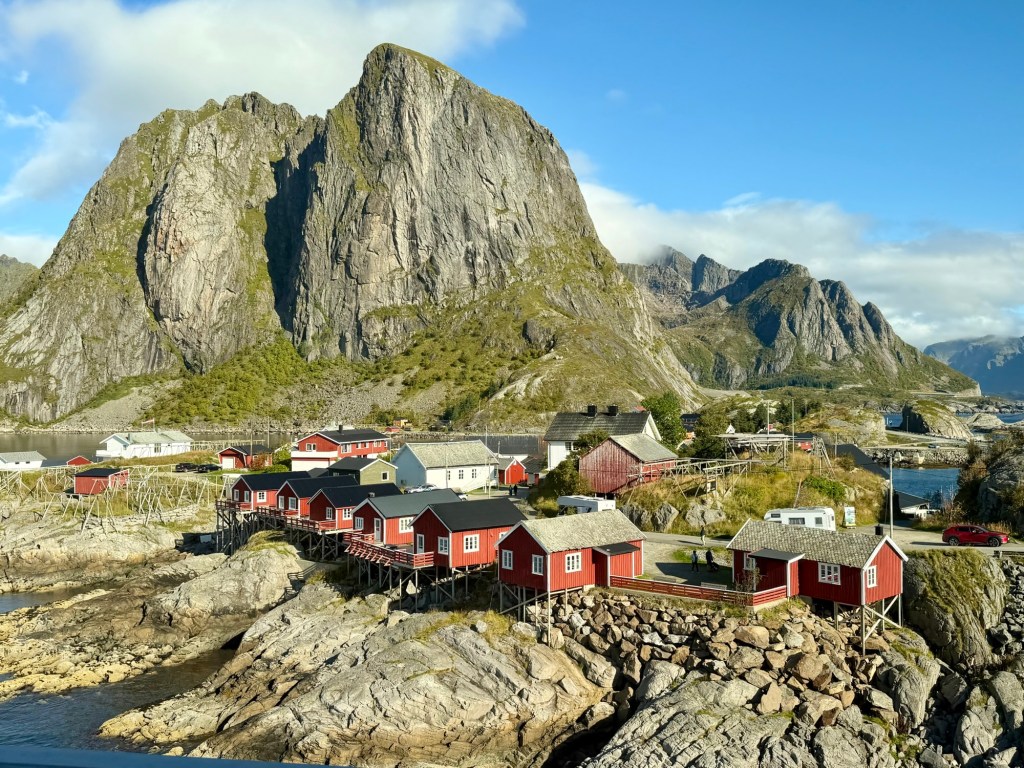
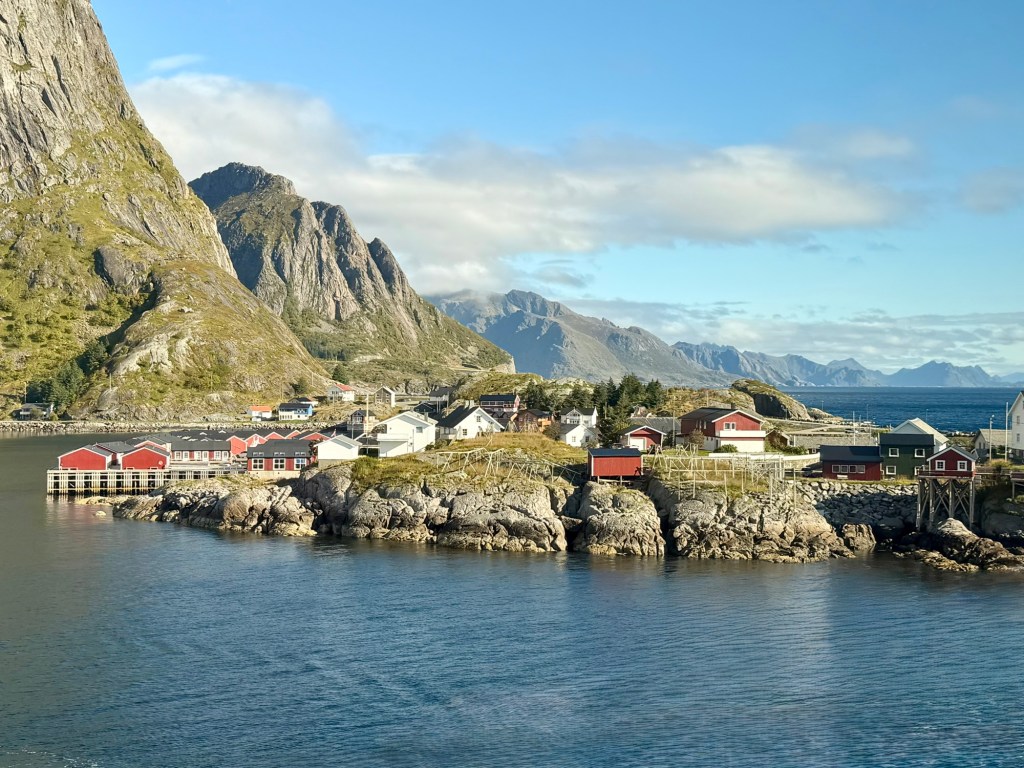
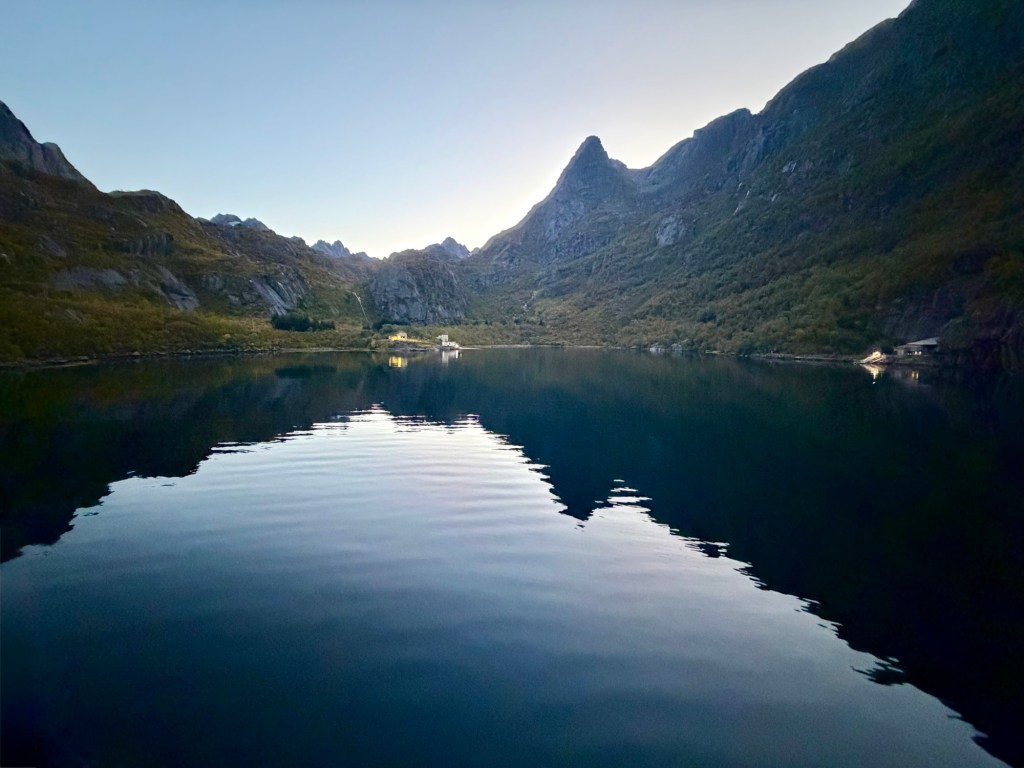
Early this morning, the Hurty docked in the fishing village of Reine on Moskenes Island, at the southern tip of the Lofoten Archipelago. I immediately noticed a similarity in the geography here to Gros Morne, Newfoundland, with its striking glacier-carved mountain peaks towering up directly beside deep coastal waters and fjords.
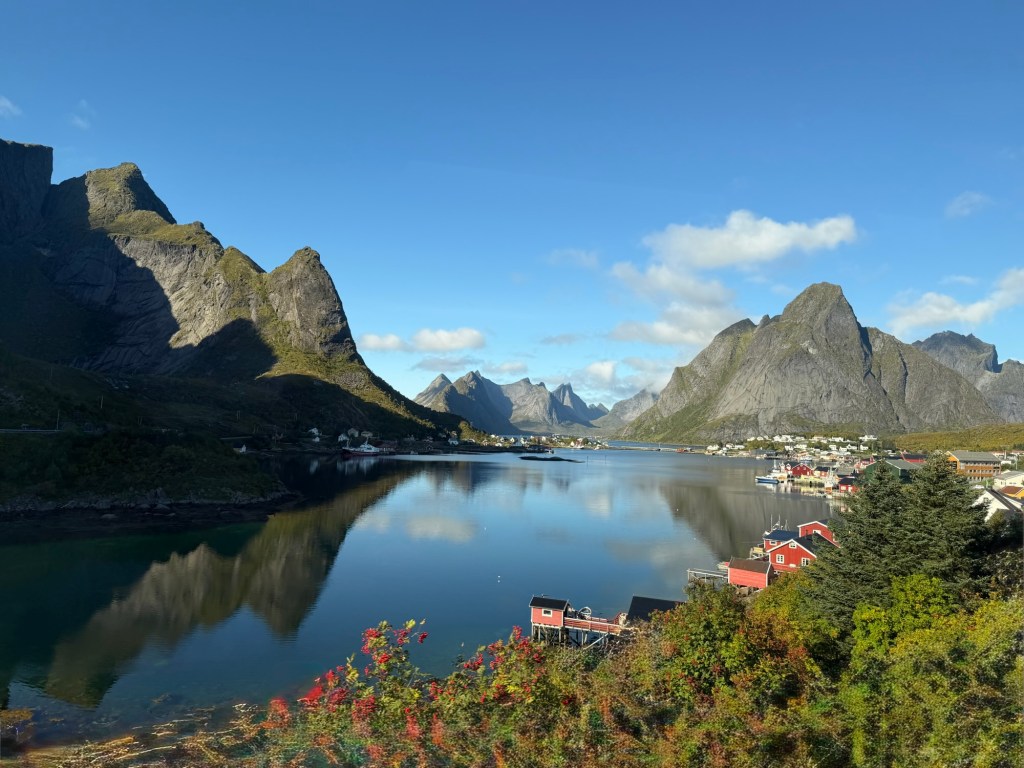
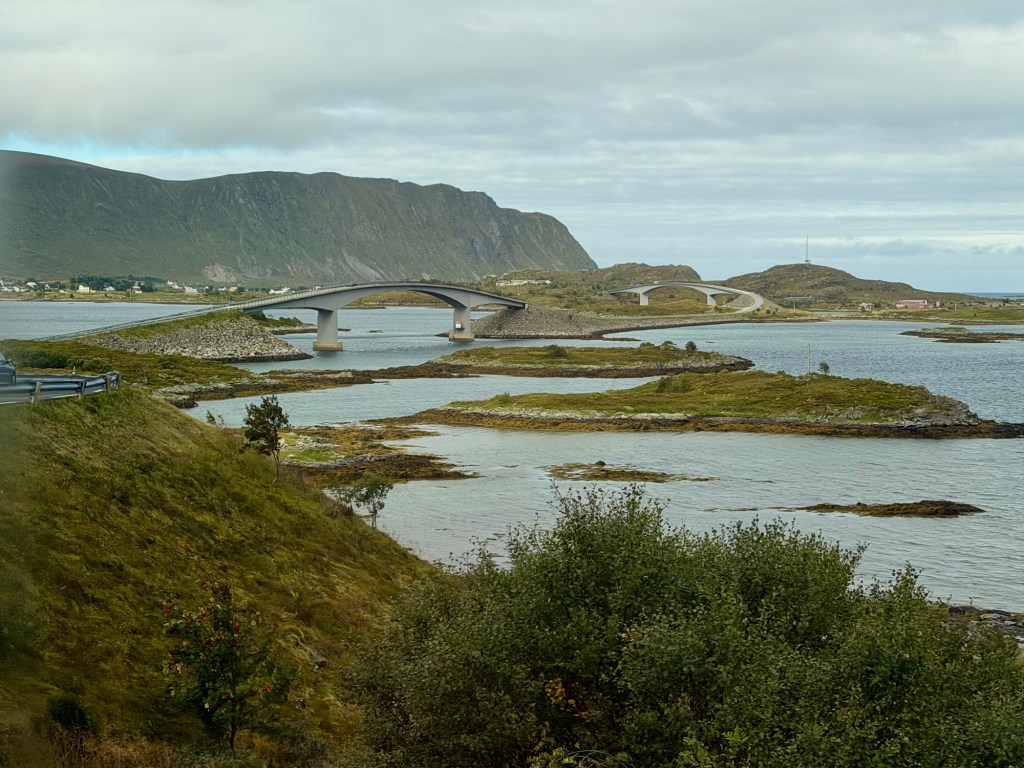
Reine consists of a chain of islands linked by arched bridges and winding coastal roads. I hopped on a bus tour that wound its way down the narrow highway to the town of Å. There, I visited the local fishing museum and sampled cod liver oil — the best I’ve ever tasted! (I wish I had room in my suitcase to bring some home.) Cod liver oil is an important staple here, especially in winter when there is little sunlight.
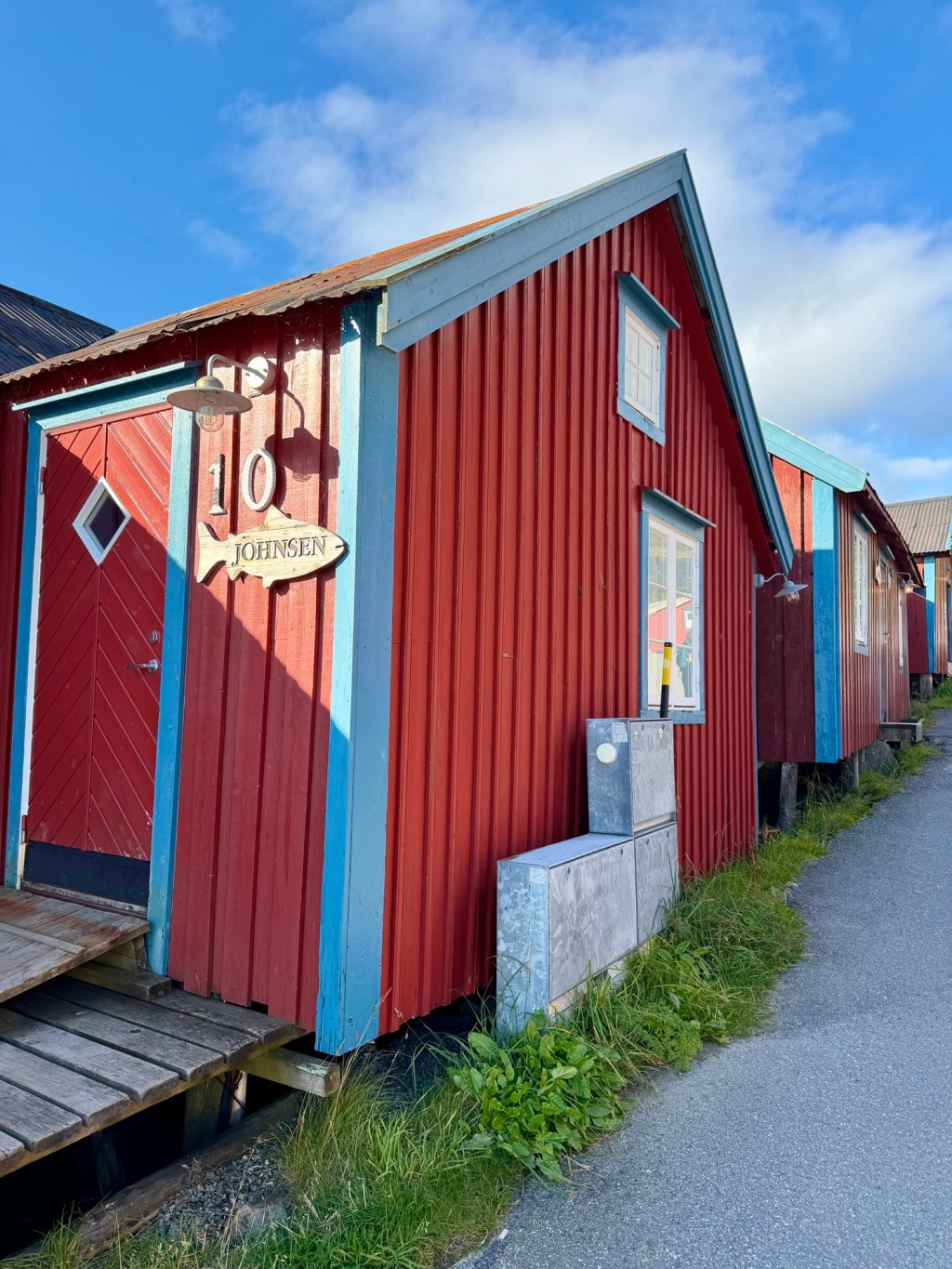
Historically, cod liver oil was even used to paint houses. Red paint, made from cod liver oil and iron rust (and sometimes animal blood), was the cheapest and most common. And often stinky! Yellow paint, made from Italian clay, was a status symbol for the wealthy. White was reserved for the highest tier, the landlords, and contained zinc imported from Sweden.
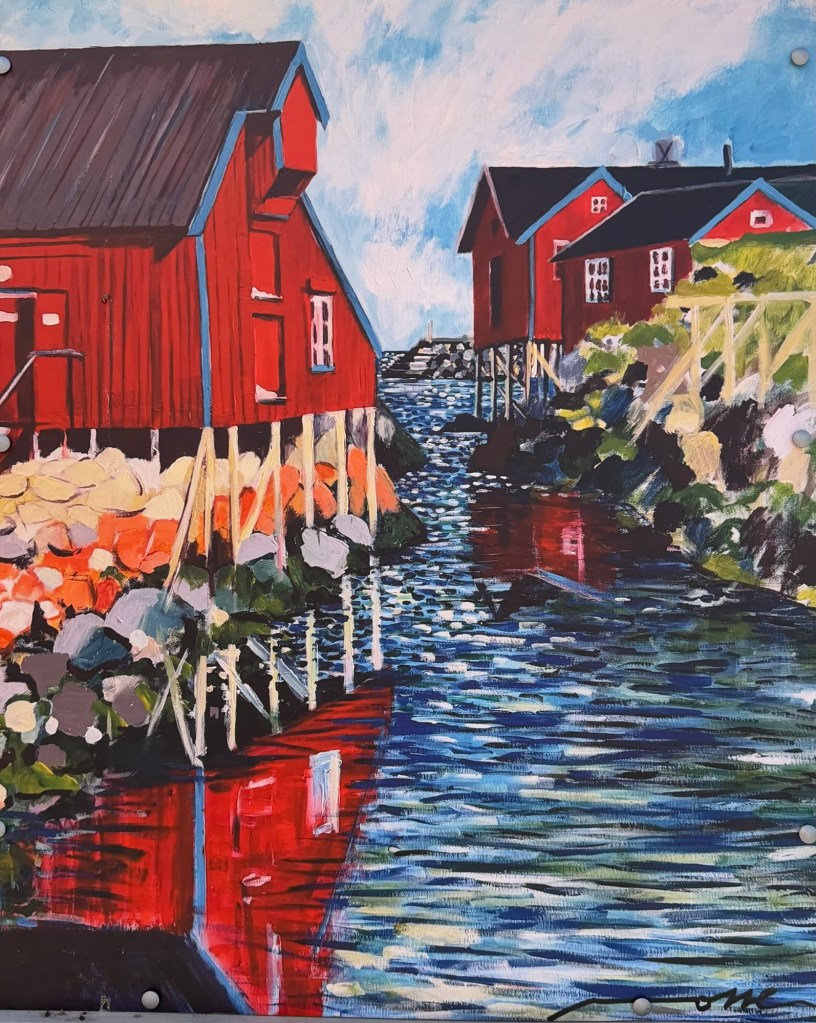
Thankfully, there is no socioeconomic link to paint colour today. And you won’t find many wild colours here; they wouldn’t be approved by the local kommune.
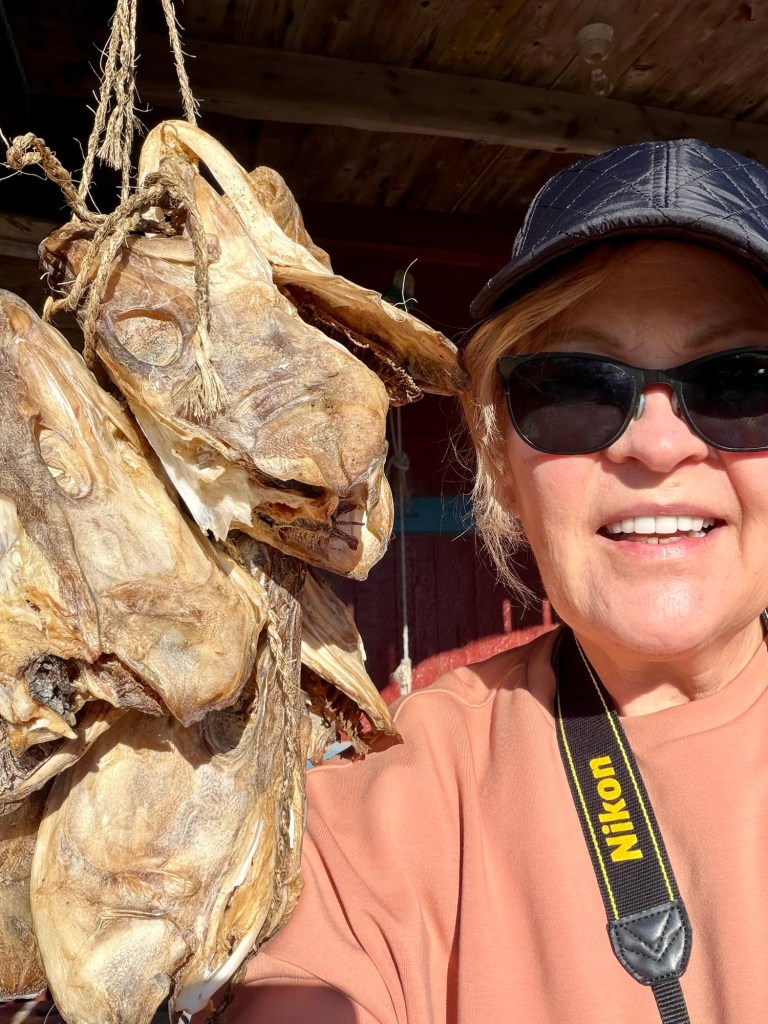
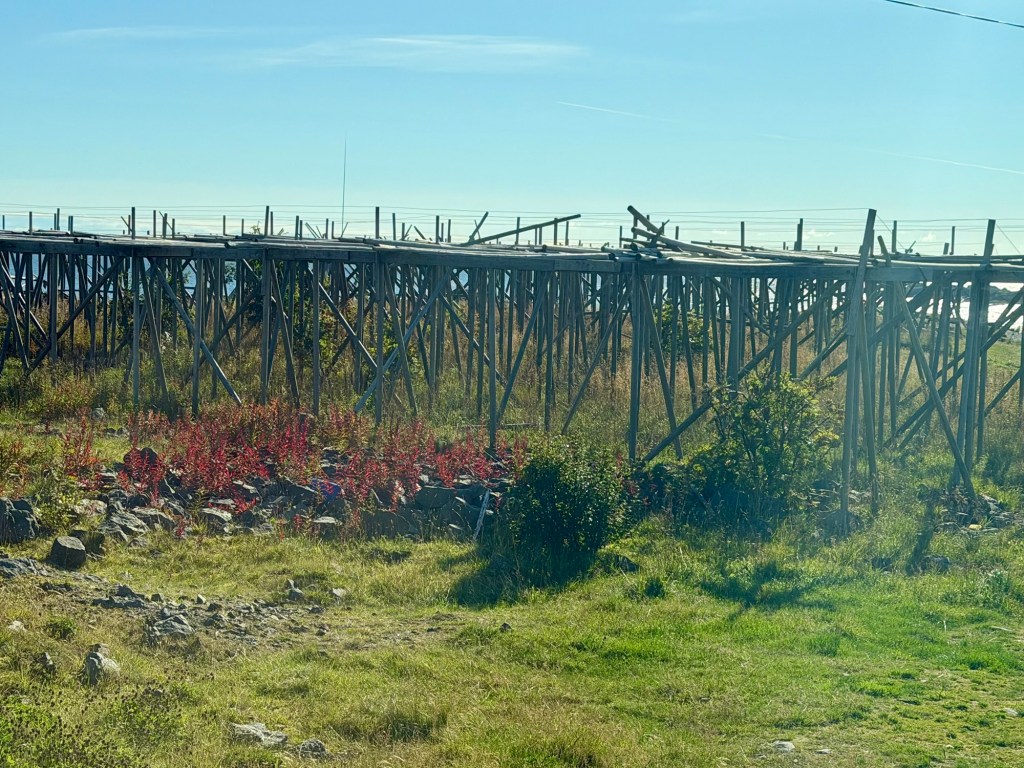
Stockfish racks for drying Arctic cod are a ubiquitous sight all over Lofoten. Cod fishing is open from January to April, after which the fish are dried for 2-3 months. Properly dried cod can remain edible for 10-15 years!
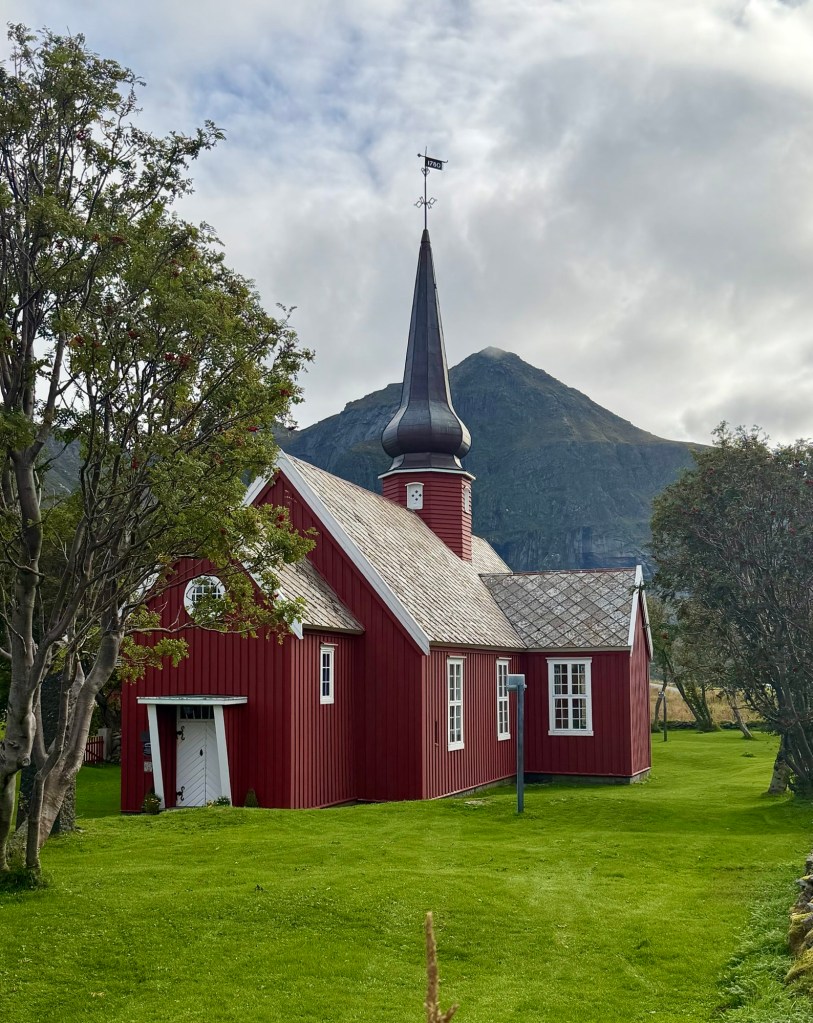
We travelled through several high-tech tunnels and over a handful of state-of-the-art bridges before ending up at the historic Flakstad Church on the island of the same name.
Fun fact: the sun shines 24/7 until the end of August, so sheep roam freely around Lofoten, helping keep the vegetation under control. I even spied them grazing in campgrounds! Their meat is naturally salty because they graze on grass alongside the sea. Mutton is not in my plans anytime soon. 
We passed Reinebringen, a 448-metre mountain with 1,978 stone steps climbing 1 kilometre straight up. These were built by Nepalese Sherpas who were compensated well by the Norwegian government. I saw plenty of hikers making their way up; this is considered an easy one-hour hike. 😂
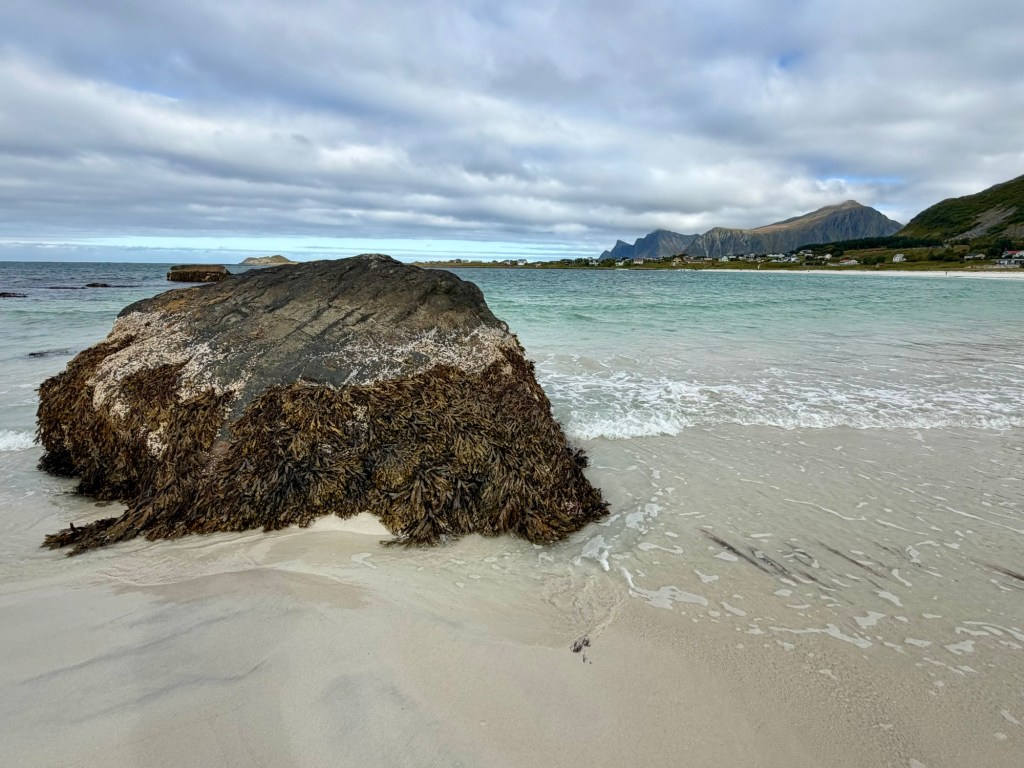
I got to walk around beautiful Ramberg Beach. If the temperature was 20° warmer I would have sworn I was in Hawaii.
Lofoten has several grass-roofed houses (sorry, no picture). The roofs can withstand gale-force winds while helping regulate the temperature inside. To prevent a roof from blowing away, a sheep is sometimes placed on top! The sheep must weigh more than 70 kilograms or it could be carried off by a sea eagle. Cats are obviously kept indoors.
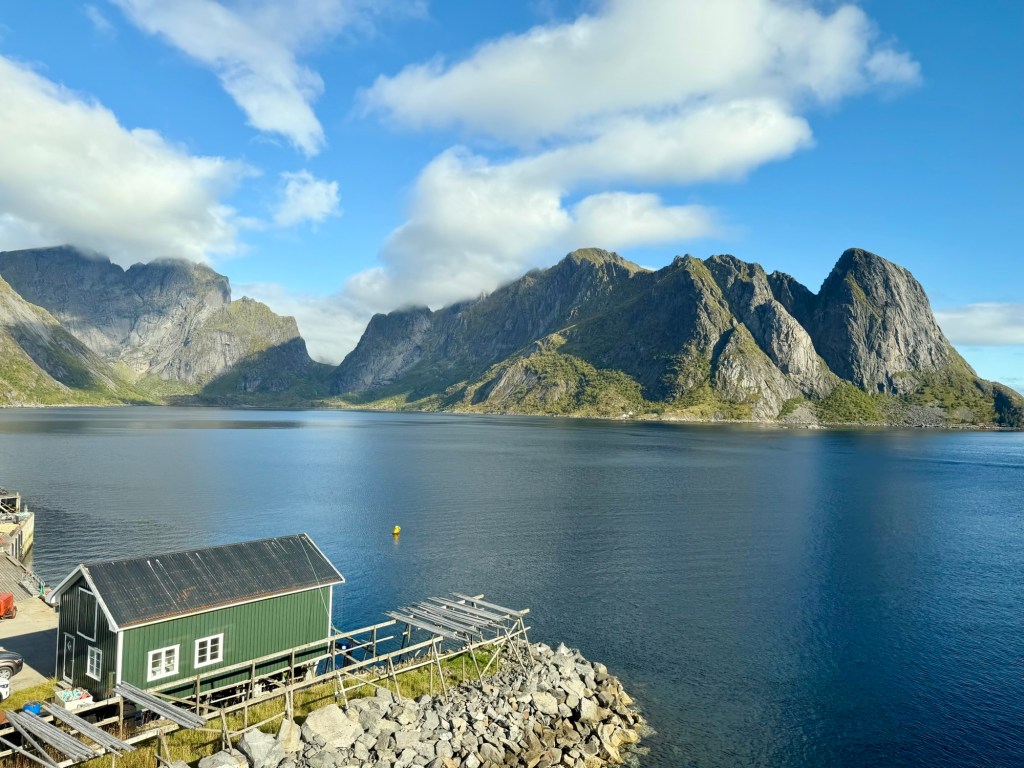
With only about 25,000 inhabitants but more than 1 million visitors a year, Lofoten’s infrastructure is under serious strain. Wastewater is the biggest problem resulting from this massive tourism. It was really busy today; I’d hate to see what summer is like.
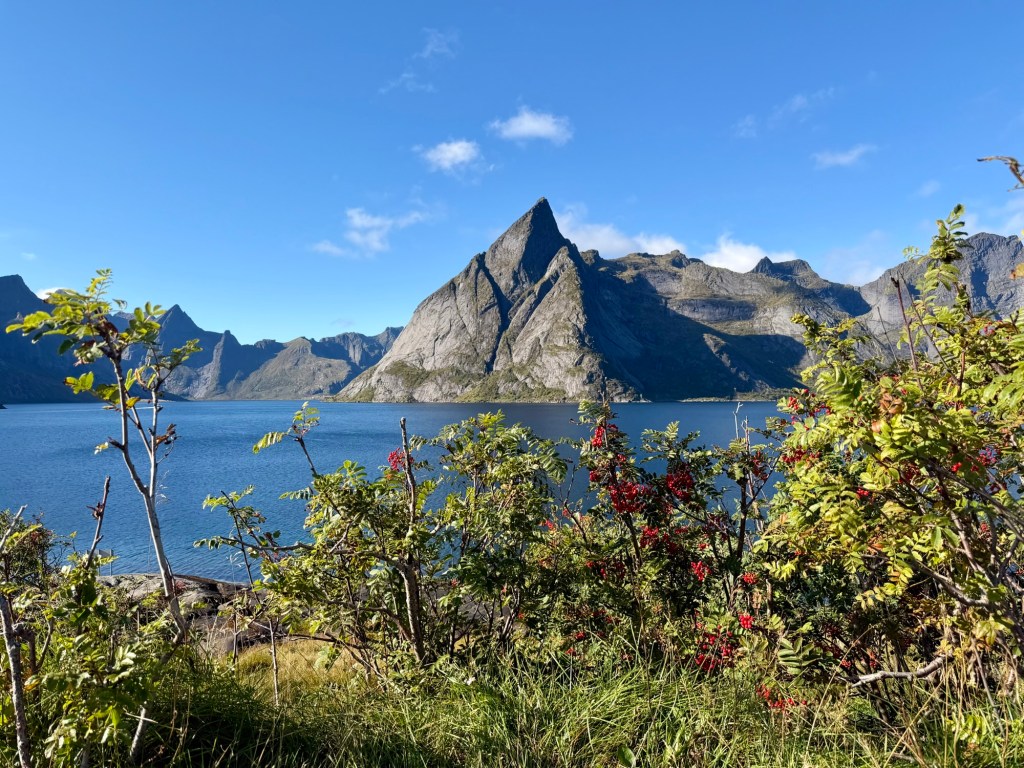
I definitely understand why Lofoten is considered one of the 10 most photographed places in the world.


Leave a comment